Grand Bazaar exchange booths along Kalpakçılar Caddesi offer currency spreads between 0.5% and 1%, compared to the 5% to 8% spreads at Istanbul Airport. You will see which specific offices inside Çarşıkapı Gate and along Mahmudpaşa Hill give the highest payout for US dollars and euros, and how to verify the digital board before handing cash to a teller. Last Tuesday at 11:00 AM, a teller rejected my crisp $100 bill over a two-millimeter tear on the margin; bring uncreased, unmarked notes to avoid being turned away. Once you collect your Turkish Lira, large stacks can draw attention near the Beyazıt tram stop, so split the bills between a front pocket and an inner pouch before you exit the shop.
Last Tuesday at 11:30 AM, I watched a traveler hand over 500 euros at an Istanbul Airport arrivals booth and walk away with 22,000 TL. With the actual market rate sitting at 50 TL to the euro, that single transaction cost him 3,000 TL in airport margins before he even stepped onto the metro.
To get the best exchange rates in Istanbul, withdraw just enough cash at an airport ATM to cover your transit into the city, then handle your main currency conversion inside the Grand Bazaar. The wholesale banknote market of Turkey still runs through the sixteenth-century stone corridors of Kapalıçarşı, centered around Altıncılar Caddesi and the courtyard of Çuhacı Han.
Here, independent Istanbul döviz offices operate with razor-thin margins. While an airport booth or hotel desk routinely shaves eight to twelve percent off your money, exchanging money at Grand Bazaar currency offices usually costs less than one percent off the interbank rate. Changing 1,000 USD at these bazaar counters yields close to the full 45,000 TL valuation, yielding several thousand extra liras by making the tram ride down to the old city.
Why the Grand Bazaar dictates Turkish exchange rates
The physical exchange rate across Turkey originates along a stone corridor inside and directly beside Kapalıçarşı, outside the corporate banking district in Levent. For decades, the network of traders operating in Tahtakale and Çuhacı Han has formed the clearinghouse for hard currency and bullion. Couriers push past shoppers carrying heavy duffel bags and wheeled handcarts loaded with foreign banknotes, balancing physical inventory directly between wholesale vaults and the small street windows of a döviz bürosu.
Commercial bank applications quote screen figures based on electronic settlements overseen by the Central Bank of the Republic of Turkey. When you step up to an automated teller or a high-street branch, the institution applies a conversion buffer that frequently costs you two to four percent. The bazaar operates on direct cash liquidity. If importers require paper currency or domestic investors convert savings into gold, wholesale demand concentrates here immediately. Because Grand Bazaar currency exchange volume is sustained by actual commercial trade rather than tourist footfall, Kapalıçarşı money changers work on margins as narrow as 0.2 percent. Converting 1,000 USD yields 45,000 TL, while 1,000 EUR returns 50,000 TL, closely tracking the interbank wholesale standard rather than the discounted rates posted at airport kiosks or neighborhood retail counters.
Berk’s Insider Tip: Do not exchange money before 10:30 in the morning. Wholesale offices wait for the interbank desk in London and the domestic gold market to settle their opening numbers, meaning early morning spreads are noticeably wider than those posted by midday.
You will find the highest density of competitive istanbul doviz offices along Kalpakçılar Caddesi, running between Beyazıt Gate and Nuruosmaniye Gate, as well as the alleys extending north toward Çuhacı Han. On a weekday at 11:30 a.m., cash windows two turns off the main arterial route post buy-sell spreads of less than 0.30 TL per unit, whereas booths outside the historic complex near the Sultanahmet tram stop widen that margin to over 2.50 TL. The numbers illuminated on the digital boards inside Çuhacı Han reflect the precise cost of physical currency settled across the floor five minutes earlier.
Exchange rates and spreads comparison across Istanbul
The difference between the buying and selling rate, known as the bid-ask spread, varies from under 0.5 percent inside the Grand Bazaar to over 14 percent at Istanbul Airport.
Retail exchange desks at Istanbul Airport (IST) and Sabiha Gökçen (SAW) operate in captive environments with heavy airport concession costs. Against benchmark 2026 reference rates of 1 USD = 45 TL and 1 EUR = 50 TL, arrival-hall exchange booths typically post buy prices between 38.50 TL and 39.50 TL per dollar. These offices rarely charge a separately line-itemed commission fee; instead, they embed their margins directly into the posted price. Street kiosks along Divan Yolu in Sultanahmet capture casual tourists walking between the Blue Mosque and Hagia Sophia, paying approximately 42.50 TL to 43.00 TL per dollar. By contrast, Grand Bazaar counters, specifically the independent brokers operating around Altıncılar Sokak and Çuhacı Han, work on tight wholesale rates dictated by high-volume gold and currency traders, buying dollars at 44.80 TL to 44.90 TL.
| Exchange Location | USD Buy Rate (per $1) | Typical Spread | Net on $500 USD Exchange |
|---|---|---|---|
| Istanbul Airport Arrivals | 39.00 TL | 13.3% | 19,500 TL |
| Sultanahmet Main Street | 42.80 TL | 4.8% | 21,400 TL |
| High Street Bank Branches | 43.50 TL | 3.3% | 21,750 TL |
| Grand Bazaar Backstreets | 44.85 TL | 0.3% | 22,425 TL |
Converting a standard sum of $500 at the airport terminal yields 19,500 Turkish Lira. Carrying that same cash to the bazaar backstreets yields 22,425 Turkish Lira. Exchanging at the airport burns 2,925 TL on the transaction, an immediate loss of $65 before you reach the city center.
When I landed at IST on an evening flight last month, the line at the arrivals currency booth was ten travelers deep, all converting paper notes at 38.90 TL. I tapped a credit card at the automated transit machines downstairs, bypassed the airport counters entirely, and walked down to Tahtakale at 10:30 the next morning to secure 44.85 TL.
For initial arrival expenses, you do not need physical cash desks. Airport shuttle buses and station turnstiles accept contactless bank cards for individual tickets and transit passes. Having lira on hand becomes far more useful once you cross into residential food neighborhoods, whether you are picking up dinner bowls of handmade mantı and garlic yogurt toppings in Kadıköy and Beşiktaş or grabbing street simit from cart vendors along the Golden Horn. The physical kiosks located on the outer rim of the Grand Bazaar display electronic rate boards refreshed every few seconds, reflecting live spot pricing from the central trading floor.
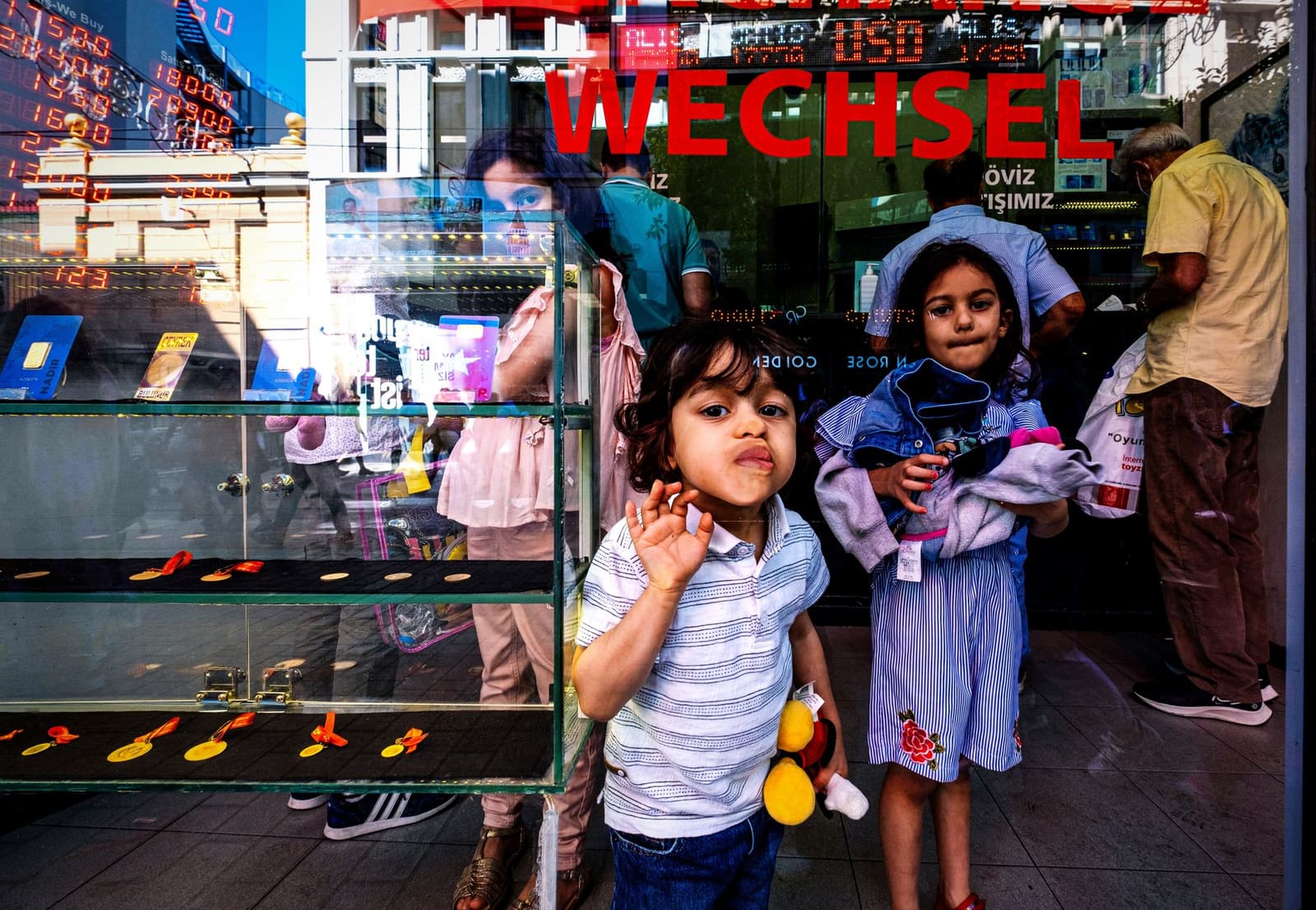
Locating reliable exchange booths in and around the market
Alighting at the Beyazıt Tram Station on the T1 line puts you two minutes on foot from the Grand Bazaar’s primary western entrance, Gate 1 (Beyazıt Kapısı). Walk past the second-hand book bazaar on your left, pass through the security arches at Gate 1, and you enter straight onto Kalpakçılar Caddesi. This wide, vaulted central avenue runs east toward the Nuruosmaniye Mosque. The Grand Bazaar currency exchange booths facing this main thoroughfare handle heavy foot traffic, meaning their rates are functional but rarely the most favorable inside the walls.
To reach the tightest spreads, turn north off the main spine into Keseciler Caddesi, located halfway down the avenue within the gold souk district. The lanes here and along the upper threshold of Mahmutpaşa host long-standing establishments like Kurtsan Döviz and Nizam Döviz. These operators service local merchant accounts and wholesale gold workshops, maintaining narrower spreads than retail kiosks closer to the perimeter gates. At these counters, exchanging 100 EUR yields 5,000 TL with minimal markup over interbank pricing.
I always watch the counters on Keseciler Caddesi around 11:30 AM, after wholesale market orders settle. If you see local shop runners standing beside you with rubber-banded stacks of lira waiting to buy foreign paper, you know that booth is running the day’s sharpest rate.
Two years ago on a humid Thursday afternoon, I made the mistake of heading down the steep flagstones of Mahmutpaşa Yokuşu to convert 300 USD at a non-descript jewelry counter because the line inside the bazaar looked daunting. The jeweler quoted me 50 kuruş below the market board, rounded the liras down to the nearest hundred, and refused to print a slip. By retracing forty steps back up toward Kurtsan Döviz on Keseciler Caddesi, I gained 180 TL on the spot and had the bills run through an optical counter right in front of me.
You will notice two operational models among Kapalıçarşı money changers: registered exchange offices (Döviz Bürosu) and counter-trading jewellers. Regulated booths display formal authorization placards from the Ministry of Treasury and Finance, feature live digital rate boards with explicit buying and selling margins, and issue an official printed receipt for every transaction. Many jewellers also exchange currency across the display glass; they calculate transactions manually based on internal gold-settlement rates and do not issue formal exchange receipts, though they frequently accept older or creased banknotes that the automated optical scanners at licensed booths reject.
Past Keseciler Caddesi toward the downhill descent of Mahmutpaşa, currency windows grow sparse as textile wholesalers take over the corridors. Complete your transaction within the market core, verify the physical banknote count on the counter surface, and retain the printed receipt before leaving the partition.
Step by step procedure for completing a cash exchange
Cash desks in the covered bazaar run on rapid, high-volume transactions where clarity at the cashier window determines whether you receive the exact rate displayed outside. When exchanging money, Grand Bazaar currency booths do not charge separate commission percentages, but they factor their margin directly into the buy and sell figures displayed on the illuminated boards.
Turkish financial regulations enforced by MASAK mandate identity recording for foreign currency transactions. While smaller conversions sometimes pass without scrutiny, passport verification is obligatory for transactions exceeding 100 USD, and clerks enforce it strictly on sums surpassing 185,000 TL (around 3,700 EUR at 50 TL per euro or 4,110 USD at 45 TL per dollar). Always carry your physical passport rather than a photocopy when visiting istanbul doviz offices.
Berk’s Insider Tip: If you are converting a sum larger than two thousand dollars or euros, ask the clerk for their wholesale rate or ‘toptan fiyat’. They frequently narrow the spread by ten to fifteen kuruş per unit compared to the public digital board.
Completing the transaction at the counter
- Check the digital rate board outside the booth before approaching the window. Confirm the Alış (the price the office pays to buy your foreign cash) rather than the Satış (the price they sell foreign cash for). For example, converting 200 EUR at a rate of 50 TL per euro should yield 10,000 TL.
- Present your foreign banknotes flat through the transaction tray under the glass partition. Ensure your notes have no tears, pen marks, or tape repairs, as clerks reject damaged bills immediately.
- Hand over your passport if the transaction amount triggers regulatory thresholds or if the cashier requests identification. The teller scans the document or inputs your details into the government reporting interface.
- Watch the teller run your bills through the desktop money counting machine. These units use ultraviolet and magnetic sensors for counterfeit detection, and the screen facing you displays the total note count and face value in real time.
- Count your Turkish Lira banknotes flat on the glass shelf before leaving the counter. Stack the 200 TL notes and 100 TL notes separately to calculate the sum, keeping your hand over the pile if other patrons crowd the window behind you.
- Take your printed transaction slip (döviz alım belgesi) and compare the final amount on the paper against the cash in your hand. Desk clerks on Altıncılar Caddesi will correct an error instantly if you point it out at the window, but they will not entertain discrepancies once you step back into the pedestrian thoroughfare.
Rules regarding banknote condition and accepted foreign currencies
Cash desks inside the bazaar trade US Dollars, Euros, and British Pounds at the thinnest spreads in the city, routinely within 0.2 to 0.5 percent of the interbank rate. If you carry Japanese Yen, Swiss Francs, or Gulf currencies like Saudi Riyals and UAE Dirhams, spreads widen to 2 or 3 percent. For Scandinavian kronor, Australian dollars, or Canadian dollars, rates degrade further because merchants pay higher handling fees to repatriate those paper reserves. To secure the best exchange rates istanbul doviz offices offer, stick to primary reserves issued by the European Central Bank or the Federal Reserve.
Tellers at istanbul doviz offices inspect foreign cash with extreme scrutiny, particularly Federal Reserve notes. Any bill with pen ink on the face, minor tears along the margin, faded security strips, or stamped teller marks will be rejected on the spot. Tellers categorize slightly worn paper as mutilated currency because local clearinghouses refuse to buy it back from them. Notes printed before 2013, especially older series hundred-dollar bills, face outright refusal or an unofficial commission penalty between 5 and 10 percent. Inspect every bill before traveling: each note should be crisp, uncreased across the portrait, and printed after the 2013 redesign with intact banknote serial numbers.
I watched a visitor at a Keseciler street desk lose ten minutes trying to argue over a tiny pinhole tear on the corner of a 2006 hundred-dollar bill. The clerk slid it back across the marble counter without a word. Check your cash under a desk lamp at home, and ask your local branch for newer series notes before you fly.
When foreign currency converts to Turkish Lira, desks pay out predominantly in 200 TL notes. At the current exchange rate of 1 USD = 45 TL and 1 EUR = 50 TL, exchanging 200 dollars leaves you holding 45 purple 200 TL notes. While counting and packing this denomination is straightforward, spending it in neighborhood shops creates immediate friction. Small grocers, yellow taxis, and ferry kiosks rarely carry enough change for a 200 TL bill early in the day. When stopping for handcrafted baklava and pistachio desserts in Karaköy and Eminönü with 2026 prices and ordering etiquette or buying transit tokens, you will need 50 and 100 TL notes. Ask the teller specifically to break at least 1,000 TL into smaller bills before stepping away from the counter window.
Safety protocols and carrying cash after your transaction
Once you pocket your lira notes at the counter, step aside into a quiet arcade corner before organizing your belongings. After exchanging money at Grand Bazaar stalls, you will often receive stacks of 200 TL notes, meaning a 10,000 TL conversion (200 EUR or roughly 222 USD) amounts to fifty individual bills. Divide this cash while you are still inside a sheltered courtyard like Çuhacı Han, never while standing in an active corridor. Slide small change and one or two bills into a pocket for immediate transport fares, and place the reserve in a concealed pocket or an under-clothing pouch. If an opportunistic thief bumps into you in the Fatih district, losing your entire travel reserve remains preventable if the bulk stays separated from your regular wallet.
A few years ago, I watched a traveler pull out a thick bank envelope of newly exchanged notes just to pay 50 TL for a bottle of water on Mahmutpaşa Yokuşu, immediately drawing three pushy street vendors to his elbow. I now keep two loose 200 TL notes in my front pocket so my main wallet stays hidden until I sit down to sample glasses at local wine bars and Anatolian grapes in Beyoğlu and Kadıköy with 2026 prices.
Leaving the market area requires deliberate route planning. The direct downhill paths toward Eminönü, particularly the steep descent of Mahmutpaşa, function as dense commercial thoroughfares packed with wholesale apparel racks, delivery porters, and slow-moving foot traffic. In these narrow bottlenecks, backpacks worn behind you sit outside your field of view. Keep zipped bags pulled across your chest or tuck your hands over your front pockets until the crowds thin out. If you prefer to bypass these alleyway stalls entirely, exit through Nuruosmaniye Gate and follow the wider sidewalks of Ankara Caddesi down toward Sirkeci. This route provides open sightlines, avoids merchant choke points, and leads directly to the flat avenues along the Golden Horn. The T1 tram runs parallel across this route, operating between Beyazıt-Kapalıçarşı and Eminönü at four-minute intervals.
Practical strategies for your exchange visits
You should convert your travel funds in small stages rather than changing your entire budget in a single stop. Most visitors hand over their full envelope of cash at the first counter inside the bazaar gates, which leaves them carrying thick stacks of 200 TL notes and locks them into one rate. The currency desks around Çuhacı Han and Keseciler Street adjust their buy-sell spreads between 12:30 and 13:00 as local wholesale markets settle, often offering slightly better numbers than the morning boards.
I once converted 800 euros at 09:30 on a Monday, only to watch the spread tighten by midday while I stood in a drafty corridor stuffing 40,000 TL into my jacket. Now I skip the bulk trade entirely, exchange 150 euros or 200 dollars at a time, and take the receipts straight into the side streets.
Staging your visits protects your wallet and keeps you from holding excess paper currency before you understand your daily spending pace. Once your liras are folded away inside your bag, exit through the Nuruosmaniye gate and continue on foot toward the workshops of Cağaloğlu.