Cobblestones around Sultanahmet will rattle a lightweight stroller to pieces, so push your wheels along the flat granite pavers laid beside the T1 tram tracks on Divan Yolu. An Istanbulkart ride costs 20 TL, and tram platforms give you level boarding, though the street lift at Sirkeci often breaks; use the Marmaray underpass elevator on the Ankara Caddesi corner instead. I wrecked a front stroller wheel trying to push down the 15-percent drop on Boğazkesen Caddesi, so spend 20 TL on the historic Tünel funicular to bypass the hill between Beyoğlu and Karaköy. From Karaköy, you have a barrier-free 1.2-kilometer flat boardwalk through Galataport with floor-level entries to shops and ferries. If an underground metro lift fails while you are on a platform, call the municipal transit hotline at 153, and station attendants will arrive with ramps.
At 09:15 at the Kabataş tram turnstiles, tapping an Istanbulkart for 46.20 TL (0.92 EUR) gets you through the wide-access gate without delay, but boarding the carriage reveals the real day-to-day reality. If you push a stroller or maneuver a chair onto the T1 line toward Sultanahmet during the morning rush, packed carriages turn what looks like an easy connection into an awkward pinch point before the doors can close.
Istanbul was built across seven steep ridges, meaning that wheelchair accessible Istanbul travel requires deliberate transit lines and proven street corridors rather than casual wandering. Centuries of layered paving, retrofitted transit stops, and sudden 15-percent inclines mean two parallel streets can offer completely different conditions. One street provides flush dropped curbs, while the next drops abruptly into Ottoman-era steps or sidewalk space claimed by parked motorcycles.
A reliable day of Istanbul stroller travel relies on knowing the layout of step-free transit in Istanbul before you head out. You will find that modern infrastructure like the M2 metro line and the subterranean Marmaray rail link offer elevators and level boarding at almost every stop. Connecting between these lines and flat walking routes in Istanbul along the Golden Horn or the Karaköy waterfront, however, requires knowing which specific station exits bypass the multi-flight stairwells.
Insider tip: After fifteen years of navigating this city, my baseline rule for visitors with wheels is to avoid the street-level interchange between the tram and metro at Aksaray. Transfer at the Yenikapı hub instead. Its underground elevator connections link the M2 metro directly to the Marmaray, bypassing the steep, uneven curbs on the street surface above.
Sidewalk realities and street surface navigation
Istanbul walking surfaces switch between level granite along renewed shorelines and uneven 19th-century basalt pavers within a single turn. Along renewed waterfront promenades such as the Golden Horn path and Karaköy, wide pedestrian walkways provide uninterrupted rolling surfaces. Two blocks inland toward Sirkeci or the antique quarter of Çukurcuma, ground conditions change radically. High-crowned roads, uneven paving stones, and absent curb cuts define the terrain.
In dense commercial districts like Sirkeci, sidewalks often measure under 80 centimeters across and stand 25 centimeters above street grade. Delivery vans, courier scooters, and merchant crates regularly obstruct what little walkway exists. For wheelchair users and travelers managing stroller transit, these obstacles force frequent detours into active traffic lanes. You should maintain eye contact with approaching drivers, as local traffic moves slowly on these narrow lanes and typically yields once you occupy the road, but blind corners around historic masonry demand full stops before proceeding.
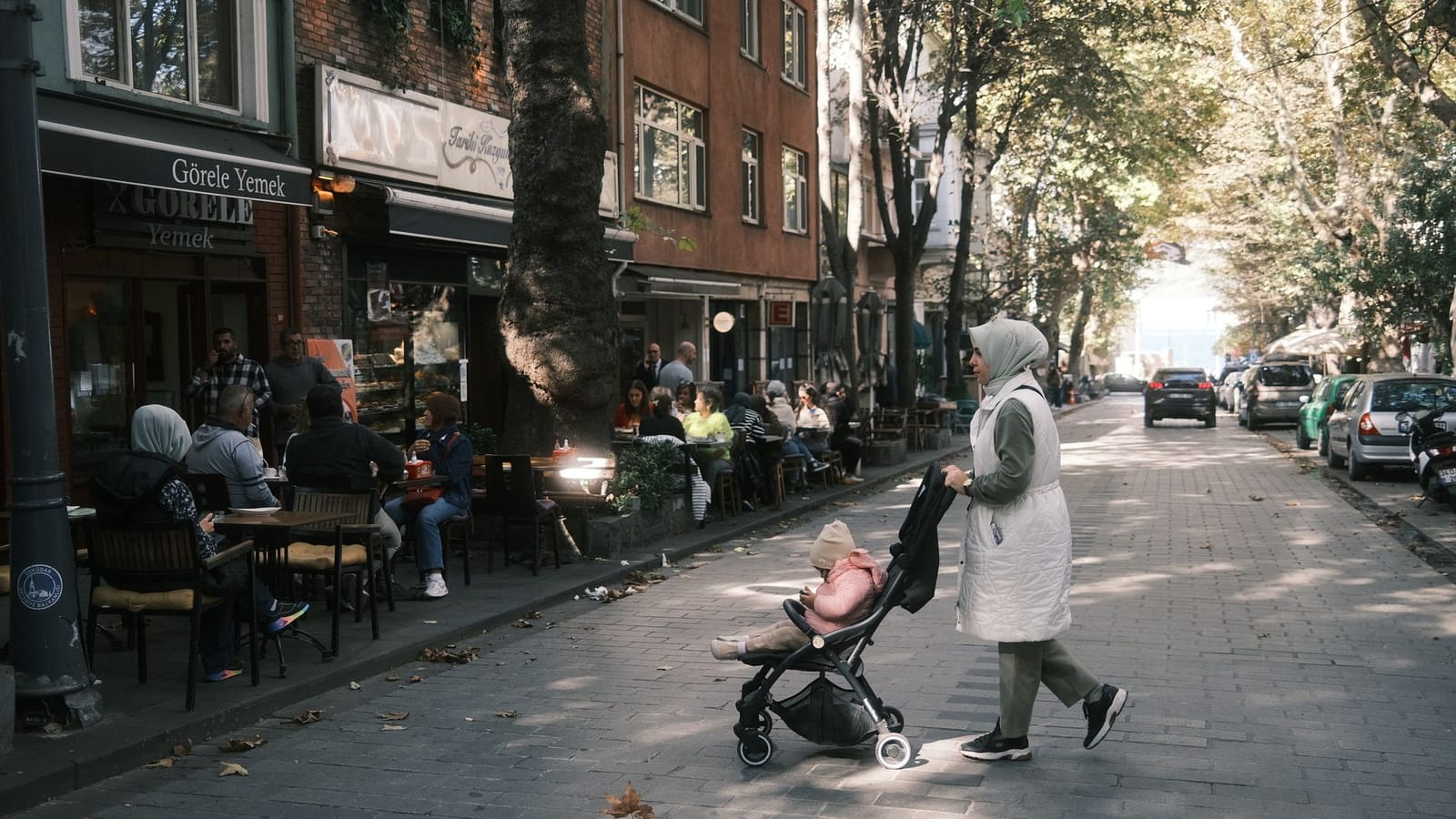
Micro-Anecdote: On a Tuesday morning at 09:45 in Çukurcuma, delivery vans parked bumper-to-bumper along Faik Paşa Caddesi left exactly zero clearance on the footpath. My mistake was attempting to lift the pram chassis down a 30-centimeter broken curb into active scooter traffic; after jamming the small wheels between basalt cobblestones, I retreated fifty meters and took Boğazkesen Caddesi instead, which maintained a continuous dropped-curb sidewalk on its western side all the way to the water.
Equipment selection dictates your range across these quarters. Compact travel strollers with small, 10-centimeter solid plastic wheels struggle here because the wheels wedge into longitudinal grooves between basalt pavers. For practical city mobility, choose pushchairs and manual chairs equipped with large front wheels measuring at least 18 centimeters, paired with sturdy suspension. Wheelchair users navigating historic districts will find that front freewheel attachments raise small front casters clear of paver joints, transferring ground contact to a single pneumatic tire.
Step-free metro, tram, and funicular routes
Istanbul’s modern rail lines provide the most dependable framework for step-free transit in the city, but navigation requires planning around steep hills and multi-stage elevators. Every standard ride on these routes deducts 46.20 TL (0.92 EUR) via a standard Istanbulkart, making rail both the most economical and predictable option when traveling with wheels.
M2 Yenikapı-Hacıosman metro line
The M2 metro line runs under the central spine of the city, linking the historic peninsula to northern commercial districts. Because northern Istanbul sits on a high plateau, stations like Şişhane, Gayrettepe, and 4. Levent sit up to 30 meters below street level. Reaching the train requires using two or three separate elevators: one from street to concourse, and one or two more from concourse down to platform level.
Street-level elevator shafts display blue accessibility signage, but they often sit separate from the main stairwells. At Osmanbey, for instance, the elevator is located around the corner on Halaskargazi Caddesi rather than above the pedestrian stairs. Near the ticket hall, locate the wide turnstile gate. If the electronic card reader malfunctions or the wide barrier is closed, station attendants stationed in the adjacent glass booth can open the manual barrier gate for wheelchairs and wide prams.
T1 Kabataş-Bağcılar tram
Operating entirely at street level, the T1 tram connects major monuments across Kabataş, Karaköy, Sultanahmet, and the old city walls. All stations have concrete approach ramps with low inclines, leading directly to the platform edge. The horizontal gap between the platform curb and the tram carriage averages between 5 and 7 centimeters, which standard wheelchair casters and stroller wheels cross easily without lifting.
The primary obstacle on this line is severe interior crowding. Between 08:00 and 09:30, as well as 17:00 and 19:00, passenger volumes reach capacity between Eminönü and Beyazıt. Attempting to board with a stroller or chair during these morning peaks often leads to missed trains or getting wedged against the doors. Plan boardings before 08:00 or after 10:00.
Berk’s Insider Tip: When exiting the T1 tram at Sultanahmet with a heavy stroller or chair, use the ramp at the rear of the platform toward the German Fountain. The front gate drops you straight onto irregular cobbles that can jam smaller caster wheels.
F1 and F4 funicular lines
Funiculars provide vertical links connecting sea-level ferry hubs to ridge tops, bypassing street gradients exceeding 15 percent. The F1 funicular covers the steep climb between Kabataş on the Bosphorus shore and Taksim Square in 2.5 minutes, with elevators at both ends and flat platform gates. Further north along the shoreline, the F4 funicular connects the Aşiyan ferry dock directly to the Boğaziçi Üniversitesi ridge. Both lines maintain level thresholds and direct platform access, making them indispensable shortcuts for step-free connections.
| Line | Step-Free Access Point | Transit Bottleneck | Practical Solution |
|---|---|---|---|
| M2 metro line | Street elevators at designated station portals | Multi-level lift transfers; deep platforms at Şişhane | Allow 10 extra minutes to transfer between surface and tracks |
| T1 tram | Ramped platform entrances at both ends of stops | Commuter gridlock from 08:00 to 09:30 | Board in mid-train carriages outside peak rush hours |
| F1 funicular | Underground lift from Kabataş concourse to Taksim | Congested gates when large Bosphorus ferries arrive | Wait two minutes for the initial disembarking surge to clear |
| F4 funicular | Aşiyan waterfront elevator shaft to Boğaziçi ridge | Infrequent ferry connections at Aşiyan dock | Coordinate arrival with the Şehir Hatları coastal ferry schedule |
At the Şişhane station Meşrutiyet Caddesi exit, timing a full descent with a client using a motorized chair took exactly eight minutes between calling the street lift, passing the mezzanine gate, and taking the final lift to the tracks. Budgeting this transfer buffer ensures you do not miss connecting trains.
Taking ferries and Marmaray with wheels
Ferries and the deep-level rail tunnel provide the only reliable step-free routes between the European and Asian shores of Istanbul. Traditional Şehir Hatları ferries handle wheelchairs and strollers effortlessly on their main lower decks, where double-wide doors eliminate steps entirely. Water levels and vessel movement can tilt the boarding gangway at varying angles, creating a short incline between the stone quay and the boat deck. You should wait for the mooring ropes to pull taut before moving forward, as deckhands regularly grab stroller frames and wheelchair handles to guide wheels across the ribbed metal threshold. A standard cross-strait crossing on an Istanbulkart costs 50.15 to 65.21 TL (1.00 to 1.30 EUR).
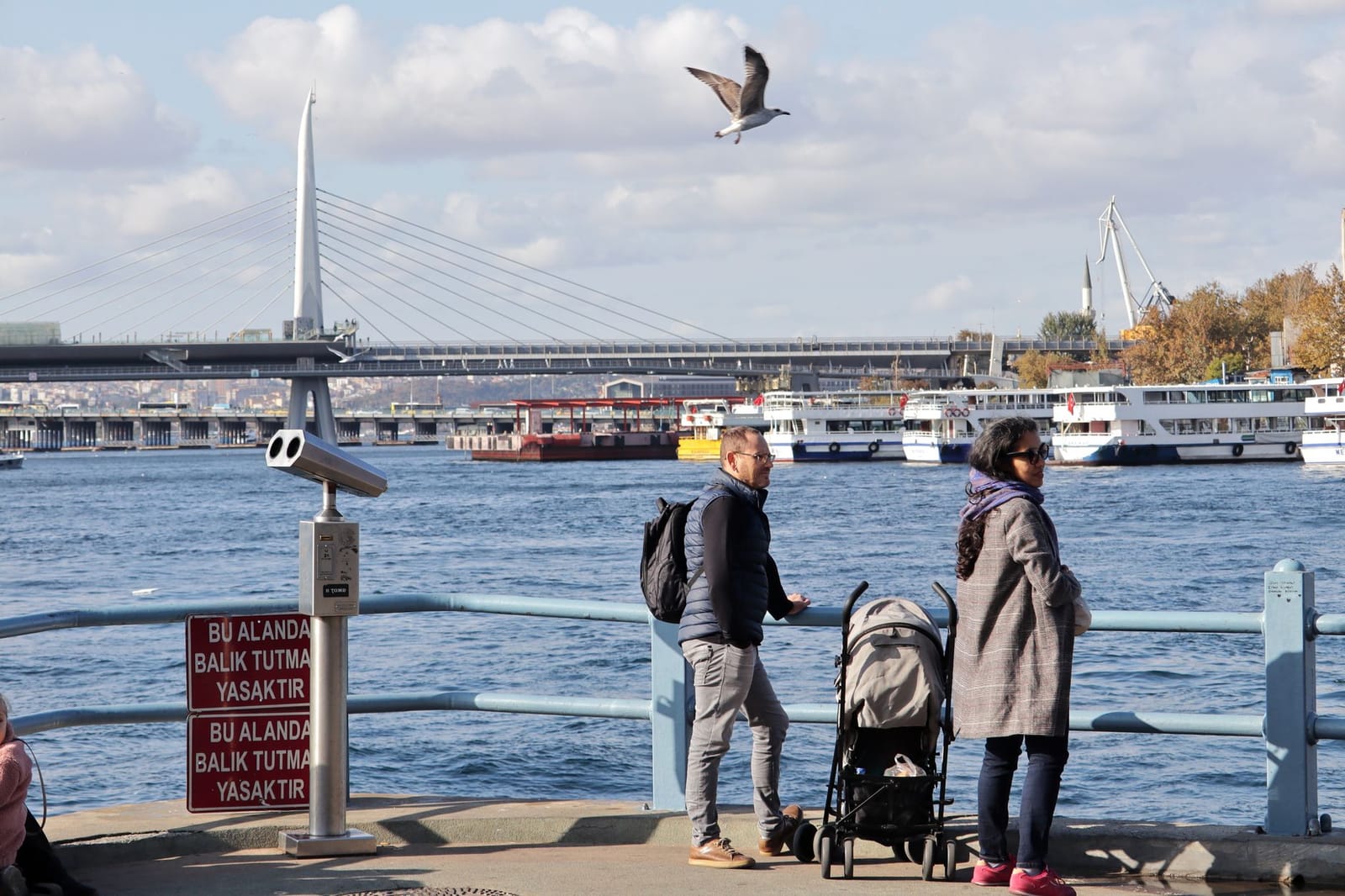
If you plan longer sea-level trips to explore the outer reaches of the strait, consider checking details for visiting Küçüksu Pavilion rococo architecture and Bosphorus ferry tips with 2026 prices, where passenger ferries pull directly up to level concrete quays. You can also organize a full day on the car-free Prince Islands using Heybeliada Forest Paths and Wooden Mansions with 2026 Island Ferry Tips, where roll-on boarding allows direct access to paved coastal paths.
For days when rough water causes difficult gangway angles, the Marmaray commuter rail offers a completely enclosed alternative. Running beneath the seabed, the tunnel links Sirkeci on the historic peninsula with Üsküdar on the Anatolian coast in four minutes. Both stations have redundant elevators connecting street plazas directly to the ticket concourses and subterranean tracks. Platform boarding is virtually level, with a horizontal gap under five centimeters that standard caster wheels cross without jarring. The short-hop fare covering one to three stops is 37.40 TL (0.75 EUR).
Boarding and navigating the Asian shore
- Approach the wide-access turnstile at the ferry terminal and tap your Istanbulkart at the low-mounted card reader.
- Signal the docking crew if the gangway sits at a steep angle due to chop, allowing them to steady the ramp edges.
- Roll directly into the indoor passenger cabin on the ground deck, avoiding the steep stairwells that lead to the upper outdoor benches.
- Exit through the rear boarding doors upon arrival at Kadıköy Pier to stay on the ground-level gangway.
- Cross the street level tram rails at the marked pedestrian strip rather than using the overhead walkway.
Micro-Anecdote: On a blustery Friday afternoon at 16:30 at the Eminönü ferry slips, a choppy south swell lifted the ferry threshold fifteen centimeters above the stone quay every few seconds. I watched an impatient traveler try to muscle a stroller across mid-motion, catching the small wheels hard in the metal hinge. I stepped back, waited thirty seconds until the deckhand threw the second stern hawser tight, and let the two dock attendants steady the gangway flaps so we could glide straight across the threshold without a jolt.
Once clear of the turnstiles at Kadıköy Pier, steer directly east into the flat pedestrian grid of the central bazaar. Avoid heading south up Moda Caddesi, which climbs an eight percent grade on uneven paving stones. Staying within the flat market alleys keeps your wheels on smooth ground while leading past outdoor counters serving fried mussels and calamari in the fish markets of Beşiktaş and Kadıköy with 2026 menu prices along Güneşli Bahçe Sokak. The street surface transitions to asphalt at the intersection of Muvakkıthane Caddesi.
Flat walking routes through the historic peninsula
The ridge line of the historical peninsula follows the ancient Roman Mese road, today known as Divan Yolu, which provides one of the reliable flat walking corridors for manual wheelchairs and wheeled strollers. Starting from Sultanahmet Square, the broad flagstone pedestrian sidewalks maintain a gentle incline under three percent as you head west past the Column of Constantine toward Beyazıt. Sticking strictly to this tram-flanked central spine avoids the severe drops to the Golden Horn and the Marmara Sea. If you deviate north into the side streets leading toward the Mahmutpaşa bazaar, the grade plummets over twenty percent across broken paving and merchandise displays, creating dangerous downhill roll conditions and blocking wheel clearance. Remaining on the main paved path along the tramway keeps you on level ground with drops at every crosswalk.
Insider tip: When rolling west along Divan Yolu between 13:00 and 15:00, avoid the north pavement near Çemberlitaş, where tea stalls set up brass trays that reduce sidewalk clearance to barely fifty centimeters. Cross at the tram signal to the southern sidewalk beside the library, where the pathway stays two meters wide and unobstructed.
Subterranean historic sites in the district require specific access points to bypass staircases. The main ticket pavilion for the Basilica Cistern along Yerebatan Caddesi descends via a steep flight of 52 stone steps. For step-free access, visitors using mobility equipment must bypass the standard turnstiles and head fifty meters further north to the exit building on Yerebatan Caddesi. Here, staff manage a dedicated hydraulic lift platform installed inside the glass pavilion. You inform the security attendant at the exit barrier, who radios an operator to lower the platform lift. Once at cistern level, the modern restoration provides flat, perforated steel gangways with security railings that navigate the entire column grid and the Medusa heads without stairs. Check Basilica Cistern Evening Access and 2026 Entry Prices beforehand, because ticketing counters change operating modes between daytime and night hours.
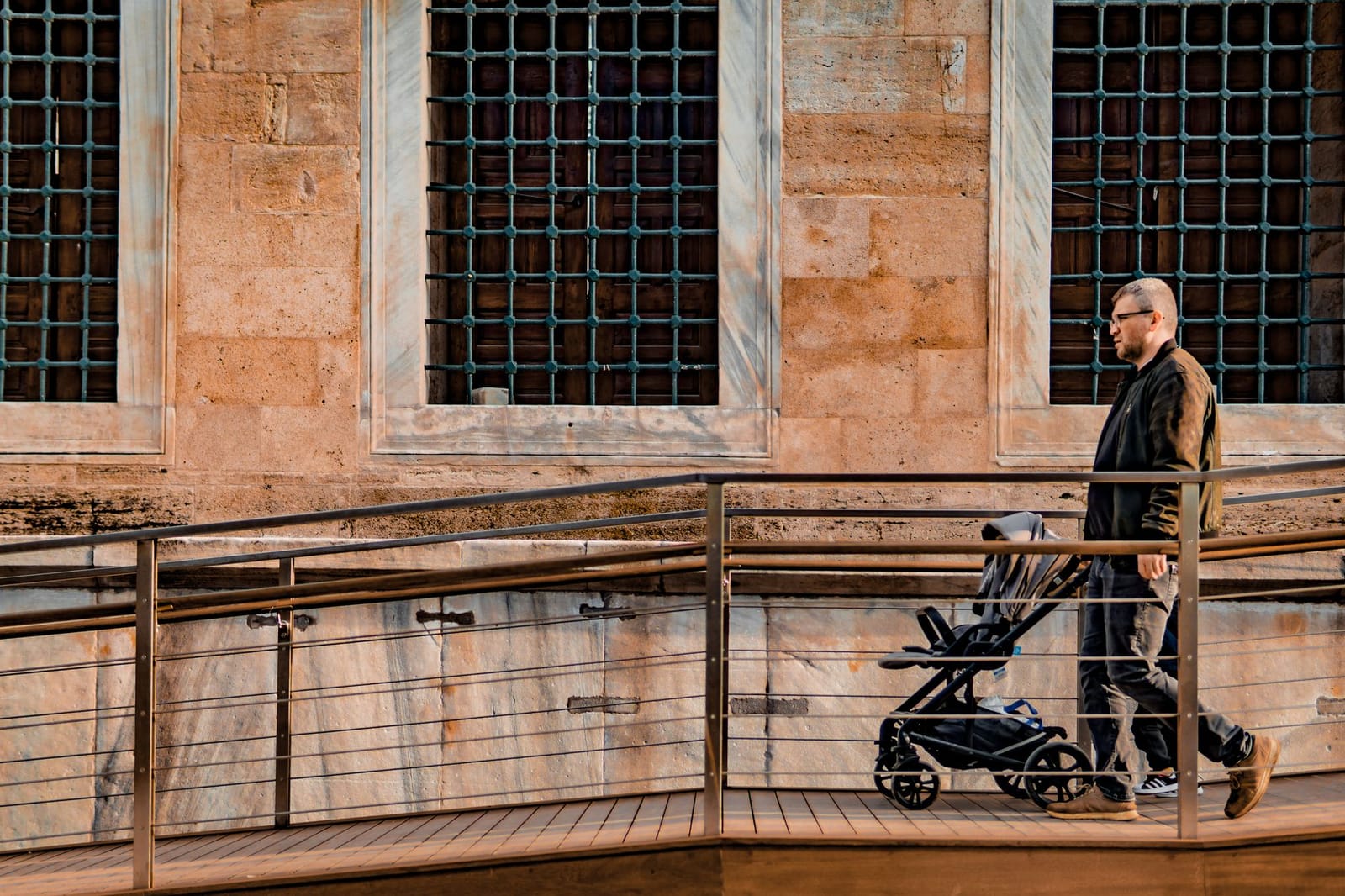
Connecting between the high ground of the peninsula and the waterfront requires avoiding the deep stairways built into the hillsides. While the central paved lane of Gülhane Park offers a smooth, descending run from the outer palace walls down to the coastline, every side trail flanking the park leads to steep stairs toward the archaeological museum or the old mint. For a continuous, level transfer that bypasses hills entirely, the coastal perimeter provides the only uninterrupted path. The pedestrian path parallel to Kennedy Caddesi runs at sea level from the ferry docks around the southern shoreline, avoiding the historic elevation changes entirely.
Key checkpoints for navigating the historic peninsula without encountering steps:
- Divan Yolu spine: Stay on the south sidewalk between Sultanahmet and Beyazıt to maintain dropped curbs and a two-meter clear walking lane.
- Mahmutpaşa bypass: Avoid all northern downhill alleyways off the Grand Bazaar toward Eminönü, using the T1 tram line along Alemdar Caddesi instead.
- Basilica Cistern platform lift: Request security assistance at the glass exit structure on Yerebatan Caddesi to use the hydraulic lift.
- Kennedy Caddesi promenade: Take the asphalted seaside promenade around the outer wall to move between Sirkeci and Yenikapı without climbing.
- Gülhane Park descent: Enter through the upper south gate near Soğukçeşme Sokağı and roll down the central asphalt road directly out the northern gate at Sarayburnu.
Waterfront strolls from Karaköy to Galataport
Galataport opens a continuous 1.2-kilometer concrete esplanade along the Bosphorus shoreline where wheels encounter zero steps or sudden curb drops. For anyone planning stroller or wheelchair outings, this stretch provides one of the easiest paved paths engineered along the strait. Taxis and private vehicles access an underground roadway for passenger drop-offs, keeping the ground-level promenade entirely pedestrian. Clear glass elevators link the subterranean drop-off bays and parking levels directly to the open quayside above. You will find wide, smooth paving running uninterrupted from the Karaköy ferry terminal past the Istanbul Modern art museum to the Tophane clock tower square.
Moving inland requires strict attention to street choice because the ground slopes upward within two blocks of the water. While Kemankeş Caddesi runs parallel to the shore along flat terrain with low curbs, every alley turning north climbs sharply toward the Şişhane ridge. Navigating the perimeter around A Gothic Secret in the Heart of Karaköy: Why I Love the Unique Arap Mosque gives you level access to fourteenth-century Genoese brickwork, provided you approach from Tersane Caddesi and stay south of the hardware trading lanes. A single wrong turn north funnels you into dead-end staircases or street gradients exceeding 15 percent, forcing manual lifting of heavy gear.
West of Karaköy pier, the shoreline boardwalk continues along the mouth of the Golden Horn, maintaining an unobstructed line along the water. The contrast between this edge and the interior district is immediate. The wooden boardwalk provides wide clearances and direct access to floating cafes, while the adjacent road carries dense tram traffic and vehicle exhaust on broken flagstones. Most visitors overlook that you can follow this waterfront path straight to the lower pedestrian walkway of the Galata Bridge without surmounting a single stair, whereas attempting the parallel inland street, Necatibey Caddesi, means navigating broken pavers and merchandise display stands that block wheeled access.
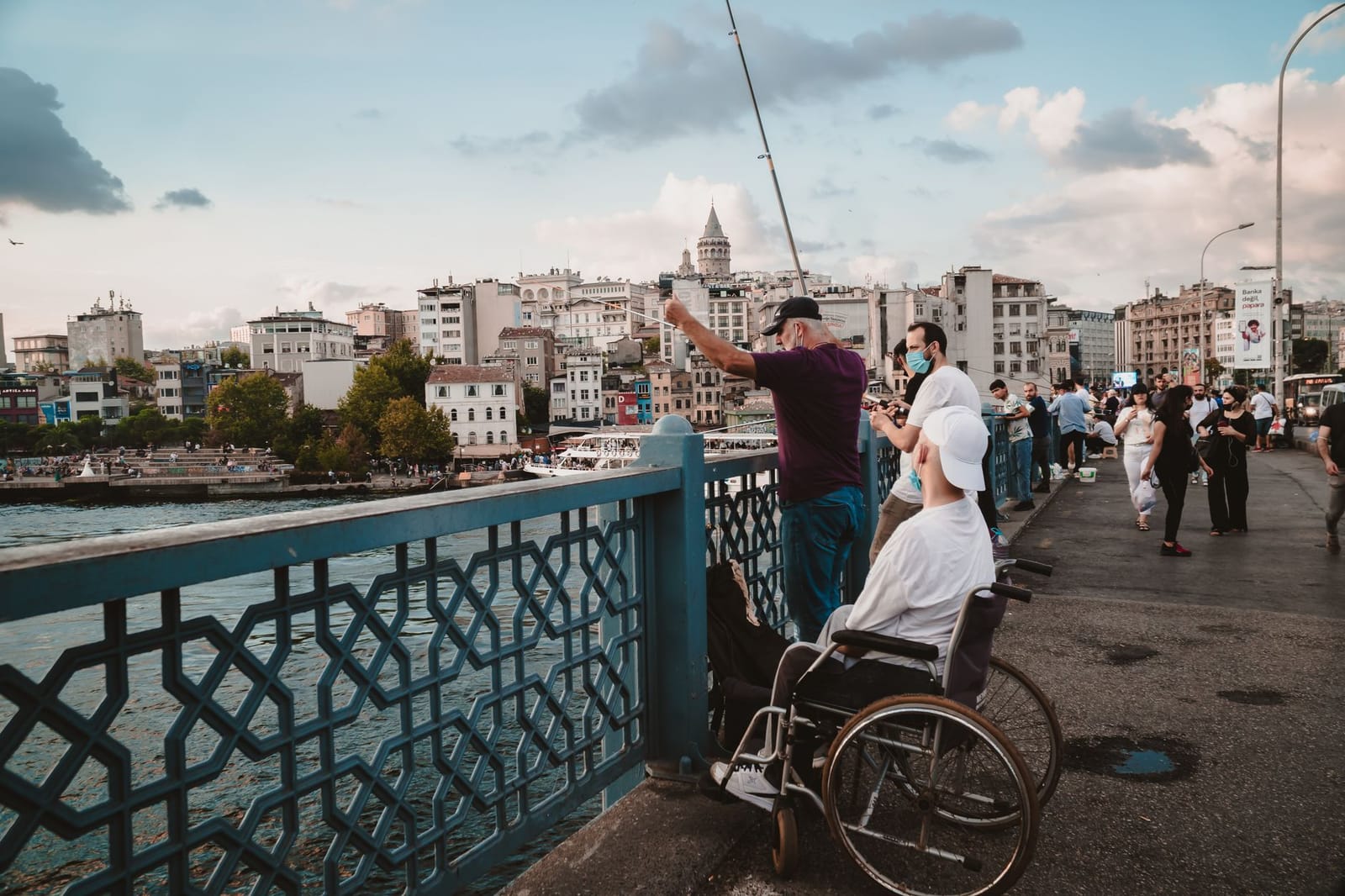
When continuing toward Beyoğlu’s upper plateau, avoid trying to push up the steep Galata hill directly; instead, take the historic underground Tünel funicular straight to Tünel Square. Near the top terminal, you can visit Galata Mevlevihanesi: Beyoğlu, which has flat, courtyard stone paving easily reached from the south end of İstiklal Caddesi.
Insider tip: On a warm Tuesday at 10:00, the street-level security gates near the Karaköy entrance had a 15-minute queue at the bag scanners. I bypassed the delay entirely by taking the elevator down to the underground car drop-off at P1, where the transit checkpoint had zero wait, and taking the adjacent lift straight out onto the seaside esplanade.
Emergency elevator hotlines and mobility support services
Broken station elevators and locked access gates occur across public transit networks, but you can resolve most platform delays quickly using official municipal response lines. When an elevator is out of service inside a rail station, message the Alo 153 municipal support line on WhatsApp at +90 552 153 00 34 or dial 153 from a Turkish phone number. Providing the station name and the specific elevator code posted on the frame prompts Metro Istanbul dispatchers to coordinate with local technicians and advise on working alternate exits. If you are stuck on a concourse, notify staff at the station control booth (Giriş Kontrol), who can activate platform stair lifts or guide you to service elevators not marked on public maps.
Micro-Anecdote: During an afternoon transfer at Yenikapı, the elevator connecting the M2 platform to the Marmaray concourse was locked for maintenance at 14:15. I alerted the attendant at the ticket control booth; within six minutes, an inspector arrived with an override key to guide us via the back-of-house service lift, saving a twenty-minute detour up street level.
Hailing a standard yellow cab on the street is rarely practical for travelers with non-folding mobility equipment. The vast majority of yellow sedan taxis in Istanbul run on liquefied petroleum gas, and the pressurized fuel tank takes up more than half of the boot space. This leaves insufficient clearance for a rigid frame or a double stroller. For reliable accessible transport, book an 8-seater black taxi through the BiTaksi app by selecting the XL vehicle category, or pre-book a dedicated ramp-equipped van through private transfer operators.
Berk’s Insider Tip: If a metro elevator is locked behind a turnstile barrier at Şişhane or Osmanbey, press the buzzer marked ‘Engelli Butonu’ directly on the metal post. Station security monitors the camera feed and releases the gate within thirty seconds without requiring you to carry an attendant card.
Navigating major cultural monuments requires checking specific site adjustments before you arrive. Istanbul Modern in Karaköy provides modern design standards, with level access from the street, broad automatic doorways, and spacious lifts to all exhibition levels. Historic sites present older architectural barriers. Topkapı Palace has ramped bypasses through the First and Second Courts, though the historical flagstones produce substantial vibration for small wheels. Portable wooden ramps are available from guards at select thresholds in the Harem. At Dolmabahçe Palace, the garden pathways are flat and surfaced with hard-packed gravel. Interior visits into the Selamlık quarters require transferring to palace-provided indoor wheelchairs at the garden gate to preserve historical parquet floors, where staff operate exterior platform lifts to bypass the entrance stairs. These measures ensure practical transit between historic quarters and modern transit hubs.
Frequently asked questions
Can standard yellow Istanbul taxis accommodate a rigid wheelchair?
Standard yellow sedan taxis in Istanbul almost universally run on autogas, meaning an LPG fuel tank fills most of the trunk space. This configuration prevents rigid wheelchairs or bulky strollers from fitting into the boot. If your mobility frame does not fold flat, order an XL black taxi through BiTaksi or reserve an accessible taxi equipped with a ramp in advance to avoid being stranded at the curb.
How do you report a broken metro elevator in Istanbul?
Contact the municipal resolution center by sending a WhatsApp message to Alo 153 at +90 552 153 00 34 with your station name and the elevator unit number. You can also walk to the station supervisor booth near the turnstiles or press the intercom buzzer on the elevator column. Metro Istanbul staff monitor these calls and can unlock back-of-house service lifts for travelers with mobility needs.
Are the grounds of Topkapı Palace and Dolmabahçe Palace step-free?
Both palace complexes offer step-free access across their main grounds, though surface textures differ. Dolmabahçe Palace has flat, paved garden paths, but entering the historical palace rooms requires transferring to the venue’s designated narrow wheelchairs and using exterior platform lifts. Topkapı Palace outer courts provide stone ramps alongside main stairways, though you must navigate uneven Ottoman cobblestones that require sturdy wheels and deliberate pacing.
Rolling smart across Istanbul’s ridges
Rolling wheels across Istanbul works only when you stay along the water level of the Bosphorus shoreline or remain directly atop the ridge lines like İstiklal Caddesi. Skip the cobblestone alleys linking Karaköy up to Galata on foot. The cracked flagstones and steep grades will wreck stroller casters and drain wheelchair batteries within twenty minutes. Use the underground F2 Historic Tünel or the F1 Kabataş–Taksim funicular to cross the slope, or cross the Golden Horn on a flat Şehir Hatları ferry instead.
I learned this the hard way at the Karaköy terminal when an unexpected repair barrier forced a detour through the tight hardware market alleys. Before setting out each morning, check the live elevator status page on the Metro İstanbul website for your exact transfer points. If a lift at a deep-level station like Vezneciler or Şişhane is out of service, reroute to a surface tram line or a ferry dock before leaving your hotel.