Karaköy Güllüoğlu charges 2,060 TL per kilo of classic pistachio baklava in 2026, while Hafız Mustafa and Köşkeroğlu sit closer to 1,350 TL. You will learn how to navigate the pay-first ticket counter at Rıhtım Caddesi, cutting your wait from twenty minutes to five. I learned the hard way to ask counter staff for dry (kuru) baklava vacuum-sealed in a tin box if you fly home, because standard cardboard syrup boxes leak through luggage within four hours. You get the exact differences between clotted-cream şöbiyet at Develi in Sirkeci and the thin-layered havuç dilimi at Güllüoğlu, alongside portion prices averaging 280 TL per plate so you know what to pay before reaching the cash register.
At 10:15 on a Tuesday morning at Karaköy Güllüoğlu on Kemankeş Caddesi, the queue at the central cash register already curves around the glass display cases. When the server presses a spatula into a fresh sheet of Antep pistachio baklava, the pastry crackles sharply under the pressure. Clarified Urfa sheep’s milk butter dominates the aroma before any sugar registers, and the syrup coats the palate without the acidic throat burn common in mass-produced versions.
Most visitors cross the Galata Bridge and buy pre-packaged boxes sitting under warm display bulbs around the Spice Bazaar in Eminönü, paying 650 TL for stale layers held together by glucose syrup. Current Istanbul baklava prices in 2026 for authentic, handcrafted pistachio varieties range between 1,100 TL and 1,450 TL per kilogram (22 to 29 EUR / 24.50 to 32 USD). That rate reflects early-harvest green Gaziantep pistachios and pure butterfat. Anything priced under 800 TL per kilo replaces sheep butter with vegetable margarine and dilutes the pistachio filling.
Getting what you want means knowing essential baklava ordering tips in Istanbul dessert halls. Floor staff do not take table orders. You examine the metal trays first, state your order by weight in grams rather than piece count at the payment desk, collect your printed slip, and present it to the counter master who plates your portions.
Insider tip: Ask the counter master for kuru baklava if you plan to carry your purchase onto the T1 tram or back across the Golden Horn. It uses a reduced syrup base, which keeps the bottom pastry layers crisp for two days without leaking through the paper box.
Anatomy of authentic Gaziantep baklava in Istanbul
A master pan of antep pistachio baklava contains forty translucent sheets of rolled yufka, rolled so thin that newsprint remains readable through an unbaked layer. Authentic producers in Gaziantep and their branches in Istanbul use stone-milled hard wheat flour, dusting the leaves with fine starch so the pastry retains structural crunch without leaving a chalky residue on the tongue. Between these layers sit two regional agricultural products: clarified butter known as sadeyağ, skimmed to eliminate all milk solids and water, and early-harvest boz fıstık. These pistachios are harvested in late July while still unripe, yielding an intense emerald-green hue, higher aromatic oil content, and a sharper flavor than the pale yellow table pistachios gathered in autumn.
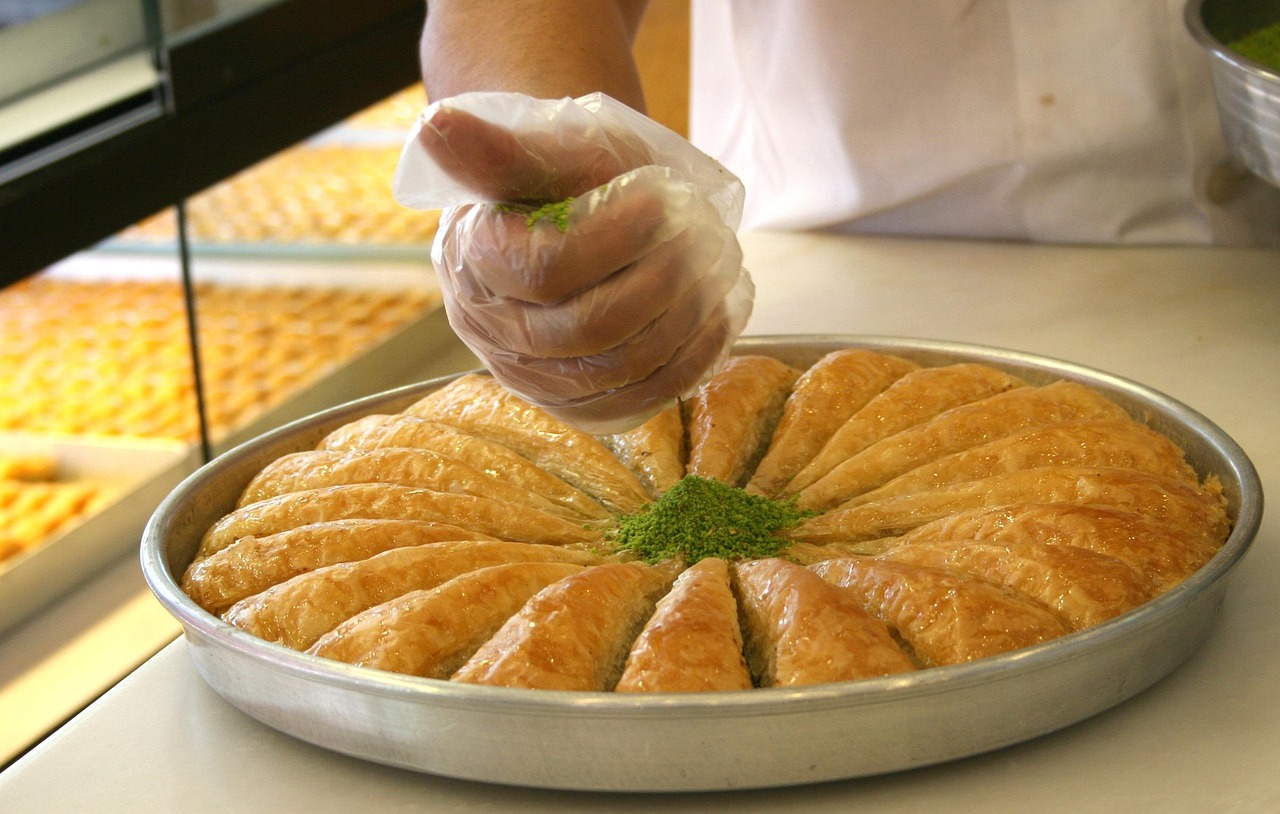
When commercial bakeries cut production costs, the chemical differences become obvious after the first bite. Mass-market shops often replace sheep butter with sunflower oil or hydrogenated vegetable shortening, which leaves a greasy coating on the palate instead of a clean dairy melt. Inferior batches also reveal themselves through syrup chemistry. Genuine artisans boil pure beet sugar, water, and lemon juice, creating a balanced sweetness that lets the butter and pistachio oils lead. Commercial producers substitute industrial glucose syrup to extend shelf life; you will feel this syrup as a sharp burn at the back of your throat several minutes after eating.
Insider tip: I try to arrive at the bakeries in Karaköy around 11:00 AM, just as the morning baking cycle finishes. If you stand near the counter when the master pours hot sugar syrup over a fresh metal tray straight from the stone oven, you will hear a sharp hiss as the steam escapes, confirming the pastry dried out completely during baking.
You can also inspect the bottom of the slice before ordering your portion of istanbul baklava. A properly baked batch shows a dry, uniform amber-gold underside where the sadeyağ settled during the bake, without any soggy, pale dough sticking to the metal tin.
How to order and eat baklava like an Istanbul local
Baklava shops in Karaköy calculate your order by metric weight or standard portion counts known as porsiyon, not by individual square pieces. Standing at the counter and pointing across the glass cases causes confusion, because trays hold distinct recipes with different syrup densities and nut ratios. Knowing the basic vocabulary and physical mechanics ensures you receive fresh pastries and taste the balance of Urfa clarified butter (sadeyağ) and Antep pistachios properly.
Practical ordering and eating steps
- Specify whether you want to eat at a table or take a boxed parcel (kutu). A sit-down porsiyon generally consists of three to four classical squares or one large triangular slice known as havuç dilimi.
- Order by gram weight when buying for takeaway. Ask for 500 grams (yarım kilo) or 1,000 grams (bir kilo) rather than requesting eight or ten loose pieces, which slow the counter scale process.
- Choose your variety according to pastry density. Classical fıstıklı baklava has forty thin pastry sheets, while şöbiyet contains a cooked semolina cream layer (kaymak) that requires consumption within twenty-four hours.
- Pick up the pastry with your fingers instead of cutting it with a fork. Pressing a fork downward crushes the layered air pockets, forces out the syrup, and hardens the pastry base.
- Turn the piece upside down so the syrupy base faces the roof of your mouth. The clarified butter settles at the bottom during baking; placing this layer against your palate allows body heat to release the aroma before you chew.
- Bite down firmly to hear the pastry crunch, then exhale through your nose. Exhaling distributes the warmed sadeyağ aroma across your palate.
- Drink hot, unsweetened çay between mouthfuls. Black tea dissolves residual pastry fats and prepares your tongue for the next bite, whereas Turkish coffee is too heavy and masks the pistachio oils.
Anecdote: During my visit to Karaköy Güllüoğlu on an overcast Tuesday at 2:15 PM, I stepped up to the counter and made the rookie mistake of asking for “six loose pieces” of pistachio baklava. The cashier immediately halted the line of 18 people behind me to explain that the kitchen balances boxes strictly by weight, not piece counts. I spent 270 TL on an uneven, hand-packed bag that crushed under its own weight while I crossed the Galata Bridge; ever since that lesson, I order strictly in 250-gram increments.
Insider tip: During the late afternoon rush at Karaköy Güllüoğlu, I regularly see visitors struggle with a fork on a piece of havuç dilimi, sending sugar flakes flying across the marble. The counter staff will quietly place a small wax-paper napkin beside your plate; that gesture is your signal to eat with your fingers.
When coming down toward Karaköy on the Beyoğlu funicular and nostalgic tram routes with 2026 boarding tips, plan your dessert stop before dinner rather than after a heavy meal. Clarified sheep butter is filling, and three pieces provide substantial calories. A standard porsiyon of classical pistachio baklava costs 225 TL (4.50 EUR / 5 USD), while a portion of havuç dilimi served with Maraş goat milk ice cream costs 270 TL (5.40 EUR / 6 USD). Keep cold water on the table to clear sugar between bites, and save any coffee order for thirty minutes after you finish.
Karaköy Güllüoğlu and the Rıhtım benchmark
Nadir Güllü operates only one shop in Istanbul, located on Kemankeş Caddesi just behind the Karaköy shoreline. Travelers often confuse this single establishment with the dozens of storefronts branded as Faruk Güllüoğlu or other variations scattered across shopping malls and transit hubs. Those chains belong to relatives from the extended Gaziantep family tree and run as separate franchise operations backed by commercial central kitchens. In Karaköy, the baking takes place in the workshop directly above and behind the sales hall under the personal supervision of Nadir Güllü, using copper trays, clarified sheep butter, and hand-rolled phyllo.
The shop runs on a strict floor flow designed to absorb heavy foot traffic. On a typical Tuesday at 3:15 PM, you will often find lines reaching 30 people deep stretching toward the street doors. Yet you will be served within 8 minutes because the order process is strictly segregated. When you enter, you pull a paper number from the ticket dispenser beside the entrance. You watch the digital screen above the cash register (kasa), step forward when your number appears, state your order, and pay. The cashier hands you a stamped receipt listing your items, which you carry over to the designated pickup counter station where the counter masters pack your boxes or slide fresh portions onto porcelain plates.
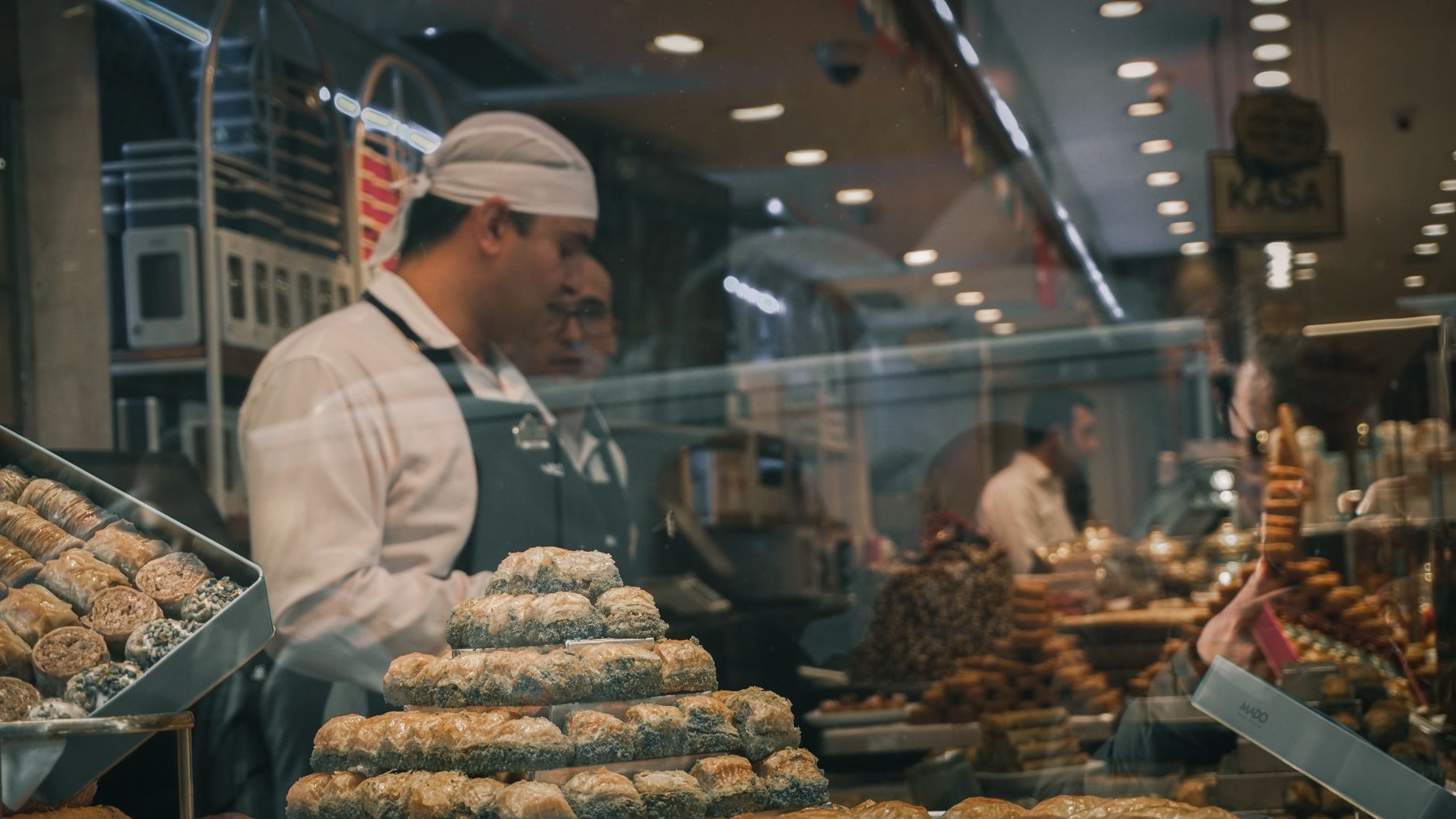
The classic fıstıklı baklava costs 225 TL (4.50 EUR / 5 USD) for a standard four-piece portion and provides the benchmark for pastry production across the district. It has 40 paper-thin layers of dough loaded with bright green Antep pistachios and saturated with hot clarified sheep butter (sade yağ). For varied textures, midye baklava is gathered into mussel-shaped folds around a core of pistachios and semolina cream, which produces crisp edges with a soft interior. The triangular havuç dilimi (carrot slice) is served warm on request, split down the center with a dense slab of knife-cut Maraş goat milk ice cream for 315 TL (6.30 EUR / 7 USD). If you intend to take pastry onto a flight, order kuru baklava (dry baklava) at 2,120 TL (42.40 EUR / 47.11 USD) per kilo; it omits the perishable semolina cream layer and has a lower moisture content. This keeps the pastry crisp for two weeks and prevents syrup from leaking inside luggage.
Many patrons carry their packaged boxes down to the shoreline promenade, which doubles as one of the Best photography spots in Istanbul for panoramic morning views of the historical peninsula across the water.
Berk’s Insider Tip: If you visit Karaköy Güllüoğlu between 10:30 and 11:30 AM on weekdays, you miss the commuter rush and catch the warm morning trays right out of the oven. Ask the counter master for ‘havuç dilimi az şerbetli’ if you prefer the pastry slightly less drenched in syrup.
The counter opens at 7:00 AM Monday through Saturday and at 8:00 AM on Sundays, remaining open until 1:00 AM every night.
Eminönü and Sirkeci masters Hafız Mustafa, Köşkeroğlu, and Develi
Crossing the Galata Bridge toward Sirkeci shifts the standard istanbul baklava profile from light, multi-layered pastry to the heavier, syrup-saturated traditions of southeastern Anatolia. In Karaköy, Köşkeroğlu operates near the concrete multi-storey car park underpass on Mumhane Caddesi, though its quieter Sirkeci branch on Hamidiye Caddesi is where you avoid the midday rush. Köşkeroğlu focuses on Gaziantep recipes: their kaymaklı şöbiyet (430 TL, or 8.60 EUR / 9.55 USD for a three-piece portion) carries an intense load of clotted semolina cream under thin pastry sheets that remain crisp only if eaten within hours of baking. Because the dairy spoils quickly in warm weather, the shop sells out of this specific tray by late afternoon.
Five minutes away at the tram intersection, Hafız Mustafa 1864 commands the main foot traffic route outside Sirkeci station. The dining room runs on polished brass cake stands, painted tilework, and rapid turnover. While casual visitors crowd the ground-floor counters for souvenir boxes, the kitchen produces dependable fıstık sarma (pistachio rolls wrapped in translucent dough, priced at 3,400 TL or 68 EUR / 75.55 USD per kilo). The trade-off is commercial showmanship: seated table service adds a steep markup over side-street confectioners, running nearly 480 TL (9.60 EUR / 10.65 USD) for a four-piece plate alongside black tea served in branded glassware.
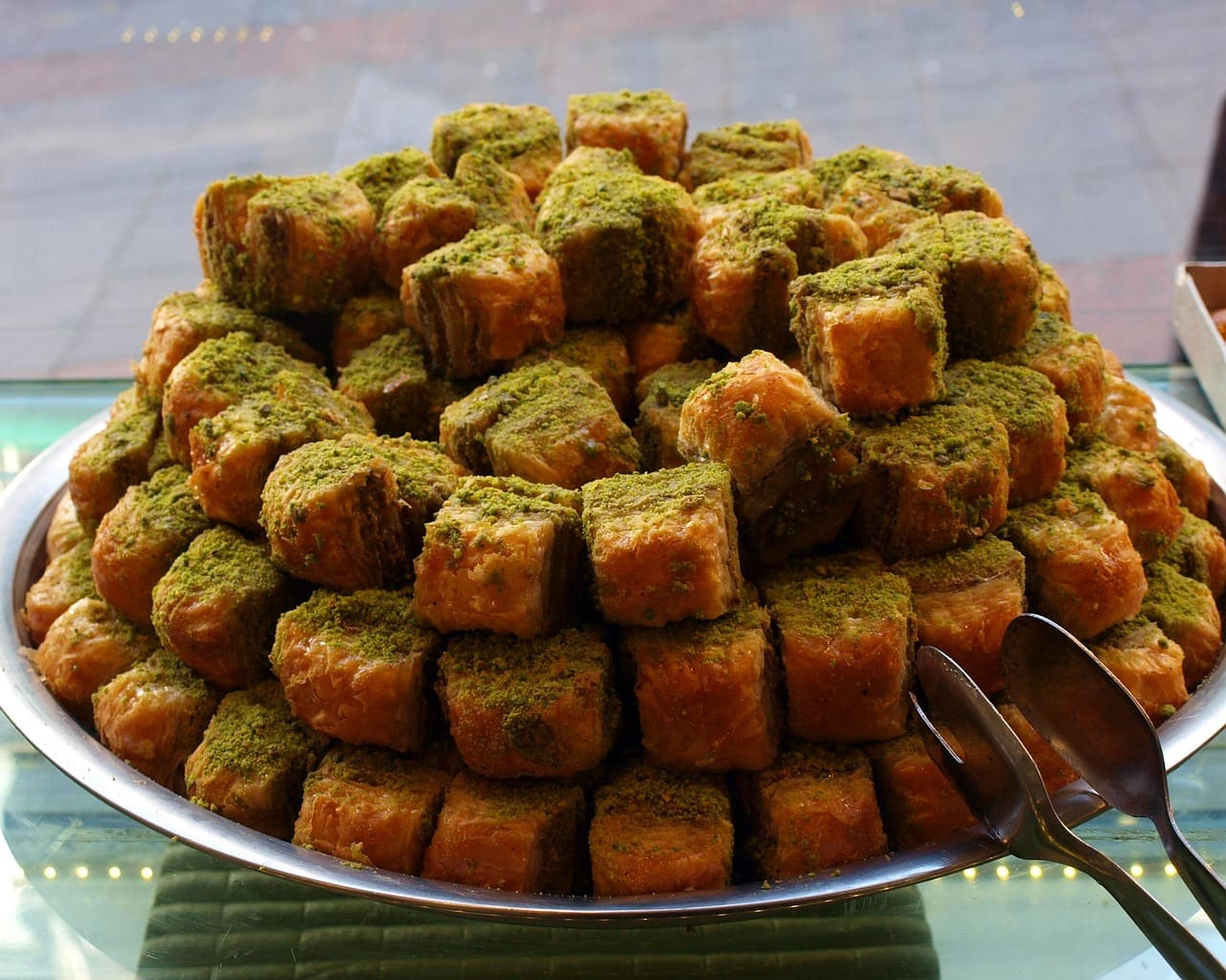
If you walk past the Spice Bazaar crowds into the narrow stone passages leading toward the market fringe, Develi Baklava makes a starker, older style. Founded as an offshoot of the famed kebab house, the bakery uses wild mountain pistachios (smaller, darker, and more astringent than cultivated farm nuts) and clarified sheep butter aged in Urfa. The resulting bite has a distinctly rustic tang that cuts right through the sugar syrup. After finishing lunch at nearby venues like Traditional Black Sea Pide Houses in Fatih and Beyoğlu with Menu Prices, heading straight to Develi for two warm squares of their classic antep pistachio baklava (320 TL, or 6.40 EUR / 7.10 USD) provides the ideal savory-to-sweet contrast.
Insider tip: I avoid the main avenue lines around 1:30 PM and slip into the rear delivery lane behind Sirkeci’s backstreets, which is the exact moment the bakery transit vans drop off steaming midday trays freshly baked in Gaziantep-style deck ovens.
To navigate these historic quarters without falling into tourist traps, keep these five distinct orders in mind:
- Kaymaklı şöbiyet at Köşkeroğlu for rich semolina cream that requires immediate eating.
- Fıstık sarma at Hafız Mustafa 1864 for dense pistachio rolls with minimal phyllo pastry.
- Antep pistachio baklava at Develi for the sharp flavor of wild mountain nuts and aged sheep butter.
- Kuru baklava at Köşkeroğlu for dry-bottomed layers that travel well in luggage.
- Cevizli ev baklavası at Develi for hand-rolled walnut pastry cut in wide triangular slices.
The Sirkeci branch of Köşkeroğlu stops warm oven runs at 16:00, while Develi keeps trays resting under counter heat lamps until 19:30.
2026 Istanbul baklava price index and packaging for transport
A standard portion of quality pistachio baklava in central Istanbul costs between 220 TL and 260 TL (4.40 to 5.20 EUR / 4.90 to 5.80 USD) in 2026. The kilo price across reputable heritage pastry shops ranges widely depending on the nut density, the type of fat used, and the proportion of pastry sheets to filling. While Turkish Lira prices adjust with seasonal wholesale food inflation, the euro and dollar equivalents remain relatively stable benchmarks across historic bakeries in Karaköy and Eminönü.
| Variety | Portion (150–180g) | Kilo Price (TL) | Approx. EUR / USD |
|---|---|---|---|
| Walnut (Cevizli Baklava) | 140–170 TL | 700–850 TL | €14–17 / $15.55–18.90 |
| Classic Pistachio (Fıstıklı) | 220–260 TL | 1,100–1,300 TL | €22–26 / $24.40–28.90 |
| Şöbiyet (Semolina Cream & Pistachio) | 250–290 TL | 1,250–1,450 TL | €25–29 / $27.80–32.20 |
| Pistachio Roll (Fıstık Sarma) | 320–380 TL | 1,600–1,900 TL | €32–38 / $35.55–42.20 |
The price divergence between items stems from the raw cost of the harvest. Walnut baklava sits at the affordable end of the menu, around 700 TL to 850 TL per kilo, because domestic Anatolian walnuts are widely available and simpler to process. By contrast, pure fıstık sarma and rich fıstık ezmesi pastries reach 1,500 TL to 1,900 TL per kilo. These rolls use almost no phyllo dough, relying instead on an uninterrupted paste of early-harvest Antep boz fıstık (green emerald pistachios), which command high wholesale auction prices in Southeastern Turkey.
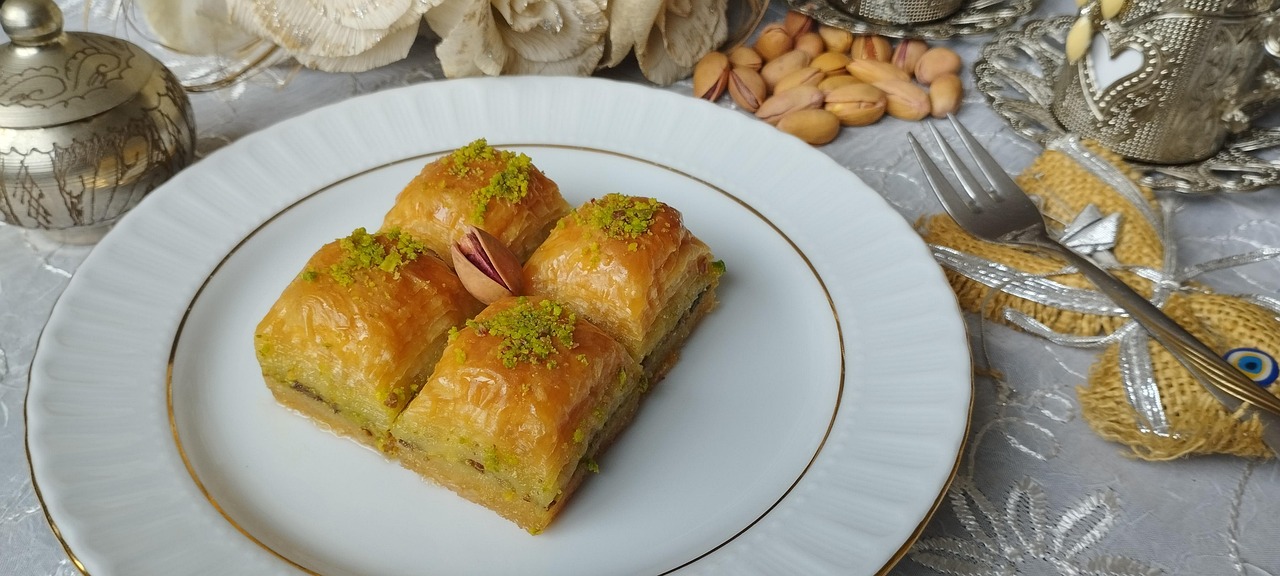
When carrying boxed pastries between shops and tram stops after seeing Sultanahmet sites like the Basilica Cistern Evening Access and 2026 Entry Prices, handle the parcels upright to avoid dislodging the bottom syrup layer.
Transporting baklava on regional or transatlantic flights requires specific care. Standard cardboard takeaway boxes will leak clarified sheep butter once the cabin pressure shifts or ambient temperatures rise. Request vakumlu paketleme (machine vacuum sealing) at the counter. Most high-turnover shops in Eminönü and Karaköy maintain vacuum machines behind the packing registers and seal metal trays or heavy foil boxes free of charge.
Insider tip: When packing baklava for a flight home, never let the bakery staff pack it in standard cardboard gift boxes alone. Ask specifically for ‘vakum poşeti’ (vacuum sealing); it keeps the pastry crisp for up to two weeks and prevents melted butter from leaking into your carry-on luggage.
Do not place fresh baklava in a hotel mini-fridge or home refrigerator. Cold moisture causes the starch in the phyllo to retrograde, turning the crispy layers rubbery, while the sugar syrup crystallizes into hard white grains. Keep the sealed box at room temperature in a dry, dark spot, away from direct sunlight, where classic syrupy varieties keep their structure for ten to fourteen days. Fresh clotted-cream varieties like şöbiyet must be eaten within forty-eight hours of baking.
Frequently asked questions about baklava in Istanbul
Baklava quality in the historic peninsula depends directly on turnover speed, butter sourcing, and fat stabilization during transport.
How long does fresh baklava last, and how should you store it?
Fresh baklava keeps its texture for four to five days at room temperature in a dry cupboard. Never put it in the refrigerator: cold temperatures cause the clarified butter to congeal and force the sugar syrup to crystallize into hard grains. If you plan to fly with your purchase, ask the staff for a vakumlu paket (vacuum-sealed box). This airtight seal prevents the pastry sheets from shifting and preserves the crunch for up to ten days.
Can travelers with celiac disease find gluten-free baklava?
Yes, but you must buy it from dedicated production facilities to prevent wheat flour cross-contamination. Karaköy Güllüoğlu produces certified gluten-free baklava (çölyak baklavası) using buckwheat and rice starch in a separate production unit. A 500-gram box costs 1,090 TL (21.80 EUR / 24.22 USD). The counter staff retrieve these boxes pre-sealed from a dedicated cabinet away from the main display counters to ensure no stray flour touches the packaging.
Insider tip: While waiting at the Karaköy Güllüoğlu register, look at the framed municipal food analysis certificates on the wall behind the cashiers. They list the batch numbers and origin testing for Urfa butter (sheep-milk sadeyağ), verifying that the kitchen uses pure clarified butterfat rather than commercial vegetable margarine blends.
How do you detect fake pistachio powder in tourist markets?
Industrial confectioners sometimes cut expensive Antep pistachios with ground green peas, fava beans, or spinach powder mixed with artificial aroma. Authentic early-harvest pistachio (boz fıstık) shows irregular pale-green and emerald flecks with small brown edges from the nut skin. It smells distinctly of roasted nuts when warmed. Counterfeit filling has a uniform, neon-green paste appearance, tastes blandly sweet, and dissolves into a mushy flour texture on the tongue.
Do historic counters accept foreign credit cards or require cash?
All established baklava houses in Karaköy and Eminönü, such as Hafız Mustafa, Köşkeroğlu, and Karaköy Güllüoğlu, accept international Visa and Mastercard cards without minimum spend limits. Card terminals will occasionally prompt for dynamic currency conversion; always select payment in Turkish Lira to avoid unfavorable bank conversion fees. Carry 250 TL to 400 TL in cash (roughly 5 to 8 EUR / 5.50 to 9 USD) only if you plan to buy loose portions from small secondary stalls around the Spice Bazaar.
Handling and storage recommendations
Plan your dessert stop at least forty-five minutes after finishing a meal in Eminönü or Sirkeci. Walking from the grill houses around Hocapaşa across the Galata Bridge gives your palate enough time to reset before you encounter heavy sheep-milk butter and concentrated sugar syrup. Skip the mixed sampler plates that counters push on indecisive visitors. Combining walnut, pistachio, and clotted cream pastries on one dish blurs their individual syrup profiles and quickly overwhelms your palate. Order two pieces of classic pistachio or a single warm slice of havuç dilimi to eat on site, and purchase what you want to take home in a separate, sealed box.
Anecdote: I learned the storage lesson the hard way at 8:40 AM on a Friday during a stay near Sirkeci station, when I stashed two 500-gram boxes of fresh pistachio baklava (costing 2,060 TL total (41.20 EUR)) straight into the hotel mini-fridge overnight. By morning, the cold air had congealed the Urfa sheep butter into a chalky, waxy coating, and the sugar syrup had separated into sandy crystals that destroyed forty delicate phyllo layers. A master baker on Mumhane Caddesi shook his head when I described the ruined pastry, explaining that cool room air on an open counter along the T1 transit corridor is the only proper way to protect the butter emulsion.
Handcrafted baklava keeps for 7 to 10 days at ambient room temperature without spoiling. Keep the cardboard box on an open desk or luggage shelf away from direct sunlight, and avoid sealing it in airtight plastic bags that trap condensation. When buying your travel batches at Karaköy Güllüoğlu, look for the metal rolling carts arriving from the basement bakery around 3:30 PM, when the mid-afternoon bake hits the front counter still radiating heat. Take the fresh package directly to your room, leave it at room temperature, and carry it onto the plane as hand luggage.