On Divan Yolu, three storefronts carry almost identical names, and I once sat down in a copycat next door before I caught the cashier’s logo. You get the exact door number for the original 1920 Tarihi Sultanahmet Köftecisi Selim Usta at No. 12, where a six-piece portion costs 620 TL in 2026, paired with 180 TL for white-bean piyaz. Arrive before 11:45 AM to skip the street queue. You will see whether to stay on the tram line or walk five minutes down to Sirkeci for Meşhur Filibe Köftecisi, where 350 TL gets you softer, cumin-free beef patties grilled over oak coals. The comparisons show you which kitchens dress their beans with genuine olive oil rather than sunflower oil, and how to request extra grilled green peppers without an unexpected surcharge on your bill.
On Divan Yolu in Sultanahmet, three storefronts within fifty meters of each other claim to be the original 1920 shop. Only Tarihi Sultanahmet Köftecisi Selim Usta uses the chuck-and-lamb mince recipe that Old City shopkeepers have eaten for decades. Arriving at the Sultanahmet T1 tram stop at 12:45 PM on a weekday, you will usually find a fifteen-person queue outside number 12, Tarihi Sultanahmet Köftecisi Selim Usta. Current Sultanahmet köfte prices reflect recent shifts: a standard 170-gram portion of grilled Turkish köfte costs 620 TL (12.40 EUR), while a side of white bean piyaz salad runs 180 TL (3.60 EUR).
Many visitors veer into neighboring dining rooms lured by energetic barkers waving laminated cards, often paying identical rates for dense meat heavily spiced to disguise lower-grade mince. The classic preparation at Selim Usta uses beef chuck, lamb fat, stale bread, and salt, grilled over hardwood charcoal without garlic or cumin. Downhill near the Marmaray rail hub, Sirkeci köfte shops offer a distinct Balkan take. On Hocapaşa Sokağı, Meşhur Filibe Köftecisi has operated out of a narrow storefront since 1893, searing plump, coin-shaped meatballs alongside thin-skinned Dermason beans tossed in olive oil and raw onion.
Navigating these historic dining rooms takes careful timing. Peak lunch between 1:00 PM and 2:30 PM leaves few open seats, and kitchens in Sirkeci routinely shut down their grills by late afternoon once the morning prep runs out. Much like timing a morning trip around the Dolmabahçe Palace Waterfront Gardens and Harem Tours with 2026 Ticket Prices, getting ahead of the midday rush here is critical. Finding the original kitchens requires checking street numbers, grill ventilation, and the acidity of the bean dressing.
The Sultanahmet köfte lineage on Divan Yolu
Divan Yolu contains half a dozen grilled meat shops within fifty meters of each other, all bearing dark green awnings, gilt lettering, and slight variations of the same historic name. The original workshop founded in 1920 is Tarihi Sultanahmet Köftecisi Selim Usta, located at Divan Yolu No: 12, directly across from the Sultanahmet Tram Station. Neighboring restaurants capitalize on disoriented arrivals stepping off the tram line, often stationing employees on the sidewalk to divert foot traffic. When you walk west from the tram stop past the historic site featured in the Ottoman Royal Tombs and Calligraphy at the Sultan Mahmud II Cemetery with Entry Tips, check the street number fixed directly above the brass doorway to verify you have the right dining room.
Field Anecdote: On a wet Tuesday in March at 1:15 PM, I made the mistake of joining the twenty-two-person queue outside Selim Usta at Divan Yolu No: 12 without checking the upper floors. By the time I reached the counter, the wait in the damp air had taken eighteen minutes, and I paid 620 TL for my portion only to realize three tables sat completely empty on the quiet second floor. Walk straight past the ground-floor registry and glance up the wooden stairs first.
Berk’s Insider Tip: When walking along Divan Yolu, bypass every storefront staffed by barkers waving menus. The original Selim Usta at number 12 never uses touts. If a host tries to usher you inside, you are standing in front of an imitator.
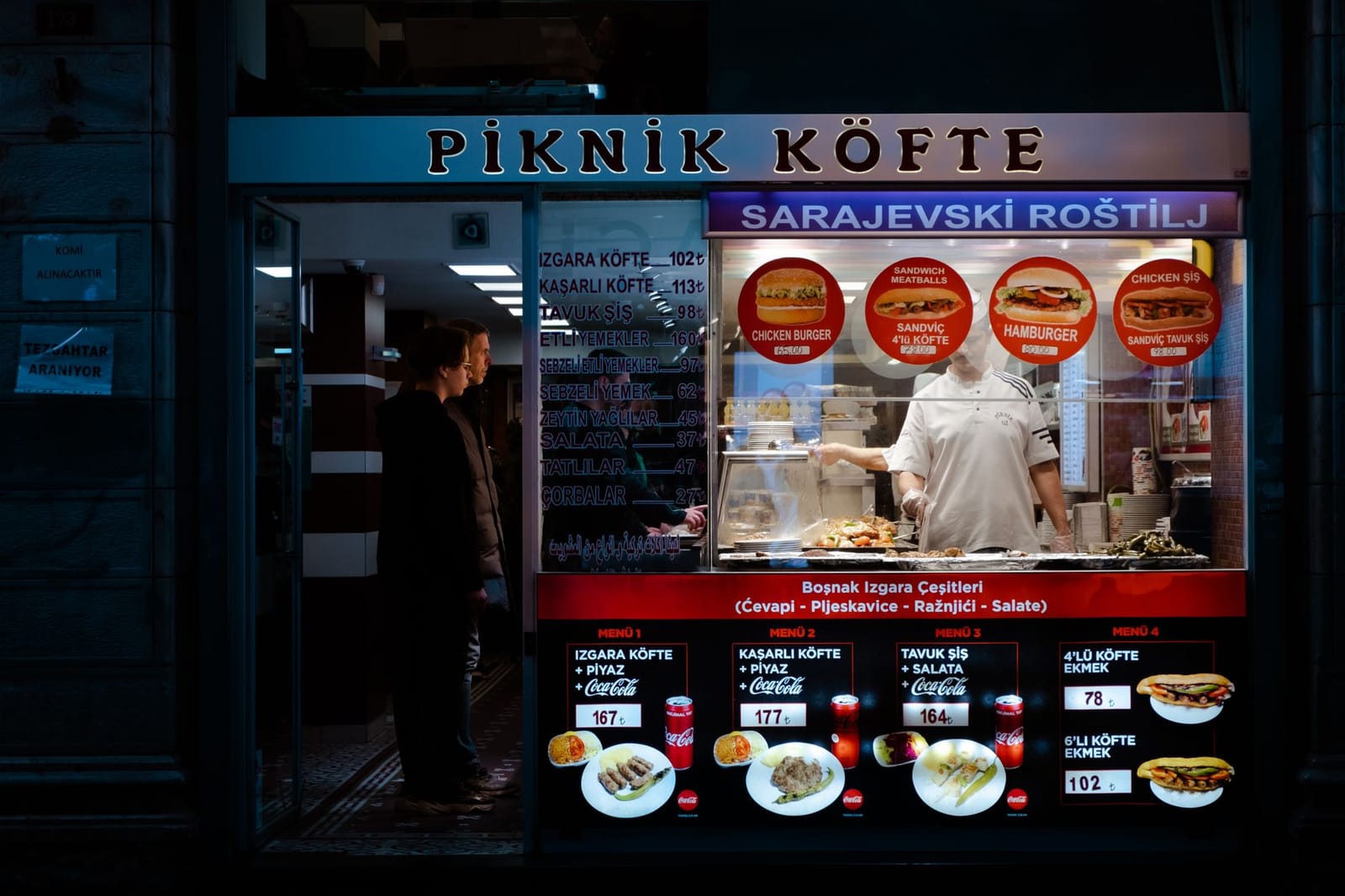
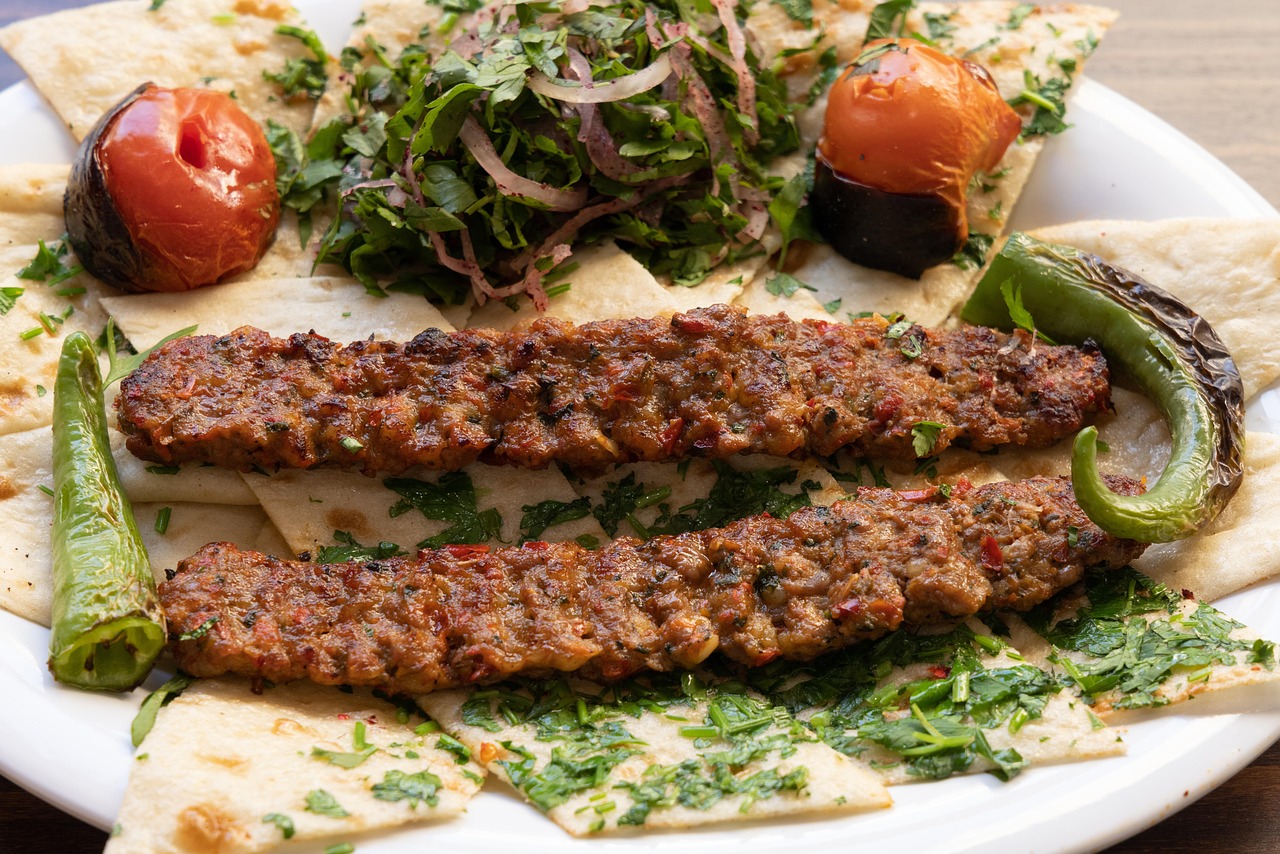
The floor operation runs with assembly-line precision. Waiters take your order within moments of seating, and the dining room regularly turns tables in twelve minutes during peak lunch hours. You will find no alcohol, no döner spits, and no extensive dessert display. The kitchen prepares charcoal-grilled patties using minced beef ribs mixed with lamb, bound with day-old bread and onions without heavy spices. Each plate arrives with charred green peppers, pickled yellow chillies, and a complimentary basket of sliced crusty white loaf bread.
A standard plate of six Sultanahmet meatballs costs 620 TL (13.78 USD / 12.40 EUR). Condiment jars on the marble tables hold dried oregano, salt, and sumac, while spicy pepper paste is brought separately upon request. The cashier desk beside the street entrance handles the bill directly, taking contactless credit cards or cash.
The anatomy of authentic bean piyaz
A traditional plate of piyaz salad in Istanbul relies on plump İspir beans or Dermason beans boiled until tender without bursting their skins. Kitchens discard split beans immediately because exposed starch turns the dressing murky. The cooked beans sit until completely cold before meeting thinly sliced red onion, flat-leaf parsley, and hard-boiled egg quarters. Cooks toss the raw onion with ground sumac beforehand, which softens the sharp sulfur bite and imparts a dry, berry tartness.
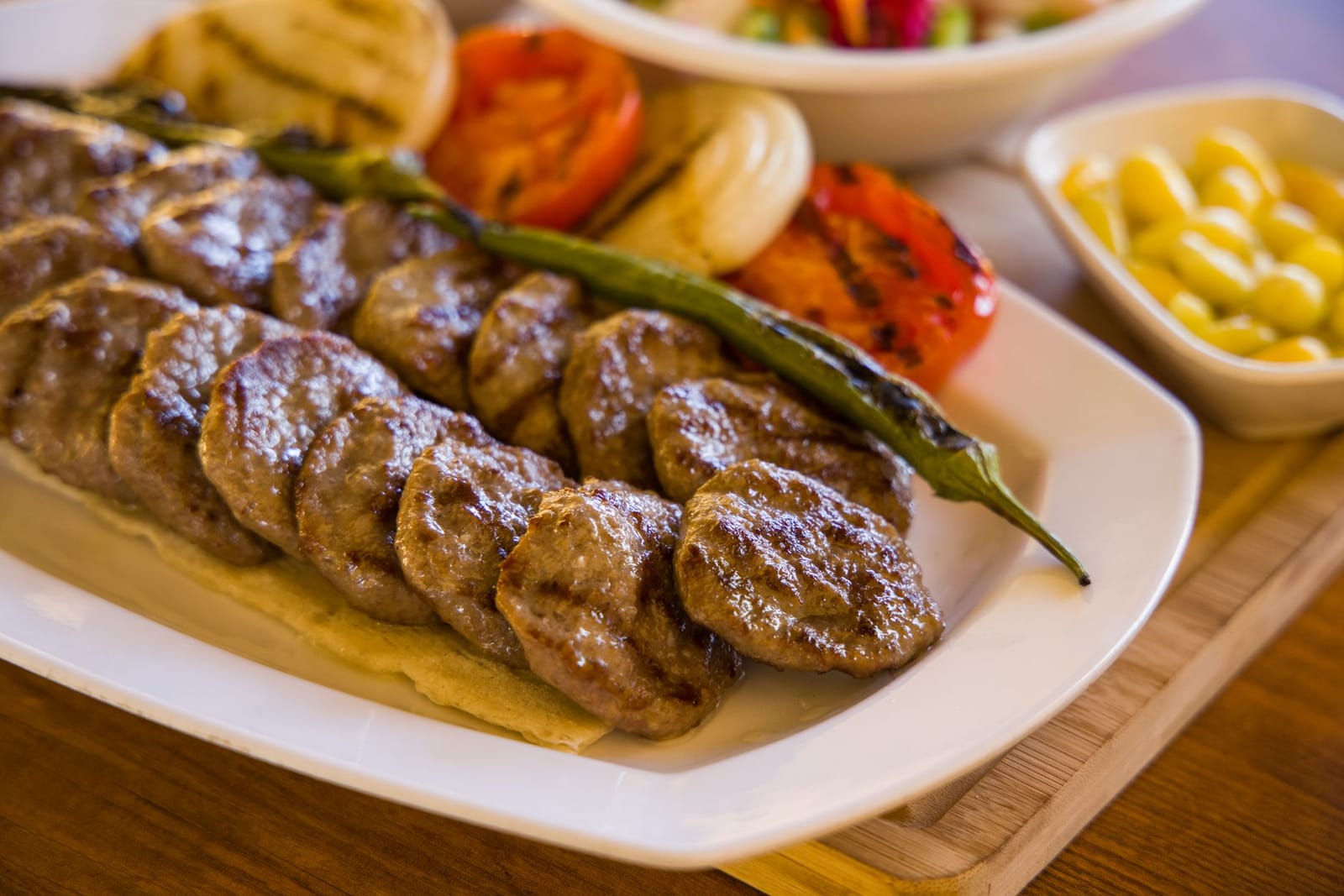
The dressing separates Istanbul style from southern variations. In traditional Old City dining, the local salad uses only cold-pressed olive oil, salt, and aged grape vinegar. Southern Turkey serves Antalya piyaz, which smothers smaller beans in a thick emulsion of tahini, garlic, and citrus juice. Historic Old City köfte joints omit tahini because sesame paste coats the tongue and dulls the charcoal flavor of the meat. Istanbul piyaz provides an acidic, clean counterweight to rendered lamb and beef fat.
You will find standard portions priced at 180 TL (4 USD / 3.60 EUR) across Sirkeci and Sultanahmet dining rooms. Much like visiting the Historical Börek Shops of Karaköy and Sarıyer with 2026 Prices and Ordering Tips, knowing the standard price protects you from tourist-menu markups that charge double for smaller servings. A single plate contains roughly 150 grams of cooked beans.
Sirkeci backstreets and artisan grill masters
Exiting the rail platforms at Sirkeci Station brings you into a dense grid of print shops, freight forwarders, and logistics couriers whose lunch patterns dictate kitchen hours across the neighborhood. Most travelers stay on the primary tram corridor, missing the narrow alleys that hold some of the oldest Turkish köfte grill traditions. These operations run on daily meat quotas. When the charcoal burns down and the trays empty, lunch is over.
On Ankara Caddesi, Meşhur Filibe Köftecisi has occupied the same footprint since 1893. The narrow, multi-level building holds barely five small tables per floor, reached by a spiral staircase. Unlike the elongated flat patties served along the Divanyolu tourist trail, Filibe produces small, thumb-sized spheres seasoned lightly with salt and black pepper, with only a trace of cumin. The mince is worked twice to produce an elastic texture that traps rendered fat inside the crust. A standard portion costs 350 TL (7.78 USD / 7 EUR).
Field Anecdote: When I sprinted down from the Eminönü T1 stop to Meşhur Filibe Köftecisi on a Thursday at 3:40 PM, the metal roll-up shutters were already half-drawn. The grill master was scraping down the grate with a wire brush, having just served the last plate to a courier. He turned away six of us because the day’s 25-kilogram meat quota had vanished forty minutes earlier.
Berk’s Insider Tip: At Filibe Köftecisi in Sirkeci, arrive by 13:00. The kitchen preps a fixed weight of meat each morning; once the final batch leaves the charcoal grill in mid-afternoon, the shutters close for the day regardless of who is waiting.
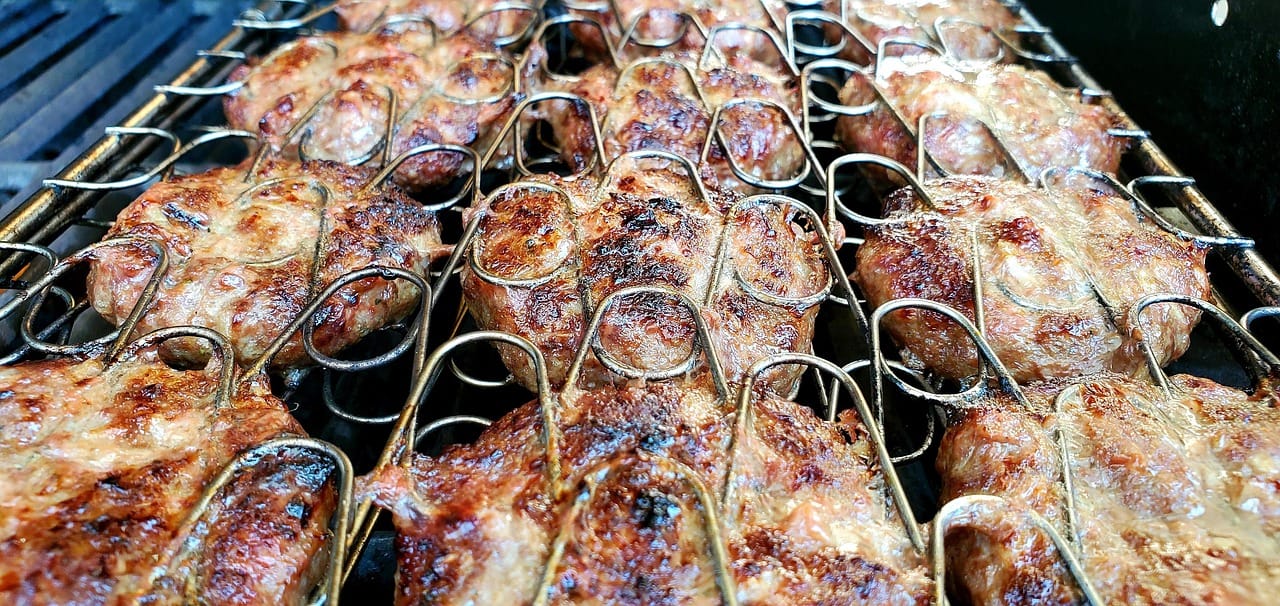
Three blocks east toward the train lines on Muradiye Caddesi, Köfteci Mustafa feeds an almost entirely local crowd of railway mechanics, port agents, and law clerks. You sit at stainless-steel tables positioned practically on top of the street. The grill master cooks over intense wood charcoal, giving the patties charred exteriors while leaving the centers juicy. Side plates here differ from standard tourist fare: alongside white bean salad, the servers place saucers of tart, house-pickled green tomatoes and whole pungent peppers to cut through the rich beef fat.
If you are continuing on the T1 tram line west past Laleli after lunch, you can connect smoothly toward the Walking route from Yenikapı Mevlevihanesi to the Zeytinburnu medicinal gardens with 2026 tram tips.
To navigate midday dining at these Sirkeci köfte shops effectively, follow these operational habits:
- Arrive between 12:00 and 12:45 to secure a stool before local corporate workers leave their desks.
- Request your piyaz without hard-boiled egg if you prefer raw onions and vinegar dressing to lead the flavor.
- Order one plate at a time because the small-format meatballs cool rapidly on metal plates.
- Keep physical cash on hand, as payment terminal cellular links frequently drop inside these old stone buildings.
- Step back onto the pavement immediately after finishing your complimentary black tea, as turnover pressure on these stools remains constant until mid-afternoon.
Köfteci Mustafa operates from 11:00 to 17:00 Monday through Saturday and remains closed on Sundays.
How to order and eat köfte like an Old City regular
Historic grill houses in the Old City operate on speed and repetition, catering to courthouse clerks, shopkeepers, and tram commuters who expect hot food within three minutes of sitting down. You will rarely receive a printed menu. Waiters recite the daily offering in a single breath, so understanding the cadence of the meal before you take a seat keeps the transaction smooth. Use this five-step sequence for navigating Sirkeci and Sultanahmet grills:
-
State your portion volume immediately upon sitting. Specify bir porsiyon for the standard six-piece serving (roughly 150 grams) or bir buçuk for a one-and-a-half portion containing nine pieces. If you sit down without stating a count, the server will default you to a single portion.
-
Request the house chili paste. Ask for acı sos right away, as it is served on a small saucer alongside charred green peppers. Depending on the venue, this paste is either complimentary or billed at 40 TL (0.80 EUR / 0.89 USD). Spread a dab directly onto each cut of meat instead of mixing it into the bread.
-
Order a side of white bean piyaz. Tell the waiter you want a plate of piyaz dressed with sumac onions, flat-leaf parsley, and olive oil. The vinegar dressing provides the sharp acidity required to balance the rich beef and lamb tallow.
-
Pair the plate with glass-bottled salted ayran. Select an ayran (45 TL / 0.90 EUR / 1 USD) instead of soda. The cold yogurt drink cleanses the grill fat between mouthfuls and tempers the heat from the charred peppers.
-
Conclude with irmik helvası topped with clotted kaymak. Order a portion of irmik helvası (120 TL / 2.40 EUR / 2.67 USD), which comes served warm with a cold spoonful of buffalo kaymak pressed against the semolina.
Traditional establishments do not bring the check to the table. Walk to the cash desk near the front doorway, state your table number, and pay the cashier in cash or by contactless card.
Comparison of historic Old City köfte institutions and 2026 prices
A single portion of meatballs across the historic district costs between 340 TL and 620 TL, maintaining a narrow price index between the tourist corridor of Sultanahmet and the pedestrian alleys of Sirkeci. While Sultanahmet köfte prices reflect higher property rents on Divan Yolu, the Sirkeci shops in Hocapaşa charge comparable rates due to sustained local demand during weekday lunch hours.
| Restaurant | Founded | Meatball style | Signature side | Lunch cost (TL / USD / EUR) |
|---|---|---|---|---|
| Tarihi Sultanahmet Köftecisi Selim Usta | 1920 | Flat rectangular patties | Sumac onion piyaz | 620 TL (13.78 USD / 12.40 EUR) |
| Meşhur Filibe Köftecisi | 1893 | Round sphere meatballs | Classic bean salad | 350 TL (7.78 USD / 7 EUR) |
| Namlı Rumeli Köftecisi | 1969 | Lean Balkan style | Roasted red pepper dip | 380 TL (8.44 USD / 7.60 EUR) |
| Köfteci Mustafa | 1912 | Charred rustic patties | Pickled green tomatoes | 340 TL (7.56 USD / 6.80 EUR) |
At Selim Usta, a line of twenty people outside the doors at 12:45 PM typically clears within twelve minutes because the kitchen maintains continuous production on massive gas-assisted griddles. In contrast, Meşhur Filibe Köftecisi prepares spherical meatballs over a small charcoal grate in batches of ten, which creates seat delays between 1:00 PM and 2:30 PM.
Cash remains the most efficient payment method during the midday rush at Filibe and Köfteci Mustafa, though all four locations accept contactless credit cards at the counter.
Frequently asked questions about Old City köfte dining
Dining at historical grills across Sultanahmet and Sirkeci follows strict operational routines established over decades of heavy daytime customer turnover.
How can you identify the genuine Selim Usta on Divan Yolu
Divan Yolu is lined with imitation grills using nearly identical lettering and gold-framed vintage photographs. You can confirm you are at the original establishment by checking the street number for Divan Yolu No 12, located directly opposite the Sultanahmet tram stop. The most reliable indicator is at the entrance: genuine staff never stand on the pavement calling out to pedestrians or waving laminated menus. If an employee tries to coax you inside from the sidewalk, you are standing outside a competitor.
What are the peak queue hours
Lunch crowds peak between 12:30 and 14:00, when office workers from Cağaloğlu mix with daytime museum visitors. At Selim Usta, this creates an outdoor line of twenty to thirty people, but queue management is brisk. Expect a wait of 10 to 15 minutes. Tables turn over rapidly because these establishments prioritize fast service: kitchen runners serve plates within five minutes of seating, and guests clear their tables once they finish their complimentary tea.
Do traditional köfte shops accept credit cards
Credit card acceptance depends on the floor layout of each business. Large dining rooms such as Tarihi Sultanahmet Köftecisi Selim Usta and Namlı Rumeli in Sirkeci process foreign bank cards on handheld terminals without friction. Smaller, counter-only spaces like Meşhur Filibe Köftecisi occasionally encounter network terminal issues during afternoon peak hours and prefer physical currency. You should keep at least 500 TL (10 EUR) in cash on hand to handle smaller street-side grills without delays.
Are there vegetarian options at these establishments
Traditional köfte houses maintain short, meat-centered menus and do not prepare vegetarian main courses. Non-meat eaters must assemble a meal from side dishes: red lentil çorba, a chopped shepherd salad with cucumbers and tomatoes, and cold piyaz salad with white beans and sliced onions. Kitchens boil the white beans in plain water and dress them with olive oil and vinegar, keeping the bean salad meat-free, though the open charcoal grills handle ground beef exclusively.
Final lunch protocol for Old City visitors
Finish your meal before 15:00. Traditional grills down in Sirkeci, such as Meşhur Filibe Köftecisi, prepare a fixed quantity of seasoned ground meat each morning; once the metal trays in the display counter are bare, the staff extinguish the charcoal and close the doors for the day. When you finish eating, do not wait at your table for a server to bring a bill. Pick up your paper ticket, walk directly to the cash register by the entrance, and pay the cashier.
After finishing lunch, visitors planning an afternoon walk outside the Sultanahmet core can take the tram toward the Golden Horn for the Fener & Balat Walking Tour: Istanbul.
Do not linger over empty plates while diners line up along the pavement behind your chair. Step out onto Divanyolu Caddesi and follow the cobbles along the T1 tram line toward Sirkeci or Beyazıt; trams arrive at the Sultanahmet stop every four to five minutes until midnight.