You only need a rental car in Istanbul if you head out to Kilyos, Şile, or Bursa; driving it to Sultanahmet is a mistake I made once and spent two hours stuck on Divan Yolu Caddesi. Picking up at Istanbul Airport (IST) involves a fifteen-minute walk to the basement garage, whereas Sabiha Gökçen (SAW) counters sit right outside arrivals. The car’s HGS chip bills bridge crossings automatically, from 59 TL (1.18 EUR) on the Bosphorus bridges to 330 TL (6.60 EUR) through the Eurasia Tunnel. In the city, pay only yellow-vested İSPARK attendants with handheld machines (about 80 to 220 TL (1.60 to 4.40 EUR) an hour) and ignore illegal street valets who demand cash upfront. Keep your final fuel receipt from the airport Opet station to protect your 15,000 lira deposit from false deduction claims.
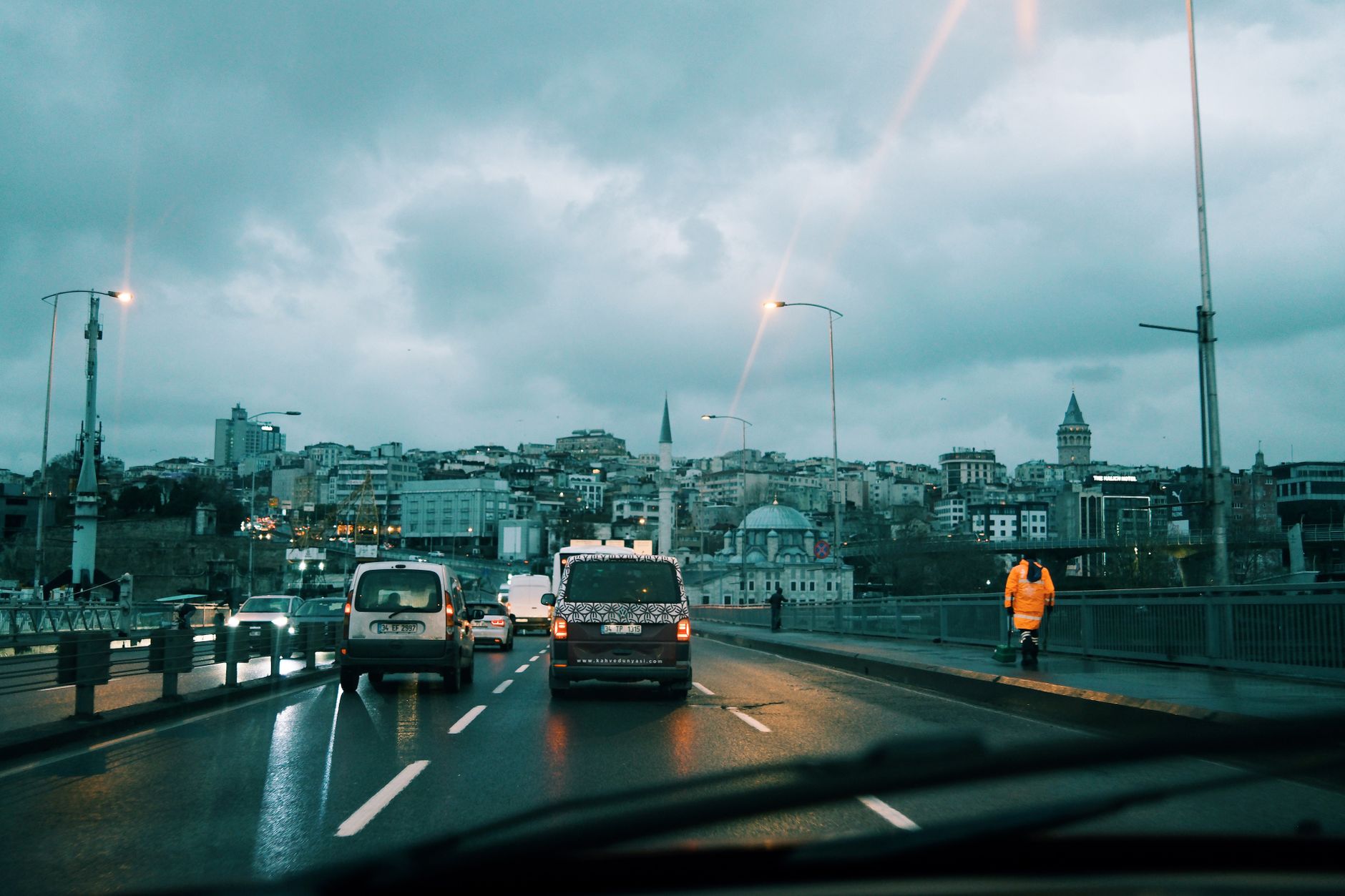
The asphalt on the O-7 highway south from Istanbul Airport runs clear at midday, but thirty-five minutes later the D-100 funnels four lanes into three at Mecidiyeköy without painted lines. Yellow taxis ease into spaces narrower than their side mirrors, and courier motorbikes thread between stopped bumpers. This sudden shift from modern motorways to dense urban bottlenecks defines driving in Istanbul 2026.
Renting a car in Istanbul makes little sense if your itinerary stays inside central areas like Sultanahmet, Beyoğlu, or Kadıköy, where the metro and ferry networks move faster than street traffic. An Istanbul car hire becomes useful when you plan day trips outside the transit grid: fishing villages along the northern Bosphorus like Rumelifeneri, the Black Sea coast near Kilyos, or the vineyards of Thrace. Essential Istanbul driving tips start with knowing how to handle aggressive merges, automated toll gates, and municipal parking zones before you leave the airport terminal.
Field Note: Inspect the upper windshield behind the rear-view mirror for the HGS electronic toll sticker before driving out of the rental bay. Rental desks bill highway and bridge tolls directly back to your credit card, often adding an administrative fee of 15 to 20 percent on top of the state transit rates two weeks after vehicle return.
When renting a car in Istanbul makes sense and when it fails
A vehicle inside the Historical Peninsula creates more logistical friction than it solves. Between 10:00 and 20:00 daily, municipal authorities close major portions of Sultanahmet and Eminönü to private vehicle traffic using automated hydraulic bollards. The remaining open corridors are steep, one-way alleys paved in uneven cobblestones, where delivery vans regularly block traffic for blocks. Finding legal street parking in these quarters, or across the Golden Horn in Karaköy and Beyoğlu, is nearly impossible. Leaving a vehicle in an unauthorized spot will result in prompt towing to municipal impound lots situated along Kennedy Avenue.
Driving from Taksim to Sultanahmet at 17:30 routinely takes 65 minutes to cover just 4.8 kilometers due to severe bottlenecks on the Galata and Atatürk bridges. In contrast, descending to the metro and transferring to the T1 Tramway takes 18 minutes. For visits centered around Byzantine and Ottoman monuments, relying on a rental car adds significant parking costs without providing mobility. Before planning your movement across districts, reviewing Practical Travel Information for Istanbul 2026: Visas, Currency, Plugs, and Everything You Need to Know helps align transit choices with the real bottlenecks of the city layout.
Renting a car in Istanbul becomes useful once your itinerary extends beyond the perimeter of the commuter rail network. The metropolitan area spans more than 100 kilometers east to west, and public transit to outer natural areas requires multiple bus connections that run on limited timetables. A private car provides direct access to Black Sea coastal towns like Şile and Ağva, which lie far outside the reach of the metro. It is equally practical for reaching the Thrace wine route vineyards around Tekirdağ or executing day trips across the Gulf of İzmit to Bursa and Sapanca. Travelers boarding ferries to the Princes’ Islands from the Asian side can leave a vehicle at the open-air parking lots near the Bostancı pier, avoiding the heavier traffic around central European terminals.
Insider Tip: When heading west toward the Thrace vineyards, collect your rental car directly from Istanbul Airport instead of a downtown city office. Merging straight onto the Northern Marmara Motorway bypasses the inner-city ring road and saves at least 90 minutes of stop-and-go driving.
The drive from Istanbul Airport to the first vineyard clusters in Tekirdağ covers 135 kilometers via the O-7 motorway, carrying a standard one-way toll of 260 TL (5.20 EUR).
Airport pick-up realities at Istanbul Airport and Sabiha Gökçen
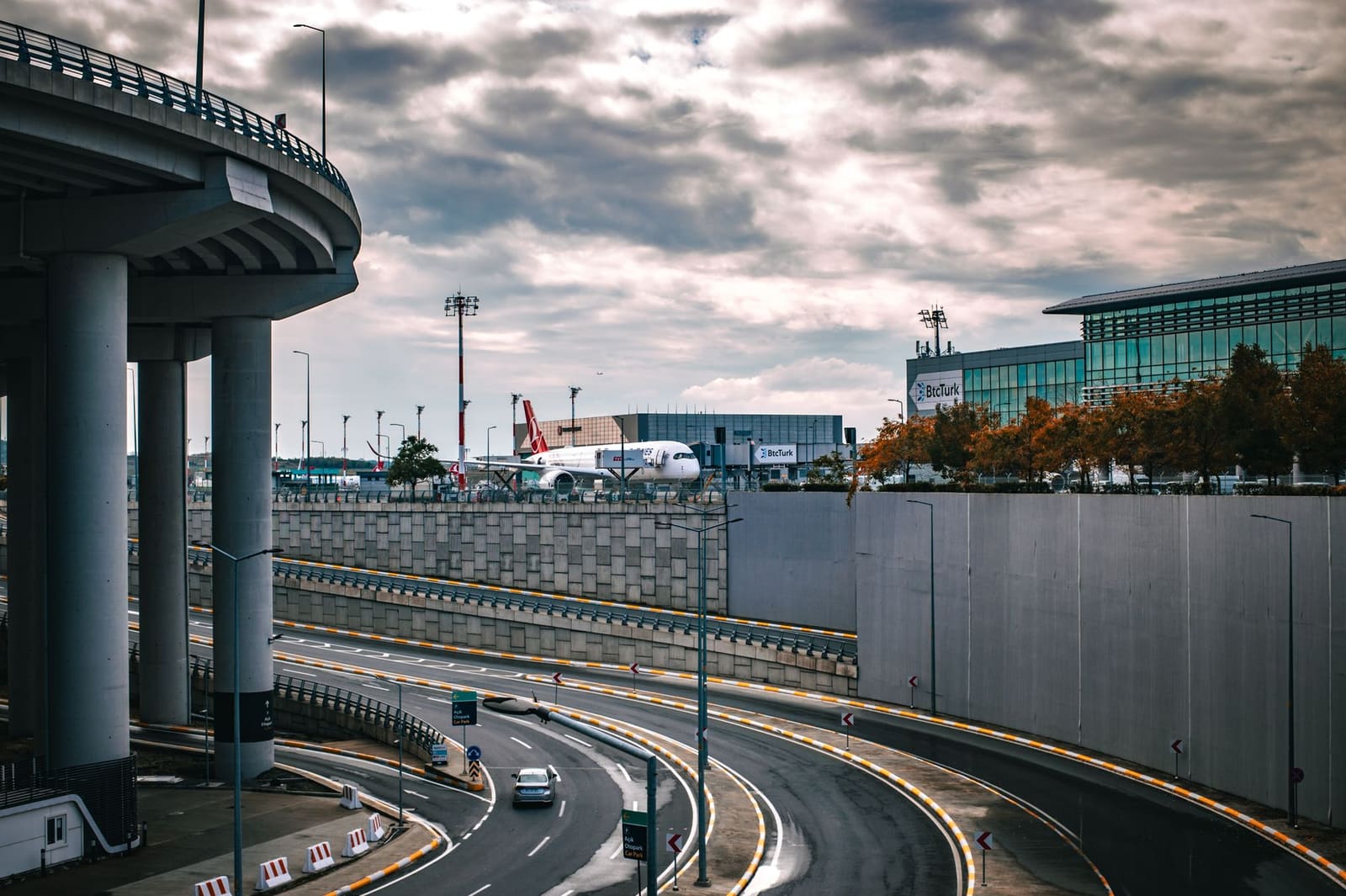
Rental desks at Istanbul Airport IST sit in a continuous line on the arrivals level immediately after customs exit doors, while vehicles wait across the roadway in the multi-storey parking garage. At Sabiha Gökçen SAW, the counters line the arrivals hall exit corridor, with the fleet parked in the terminal lot opposite the main building.
Major international brands hand over keys inside these terminals, allowing you to walk directly to the designated parking bay. Budget aggregators and secondary suppliers often operate off-site depots along the airport perimeter roads. These off-site operators run shuttle vans every twenty to thirty minutes, which adds forty-five to sixty minutes to your collection process after a flight. If you land during the evening arrival rush between 17:00 and 20:00, the line at an off-site depot office can hold twenty customers ahead of you with only two staff members processing paperwork.
Every authorized agency requires a credit card in the primary driver’s name for a pre-authorization hold. Debit cards, prepaid travel cards, and cash are routinely rejected at the counter for this security deposit. For economy and compact models, expect a hold between 10,000 TL and 15,000 TL (200 to 300 EUR). Intermediate SUVs and premium vehicles require holds from 20,000 TL to 25,000 TL (400 to 500 EUR). Turkish banks process the release promptly upon vehicle check-in, but your home bank can take up to 14 business days to clear the reserved credit line on a foreign account.
Personal Anecdote: During my rental pick-up at IST garage level P3 on a rainy Thursday at 22:30, I watched a traveler get billed 12,000 TL for pre-existing scuffs on a Fiat Egea rear bumper because he trusted an attendant who waved him through without writing them down. At IST, the pick-up bays are notoriously dim. Before putting the key in the ignition, I drive fifty meters up to the parking exit barrier where overhead LED floodlights shine brightest, step out of the car, and take ninety seconds to film every panel and alloy wheel.
Before signing the vehicle damage report and leaving the airport premises, conduct your own inspection. The airport parking garages cast heavy shadows that hide door dings, rim rash, and lower splitter scrapes. Turn on your smartphone flashlight and record a single, unbroken video starting at the front license plate, moving clockwise around the body panels, the wheel arches, the tire treads, and the windshield glass. Ensure the fuel level and odometer reading on the dashboard cluster appear clearly in the recording. Demand that the check-out clerk record every scratch larger than a two-euro coin on the physical or digital contract copy before you scan your exit ticket at the gate. Any damage not documented on the departure sheet is automatically attributed to your rental contract when you return the car.
Navigating the HGS electronic toll network and bridge crossings
Every licensed rental car in Turkey carries an HGS transponder (Hızlı Geçiş Sistemi) affixed to the inside of the windshield behind the rearview mirror. When driving in Istanbul 2026, you will never stop at a manual cash booth on state highways or intercontinental crossings. Overhead gantries scan this passive RFID sticker at highway speed, logging the vehicle identification number against the national toll database managed by the General Directorate of Highways (KGM).
Toll structures across the Bosphorus differ based on the crossing point and your direction of travel. The two central spans charge tolls exclusively when crossing from Europe to Asia, whereas westbound returns toward Europe incur no fee. Farther north, the third bridge bills both directions, as does the deep twin-deck tunnel beneath the seabed.
| Crossing Point | Direction Billed | Toll Rate | Overhead Detection |
|---|---|---|---|
| 15 July Martyrs Bridge | Eastbound only (Europe to Asia) | 33 TL (0.66 EUR) | Overhead HGS gantry |
| Fatih Sultan Mehmet Bridge | Eastbound only (Europe to Asia) | 33 TL (0.66 EUR) | Overhead HGS gantry |
| Yavuz Sultan Selim Bridge | Both directions (each way) | 140 TL (2.80 EUR) (1.40 EUR) | Overhead HGS gantry |
| Eurasia Tunnel (05:00 to 23:59) | Both directions (each way) | 330 TL (6.60 EUR) | Dual HGS and plate cameras |
The Eurasia Tunnel operates under a separate public-private tariff scheme that doubles the crossing cost compared to the northern bypass, though it cuts the run between Yenikapı and Kadıköy to under fifteen minutes outside peak hours. In Karaköy and surrounding port sectors, bridge queues worsen significantly whenever major cruise liners berth; consulting Galataport Istanbul: What Happens When a Cruise Ship Arrives and What It Means for Your Visit details how shore disembarkations throttle traffic along the lower Bosphorus arteries.
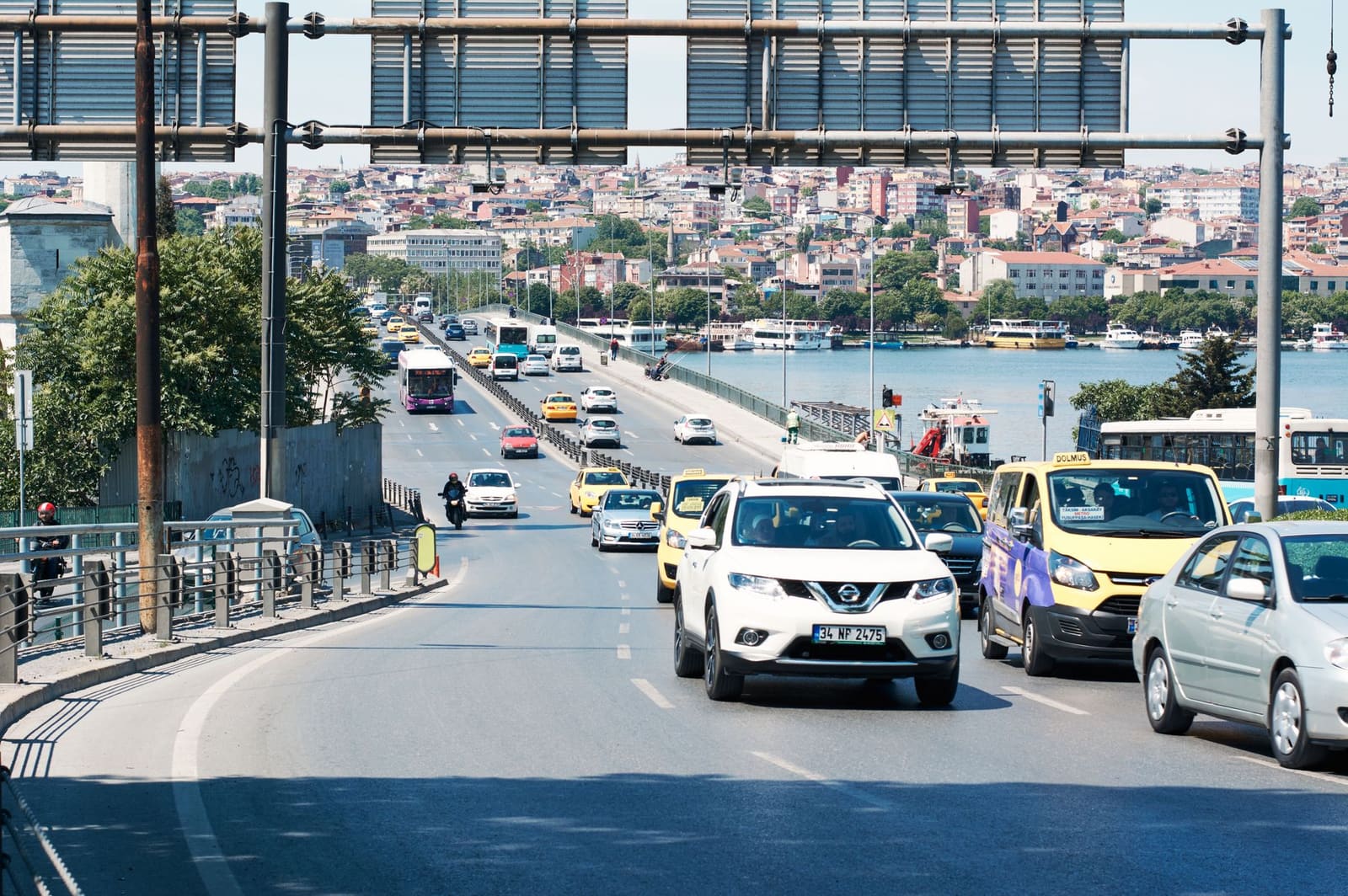
Field Note: If you take the Eurasia Tunnel southbound toward Kadıköy, be aware that the speed limit drops strictly to 70 km/h the instant you pass beneath the waterline. Radar cameras operate non-stop inside the tunnel tube, and rental companies bill the resulting 1,506 TL (around 30 EUR) fine directly to your card two weeks later.
When you return the car, the supplier queries the Karayolları database to calculate your total HGS toll usage. Rental companies do not bill these crossings at net cost; contracts stipulate an administrative processing fee between 100 TL and 250 TL (2 to 5 EUR) added to the aggregate toll invoice. This final charge is deducted from your pre-authorized credit card deposit within seven to fourteen business days following vehicle drop-off.
How to use municipal İSPARK parking and avoid illegal valets
The municipal parking operator in Istanbul is İSPARK, recognizable by blue-and-yellow street signs posted along arterial roadways. Legitimate street parking attendants wear high-visibility vests bearing the official İSPARK and Istanbul Metropolitan Municipality logos. They carry a handheld POS terminal on a neck lanyard or utility belt and never demand payment before printing a barcode ticket. Hourly rates in central areas such as Şişli, Beşiktaş, and Kadıköy average 140 TL to 1140 TL (2.80 EUR) per hour (2.80 to 3.40 EUR), with the first fifteen minutes free of charge by municipal regulation.
In districts with active nightlife and tight residential streets, such as Beyoğlu, Kadıköy, and Beşiktaş, you will encounter unlicensed street operators known as a değnekçi. These individuals claim public curb space as their own, directing drivers into gaps with a cloth rag or a ring of keys. They demand upfront cash sums of 150 TL to 300 TL (3 to 6 EUR) without issuing a receipt, and they frequently ask drivers to leave vehicle keys behind to double-park other cars. Surrendering your keys to an informal valet voids standard rental vehicle insurance in Turkey, which requires that only authorized drivers listed on the contract operate the vehicle.
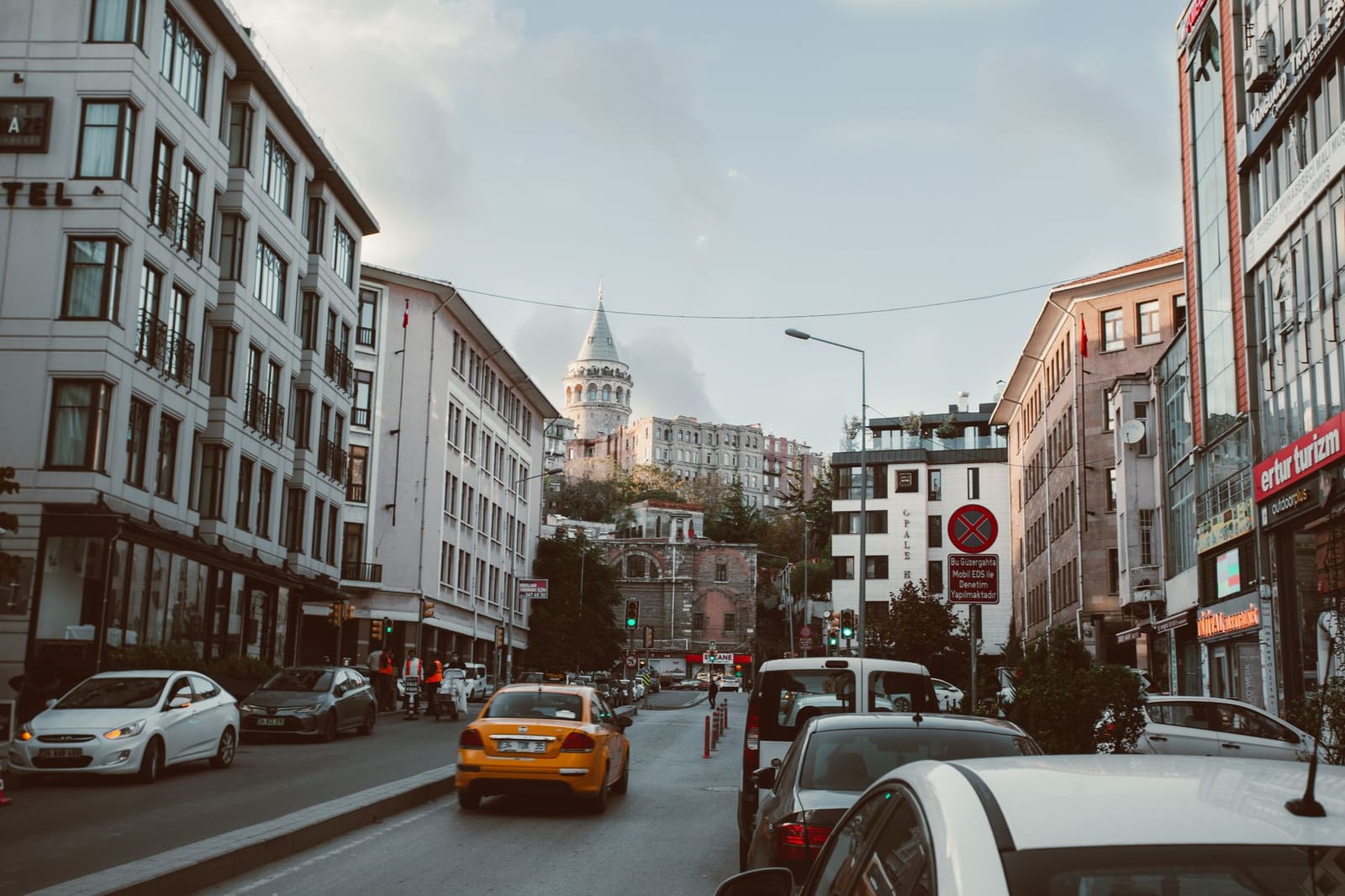
Personal Anecdote: When driving through Kadıköy on a Friday at 21:15, an unlicensed değnekçi near Moda Caddesi stepped right in front of my hood waving a blue rag, demanding 200 TL cash upfront for an open curb space. I refused, drove four hundred meters down to the official Caferağa İSPARK multi-storey garage, paid 140 TL (2.80 EUR) on my credit card, and avoided leaving my keys with a stranger. Official İSPARK staff never demand upfront payments before issuing a machine ticket. If an unofficial operator insists, keep your doors locked and drive to the nearest barrier-controlled municipal garage.
To use curbside municipal parking properly and avoid invalid fines, follow these steps:
- Locate an empty street stall marked by blue-and-yellow municipal signage and a posted tariff board.
- Position your vehicle within the lines and wait by the driver door for the uniformed attendant to approach.
- Check that the attendant inputs your license plate into the handheld POS terminal and places the printed slip under the wiper.
- Inspect the printed slip to verify that your vehicle plate and the entry time are recorded accurately.
- Present the ticket to the attendant when leaving, settling the amount with a contactless credit card or cash before driving out.
If an attendant is not on duty when you return to your vehicle, the unpaid fee logs automatically to your vehicle plate in the central municipal database. Rental agencies audit these municipal records when closing your rental contract at Istanbul Airport or Sabiha Gökçen Airport, charging any unsettled parking balance alongside an administrative processing fee to your credit card.
Unwritten rules and hazards of Istanbul traffic flow
Istanbul roads operate on an assertive spatial logic where right-of-way belongs to whichever vehicle commits to the opening first. On major corridors like the D-100 highway, an indicator rarely functions as a polite inquiry. Local drivers treat a flashing indicator as a warning that a vehicle is already crossing the lane line. If you leave more than half a car length of open pavement ahead in stop-and-go traffic, an adjacent taxi or delivery vehicle will take it. Practical Istanbul driving tips emphasize deliberate movement: hold your lane, match the pace of the surrounding pack, and make lane changes firmly rather than waiting for an explicit gap.
Delivery scooters, universally identified as motor kurye, weave between lanes through every tier of traffic. Lane filtering is the standard operating mode for thousands of couriers across the city, meaning a two-wheeler can pass your vehicle on either flank at 50 km/h without warning. Check both side mirrors and your physical blind spot before initiating any turn, particularly when exiting broad multi-lane roads like Barbaros Bulvarı. Couriers routinely pass on the inside curb side of right-turning cars. If you are heading out strictly for dinner along the Bosphorus market strips, skipping the steering wheel and walking the bazaar lanes for Fried Mussels and Calamari in the Fish Markets of Beşiktaş and Kadıköy with 2026 Menu Prices spares you the ordeal of dodging two-wheelers and finding non-existent curbside slots.
Field Note: Never rely blindly on Google Maps or Yandex around Balat or Galata. Both apps frequently interpret narrow pedestrian stairways and 30-degree residential slopes as drivable shortcuts. Stay on the perimeter ring roads like Kennedy Caddesi or the Golden Horn waterfront avenue (Ragıp Gümüşpala Caddesi) until you reach your primary turn.
Navigation apps often fail inside historical quarters. Standard GPS routing frequently directs vehicles into the steep Cihangir alleys or the older residential roads of Fener, mistaking narrow single-track stone chutes for practical shortcuts. These streets regularly have 25-degree inclines lined with parked vehicles and delivery vans unloading stock. Meeting an oncoming truck on a slick stone slope forces an uphill or reverse start on a 20 percent incline, which can burn through a rental clutch in minutes. When driving in Istanbul 2026, keep your vehicle on designated district arterials and waterfront avenues until you are within two turns of your destination.
Speed monitoring on major urban arteries is automated. The city enforces speed limits through overhead EDS speed camera corridors installed along the D-100, the Kennedy Caddesi coastal road, and the Trans-European Motorway connectors. These gantries calculate your average transit speed between two set check-points as well as your instantaneous speed beneath the camera frame, sending automated fines directly to the vehicle registration. Overhead digital boards display speed limits that drop from 80 km/h to 50 km/h before major interchanges.
Refueling protocols and return procedures to protect your deposit
Fuel stations across Turkey operate exclusively as full-service facilities where you remain in your car while a petrol station attendant pumps the fuel. When you pull up to the pump, lower your window and state your fuel grade clearly, specifying either Benzin 95 for standard unleaded or Dizel for diesel. Step out of the vehicle to confirm that the pump nozzle label matches your car’s fuel flap requirement before the attendant pulls the trigger, because rental agencies charge the full cost of engine flushing and towing if the tank is misfueled. You can pay the attendant directly with a credit card via their mobile terminal, or you can step into the station office to pay the cashier by pump number.
Personal Anecdote: During my return run to Istanbul Airport at 06:45 on a Sunday, I learned this lesson first-hand at the Opet station on the D20 airport approach. I watched a driver accept a verbal nod from the pump attendant without asking for a printed slip, only to be billed 1,200 TL at the drop-off counter because the fuel needle rested two millimeters below the full line. I now stop at that exact station five kilometers before the terminal, fill until the pump nozzle clicks off automatically, and hand the physical timestamped slip directly to the return clerk.
When driving in Istanbul 2026, automated highway monitoring relies heavily on the EDS speed trap network, known locally as Elektronik Denetleme Sistemi. Mounted cameras scan license plates along major corridors like the TEM highway, Kennedy Caddesi, and the Avrasya Tunnel approaches. Speeding violations begin at 2,719 TL (54.38 EUR) for exceeding the posted limit by ten to thirty percent. These infractions register digitally against the car’s registration plate, prompting the rental firm to charge your credit card weeks later alongside their own administrative fee of 500 TL to 1,000 TL (10 to 20 EUR) per violation.
Your car return procedure requires strict documentation when renting a car in Istanbul. Top off the fuel tank within five kilometers of the terminal and retain the timestamped receipt. Accompany the lot agent during the physical vehicle inspection, ensuring that every panel, tire rim, and glass surface is logged on their inspection sheet. Insist on receiving a signed rental drop-off protocol stating zero new damages and a confirmed full tank. Before leaving the desk, request a printed deposit release slip proving that the counter staff canceled the security hold on your credit card. Turkish banks release these authorizations within two to three business days, whereas foreign banks hold the pending credit block for up to twenty business days.
Practical verdict on Istanbul car hire
Keep the rental car for open-road routes along the Black Sea coast and regional loops around the Sea of Marmara. Using a vehicle within central quarters like Sultanahmet or Kadıköy trades fast public transit for gridlocked arterials and chronic garage shortages.
Personal Anecdote: On a Tuesday evening in October at 18:00, picking up a car in central Taksim took me forty-five minutes just clearing the 800-meter Tarlabaşı chokepoint toward the D-100, followed by circling three congested blocks in Karaköy looking for an İSPARK space before the street attendant logged off at 22:00.
Collect the vehicle directly from Istanbul Airport or Sabiha Gökçen on the morning you head out toward Şile or İznik. Take the O-7 highway access road straight out of the terminal, keep the HGS toll sticker fixed behind the rearview mirror, and avoid inner-city traffic completely.