
Shared e-scooters in Istanbul cost around 7.50 to 9.00 Turkish lira per minute, plus an activation fee of 12 lira on operators like Martı, BinBin, and Link. You need your passport number and active international SMS roaming to clear identity verification. When my foreign credit card failed the 3D-Secure check in Kadıköy, routing the payment through Masterpass solved the transaction block immediately. Ride on dedicated shoreline paths like the paved route between Caddebostan and Bostancı, or the Golden Horn boardwalk in Balat. Avoid Sultanahmet and Beyoğlu, where steep cobblestones, tram tracks, and pedestrian zone geofences cut your motor automatically. Municipality regulations cap speeds at 20 km/h and impose hefty fines for riding on pedestrian sidewalks. To end your trip without a penalty, loop the integrated cable lock through an approved municipal post and upload a photo showing the scooter upright.
At 18:15 on a Tuesday outside the Kadıköy ferry pier, traffic along Rıhtım Caddesi reliably freezes into a wall of idling exhaust. The municipal bus toward Moda rarely moves twenty meters in fifteen minutes. Scanning an electric scooter parked beside the ferry exit with a 12 TL (€0.24) starting fee and an 8.50 TL (€0.17) per-minute rate gets you along the Marmara shoreline path in eight minutes flat.
Shared fleets line almost every major waterfront terminal from Beşiktaş to Bostancı. For traversing long coastal stretches, shared micro-mobility platforms provide one of the quickest transport options in the city. Navigating the streets requires care. Istanbul combines steep cobblestone hills, heavy traffic on narrow arteries, and strict electronic no-ride zones monitored by the municipality, which means an unprepared rider can easily end up stranded with a killed motor or an administrative penalty.
Setting up an account requires clearing two verification gateways before you can ride. Apps like Martı and BinBin require SMS verifications that frequently reject international numbers or foreign bank cards, while parking outside designated zones triggers automated lockouts and municipal recovery fees starting around 400 TL (€8). Following the correct registration steps and local street bylaws allows you to use these fleets to bypass congested coastal roads.
Major scooter operators and current pricing structures
Three licensed fleet operators dominate Istanbul under micro-mobility quotas established by UKOME (Transportation Coordination Center): Martı İleri Teknoloji, BinBin, and Link. You will spot their vehicles stationed at ferry terminals, metro exits, and coastal boardwalks across both sides of the city. Martı operates green scooters, BinBin uses bright turquoise frames, and Link deploys yellow units.
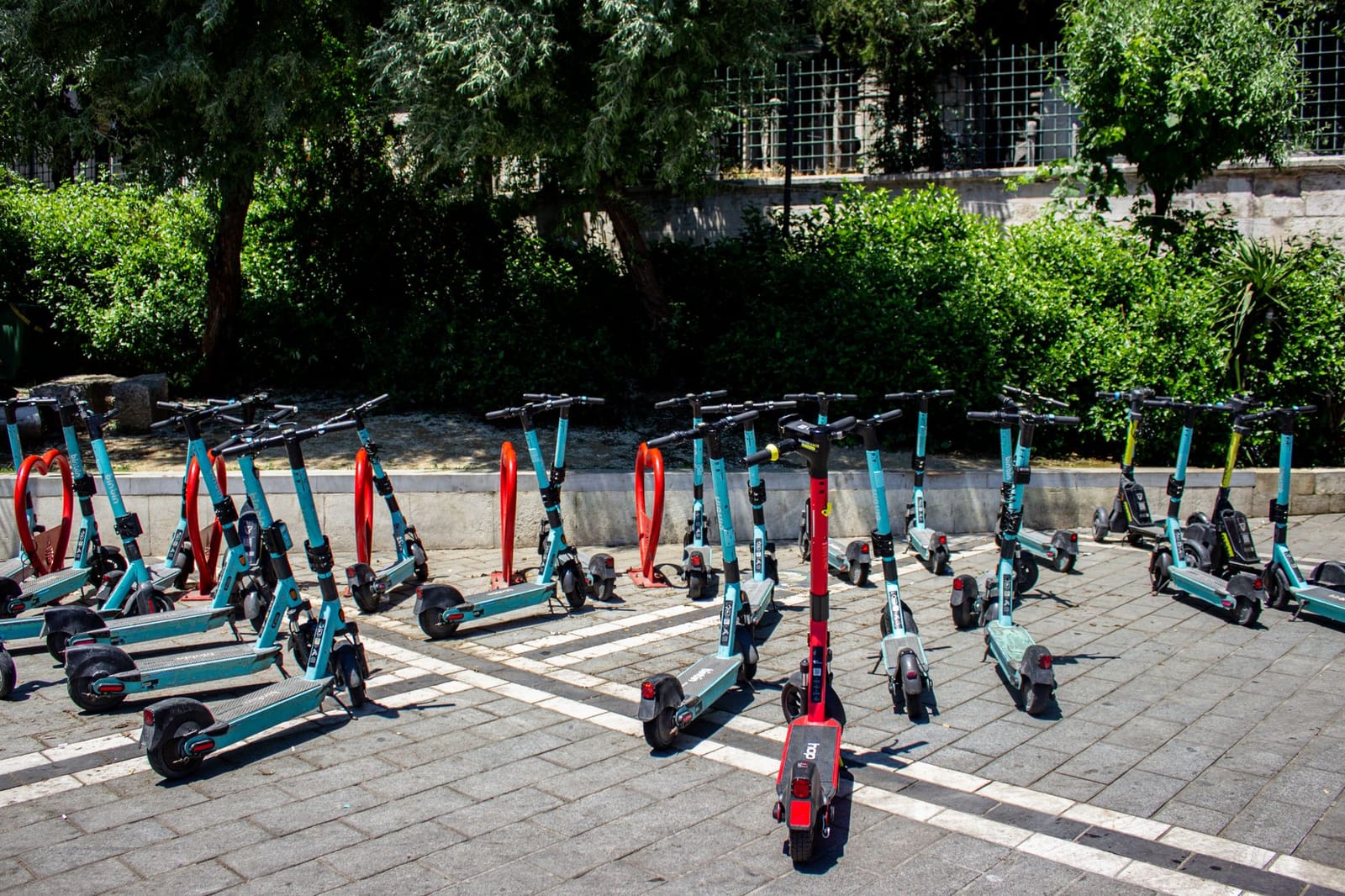
The three primary fleets operate under a uniform base fare model set in Turkish Lira. All three operators charge a standard unlocking fee of 12 TL (€0.24 / $0.27), followed by per-minute charges that average between 7.50 TL and 9.00 TL (€0.15 to €0.18 / $0.20). A typical fifteen-minute ride along the Kadıköy or Beşiktaş shoreline costs roughly 125 TL to 147 TL (€2.50 to €2.94 / $2.78 to $3.27).
| Operator | Frame Color | Unlocking Fee | Rate per Minute | Payment Coverage |
|---|---|---|---|---|
| Martı | Green | 12 TL (€0.24 / $0.27) | 8.50 TL (€0.17 / $0.19) | International Visa, Mastercard |
| BinBin | Turquoise | 12 TL (€0.24 / $0.27) | 7.50 TL (€0.15 / $0.17) | International Visa, Mastercard |
| Link | Yellow | 12 TL (€0.24 / $0.27) | 9.00 TL (€0.18 / $0.20) | International Visa, Mastercard |
| Fleet average | Various | 12 TL (€0.24 / $0.27) | 8.30 TL (€0.17 / $0.18) | 3D Secure verification |
Both the Martı and BinBin applications accept foreign-issued Visa and Mastercard credit and debit cards, eliminating the need for a local Turkish bank card. However, registration frequently stalls at the digital payment stage due to 3D Secure protocols. Turkish payment gateways mandate two-factor authentication for micro-transactions, requiring an instantaneous verification code sent by your home financial institution.
Outside the Kabataş ferry terminal at 08:45 on a rainy Monday, I watched a commuter attempt to bypass a 30-person tram queue by grabbing a yellow Link scooter. After spending 12 TL on the unlock and riding just 150 meters into the Kabataş transfer plaza, the motor throttled down to a dead crawl because of the municipal speed restriction, turning a quick hop into a frustrating 40 TL mistake while the tram rolled right past.
If your foreign SIM card does not receive carrier roaming texts while moving between Turkish cell towers, the gateway rejects the card registration, leaving the scooter locked. In-app pre-funding wallets, which allow you to load 100 TL (€2.00 / $2.22) or 250 TL (€5.00 / $5.56) in a single approved transaction, bypass repeated verification checks during consecutive trips. Martı and BinBin apps require an active passport number during profile registration to validate rider identity under municipal transport regulations.
Setting up the apps with a foreign passport and roaming phone
Turkish transport regulations require micro-mobility providers to bind every account to a verified government identity document. For citizens, systems pull records from the central civil registry using an eleven-digit identification number. Foreign visitors must use passport verification instead, though several platform interfaces obscure this option unless configured properly from the start.
The primary barrier during sign-up is the national identity prompt. When you launch the Martı app or BinBin with Turkish set as the default device language, the interface immediately demands a T.C. Kimlik number. The input box strictly enforces an eleven-digit algorithmic check, rejecting alphanumeric foreign passport codes outright. Changing the app or phone language to English before entering the sign-up flow switches the interface to a foreign identity intake screen that accepts international travel documents.
Follow these steps to complete registration on an international device:
- Download the operator app over hotel or airport Wi-Fi to avoid cellular data interruptions.
- Select English in the language settings before touching the registration button so the system presents the tourist onboarding interface.
- Enter your international mobile number including the full country exit code to initiate SMS authentication.
- Submit the six-digit OTP code sent to your roaming phone line.
- Type your full legal name, date of birth, and passport number exactly as they appear on your physical passport photo page.
SMS authentication represents the most common mechanical failure point during setup. Last month around 17:30 by the Karaköy ferry dock, a client waited four minutes for an OTP code while roaming on a North American carrier, watching parked units get claimed by commuters before the text arrived. Testing your roaming carrier’s ability to receive overseas automated shortcodes while you are still at your hotel prevents being stranded on a street corner.
Card security triggers create a secondary bottleneck. A foreign credit card used on pay-per-ride mode generates repeated micro-debits between 40 TL and 90 TL (0.80 EUR to 1.80 EUR) across a single afternoon. Overseas fraud algorithms frequently flag multiple small international merchant charges occurring within minutes of each other, triggering an automatic freeze on the card. Utilizing the in-app mobile wallet avoids this friction. Loading a lump sum of 300 TL (6 EUR) or 500 TL (10 EUR) into the in-app balance creates a single foreign transaction, insulating your card from fraud blocks.
Berk’s Insider Tip: If your international bank blocks the small verification charge on Martı, add your card through Masterpass inside the app rather than entering raw card details. It bypasses the secondary Turkish SMS gateway that frequently hangs up foreign cellular networks.
Unspent funds deposited into a local mobility wallet cannot be refunded to foreign bank accounts once added.
Where you can legally ride and 2026 municipality traffic rules
Municipal regulations in Istanbul enforce where, how fast, and on what pavement you can operate an electric scooter. The Istanbul Metropolitan Municipality Coordination Center, known locally as UKOME, sets these parameters directly through municipal bylaws. Every commercial operator integrates these requirements into their fleet software via built-in GPS units and an automated speed governor.
Operating on city streets requires adhering to five municipal rules:
- Coastal and park bike lanes: Dedicated asphalt paths (marked as bisiklet yolu) along the Kadıköy–Bostancı coast, the Golden Horn, and Bakırköy provide full legal access at the standard municipal cap of 20 km/h.
- Low-speed roads: You may ride in the right lane of standard secondary roads where the posted vehicular limit does not exceed 50 km/h.
- Sidewalk prohibition: Riding on standard pedestrian pavements is illegal across all thirty-nine districts of the city. Traffic police and municipal enforcement officers issue fines of up to 5,000 TL (100 EUR) for riding on walkways.
- Major pedestrian corridors: Prominent foot-traffic corridors including İstiklal Caddesi in Beyoğlu, the historic alleys of the Grand Bazaar, and Sultanahmet Square near the Ottoman Royal Tombs and Calligraphy at the Sultan Mahmud II Cemetery with Entry Tips are strict pedestrian zones. Operators enforce an active geofencing boundary that halts the throttle within ten meters of entry.
- Highways and arterial access: Riding on primary ring roads such as the D-100, the TEM motorway, or connecting tunnels is strictly prohibited. For longer trips across the city where high-speed bypasses are required, consider Renting a Car in Istanbul with Toll Rules İSPARK Parking Tips and 2026 Driving Realities instead of attempting arterial roads on two wheels.
In crowded central quarters including Kadıköy, Şişli, Beşiktaş, Beyoğlu, and Fatih, the municipal government enforces a mandatory deceleration to 12.5 km/h. You do not need to adjust settings manually; the scooter detects the district coordinate via GPS and throttles down on its own.
I watched a visitor in Karaköy try to ride through the perimeter near the docks around 16:30 on a Friday. The moment their front wheel crossed into the pedestrian zone, the motor cut out instantly, the scooter started beeping, and the rear brake engaged automatically. Dismount before entering pedestrian plazas to avoid dragging a locked 22-kilogram machine by hand.
Turkish traffic code requires riders to stay in single file on vehicular roads. You cannot carry passengers, hang heavy cargo from the handlebars, or ride against vehicular traffic flow under any circumstances. Enforcement checkpoints operate regularly near major ferry piers in Beşiktaş and Eminönü, where officers stop riders without operational headlights after dusk.
Scenic and flat coastal routes suited for riding
Istanbul’s maritime edges offer continuous, graded corridors that bypass the steep ridges defining the historic quarters. Choosing sea-level corridors protects battery life, avoids high-traffic roads, and keeps you on legal riding surfaces.
The most reliable stretch in the city is the coastal promenade on the Asian shore, running from Caddebostan Sahil south to Bostancı. This route provides a continuous 7-kilometer dedicated two-lane seaside bike path without car interference, separated from both vehicular traffic and pedestrian walkways. The asphalt is smooth and directly skirts the Marmara Sea, with painted directional lanes and designated geofenced parking bays near public parks. If you plan to spend the afternoon exploring the eastern shore, the Istanbul Asian Side Guide: Kadıköy, Üsküdar, and Kuzguncuk in 2026 details connections linking Kadıköy transit docks directly to these outer coastal greenways.
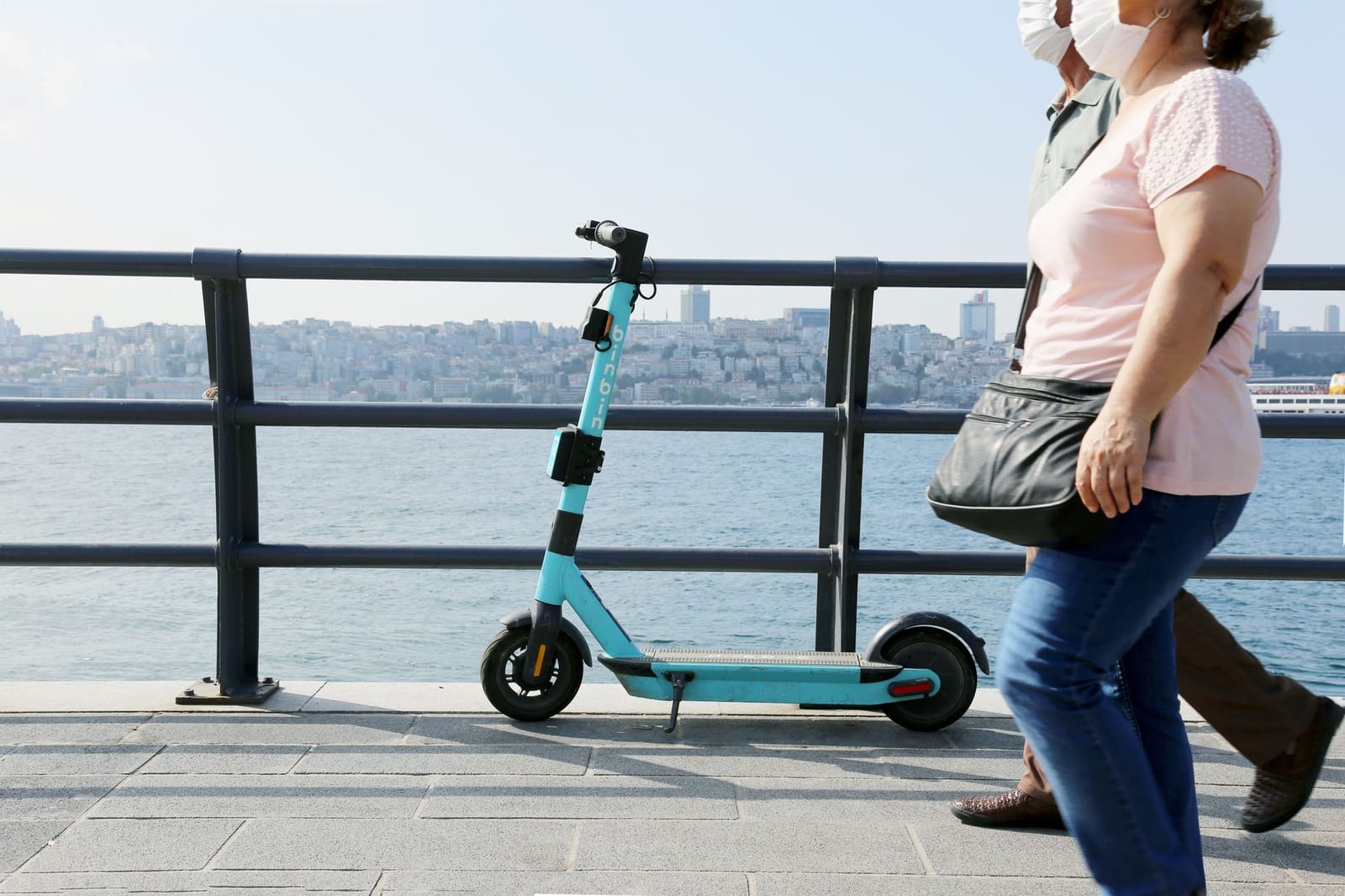
On the European Bosphorus shore, a popular route links Karaköy to Beşiktaş and runs onward to Kuruçeşme. This trail stays entirely flat, but riders must negotiate intermittent pavement gaps around busy commuter hubs. At the Kabataş and Beşiktaş ferry terminals, dedicated lanes vanish into pedestrian squares paved with uneven granite tiles. You must slow your speed below 10 km/h or dismount to walk the machine through crowds disembarking from commuter vessels. Beyond Ortaköy, the path clears again along the water through Kuruçeşme Park, where wide concrete surfaces provide open views of the strait.
Berk’s Insider Tip: Never attempt to ride an electric scooter up the steep climb from Karaköy to Galata Tower. The motors overheat and cut power halfway up Bankalar Caddesi, leaving you pushing a 25-kilogram dead machine uphill against oncoming yellow taxis.
The Golden Horn shoreline trail offers a calm third option, running from Balat north toward Eyüpsultan. While interior Balat is packed with broken cobblestone alleys and steep gradients, its waterfront park contains wide seaside promenades flanked by manicured lawns. This path runs level along the inlet, steering riders away from road exhaust. Across the water in Hasköy, riders can link their route to industrial transport history via the Rahmi M Koç Museum vintage transport and Golden Horn ferry tips. The riding lane terminates at the Eyüpsultan ferry landing, where painted scooter parking bays sit directly opposite the T5 tram line station platform.
Parking zones, physical lock cables, and no-parking fines
Ending a ride requires physical anchor points and strict GPS compliance. Riders using Martı or BinBin cannot abandon a device wherever the battery runs down. The Istanbul Metropolitan Municipality mandates that riders secure e-scooters either inside painted İBB parking bays or to municipal bike racks and fixed street posts using the integrated cable lock. The app prompts you to wrap the steel cable around the anchor fixture, insert the latch pin into the housing, and upload an unobstructed photo showing both the upright scooter and the secured lock. If the image is blurry, poorly lit, or shows an unattached cable, the system rejects the submission and the trip meter keeps running.
Both operators and traffic police enforce zero-tolerance parking policies across busy transit corridors. You must keep all yellow tactile paving on sidewalks clear for visually impaired pedestrians, and leave building doorways, accessibility ramps, and tramway curbs completely unobstructed. Blocking any of these public pathways results in operator penalties and municipal fines up to 750 TL (15 EUR), charged directly to your linked bank card. Operators flag non-compliant accounts, and repeated violations lead to a permanent ban across shared micro-mobility platforms.
I watched two visitors spend twenty minutes trying to end their trip beside the Karaköy ferry terminal, unaware that the waterfront esplanade is an active red zone. Before starting your ride, open the in-app map and locate an approved parking zone at your intended stop so you do not waste time and money searching for an exit boundary.
Digital geofencing dictates where rentals may terminate. Dense pedestrian thoroughfares such as İstiklal Caddesi, historical squares around Sultanahmet, and open quays function as permanent no-park zones. These restricted areas appear shaded in red on the screen. Riding into a red zone causes the scooter motor to throttle down automatically, and the software disables the trip termination button. You must push the scooter on foot back into an authorized white or green sector before the application lets you lock the hardware and complete the rental.
Frequently asked questions about electric scooters in Istanbul
Traffic police and municipal bylaws regulate e-scooters under strict motorized transit statutes.
Can two people ride a single electric scooter in Turkey?
Tandem riding is illegal under the Turkish Highway Traffic Law. Electric scooters are certified exclusively for single riders, and you cannot carry passengers or bulky cargo beyond a standard backpack. Traffic police patrol major pedestrian corridors in Kadıköy and Beşiktaş and issue fines of 5,000 TL (100 EUR) directly to violators. If a collision occurs while carrying a passenger, the rental operator automatically voids third-party liability coverage. For broader context on avoiding street fines and navigating transit hubs safely, read through Is Istanbul Safe for Tourists? An Honest 2026 Safety Guide from a Local.
Last spring near the Moda pier around 16:00, I watched municipal police pull over two visitors sharing a single deck; both walked away with the standard 5,000 TL fine. If you are traveling as a pair, set up the platform on two separate phones so each person can ride independently.
Do you need a driver’s license to unlock Martı or BinBin?
You do not need a driver’s license for platforms such as Martı or BinBin, provided the vehicle speed is restricted to 25 km/h. The statutory age limit requires all riders to be at least 15 years old. Foreign travelers need only enter a passport number, provide an active phone number capable of receiving SMS authentication codes, and register a payment card enabled for international 3D Secure verification.
Are helmets legally required when riding on coastal paths?
Helmets are not legally required for stand-up electric scooters under current Turkish traffic codes, which reserve helmet penalties exclusively for mopeds and motorcycles. You will not face a police fine for riding bareheaded along the dedicated seaside lanes between Caddebostan and Bostancı. However, municipal regulations strictly bar you from riding on pedestrian sidewalks, and scooter operator insurance policies often deny personal accident compensation if safety equipment was omitted during an incident.
Street riding realities and practical takeaways
Skip shared scooters entirely if you are navigating Beyoğlu, Şişli, or the historic peninsula. At 14:15 on a damp afternoon near the Kadıköy İskele dock, I grabbed a green Martı to reach Moda Caddesi, thinking I could skip a 20-minute uphill walk. Three minutes into the ride on Mühürdar Caddesi, the small solid rubber wheel slid out on wet tram tracks, dropping the frame onto the stone curb and cracking my phone screen. The repair cost 1,850 TL at a shop on Yazıcı Sokak. Small scooter wheels catch on tram track grooves and slick basalt setts instantly, making steep descents dangerous. Scooters excel exclusively along flat, designated asphalt paths, particularly the eight-kilometer coastal strip stretching from Kadıköy Pier to Bostancı on the Anatolian shore.
Run through two checks before you start. Confirm in the app that your selected scooter has at least 35 percent battery, because the motor throttles output automatically once capacity drops under 20 percent. When ending the ride, park the frame upright on its kickstand clear of building doorways and yellow tactile paving for visually impaired pedestrians, then submit the required wide-angle confirmation photo. Leaving a scooter inside a red geofenced exclusion zone or blocking sidewalk traffic incurs a 400 TL (8 EUR) penalty charged directly to your card.