Istiklal Street’s polished granite tiles turn slick within minutes of rain, so I cut through Avrupa Pasajı and Halep Pasajı to walk Beyoğlu under glass roofs. When runoff turns the cobblestones on Bankalar Caddesi into streams, skip the downhill descent to Galata and spend 46.20 TL on the underground Tünel funicular to reach Karaköy. Cross-continental ferries cost 58.52 TL with an Istanbulkart; bypass the exposed top deck and sit beside the tea counter in the heated lower cabin. If downpours stop street traffic, wait them out inside the Pera Museum for 300 TL, or visit after 18:00 on Friday for free admission. This guide details the arcade connections, cabin layouts, and transit fares needed to move between both continents while staying dry.
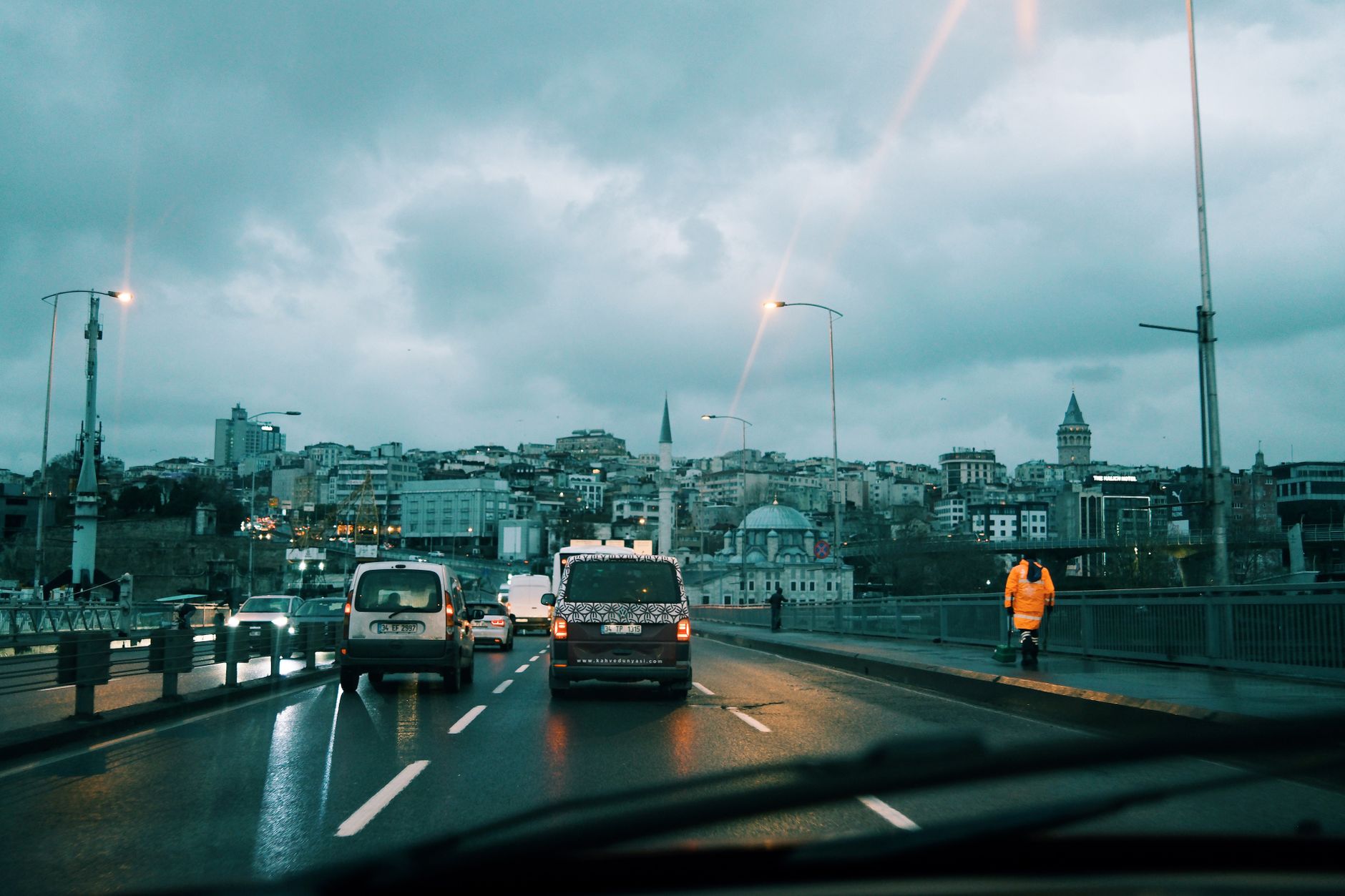
A sudden autumn downpour along İstiklal Caddesi turns the polished basalt pavers into slick slides within three minutes. Pedestrians scramble under shop awnings, while yellow taxis on nearby Tarlabaşı Bulvarı immediately switch off their roof lights. Trying to hail a cab or walk down steep perimeter slopes during these squalls leaves you stranded; vehicle traffic across the Golden Horn bridges slows to a crawl almost instantly.
Central Istanbul has a historic network constructed to withstand wet seasons. The nineteenth-century covered passages of Beyoğlu, the connected arcades around Karaköy, and the underground spine of the M2 metro link major districts without exposing you to the weather. Public ferries also provide efficient shelter: an Istanbulkart fare of 58.52 TL (1.17 EUR) secures a seat inside a heated Şehir Hatları lower cabin, allowing you to cross between continents in comfort while rain clears the open decks above.
Insider tip: After fifteen years of dealing with winter rains here, I avoid walking down Boğazkesen Caddesi during heavy downpours. The steep grade funnels runoff like a creek bed. Cut through the sheltered corridor of Passage Hazzopulo toward Meşrutiyet Caddesi instead, which keeps your footwear dry and skips the slick descent toward the water.
Handling wet weather in Istanbul requires treating maritime transit lines and covered commercial passages as your primary walking routes. When you know which station exits connect directly into arcades and which ferry terminals offer dry transfers, you can navigate across entire quarters without fighting the wind.
Navigating the steep topography when cobblestones become streams
Basalt paving stones and polished granite slabs cover the pedestrian slopes linking Beyoğlu to the Bosphorus water level. Under dry conditions, these historical surfaces provide reasonable traction, but a brief shower mixes with ambient road grime to turn arteries like Boğazkesen Caddesi, Yüksek Kaldırım, and Kumbaracı Yokuşu into slick surfaces. The gradient along these corridors reaches up to 15 percent, meaning friction disappears just when your stride requires the most resistance.
Footwear dictates whether you negotiate these hills safely or end up on the pavement. Rubber lug outsoles with defined tread patterns grip the micro-crevices of wet basalt. Conversely, leather dress soles and smooth synthetic running shoe foams lose surface contact entirely. If caught on a steep decline in light shoes during a sudden shower, adjust your path: avoid the center of the road where vehicular traffic has worn the stones smooth, and walk diagonally across the slope while keeping close to storefront walls.
Berk’s Insider Tip: During sudden squalls on İstiklal, avoid ducking under awning edges; shop owners routinely tilt the canvas with broom handles to dump gallons of pooled water directly onto the curb below without checking who is standing underneath.
Curbs present another hazard when heavy rain sets in. Surface water quickly outpaces municipal drain capacity on steep grades, funneling hundreds of liters per minute downhill toward Galata and Karaköy. Road runoff pools up to fifteen centimeters deep where curb drains clog with street debris. Stepping off a curb directly above a storm grate will soak footwear over the ankle. You should cross streets five to ten meters above intersections where the water flows in a shallow sheet across the crown of the asphalt rather than gathering in deep gutters.
Personal Anecdote: I learned this the hard way during an October downpour at 08:30 on Yüksek Kaldırım. I tried to brake downhill outside the musical instrument shops wearing smooth dress shoes, lost traction instantly on the wet stone, and bruised my shoulder against a shop grille. Within five minutes, I watched three commuters slide down the exact same stones before local shopkeepers brought out ribbed rubber doormats so pedestrians could step along the threshold edges without falling.
You can eliminate physical risk by utilizing covered transit connections rather than walking down these slick descents. The subterranean Tünel funicular links İstiklal Caddesi directly with Karaköy square, descending the 573-meter distance through a tunnel in 90 seconds. To evaluate alternative covered ascents in this neighborhood, consult the breakdown of Public Staircases and Funicular Shortcuts Between Karaköy and Beyoğlu with 2026 Fares. A single journey on the F2 Karaköy-Beyoğlu Tarihi Tünel costs 46.20 TL (0.92 EUR) on a standard Istanbulkart, with departures running every five minutes throughout the day. Turnstiles also accept contactless bank cards at the standard limited-use tariff.
Sheltered arcade shortcuts across Istiklal Street
When northwesterly rainstorms drive down the Pera ridge, İstiklal Caddesi turns into an exposed wind corridor where standard umbrellas buckle within minutes. The solution is moving through the network of late nineteenth-century covered shopping arcades that flank the pedestrian boulevard. Built between 1870 and 1910 during the modernization of the Ottoman district of Pera, these stone-and-glass galleries run parallel and perpendicular to the thoroughfare, providing continuous overhead shelter alongside indoor circulation.
By linking these structures together, you can travel between Galatasaray Square and the southern Tünel district while minimizing time in open downpours.
How to traverse Beyoğlu through covered passages
- Enter Atlas Pasajı on the eastern side of the street near Galatasaray to let heavy showers pass beneath its restored vaulted plaster ceiling.
- Cross the street directly into Halep Pasajı across the tram tracks, where the interior corridor extends back toward theatrical halls and subterranean film memorabilia shops.
- Walk two minutes south to Çiçek Pasajı, entering the three-story glass dome and exiting through its western portal into the covered fish market zone.
- Cut into Hacopulo Pasajı through the narrow stone portal opposite Galatasaray High School, navigating its central courtyard to reach the rear exit onto Meşrutiyet Caddesi.
- Step inside the iron gates of Suriye Pasajı near the Swedish Consulate to conclude the route along dry, wide residential ground corridors.
Personal Anecdote: Caught at Galatasaray Square at 17:15 during a fierce November squall when rain was blowing horizontally down İstiklal, I ducked into Hacopulo Pasajı rather than fighting the crowd on the avenue. I paid 45 TL for a hot tea at an interior stool under the stone arches, waited out the fifteen-minute deluge in complete dryness, and slipped through the rear gate onto Meşrutiyet Caddesi without turning an umbrella inside out.
The transit between Hacopulo Pasajı and Meşrutiyet Caddesi is the most practical detour on the avenue. Rain blowing from the Sea of Marmara hits the wide clearing around the Odakule high-rise with high wind speed, sweeping sheets of water directly down the central pavement. Instead of walking through this section, you step into the stone portal of Hacopulo, where a covered stone walkway opens into an internal lightwell surrounded by milliners and silversmiths. Walking straight through the rear gate deposits you onto Meşrutiyet Caddesi, where the sidewalks are protected by continuous architectural awnings and building overhangs.
Insider tip: Marble flooring inside Halep and Suriye passages becomes dangerously slick when wet shoes track in rainwater. Step along the ribbed rubber entry runners, and if you need an unhurried break, head to the back corner of Suriye Pasajı where a traditional glass of black tea from the basement burner costs 40 TL to 50 TL (0.80 EUR to 1.00 EUR) on low wooden stools.
At the southern end of the corridor route sits Suriye Pasajı, completed in 1908 as an early mixed-use concrete and stone complex. The ground floor provides a dry corridor lined with independent used bookstores, letterpress print studios, and vintage clothing stalls. Unlike modern shopping centers, the high ceilings and ventilation shafts keep the central hall dry without artificial heating, allowing visitors to inspect Ottoman-era prints and back-issue art journals away from the storm outside. The shops here operate Monday through Saturday from 10:30 until 19:30.
Cross-continental transit using heated lower ferry cabins
When heavy downpours hit Istanbul, arterial coastal roads and suspension bridges lock into gridlock, turning taxi and bus rides into stationary waiting games. While underground rail corridors pack beyond capacity, public transit travel functions most reliably on the water. Commuter vessels run by Şehir Hatları follow schedules that inclement weather rarely disrupts, maintaining regular 20-minute crossings between Europe and Asia through conditions that halt surface vehicles. Standard one-way fares using a standard transit card run between 58.52 TL and 65.21 TL (1.17 EUR to 1.30 EUR), making water transit faster and far cheaper than a metered cab over the bridge.
Most casual visitors climb the outdoor stairs toward open decks, only to encounter slick stairs and windblown rain. The sensible move on a wet day is walking directly into the enclosed main saloon on the lower deck. Cast-iron heating pipes run along the baseboards below rows of wooden and cushioned bench seating, radiating continuous warmth into damp coats. The enclosed cabin insulates passengers from biting drafts, keeping crossings over choppy water warm and calm. You can take a seat beside the midship windows, clear a viewing circle through the steam with a paper napkin, and watch the gray outline of the historical peninsula pass by in comfort.
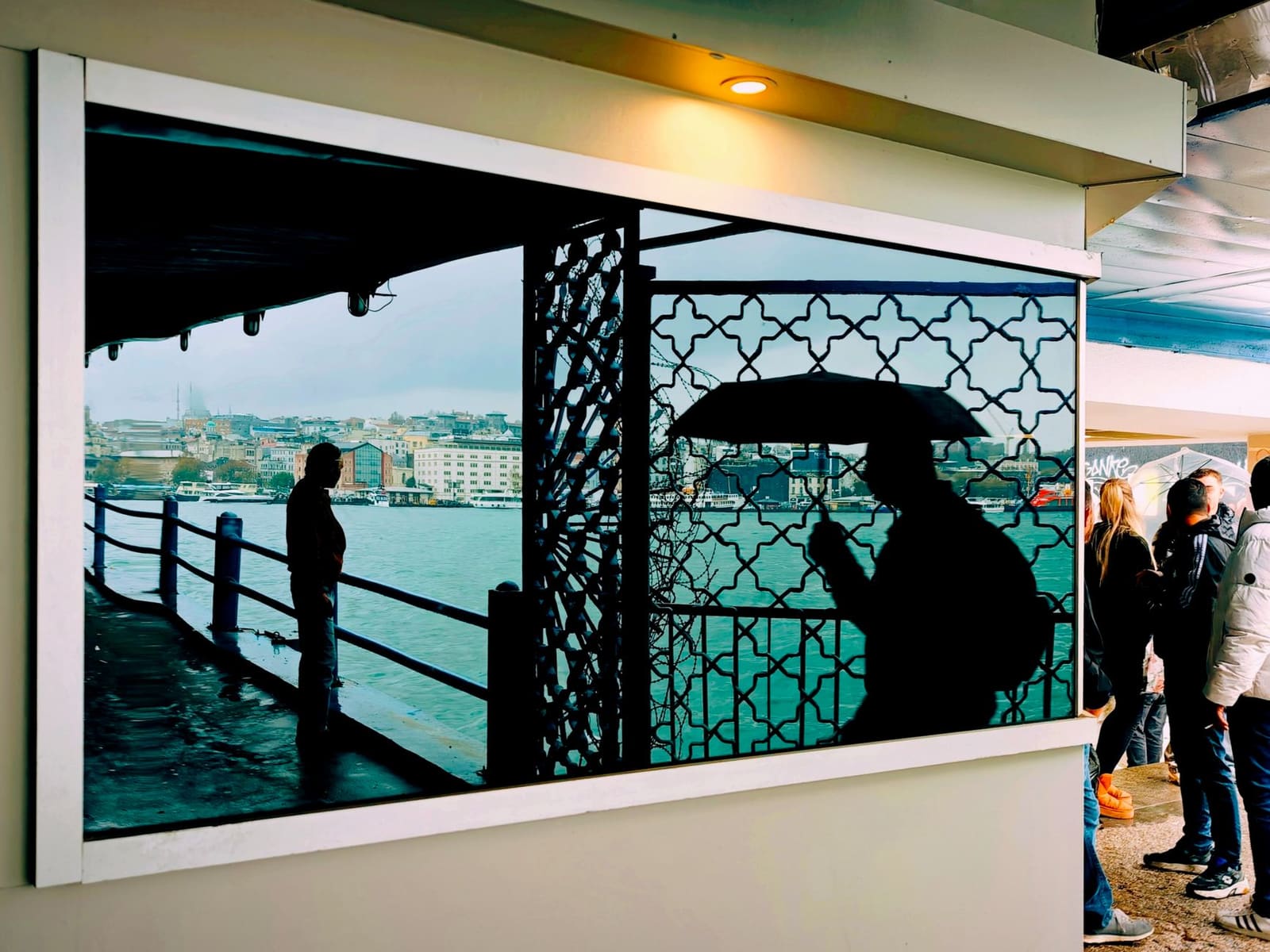
Within two minutes of clearing the dock, an attendant pushes a metal beverage cart through the central aisle. Ordering a freshly poured glass of hot black tea for 25 TL (0.50 EUR) is standard practice across every commuter route. Having small lira coins ready speeds up the exchange, though onboard counters also take contact-free bank cards. The hot tea doubles as a hand-warmer while the vessel navigates open water toward where the Bosphorus meets the Marmara Sea. For passengers planning longer excursions along the northern shoreline, reviewing practical Tarabya and Yeniköy waterfront walking route with Levantine mansions and 2026 ferry tips helps identify which historic quays have fully covered waiting halls.
Berk’s Insider Tip: When taking the ferry from Eminönü to Kadıköy in heavy rain, bypass the forward saloon doors and head for the aft lower cabin; the engine heat keeps the windows clearer and the vibration keeps damp cold out of your shoes.
Navigating the docks requires caution around slick surfaces and floating gangways. At Karaköy Pier, wind pushes water across the boarding ramp, so keep a hand on the sheltered railing until crew members secure the mooring lines. At Eminönü, the covered passenger pavilion provides shelter, but puddles collect quickly along the stone walkways near the tram lines; stick to the elevated curb edge to keep your shoes dry. At Kadıköy Pier, you can step off the gangway and walk directly through the turnstiles into the covered bus bays or follow the underground passage straight into the M4 metro line without stepping out into the weather.
Dry cultural sanctuaries for extended downpours
When a sustained front sweeps in from the Black Sea, small neighbourhood museums and damp boutique shops quickly feel claustrophobic. You need spaces with wide footprints, vaulted heights, and climate-controlled galleries where you can comfortably spend three or four consecutive hours on foot without retracing your steps every ten minutes. Here are the top five indoor sanctuaries for enduring heavy downpours, ranked by sheltered space and amenities:
- Istanbul Modern Ground-Floor Library and Colonnades (Best for seamless covered arrival): Expansive, covered access keeps you dry directly from the street while providing unhurried space to study contemporary catalogues.
- Salt Galata Research Hall (Best free public workspace): Quiet multi-tier desks with reading lamps and power sockets provide an undisturbed working environment inside a monumental hall.
- Istanbul Modern Second-Floor Sea-Facing Hall (Best daylight views): Floor-to-ceiling glass panes look onto the wet Bosphorus shipping lanes, providing daylight even under heavy cloud cover.
- Ottoman Bank Museum Vaults (Best subterranean refuge): Subterranean safe rooms and archive corridors insulate you entirely from outdoor noise and surface chill.
- Pera Museum Third-Floor Orientalist Wing (Best quiet cultural refuge): A quiet, low-lit gallery displaying the Osman Hamdi Bey collection, insulated from traffic noise on the street below.
Istanbul Modern waterfront glass and covered arrivals
Designed by Renzo Piano Building Workshop, the modern structure at Karaköy sits directly on the water and uses transparency to keep gray days from feeling grim. If you arrive by taxi, you can pull straight into the Galataport underground vehicle drop-off and take the elevator directly to the ground level without an umbrella. If arriving on foot from the Karaköy tram stop, the wide overhang of the peripheral colonnade provides overhead shelter before you clear the turnstiles.
Inside, the ground-floor bookshop and library merge into central gathering spaces with wide concrete staircases leading upward. Standard adult admission is 1,000 TL (20 EUR). The second-floor galleries house modern Turkish painting and sculpture, but the primary asset during heavy rain is the seaward-facing perimeter wall. You can sit along the indoor benches and watch cargo traffic maneuver through heavy swells while remaining protected. The main café sits on the mezzanine, but midday seating fills rapidly when tour groups arrive; visiting between 13:30 and 15:30 ensures you can find an empty table.
Salt Galata vertical marble and silent archives
A ten-minute walk up Bankalar Caddesi leads to Salt Galata, housed in the 1892 headquarters of the Imperial Ottoman Bank. The exterior is French neoclassicism, while the interior opens into a massive multi-story lightwell framed by marble balustrades and skylights.
Entry to Salt Galata is free. Unlike standard galleries where guards nudge patrons to keep moving, the facility operates primarily as a public research institute. The Salt Research hall on the lower ground level provides hundreds of linear meters of open bookshelves, large shared oak tables, and power outlets. Down in the basement vaults, the original bank safes, iron gates, and ledgers remain open for self-guided exploration. It offers an interior experience comparable in scale to older sacred spaces like the Architecture and Gardens of the Şehzade Mosque with Visiting Tips and 2026 Entry Prices, but with climate-controlled work stations and Wi-Fi.
Insider tip: When rain turns the cobblestones outside Salt Galata slick, head straight past the security gate down to the basement vault rooms. On a Thursday afternoon last November, while heavy rain washed out the tram lines below, I spent two quiet hours down in the Ottoman ledger room where the acoustic insulation muffles street noise completely.
Pera Museum compact pacing and sheltered refreshments
Set along Meşrutiyet Caddesi, Pera Museum occupies the former Hotel Bristol, rebuilt internally into a five-story vertical gallery. Standard admission is 300 TL (6 EUR). The vertical layout separates temporary modern exhibitions from the permanent collections, which include Anatolian weights and measures, Kütahya tiles, and the Orientalist painting collection.
The staircase core allows for steady, deliberate movement between floors without exposure to exterior damp. On the ground floor, Pera Café reproduces the art deco interior of the original hotel with wood paneling and low acoustic reverberation, making it a functional workspace when the streets outside are flooded. The museum opens at 10:00 Tuesday through Saturday and 12:00 on Sundays, remaining closed on Mondays.
Essential rainy day protocol and transit survival
When heavy rain hits Istanbul, road traffic freezes across both sides of the Bosphorus, and hailing a street taxi or securing a ride on Uber or BiTaksi becomes nearly impossible. Drivers routinely turn off their meters, decline short runs, or stay off congested arteries altogether. Relying on municipal rail and ferry strategies is the only dependable way to move across the city on schedule during downpours. The M2 Metro line and the T1 Tram form the primary spine for central travel, bypassing surface gridlock along choked waterfront corridors. A standard single ride on an İstanbulkart costs 46.20 TL (0.92 EUR), while an anonymous card costs 165 TL (3.30 EUR) at station vending machines.
At Taksim Station, extensive underground pedestrian concourses extend directly into the F1 Füniküler down to Kabataş and exit toward Gezi Park, Cumhuriyet Caddesi, and the Marmara Hotel. You can cross major multi-lane intersections below ground without surfacing into rain squalls. Further south, the deep Yenikapı transfer hub links the M1A, M1B, M2 Metro line, and the undersea Marmaray rail network without requiring you to step outdoors. You should follow the illuminated overhead directional signage rather than exiting to street level, keeping your transit transfers dry even though platform connections require a five- to ten-minute walk through tiled corridors.
Insider tip: During an October cloudburst at Karaköy, I watched six consecutive street vendor umbrellas fold inside out on the Galata Bridge within fifteen minutes. If you get caught without rain gear, duck into the tiled underpass beneath Kemeraltı Caddesi rather than fighting the waterfront gusts above.
At the first signs of rainfall near station stairs, street sellers deploy across curbs offering flimsy black folding umbrellas for 150 TL (3 EUR). These emergency items use lightweight stamped metal ribs that reliably snap in the gusty wind tunnels created by high-density streets and open coastal passages. Bringing your own compact umbrella with flexible fiberglass ribs or wearing an impenetrable waterproof shell saves money and prevents drenched clothing.
Planning meals around sheltered architectural hubs keeps your day moving without wet-weather delays. Practical dining strategies include using indoor food concentrations situated near transit exits. In Fatih, the sheltered dining porticos and enclosed halls of Kadınlar Pazarı, set directly beneath the arches of the 4th-century Roman Valens Aqueduct, provide hearty meals protected from the elements. Reaching the market requires an eight-minute walk from the Vezneciler metro station or a short walk from the Aksaray transit hub. The area is celebrated for slow-roasted büryan kebab, a tender pit-cooked lamb dish served over fresh pide flatbread in warm, multi-level dining rooms. Those wishing to explore historical neighborhoods nearby once the weather calms can head north toward Zeyrek Istanbul: Old City along the stone residential lanes.
| Route Corridor | Best Dry Connection | Practical Rain Strategy |
|---|---|---|
| Taksim to Historic Peninsula | M2 Metro line from Taksim Station to Vezneciler | Avoid surface buses; walk five minutes covered through university corridors toward the Grand Bazaar. |
| Beyoğlu to Bosphorus Shore | F1 Füniküler from Taksim to Kabataş | Transfer underground to the sheltered T1 Tram platforms toward Karaköy. |
| Asian Side to European Historic Core | Marmaray undersea rail | Cross below the seabed from Kadıköy (Ayrılık Çeşmesi) directly to Sirkeci or Yenikapı without ferry weather delays. |
| Sirkeci to Fatih Dining | Marmaray to Yenikapı, transfer to M2 Metro line | Exit at Vezneciler station to access covered eateries around the Valens Aqueduct. |
The Vezneciler metro exit places you within 700 meters of the aqueduct arches, where restaurants keep outdoor heating running under broad awnings all winter long.
Practical transit precautions and storm management
Wet days in Istanbul shift the pace of the city away from exposed ridge walks like the Süleymaniye courtyard toward stone arcades and enclosed maritime decks. Avoid trying to hail a yellow taxi outside Galataport once rain begins pooling on the granite stones of Kemankeş Caddesi. Traffic along the coastal avenue stalls within minutes, and empty cabs pass by without stopping. You will make better progress by walking through the covered passages of Beyoğlu or boarding a Şehir Hatları ferry to cross between continents from inside the heated lower salon.
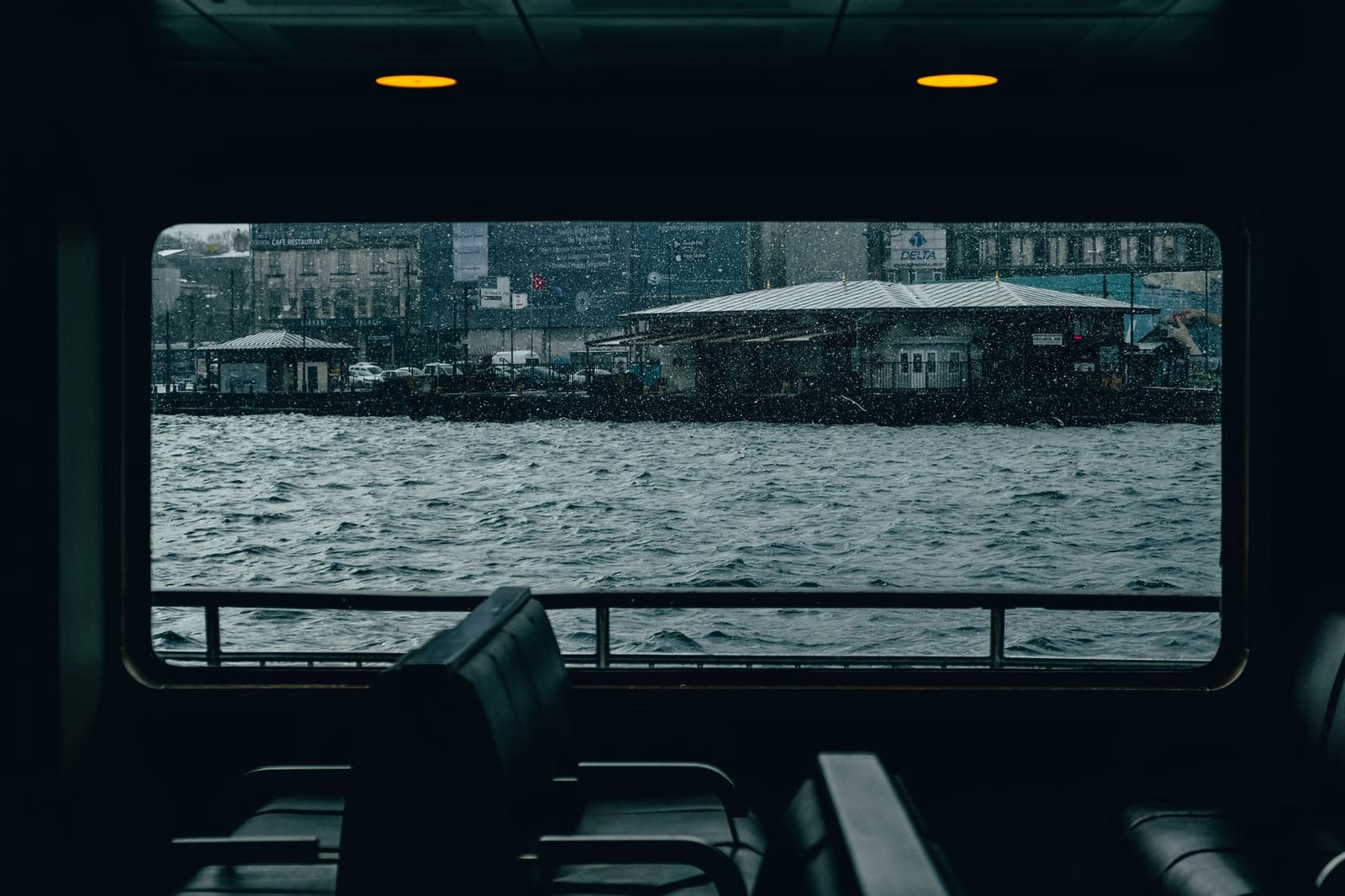
Insider tip: When boarding a ferry at Karaköy in heavy weather, bypass the open upper deck entirely and sit along the lower cabin’s wooden benches near the central tea bar, where the radiator pipes keep the cabin warm and the windows free of mist.
Do not wait until you reach a turnstile to check your transport card balance. A standard ride across the municipal metro, tram, and ferry network costs 46.20 TL (0.92 EUR). During sudden downpours at transit hubs like Eminönü and Taksim, long queues form at the yellow Biletmatik terminals as passengers struggle to feed damp banknotes into the readers. Load at least 200 TL (4 EUR) onto your Istanbulkart at the start of the morning so you can walk straight through the gates.