
I’ve spent fifteen years navigating these hills, and it still pains me to see a visitor sitting under a parasol in Sultanahmet, chewing through a limp, doughy disc that’s been sitting under a heat lamp. That isn’t lahmacun; it’s a tragedy disguised as lunch. To find the real thing—the kind of crust that shatters like parchment and carries the deep, primal scent of a wood-fired stone oven—you have to be willing to board a ferry to Kadıköy or lose yourself in the spice-laden backstreets of Fatih, a journey as rewarding as visiting The Guardian of the Bosphorus: Why I Never Get Tired of Rumeli Hisarı.
In these neighborhoods, the rhythm of the city changes. You’ll hear the frantic clatter of metal paddles hitting stone floors and smell the sharp tang of parsley and sumac hitting the air. A proper lahmacun should be so thin you can almost see the history of the Anatolian southeast through it, yet sturdy enough to hold a heap of greens once you’ve rolled it into a tight baton. Even with prices shifting—expect to pay anywhere from 100 to 150 TL (roughly $2.20 to $3.30 USD) depending on how legendary the oven is—it remains the most honest meal in the city. You don’t just eat it; you engage with it, squeezing your lemon until the last drop hits the spiced meat and ignoring the juice running down your wrist because that first, smoky crunch is the only thing that matters.
The Soul of the Stone Oven
A lahmacun cooked in an electric oven isn’t just a disappointment; it’s a tragedy. If you aren’t smelling the faint scent of oak or apricot wood burning in the back, you’re essentially eating a soggy flatbread with meat on top. The Taş Fırın (stone oven) is the only place where a lahmacun truly earns its name. It’s about the thermal mass of the bricks and the way the fire licks the ceiling, creating a convection of dry, intense heat that shocks the dough into perfection in less than three minutes.
Electric vs. Wood-Fired
Electric ovens are for malls and people in a hurry. They cook from the bottom up, often leaving the center of the dough gummy while the edges turn into cardboard. A real stone oven, fueled by wood, provides an uneven, charred kiss to the crust. You want those little “leopard spots” on the bottom. That’s where the flavor lives. If the bottom of your lahmacun is a uniform, pale tan color, the chef is cutting corners.
What “Thin” Actually Means
In the world of high-quality lahmacun, thinness is a structural achievement. We aren’t looking for a cracker that shatters into a thousand pieces the moment you touch it. A proper crust should be paper-thin but pliable. It needs to be sturdy enough to hold the weight of the minced meat and herbs, yet flexible enough to be rolled into a wrap without snapping in half. It’s a delicate balance that only a master usta (master craftsman) can achieve with a rolling pin and a hot floor.
Identifying the Sign
When you’re wandering the backstreets of Kadıköy or the historical corners of Fatih, look for the words “Taş Fırın” or “Odun Ateşi” (wood fire) painted on the window. These aren’t just marketing terms; they are a promise of quality.
Berk’s Insider Tip: If you see a chimney pumping out dark smoke behind the counter, you’ve found a wood-fired oven. If it looks like a pizza oven from a mall, keep walking.
Fatih: The Bastion of Tradition
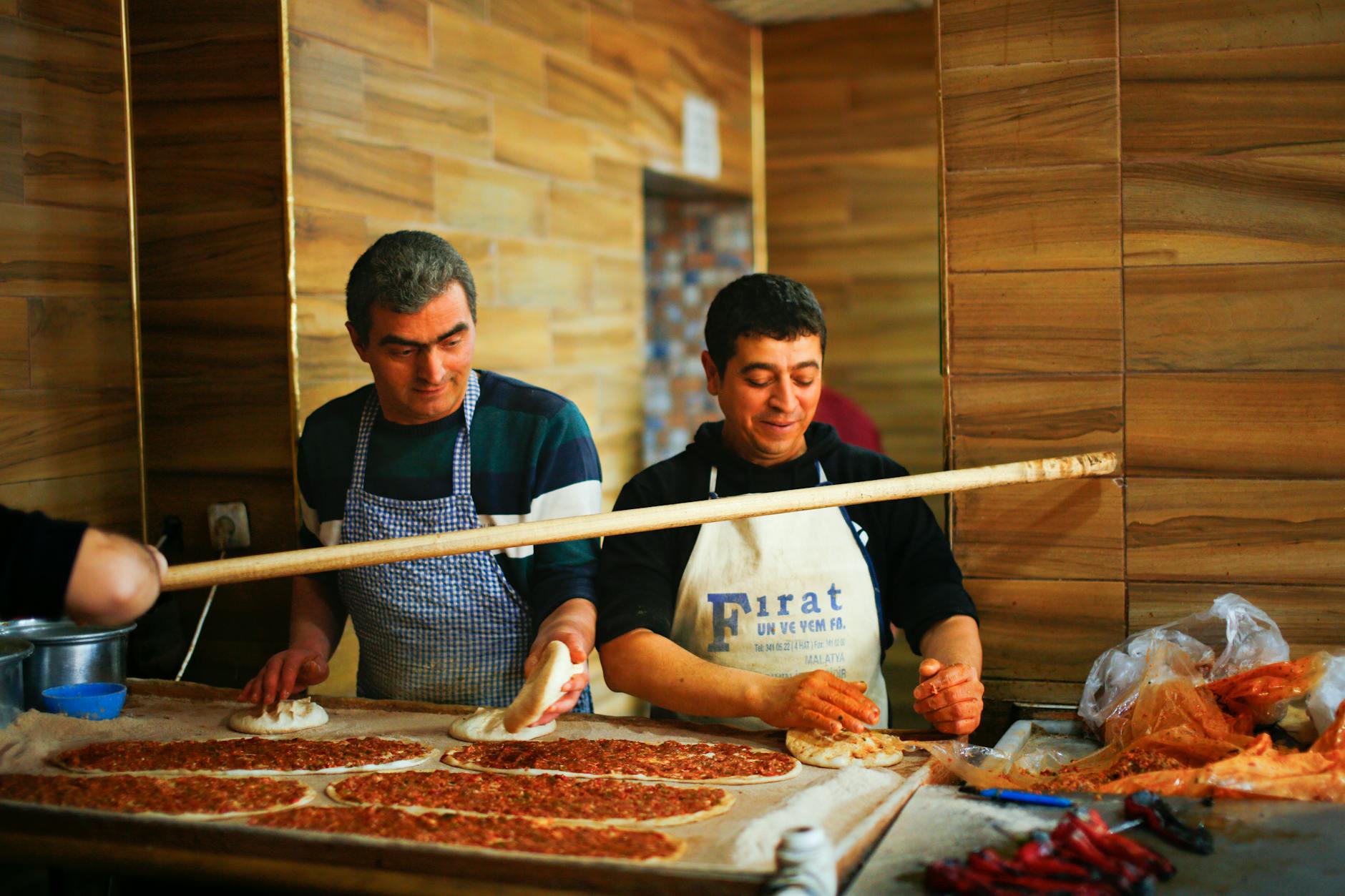
Fatih is where the recipe for lahmacun goes to be preserved, not reinvented. While the rest of the city experiments with sourdough bases or fusion toppings, the masters in these backstreets stick to the holy trinity: paper-thin dough, hand-minced meat, and an unwavering commitment to the stone oven. It’s the kind of place where the chef will likely give you a look of genuine concern if you ask for a knife and fork. You roll it, you eat it with your hands, and you move on.
The Spice of the Old City
The flavor profile here is noticeably deeper than what you’ll find in the more touristy districts. It’s all about the Isot. This isn’t just a generic chili flake; it’s a deep, fermented, smoky pepper from Urfa that gives the meat a dark, almost purple hue and a slow-building heat. Pair that with a generous dusting of Sumac on your side onions, and you get that sharp, citrusy punch that cuts right through the richness of the lamb fat.
I’ve spent fifteen years wandering these streets, and I still find that the best meals happen in the most unassuming corners. Sometimes the shops are cramped and the fluorescent lighting is a bit harsh, but the smell of toasted flour and charred peppers makes up for it. If the noise gets to be too much, do what I do: grab your order to go. A short walk brings you to my favorite view of the ancient Valens Aqueduct, where you can eat your lunch while staring at 1,600 years of history. For those who want to keep exploring the area, the Fener & Balat Walking Tour: Istanbul is right nearby.
The Fatih Essentials
- Hand-minced “Zırh” meat: Look for places that use a large curved blade to chop the meat; the texture is vastly superior to machine-ground paste.
- Smoky Isot flakes: The essential spice that provides a deep, earthy heat without scorching your palate.
- Fresh parsley bunches: Always tuck a few sprigs into your roll for a burst of freshness.
- Charred crust edges: Don’t send it back if it’s a bit dark; that wood-fired char is where the flavor lives.
- Traditional Ayran: Skip the soda and get the salty yogurt drink to balance the spices.
Kadıköy: Modern Energy, Ancient Flavors
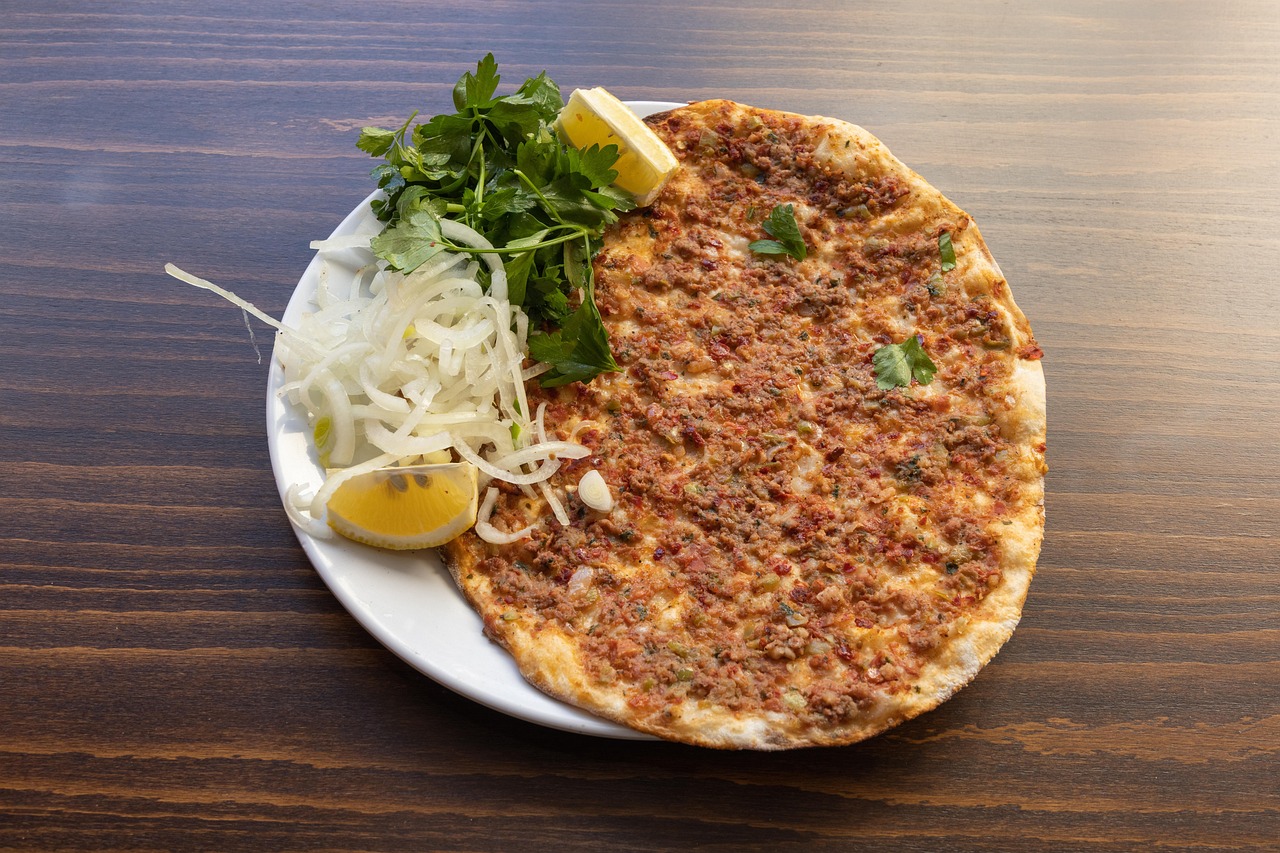
If you think the best food in Istanbul is tucked away in dusty, silent corners, Kadıköy will prove you wrong within five minutes of stepping off the ferry. This place is loud, it’s crowded, and the Kadıköy street food scene moves at a speed that would make a New Yorker dizzy. You don’t come here for a quiet candlelight dinner; you come for the crackle of a dough that’s been stretched so thin it’s almost translucent.
The High-Turnover Hustle vs. Hidden Gems
There’s a specific magic to high-turnover spots like Halil or Borsam. You might feel a bit rushed by the waiters—don’t take it personally, they’ve got a hundred hungry locals eyeing your stool. The trade-off is unbeatable: your lahmacun hasn’t been sitting under a heat lamp for even ten seconds. It’s straight from the wood-fired stone oven to your marble table.
However, if the market madness gets to be a bit much, I usually wander just two blocks inland. You’ll find smaller, family-run shops where the crust is just as crisp but the pace lets you actually breathe. Turkish food prices remain incredibly honest here; expect to pay around 100 TL (roughly $2.20) for a top-tier wrap. I once spent an hour chatting with an usta (master) in one of these side streets about the exact ratio of lamb fat to tail fat in his mince. That’s the Kadıköy way—obsession disguised as casual lunch.
The Essential Post-Meal Ritual
Lahmacun is a heavy commitment for your palate, mostly thanks to the raw onions and spicy Isot peppers. The only civilized way to reset your senses is a walk toward the sea. I never skip the transition from the frantic market to the breezy shoreline. It’s the perfect time for a walking tour of Kadıköy and the Moda coastline to clear your head, which offers a different perspective of the city than the Theodosian Walls: Istanbul.
The salt air off the Marmara Sea does wonders for your digestion. By the time you reach the tea gardens in Moda, the spice-induced endorphins settle into a perfect afternoon buzz. Grab a glass of tea—no sugar, you’ve had enough excitement—and watch the ferries cut through the wake. This is how we live.
How to Dress and Roll Like a Local
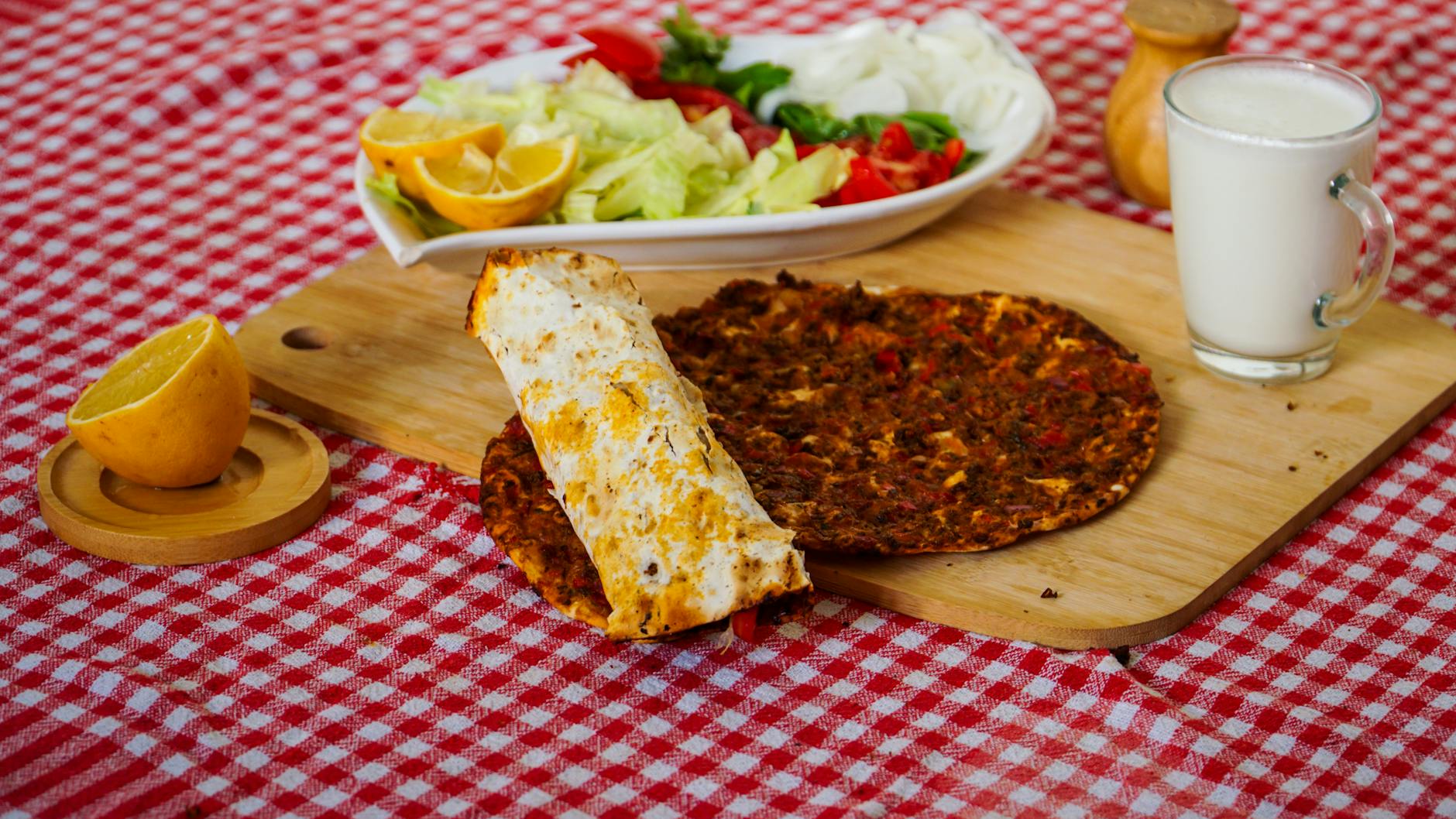
Eating a lahmacun with a knife and fork is a cardinal sin in Istanbul; you might as well be eating pizza with a spoon. The whole point of that paper-thin, stone-baked crust is to act as a flexible vessel for the toppings, not a plate for a formal dinner. To eat this like someone who actually lives here, you have to master the balance of fat and acid.
Most newcomers make the mistake of treating the salad bowl like a buffet. If you pile on mountains of chopped tomatoes and shredded lettuce, you’re going to end up with a soggy, structural disaster. Too much tomato releases juice that kills the crunch instantly. You want high-contrast flavors: the heavy, spiced lamb fat needs the sharp bite of parsley and the sour kick of lemon to really sing.
Berk’s Insider Tip: Always ask for ‘bol yeşillik’ (extra greens). The crunch of fresh parsley and the acidity of lemon are non-negotiable for cutting through the richness of the lamb fat.
The Art of the Perfect Dürüm
- Squeeze a generous amount of lemon across the entire surface of the meat while it’s still steaming.
- Pluck the leaves of fresh parsley—discard the stems—and scatter them down the center line.
- Sprinkle a few sumac-rubbed onions over the parsley if you want that deep, earthy tang.
- Fold about an inch of the bottom edge upward to create a pocket that catches the stray juices.
- Roll the lahmacun tightly from left to right into a firm cylinder (the dürüm).
- Take a bite and immediately follow it with a cold sip of Ayran to balance the spice.
The Economics of the Perfect Crunch
A lahmacun priced under 100 TL is a gamble I’m not willing to take. You might think you’re snagging a bargain in the backstreets, but a suspiciously low price usually means the “meat” is mostly soy filler or an overwhelming amount of cheap tail fat. I’ve learned the hard way: if the price is too low, you’ll be left with a heavy, waxy film on the roof of your mouth that even a liter of Ayran can’t wash away. High-quality ingredients have a floor price in this city, and honesty in the kitchen costs money.
The Value of the Blade
The real magic happens when you move into the 120-150 TL range. This is where you find the zırh technique—meat hand-chopped with a massive, crescent-shaped blade rather than being pulverized by a machine. Machine-ground meat often turns into a lifeless paste, but hand-chopped lamb retains its texture and juices. It’s the same labor-intensive philosophy you’ll encounter when exploring authentic grill culture across the city. You aren’t just paying for flour and meat; you’re paying for the usta’s wrist strength and a better grade of lamb.
| Price Range (TL) | Meat Composition | Quality Indicator | Berk’s Verdict |
|---|---|---|---|
| 60 - 85 | High fat/Soy fillers | Oily residue on paper | Skip it. |
| 100 - 150 | Lean lamb & local spices | Balanced, crisp edges | The “Local Sweet Spot.” |
| 200+ | Prime Zırh (Hand-chopped) | Visible meat texture | Gourmet experience. |
Berk’s Insider Tip: At around 100 to 150 TL (roughly $2.20 to $3.30 USD), don’t be afraid to order two. One is never enough, and three is a feast.
Lahmacun Etiquette: Frequently Asked Questions
Is lahmacun considered a snack or a full meal?
One is a snack; two or three is a meal. In the busy streets of Kadıköy, I often see locals grabbing a single wrap to eat while walking to the ferry. But if you’re sitting down for lunch, the standard order is two. The crust is thin and the topping is light, so don’t worry about overdoing it. If you’ve spent the morning trekking through Fatih, you’ll easily polish off two without feeling weighed down.
Should I pair my order with Ayran or Şalgam?
It’s the great Istanbul debate. Ayran is the classic choice; its creamy, salty profile cuts through the spice and cools your mouth. However, if you want to eat like a true Anatolian, try Şalgam (fermented purple carrot juice). It’s tangy, sharp, and definitely an acquired taste. I usually tell my friends to order both. Use the Şalgam to highlight the flavor of the meat and the Ayran as your “fire extinguisher” if the peppers are too hot.
What is the best time of day to eat lahmacun?
Lunch is peak time. You want the stone oven to be roaring and the dough to be freshly rolled. Between 12:30 and 2:00 PM, the turnover is so fast that your lahmacun will likely spend less than two minutes outside the oven before hitting your plate. I’d suggest avoiding the late-night spots that look empty; the meat mix needs to be fresh. If the shop is crowded and the air smells like toasted flour and parsley, you’ve timed it perfectly.
Conclusion
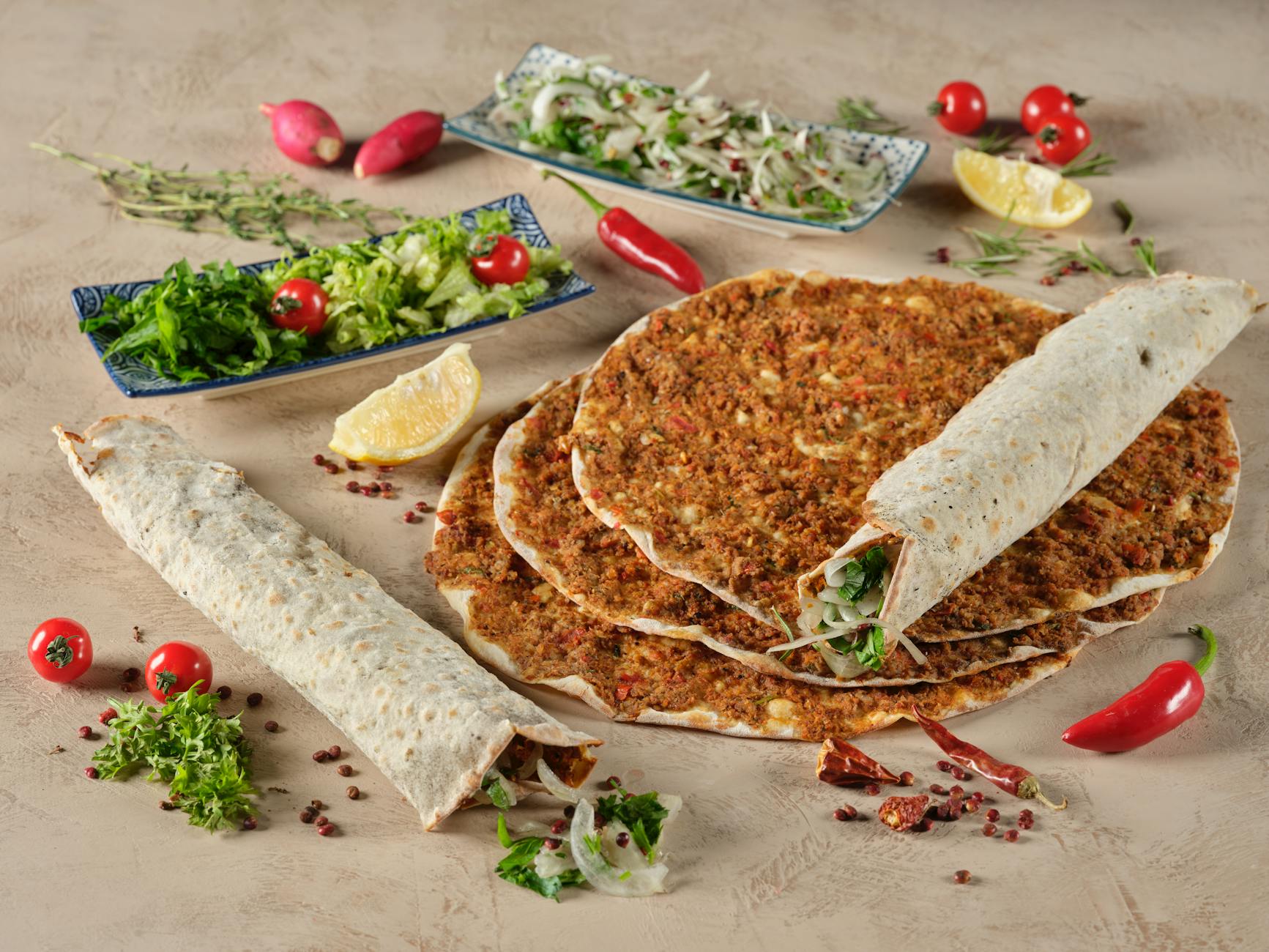
That first snap of the blistered, thin crust, followed by the sharp zing of sumac-dusted onions and a squeeze of lemon, is the precise moment you stop being a visitor and start feeling like a local. It’s a messy, glorious ritual that demands you forget your table manners for a few minutes. If you’re sticking to the sanitized cafes near your hotel, you’re missing the point. Take the ferry, let the Bosphorus wind wake you up, and track down these backstreet masters in Kadıköy or Fatih. You’ll find that the most profound culinary experiences in Istanbul rarely involve a reservation—just a plastic stool, a glass of cold ayran, and a bill that comes out to less than 150 TL (3 Euros). Do yourself a favor: skip the tourist traps, roll up your sleeves, and eat where the smoke from the stone oven is the only advertisement they need.