
Theodosian Walls: Istanbul's Ancient Hidden Landmark
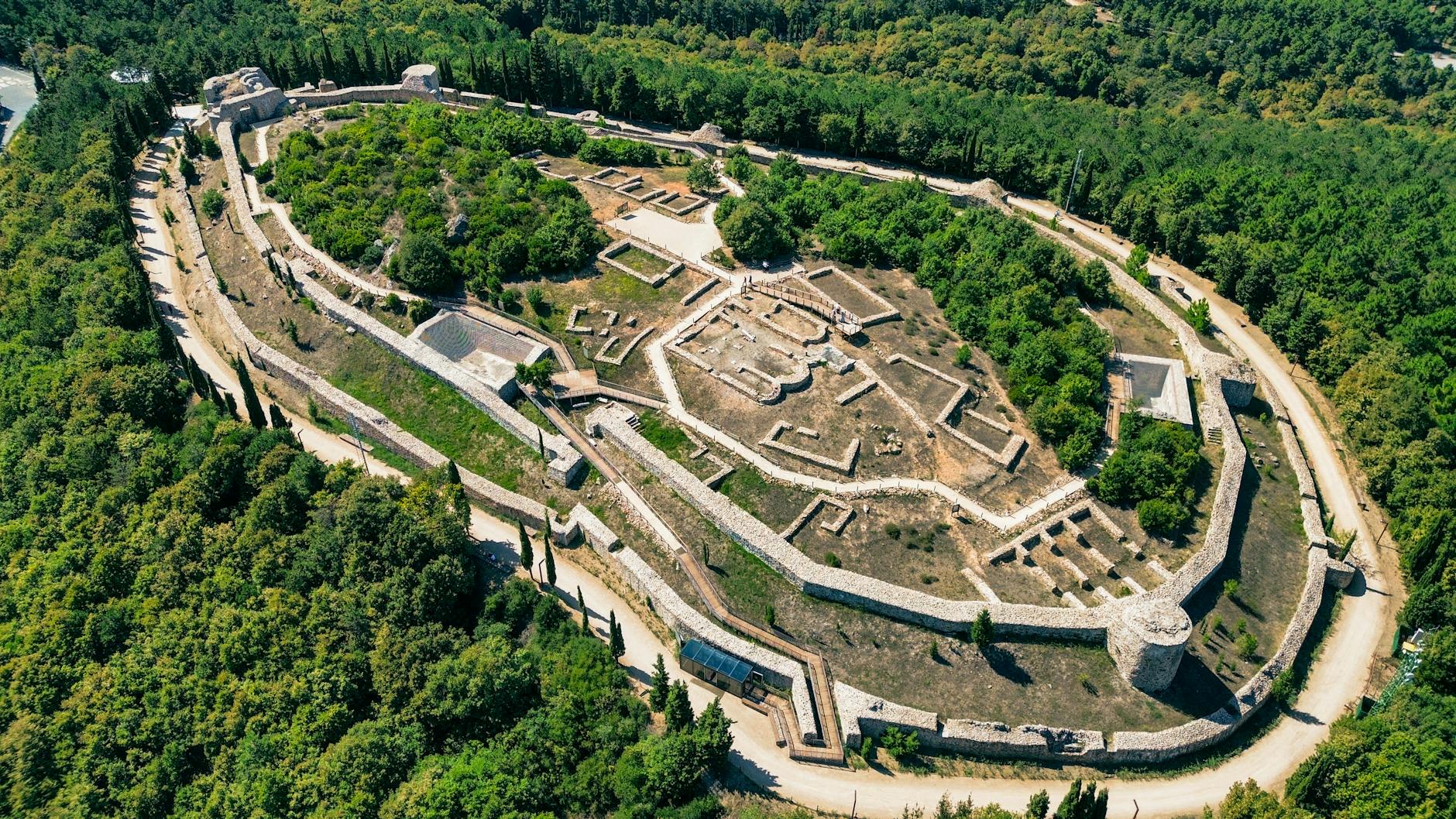
Whenever the chaotic energy of the Grand Bazaar or the polished marble of the Sultanahmet squares starts to feel a bit too loud, I find myself heading west. I’ve lived in Istanbul for fifteen years now, and while I love the iconic skyline as much as any local, my heart really belongs to the rugged, ivy-covered frontier that once marked the end of the known world.
Standing at the base of the Triple Walls during the golden hour, you realize these aren’t just ruins; they are the 1,600-year-old skeleton of a city that refused to fall. While the crowds at the Blue Mosque are just a few miles away fighting for the perfect selfie, I’m usually here alone, or perhaps with a stray cat for company, touching limestone blocks that have literally weathered the wrath of Attila the Hun and the madness of the Fourth Crusade. There’s a specific smell that lingers near the Yedikule section—a mix of damp earth, ancient dust, and the faint scent of woodsmoke from the nearby neighborhoods. It’s a sensory bridge back to Byzantine Istanbul, a time when these Constantinople fortifications were the most formidable defense system in the medieval world.
For a transport and culture geek like me, the Theodosian Walls represent the ultimate off the beaten path Istanbul experience. They aren’t sanitized or cordoned off behind velvet ropes; they are woven into the fabric of modern life. You’ll see local families tending to bostans (ancient vegetable gardens) in the shadows of the ramparts and laundry hanging from towers that once housed elite guards. It is raw, it is gritty, and it is undeniably beautiful.
But because these walls stretch for nearly seven kilometers from the Sea of Marmara to the Golden Horn, knowing where to start—and how to navigate the complex layers of history and modern-day life that surround them—can be daunting for a first-timer. That’s why I want to take you on a personal tour of my favorite stretches. I’m going to show you the secret gates, the best vantage points for a sunset view that will take your breath away, and the stories hidden within these stones that the tour buses never mention. Let’s take a walk through the city’s forgotten shield.
A Relic of Power: Understanding the Genius of Theodosius II
When you stand at the foot of the Theodosian Walls, you aren’t just looking at old stones; you are standing before the most sophisticated defensive system of the ancient world. I’ve lived here for 15 years, and even today in 2026, with our glass skyscrapers and high-speed Marmaray trains, these ruins still humble me. To truly understand why Byzantine Istanbul—then known as Constantinople—survived for a millennium while other empires crumbled, you have to look at the fear and the foresight of the 5th century.
The 5th Century: A City Under Siege
Back in 412 AD, the Emperor Theodosius II was just a boy, but his advisors knew the city was in trouble. The Roman Empire was fracturing, and the “Scourge of God,” Attila the Hun, was galloping toward the gates. The old walls built by Constantine were no longer enough to hold the growing population or the advancing siege engines.
The Romans needed a shield that was physically impassable. What they built was a masterpiece of Constantinople fortifications that stretched 6.5 kilometers from the Sea of Marmara to the Golden Horn. It wasn’t just a wall; it was a layered trap designed to exhaust, demoralize, and eventually crush any army that dared to approach.
The Triple-Wall Engineering Marvel
The “genius” of the walls lies in their depth. Most cities had a single wall; Theodosius built three. If you were an invader, you didn’t just have to scale a fence—you had to survive a lethal obstacle course.
- The Moat (Hendek): First, you faced a massive trench, 18 meters wide and 7 meters deep. It was often kept flooded, forcing soldiers into the open under a hail of arrows.
- The Outer Wall (Dış Sur): If you crossed the moat, you met a 9-meter-high wall protected by 96 towers. This was the first line of active combat.
- The Inner Wall (İç Sur): This was the “big brother.” Standing 12 meters high and 5 meters thick, this wall housed the heavy infantry. The towers here were staggered with the outer towers, creating a “killing zone” where invaders were caught in a crossfire from two different heights.
While the [Suleymaniye Mosque] represents the spiritual and aesthetic peak of the later Ottoman era, these walls represent the raw, muscular endurance of the Roman spirit. Walking along the ramparts today, you can still feel that weight of history.
Survival Against Nature and Man
What amazes me most is how these stones survived the earth itself. In 447 AD, a massive earthquake leveled large sections of the walls just as the Huns were approaching. In an incredible feat of communal will, the citizens of the city rebuilt the entire system in just 60 days.
For the next thousand years, these walls rebuffed everyone: Avars, Persians, Arabs, and Bulgars. They only fell twice—once to the Fourth Crusade in 1204 (due to a gate left unlocked) and finally to Mehmed the Conqueror in 1453, and even then, it took the world’s first “super-cannons” to make a dent.
Today, as we navigate 2026, the city is much more accessible. If you’re heading out to the Yedikule section (the Fortress of the Seven Towers), expect to pay around 250 TL for entry—that’s roughly 5 Euro or 5.50 USD at current rates. It is a small price to pay to walk through a gateway that held back the middle ages.
| Feature | Theodosian Walls (Byzantine) | Great Wall of China (Comparison) |
|---|---|---|
| Construction Style | Triple-layered defensive system | Continuous linear barrier |
| Primary Material | Alternating brick and limestone | Earth, stone, and brick |
| Max Height | 12 meters (Inner Wall) | 14 meters (at highest points) |
| Total Length | 6.5 Kilometers (Land Walls) | 21,196 Kilometers |
| Survival Status | 70% still visible in urban fabric | Varied (some parts reconstructed) |
| Key Innovation | The “Killing Zone” (crossfire) | Signal towers and mountain integration |
The scale of the Theodosian Walls is often lost on those who stay in the tourist bubbles of Sultanahmet. But for those of us who live here, they are a reminder that Istanbul is a city built on layers of resilience. In the next section, I’ll show you the best spots to grab a çay (tea) while overlooking these ancient stones.
Navigating the Frontier: How to Get to the Walls Like a Local
Getting to the Theodosian Walls isn’t quite as straightforward as hopping off at Sultanahmet for the Blue Mosque, but that’s exactly why I love it. It feels like you’re heading toward the edge of the world—or at least the edge of the Old City. Even in 2026, with Istanbul’s ever-expanding metro network, the walls remain a bit of a “connoisseur’s commute.”
To navigate this like a local, you first need to understand that the walls stretch nearly 7 kilometers. You don’t just “go to the walls”; you pick a gate. Here is how I usually break it down for friends visiting me here.
The Southern Start: Kazlıçeşme and the Marmaray
If you want to experience the walls in their full, dramatic progression from the Sea of Marmara up to the Golden Horn, I highly recommend starting at the southern end. The easiest way to get there is via the Marmaray, our deep-undersea commuter rail.
Take the Marmaray to the Kazlıçeşme station. From there, it’s a short walk to the Yedikule (Fortress of the Seven Towers). Back when I moved here 15 years ago, this area felt quite isolated, but today it’s a beautifully rugged starting point. A single ride on your Istanbulkart will cost you about 40 TL (less than $1 USD at the current rate of 1 USD = 45 TL), which is a steal for a journey that takes you across continents. Understanding the nuances of the ticketing system can be tricky, so I always suggest checking out this guide to public transport in Istanbul before you set out.
The Heart of the Walls: The T4 Tram
For those who want to jump straight into the most impressive, restored sections near the Chora Church or the Mihrimah Sultan Mosque, the T4 Tram line is your best friend.
You can transfer to the T4 at the Topkapı station (not to be confused with the palace!). I love the T4; it’s a “high-floor” tram that feels a bit more rugged than the sleek T1 you see in Eminönü. Hop off at the Edirnekapı stop. This puts you at the highest point of the city. From here, the views of the crumbling towers against the modern Istanbul skyline are simply unbeatable. If you’re coming from the Sultanahmet area, expect the trip to take about 45 minutes, costing roughly 70-80 TL (1.50 Euro) if you’re transferring between lines.
Gear Up for the Frontier
Walking the walls is not a manicured park experience. This is an ancient “frontier,” and it demands respect. You’ll be walking on uneven cobblestones, packed dirt, and—if you’re brave—narrow stone ledges.
I cannot stress this enough: leave the sandals at the hotel. You need sturdy footwear with good grip. Exploring the walls is an adventure that requires a bit of a “scavenger” mindset. You’ll find yourself ducking under low arches and navigating around local tea gardens that have sprouted in the shadows of the bastions.
Berk’s Insider Tip: Avoid the wall walk on rainy days. The limestone can be incredibly slippery, and some of the best vantage points involve climbing uneven, ancient stairs that don’t have handrails.
Bring a bottle of water and a sense of curiosity. In 2026, the city is busier than ever, but out here, between the massive inner and outer walls, you can still find a pocket of silence that feels like the 5th century.
The Golden Gate and Yedikule: Where Emperors Entered in Triumph
If you walk far enough south along the base of the walls, the air starts to change. The noise of the city fades into a heavy, reverent silence as you approach the southwestern corner of the old city. This is where you’ll find the Porta Aurea, or the Golden Gate of Constantinople. In my fifteen years of wandering these stones, no other spot makes me feel the sheer weight of time quite like this.
The Gilded Entrance of an Empire
Back in the 5th century, this wasn’t just a gate; it was a statement. The Golden Gate of Constantinople was the primary ceremonial entrance for Byzantine Emperors returning from successful military campaigns. Imagine the scene: a massive triple-arched gate made of polished white marble, flanked by two towering pylons, and literally covered in gold leaf and bronze statues of winged Victories and elephants.
When you stand before it today, you have to use your imagination, because the arches are bricked up. Legend has it that the Byzantines sealed the gate because of a prophecy that a Christian liberator would one day enter through it. When the Ottomans took the city in 1453, they kept it sealed for much the same reason. Even though you can’t walk through it, the massive marble blocks and the sheer scale of the structure tell a story of an empire that believed it would last forever. It was the final stop on the Mese (the Middle Way), the main arterial road of Byzantine Istanbul, leading straight to the heart of the Hagia Sophia.
From Triumphal Arch to Fortress
Shortly after the conquest, Sultan Mehmed the Conqueror looked at this site and saw more than just a gate; he saw a defensive powerhouse. He added three massive round towers to the four existing Byzantine ones, connecting them with thick curtain walls to create the Yedikule Fortress (meaning “Seven Towers”).
It’s a fascinating architectural hybrid. You have the ancient, square Roman towers standing side-by-side with the circular Ottoman fortifications. It’s much grittier than the scenic [Rumeli Fortress] (https://istanbulcool.com/rumeli-fortress-guide-istanbul) on the Bosphorus. While that fortress was built for naval blockade, Yedikule was built to protect the city’s treasury, house the state archives, and, eventually, serve as one of the most feared prisons in the world.
Walking through the inner courtyard today in 2026, the entry fee is about 500 TL (roughly 10 Euro or 11 USD), which is a bargain for the history you’re about to soak in. The courtyard is often quiet, a stark contrast to the bustling squares of Sultanahmet. It feels like a secret garden—if that garden was designed by a medieval warlord.
Whispers from the Abyss: The Dungeons
This is where the atmosphere takes a turn toward the gothic. Yedikule wasn’t just a fort; it was the “Dungeons of the Seven Towers.” If you were a disgraced vizier, a rebellious janissary, or a foreign ambassador whose country had just declared war on the Ottomans, this is where you were sent.
The most chilling spot is the Tower of Inscriptions. As you step inside, the temperature drops. If you look closely at the wooden beams and the stone walls, you can still see the carvings left by prisoners from centuries ago—names, dates, and desperate prayers in Latin, Greek, and Old Ottoman.
The most tragic story, however, is that of the young Sultan Osman II. In 1622, at just 17 years old, he was imprisoned here by his own Janissaries and ultimately executed within these walls. There is a palpable, heavy energy in the air near the execution chamber. It’s not “haunted” in a cheap, touristy way, but rather in a way that demands respect. You are standing where the course of history was violently shifted.
What to Look for Within the Walls
To make the most of your visit, keep an eye out for these specific details that many people walk right past:
- The Eagle Reliefs: Look for the faint traces of the Byzantine double-headed eagle carved into the marble of the Golden Gate.
- The Ambassador’s Inscriptions: In the wooden floors of the towers, look for the scratched names of European diplomats who spent years here waiting for their release.
- The View from the Battlements: You can still climb some of the stairs (carefully!). From the top, you get a panoramic view of the Marmara Sea on one side and the endless sprawl of modern Istanbul on the other.
- The Fatih Mosque: Inside the fortress courtyard, you’ll see the ruins of a small mosque and a minaret, built for the garrison that once guarded the treasury.
As you leave through the small side gate, you’ll likely see local kids playing football against the 1,600-year-old stones. That’s the beauty of this city in 2026; the most legendary monuments aren’t behind velvet ropes—they are the backdrops to everyday life. Grab a simit (sesame bread ring) from the vendor outside for 25 TL and take a moment to look back at the towers. They’ve seen empires rise, gold shine, and kings fall, yet they still stand as the city’s forgotten shield.
The Living Walls: Vegetable Gardens and Local Life
If you walk alongside me near the Gate of Silivri, you’ll notice something that most guidebooks completely overlook. It’s not just the height of the limestone blocks or the scars of cannon fire that tell the story of this city—it’s the smell of fresh arugula and wet earth rising from the base of the fortifications.
The Green Legacy of the Moats
These are the bostans, the historic urban vegetable gardens that have occupied the moats of the Theodosian Walls for centuries. To me, this is the most fascinating example of Byzantine agriculture still in practice today. Even now, in 2026, as Istanbul races toward a high-tech future, these small plots of land remain a stubborn, beautiful link to the past.
For over 1,500 years, these gardens have fed the city. When I chat with the gardeners—some of whom come from families that have tilled this specific patch of dirt for generations—they speak of the soil as if it were a living relative. In the shadow of the crumbling towers, you’ll see rows of lettuce, mint, and seasonal greens being watered by hand. It’s a slow, rhythmic way of life that feels entirely removed from the chaotic traffic of the E-5 highway just a few hundred meters away. Exploring these gardens is a masterclass in off the beaten path Istanbul, where the city’s survival isn’t just about military might, but about the ability to grow food in the heart of a fortress.
Where History Meets the Clothesline
What I find most moving about this stretch of the city is the lack of “museum-ification.” In many European cities, ruins of this age would be sanitized, roped off, and silent. But here? The walls are part of the mahalle (neighborhood) fabric.
As we wander deeper into neighborhoods like Ayvansaray, you’ll see the juxtaposition that defines Istanbul local culture. You’ll see a 5th-century Roman arch used as a sturdy anchor for a laundry line draped with colorful shirts and bedsheets. You’ll see local kids playing soccer against a section of the wall that once withstood the siege of 1453, the stones worn smooth by decades of bouncing balls.
It’s deeply personal for me because it reminds us that history isn’t just something to be studied—it’s something to be lived in. When you see an elderly woman shaking out a rug from a wooden balcony that practically touches a Byzantine tower, you realize that for the people here, the “Great Shield of Byzantium” isn’t a monument; it’s just the back wall of their garden.
Connecting with the Mahalle
To truly experience the “human” side of the ruins, you have to slow down. Don’t be afraid to offer a “Merhaba” (Hello) or a “Kolay Gelsin” (May it be easy for you—a standard Turkish greeting for anyone working). In Ayvansaray, the pace of life mimics the ancient stones: heavy, slow, and resilient.
I often stop for a glass of tea at a local coffeehouse here. Even with the 2026 exchange rates (where your 1 USD gets you about 45 TL), a tea is still a modest 25 TL—a small price for the hospitality you’ll receive. The locals might ask where you’re from, and once they realize you’re not just another tourist looking for a photo op, the stories start to flow.
After a long morning of walking, your appetite will definitely kick in. I always tell my friends that to understand the soul of a neighborhood, you have to eat where the workers eat. Finding a local esnaf lokantası is the best way to get a real taste of home-style cooking while supporting the local economy.
Berk’s Insider Tip: For the best ‘Esnaf Lokantası’ experience near the walls, head to ‘Safa Meyhanesi’ near Yedikule. Don’t let the name fool you; during the day, they serve incredible traditional stews that have fed locals for decades.
A Walk Through the Gates: My Recommended 5km Trek
If you’ve got a sturdy pair of walking shoes and a morning to spare, I want to take you on my favorite Istanbul walking tour. This isn’t the kind of walk you’ll find in the glossy brochures at your hotel in Sultanahmet. This is a journey through the “backyard” of history. We are going to track the walls from the south, starting where the fortifications meet the blue of the Sea of Marmara, and head north toward the Golden Horn.
In 2026, even with the city expanding at a dizzying pace, this 5km stretch remains a sanctuary of silence and stories. Before we start, grab a simit (a sesame-crusted bread ring) from a street vendor for about 30 TL—that’s just about 0.60 Euro or 0.65 USD at current rates—and let’s get moving.
1. The Starting Point: Mermer Kule and the Sea
We begin at the Mermer Kule (Marble Tower), right on the coast road. This is where the land walls meet the sea walls. Stand here for a moment and look out at the Marmara. To your left is the ultra-modern skyline of Zeytinburnu, and to your right, the ancient stones that have stood for over 1,600 years. It is the perfect introduction to the Theodosian Walls hike, showing you exactly how Istanbul bridges the gap between the ancient and the futuristic.
2. Through the Fortress of Yedikule
Head inland toward the Yedikule Hisarı (Fortress of the Seven Towers). While the fortress itself is a paid museum (entry is roughly 500 TL or 10 Euro), you can appreciate its massive presence from the path outside. This was the “Golden Gate,” the ceremonial entrance for returning Emperors. As you walk past, notice the vegetable gardens (bostans) nestled in the former moats. These gardens have been farmed since the Byzantine era—a living piece of agricultural history right in the middle of a megacity.
3. The Grandeur of Belgrad Kapı
As you continue north, you’ll reach Belgrad Kapısı (Belgrad Gate). For me, this is the most evocative part of the trek. It was heavily restored in the late 20th century, which allows you to see the true scale of the triple-wall system. You can actually climb some of the accessible stairs here.
Belgrad Gate gets its name because Sultan Suleiman the Magnificent settled artisans from Belgrade here after his 1521 conquest. It feels sturdy, defensive, and intimidating. When you stand in the “inner ward” between the two main walls, you realize that any invading army would have felt like they were walking into a deathtrap.
4. Local Life at Silivri Kapı
A further twenty minutes north brings you to Silivri Kapısı (Silivri Gate). This area feels much more like a traditional Turkish mahalle (neighborhood). You’ll see local men sipping çay (tea) at wooden tables and laundry hanging from windows built right into the secondary fortifications.
The significance of the Silivri Gate lies in its role during the recapture of the city from the Latins in 1261. Today, it’s a quiet spot, but if you look closely at the inscriptions above the archway, you can still see the names of the Byzantine emperors who repaired these stones after earthquakes. It’s a humble, spiritual place, flanked by historic cemeteries that offer a peaceful, if somber, atmosphere.
5. Finding the Contrast: The Best Viewpoints
Between Silivri Gate and the Mevlanakapı section, the path rises slightly. This is where you’ll find my favorite Istanbul historical landmarks photo op. If you look west, you see the 2026 skyline—glass towers, the glistening roofs of new shopping hubs, and the constant flow of traffic on the peripheral highways. Then, turn 180 degrees to look east into the Old City. You’ll see the domes of the ancient churches and mosques rising through the haze. The contrast is a physical manifestation of Istanbul’s soul: one foot in the future, one foot firmly planted in the dust of empires.
Berk’s Insider Tip: If you want the perfect sunset photo, the stretch of wall near the Mihrimah Sultan Mosque at Edirnekapı is the highest point in the city. The view of the sun dipping behind the wall’s silhouette is unmatched.
6. The Final Push to Edirnekapı
The final leg takes you toward the district of Edirnekapı. By now, your legs might be feeling the 5km, but the sight of the walls merging with the massive Mihrimah Sultan Mosque—designed by the great architect Sinan—is your reward. You’ve just walked the same line that stopped Attila the Hun and the Crusaders.
Take a moment at a local kahvehanesi (coffee house) near the gate. A Turkish coffee will cost you about 75 TL (1.50 Euro). Sit back, look at the dust on your shoes, and realize you’ve just traversed the most successful defensive system in human history. Not a bad way to spend a Tuesday morning, right?
From Siege to Sanctuary: The Panorama 1453 Museum and Chora Connection
If you’ve followed my path this far along the fortifications, your boots are likely dusted with the history of centuries, and your mind is probably filled with the quiet, stoic dignity of these ruins. But now, I want to take you to the exact spot where that silence was shattered forever. We are heading toward the Topkapı Gate—not the famous palace downtown, but the “Gate of the Cannon”—the site of the most dramatic turning point in the city’s 2,700-year life.
The Roar of the Great Cannon
As we stand in the shadow of the gate, try to imagine the morning of May 29, 1453. This specific stretch of the Theodosian Walls was where the fate of empires was decided. To truly feel the weight of the Fall of Constantinople, you must step inside the Panorama 1453 History Museum, located just a few minutes’ walk from the Topkapı T1 Tram station.
Walking into the museum’s central chamber is an experience that still gives me goosebumps, even after 15 years of living here. It is a 360-degree “cyclorama” that places you right in the center of the Ottoman conquest Istanbul. Above you, the sky is filled with the smoke of the Basilic—the massive Hungarian-designed cannon that finally cracked the “unbreakable” Byzantine defense.
The detail is staggering. You’ll see the Janissaries rushing the breaches and the last Byzantine Emperor, Constantine XI, reportedly throwing off his royal regalia to die as a common soldier in the fray. It’s loud, it’s visceral, and in this 2026 version of the exhibit, the new augmented reality layers bring the sounds of clashing steel right to your ears. Entry for international visitors currently sits at about 600 TL (roughly 12 Euros or 13.50 USD), and it is worth every kuruş (cent) to see the wall you just walked on through the eyes of those who breached it.
A Walk Toward the Divine
Once your ears have stopped ringing from the imagined thunder of the cannons, I want you to walk with me about fifteen minutes north, deeper into the neighborhood of Edirnekapı. We are moving from the chaos of the Ottoman conquest Istanbul toward the spiritual heart of Byzantine Istanbul: the Chora Mosque, known locally as Kariye.
If the walls represent the city’s muscle and bone, the Chora represents its soul. Though it was converted from a museum back into a mosque some years ago, it remains open to visitors outside of prayer times. This is where you find the finest 14th-century mosaics and frescoes in the world.
The transition from the violent siege scenes at the Panorama to the serene, golden mosaics of the Chora is, for me, the most profound way to experience Istanbul. Here, the “Sanctuary” begins. The depictions of the Anastasis (the Resurrection) in the side chapel—where Christ pulls Adam and Eve from their tombs—are so vibrant they look like they were painted yesterday, not 700 years ago.
Ending the Day Like a Local
By now, you’ve earned a rest. Just outside the Chora’s walls, there are several small, leafy cafes. In our current 2026 economy, a glass of demli çay (well-brewed tea) will run you about 25 TL, and a rich Turkish coffee is around 75 TL (about 1.50 Euros).
Sit back and look up at the walls one last time. From here, you can see how the city has absorbed its scars. The Theodosian Walls aren’t just a dead monument; they are a living spine that connects the violent birth of the Ottoman era to the breathtaking artistic legacy of the Byzantines. You’ve walked the line where one world ended and another began—and that, my friend, is the true secret of being Berk.
Why the Walls Matter: Berk’s Final Reflection
As the sun begins to dip behind the horizon of the Marmara Sea, casting long, amber shadows across the fractured limestone, I’m always reminded of why I’ve spent fifteen years returning to these stones. There is a specific feeling that permeates the air here—something we locals call hüzün.
The Soul of Istanbul: Embracing Hüzün
In Turkish culture, hüzün isn’t just simple sadness; it’s a collective, poetic melancholy that comes from living in a city that has seen empires rise and fall for millennia. You see it in the way the ivy clings to the crumbling bricks and the way the wind whistles through the arrow slits. While the renovated palaces of Sultanahmet offer a polished version of the past, the Theodosian Walls offer the truth. They are a physical manifestation of time passing—beautifully weathered, unapologetically scarred, and deeply soulful. To sit on a fallen column and watch the local children play football against a 1,600-year-old fortification is to understand the heartbeat of the real Istanbul.
The City’s Most Honest Storyteller
I consider this the most honest historical site in the city. There are no velvet ropes here, no overpriced gift shops, and no crowds of tour buses. It is one of the few hidden gems Istanbul still keeps close to its chest. In 2026, as the city becomes increasingly digital and fast-paced, these walls remain a sanctuary of raw, tactile history.
Unlike the Hagia Sophia or the Topkapi Palace, which have been “frozen” in time for museum-goers, the walls are still part of the living neighborhood. They host vegetable gardens (bostans), provide shade for tea houses, and serve as the backdrop for daily life in the Fatih and Zeytinburnu districts. This lack of pretense is what makes them so special for the discerning traveler.
A Note for Your Journey
If you decide to follow my path, my final Istanbul travel tips are simple: go slowly. Don’t try to “do” the walls in an hour. Bring a bottle of water and perhaps a simit (sesame bread) from a local bakery. At current 2026 rates, where 1 USD equals 45 TL and 1 Euro equals 50 TL, you’ll find that a day spent exploring this open-air museum is as light on the wallet as it is heavy on the heart.
Put your phone away for a moment. Feel the cool dampness of the stone. Listen to the call to prayer echoing from the minarets of the inner city and responding from the suburbs outside. You aren’t just looking at a monument; you are standing inside the very shield that allowed Western civilization to survive.
I’ll see you somewhere along the ramparts.
Warmly,
Berk
Berk
Conclusion
After fifteen years of navigating this city’s labyrinthine streets and decoding its complex transit maps, I’ve realized that Istanbul doesn’t always reveal its best self in the center of a crowded square. For me, the personal verdict is simple: the Theodosian Walls are the most honest piece of history we have left. They aren’t curated, they aren’t polished, and they don’t demand your patronage. They just exist, standing as a silent witness to every triumph and tragedy this city has weathered for over 1,600 years.
Whenever the chaos of modern Istanbul feels a bit too loud, I find myself heading west. I often tell my friends that if the landmarks of Sultanahmet—the Hagia Sophia and the Blue Mosque—are the city’s polished jewels, then these crumbling, weed-strewn ramparts are undoubtedly its soul. The jewels are what you show off to guests, but the soul is what keeps the heart beating when things get tough.
My final piece of advice for you isn’t just to “see” the walls, but to move with them. Don’t just glimpse them from a taxi window on your way to the airport. Instead, take the T4 tram to Edirnekapı or start down at the Yedikule Fortress. Give yourself a full afternoon to walk the perimeter towards the Golden Horn as the sun begins to dip. Wear your sturdiest shoes—the terrain is as uneven as the history—and bring a thermos of tea. Sit in the shadow of a gatehouse and watch the local kids play football in the ancient moats; it’s the most beautiful juxtaposition of the eternal and the everyday you’ll find in Turkey.
Once you’ve stood there and felt the weight of those stones, I’d love to hear from you. Did the silence of the old fortifications speak to you as it does to me? Or perhaps you found a hidden garden tucked into a bastion that I’ve yet to discover? Drop me a note and share your story.
Warmly,
Berk
Comments
Share your thoughts with us