
The Guardian of the Bosphorus: Why I Never Get Tired of Rumeli Hisarı
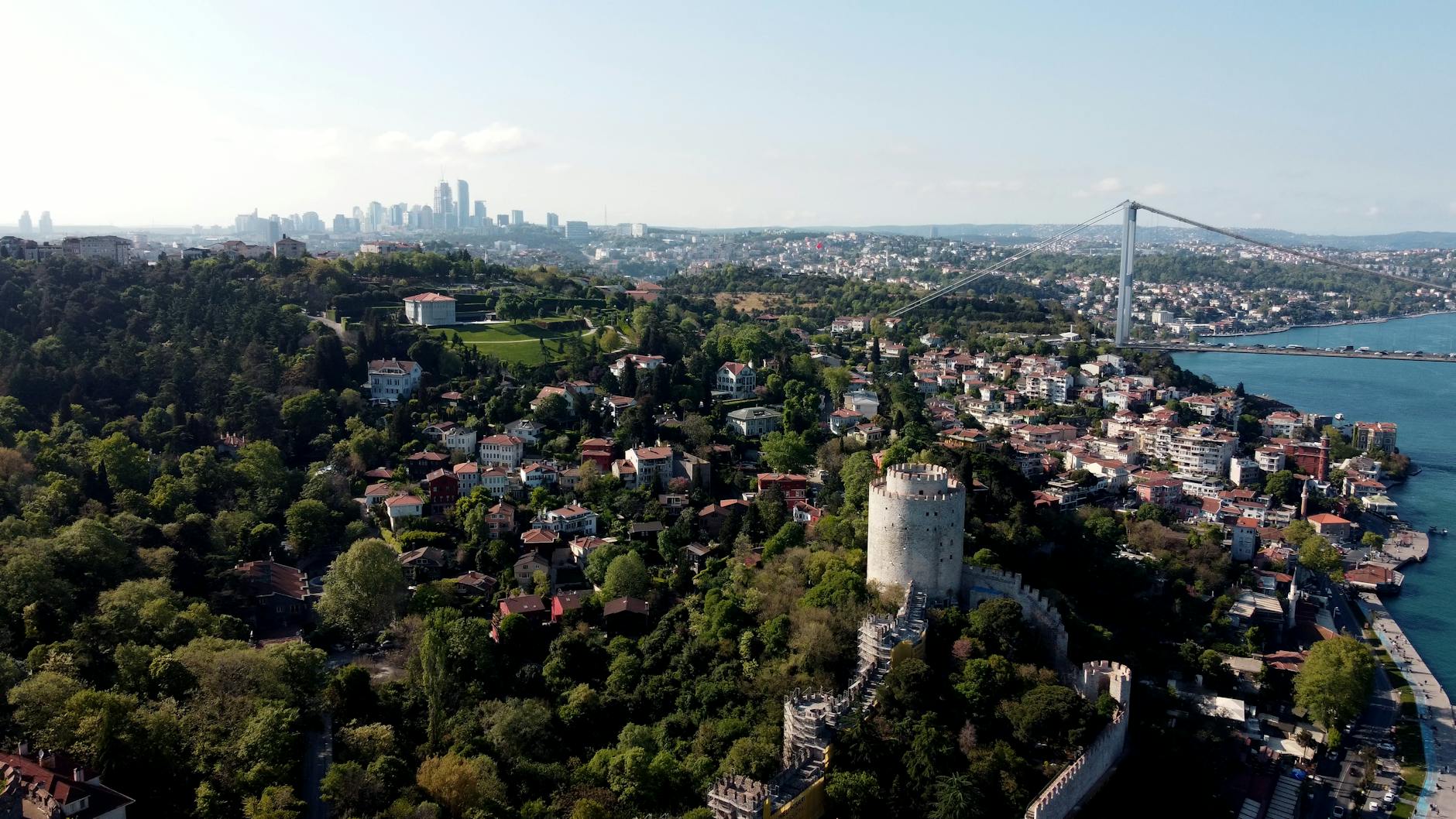
The roar of the Sahil Yolu is a constant in Istanbul. It is the sound of a city that never stops moving—the hum of thousands of tires on asphalt, the impatient honks of yellow taxis, and the rhythmic churning of the Bosphorus ferries. But the moment you step through the heavy wooden gates of Rumeli Hisarı, that roar vanishes. It’s replaced by a weight of silence so thick it feels as if the stone walls are absorbing the sound of the 21st century itself.
I remember my first spring in Istanbul, back in 2011. I was still figuring out the difference between simit and açma, and the city felt like an unsolvable puzzle. I wandered up the coast from Bebek, and the Erguvan (Judas trees) were in full bloom, painting the grey hillsides in shades of shocking magenta and violet. I looked up at the massive towers of the fortress, and for the first time, I understood why the Ottomans called this place Boğazkesen—the “Throat-Cutter.” It doesn’t just sit on the Bosphorus; it grips it. It commands the narrowest point of the strait (only 660 meters wide) with a predatory grace that hasn’t faded in nearly 600 years.
If you are looking for the manicured perfection of a European palace, you won’t find it here. Rumeli Hisarı is raw. It is an honest piece of military engineering that was built for one purpose: to end an empire. Today, it remains my favorite “antidote” to the sensory overload of Sultanahmet. While the crowds are jostling for position at the Hagia Sophia, you can find me here, sitting on a sun-warmed stone block, watching the tankers slide silently toward the Black Sea.
My Love Affair with the Stone Giant
After 15 years of living here, I’ve realized that most people visit Istanbul to see the “Old City,” but they forget that the city’s heart isn’t just in the mosques—it’s in the water. Rumeli Hisarı is the architectural manifestation of that truth. It was built in 1452 by Sultan Mehmed II, a man who was only 21 years old but possessed a strategic mind that would make modern generals blush.
The reason I keep coming back—and the reason I tell my friends to prioritize this over almost any other “minor” site—is the scale. When you stand at the base of the Zağanos Pasha Tower, looking up at 20-plus meters of masonry, you feel the sheer audacity of the Ottoman project. This wasn’t built to be beautiful; it was built to be an ultimatum.
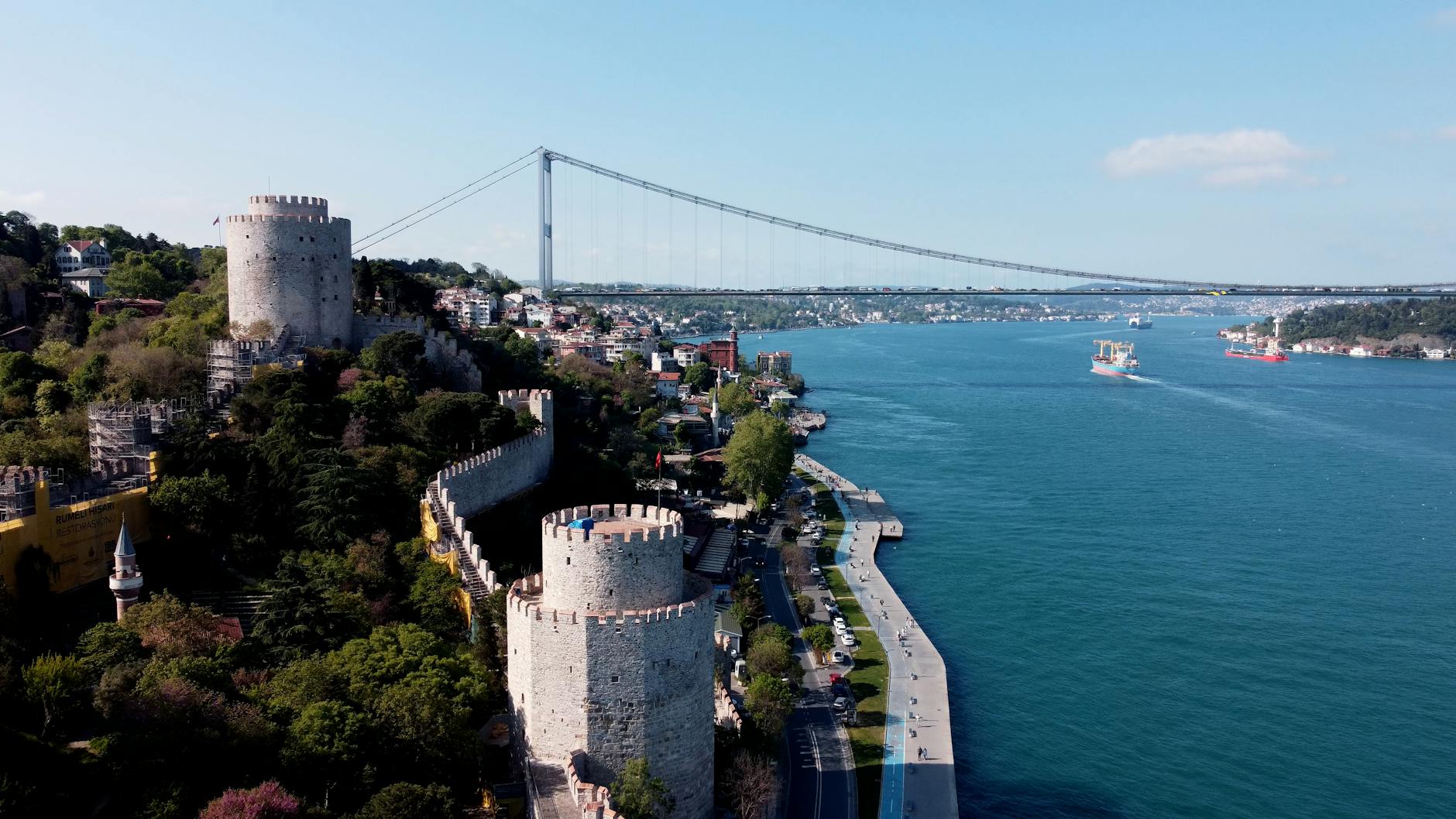
In the early morning, especially during the 2026 season where we’ve seen a slight uptick in local visitors, the fortress feels like a private park. There is a specific way the light hits the Halil Pasha Tower at exactly 4:00 PM in the autumn—a golden, honeyed glow that makes the rough-hewn stones look like they’re vibrating. It’s a place where you can touch history without a velvet rope or a “Do Not Touch” sign getting in the way. It’s just you, the stone, and the wind.
Getting There: A Transport Expert’s Secret Route
As someone who has spent a decade documenting the intricacies of the ultimate guide to public transport in Istanbul, I can tell you that getting to Rumeli Hisarı is half the fun—if you know what you’re doing.
Most people will tell you to take the 22, 22RE, or 25E bus from Kabataş. It’s the standard route, and it follows the coastline. On a clear day, the view from the bus window is spectacular, but the traffic on the coastal road can be soul-crushing. By 2026, the traffic has only intensified, and what should be a 20-minute ride can easily turn into an hour of staring at the bumper of a tour bus.
The “Berk” Route: The High-to-Low Approach Instead of fighting the traffic at sea level, I always recommend the “High-to-Low” approach. Take the M2 Green Metro line to Gayrettepe, transfer to the M6 Mini-Metro, and ride it to the end at Boğaziçi Üniversitesi.
From the university station, you are at the top of the hill. It is a steep, winding walk down through the neighborhood of Aşiyan, but it is one of the most scenic descents in the city. You’ll pass through quiet, leafy streets where the old wooden yalı (waterside mansions) still stand, and you’ll get “bird’s eye” glimpses of the fortress towers peeking through the trees long before you reach the entrance.
The 2026 Funicular Connection If your knees aren’t up for the walk down, there is a fantastic update for 2026: the F4 Aşiyan Funicular. You can take the metro to the university, hop on the funicular which drops you right at the Aşiyan Pier, and then walk five minutes north to the fortress. This also allows you to use the ferry system. You could take a ferry from Üsküdar or Beşiktaş to Aşiyan, making the commute part of the adventure.
Berk’s Insider Tip: If you’re using the bus, don’t wait for the #22 specifically. Any bus with “Sariyer” on the sign passing through Kabataş or Beşiktaş will get you there. Just keep your Istanbulkart topped up; as of 2026, a single ride is roughly 30 TL (€0.60), but the “limited use” cards are much more expensive. Stick to the refillable card!
The Four-Month Miracle: A History Deep Dive
To understand Rumeli Hisarı, you have to understand the desperation of 1452. The Byzantine Empire was a shadow of its former self, essentially reduced to the city of Constantinople. But they had a secret weapon: the Bosphorus. As long as grain and reinforcements could reach them from the Black Sea, they could withstand a siege.
Mehmed II decided to cut the throat of the city. He ordered the construction of this fortress directly across from Anadolu Hisarı, the smaller fortress built by his grandfather on the Asian side. Together, they formed a pincer that could sink any ship that refused to pay a toll or carry an Ottoman permit.
139 Days of Chaos What blows my mind every time I walk these ramparts is the timeline. The entire complex was built in just 139 days. Think about that. In an era before cranes, power tools, or even basic engines, the Ottomans moved thousands of tons of stone and timber and erected three massive towers and connecting walls in less than four months.
Mehmed incentivized the construction by putting his three Grand Viziers in charge of the three main towers:
- Çandarlı Halil Pasha (the tower by the gate).
- Zağanos Pasha (the southern tower).
- Saruca Pasha (the northern tower).
Legend has it that Mehmed told them if the towers weren’t finished on time, their heads would be on the line. Unsurprisingly, the work was completed with record speed. When you see the architectural evolution of the city, moving from this rugged military outpost to the refined elegance of the Suleymaniye Mosque built a century later, you see the story of a nomadic people becoming the masters of a sophisticated empire.
The strategic purpose was achieved almost immediately. A Venetian galley tried to run the blockade shortly after completion. The fortress cannons—massive bronze monsters—sank the ship with a single shot. The message was received: the Bosphorus now belonged to the House of Osman.
Architectural Marvels: Towers, Gates, and Walls
When you enter, don’t just rush to the top. Take a moment to look at the construction. You’ll see fragments of white marble pillars and carved stones embedded in the rough grey walls. These were “recycled” from ancient Byzantine and Roman ruins found nearby. To the Ottomans, it was practical; to us, it’s a beautiful, accidental mosaic of history.
The Three Giants The towers are not identical. Each has its own personality.
- Saruca Pasha Tower: Standing 28 meters tall and 24 meters in diameter, it’s a cylindrical beast. Inside, it’s divided into nine stories. In 2026, access to the very interior of the towers is often restricted for restoration, but standing at the base gives you a sense of its “thickness”—the walls are over 5 meters thick at the bottom.
- Zağanos Pasha Tower: This one sits at the highest point of the southern slope. It’s where you get the most iconic photos.
- Halil Pasha Tower: This is the dodecagonal (12-sided) tower. It’s an engineering marvel that shows the Ottomans were already experimenting with geometry to deflect cannon fire.
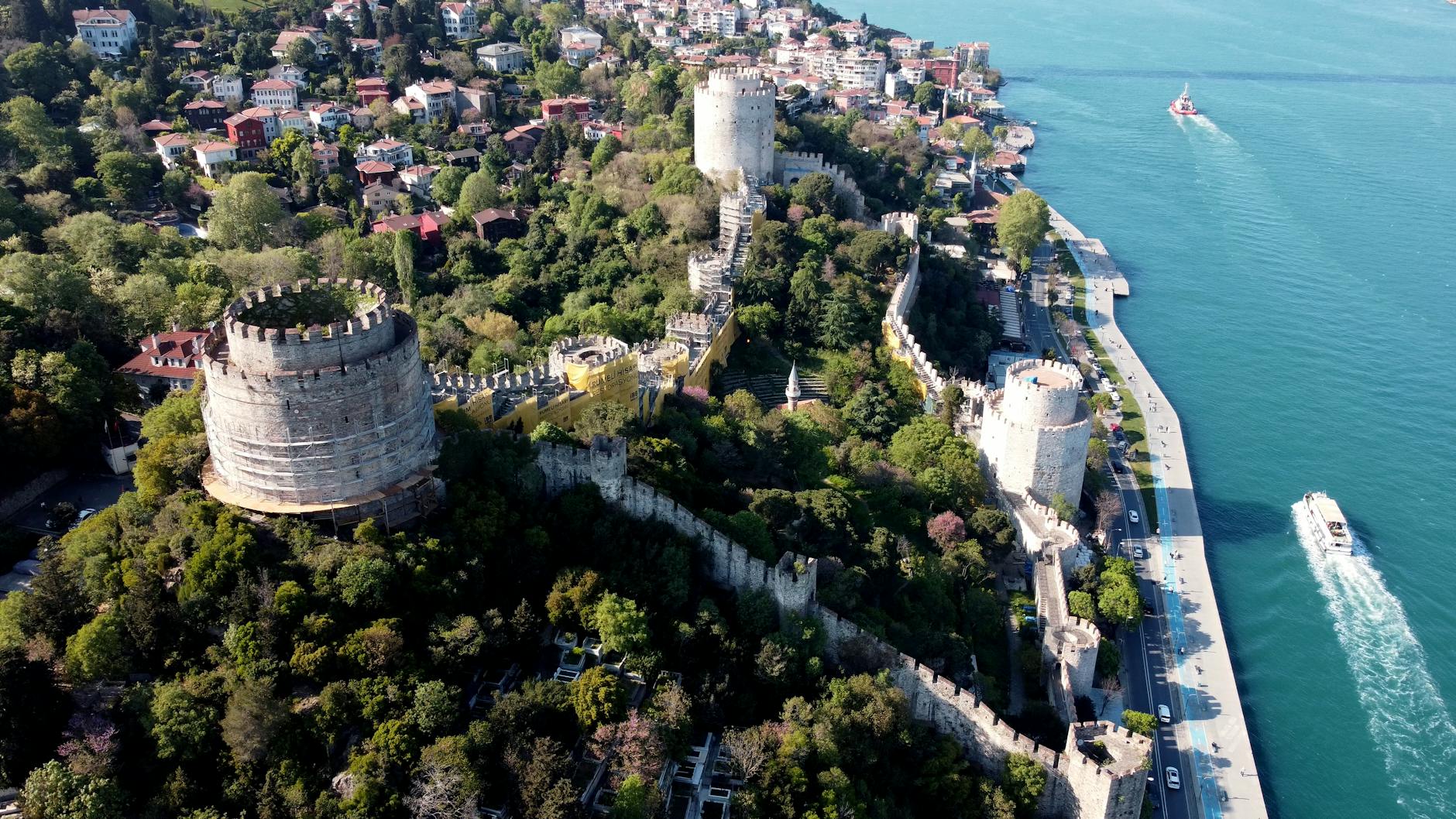
The Lost Mosque and the Amphitheater In the center of the fortress, you’ll see a solitary minaret standing in a grassy void. This is all that remains of the mosque built for the garrison. The main structure was destroyed over centuries of earthquakes and neglect.
In the late 20th century, a wooden amphitheater was built in the central courtyard for concerts and festivals. While some purists hate it, I’ve attended jazz festivals here in the past, and there is nothing—and I mean nothing—like hearing a trumpet solo echoing off 15th-century walls while the lights of the Fatih Sultan Berk Bridge twinkle in the background.
The Climb: Navigating the Fortress
This is where I give you my “friend-to-friend” warning. Rumeli Hisarı is not a sanitized theme park. It is a medieval fortress, and it treats you like a medieval soldier.
The Lack of Railings There are very few railings. The steps are steep, uneven, and often slippery from the Bosphorus mist. If you have vertigo or are traveling with small children who like to bolt, you need to be extremely careful. I once saw a tourist try to navigate the upper ramparts in flip-flops; don’t be that person.
The Golden View The goal for most is the walk along the curtain walls that connect the main towers. From the top of the ramparts, the view is dizzying. You are looking directly across at the Asian side, seeing the Anadolu Hisarı and the million-dollar waterfront villas of Kandilli.
As you climb, look for the wild rosemary and thyme growing in the crevices of the stones. When the wind kicks up off the water, it carries the scent of these herbs mixed with the salt of the sea. It’s the smell of Istanbul that I’ll never forget, even if I live here another 50 years.
If you’re planning a full day of exploring, this fortress offers a rugged contrast to the colorful, crumbling charm you’ll find if you visit Fener and Balat. While Balat is about human stories and neighborhood life, Rumeli is about raw power and geography.
Berk’s Insider Tip: For the absolute best photo—the one that will make your Instagram followers weep with envy—head to the wall section just below the Saruca Pasha Tower. Aim your camera south toward the Fatih Sultan Berk Bridge. The contrast between the 15th-century battlements and the 20th-century suspension bridge is the quintessential “Istanbul moment.”
Beyond the Walls: The Neighborhood of Rumelihisarı
Once you’ve finished your climb and your legs are shaking slightly (and they will be), don’t head straight back to the city center. The neighborhood surrounding the fortress is one of the most prestigious and atmospheric in the city.
The Breakfast Culture (Kahvaltı) The waterfront strip in front of the fortress is famous for one thing: Van Kahvaltı. The city of Van in eastern Turkey is famous for its breakfast spreads, and several restaurants here specialize in it.
However, by 2026, the main road has become quite “touristy.” If you want a more authentic experience, walk five minutes north toward Baltalimanı. Look for the smaller, family-run cafes tucked into the side streets. You’ll get the same local honey, the same kaymak (clotted cream), and the same sucuklu yumurta (eggs with spicy sausage), but at half the price and with a quarter of the noise.
The Coastal Walk If the weather is fine, I highly recommend the walk from Bebek to Rumeli Hisarı. It’s about a 20-25 minute stroll along the Bosphorus. You’ll see local fishermen casting their lines, joggers from the nearby universities, and the occasional stray cat sunning itself on the hood of a parked Mercedes. It’s one of those walks where you feel the “high-end” vibe of Istanbul, which is a great counterpoint to the more bohemian energy you might experience on a Kadikoy and Moda walking tour.
The Hidden Cemetery Just outside the fortress, on the uphill side, is the Rumeli Hisarı Cemetery. It’s one of the oldest in the city. Many of the soldiers who built and guarded the fortress are buried here. It’s a quiet, contemplative place with ancient “Janissary” style headstones—carved with turbans or hats that indicate the rank and profession of the deceased. It’s rarely visited by tourists, but it’s part of the fortress’s soul.
2026 Practicalities: Everything You Need to Know
Visiting Istanbul in 2026 requires a bit more planning than it did a few years ago. The shift to Euro-indexed pricing for major museums has made some sites quite expensive, but in my opinion, Rumeli Hisarı remains one of the best values for your money because of the time you can spend exploring.
| Item | Details (2026 Context) |
|---|---|
| Entrance Fee | €20 - €25 (Payable in TL at current rates, approx. 1,000-1,250 TL) |
| Operating Hours | 09:00 - 19:00 (Summer) | 09:00 - 17:00 (Winter) |
| Closed Day | Mondays (Don’t forget this! Many travelers make this mistake.) |
| Museum Pass | Yes, accepted and highly recommended. |
| Best Time to Visit | 09:00 AM sharp to beat the tour groups and the heat. |
| Footwear | Sturdy sneakers or hiking boots. No heels or slick-soled shoes! |
Is the Museum Pass Worth It? If you are planning to see the Topkapi Palace and the Galata Tower, then yes, the Museum Pass is a no-brainer. It will cover your entry here and allow you to skip the ticket line, which can get long on weekends.
A Note on 2026 Pricing With the exchange rate sitting at 1 Euro = 50 TL, prices can feel like they are in flux. Always check the official Ministry of Culture and Tourism website the morning of your visit, but generally, expect to pay around the 1,000 TL mark. It’s a jump from the “old days,” but considering the maintenance required for a 600-year-old stone giant, it’s a price worth paying.
Berk’s Insider Tip: Bring a bottle of water with you. There are no vendors inside the actual fortress grounds once you pass the ticket office. In the summer, the stone walls radiate heat, and the climb will leave you parched. There’s a small shop near the entrance, but it’s better to be prepared.
Personal Verdict: The Eternal Guardian
After 15 years of living in this beautiful, chaotic mess of a city, I’m often asked if I ever get tired of the “tourist” sites. The truth is, I don’t think of Rumeli Hisarı as a tourist site. To me, it’s a grounding point.
When the city feels too loud, when the traffic is at a standstill, or when I just need to remember why I moved here in the first place, I head to the Bosphorus. I look up at the towers of the “Throat-Cutter,” and I’m reminded of the sheer willpower it took to build this place.
It stands as a symbol of Istanbul’s permanence. Empires fall, names change, and bridges are built, but the stone remains. It’s a place that demands respect—not just for its history, but for its physical presence. It’s the guardian of the strait, and even in 2026, it still feels like it’s keeping a watchful eye on every ship that passes through its domain.
If you’re trying to decide where to stay for a real Istanbul vibe, consider looking at the Arnavutköy or Bebek areas nearby. Staying on this side of the Bosphorus allows you to experience the fortress in the quiet hours of the morning, before the rest of the world wakes up.
When you finally reach the top of the Saruca Pasha ramparts and the wind hits your face, take a deep breath. You aren’t just looking at a view; you’re looking at the reason this city has been the center of the world for two millennia.
One final secret: If you look closely at the walls near the entrance, you might see small, carved birdhouses ( Kuş Evi ) built directly into the masonry. Even the “Throat-Cutter” had a soft spot for the city’s feathered residents. It’s those little details—the kindness embedded in the fortress—that make Istanbul the most human city on earth.
Comments
Share your thoughts with us