
The plastic basket, or sepet, rattles against the peeling pink paint of a three-story Ottoman house as it’s lowered from a fourth-floor window on a frayed nylon rope. Inside, a few coins jingle. Below, the local grocer swaps the change for a fresh loaf of ekmek (bread) and a morning newspaper, all without a single word being exchanged. This is the rhythm of the Golden Horn, a sound I’ve woken up to for fifteen years. While the rest of Istanbul rushes toward a glass-and-steel future, here in the twin districts of Fener and Balat, time doesn’t just slow down-it seems to have forgotten where it was going altogether.
When friends visit me, they usually ask for the “real” Istanbul. They’ve seen the Blue Mosque and they’ve haggled for carpets, but they want the soul. I always take them here. Fener (the historic Greek quarter) and Balat (the historic Jewish quarter) are more than just “colorful neighborhoods” for your Instagram feed. They are a living museum of the city’s cosmopolitan past, where the call to prayer mingles with the bells of Greek Orthodox churches and the silent history of ancient synagogues.
Walking these streets requires more than just a pair of sturdy shoes; it requires an appetite for stories and a willingness to get lost. The cobblestones here are uneven, the hills are steep, and the rewards are found in the details: a Star of David carved into a crumbling lintel, a hidden garden behind a heavy iron gate, or the smell of slow-cooked kuru fasulye (white bean stew) wafting from a kitchen window.
Navigating the Golden Horn: The Journey In
Before we dive into the maze, we have to get you here. Most travelers make the mistake of taking a taxi from Sultanahmet or Taksim. Don’t do that. You’ll sit in soul-crushing traffic on the Atatürk Bridge and miss the best part of the experience: the water.
To truly arrive, you should navigate the city’s complex ferry network, which is my favorite way to travel. The Haliç (Golden Horn) line departs from Eminönü (the ferry pier is just to the left of the Galata Bridge) and stops at both Fener and Balat. The ride costs about 20-30 TL depending on your card type, and it offers a perspective of the city skyline that no bus window can compete with. As the ferry pulls away, you’ll see the majestic silhouette of the Suleymaniye Mosque rising over the horizon, its domes stacked like silver bubbles against the sky.
If you prefer the land route, the T5 tram line runs along the coast of the Golden Horn. It’s sleek, modern, and fast, but it lacks the romance of the sea. Whichever way you choose, aim to arrive by 10:00 AM. These neighborhoods wake up late, and you’ll want to be there just as the antique shops are rolling up their shutters.
Berk’s Insider Tip: If you are coming from the Asian side, take the ferry from Karaköy to Fener. It’s a short, 15-minute hop that cuts through the heart of the Golden Horn. Check the Şehir Hatları app for live timings, as this specific route is less frequent than the main lines.
Fener: The “Vatican” of the East
We start our walk in Fener. For centuries, this was the heart of the Greek (Rum) community in Istanbul. It was the home of the “Phanariotes,” the wealthy Greek families who served as high-ranking officials in the Ottoman Empire.
Our first stop isn’t a museum, but it feels like one: The Ecumenical Patriarchate of Constantinople. Tucked away behind a nondescript wall on Dr. Sadık Ahmet Caddesi, this is the spiritual center of the Eastern Orthodox Church. It is, in many ways, the Orthodox equivalent of the Vatican, yet it is strikingly humble.
Enter through the gate (security is tight but polite) and head into the Church of St. George. The interior is a masterclass in Byzantine-style wood carving and gold leaf. Look for the “Pillar of Christ’s Scourging,” believed to be the column where Jesus was tied and whipped in Jerusalem. It’s a place of heavy silence and thick incense. There is no entry fee, but donations are welcome.
The Red School: Fener’s Crimson Landmark
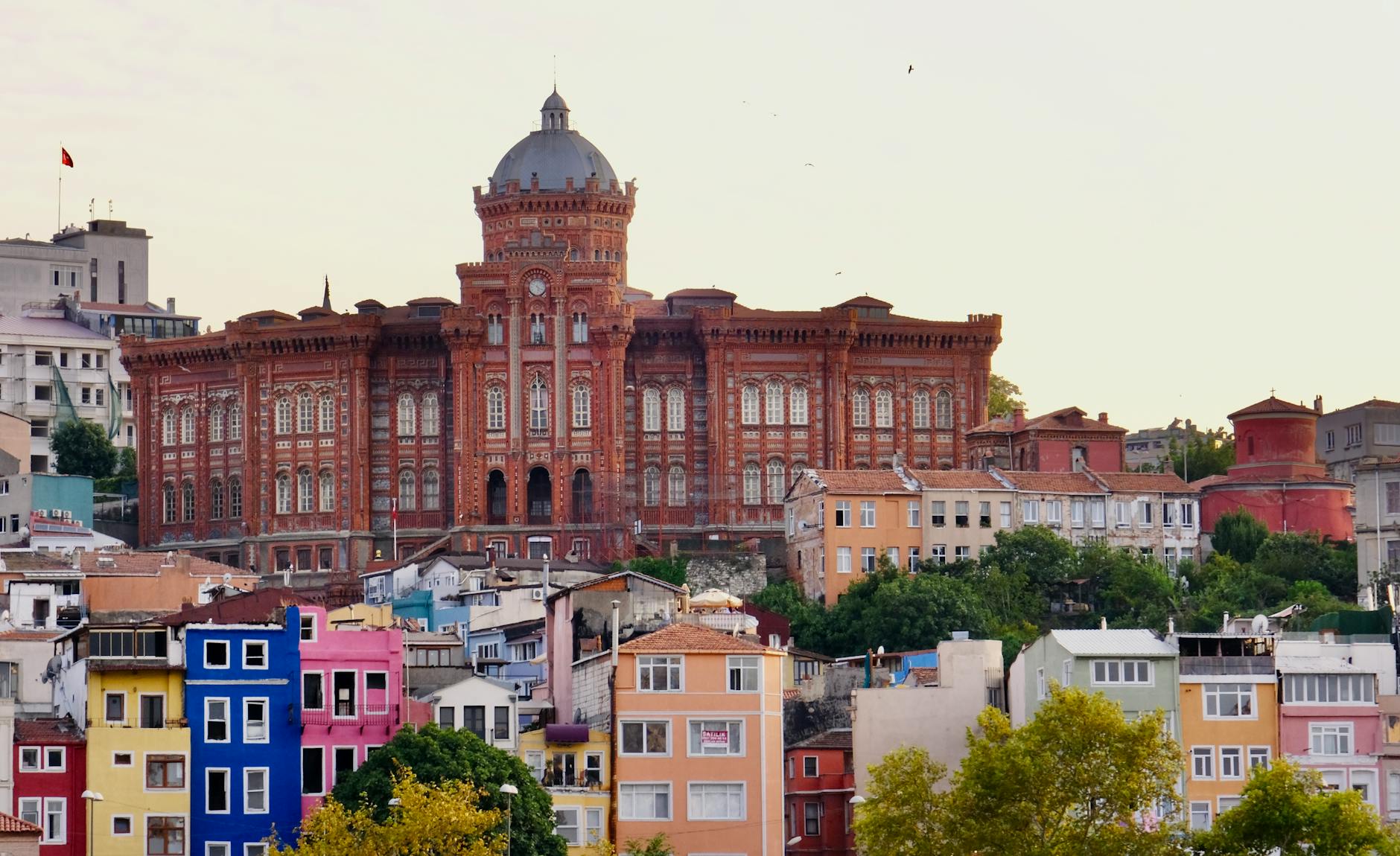
As you leave the Patriarchate, look up. Looming over the neighborhood like a Gothic castle is the Phanar Greek Orthodox College (Özel Fener Rum Ortaokulu ve Lisesi). Locals call it Kırmızı Mektep (The Red School) because of its stunning red bricks imported from France in the 1880s.
It is arguably the most photographed building in Fener, but few people actually climb the hill to see it up close. The walk up Sancaktar Yokuşu is brutal on the calves, but the view from the top is your first real reward. The school is still active, though its student body has dwindled to just a handful of pupils, a poignant reminder of the city’s shifting demographics.
The Church of St. Mary of the Mongols
Just a few steps from the Red School lies a secret that most guides miss: The Church of St. Mary of the Mongols (Kanlı Kilise or the “Bloody Church”). This is the only Byzantine-era church in Istanbul that was never converted into a mosque. It has remained a church since the 13th century, thanks to a special ferman (decree) signed by Mehmed the Conqueror himself.
The door is usually locked. To get in, you have to ring the bell and wait for the caretaker. If he’s in a good mood, he’ll let you into the dim, ancient space where the original Ottoman decree is still displayed on the wall. It’s a chillingly beautiful piece of history that makes you feel the weight of the centuries.
Crossing the Border: From Fener to Balat
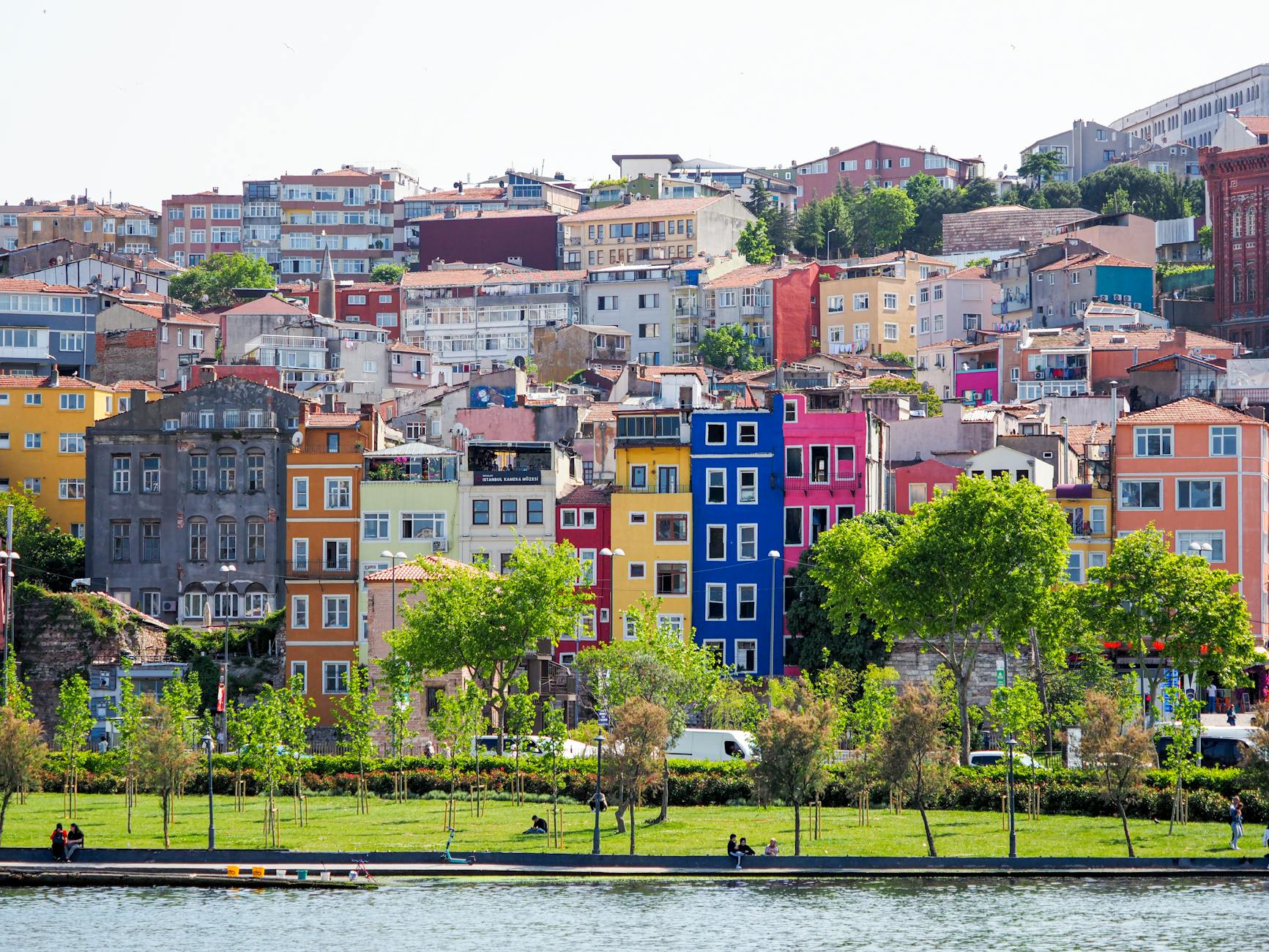
As you walk west, the grand stone houses of Fener begin to give way to the smaller, more tightly packed, and vibrantly painted homes of Balat. Historically, this was the Jewish quarter. Following the Spanish Inquisition in 1492, Sultan Bayezid II invited the Sephardic Jews to settle here, and for nearly 500 years, this was one of the most vibrant centers of Jewish life in the world.
While many of the original families moved to Israel or the posh districts of Şişli and Nişantaşı in the mid-20th century, their fingerprints are everywhere. If you look closely at the doorframes of the older, dilapidated houses, you can still see the indentations where Mezuzahs once sat.
The Architectural Kaleidoscope of Balat
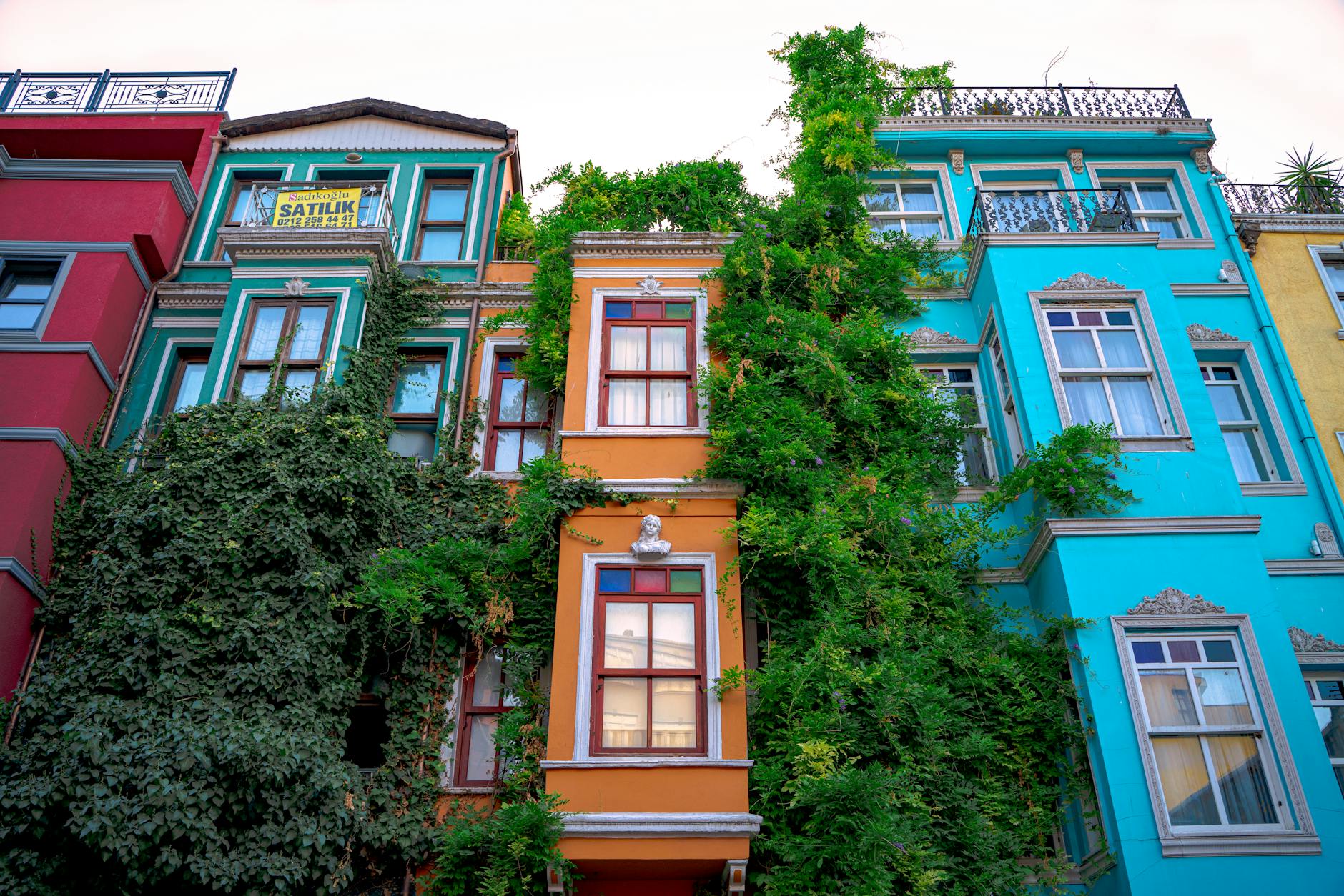
This is where you’ll want to put your phone on silent and just wander. Kiremit Street is the “postcard” Balat you’ve likely seen online. The houses here are painted in shades of turquoise, ochre, and candy-apple red.
When choosing where to base yourself for a trip to Istanbul, I often tell my friends that while Sultanahmet is for history, Balat is for vibe. If you want to wake up to the sound of seagulls and the smell of roasting coffee, there are a few boutique guesthouses here that offer a much more authentic stay than the big hotels.
The Çıfıt Bazaar
Make your way down to Leblebiciler Sokak, the heart of the Çıfıt Bazaar. “Çıfıt” was a term used for Jews in the Ottoman era, and the bazaar remains a bustling mercantile hub. Here, you’ll find the Ahrida Synagogue, one of the oldest in the city. Its “Teve” (pulpit) is shaped like the prow of a ship, symbolizing the boats that brought the Sephardic Jews to these shores.
Note: You cannot just walk into the Ahrida Synagogue. Due to security, you must contact the Chief Rabbinate of Turkey weeks in advance to arrange a visit. If you haven’t done that, you can still admire its heavy iron doors from the street.
The Bulgarian Iron Church
Back toward the water, you’ll find the Sveti Stefan Bulgarian Orthodox Church. This is a miracle of 19th-century engineering. Because the ground near the shore was too soft to support a heavy stone structure, the church was made entirely of prefabricated cast iron in Vienna and shipped down the Danube on barges.
It was recently restored to its former glory. The white exterior and gold-plated domes glisten in the sun. Inside, the “iron” nature of the building is hidden by clever painting that makes the columns look like marble. It is free to enter and is one of the most unique religious buildings you will ever see.
Berk’s Insider Tip: Most people visit the Iron Church and then leave the waterfront. Instead, walk 50 meters north to the small park. It’s one of the few places where you can sit on a bench and see the Galata Tower, the Topkapi Palace, and the Bulgarian Church all in one panoramic sweep.
The Modern Soul: Antiques, Auctions, and Artisans
In the last decade, Balat has undergone a transformation. What was once a neglected, crumbling district has become a magnet for artists, antique collectors, and “hipsters” (though I use that term affectionately).
The best way to experience this is through the Mezat (auctions). As you walk down Vodina Street or Yıldırım Street in the late afternoon (usually after 3:00 PM), you’ll see groups of people sitting on plastic chairs in small storefronts. An auctioneer will be standing at the front, holding up everything from 1950s Turkish movie posters to vintage tea sets.
The bidding is fast, loud, and incredibly entertaining. You might pick up a hand-painted Ottoman-style bowl for 150 TL (€4) or a vintage camera for 800 TL (€22). You don’t need to speak perfect Turkish to participate-just raise your hand and hope for the best.
Where to Eat and Drink
You can’t walk through Fener and Balat without stopping for fuel. The cafe culture here is second to none, but avoid the places that look too “designed” for tourists.
- For Breakfast: Go to Forno Balat. Their kahvaltı (breakfast) features organic honey, sourdough bread baked in-house, and some of the best sucuklu yumurta (eggs with spicy sausage) in the city. Expect to pay around 450 TL (€12) for a full spread.
- For Coffee: Coffee Department on Kürkçü Çeşme Street is the pioneer of specialty coffee in the area. They roast their own beans and have a great view of the street life. A flat white will run you about 95 TL.
- For Lunch: Look for Balat Sahil Restoran. It’s an old-school meyhane (tavern) that serves incredible seafood and meze. If you’re lucky, you’ll see the owner playing the accordion.
- For Something Sweet: Find Balat Turşucusu. While technically a pickle shop (try the spicy pickle juice if you’re brave!), they are a local institution. For something more traditional, the nearby bakeries sell Kandıra yoğurdu and local honey.
Climbing the Hill: The Yavuz Selim Mosque
If you have any strength left in your legs, we’re going to climb one last hill. Follow the winding streets upward from Balat toward the Yavuz Selim Mosque.
This mosque is often overshadowed by the larger ones in the city, but it is a masterwork of the early Ottoman period. Because it sits on the edge of the fifth hill of Istanbul, the courtyard offers a view that is, in my opinion, even better than the one from the Galata Tower. You can see the entire Golden Horn, the Galata Bridge, and the ancient mercantile hans of the Eminönü district sprawling out below you.
It is a place of profound peace. While the streets of Balat below are noisy with the sound of children playing football and tourists snapping photos, up here, there is only the sound of the wind.
The Gentle Art of Getting Lost
While I’ve given you a route, the real magic of Fener and Balat happens when you ignore the map. This neighborhood is a jigsaw puzzle where the pieces don’t quite fit. You’ll walk down a dead-end street only to find a hidden workshop where a master craftsman is repairing 100-year-old furniture. You’ll turn a corner and find a group of elderly women sitting on stools, cleaning spinach and gossiping.
This is not a “manicured” experience. There is laundry hanging over the streets, there are stray cats (very well-fed ones) guarding every doorway, and there are buildings that look like they might fall over if you sneeze too hard. But that is the charm. It’s a contrast to the perfectly preserved Sultanahmet bubble where everything is polished for the traveler.
A Note on Photography
As an expert who has spent years documenting these streets, I have one request: be mindful. These are people’s homes. It’s tempting to stand in front of a colorful door for twenty minutes to get the perfect shot, but remember that someone is trying to carry their groceries through that door. A smile and a “Merhaba” (Hello) go a long way. If you want to take a photo of a local shopkeeper, ask first. Most will be happy to pose, especially if you buy a glass of tea afterward.
Logistics and Practical Tips
- When to go: Weekdays are best if you want a quiet walk. Saturdays and Sundays are incredibly busy with locals from all over Istanbul coming for brunch.
- What to wear: Comfortable shoes are non-negotiable. The cobblestones are slippery when wet and uneven when dry.
- Safety: The area is generally very safe, but like any popular urban area, keep an eye on your belongings in crowded cafes.
- Money: Most cafes take cards, but the antique auctions and small grocers are cash only. Keep some 10, 20, and 50 TL notes handy.
Berk’s Insider Tip: If you find yourself in Balat on a Tuesday, you’re in luck. The local street market (Pazar) takes place then. It’s not a tourist market; it’s where the locals buy their olives, cheese, and household goods. It’s a sensory explosion and a great place to see the real economy of the neighborhood in action.
Personal Verdict: Why Fener and Balat Matter
I’ve lived in Istanbul for 15 years, and I still find something new in Fener and Balat every time I visit. Last week, it was a tiny basement bookstore specializing in 19th-century French maps. The week before, it was a new mural by a local street artist tucked behind a trash bin.
These neighborhoods represent the “old” Istanbul-the one that was a mosaic of different faiths and languages. While the city changes at a dizzying pace, Fener and Balat remain anchored by their history. They are a reminder that the soul of a city isn’t found in its skyscrapers, but in its stories, its steep hills, and the way the light hits a red brick school at sunset.
Don’t just come here to take a photo. Come here to breathe. Listen to the sepet rattling against the wall, hear the distant foghorn of a ferry, and let the city’s past whisper to you.
My Final Secret Tip: After you’ve finished your walk and the sun is starting to dip, don’t take the tram back. Walk to the Fener Ferry Pier and wait for the boat heading toward Karaköy. As the ferry moves across the water, the sun will set directly behind the minarets of the historic peninsula, turning the Golden Horn into a literal sheet of liquid gold. It is the cheapest and most beautiful “sunset cruise” in the world, and it’s the perfect way to say goodbye to these magical districts.
Want a Local Guide for Fener & Balat?
These neighborhoods are best experienced with someone who knows every hidden courtyard and back alley. We run a dedicated private walking tour through these exact streets — our Tour 4: Fener & Balat – The Colorful Bohemian Soul of Istanbul covers the Red School, the Iron Church, the colorful houses, and spots that even most locals don’t know about.
If you’d rather combine Fener & Balat with the historic highlights across the Golden Horn, our Tour 1: The Essential Istanbul offers a full-day experience covering both sides of the city.
Interested in booking? See all our private tours and pick your route →