The Ultimate Guide to Public Transport in Istanbul
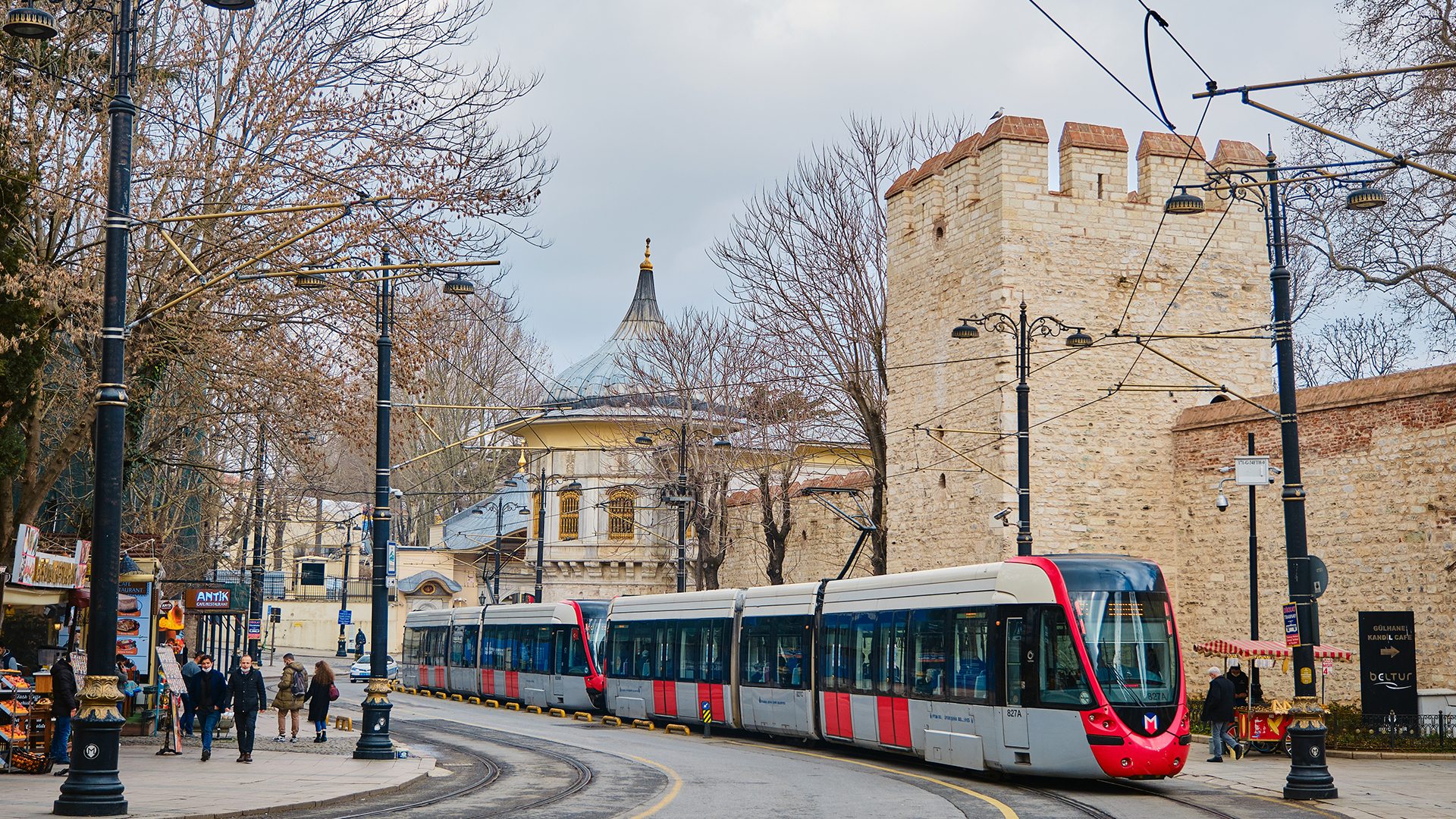
Istanbul is a sprawling metropolis that moves at a frantic pace, constantly evolving and expanding. As the only city in the world spanning two continents—Europe and Asia—Istanbul’s geography is as dramatic as its history. While it faces urban and traffic challenges due to rapid growth and a complex topography—being divided by the Bosphorus Strait, the Golden Horn, and built across numerous steep hills—the city has made monumental strides in public transportation over the last two decades.
In a city of over 16 million people, moving from point A to point B is not just a logistical task; it is a cultural experience. Navigating Istanbul’s transport network initially might seem daunting with its mix of ultra-modern metros, historic trams, high-speed funiculars, majestic ferries, and the chaotic but efficient bus system. However, mastering it is essential for any visitor who wants to truly feel the pulse of the city. While Istanbul is walkable in specific districts like Sultanahmet or Galata, skipping public transport would mean missing out on the vast, diverse reality of this transcontinental giant.
This guide acts as your ultimate companion, offering deep insights into every mode of transport, from the depths of the Marmaray tunnel to the heights of the Pierre Loti cable car. Whether you are a first-time tourist or a seasoned traveler, this comprehensive breakdown will ensure you navigate Istanbul like a local “İstanbullu.”
Quick Answer (Read This First)
If you want the fastest, lowest-friction way to move around Istanbul:
- Buy an Istanbulkart immediately and keep a healthy balance on it.
- Use Metro + Marmaray + Ferry as your default backbone, then fill gaps with tram or bus.
- For airport runs, prioritize M11 (IST) and M4 (SAW) where possible.
- Avoid peak-hour road dependency (07:30-09:30, 17:30-20:00) unless absolutely necessary.
This approach is the closest thing to a “local operating system” for Istanbul mobility.
2026 Transport Snapshot (Official Sources)
| Metric | Value | As Of | Why It Matters |
|---|---|---|---|
| Turkey total air passengers | 247,163,531 | 2025 full year | Confirms sustained national air demand and transfer pressure in major hubs. |
| Istanbul Airport passengers | 31,898,425 | Jan-May 2025 | Shows IST remains one of the highest-throughput gateways for international arrivals. |
| Metro Istanbul extra weekday capacity | 519,893 additional passengers | Winter timetable update, Sep 2025 | Indicates active capacity scaling on the metro network. |
DHMİ stated in January 2026 that this total represented a “Cumhuriyet tarihinin rekoru” in air travel.
Primary References
- DHMİ (Jan 9, 2026): https://www.dhmi.gov.tr/Sayfalar/Haber/havayolunda-cumhuriyet-tarihinin-rekoru.aspx
- DHMİ (Jun 7, 2025): https://www.dhmi.gov.tr/Sayfalar/Haber/5-ayda-855-milyon-yolcu.aspx
- Metro Istanbul (Sep 8, 2025): https://www.metro.istanbul/duyuru/detay/metrolarda-kis-tarifesine-gecildi-070925
A Journey Through Time: History of Transport in Istanbul
To understand Istanbul’s current transport network, one must look back at how this city has moved through the ages. Istanbul has always been at the crossroads of civilizations, and its mobility reflected its prestige.
The Era of Horses and Boats
For centuries, movement in Constantinople was dominated by walking, horse-drawn carriages, and the sea. The Bosphorus and the Golden Horn were the main highways of the Byzantine and early Ottoman eras. Thousands of small boats called “kayıks” shuttled people across the water, and the elite moved through the narrow streets on horseback or in palanquins.
The 19th Century: Industrialization Hits the Sublime Porte
Modern transport truly began in the mid-19th century. In 1851, the Şirket-i Hayriye (The Auspicious Company) was established as the world’s first scheduled ferry company, bringing steam-powered vessels to the Bosphorus.
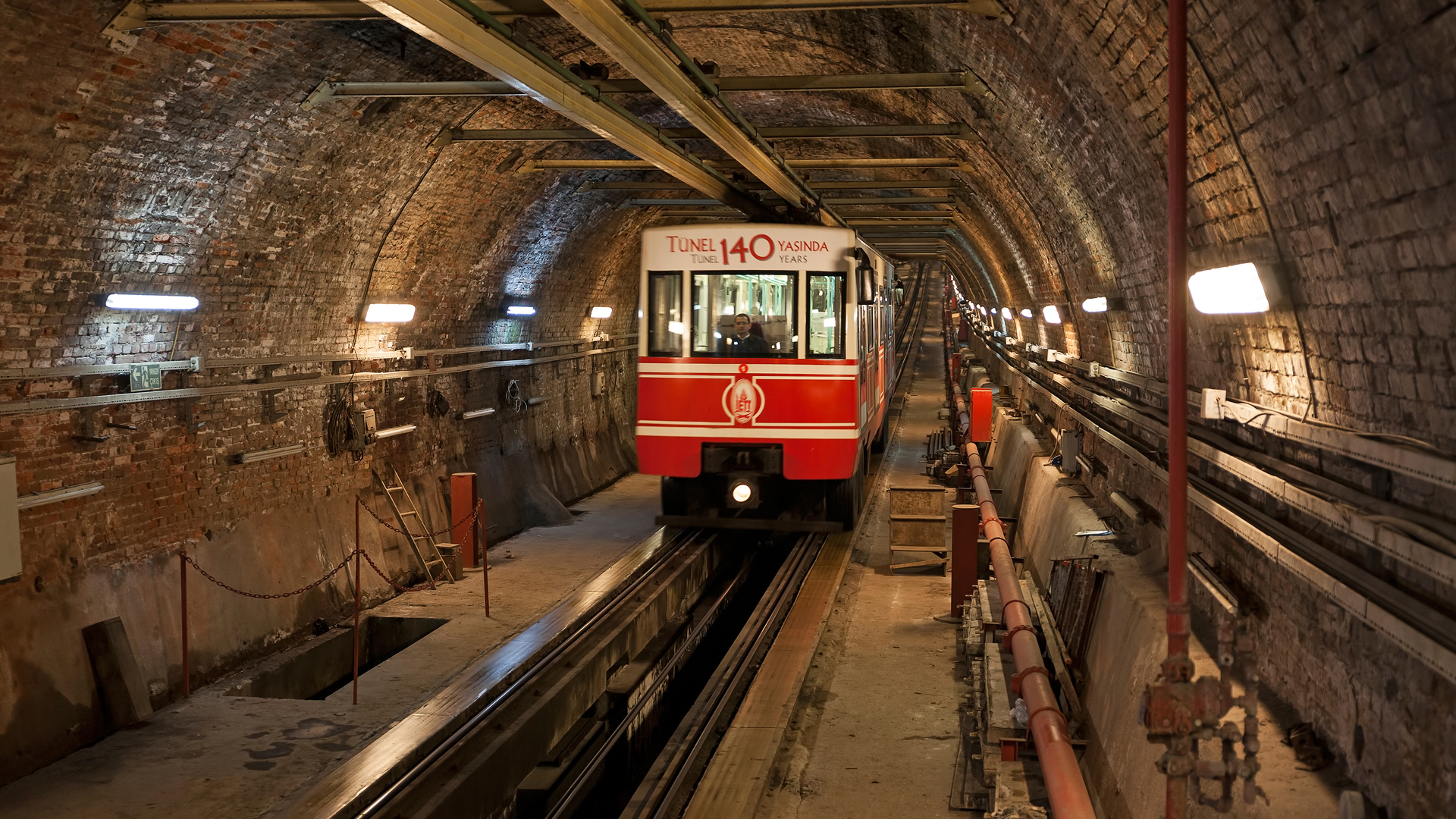
However, the most significant landmark occurred in 1875 with the opening of The Tünel. This underground funicular connecting Karaköy and Beyoğlu became the second-oldest subway in the world, preceded only by London. It was a marvel of Victorian engineering that still carries thousands of passengers today.
The Rise of the Tram
The late 1800s also saw the introduction of horse-drawn trams, which were later electrified in 1914. These “Nostalgic Trams” covered both the European and Asian sides, defining the urban landscape of early republican Turkey. While many lines were sadly removed in the 1960s to make way for cars, the city realized its mistake in the 1990s, bringing back modern trams (like the T1) and nostalgic lines on Istiklal Street.
The Modern Era: The Metro and the Marmaray
The 21st century saw a massive infrastructure boom. The Istanbul Metro network grew from a single short line in 1989 (the M1) to a sprawling web of 10+ lines today. The crowning achievement of this era is the Marmaray, an underwater rail project first dreamed of by Ottoman Sultans in 1860 but only realized in 2013. It connects the world’s continents through a tunnel deep beneath the Bosphorus seabed.
Today, Istanbul continues to innovate, with the new high-speed airport metro (M11) and the expansion of driverless metro lines (M5 and M7), making it one of the most technologically advanced transit hubs in Europe.
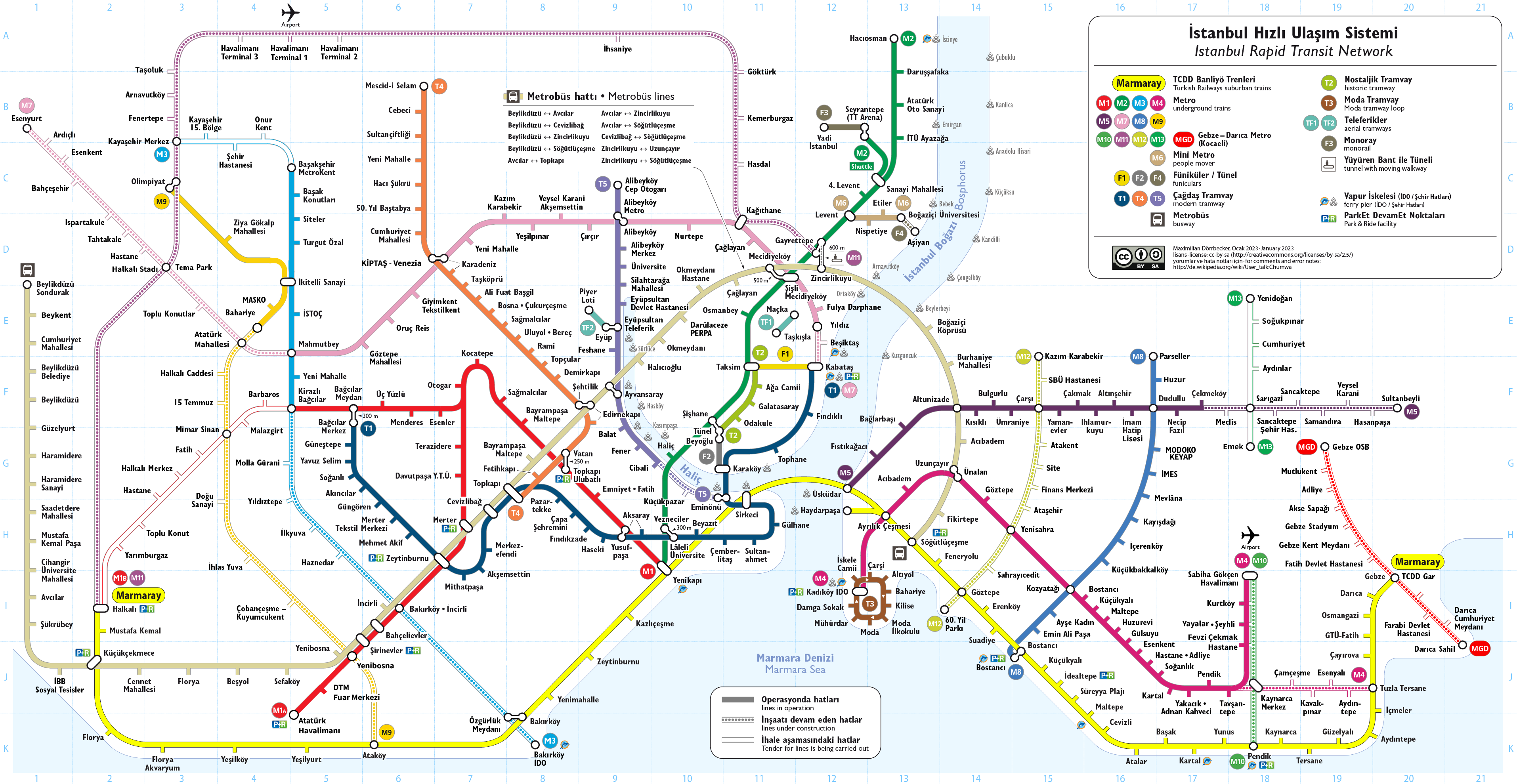 A schematic map of Istanbul’s rapid transit network.
The Key to the City: Istanbulkart
If there is one object that defines the modern Istanbul experience, it is the Istanbulkart. This RFID-based contactless smart card is more than just a transit pass; it is your passport to the city’s vast infrastructure. From the moment you land, this card becomes your most trusted companion.
Understanding the Types of Istanbulkart
While most tourists will use the standard Anonymous Card (Red/Yellow), there are actually several versions of the card that you might see being used by locals:
- Anonymous Card: The standard card purchased from machines. It requires no registration for short-term use, though local regulations now encourage registration for data protection and loss recovery.
- Blue Card (Mavi Kart): A monthly subscription card used by residents. It offers a set number of rides (usually 180 or 200) for a fixed monthly fee.
- Digital Card (Istanbulkart Mobile): You can generate a QR code on your phone using the Istanbulkart app. This is increasingly popular as it removes the need for a physical card entirely.
- Limited Use Cards: For those staying only a day, there are “Beşi Bir Yerde” (5-pass) or “Onu Bir Yerde” (10-pass) cards, but these are generally less cost-effective than the standard card.
Where and How to Buy
The most common way to acquire a card is through the Biletmatik machines. These yellow (sometimes blue) kiosks are located at:
- Istanbul Airport (IST) and Sabiha Gökçen (SAW): Look for the transit floor or bus waiting areas.
- Major Metro Hubs: Stations like Taksim, Yenikapı, and Kadıköy have dozens of them.
- Ferry Terminals: Eminönü, Karaköy, and Beşiktaş terminals always have machines near the turnstiles.
- Small Kiosks: Many “Büfes” (small convenience stores) near bus stops display the Istanbulkart logo and sell the cards.
Cost and Refilling
As of 2024, there is a one-time fee to purchase the physical card (usually around 70-100 TRY). Once purchased, the card has a zero balance, so you must immediately top it up.
- Cash Refills: The Biletmatik machines accept Turkish Lira banknotes. Note: Most older machines do not give change, so any money you put in will be converted into balance on your card.
- Credit/Debit Card: Modern blue Biletmatik machines and the mobile app allow for top-ups via international credit cards.
- Online Top-up: Using the Istanbulkart app, you can link your credit card and top up on the go. You then “activate” the balance by tapping your phone (via NFC) or tapping the card at a designated point at the station.
The Magic of Transfers (Aktarma)
The real power of the Istanbulkart lies in the Transfer Discount. Istanbul’s transit system is designed to reward multi-modal journeys.
- How it Works: When you tap your card for a second, third, or fourth time within a 2-hour window (e.g., moving from a bus to a metro), the fare is significantly reduced.
- One Card for Multiple People: You can use one physical card for up to 5 people. However, only the first person to tap will receive the transfer discount. For the others, the full fare will be deducted each time. If you are traveling in a group for several days, it is highly recommended that everyone has their own card.
Where Else Can You Use It?
The Istanbulkart is slowly becoming a “City Card.” You can now use your balance at:
- Public Toilets: Most municipal “iBB” toilets require a tap of your Istanbulkart.
- Vending Machines: Some vending machines in metro stations accept the card.
- Migros Supermarkets: You can even use your balance to buy groceries at Migros and A101 stores!
- Hamidiye Water Kiosks: The municipal water points accept card taps.
Traveling by Bus in Istanbul
Buses are the backbone of the city’s transport for millions of locals. The network is vast, covering every corner from the outskirts of Beylikdüzü to the residential hills of Pendik.
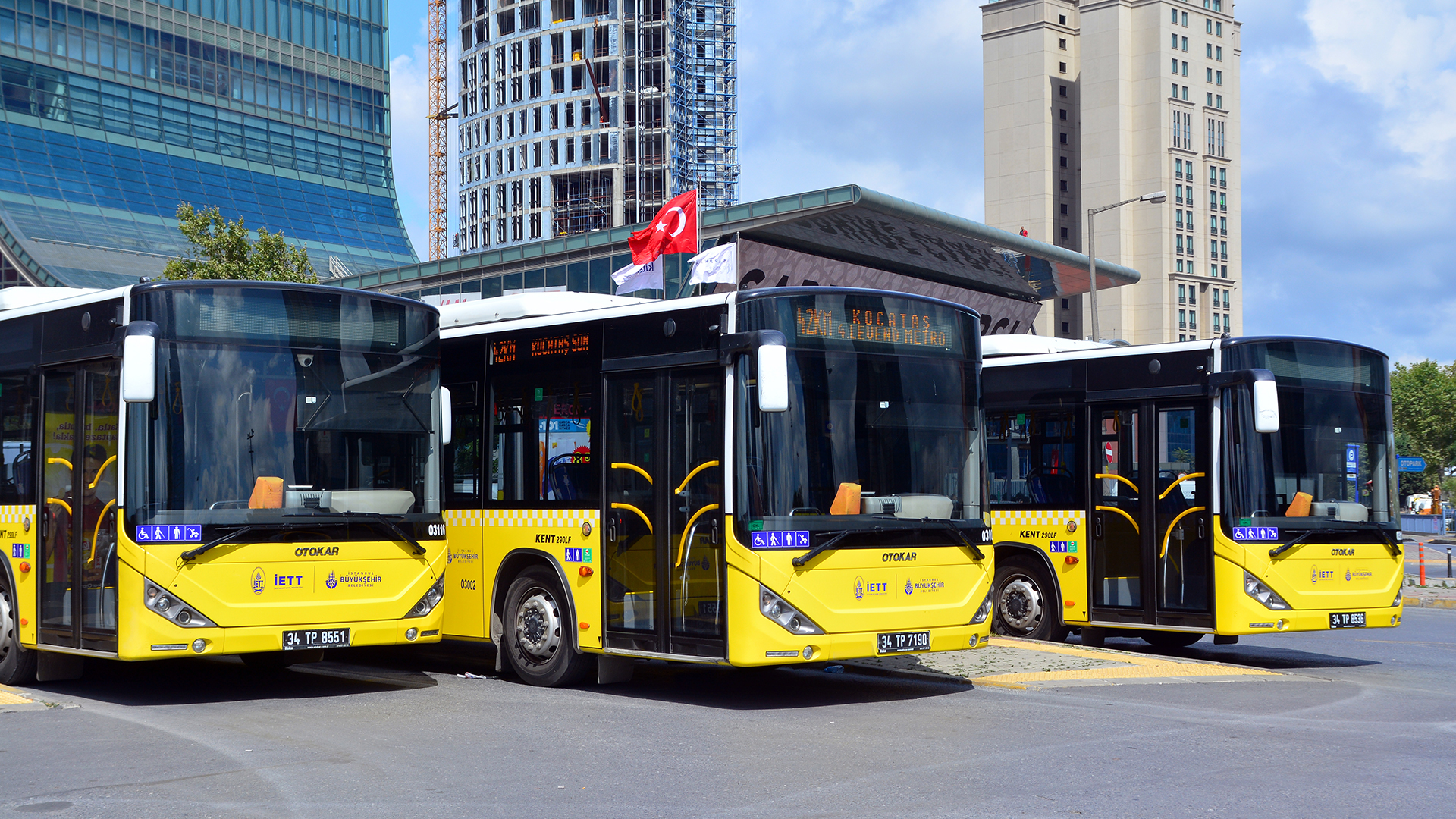
Tips for Using the Bus:
- The IETT App: Download the “Mobiett” app. It shows real-time bus locations and tells you exactly which line to take based on your GPS coordination.
- The “Yellow” Buses: Most buses are yellow (run by IETT). Some are turquoise or blue, which are privately owned but still use the Istanbulkart system.
- Peak Hour Warning: From 5:00 PM to 8:00 PM, buses can be incredibly crowded. If you can, avoid travel during these times or opt for the Metro.
- Entering the Bus: Always enter through the front door and tap your card. Exit through the middle or back doors.
The Istanbul Metro: Fast & Efficient
Istanbul currently operates 11 metro lines, with several more under construction. It is clean, safe, and air-conditioned, making it the preferred choice for long-distance travel within the city. The metro runs from 06:00 to 00:00 every day, but on Friday and Saturday nights, several major lines remain open for 24 hours (Night Metro).
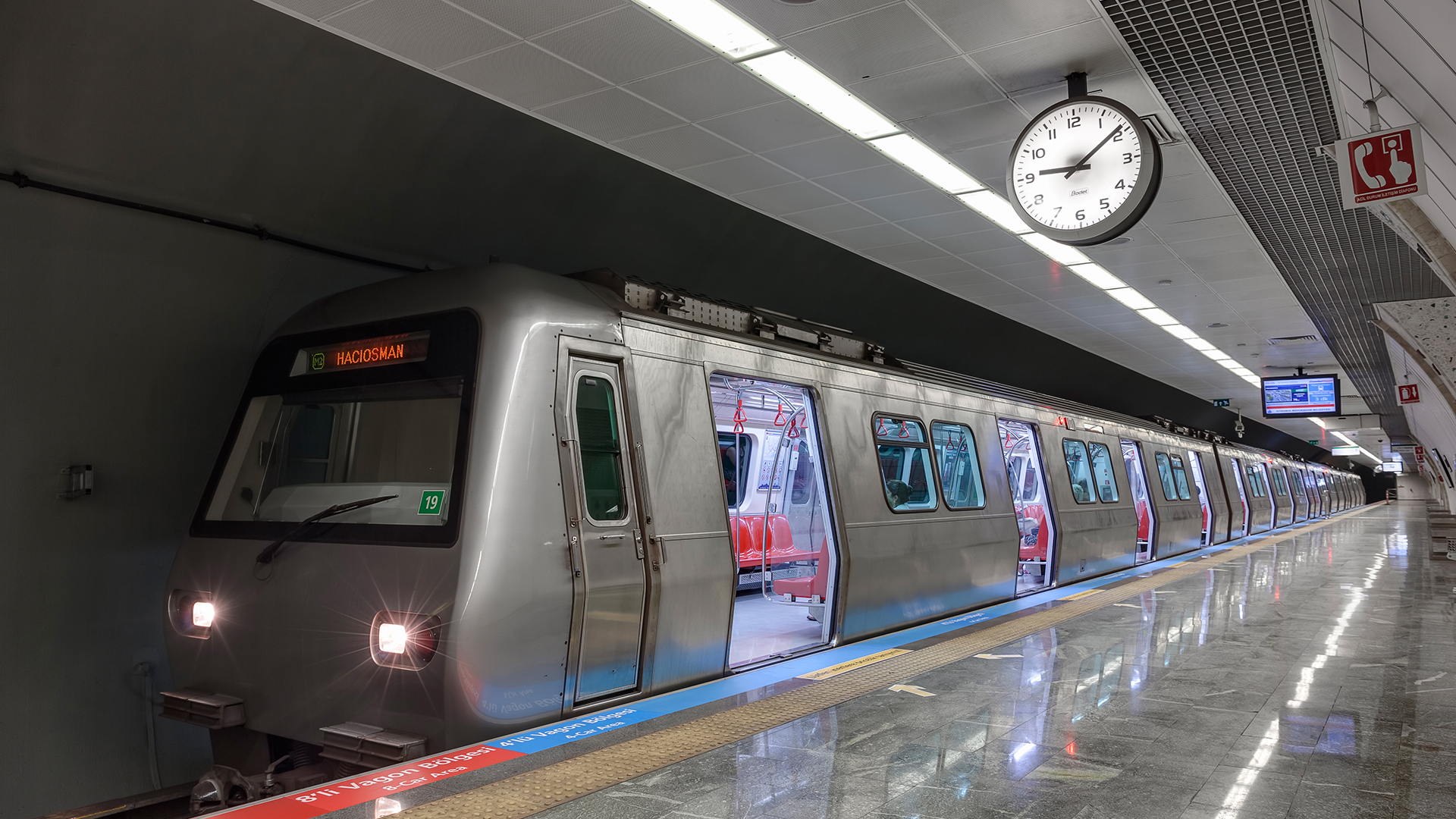
M2 (Green Line): The Essential Tourist Link
The M2 is the “prestige” line of Istanbul. It connects the historic peninsula to the northern financial and residential districts.
- Yenikapı: The southern terminus. A massive transport hub where you can transfer to the M1 line, Marmaray, or the IDO ferry port.
- Vezneciler: This is your stop for the Grand Bazaar and the Süleymaniye Mosque. It’s located in a bustling student district near Istanbul University.
- Haliç (The Golden Horn): One of the most beautiful metro stations in the world. The station is built directly onto a bridge spanning the Golden Horn. Exit here for stunning panoramic photos of the Old City.
- Şişhane: The exit for the Galata Tower and the southern end of Istiklal Street.
- Taksim: The heart of modern Istanbul. Connects to the F1 Funicular and the Nostalgic Tram.
- Osmanbey: Known for its textile shops and being the gateway to the trendy Nişantaşı neighborhood.
- Gayrettepe: A major financial hub and the transfer point for the M11 Airport Metro.
- Levent & Maslak: The skyscraper districts. If you want to see the “New Istanbul” and its massive malls like Kanyon or Zorlu, this is where you go.
M1A & M1B (Red Lines): The Legacy Routes
- M1A: Originally connected to Atatürk Airport. Now its primary use is reaching the Otogar (Main Bus Terminal) and local residential areas.
- M1B: Branches off towards Kirazlı. Generally less relevant for tourists unless you are visiting certain industrial or shopping outlet areas.
M4 (Pink Line): The Asian Side’s Backbone
Stretching from Kadıköy to Sabiha Gökçen Airport, this line is essential for anyone staying on or visiting the Asian Side.
- Kadıköy: The vibrant cultural heart of the Asian side.
- Ayrılık Çeşmesi: The transfer point to the Marmaray.
- Sabiha Gökçen Airport: The terminus station. It brings you directly into the airport’s terminal building.
M11 (Purple Line): The High-Speed Gateway
The pride of Istanbul’s recent infrastructure, the M11 is one of the fastest metros in Europe.
- Istanbul Airport to Kağıthane/Gayrettepe: It connects the mega-airport to the city center in roughly 30 minutes.
- Connectivity: From Gayrettepe, you can easily switch to the M2 line to reach Taksim or Sultanahmet.
Other Notable Lines
- M7 (Pink): A fully automatic, driverless line connecting Mecidiyeköy to Mahmutbey. Great for exploring residential districts.
- M6 (Mini-Metro): A short 4-stop line connecting Levent to Boğaziçi University. It offers a beautiful walk down to the Bosphorus shore at Rumeli Hisarı.
- M8 (Bostancı-Dudullu): A north-south link on the Asian side that makes getting to the Bostancı ferry terminal much easier.
The Tramways: Moving at Street Level
If the Metro is the city’s nervous system, the Trams are its heart. They move through some of the most historic streets in the world, allowing you to see the city as you travel.
T1 (Dark Blue): The Historical Peninsula Tour
This is, without a doubt, the most important transit line for any tourist. It connects the ferry docks of Kabataş and Eminönü with the “Old City.”
- Kabataş: The terminus. Connects to the F1 Funicular and Bosphorus ferries.
- Beşiktaş/Dolmabahçe: Near the Dolmabahçe Palace.
- Tophane: The art and hookah district. Home to the Istanbul Modern museum and the Galataport cruise terminal.
- Karaköy: The gateway to Galata. Exit here for the world’s best baklava and the fish market.
- Eminönü: The busiest spot in Istanbul. The Spice Bazaar and the New Mosque are right here.
- Sirkeci: Near the historic Orient Express train station.
- Gülhane: The entrance to the Gülhane Park and the Topkapi Palace.
- Sultanahmet: The destination everyone comes for. The Blue Mosque, Hagia Sophia, and Basilica Cistern are all within 5 minutes of the stop.
- Çemberlitaş: Known for its historic hammam and the Column of Constantine.
- Beyazıt/Kapalıçarşı: The main entrance to the Grand Bazaar.
T5: The Golden Horn Scenic Route
The T5 is one of the newest and most beautiful lines in the city. It runs along the entire southern shore of the Golden Horn, from Eminönü to Alibeyköy.
- Balat: Stop here to explore the colorful houses, Jewish heritage, and trendy cafes of Fener and Balat.
- Eyüp Sultan: Exit here for the Eyüp Sultan Mosque and the cable car to Pierre Loti Hill.
- The Experience: The line uses ground-level power (no overhead cables), providing an unobstructed view of the water and the historic city walls. It’s a must-do for photographers.
Other Tram Lines
- T4 (Topkapı-Mescid-i Selam): A high-floor tram that feels more like a metro. It services mostly local residential and industrial areas.
- T3 (Kadıköy-Moda): A circular nostalgic line that loops through the charming streets of Moda. It’s more of an attraction than a transit tool, but it’s a delightful way to spend 20 minutes.
Unique Transport Modes
Istanbul has some of the most unique transport options in the world, blending history with modern engineering.
The Tünel (F2) & F1 Funicular
- The Tünel (F2): Built in 1875, it’s the second-oldest subway in the world. It’s a short, 90-second ride that saves you from the steep “Galata Hill” climb between Karaköy and Istiklal Street.
- Taksim-Kabataş Funicular (F1): A modern version that connects the M2 Metro at Taksim Square down to the T1 Tram and ferries at Kabataş.
The Nostalgic Trams
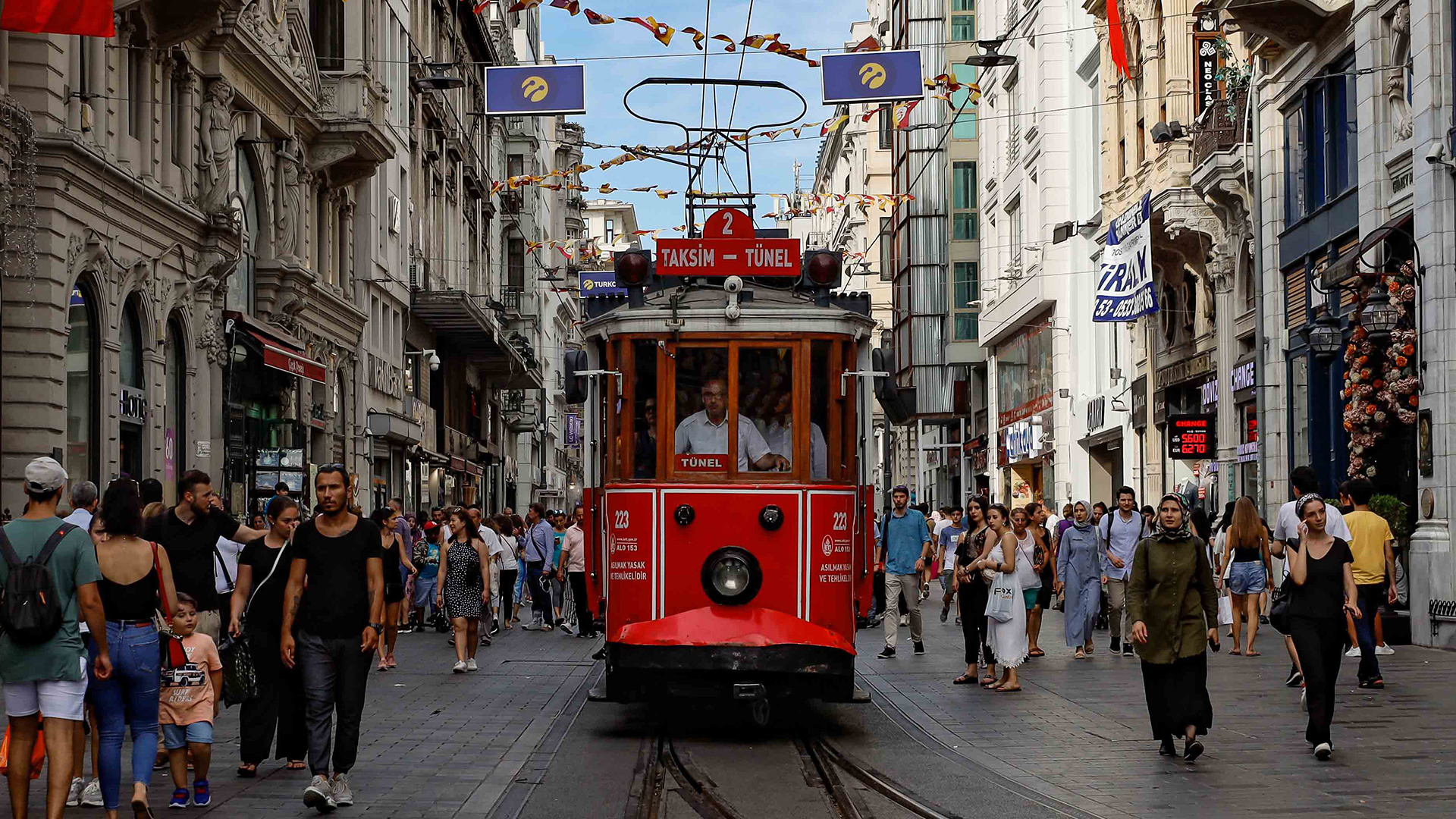
These are the iconic red trams you see in postcards.
- Taksim (T2): Runs through the middle of Istiklal Street. It’s mostly for the experience, but it’s a functional part of your transit if you’re tired of walking.
- Kadıköy (T3): A circular route through the trendy Moda district on the Asian side.
The Metrobus (The Traffic-Beater)
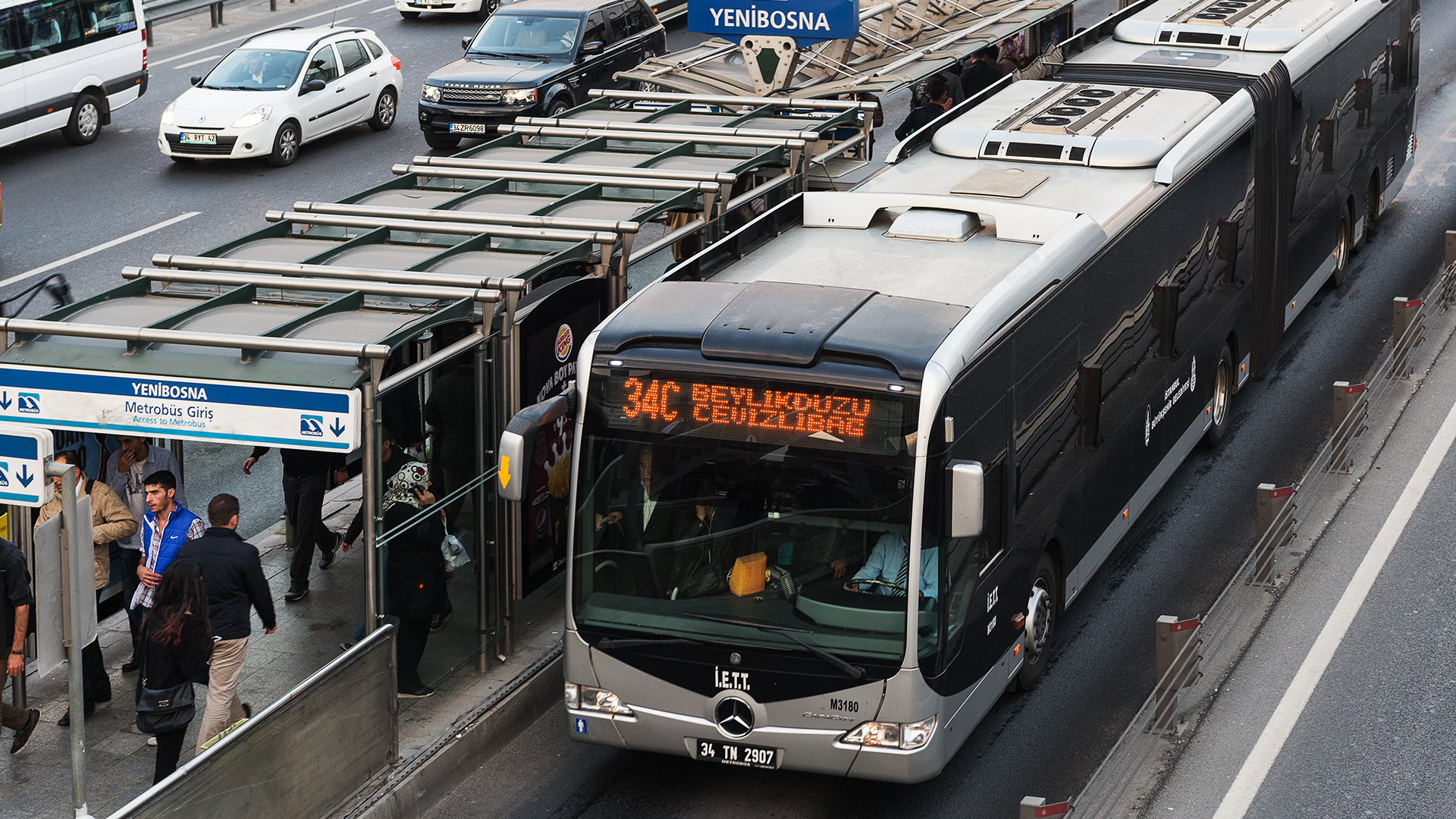
The Metrobus is a “Bus Rapid Transit” system with its own dedicated lane in the middle of the highway. It’s incredibly fast because it never gets stuck in traffic.
- Caution: It is famously crowded. During rush hour, people are packed in like sardines. Use it if you need to go from the European outskirts to the Asian side quickly, but be prepared for a “squeezed” experience.
Other Essential Connections
Marmaray: Between Two Continents
The Marmaray is an engineering marvel—a rail tunnel running under the Bosphorus, physically connecting the European and Asian continents. It is technically the deepest immersed tube tunnel in the world.
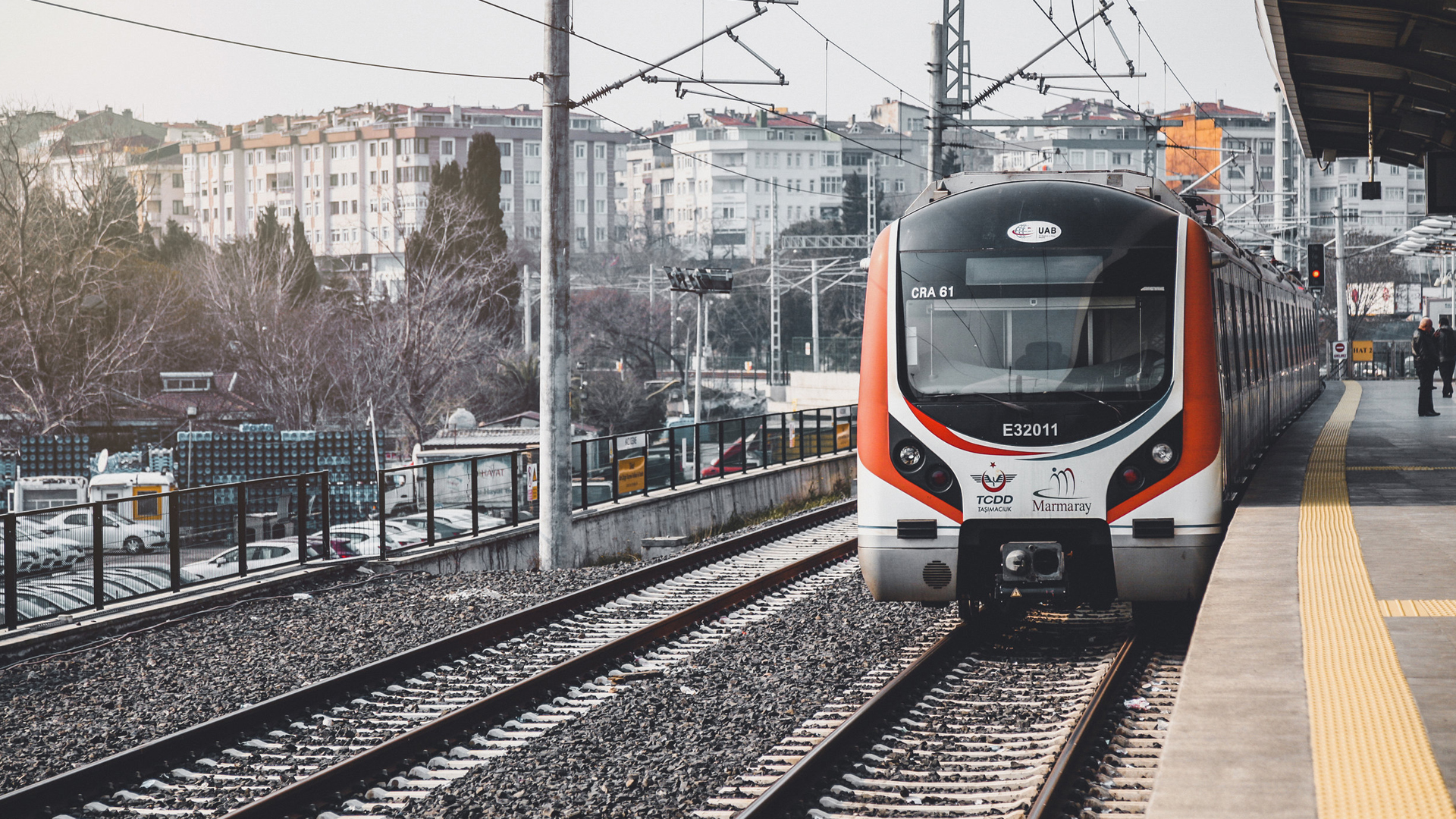
- Speed: It’s the fastest way to cross between continents (just 4 minutes in the tunnel).
- The Route: It runs from Halkalı on the European side to Gebze on the Asian side.
- Key Station: Sirkeci Station is deep underground and worth seeing just for its scale.
- Refund Tip: Marmaray uses a different fare system. You tap when you enter (it takes the maximum fare) and then you must tap the “Refund” (İade) machine when you exit to get back the money for the distance you didn’t travel!
The Eyüp-Pierre Loti Cable Car (TF2)
This cable car connects the historic district of Eyüp on the Golden Horn to the famous Pierre Loti Hill.
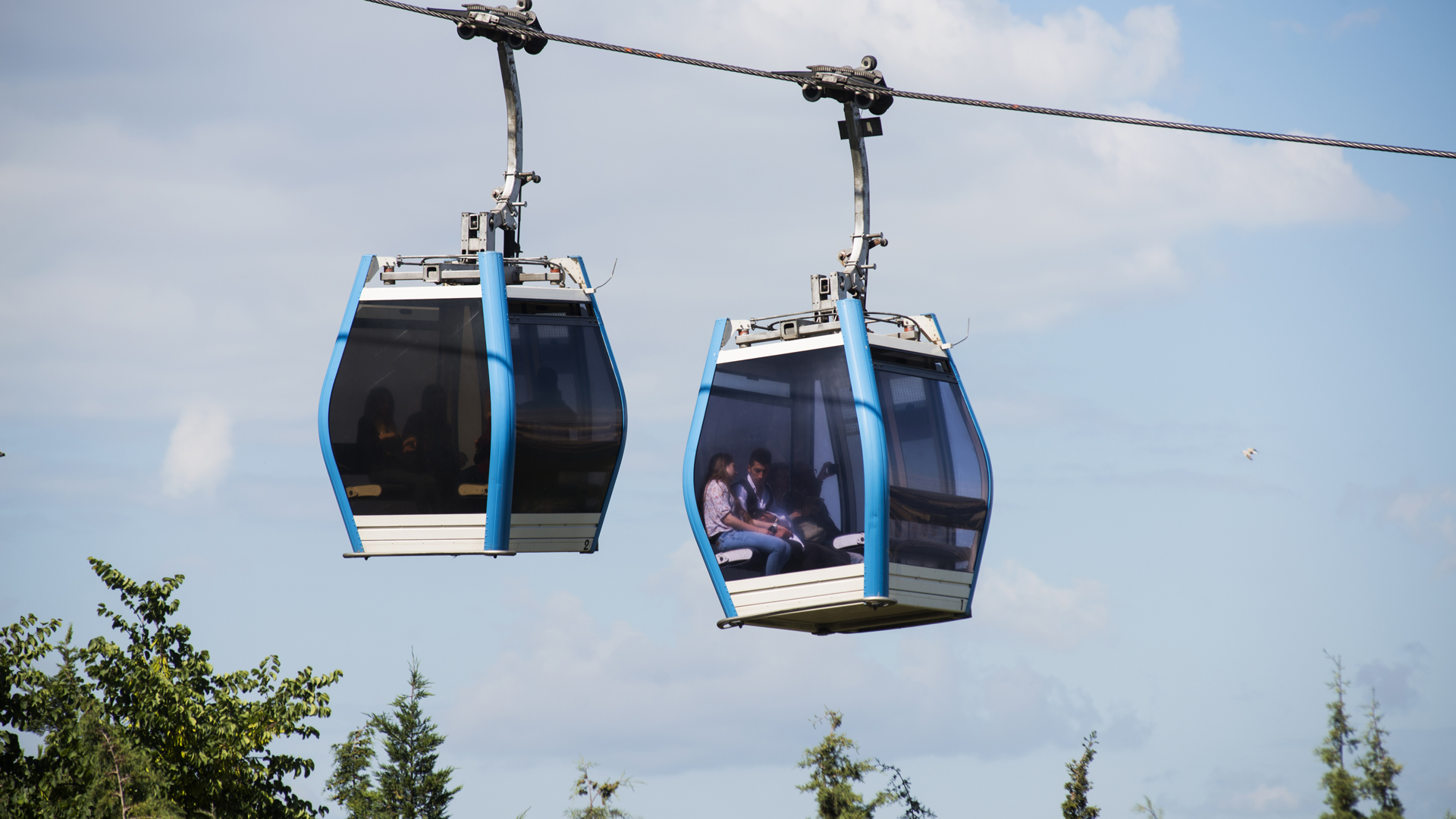
- The View: It offers one of the best views of the Golden Horn and the city’s skyline.
- Tip: Go during sunset and have a glass of traditional Turkish tea at the Pierre Loti Hill Cafe.
- Hours: 8:00 AM – 10:00 PM.
Istanbul Ferries (Vapur): The Soul of the City
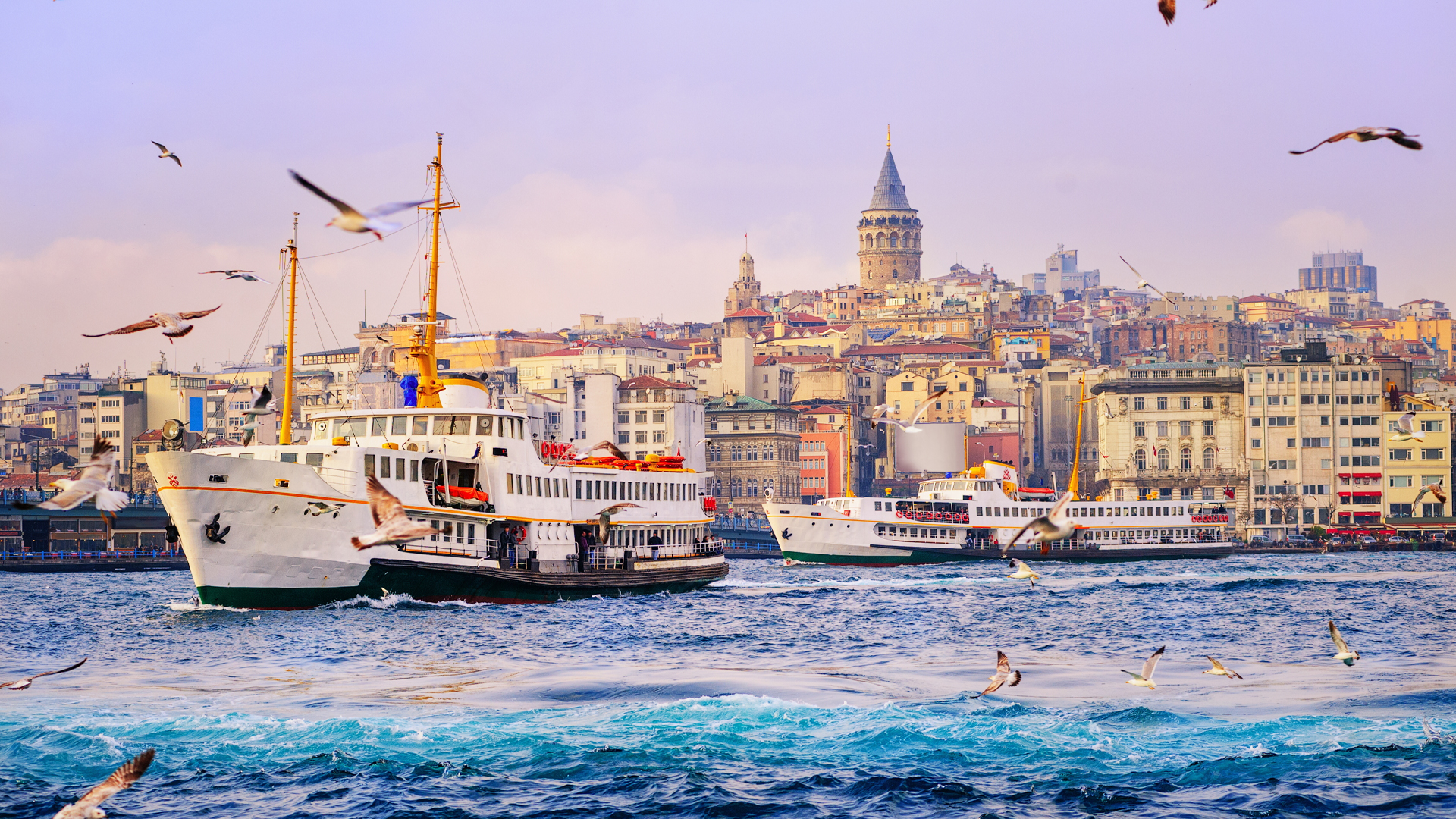
No trip to Istanbul is complete without a ferry ride. For locals, it’s a daily commute; for visitors, it’s arguably the world’s most beautiful “public cruise.” The feeling of the Bosphorus breeze in your hair while sipping hot tea is the quintessence of the Istanbul experience.
The Main Transit Hubs
To master the ferry system, you only need to remember five names:
- European Side: Eminönü, Karaköy, Beşiktaş, Kabataş.
- Asian Side: Üsküdar, Kadıköy.
Understanding the Operators
There are three main ways to travel by water:
- Şehir Hatları (City Lines): The classic, state-run ferries with large open decks. They are the cheapest and most romantic. They use the Istanbulkart and offer the most routes. Look for their distinct “vapur” silhouette.
- Private Motorboats (Turyol & Dentur): These are smaller, faster boats that run similar routes. They also accept the Istanbulkart and are great when the large ferries are crowded or running less frequently.
- Sea Taxis: Small speedboats that you can call via an app. They are expensive (starting around 500-1000 TRY) but operate 24/7 and can take you directly to private docks at hotels or restaurants.
Top Ferry Routes for Visitors
- Eminönü to Kadıköy: The classic transition from the historic European center to the vibrant Asian residential heart. (20 minutes)
- Beşiktaş to Üsküdar: A quick 10-minute dash that gives you a perfect view of the Maiden’s Tower (Kız Kulesi).
- The Golden Horn Line: Starting from Üsküdar or Karaköy, this slow boat stops at Balat, Ayvansaray, and Eyüp. It’s the most scenic way to see the historic city walls from the water.
- The Princes’ Islands (Adalar): Ferries depart from Beşiktaş, Kabataş, and Eminönü. It’s a 75-90 minute journey to a car-free paradise. Tip: Take the “Sea Bus” (Deniz Otobüsü) for a faster, catamaran-style trip, or the classic “Vapur” for the views.
Local “Vapur” Etiquette & Tips
- The Çay & Simit Ritual: You are almost legally required to buy a glass of tea from the onboard canteen. If you’re on the open deck, buy a “Simit” (sesame bread ring) at the dock and throw pieces to the seagulls that follow the ferry. It’s a tradition that spans generations.
- Seating Strategically: In summer, head to the upper open decks for the breeze. In winter, the interior lounges are cozy and often have heaters.
- The Musicians: Most ferries have street musicians who perform for tips. They are often high-quality performers who add a cinematic soundtrack to your journey.
- The “Sunset” Ferry: If you can, time your ferry ride from Kadıköy to Eminönü for sunset. The view of the Hagia Sophia and Blue Mosque silhouettes against a purple sky is unforgettable.
- Check the App: Download the “Şehir Hatları” app to see real-time schedules, as some routes stop running after 9:00 PM.
Airports & Taxis in Istanbul
Getting to and from the airports is a key part of any Istanbul itinerary. The network has expanded significantly recently.
Reaching the Airports
- New Istanbul Airport (IST): Located far to the north. The M11 Metro is the fastest way (30-40 minutes from Kağıthane). Alternatively, use the Havaist buses which have luggage compartments and are very comfortable.
- Sabiha Gökçen Airport (SAW): Located on the Asian side. The M4 Metro connects it directly to the Kadıköy ferry terminal. Havabus shuttles also run to Taksim and Kadıköy.
Dolmuş & Minibüs: The Unofficial Masters of the Road
While the metro and tram are run by the municipality, there is a whole secondary layer of transport that is privately owned and operated. These are the Minibüs and the Dolmuş.
The Minibüs (The Blue/Green Vans)
You will see these small, often beat-up vans speeding through residential streets. They fill the gaps where buses don’t go.
- Payment: NO ISTANBULKART. These are cash only.
- How it Works: You hop on and tell the driver your destination (e.g., “Beşiktaş” or “Kadıköy”). He will tell you the price (usually a few Lira). You pass your money forward through other passengers, and the change comes back the same way. It is a fascinating communal experience.
- Routes: They don’t have fixed stops. You can flag them down anywhere on their route, and you yell “İnecek var!” (Someone wants to get off!) when you want to stop.
The Dolmuş (The Yellow Vans)
“Dolmuş” means “filled,” and that is exactly how they work. These are shared yellow taxis that follow a specific route.
- Payment: Cash or sometimes Istanbulkart (on specific newer models), but assume cash.
- Waiting: They stay at their starting point until every single seat is filled. Once full, they depart.
- Popular Routes:
- Taksim <-> Beşiktaş
- Taksim <-> Kadıköy (even across the bridge!)
- Beşiktaş <-> Bostancı
- Speed: They are famously fast (sometimes terrifyingly so). They are a great alternative at night when the ferries have stopped.
Walking: The Most Rewarding Transit Mode
Despite the hills, Istanbul is a city meant to be seen from the ground. Some of the best transport “routes” aren’t on a map.
Crossing the Galata Bridge
Instead of taking the T1 tram from Karaköy to Eminönü, walk across the bridge. You will see the fisherman lining the rails, the boats shuffling below, and the iconic silhouette of the New Mosque ahead of you. It takes 10 minutes and is pure Istanbul.
The Bosphorus Promenade
Walking from Beşiktaş to Ortaköy (and then to Kuruçeşme and Bebek) is a 2-hour journey past mansions, parks, and the water. It is the city’s favorite Sunday activity.
The Istiklal Street Stroll
Istiklal Street is 1.4km of pedestrian-only madness. While the nostalgic tram can take you through it, walking allows you to duck into the hidden “passages” (pasajlar) and side streets that hold the city’s best bars and bookstores.
A Note on Hills
Prepare your calf muscles. Istanbul is the “City of Seven Hills,” and while its transport helps with many, you will inevitably find yourself climbing a 45-degree street at some point. Wear comfortable shoes!
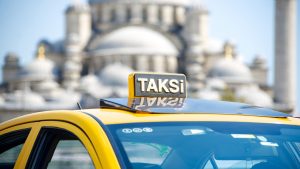
Mastering the Istanbul Taxi
Taxis are plentiful but can be tricky during rush hour or rain.
- The Apps: NEVER hail a taxi on the street if you can avoid it. Use BiTaksi or Uber. This ensures the meter is on and the route is tracked.
- Payment: Yellow taxis are standard. Turquoise and Black are more expensive luxury options. Most taxis now accept credit cards, but it’s always safer to have some Turkish Lira (TRY) on hand.
- The Meter: Always ensure the driver starts the “Taksimetre.”
Public Transport Etiquette & Local Culture
Navigating the city isn’t just about maps; it’s about social rules. Understanding these will make your journey smoother and earn you the respect of the locals.
Giving Up Your Seat
This is perhaps the most important rule in Istanbul. If you are sitting and an elderly person, a pregnant woman, or someone with a small child boards the vehicle, you are expected to offer your seat immediately. It is considered very rude to ignore them. Even if you are exhausted, standing up for an elder is viewed as a mark of good character.
Backpack Etiquette
Istanbul’s buses and metros can get incredibly crowded. If you are wearing a large backpack, take it off and hold it between your feet. Leaving it on your back takes up space for one or even two extra people and makes you a target for accidental bumps or, occasionally, pickpockets.
Moving to the Middle
A common mistake tourists make is standing near the doors. In Istanbul, you must move toward the center of the vehicle as soon as you board. If you block the doorway, you will hear people shouting “İlerleyelim lütfen!” (Let’s move forward, please!).
Quiet Culture
While Istanbul is a loud city, public transport (especially the Metro) is relatively quiet. People rarely talk loudly on their phones or play music without headphones. Be respectful of this calm environment.
Escalator Rules
Like most major cities, the rule is “Stand on the Right, Walk on the Left.” If you stand on the left side of the escalator, you will likely be asked to move by someone rushing for their train.
Safety & Common Scams to Avoid
Overall, Istanbul’s public transport is very safe, with security guards and cameras at almost every station. However, like any major tourist destination, there are things to watch out for.
The “Felt Tip” Taxi Scam
Some taxi drivers might try to use a “shortchange” trick. You hand them a 100 TRY bill, and they quickly swap it for a 20 TRY bill while you aren’t looking, claiming you underpaid. To avoid this, say the value of the bill out loud as you hand it over: “Here is 100 Lira.”
Pickpockets in Crowded Areas
The T1 Tram and the Metrobus are hotspots for pickpockets during rush hour. Always keep your bag in front of you and your wallet in a secure internal pocket. Avoid keeping anything in your back pockets.
Fake “Assistance” at Biletmatik
In busy stations like Sultanahmet or Taksim, someone might offer to help you use the Biletmatik machine to buy an Istanbulkart. They might claim the machine is “broken” and offer you a card they have for a higher price. Ignore them. The machines always have an English language option, and there are municipal staff (wearing official vests) who can truly help you if you’re stuck.
The “Bosphorus Tour” Hustlers
Near the Eminönü ferry docks, you will be approached by dozen of people offering “Bosphorus Cruises” at “special prices.” While some are legitimate private operators, we recommend sticking to the official Şehir Hatları ferries for the most authentic and fairly priced experience.
Frequently Asked Questions (FAQ)
1. Does the Istanbulkart work for the whole family?
Yes, you can use one Istanbulkart for up to 5 people by tapping it multiple times at the turnstile. However, only the first tap receives the “transfer discount” (aktarma). For a long stay, we recommend one card per person to save money on complex journeys.
2. Can I use my credit card directly on the bus or metro?
In many modern cities, you can “tap-to-pay” with a credit card. In Istanbul, this is slowly being rolled out on buses and some metro lines, but it is much more expensive than using an Istanbulkart and doesn’t always work on older equipment. Always have an Istanbulkart as your primary method.
3. What time does public transport stop at night?
Most metros and trams run until 00:00 (Midnight). However, on Friday and Saturday nights, the “Night Metro” operates 24 hours on major lines (M1, M2, M4, M5, M6, M7). The Metrobus and some specific bus lines (Yellow Buses) operate 24/7 every day.
4. How do I get from Sultanahmet to Taksim?
The most efficient way is to take the T1 Tram from Sultanahmet to Karaköy, and then either walk up the hill or take the F1 Funicular from Kabataş to Taksim. Alternatively, you can take the T1 to Laleli-Üniversite and walk to the M2 Metro at Vezneciler.
5. How do I get to the Princes’ Islands?
Take a ferry (Vapur) from Kabataş, Beşiktaş, or Eminönü. The journey takes about 90 minutes to the largest island, Büyükada. Use your Istanbulkart for the best price.
6. Is public transport safe for solo female travelers?
Yes, Istanbul’s public transport is generally very safe. Stations are well-lit and guarded. During late-night hours, try to sit in carriages that are more populated. If you feel uncomfortable on a bus, sitting near the driver is a good idea.
7. What should I do if I lose my Istanbulkart?
If it’s an anonymous card, unfortunately, the balance is lost. If you registered your card via the mobile app, you can block it and potentially transfer the balance to a new card.
8. Are there student or senior discounts for tourists?
Unfortunately, no. The deeply discounted rates for students and seniors are only available to residents with official Turkish ID cards or student permits. Tourists must pay the standard “Anonymous” rate.
9. Can I take my pet on the metro or ferry?
Small pets in carrying cases are allowed. Guide dogs are permitted. On ferries, you may see local cats and dogs on the open decks; they are often the “mascots” of the vessel!
10. How do I get to the New Istanbul Airport (IST) cheaply?
The Havaist buses are the most convenient (comfortable seats, luggage space). The M11 Metro is the cheapest and fastest if you are near a connecting station like Gayrettepe.
11. Is there a “Day Pass” for unlimited travel?
There aren’t many “unlimited” passes like in London or Paris. The best option is to top up your Istanbulkart as you go. There are “limited use cards” (1, 3, 5, or 10 rides), but they are usually more expensive per ride.
12. Does public transport run on national holidays?
Yes, it runs on all holidays (like Republic Day or Eid). In fact, on many major holidays, public transport is often free for everyone, leading to very large crowds at popular spots.
13. What is the “İade” (Refund) machine on Marmaray?
Marmaray charges a fixed maximum fare when you enter. If you get off after only a few stops, you must tap your card on the yellow/orange “İade” machines outside the turnstiles to get a partial refund of your balance.
14. Can I use the Istanbulkart for the Bosphorus Cruise?
Yes! The “Short Bosphorus Tour” run by Şehir Hatları usually accepts Istanbulkart. It’s the best value-for-money cruise in the city.
15. How do I know which bus stop is mine?
Modern buses have screens and voice announcements (in Turkish). If you’re unsure, follow your route on Google Maps or use the Mobiett app, which shows your live position on the bus line.
16. What is a “Dolmuş” and how is it different from a taxi?
A Dolmuş is a “shared taxi.” It looks like a yellow van. It follows a set route and only leaves when it’s full of passengers. It’s faster than a bus and cheaper than a private taxi.
17. Why is the Metrobus so crowded?
The Metrobus carries over a million people a day across the city’s main artery. It is often the only way to beat the extreme highway traffic, so everyone uses it! Avoid it during rush hours if you have luggage.
18. Can I use the Istanbulkart to pay for a private taxi?
Generally, no. A few taxis in the BiTaksi app might allow it, but it’s not a standard feature. Use cash or a credit card for taxis.
19. Is the water in the Bosphorus ferries safe to drink?
The water from the taps in the toilets is NOT for drinking. However, the onboard canteen sells bottled water, tea, coffee, and snacks.
20. How much should I top up for a 3-day trip?
A safe estimate for a moderately active tourist is about 500-800 TRY per person. You can always add more at any station if you run low.
21. What happens if my card balance is zero at the turnstile?
The machine will make a distinct “negative” sound and show “Yetersiz Bakiye” (Insufficient Balance). You must go to the nearest Biletmatik to top up. Don’t worry, they are always located right next to the entrance.
22. Are the metros and trams air-conditioned?
Yes, almost all modern metros and trams have high-quality air conditioning. Some older buses might not, but the municipality is rapidly upgrading its fleet.
23. Can I take a bicycle on public transport?
Bicycles are allowed on metros and ferries with some time restrictions during peak hours. Folding bikes are usually allowed at any time.
Note: Always keep your Istanbulkart topped up. Most stations have Biletmatik machines that accept cash and credit cards. Enjoy your journey across this magnificent city!
Comments
Share your thoughts with us