
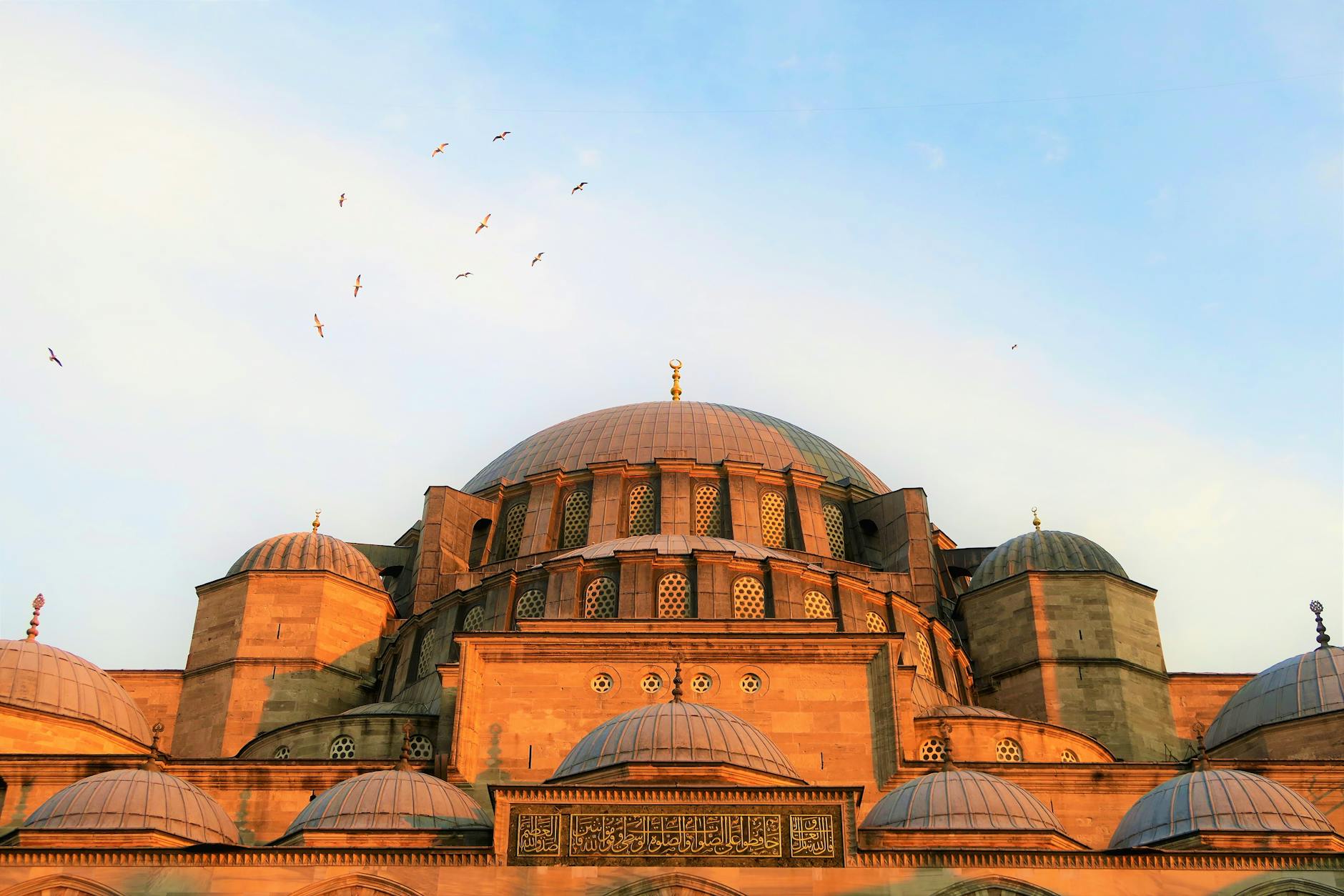
More Than a Landmark: My Insider’s Guide to the Suleymaniye Mosque
I remember my first autumn in Istanbul, back in 2009. I had just moved into a drafty but charming apartment in Moda, on the Asian side, and I was still at that stage where every ferry ride felt like a cinematic event. I’d spend my afternoons crossing the Bosphorus, eyes glued to the skyline, trying to make sense of the jagged silhouette of minarets and domes that defines this city. Like most newcomers, I was initially drawn to the “Big Three”: the Hagia Sophia, the Blue Mosque, and the Topkapi Palace. They are magnificent, don’t get me wrong. But there was one silhouette that seemed to follow me-a massive, perfectly proportioned crown sitting atop the Third Hill of the city, overlooking the Golden Horn.
That was the Suleymaniye Mosque.
Over the last 15 years, as I’ve transitioned from a confused expat to a seasoned local writer for Berk, I’ve visited this complex more times than I can count. While the crowds in Sultanahmet grew thicker and the “tourist menu” prices soared, Suleymaniye remained my sanctuary. It is, in my professional and personal opinion, the true heart of the city. It isn’t just a place of worship; it’s an architectural masterpiece of the highest order, a testament to the genius of Mimar Sinan, and a living neighborhood that breathes the history of the Ottoman Empire.
If you’re the kind of traveler who hates being ushered through velvet ropes and prefers the smell of roasting chickpeas to the scent of overpriced perfume in a duty-free shop, this guide is for you. Put on your most comfortable walking shoes-we’re going up the hill.
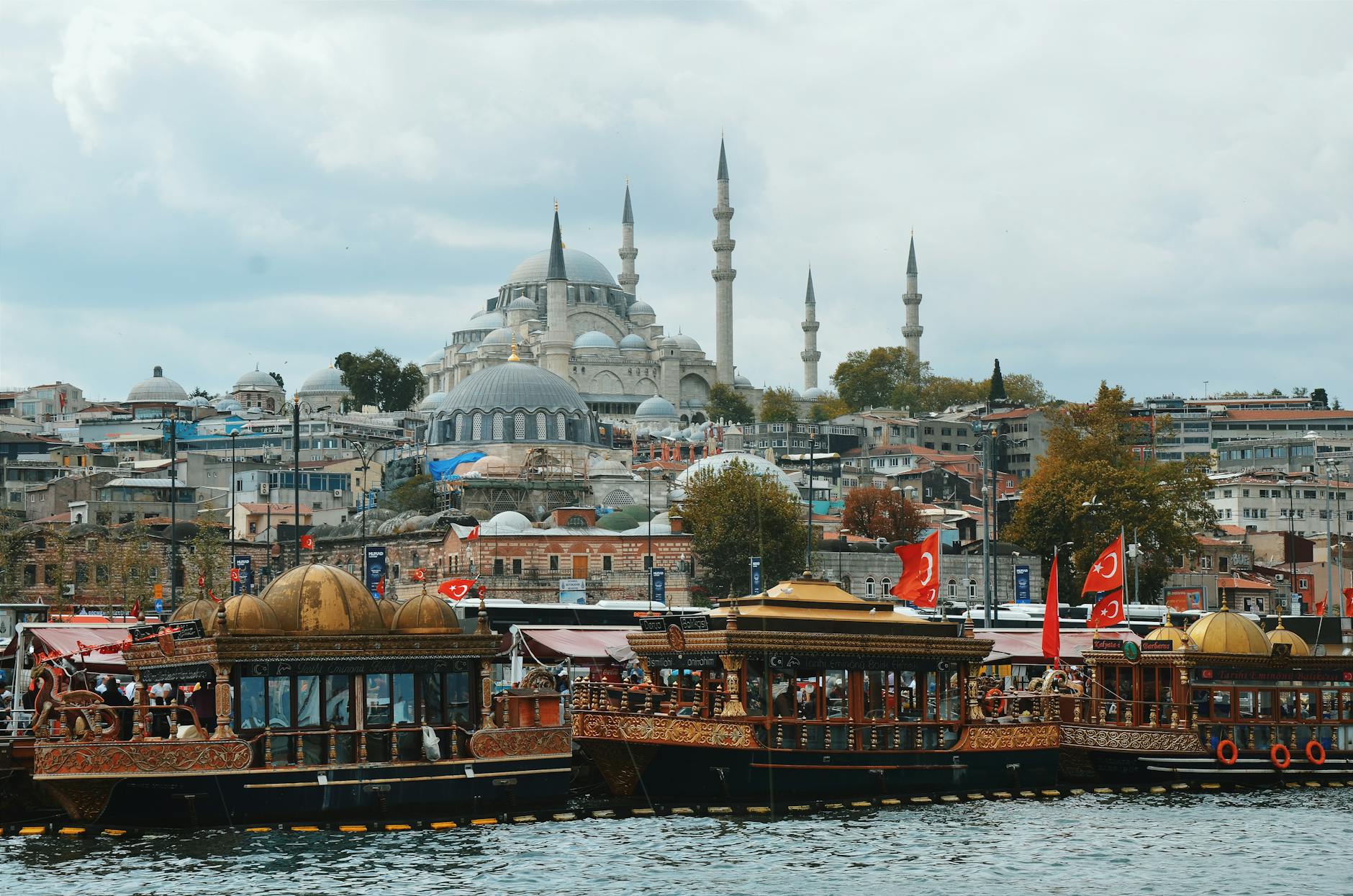
Why the Suleymaniye Mosque Wins Every Time
In the rivalry of Istanbul’s great monuments, the Suleymaniye Mosque often plays second fiddle to the Blue Mosque in the eyes of tour bus operators. This is a blessing in disguise. While the Blue Mosque is undeniably beautiful with its six minarets and cascading domes, it often feels like a museum where you happen to catch people praying. It’s crowded, the queues are legendary, and the interior can feel a bit overwhelmed by the sheer volume of visitors.
Suleymaniye is different. It is vast. It is airy. It is filled with a specific kind of golden light that seems to have been engineered by Mimar Sinan himself (and, as we’ll discuss later, it actually was). When you step into the courtyard, the noise of the Emin�n� markets-the shouting vendors, the honking taxis, the clatter of the tram-simply vanishes. It is replaced by the cooing of pigeons and the distant, rhythmic sound of the call to prayer echoing from across the water.
For me, Suleymaniye represents the “Golden Age” of the Empire. It was commissioned by Suleiman the Magnificent (Kanuni Sultan S�leyman), the longest-reigning Sultan of the Ottoman Empire, at the height of his power. He didn’t just want a mosque; he wanted a K�lliye-a social complex that included schools, a hospital, a library, and a public kitchen. When you walk through this area, you aren’t just looking at a building; you are looking at a 16th-century “smart city” designed to care for the people from birth to death.
Berk’s Insider Tip: Most people enter the mosque from the main gate and leave immediately after. Don’t do that. The real magic of Suleymaniye is in the “outer garden” (the hazire). Walk to the very back, behind the mosque, to the terrace overlooking the Golden Horn. It is, without a doubt, the best view in Istanbul. You can see from the Galata Bridge all the way to the skyscrapers of Levent, framed by the ancient walls of the mosque.
The Master and the Sultan: A History of Ambition
To understand this mosque, you have to understand the man who built it: Mimar Sinan. If Leonardo da Vinci and Robert Moses had a child who was obsessed with stone and geometry, it would be Sinan. He was the Chief Architect for three sultans and lived to be nearly 100 years old. Suleymaniye was his “journeyman” work (he considered the Selimiye in Edirne his “masterpiece”), but for the rest of the world, Suleymaniye is the pinnacle of Ottoman architecture.
The construction began in 1550 and took seven years. Legend has it that the Safavid Shah of Persia, hearing that construction had slowed down, sent a box of jewels to Suleiman, implying that the Sultan had run out of money to finish the project. Suleiman, insulted, handed the jewels to Sinan, who promptly ground them into dust and mixed them into the mortar of one of the minarets. Whether the “Jewel Minaret” actually sparkles under the sun is a matter of debate, but the story perfectly captures the ego and the stakes involved in this project.
Sinan was an engineer before he was an architect. He served in the Janissaries (the elite infantry) and spent years building bridges and fortifications. This background is why Suleymaniye is still standing despite the numerous earthquakes that have leveled other parts of the city. The foundations are deep, filled with water-resistant mortar, and the entire structure is designed to “flex” rather than break.
The four minarets are not a random choice. They signify that Suleiman was the fourth Sultan to rule from Istanbul. The ten balconies (�erefe) on those minarets indicate that he was the tenth Sultan of the Ottoman dynasty. Every stone here tells a story of lineage and legitimacy.
A Sensory Journey: What It’s Like Inside
Stepping into the main prayer hall of the Suleymaniye Mosque is a sensory experience that stays with you.
The Sound: The first thing you notice is the silence. Despite its size, the acoustics are perfect. Sinan famously placed 64 large hollow jars around the dome, acting as resonators. If you stand in the center and whisper, your voice carries. During the Ottoman era, this allowed the Imam’s voice to reach every corner of the room without any electronic amplification. Even today, with the muffled footsteps on the thick carpets, there’s a heavy, respectful quietness that feels sacred.
The Sight: Look up. The dome is 53 meters high-exactly double its diameter. This mathematical harmony creates a sense of “weightlessness.” Unlike the dark, brooding cathedrals of Northern Europe, Suleymaniye is flooded with light. There are over 200 stained-glass windows, designed by the famous “Drunkard” Ibrahim (his nickname was a bit of an irony, given his beautiful work on mosques). The light filters in, illuminating the Iznik tiles and the masterful calligraphy of Ahmed Karahisari.
The Air: There is a faint scent of aged wood, old wool, and a hint of rosewater. But here’s a secret for the “tech” nerds: Sinan built a “smoke room” (is odas�) above the main entrance. In the days of thousands of oil lamps and candles, the soot would normally blacken the walls. Sinan designed an airflow system that sucked all the smoke into this small room. The soot was then collected and used to make the highest-quality black ink for the Sultan’s calligraphers. It was the world’s first “green” air filtration system.
The Texture: Run your hand along the marble columns. They were recycled from ancient ruins-one from Alexandria, one from Baalbek, and two from Byzantine palaces in Istanbul. The history of the Mediterranean is literally baked into these walls.
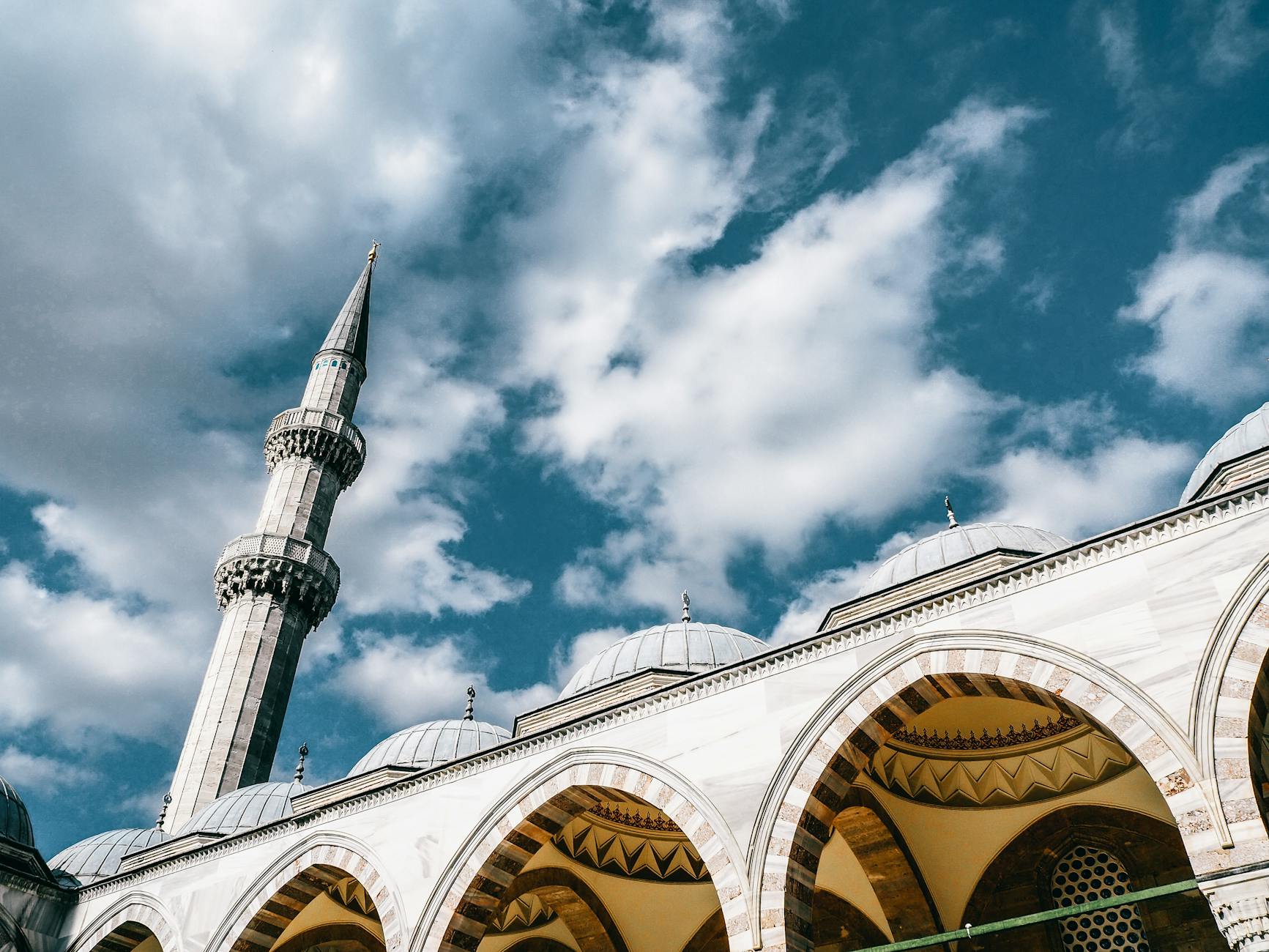
Practical Information: Planning Your Visit
Getting to Suleymaniye is half the fun, but it can be confusing if you’re relying on old maps. If you are coming from my side of the city (Kadikoy/Moda), you’ll want to take the ferry to Emin�n�. From there, it’s a steep 15-minute walk uphill.
For more details on navigating the city’s ferries and trams, check out The Ultimate Guide to Public Transport in Istanbul.
| Category | Details |
|---|---|
| Opening Hours | Daily from 09:00 to 18:00 (Closed to tourists during prayer times) |
| Entrance Fee | Free (Donations are welcome) |
| Best Time to Visit | 09:00 AM (avoiding the heat and mid-day prayer) |
| Dress Code | Modest. Shoulders and knees covered. Women must wear a headscarf (available for free at the entrance). |
| Nearby Transit | M2 Metro (Vezneciler Station) or T1 Tram (Emin�n�/Laleli) |
| Crowd Level | Moderate (Significantly less than the Blue Mosque) |
| Berk’s Vibe Rating | 10/10 - Authentic, spiritual, and visually stunning. |
Beyond the Dome: The Tombs and the Neighborhood
Once you’ve soaked in the interior, head out to the garden. This is where the heavy hitters are buried.
The Tombs of Suleiman and H�rrem
In a separate walled garden behind the mosque, you’ll find two of the most significant mausoleums in the Islamic world. The first is that of Suleiman the Magnificent. It is an octagonal building, decorated with exquisite tiles that make the interior look like a garden of paradise.
Right next to him is the tomb of his wife, H�rrem Sultan (known in the West as Roxelana). Her story is the stuff of legends-a captive who rose to become the most powerful woman in the Empire. Her tomb is smaller but arguably more elegant, filled with floral Iznik tiles that reflect her influence on the arts. Visiting these tombs is a somber, beautiful experience. You see locals coming here to pray and pay their respects to the figures who shaped their national identity.
The Hidden Workshops of Vefa
Most tourists head straight back down to Emin�n� after seeing the mosque. Don’t be “most tourists.” Walk west into the neighborhood of Vefa. This is one of the oldest residential areas in Istanbul, and it feels like time stopped around 1950.
You’ll see small workshops where artisans are still making traditional Turkish instruments, wooden furniture, and copper pots. The air here smells like sawdust and strong tea. This is the “Real Istanbul” you came for.
Berk’s Insider Tip: If you are visiting in the winter or autumn, you MUST go to Vefa Bozac�s�. It has been serving boza (a fermented malt drink topped with cinnamon and roasted chickpeas) since 1876. Even Atat�rk used to drink here; his cup is still on display. It’s an acquired taste-thick and slightly tart-but it is the quintessential Istanbul winter experience.
Berk’s Honest Verdict: The Pros and the Cons
I’m a travel writer, not a PR agent. Even my favorite places have their downsides, and I want you to be prepared.
The Pros
- Architectural Superiority: It is objectively a better piece of architecture than the Blue Mosque. The sense of space and the engineering behind the dome are world-class.
- The View: I will say it again: the terrace view of the Bosphorus and the Golden Horn is worth the flight to Turkey alone.
- Authenticity: You will see more locals than tourists here. It feels like a living part of the city, not a theme park.
- The Food: The area surrounding the mosque is famous for Kuru Fasulye (white bean stew). It sounds simple, but at places like Ali Baba Kuru Fasulyeci, it is a culinary masterpiece. The beans are creamy, the butter is rich, and the view of the mosque while you eat is unbeatable.
The Cons
- The Hill: The walk up from Emin�n� is brutal in the July heat. If you have mobility issues, take a taxi or the M2 Metro to Vezneciler and walk down the hill instead.
- Scammers: While less common here than in Sultanahmet, you might still encounter “friendly” locals who want to show you a “hidden carpet shop” or a “special rooftop.” Politely say “Hay�r, te�ekk�rler” (No, thank you) and keep walking.
- Noise during Prayer: If you visit during the Ezan (call to prayer), you cannot enter the mosque. Check the prayer times online before you go. The wait can be 30-45 minutes.
Berk’s Alternative:
If you find Suleymaniye is actually too crowded for your taste (rare, but it happens during holidays), head over to the R�stem Pa�a Mosque down in the spice market area. It was also designed by Sinan and is famous for having even more Iznik tiles per square inch than any other mosque in the city. It’s tiny, hidden on a second floor above some shops, and usually empty.
Walking the Neighborhood: A Local’s Path
If you’ve finished at the mosque and want to keep exploring, I highly recommend walking towards the Valens Aqueduct. This massive Roman structure still straddles one of the city’s main arteries. From Suleymaniye, it’s about a 10-minute walk through the backstreets.
Along the way, look for the Mimar Sinan Terrace Cafe. It’s a bit of a “tourist” spot, but the view is legitimate. If you want something more “Moda-style” and hip, you’ll have to cross the bridge back to my neighborhood. For a breakdown of that side of the city, see my Walking Tour of Kad�k�y and the Moda Coastline.
The transition from the ancient, religious atmosphere of Suleymaniye to the bustling, student-heavy streets of the university district nearby (Istanbul University) is one of my favorite things about this city. You can feel the layers of time shifting under your feet.
Frequently Asked Questions (FAQ)
1. Is the Suleymaniye Mosque better than the Blue Mosque?
“Better” is subjective, but from an architectural and historical standpoint, most experts (and locals like me) prefer Suleymaniye. It is larger, brighter, and offers a more peaceful experience without the crushing crowds of Sultanahmet. Plus, the surrounding complex (the K�lliye) is much better preserved.
2. What should I wear when visiting?
Istanbul is a cosmopolitan city, but mosques are active places of worship. Men should avoid shorts and tank tops. Women need to cover their hair, shoulders, and legs. If you forget your scarf, don’t worry-the mosque staff provides clean wraps and scarves at the entrance for free.
3. Can I take photos inside?
Yes, but be respectful. Flash photography is generally frowned upon, and you should never take photos of people while they are praying. During non-prayer times, feel free to capture the dome and the tiles. The “No Photography” signs are usually aimed at professional crews, but as a tourist with a smartphone or a DSLR, you’re fine.
4. Where is the best place to eat near Suleymaniye?
The area is legendary for Kuru Fasulye (white beans). Look for the row of restaurants directly across from the mosque’s main entrance. Erzincanl� Ali Baba is the most famous. Order the beans, a side of pilav (rice), and a bowl of tur�u (pickles). It’s the ultimate Turkish comfort food.
5. How long does it take to see the whole complex?
If you just want to see the mosque, 30 minutes is enough. However, if you want to see the tombs, walk through the madrasas, enjoy the view from the terrace, and have lunch, you should budget at least 2 to 3 hours. It’s a place that rewards slow exploration.
The Soul of Istanbul in One Dome
After 15 years in this city, I’ve learned that Istanbul isn’t about the monuments themselves; it’s about the way they interact with the life around them. The Suleymaniye Mosque isn’t a museum piece frozen in time. It’s where the students from the nearby university come to study in the gardens, where old men gather to discuss politics after the noon prayer, and where the sunset hits the Golden Horn in a way that makes you forget all the chaos of the city below.
When you stand on that back terrace, looking out over the water towards Galata, you aren’t just a tourist. For a moment, you’re part of the same skyline that Sinan and Suleiman gazed upon five centuries ago. That connection to history-raw, beautiful, and unfiltered-is why I still call this city home.
Don’t just check it off your list. Go there, sit on the carpet, listen to the silence, and let the genius of Sinan tell you the story of Istanbul.
Berk Senior Writer, Berk Moda, Istanbul
Enjoyed this guide? Don’t forget to check out our other deep dives into the city’s heart at Istanbul Cool.
See S�leymaniye with a Local Guide
The S�leymaniye complex is a stop on our Tour 1: The Essential Istanbul, where we pair it with the Grand Bazaar, the Spice Bazaar, and local food stops that most visitors walk right past. If you’d rather focus on the historical peninsula, our Tour 3: Heart of History � Treasures of Sultanahmet covers the nearby imperial core in depth.
We also run private tours through these routes � no crowds, no rush, just the city at your own pace. See all our tours and book �