
Public Staircases and Funicular Shortcuts Between Karaköy and Beyoğlu with 2026 Fares
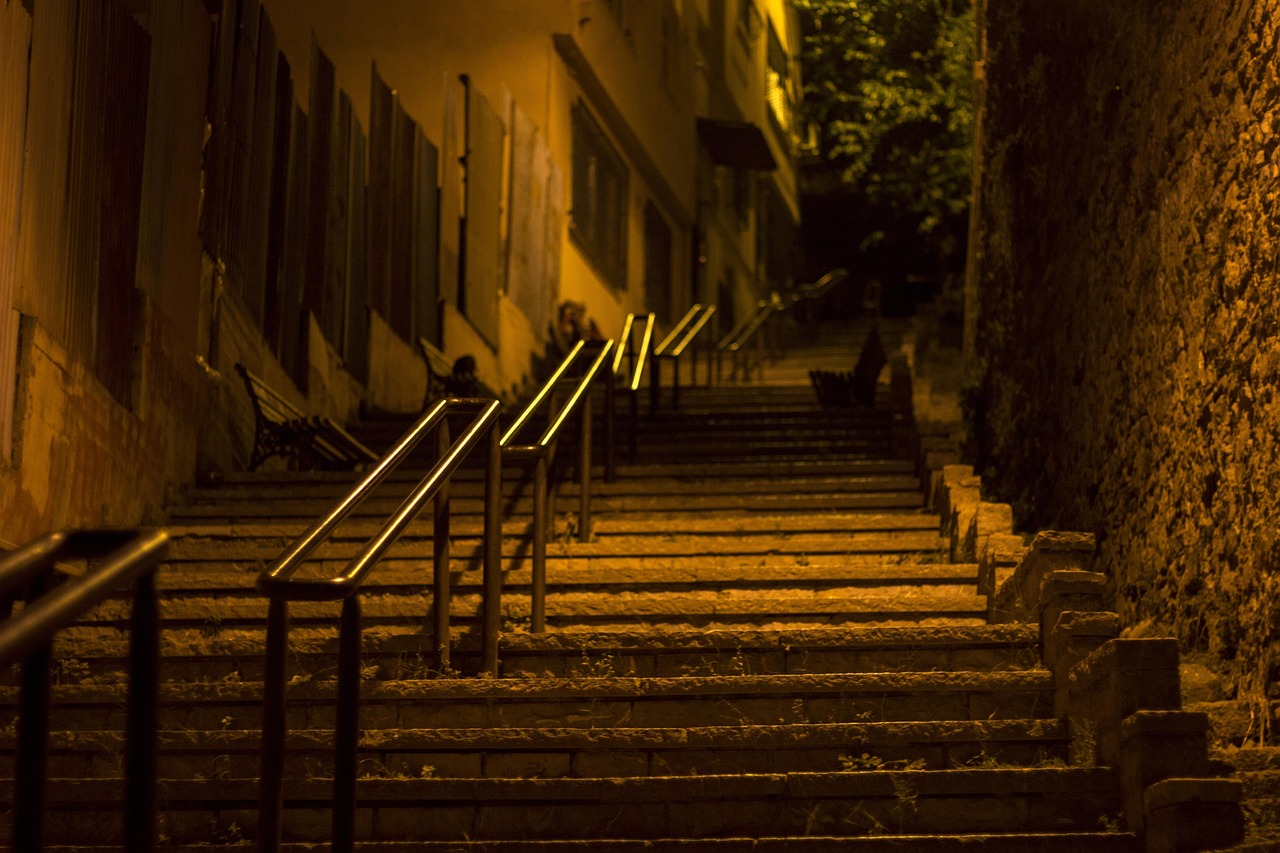
My calves still remember my first month in the city; I made the amateur mistake of trying to power-walk from the Galata Bridge to Istiklal Avenue in August heat, only to realize halfway up Galip Dede Street that the incline is less of a street and more of a vertical challenge designed to humble you. I reached the top drenched, clutching a lukewarm water bottle, while chic locals glided past me looking suspiciously cool. I learned quickly that in Istanbul, gravity is something you negotiate with, not something you fight head-on.
Field Note: Tuesday, 5:30 PM at Karaköy Tünel The air was thick with the scent of sea salt and roasted chestnuts, and the evening rush was just peaking. I tapped my Istanbulkart—the fare has ticked up to 25 TL now (approx. 0.50 EUR)—and stepped into the world’s second-oldest subterranean railway. It is a ninety-second ascent in a wood-paneled carriage that saves you a grueling twenty-minute climb. While the Kamondo Stairs are undoubtedly the most photogenic way to move between the waterfront and the heights of Beyoğlu, their winding limestone curves are a test of endurance if you’re carrying a heavy camera bag or a few bags of Turkish delight.
The secret to navigating this vertical landscape isn’t just about finding the fastest route; it’s about knowing when to surrender to the funicular and when to take the hidden alleyway stairs. If you choose the stairs, the trick is to stop every twenty steps. Don’t look at your feet; turn around and look at the Golden Horn. It gives you a legitimate excuse to catch your breath while pretending you’re just deeply moved by the architecture. Whether you’re leaning into the history of the 19th-century Tünel or weaving through the street art of the Enli Rise, understanding these shortcuts is the difference between arriving at a rooftop bar looking like a local or looking like you just finished a marathon.
The Tünel: Two Minutes of History for 30 Lira
The Tünel is the only way to climb the hill from Karaköy to Istiklal Avenue without arriving frustrated by a taxi driver’s “scenic route.” Dating back to 1875, locals treat it as a vertical extension of the sidewalk. It is short, jerky, and utterly essential. For 30 TL (0.60 EUR / 0.67 USD) per ride in 2026 for those without a standard subscription, it’s the best bargain in the city for avoiding the agonizing calf-burn of the Galata slopes.
I’ve spent 15 years watching travelers stand at the bottom of the hill, squinting at Google Maps in despair as they realize how steep the climb is. Just last week, I saw a couple trying to drag suitcases up the cobblestones; I pointed them toward the inconspicuous station entrance next to the tea shops in Karaköy. They were at the top before their heart rates even spiked. The ride itself lasts barely two minutes. You’ll feel a distinct tug as the cable engages, a nostalgic mechanical shudder that reminds you this line has been hauling people up this hill since the days of the Ottoman Sultans.
Wait times are rarely an issue. A train departs roughly every five minutes. If you arrive and see a crowd spilling out onto the street, that’s your signal to bail—walking is actually faster than waiting for two cycles of the Tünel. However, if the platform is clear, tap your card and enjoy the cool, subterranean air.
Navigating the F2 Line Like a Local
Getting from the waterfront to the start of Istiklal Avenue is a seamless process if you follow these steps:
- Locate the Karaköy Station: Find the entrance on Tersane Avenue, tucked away behind the tram stop and the street food stalls.
- Verify your Istanbulkart balance: Ensure you have at least 30 TL loaded; there are yellow top-up machines (Biletmatiks) right at the entrance if you’re short.
- Tap and enter: Move through the turnstiles quickly to keep the flow moving during the morning rush.
- Board the carriage: Grab a handle or a seat immediately; the funicular starts with a sudden lurch that can catch you off guard.
- Disembark at Tünel Square: Walk out of the upper station directly onto the start of Istiklal Avenue, right near the historic Galata Mevlevihanesi.
The Kamondo Stairs: An Art Nouveau Shortcut
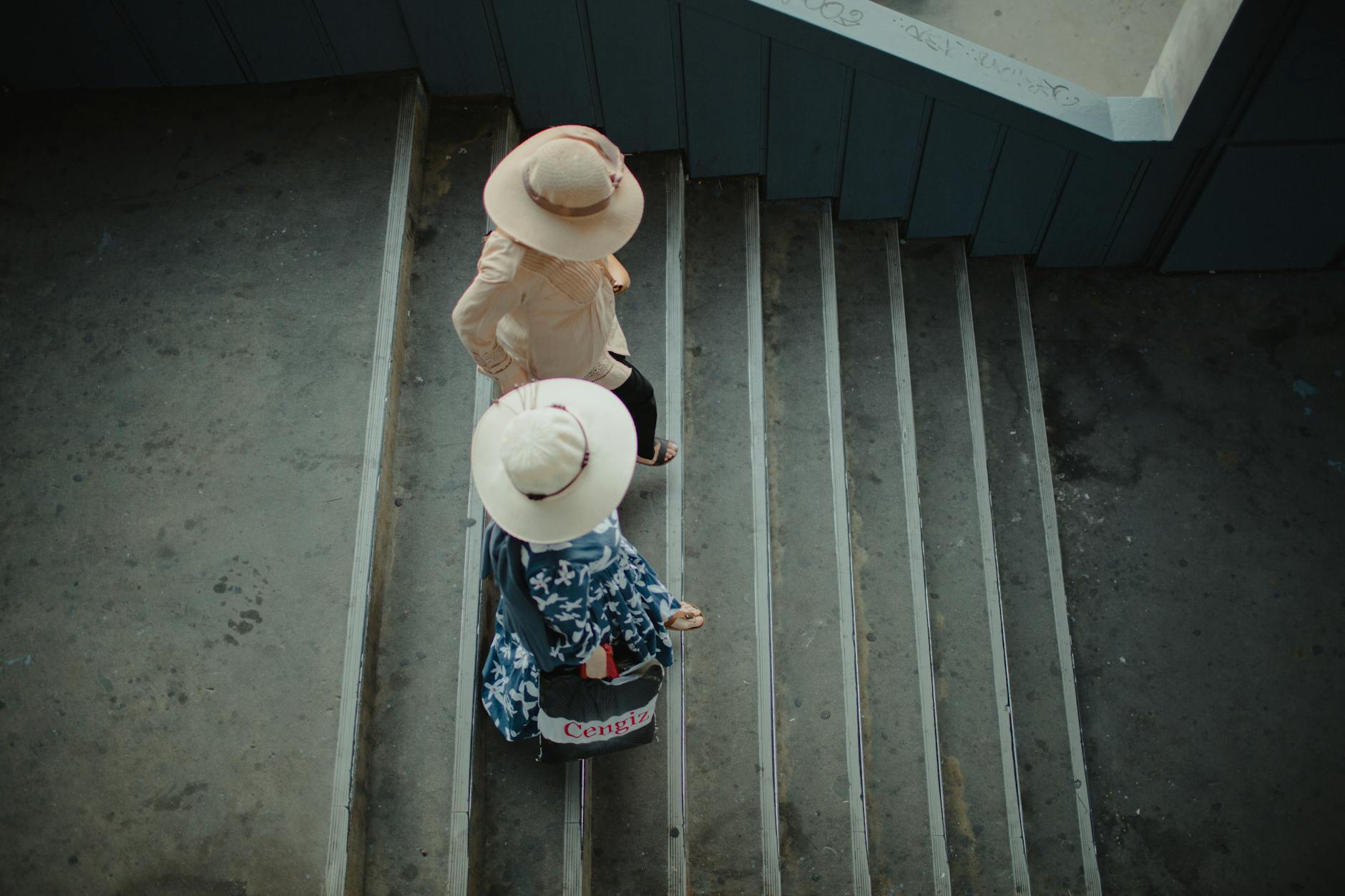
If you’re only looking at these stairs through a camera lens, you’re missing the soul of the structure—they are the most elegant piece of civil engineering in Istanbul, even when they’re crowded. These ribbon-like, intertwined steps are more than just a photo op; they are a functional masterpiece that connects the old financial district of Karaköy to the creative heights of Galata. While the historic Tünel funicular nearby will cost you 30 TL (around 0.60 EUR or 0.65 USD) for a single ride in 2026, these stairs offer a scenic, thigh-burning alternative for the price of zero liras.
Timing the “Instagram Queue”
The House of Camondo, a wealthy Sephardic Jewish banking family, commissioned this staircase in the 1870s for a very relatable reason: they wanted their children to have a paved, mud-free shortcut to their schools on the hilltop. I usually recommend a “move-fast” strategy here.
Micro Anecdote: The Kamondo Crowd Last Wednesday, I walked past at 8:10 AM, and the grey stone was glistening and empty. By 12:15 PM, I counted three separate wedding shoots and a line of influencers waiting for their turn on the central landing. To actually enjoy the curves of the Art Nouveau design without dodging a tripod, aim for an 8:00 AM arrival. If you find it too packed later in the day, just use the outer edges of the steps to bypass the crowds and head straight for the boutiques.
The Great Cultural Pivot
What fascinates me most about this climb is how the atmosphere shifts mid-step. At the base, you are on Voyvoda Street (Bankalar Caddesi), surrounded by the heavy, imposing stone facades of the city’s former banking empire. It still feels serious and busy. But as you ascend the braided steps, the grit of the lower level begins to fade.
The transition is immediate. By the time you reach the top step, the world of banking and the nearby Grease and Iron of My Favorite Walk Through Perşembe Pazarı feels miles away. You are suddenly dropped into a neighborhood of designer workshops and third-wave coffee shops leading toward the Galata Tower. It is the most dramatic 30-meter elevation change in the city, taking you from the “old money” of the 19th century straight into the heart of modern Beyoğlu culture.
The Şişhane Secret: Public Elevators to the Rescue
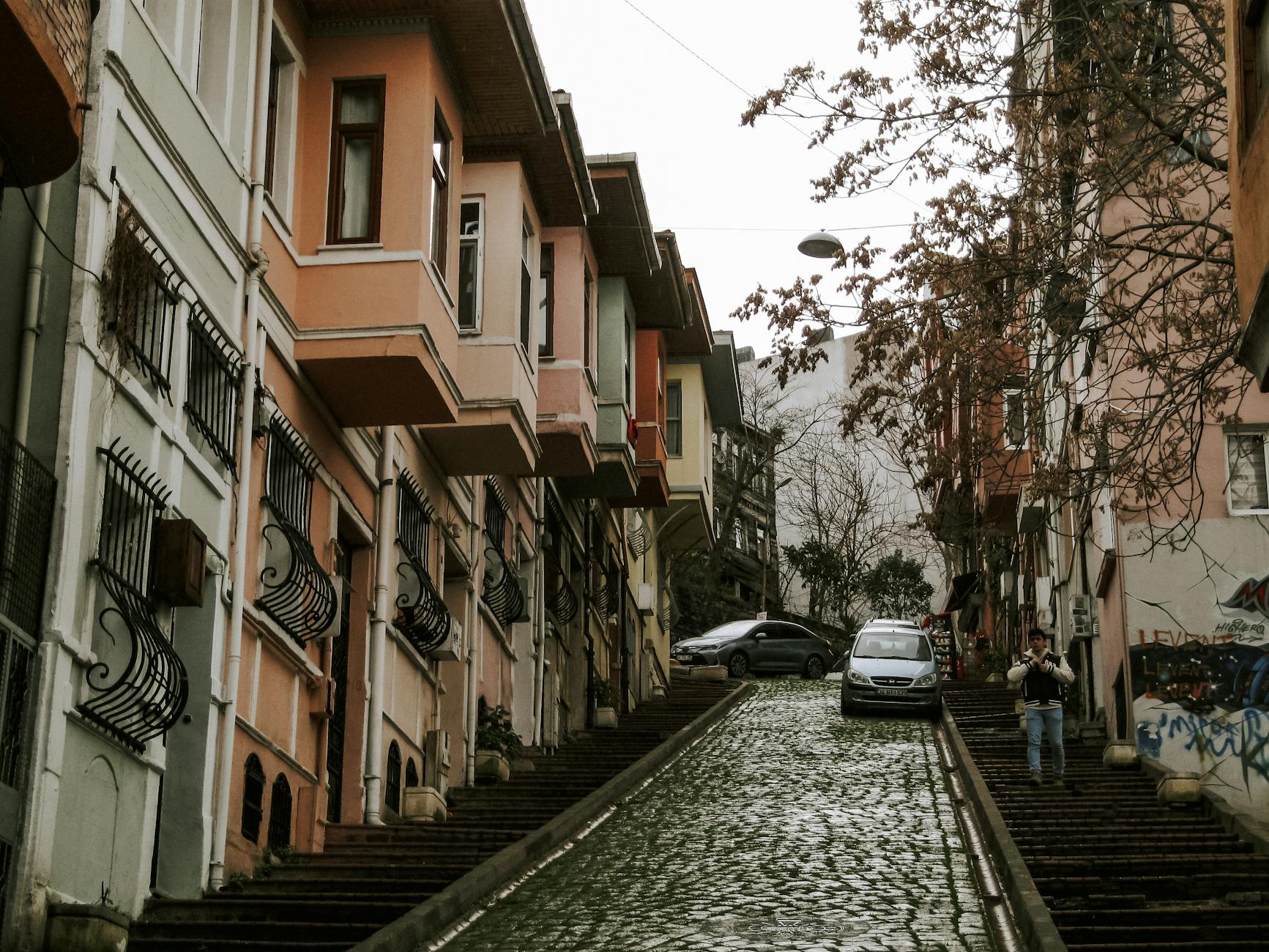
Most travelers waste their energy—and their knees—climbing the brutal incline between Karaköy and Beyoğlu, unaware that the M2 Metro line infrastructure doubles as a free vertical transit system. If you find yourself at the southern end of Meşrutiyet Street, you don’t need to hike down to the Tünel square or pay for a funicular ride. There is a “cheat code” involving the public elevators that drop you straight down to the Karaköy/Kasımpaşa level in seconds.
I recently watched a group of backpackers nearly collapse trying to navigate the steep steps with 20kg rucksacks. I pointed them toward the nondescript elevator entrance near the Jewish Museum, and the look of relief on their faces was priceless. If you are struggling with heavy bags, I recommend checking out these luggage storage and locker locations before attempting any of Beyoğlu’s steep shortcuts, as even an elevator won’t save you from the cobblestones later.
How to Navigate the Şişhane “Cheat Code”
This isn’t just a metro entrance; it’s a public thoroughfare. You can enter the station mezzanine, follow the signs, and exit at a much lower elevation without ever touching your Istanbulkart to a turnstile.
- Locate the Entrance: Find the elevator on Meşrutiyet Street, right across from the posh hotels and near the Neve Shalom Synagogue.
- The Mezzanine Move: Take the elevator down to the station concourse level.
- Follow the Signs: Look for the exits labeled ‘Kasımpaşa’ or ‘Refik Saydam’.
- The Second Descent: Follow the long corridor to the secondary set of elevators that lead out toward the naval headquarters level.
The beauty of this route is that it’s completely free and climate-controlled. While the historic Tünel costs 30 TL, this path costs nothing but five minutes of your time. Just be prepared for a bit of a walk through the station corridors.
2026 Fare Comparison: Stairs vs. Steel
Choosing between the historical climb and the mechanical lift is a simple trade-off between your physical stamina and your spare change. In 2026, the price of convenience has climbed alongside inflation, making your choice of payment method more important than the route itself.
I recently stood behind a couple at the Karaköy Tünel station who paid for two “Limited Use” cards. They spent 160 TL total—80 TL each—for a 90-second ride. Meanwhile, I tapped my Istanbulkart and paid just 25 TL (0.50 EUR). If you plan to be in the city for more than a few hours, do not buy those single-use paper tickets. They are essentially a “convenience tax.”
Breaking Down the Numbers
| Transport Method | 2026 Fare (approx.) | Best For |
|---|---|---|
| F1/F2 Funicular (Istanbulkart) | 25 TL (0.50 EUR / 0.55 USD) | Frequent travelers and locals |
| Limited Use Card (Single Pass) | 80 TL (1.60 EUR / 1.77 USD) | One-time transit emergencies |
| Walking (Kamondo/Enli Stairs) | 0 TL (Free) | Photographers and fitness buffs |
| Bakkal Water Refuel | 75 TL (1.50 EUR / 1.66 USD) | Vital hydration for the summer |
The Descent Through Tomtom: Hidden Views of the Bosphorus
Galip Dede Street is the easy choice for most, but unless you enjoy dodging selfie sticks, you should avoid it entirely. To truly feel the pulse of Beyoğlu, you need to slide behind the Italian Consulate and let yourself fall into the quiet, narrow labyrinth of Tomtom. This neighborhood is the antithesis of Istiklal’s chaotic roar; it is a place of heavy wooden doors and sudden silence.
The Vertical Poetry of Kumbaracı Yokuşu
My personal ritual involves heading down Kumbaracı Yokuşu. It is one of the steepest arteries in the city, but the reward is unmatched. Last Tuesday, around 4:00 PM, I stopped halfway down just as the sun hit the Bosphorus. Between two crumbling, pastel-colored apartment blocks, the water appeared like a jagged piece of turquoise glass.
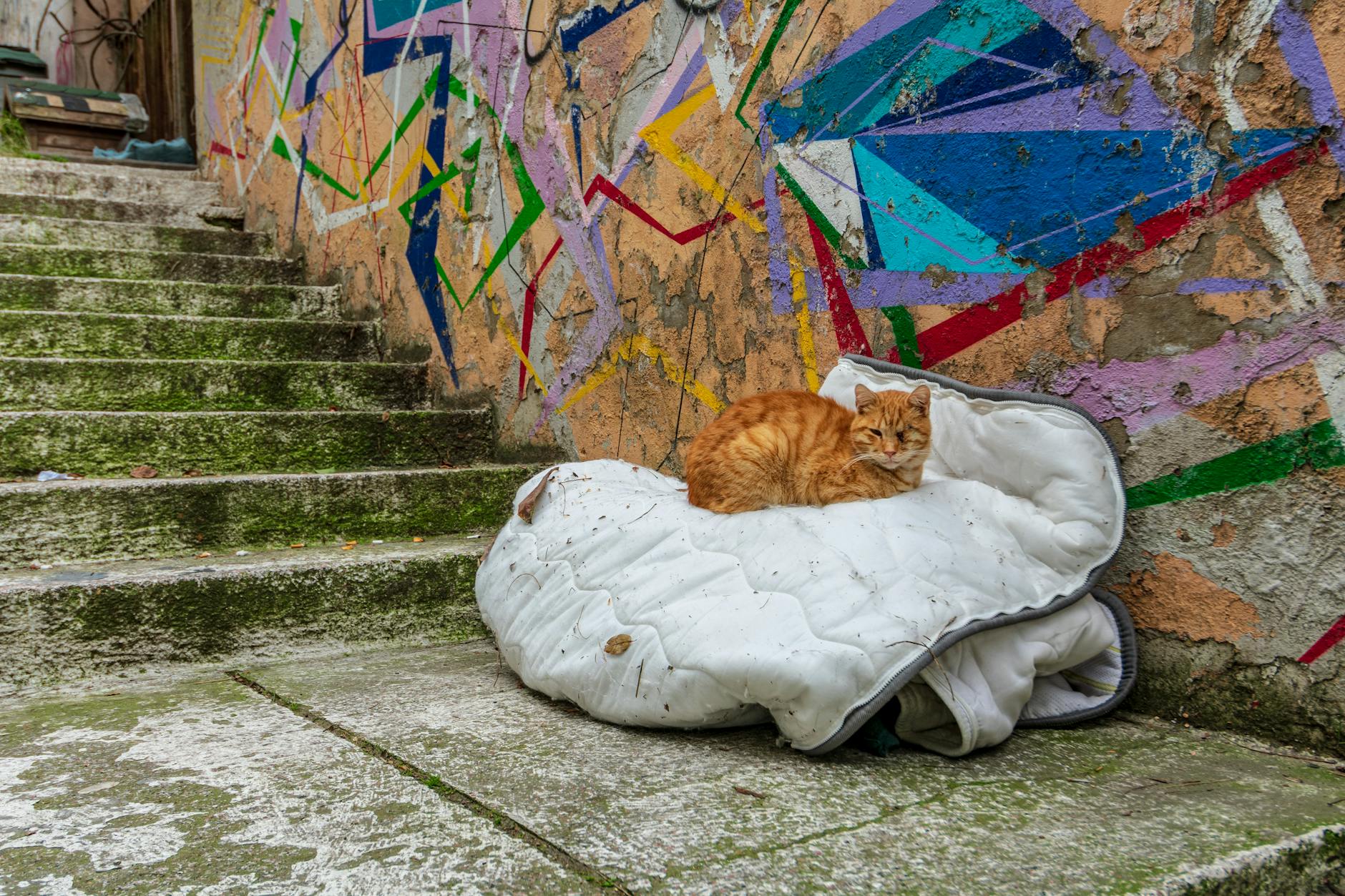
The street art here is alive; it evolves every time I walk through. Just keep an eye on the top three steps of every staircase—those are the exclusive territory of the local cats. They don’t move for anyone. As you emerge near the bottom toward Tophane, look for some traditional tea gardens to recover. A small tulip glass of tea shouldn’t cost you more than 30 TL.
Navigating the Incline: Timing and Strategy
Gravity is your greatest adversary or your best ally. The smartest way to tackle the Karaköy to Beyoğlu stretch is the “Reverse Commute”: pay the 25 TL to ride the Tünel funicular up, then wander back down the staircases on foot.
The Rush Hour “Pressure Cooker”
Avoid the Tünel station between 5:00 PM and 6:30 PM. During these ninety minutes, the station transforms into a human pressure cooker. Thousands of commuters pouring out of Karaköy ferry terminals cram into the lower station. If you find yourself stuck in this window, grab a tea at a nearby cafe and wait it out.
Staircase Etiquette and the “Teyze” Rule
Social hierarchy on Istanbul’s stairs is dictated by age and momentum. Always keep to the right on narrow passages. If you hear a rhythmic clicking of heels or a heavy sigh behind you, it’s likely a local teyze (auntie) on her way to the market. Do not be deceived by her grocery bags; these women possess cardio levels that would shame an Olympic athlete. Step aside and let her pass. When you yield, a small nod is the universal currency of respect here.
FAQ: Navigating Karaköy and Beyoğlu
What is the most cost-effective way to get from Karaköy to Taksim?
The most efficient route is taking the Tünel funicular from Karaköy up to Şişhane for 25 TL (approx. $0.55), then walking the remaining length of Istiklal Avenue to Taksim Square. It’s faster than a taxi, which often gets mired in gridlock.
Are the public staircases safe to use after dark?
Most staircases between Karaköy and Beyoğlu, like the Kamondo or those leading toward Galata, are well-lit and frequently used by locals. Stick to the main arteries near the Galata Tower after 10:00 PM for the best lighting.
How much should I budget for public transport in this area?
For 2026, a single trip on the Tünel costs 25 TL with a card. If you plan on doing the “up-by-rail, down-by-stair” method twice a day, 50 TL (around $1.10) is plenty.
Finding Your Vertical Rhythm
Standing at the bottom of the Kamondo Stairs on a humid July afternoon, you can almost feel the weight of the city pressing down toward the Golden Horn. These vertical veins—the stone steps and the century-old iron cables—are the only things holding the old maritime grit of Karaköy and the cosmopolitan pulse of Beyoğlu together.
Istanbul doesn’t give away its beauty for free. You pay for it in sweat or you pay for it at the turnstile. Whether you choose the 200 steps or the mechanical lift, once you reach the top and that first breeze from the Bosphorus hits your face near Şişhane, you’ll realize the climb wasn’t just a commute—it was the price of admission to the heart of the city.
Comments
Share your thoughts with us