
If you’ve spent more than ten minutes on İstiklal Avenue, you know exactly what I’m talking about. It’s a glorious, neon-lit sensory overload—the rhythmic cling-clang of the nostalgic red tram, the overlapping melodies of street musicians, and that constant, electric hum of millions of feet hitting the pavement. It is the beating heart of modern Istanbul, but even for someone like me who has called this city home for fifteen years, there are days when the “heartbeat” feels a bit more like a drumroll.
That’s when I slip away to my sanctuary.
Just a few steps away from the end of that crowded thoroughfare, right before the street begins its steep tumble down toward the Galata Tower, there is a heavy stone gate that most tourists walk right past. But once you cross that threshold into the Galata Mevlevihanesi, the world shifts. The roar of Beyoğlu’s modern chaos doesn’t just fade; it vanishes. It’s replaced by the scent of sun-warmed wood and the gentle rustle of ancient cypress trees.
The Galata Mevlevihanesi is the city’s oldest Mevlevi lodge—a 15th-century spiritual center for the followers of the Sufi mystic Rumi. While most people come here just to see a Sema (the iconic Whirling Dervish ceremony) and check it off a list, I come here to breathe. There is a profound, heavy silence in the lodge’s garden, where Ottoman-era gravestones stand as quiet witnesses to centuries of seekers who found peace within these walls.
Whether you are interested in the intricate history of Sufism or you’re simply looking for a moment of clarity in a city that never stops moving, this lodge is more than just a museum. It is a portal to an older, slower Istanbul. Let me take you inside and show you why this hidden corner of Beyoğlu remains my favorite place to rediscover the soul of the city.
Escaping the Noise: My Personal Threshold to Peace
Living in Istanbul for fifteen years hasn’t dulled my love for its chaotic energy, but even as a local expert, I’ll admit that the city can sometimes feel like a beautiful, relentless storm. By 2026, the pulse of Beyoğlu has only quickened. As you walk down İstiklal Avenue, you are surrounded by the frantic chime of the nostalgic red tram, the scent of roasting chestnuts, and a sea of people moving in a dozen different directions. It is exhilarating, yes, but it is also exhausting.
Whenever I feel the city’s weight pressing in on me after a long week of navigating transport logistics and urban bustle, I head toward the end of the avenue, near the Galata Tower. There, hidden behind a modest stone wall, lies the Galata Mevlevihanesi. Passing through its gates isn’t just about entering a museum; for me, it is like hitting a “reset” button for the soul. The transition is instantaneous. One moment you are in the 21st-century roar of Istanbul, and the next, the sound of the crowds fades into a muffled hum, replaced by the gentle rustle of cypress trees.
A Portal to Old Beyoğlu History
The Galata Mevlevihanesi is the oldest Mevlevi lodge in the city, and its presence is a grounding force in Beyoğlu history. While most visitors rush toward the Galata Tower for a photo op, those who step inside these grounds find something much rarer: stillness.
My first impression every time I enter the courtyard is the temperature—it always feels a few degrees cooler here, shielded by thick stone walls and centuries of spiritual gravity. The atmosphere is thick with the legacy of the Mevlevi Order, the followers of Rumi, who sought the divine through music, poetry, and the iconic whirling dance known as the Sema. Even if you aren’t here to watch a performance, the physical space itself carries a meditative quality that is hard to find anywhere else in this sprawling metropolis.
My Personal Sanctuary
I often tell my friends that if they want to understand the “real” Istanbul, they need to find their own sanctuary. Many travelers make the mistake of staying in the tourist-heavy districts, but I always suggest looking for the best neighborhoods to stay to truly feel the city’s heartbeat. For me, having this lodge within walking distance of my favorite cafes is why I’ve called this area home for over a decade.
As of 2026, the entrance fee is roughly 500 TL (which, at our current rates, is about 10 Euro or 11 USD). It is perhaps the best investment you can make for your mental health in Istanbul. I usually start by sitting on one of the wooden benches near the entrance, watching the local cats—the unofficial guardians of the lodge—patrol the gravestones with a dignified air.
Berk’s Insider Tip: Visit the lodge around 10:00 AM on a weekday. Most tour groups are still at the Topkapı Palace or Blue Mosque, and you will often have the ‘Hamuşan’ (the graveyard) entirely to yourself for reflection.
The Hamuşan, or “The Area of the Silent Ones,” is particularly moving. In Sufi tradition, death isn’t seen as an end but as a “wedding night” with the divine. Looking at the elegantly carved tombstones, topped with stone turbans that indicate the rank of the deceased, you realize that Istanbul’s story is much deeper than the shops and neon lights outside. It’s a place where I come to remember that while the city changes, its spirit remains unshakable.
A Legacy of Rumi: The History of Istanbul’s Oldest Mevlevihane
When you step off the frantic, neon-lit path of Istiklal Avenue and pass through the gate of the Galata Mevlevihanesi, the decibel level of the city doesn’t just drop—it transforms. You aren’t just entering a garden; you’re stepping into a timeline that stretches back over five centuries. To understand why this place feels so sacred to us locals, you have to understand the roots that anchor it to the very soil of Istanbul.
From Forested Slopes to Spiritual Hub (1491)
The story begins in 1491, just a few decades after the conquest of the city. At that time, Galata wasn’t the dense urban labyrinth it is today; it was a mix of Genoese fortifications and wild, forested slopes. It was here that Sheikh Sema’i Mehmed Dede, coming from the Afyon Mevlevihanesi, established the first Mevlevi lodge in Istanbul.
The lodge was built on land formerly owned by Iskender Pasha, a vizier of Sultan Bayezid II. For the followers of Mevlana Celaleddin-i Rumi—the 13th-century Persian poet and mystic whose teachings form the bedrock of the Mevlevi Order—this wasn’t just a building. It was a tekke (a dervish lodge), a sanctuary where the pursuit of divine love was practiced through music, poetry, and the iconic Sema (the whirling meditation).
The Intellectual Heartbeat of the Ottoman Empire
If you think of the Mevlevis as just monks, you’re only seeing half the picture. During the Ottoman era, the Mevlevi Order was the ultimate “cool kids’ club” for the empire’s intellectuals, artists, and musicians. While the Janissaries had their own spiritual ties, the Mevlevihane here in Galata became a high-culture hub.
It was a prestigious academy where Ottoman history was written not just in ink, but in song. Many of the empire’s greatest composers and calligraphers were trained right here. The Sheikhs of Galata were often confidants of the Sultans, and the lodge served as a bridge between the ruling elite and the spiritual world of Sufism in Istanbul. When you walk through the museum sections today, look closely at the musical instruments and the intricate calligraphy; these aren’t just relics, they are the “PhD diplomas” of the 18th and 19th centuries.
Surviving the Winds of Change
History wasn’t always kind to the lodge. It survived massive fires—most notably the great fire of 1765—and underwent several renovations, most significantly under Sultan Selim III, who was himself a Mevlevi and a talented composer.
The biggest shift, however, came with the birth of the Republic. In 1925, as part of the modernization reforms, all dervish lodges (tekkes) were closed. For decades, the building served different purposes, including a school, but the spirit of the place was too strong to fade away. It eventually reopened as a museum in 1975, and today, in 2026, it stands as a beautifully restored testament to the city’s pluralistic soul.
Visiting Today: Costs and Vibes
As of this year, the entrance fee for the museum is approximately 500 TL (about 10 Euro or 11 USD). It’s one of the best “investments” you can make in Beyoğlu. While the world outside is obsessed with the newest TikTok-famous cafe, the Mevlevihane remains focused on the eternal.
I often tell my friends: don’t just rush to the main hall (the Semahane). Take your time in the “Silent Ones’ Cemetery” (Hamuşan) in the garden. In Mevlevi culture, they don’t say people “died”; they say they “attained silence.” Reading the tombstones of the dervishes and poets like the famous Sheikh Galip, you realize that this place is a living bridge between the 15th-century forest and the 21st-century metropolis.
The Semahane: Where Architecture Meets the Divine
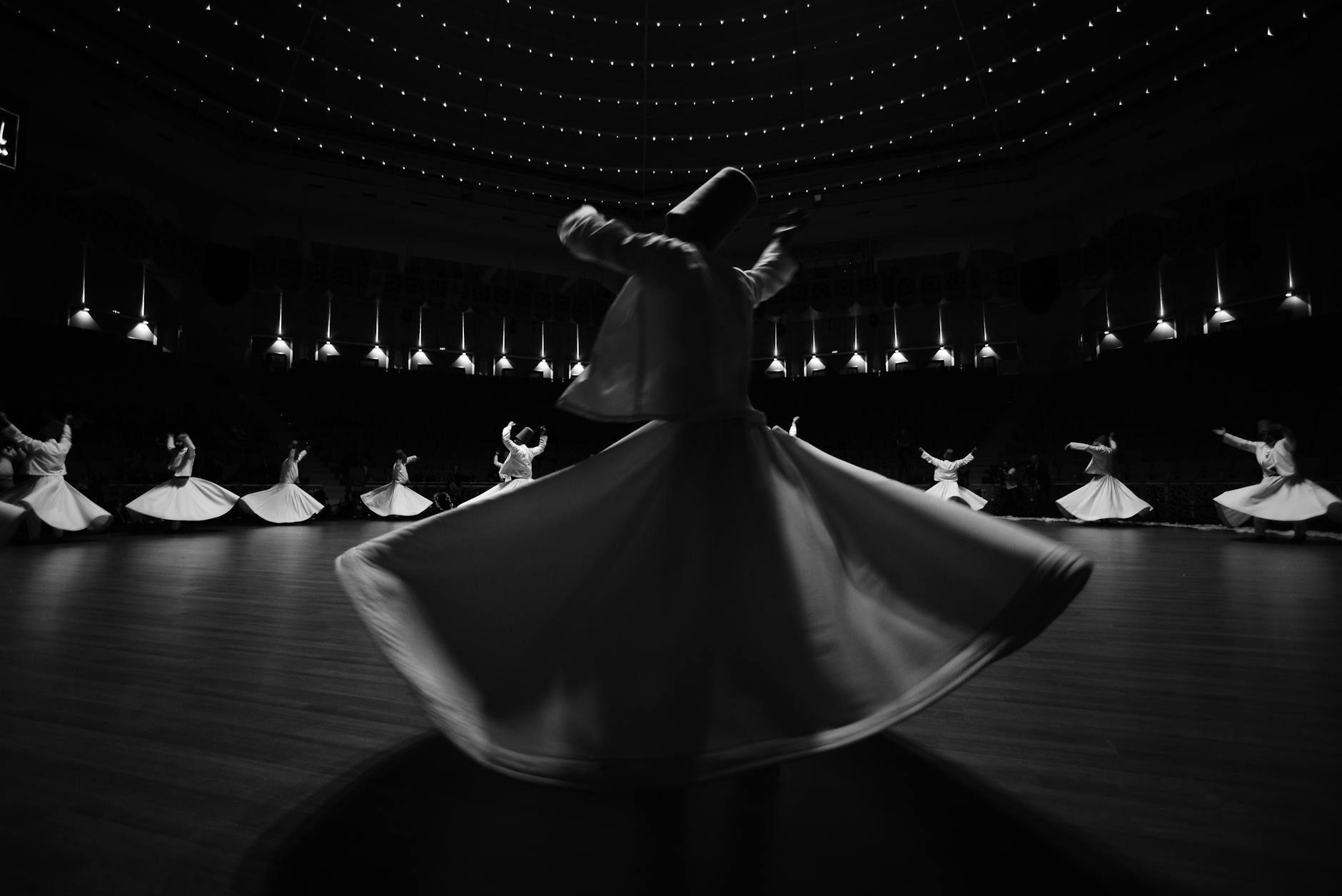
When you step inside the Semahane (the whirling hall), the first thing you’ll notice isn’t the grandeur, but the silence. Even in 2026, with the İstiklal Avenue crowds just a few hundred meters away, this wooden sanctuary feels like it’s wrapped in a velvet blanket. I’ve lived in Istanbul for fifteen years, and I still haven’t found a place that commands such immediate, effortless respect from its visitors.
The Geometry of the Soul
The hall is a masterpiece of 18th-century Ottoman Baroque style, but it’s the octagonal layout that steals the show. In Sufi symbolism, the octagon represents the transition between the square (the earth) and the circle (the heavens). As you stand on the perimeter, look at the polished wooden floor. This is where the Whirling Dervishes perform the Sema ceremony.
The acoustics here are nothing short of a miracle. The master builders of the era used the wooden ceiling and the specific proportions of the hall to ensure that even the faintest whisper of a reed flute reaches every corner. It’s an architectural hug. I often come here just to sit on the sidelines and imagine the sound of dozens of dervishes spinning in unison—the soft whoosh of their white robes catching the air is a sound you never forget.
The Sultan’s Gaze and Sacred Ink
As you look up, you’ll see the Mahfil, an elevated, screened gallery. This was the Sultan’s lodge. It’s a fascinating reminder of the complex relationship between the Ottoman throne and the Mevlevi Order. Even the most powerful rulers in the world came here to sit in the presence of the dervishes, seeking spiritual guidance.
The walls are adorned with some of the finest examples of Islamic calligraphy you will see in Istanbul. These aren’t just “decorations.” To the calligraphers, or Hattats, writing the name of God or a verse from Rumi was a form of active meditation. The flowing, interlocking letters are meant to mirror the fluid motion of the universe. This profound sense of historical continuity and spiritual stillness is rare; it’s the same feeling of “stopping time” that I get during my favorite afternoon walk in Kuzguncuk on the Asian side. Both places offer a rare breathing room in our fast-paced city.
A Treasury of Devotion: The Museum Collection
Before you leave the hall, take your time exploring the museum sections located in the side rooms and the lower floor. The collection is intimate and deeply personal. You’ll find the Sikke (the tall, conical felt hats) which represent the tombstone of the ego, and the Tenure (the heavy white skirts) which represent the ego’s shroud.
The display of calligraphy tools is particularly moving. You’ll see the small, hand-carved kamış kalem (reed pens) and the tiny jars of soot-based ink. There’s a quiet dignity in these objects; they are the tools of men who spent decades trying to perfect a single stroke.
Berk’s Insider Tip: Pay close attention to the musical instruments in the museum section. Look for the ‘Ney’ (reed flute); its haunting sound is considered the breath of God in Sufi tradition and hearing it live in this hall is a life-changing experience.
The entry fee in 2026 is approximately 500 TL (around 10 Euro or 11 USD), which is a bargain for the peace of mind you’ll carry out with you. As you walk through the instrument display, you’ll also see the Kudüm (small kettledrums) and the Rebab (a bowed string instrument). These aren’t just artifacts; they are the heartbeat of the Mevlevi tradition. Even if you don’t catch a live performance, just standing among these instruments allows you to feel the rhythmic pulse of a tradition that has survived for over 700 years.
The Sacred Spin: Decoding the Sema Ceremony
Whenever I bring a friend to the Galata Mevlevihanesi, I always start with a small disclaimer. In the brochures you see scattered around Sultanahmet, they often call this a “show” or a “performance.” But here, in the quiet heart of Beyoğlu, we don’t use those words. What you are about to witness is a Sema ceremony—a profound act of Dhikr (remembrance of God). It is an active meditation, a prayer in motion that has been practiced for over seven centuries.
As we sit on the wooden benches of the Semahane (the ritual hall), I want you to look past the grace of the movement. For a Semazen (a Whirling Dervish), the ceremony is a journey of the soul, a systematic shedding of the ego to find a direct connection with the Divine. In 2026, where our lives are dominated by digital noise and the frantic pace of Istanbul’s streets, watching this ritual feels like stepping into a pocket of timelessness.
The Language of the Garments
Before the music even begins, take a look at what the dervishes are wearing. Nothing is accidental; every stitch is a symbol. As an Istanbulite who has studied these traditions for 15 years, I find the visual storytelling of the Mevlevi order to be one of the most beautiful aspects of our culture.
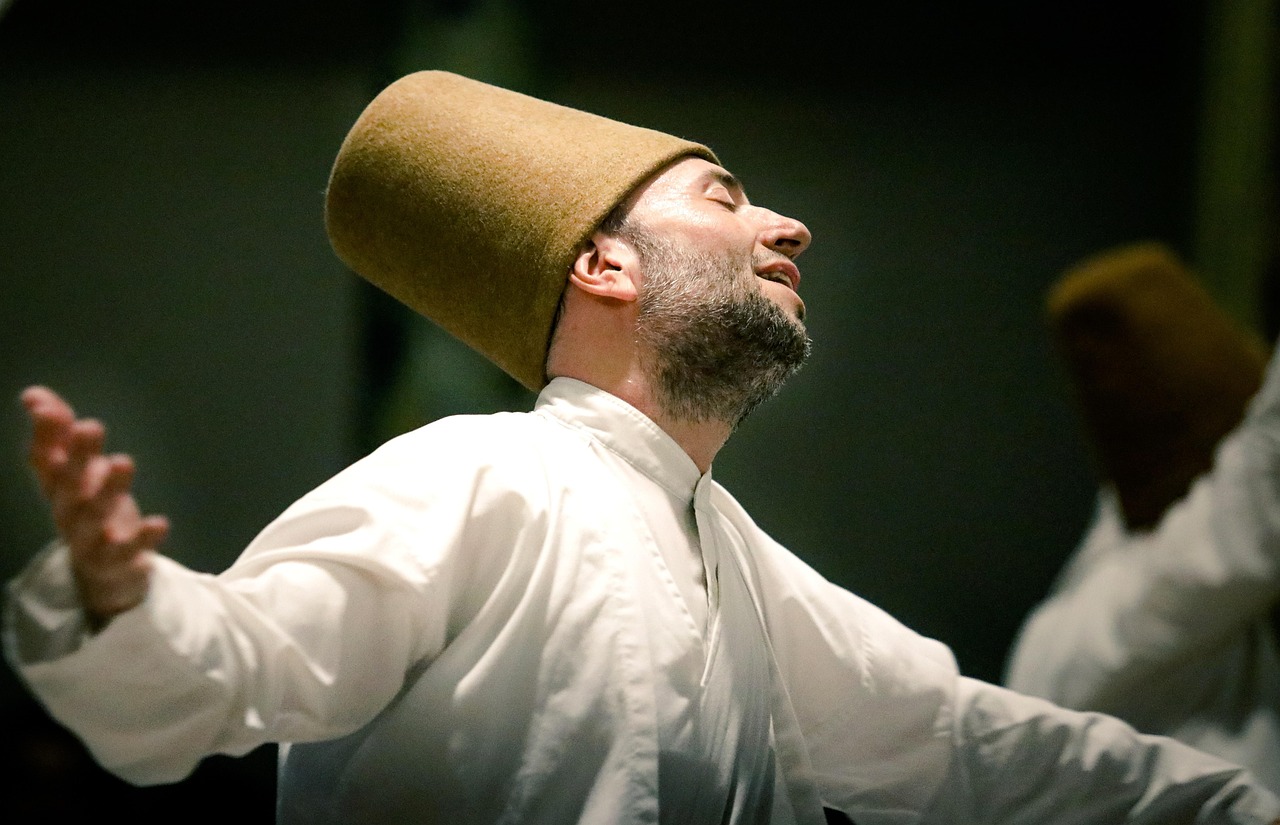
- The Sikke: That tall, conical hat made of brown felt? It represents the tombstone of the ego. It is heavy and prominent, reminding the dervish that their biggest obstacle in life is their own pride and worldly desires.
- The Tennure: This is the long, white, sleeveless skirt. It represents the shroud of the ego. When the dervish begins to whirl and the skirt fans out into a perfect white circle, it signifies the soul’s liberation from the “grave” of the physical body.
- The Hırka: You will see them enter wearing a heavy black cloak. This represents the worldly tomb. When they cast it off at the beginning of the ceremony, it symbolizes their spiritual rebirth and their readiness to leave the material world behind.
As the haunting, breathy notes of the Ney (the traditional reed flute) fill the hall, you’ll feel the temperature of the room change. It’s not just music; it’s a lament for the soul’s separation from its source.
The Four Selams: A Spiritual Ascent
The ceremony is divided into four distinct movements, known as Selams. Each represents a different stage of the dervish’s spiritual journey. I always tell my guests to watch the lead dervish—the Semazenbaşı—as he guides the others through these transitions.
- The First Selam: This is the dervish’s recognition of their own existence and the greatness of the Creator. It is an awakening. They begin to turn, always from right to left, mirroring the rotation of the planets and the atoms themselves.
- The Second Selam: Here, the dervish expresses their wonder at the splendor of creation. It is an emotional stage, filled with the realization that everything in the universe is part of a grand, divine harmony.
- The Third Selam: This is the climax of the ceremony. The music often swells here. It represents the transformation of “wonder” into “absolute love.” The dervish sacrifices their mind and self to this love, achieving a state of total submission.
- The Fourth Selam: This is perhaps my favorite part because it is the most grounded. Most people expect the dervish to stay in a trance, but the Fourth Selam is about returning to service. The dervish accepts that while they have reached a spiritual peak, their duty is to return to the world and serve their fellow humans with the love they have found.
The Hand of the Heart
As you watch them whirl, pay close attention to their hands. You’ll notice the right hand is turned upward toward the sky, while the left hand is turned downward toward the earth. This is the core philosophy of Mevlana Rumi in a single gesture: “What we receive from God, we give to the people; we keep nothing for ourselves.”
In today’s economy—where a ticket for this experience might cost you around 1,500 TL (roughly 30 Euros or 33 USD in 2026)—it is easy to treat this as just another item on your “to-do” list. But I encourage you to put your phone away. Don’t worry about capturing the perfect video for social media. Instead, try to match your breathing to the rhythm of the Kudüm (small kettledrums).
The Galata Mevlevihanesi isn’t just a museum; it’s a living bridge. When the ceremony ends and the dervishes walk out in silence, you’ll find that the chaos of Istiklal Avenue outside feels a little softer, a little more distant. You aren’t just a tourist anymore; you’ve shared in a 700-year-old secret.
Hamuşan: Walking Through the ‘Garden of the Silent’
Step out of the wooden hall of the Semahane and let the cool air of the courtyard hit you. After the dizzying, spiritual intensity of the Whirling Dervishes, there is one place I always go to ground myself. It is a place that many tourists walk past in a hurry, yet it holds the very soul of this lodge. To the right of the main path lies the Hamuşan, a Persian word that translates beautifully to the “Garden of the Silent.”
In most cultures, a graveyard is a place of mourning, often tinged with a bit of gloom. But here in the heart of Galata, the Mevlevis view it differently. For me, walking through these stones doesn’t feel like visiting a cemetery; it feels like entering a library of frozen lives. There is a profound, meditative stillness here that you won’t find anywhere else in the district—not even in the quietest backstreets of Beyoğlu.
The Resting Place of the Master: Galip Dede
As you walk the narrow paths, you will see a small, elegant tomb (türbe) that stands out. This is the final home of Galip Dede, one of the most celebrated Sufi poets of the 18th century and a former Sheikh of this very lodge. If you’ve spent any time in Istanbul, you’ve likely noticed the street leading down to the Galata Tower is named “Galip Dede Caddesi.”
He wasn’t just a religious leader; he was a literary giant who wrote Hüsn-ü Aşk (Beauty and Love), an allegorical masterpiece. When I stand before his tomb, I’m reminded that for the Mevlevis, poetry and spirituality are two sides of the same coin. He is the guardian of this garden, surrounded by other Sufi poets, calligraphers, and musicians who once filled these halls with “ney” music and divine verses.
The “Wedding Night” and the Joy of Return
You might notice that the atmosphere here isn’t heavy. That’s because of the Mevlevi concept of death, which is perhaps the most beautiful perspective I’ve encountered in my 15 years living in this city. They call the night of one’s passing Şeb-i Arus, or the “Wedding Night.”
To a Sufi, death is not a cold ending or a “loss.” It is the moment the soul is finally liberated from the cage of the body to reunite with the Beloved—the Creator. It is a celebration of return. When you look at the stones in the Hamuşan, try to see them through this lens. They aren’t markers of absence, but witnesses to a grand reunion. It’s a thought that always brings me a strange sense of peace whenever the frantic pace of 2026 Istanbul life starts to feel like too much.
Petrified History: The Art of the Mevlevi Tombstones
Take a close look at the headstones themselves. They are masterpieces of Ottoman stonemasonry. You’ll notice that many of them are topped with a carved stone representation of a tall, cylindrical hat. This is the Sikke, the felt cap worn by the dervishes.
The shape of the turban carved onto the stone tells you the rank and the “path” of the person buried there. A plain, tall hat usually belongs to a dervish, while more intricate, wrapped turbans signify a Sheikh or a high-ranking member of the order. These stones are meant to look like the person is still standing there, present in spirit.
Even now, as the exchange rate sits at 50 TL to the Euro, a stroll through this garden remains one of the most “valuable” experiences you can have in the city for the price of a standard museum entry. It costs nothing extra to linger here, watching the famous Istanbul cats nap atop the 300-year-old marble, but the sense of perspective you take away is priceless. This is where the noise of the world fades, and the “Silent Ones” begin to speak.
Planning Your Visit: Timing, Tickets, and Etiquette
After spending 15 years navigating this city, I’ve learned that timing is everything in Istanbul. The Galata Mevlevihanesi is a place that transforms depending on when you walk through its gates. To truly feel the soul of this “lodge of the whirling dreams,” you need to decide if you’re looking for a quiet historical deep-dive or a spiritual encounter.
The Daytime Museum vs. The Sunday Ceremony
During the day, the Mevlevihane functions as a beautifully curated museum. It’s the best time to appreciate the Semahane (the wooden hall where the dervishes whirl) without the crowds. You can take your time looking at the Rumi-inspired calligraphy, the delicate Sufi musical instruments, and the clothes worn by dervishes centuries ago. It is peaceful, quiet, and reflective.
However, if you want to witness the Sema ceremony, you must plan for a Sunday afternoon. This isn’t just a performance; it is a dhikr—a spiritual remembrance. While the museum gives you the “what,” the Sunday ceremony gives you the “why.” Seeing the dervishes spin in the very hall where their predecessors did for centuries is a heavy, beautiful experience.
Berk’s Insider Tip: If you want to attend the Sunday Sema ceremony, do not wait until the day of. Tickets are usually sold at the booth a few days in advance or online, and they sell out fast because the seating in the Semahane is very limited.
Respecting the Space
This isn’t your average tourist attraction; it’s a site of immense spiritual significance. When visiting Istanbul museum sites like this, the etiquette is simple: keep your voice down and your movements slow.
For the Sunday ceremony, the rules are stricter. You should dress modestly—cover your shoulders and knees. While it isn’t a mosque, it is a sacred space. Photography and filming are strictly forbidden during the Sema. Believe me, you’ll want to experience it with your eyes, not through a smartphone screen. Also, remain seated until the very end; leaving while the dervishes are still on the floor is considered quite disrespectful.
Galata vs. Commercial Dervish Shows
I often get asked if Galata Mevlevihanesi tickets are worth the extra effort compared to the dinner-show versions you see advertised in Sultanahmet. My answer is always a resounding yes.
Commercial shows are often choreographed for entertainment, with flashy lights and faster music. The ceremony at the Mevlevihane is the real deal—it’s slower, more meditative, and follows the strict traditional liturgy of the Mevlevi order. It’s the difference between watching a movie about a ritual and witnessing the ritual itself.
| Feature | Daytime Museum Visit | Sunday Sema Ceremony |
|---|---|---|
| Best For | History, Architecture, Photos | Spirituality, Music, Atmosphere |
| Cost (Approx.) | 500 TL (€10 / $11) | 1,500 TL (€30 / $33) |
| Crowds | Low to Moderate | Very High (Book ahead!) |
| Photography | Allowed (No flash) | Strictly Prohibited |
A Day in Galata: My Perfect Spiritual and Local Itinerary
After spending an hour or two in the silent, incense-scented embrace of the Mevlevihane, stepping back onto the street always feels like waking up from a vivid dream. The transition from the 18th-century tranquility of the lodge to the buzzing energy of modern-day Istanbul is part of the magic. Whenever friends visit me here in 2026, I always lead them on this specific route to help them “digest” the spiritual weight of the lodge before diving back into the city’s chaos.
The Melodies of Galip Dede Street
As you exit the lodge’s gate, you are immediately on Galip Dede Street, a steep, winding cobblestone path that flows down toward the Galata Tower area. This street is the historical heart of Istanbul’s musical soul. For centuries, the presence of the Mevlevi dervishes—who considered music a bridge to the divine—attracted instrument makers to these very doors.
I love taking my time here, browsing the local instrument shops that line the descent. Even if you aren’t a musician, stop and look at the window displays of Ouds (pear-shaped lutes) and Sazs (long-necked Turkish guitars). You’ll likely hear the haunting, breathy whistle of a Ney—the traditional reed flute—drifting from a workshop. If you’re tempted to take a piece of the culture home, a high-quality, handcrafted Ney might run you about 2,500 to 4,000 TL (around €50–€80 at current 2026 rates). It’s a beautiful, tactile reminder of the “Whirling” sounds you just experienced.
Winding Down to the Tower
Continue your Beyoğlu walking tour by following the slope downward. The street narrows, the vintage poster shops become more frequent, and suddenly, the massive stone silhouette of the Galata Tower looms over the apartment blocks. While the queue to go up the tower is usually packed with tourists, I prefer to appreciate it from the base, looking up at the Genoese stonework against the Marmara blue.
By now, the spiritual stillness of the lodge might be wearing off, and the “Istanbul pace” might be kicking back in. This is exactly when you need a “keyif” break—a moment of pure pleasure and relaxation.
A Quiet Corner for Reflection
Instead of the crowded cafes directly under the tower, I suggest ducking into one of the side streets—like Serdar-ı Ekrem—to find a quiet courtyard. My ritual is to find a small third-wave coffee shop or a traditional tea house where the music is low.
Order a Türk Kahvesi (Turkish coffee) or a simple glass of Çay. In 2026, a well-brewed coffee in a local Galata haunt will cost you about 150 TL (roughly $3.30). As you sip, take out a notebook or just sit in silence. Reflect on the Sema ceremony or the calligraphy you saw earlier. There is something about the contrast between the dervishes’ ancient search for the “Center” and the vibrant, eclectic life of Galata that makes you feel truly present. This isn’t just a walk; it’s the way we locals bridge the gap between Istanbul’s glorious past and its frantic, beautiful present.
Conclusion
In a city as relentless and beautiful as Istanbul, finding a place where time actually slows down is a rare gift. The Galata Mevlevihanesi isn’t just a museum or a relic of the Ottoman past; it is a threshold. When you step through those gates, you are crossing a bridge between two worlds. On one side is the grit, the neon lights, and the frantic, electric energy of Istiklal Street. On the other is a profound, rhythmic silence that has been cultivated for centuries. It is where the physical weight of the city meets the weightless spirituality of the Mevlevi tradition.
I’ve lived in this magnificent, chaotic sprawl for fifteen years, and people often ask me where I go when the noise of 16 million souls becomes a bit too much to bear. My answer is always this courtyard. There is a specific kind of huzur—a deep, inner peace—found here that you won’t find at the Hagia Sophia or the Blue Mosque. It is my ultimate sanctuary because it reminds me that while Istanbul is constantly reinventing itself, its heart still beats to an ancient, steady rhythm. In the shadow of the Galata Tower, amidst the gravestones of the “silent ones” who once called this lodge home, the stresses of modern life simply evaporate.
My final piece of advice for you is this: when you enter, do something radical. Leave your phone in your pocket. Don’t worry about the perfect framing or the right filter. The essence of the Mevlevihane cannot be captured in pixels; it has to be felt in the chest. Find a quiet bench, listen to the wind rustling through the trees, and just breathe. Give yourself the luxury of being truly present. In a city that never stops talking, the most profound thing you can do is simply sit and listen to the silence.