
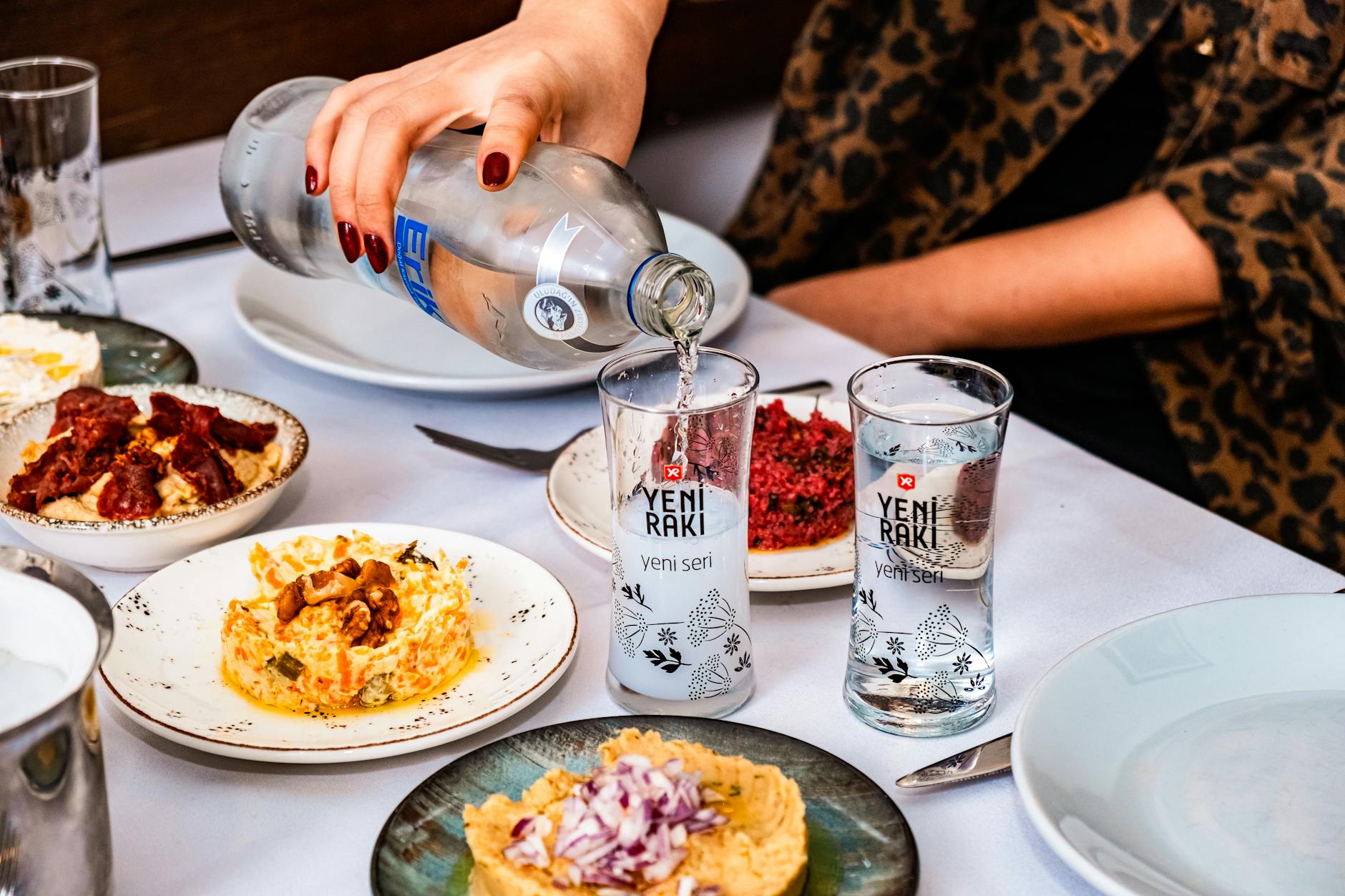
I remember my first night at a tucked-away Beyoğlu meyhane fifteen years ago; the clink of glasses felt like a secret heartbeat against the backdrop of a frantic city. I sat there, a bit overwhelmed by the noise and the charcoal smoke, until the waiter poured a splash of clear liquid into my glass and followed it with a slow stream of ice-cold water. The moment that sharp aniseed spirit clouded into a ghostly, milky white—what we locals call Aslan Sütü or ‘Lion’s Milk’—I realized I wasn’t just having a drink; I was being initiated into the very soul of Istanbul.
Back then, I was just a curious newcomer trying to find my footing in this sprawling metropolis. Today, after a decade and a half of navigating these winding streets and even more winding conversations over a shared bottle, I’ve come to see the meyhane as the city’s most sacred secular space. It’s our communal living room. It’s where business deals are sealed with a nod, where heartbreaks are mended with a song, and where the heavy political air of the day is exhaled over plates of creamy haydari and perfectly chilled melon.
But here’s the thing: you can’t just walk into a traditional meyhane and treat it like a standard pub or a western bar. Turkish drinking culture is built on a foundation of centuries-old, unwritten rules that govern everything from the pace of your sips to the volume of your voice. There is a specific rhythm to the night, a choreography to the service, and a deep-seated philosophy behind every pour. If you rush it, you miss the point. If you ignore the nuances of raki etiquette, you remain a spectator rather than a participant in the ritual.
For the discerning traveler, mastering the art of the rakı table is the ultimate “in.” It’s the difference between being a tourist in a chair and being a guest of the city. So, let’s pull up a seat, break some warm pide, and dive into the subtleties of the table. From the proper way to clink your glass to the essential meze that must never be skipped, here is my guide to navigating an Istanbul evening like a true local.
What is a Meyhane? Understanding the House of Joy
If you’ve spent any time walking the side streets of Beyoğlu or Kadıköy after the sun dips below the Marmara, you’ve likely heard it: a rhythmic symphony of clinking glasses, collective laughter, and the low, steady hum of intense conversation. You haven’t stumbled upon a standard bar or a rowdy pub. You are standing at the threshold of a meyhane.
To the uninitiated, it looks like a restaurant. To a local like me, who has spent fifteen years navigating the soul of this city, the meyhane is something far more sacred. It is often translated as a “tavern,” but that word feels too clumsy, too functional. In its truest sense, a meyhane is a “house of joy”—a sanctuary where the weight of the world is left at the door, replaced by the white, cloudy embrace of Rakı and the company of friends.
From Byzantine Vineyards to Ottoman Tables
To understand meyhane history, we have to look back much further than the modern Republic. The word itself is a beautiful Persian-Turkish hybrid: mey (wine) and hane (house). Long before the Ottomans claimed Istanbul, the Byzantines had a thriving culture of neighborhood wine shops and taverns. When the city changed hands in 1453, these establishments didn’t disappear; they evolved.
During the Ottoman era, while alcohol was technically prohibited for Muslims, the city’s cosmopolitan fabric—Greeks, Armenians, and Jews—kept the turkish drinking culture alive in districts like Galata and Samatya. Eventually, the sultans recognized these “wine houses” as vital social hubs. Over the centuries, the focus shifted from the rough wine of the Byzantines to the refined, anise-scented spirit we call Rakı. What remained constant was the purpose: the meyhane was always a place where people of different backgrounds could sit at a shared table, finding common ground in the glow of a kerosene lamp.
The Philosophy of Muhabbet
If you ask me what makes a meyhane different from any other place in the world, I’ll give you one word: Muhabbet.
This is a term that doesn’t have a direct English equivalent. It translates roughly to “affectionate conversation,” but in the context of a meyhane, it is the very reason we exist. Unlike a Western bar where the goal might be to get a quick drink or dance to loud music, the meyhane is designed for the art of deep, meaningful conversation.
In a meyhane, the food and the drink are merely the supporting cast; the muhabbet is the star. We sit for hours—sometimes four, five, or six—over a single bottle of Rakı. We talk about politics, we talk about heartbreak, we talk about the crumbling old buildings of our neighborhoods. The table is a leveler. In the “house of joy,” there are no bosses or subordinates—only companions sharing a moment of honesty. This is why you will rarely find a television or booming speakers here; nothing is allowed to compete with the human voice.
A Different Rhythm: How the Meyhane Differs from a Bar
For my friends visiting from London or New York, the rhythm of a meyhane can be a bit of a shock. In a Western tavern, you might stand at a bar, move from group to group, or order a round of shots to “get the night started.”
The meyhane is the antithesis of this “fast” culture. It is slow, deliberate, and communal. You do not stand; you sit. Your table is your universe for the evening. There is no rush to finish a plate because the meze (appetizers) are designed to be nibbled on over several hours.
The atmosphere today is also a beautiful paradox. While the law has made these spaces smoke-free, the air still feels thick with a different kind of haze—a warmth generated by the steam of hot appetizers and the communal energy of fifty people talking at once. It is loud, yes, but it is a “soft” loud—the sound of people truly connecting, rather than shouting over a DJ.
When you step into a meyhane, you aren’t just going out for a drink; you are participating in a centuries-old ritual of togetherness. It is a place where time slows down, the Rakı turns white, and the world finally makes sense again.
The Ritual of the Lion’s Milk: Proper Rakı Etiquette
To the uninitiated, a bottle of rakı might look like any other spirit sitting on a shelf. But here in Istanbul, we don’t just “have a drink.” We perform a ritual. After fifteen years of sitting at these linen-covered tables, I’ve seen many visitors make the mistake of treating rakı like vodka or tequila—tossing it back quickly or mixing it haphazardly. If you want to earn the respect of the meyhane staff and your tablemates, you must understand that raki etiquette is as much about chemistry as it is about culture.
The Alchemy of the Pour
The first thing you’ll notice is that rakı is served in a tall, slim glass called a kadeh. The sequence of the pour is sacred. You must always pour your rakı first—usually about two fingers deep, or more if you’re feeling particularly brave. Only after the spirit is in the glass do you add the water.
This is where the magic happens. As the water hits the clear liquid, the anise oils emulsify, turning the drink a cloudy, milky white. This is why we call it Aslan Sütü, or “Lion’s Milk.” It’s a visual signal to the table that the conversation is about to begin.
The most common “rookie error” I see is letting the ice touch the pure rakı. Never let ice come into contact with the undiluted spirit. If you drop ice into the glass before the water, the anise will crystallize, creating an unpleasant film on the surface and ruining the smooth texture of the drink. Pour your rakı, add your water to taste (I prefer a 50/50 mix), and only then, if you must, add a single cube of ice.
The Clink: A Bond of Honor
In a Western pub, you might clink the rims of your glasses and shout “Cheers!” In an Istanbul meyhane, we do things a bit more subtly. When we toast—saying “Şerefe” (To your honor)—we clink the bottoms of our glasses.
The reason is practical and poetic. The rim of the glass is where your lips touch; it’s private. The bottom of the glass is the foundation. By touching the bases together, you are signaling that your foundations are joined, that there is trust and an equal footing between everyone at the table.
Berk’s Insider Tip: If you are drinking with a local who is significantly older than you, it is a sign of respect to hold your glass slightly lower than theirs when clinking.
It’s a quiet gesture, but one that speaks volumes. It shows you aren’t just here for the alcohol, but that you understand the social hierarchy and the deep-seated respect that governs Turkish life.
The Marathon and the Ehli-keyif
If you see someone treating rakı like a sprint, they aren’t from here. Rakı is a marathon. It is the only spirit I know that is designed to be sipped over four, five, or even six hours. The goal isn’t to get drunk; the goal is to reach a state of keyif—a uniquely Turkish word that translates roughly to “joyous relaxation” or “blissful idle.”
To maintain this state, the drink must stay cold, but you don’t want to keep diluting it with melting ice. This is where the Ehli-keyif comes in. If you are at a high-end or traditional meyhane, ask if they have one. It is a beautiful copper or brass bowl filled with ice, with a hole in the center specifically designed to hold your glass. It keeps your Lion’s Milk chilled to perfection without ever touching the liquid inside.
This slow pace is essential because of the turkish meze. The table will be laden with small plates—creamy haydari, spicy ezme, and warm arnavut ciğeri (Albanian liver). You take a tiny bite of food, a tiny sip of rakı, and then a long stretch of conversation.
When you walk through the vaulted stone ceilings of a traditional meyhane, you might feel a sense of déjà vu if you’ve spent any time exploring the city’s architectural roots. Much like the winding corridors and heavy stone arches I describe in my guide to the Beyond the Trinkets: My Guide to the Secret Hans of the Grand Bazaar, the classic meyhane shares that same DNA—a sanctuary where time feels suspended, and the outside world fades into the background. Both the han and the meyhane were built as communal spaces for weary travelers and locals alike to find connection.
In the next section, we’ll dive into the food itself—the “supporting cast” that makes the rakı shine. Because a rakı table without the right meze is like an Istanbul sunset without the call to prayer: it’s beautiful, but it’s missing its soul.
The Meze Parade: A Symphony of Small Plates
If you’ve spent any time living here, you’ll realize that Istanbulites have a unique relationship with time. We don’t just eat; we inhabit the meal. Much like the way we approach the morning—where a simple meal transforms into an hours-long affair, as I’ve detailed in Beyond the Buffet: My Guide to the Slow Art of a Real Turkish Breakfast—the meyhane evening is a slow-motion marathon. The turkish meze isn’t an appetizer in the Western sense; it is the heartbeat of the entire night.
When you sit down at one of the best meyhanes istanbul has to offer, the table shouldn’t be crowded with main courses. Instead, it’s a canvas for a rotating selection of small plates that balance the sharp, anise-heavy punch of the rakı.
The Ritual of the Tray
The night truly begins when the server approaches with “The Tray.” This is a large, often wooden platter laden with twenty or thirty different small bowls, each a vibrant mosaic of colors and textures. It is a moment of pure sensory overload—the sight of ruby-red roasted peppers, the smell of garlic-heavy yogurt, and the glisten of high-quality Aegean olive oil.
For a newcomer, the temptation is to point at everything. My advice? Resist. The tray is a conversation, not a buffet. You should select three or four cold plates to start. The beauty of the meyhane is that the tray will always be there, and the kitchen never truly sleeps. You can always call the server back for a second round once the first round of rakı has settled your spirit.
Berk’s Insider Tip: Avoid the ‘mixed meze plate’ listed on many tourist menus. Always ask to see the tray or go to the display fridge to pick what looks freshest today.
The Hierarchy: Cold Before Hot
There is a strict, unwritten hierarchy to how we eat here. We begin with the Zeytinyağlılar (dishes cooked in olive oil) and cold yogurt-based dips. This phase is about cooling the palate and lining the stomach.
The “Holy Trinity” of any respectable table starts with white cheese (Beyaz Peynir) and melon. It sounds simple—perhaps too simple—but the chemistry is legendary. The saltiness of a well-aged, creamy Ezine cheese cuts through the sugary, floral sweetness of a chilled Anatolian melon, while both provide a velvety buffer against the rakı’s burn.
Next, you must look for Deniz börülcesi (sea beans or samphire). These are hand-picked from the shoreline, blanched, and dressed simply in a heavy hand of garlic and lemon. They offer a literal taste of the sea—briny, crunchy, and incredibly refreshing. If you see Topik on the tray—a spiced chickpea and onion pâté with tahini and currants—grab it. It’s an Armenian-Istanbul classic that represents the deep, multicultural roots of our city’s food scene.
Transitioning to the Heat: Ara Sıcaklar
Once the rakı bottle is half-empty and the conversation has moved from polite small talk to deep philosophy, it’s time for the Ara Sıcaklar, or hot starters. This is the “bridge” of the meal.
While many might reach for meat, the best meyhanes istanbul regulars know that seafood is the king of the hot meze. A staple you cannot miss is grilled octopus (Ahtapot Izgara). When done right, it should be charred and smoky on the outside, while the interior remains butter-tender. It’s often served with nothing more than a drizzle of olive oil and a sprinkle of oregano.
Another local favorite is Paçanga böreği, a deep-fried pastry filled with pastırma (highly seasoned air-dried beef) and melting kaşar cheese. The contrast of the crispy dough and the pungent, spicy beef is the perfect companion to a fresh glass of “Lion’s Milk.” Remember, the goal here isn’t to get full; it’s to keep the flavors dancing until the sun begins to think about rising over the Bosphorus.
My Favorite Backstreet Gems: Where I Actually Drink
Listen, if you head straight to Nevizade or the Çiçek Pasajı, you’ll have a fine time. But you’ll be sharing it with about five thousand other people and a lot of accordion players who know exactly three songs. After fifteen years in this city, I’ve learned that the best meyhanes istanbul has to offer aren’t usually the ones with the brightest neon signs. They are tucked away in neighborhoods where the laundry still hangs across the street and the waiter remembers your name—or at least your mezze preferences—by your second visit.
The Great Divide: Traditional vs. Modern Meyhane
Before I give you my “secret” list, you need to understand the shift happening in turkish drinking culture. We are currently seeing a divide between the Klasik (Traditional) and the Yeni Nesil (Modern) meyhane.
The traditional spots are my sanctuary. Think white tablecloths, a heavy wooden sideboard, and a radio playing Zeki Müren at a volume that allows for deep conversation. The focus is entirely on the sohbet (the talk). In these places, the menu hasn’t changed since the 70s, and thank God for that. You go here when you need to heal your soul or celebrate a life milestone with three close friends.
The “Modern Meyhane,” on the other hand, is where the younger Istanbul crowd is heading. These spots often ditch the white tablecloths for industrial-chic decor and serve “fusion” mezze—think hummus with pastırma or sea bass ceviche with a Turkish twist. By 10:00 PM, the music usually cranks up, people might start dancing between the tables, and the rakı flows just as fast. They are high-energy and fantastic for a big group, but they are a different beast entirely from the quiet, melancholic ritual of the old guard.
The Kadıköy Sanctuary: The Asian Side’s Bohemian Soul
When I want to truly escape the tourist bubble, I jump on the ferry to Kadıköy. There is something about the “Asian Side” that feels more grounded, more intellectual, and significantly more bohemian. While the European side can feel like it’s performing for guests, Kadıköy is just living its life.
The backstreets of the Caferağa neighborhood are home to some of the most authentic spots in the city. Here, the vibe is relaxed. You’ll see students, artists, and old-school retirees sitting side-by-side. I often find myself at the smaller spots near the “Fish Market” (Balık Pazarı), but I tend to avoid the main “Meyhaneler Sokağı” (Güneşli Bahçe Street) because it’s become a bit too chaotic for my taste. Instead, I duck into the side streets to find places like Güneşin Sofrası, where the courtyard feels like a secret garden and the food tastes like a Turkish grandmother’s Sunday best.
The Old Guard: Kurtuluş and Samatya
If you want to feel the ghost of old Constantinople, you have to head to Kurtuluş or Samatya. These are the historic Greek and Armenian heartlands of the city, and their influence on the meyhane culture is the foundation of everything we drink today.
Kurtuluş is a working-class neighborhood that smells like roasted coffee and fresh bread. It’s home to Despina, one of the oldest meyhanes in the city. It was founded by Madam Despina, and it still carries that female-led, elegant-yet-sturdy energy. It’s quiet, respectful, and the ciğer (liver) is legendary.
Then there’s Samatya, down by the Marmara Sea. The town square is cinematic—literally, many famous Turkish films were shot here. It feels like a fishing village that got swallowed by a metropolis. Sitting in the square under the giant plane trees, surrounded by the sound of clicking glasses and the smell of the sea, is the closest you’ll get to time travel in Istanbul.
Ending the Day in Balat
Finally, I have to mention the Golden Horn. Most people visit Balat during the day for the “Instagrammable” houses, but they leave just as the neighborhood’s real magic begins. As the sun sets and the day-trippers head back to Sultanahmet, the local spots come alive.
If you’ve spent the afternoon wandering the colorful, crumbling streets of the old Jewish and Greek quarters using Where Time Stands Still: My Personal Walking Route Through Fener and Balat, you’ll know that by 6:00 PM, you’ve earned a glass of rakı.
I highly recommend finishing your walk at Agora Meyhanesi 1890. It’s one of the most storied spots in the city. It’s been renovated, but it retains that thick, historical atmosphere. The brick walls and high ceilings have heard over a century of secrets. Another gem in the area is Barba Vasilis, right on the water’s edge. It’s small, intimate, and serves some of the best octopus in the city. In these places, you aren’t just a customer; you are part of a lineage of people who have come to the water’s edge to toast to life, love, and the enduring spirit of Istanbul.
The Unwritten Social Rules: Music, Politics, and Toasts
After fifteen years of sitting at these white-clothed tables, I’ve realized that a meyhane isn’t just a place to eat; it’s a living, breathing theater of Turkish social life. While the food feeds the body, the conversation and the atmosphere feed the soul. However, to truly navigate turkish drinking culture like a local, you need to understand the invisible choreography that happens between the first pour and the final bill.
The Rhythm of the Fasıl: When to Listen and When to Roar
Music is the heartbeat of the evening, usually in the form of Fasıl—traditional Ottoman classical music played by a small ensemble of wandering musicians. You’ll see the clarinet, the kanun (zither), and the oud.
In the early evening, the music is light, a mere backdrop to the clinking of ice. This is the time for deep, quiet conversation. But as the rakı takes hold, the energy shifts. There is a specific nuance to raki etiquette regarding the musicians. When they approach your table and play a heartbreakingly beautiful solo, it is polite to stop talking, lean back, and show your appreciation—a simple nod or a “Bravo” will do.
However, when the tempo picks up and the ensemble breaks into a classic İstanbul folk song that everyone knows, the “parBerkent” opens its doors. This is your cue to join the chorus. Don’t worry about your singing voice; the collective roar of a twenty-table restaurant is remarkably forgiving. Just remember: we listen to the solos, but we own the choruses together.
The Meyhane as the People’s ParBerkent
There’s a beautiful Turkish concept called the Çilingir Sofrası—the “Locksmith’s Table.” It is said that a few glasses of rakı can unlock the most guarded hearts. In a city as complex and bustling as Istanbul, the meyhane serves as a democratic sanctuary. Here, the strict social hierarchies of the daytime melt away.
You will hear people discussing everything from the rising price of tomatoes to the existential complexities of the universe. Most notably, you will hear politics. In many cultures, talking politics at dinner is a recipe for disaster, but here, it is the main course. The rule, however, is mutual respect. The goal isn’t necessarily to win an argument, but to “pour out” your frustrations and be heard. We call it dertleşmek—sharing one’s sorrows to make them lighter. As a guest, feel free to listen and engage, but always keep the tone warm. The table is a place of peace, no matter how heated the debate over the local football standings becomes.
The ‘Yolluk’: One for the Road
As the night winds down and the coffee is served, there is one final ritual you might encounter: the Yolluk. Literally translating to “for the road,” this is a final, half-measure of rakı poured into your glass just as you’re thinking about calling a taxi.
It is a gesture of hospitality that says, “We aren’t quite ready for this moment to end.” Accepting a yolluk is a sign that you’ve had a wonderful time. It’s a small, chilled “parting gift” to steel your nerves for the journey home.
The Magic of the Walk Home
There is a specific kind of magic in the walk home after a long rakı session. The city looks different; the streetlights seem warmer, and the salt breeze from the Bosphorus feels more intimate. This is why I always tell my friends that where you choose to lay your head is just as important as where you choose to eat.
If you’re staying in a sterile hotel district, that post-meyhane glow evaporates the moment you step into a sterile lobby. To keep the feeling alive, you want to be walking through the cobblestone streets of neighborhoods where the locals actually live and breathe. If you haven’t decided on your base yet, check out our guide to finding a real Istanbul vibe to ensure your walk home is through a neighborhood with character, rather than a tourist trap. Walking back to a flat in Kadıköy or a cozy guesthouse in Beyoğlu after a yolluk is, in my opinion, one of the greatest pleasures Istanbul has to offer.
Navigating the Night: Logistics and Safety
By now, you should feel like a pro at balancing your white chickpeas with your anise-scented sips. But as your local guide who has seen many a night turn into morning over the last 15 years, I want to ensure that the practical side of your evening is just as seamless as the conversation. Part of mastering raki etiquette is knowing how to handle the beginning and the end of the night with grace.
The First Rule of Adab: Make the Call
In the world of the Istanbul meyhane, the concept of Adab (etiquette) begins long before the first bottle is opened. Even if you are passing by a place that looks half-empty at 7:00 PM, always call ahead. In the best meyhanes Istanbul has hidden down its narrow side streets, tables are often “spoken for” by regulars who might not show up until 9:00 PM.
Showing up with a reservation isn’t just about securing a seat; it’s a sign of respect to the Meyhaneci (the proprietor). It tells them you value their craft enough to plan for it. When you call, you aren’t just a customer; you are a guest entering their home.
Decoding the ‘Hesap’: Tipping and the Kuver
When the Hesap (bill) finally arrives, usually tucked into a small wooden box or a leather folder, don’t let it confuse you. You will likely see a line item called Kuver. This is a standard cover charge (usually ranging from 20 to 50 TL per person) that covers the bread, spreads, and the table setup. It is not a tip.
Regarding tipping, the standard in Istanbul meyhanes is about 10% of the total bill. If the service was exceptional—perhaps the waiter anticipated your need for extra ice before you even realized it—feel free to go up to 15%. In more traditional, old-school spots, it’s often preferred to leave the tip in cash directly on the table or in the bill folder, even if you pay the main bill by card.
Berk’s Insider Tip: In the most traditional meyhanes, you won’t find a menu with prices. Don’t be afraid to ask ‘Ne kadar?’ (How much?) for the fish of the day to avoid ‘tourist pricing’.
Getting Home: Your 1 AM Strategy
The magic of a rakı night often means you’ll be heading home well after midnight. Istanbul is a city that never truly sleeps, but its transport rhythm changes. If you are dining in Beyoğlu or Kadıköy, you’ll find the streets are still vibrant, but the main Metro lines typically stop around midnight on weekdays (though they often run 24 hours on Friday and Saturday nights).
For those late-weeknights, I always recommend using a ride-hailing app like BiTaksi or Uber. It provides a digital record of your journey and a pre-calculated price, which adds an extra layer of security. If you do hail a yellow taxi on the street, ensure the meter (taksimetre) is turned on the moment you pull away.
If you want to navigate like a true local and understand which ferries or night buses might still be running near your accommodation, be sure to check out our ultimate guide to public transport in Istanbul.
Navigating Istanbul at 1 AM is generally very safe, especially in the areas where meyhanes thrive. The city’s “protective” culture means people look out for one another. If you ever feel lost or unsure, don’t hesitate to step into a nearby “Tekel” (convenience store) or ask a waiter for help calling a cab. We take hospitality seriously here, from the first mezze to the final ride home.
The Morning After: The Tripe Soup Tradition
If you woke up this morning feeling like a Galata ferry is docking inside your skull, don’t panic. You haven’t failed; you’ve simply participated in a rite of passage that has defined turkish drinking culture for centuries. In Istanbul, we have a saying: “The rakı table is for the soul, but the soup shop is for the survival.”
The transition from a night of laughter and turkish meze to the harsh reality of the morning sun requires a very specific bridge. For us locals, that bridge is paved with garlic, vinegar, and a healthy dose of courage.
The Legendary Garlic Cure: İşkembe Çorbası
Before you even think about crawling back under the duvet, you need to understand the ritual of İşkembe Çorbası (tripe soup). It is the undisputed heavyweight champion of hangover cures. Somewhere around 3:00 AM, as the meyhanes begin to dim their lights, a secondary migration occurs. You’ll see well-dressed couples and rowdy groups of friends all funneling into brightly lit, white-tiled soup salons (İşkembeci).
The soup itself is a creamy, collagen-rich broth that acts like a velvet glove for your agitated stomach. But the secret isn’t just in the tripe; it’s in the “medicine” you add to it. On every table, you’ll find jars of crushed garlic in vinegar and bowls of spicy red pepper flakes. Do not be shy. You want enough garlic to ensure no one stands within three feet of you for the rest of the day. This potent mixture jumpstarts your metabolism and, quite frankly, shocks your system back into the land of the living. If tripe feels a bit too adventurous for your morning-after palate, ask for Kelle Paça (head and trotter soup) or a simple, soothing Mercimek (lentil soup). It’s not just food; it’s a culinary reset button.
The ‘Ayılmak’ Alternatives: Bal-Kaymak and Coffee
If the thought of garlic at dawn makes your stomach do somersaults, there is a sweeter path to ayılmak (sobering up). Istanbul’s breakfast culture is designed for restoration. My personal “Berk-certified” remedy is a heavy dose of Bal-kaymak—thick, clotted water buffalo cream drowned in pine honey. Spreading this onto a piece of warm, crusty bread provides the immediate glucose spike your brain is screaming for after a night of lions’ milk.
Once the sugar hits your bloodstream, it’s time for the final blow to the hangover: a strong Turkish coffee. In our culture, the coffee isn’t the start of the day; it’s the conclusion of the recovery. Sip it slowly—sade (no sugar)—and let the thick grounds at the bottom remind you that life is worth living again.
Why the Conversation Never Truly Ends
You might wonder why, after six hours of talking at the meyhane, we still find things to discuss over a bowl of soup or a breakfast plate. This is the heart of the Istanbul experience. The rakı opens the doors of the heart, but the “morning after” debrief is where those connections are solidified.
Even after the rakı is gone, the muhabbet (the art of conversation) continues because, in Istanbul, we don’t just drink to get tipsy; we drink to understand one another. The soup shop and the breakfast table are where we laugh about the secrets shared the night before and plan the next time we’ll do it all over again. So, take a deep breath, finish your coffee, and smile—you’re officially an Istanbulite now. Just maybe avoid any close-range meetings until tomorrow.
Conclusion
As the night deepens and the bottom of the carafe nears, you’ll notice something shift. The music seems softer, the white tablecloths are dappled with melon seeds and stray sprigs of parsley, and the strangers at the next table suddenly feel like old friends. After fifteen years of pulling up a chair at these tables, I’ve realized that the rakı itself is merely a catalyst. The true alchemy of the Istanbul night is Muhabbet.
Muhabbet is a word that doesn’t translate easily. It’s more than just “conversation”; it is the warm, soul-baring connection that happens when time slows down. It is the laughter that erupts over a shared plate of haydari and the comfortable silence that follows a heavy confession. In a city that has seen empires rise and fall, the meyhane remains our sanctuary. It’s where we come to unburden our hearts so that we can face the chaotic, beautiful streets of Istanbul again tomorrow.
My final verdict? You haven’t truly seen this city until you’ve seen it through the hazy, milky-white glass of a rakı tumbler. But remember my golden rule: don’t treat a meyhane like a pit stop. This isn’t a bar crawl; it’s a marathon of the spirit. My advice is to choose one spot—perhaps somewhere tucked away in the side streets of Kadıköy or a hidden gem in Kurtuluş—and commit your entire evening to it. Let the meze come slowly, keep your water glass full, and never, ever check your watch.
So, when you finally find yourself sitting beneath a vine-covered trellis or in a wood-paneled dining room echoing with the sounds of a kanun, take a breath. Look at the people around you, clink your glass gently against the table to honor those who aren’t there, and take that first sip with an open heart. Welcome to the real Istanbul. Şerefe!