
Introduction: The Grand Bazaar Beyond the Glitz
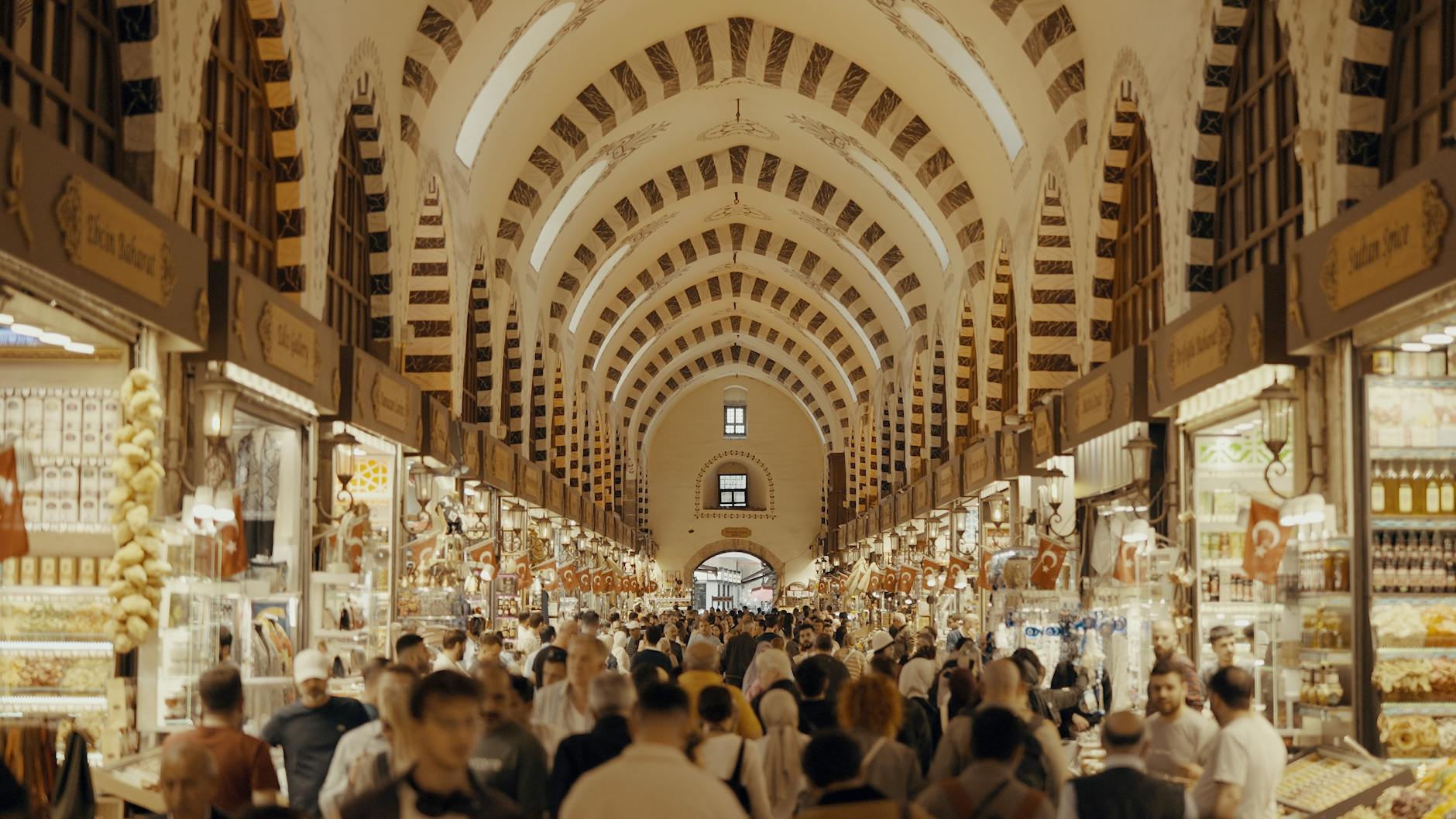
I’ve lived in Istanbul for fifteen years, and if there is one thing I have learned, it is that the city possesses a cruel ability to hide its best self in plain sight. Most visitors experience the Grand Bazaar as a shimmering, neon-lit fever dream-a cacophony of “Hello my friend” and “Genuine Fake Watches” that smells faintly of apple tea and desperate commission. They enter through the Nuruosmaniye Gate, dazzled by the polished marble and the sheer, overwhelming geometry of the vaulted ceilings, and they think they’ve seen it. They haven’t. They’ve merely stepped into the commercial circus, a carefully curated stage set designed to extract Euros and Dollars with surgical precision.
When I first moved here, I made the same mistake. I walked the main arteries, the Kalpakçılar Caddesi, dodging the carpets that look like they were woven by machines in a factory outside Bursa but are sold as “nomadic heirlooms.” I felt the heat of the crowds, a humid, claustrophobic press of bodies that carries the scent of stale sweat and expensive, heavy perfume. For a long time, I hated it. I saw the bazaar as a soulless tourist trap, a relic of the Ottoman past that had been gutted and stuffed with plastic trinkets and cheap ceramics that you can find in any airport gift shop from London to Lisbon.
But Istanbul is a city of layers, and the Grand Bazaar is its most complex geological formation. If you stay here long enough-if you drink enough tea with the silver-smiths and learn to ignore the beckoning calls of the leather jacket salesmen-the walls start to thin. You begin to notice the darker, narrower veins branching off the main thoroughfares. You start to smell something different. Beyond the sweet, cloying aroma of the spice shops, there is a grit to the air. It’s the smell of charcoal smoke drifting from a hidden forge, the metallic tang of shaved silver, and the heavy, damp scent of ancient stone that hasn’t seen the sun since the fall of the Byzantines.
This is the world of the Hans. In the context of the bazaar, a Han is more than just an inn or a warehouse; it is a medieval ecosystem. These are the crumbling, multi-storied caravanserais where the Silk Road didn’t just end-it breathed. While the main corridors of the bazaar have been “Disney-fied” with LED lights and polished floors, the Hans remain gloriously, stubbornly decrepit. They are the industrial heart of the Kapalıçarşı, and they are where the real Istanbul hides, away from the glitz and the curated chaos.
I remember the first time I truly broke through the surface. I was avoiding a particularly aggressive silk merchant near the Zincirli Han. I ducked into a doorway that looked like it led to a broom closet, only to find myself in a courtyard where the air was thick with the salt spray of the Bosphorus blowing up from the Golden Horn, mixing with the acrid scent of industrial soldering. There was no marble here. There were only uneven cobblestones, slick with the residue of a hundred years of work, and the constant, rhythmic tink-tink-tink of hammers hitting brass. There were no tourists. There was only the sound of production, a visceral reminder that this place was once the greatest workshop in the world, not just its greatest shop.
The Hans are where you see the architectural scars of the city. You’ll see Ottoman arches reinforced with rusted iron bars from the 1920s, and Byzantine masonry repurposed to hold up a satellite dish. The textures are rough; the walls are pitted by centuries of soot and the oily residue of a million passing shoulders. It is beautiful in its ugliness. It is honest. In the Hans, a man will not call you “my friend” unless he has shared a hundred glasses of tea with you. In the Hans, they don’t sell “trinkets.” They craft objects of weight and history, and they do it in the same cramped, soot-stained rooms where their grandfathers and great-grandfathers sat.
If you are looking for a souvenir to put on a shelf, stay on the main drag. Buy your mass-produced evil eye bead and your “Istanbul” t-shirt. But if you want to feel the pulse of a dying era, if you want to understand how this city actually functions beneath its shimmering skin, you have to leave the light behind. You have to be willing to get your shoes dusty and your lungs a bit tight. You have to look for the heavy iron doors that look like they haven’t been oiled since the Tanzimat era.
Berk’s Insider Tip: Never judge a door in the Grand Bazaar by its appearance. The most rusted, unassuming entrances often lead to the most spectacular 18th-century courtyards. If you see a delivery man carrying a tray of tea into a dark alleyway, follow the tea. It always leads somewhere more interesting than the gold section.
We are going deep into the zinc-roofed labyrinths. We are going to find the places where the sunlight hits the dust motes just right, illuminating a version of Istanbul that doesn’t care if you buy anything or not. This is my guide to the secret Hans, the places where the bazaar still has its teeth, its grit, and its soul. It is time to step away from the polished facades and into the shadows where the real work-and the real magic-is done.
The Architecture of Commerce: Five Centuries of the Han System
To understand the Grand Bazaar, you have to stop looking at the glittering shop windows and start looking at the shadows between the stones. For fifteen years, I’ve watched tourists get swept up in the central “Cadde” (the main streets), buying pashminas that were likely made in a factory in Denizli, while the true architectural soul of this labyrinth-the Han system-remains largely ignored. If the Bazaar’s main corridors are its veins, the Hans are its heavy, beating heart. They are the stone-built urban inns that have anchored the Ottoman economy since Berk the Conqueror first laid the foundations of the İç Bedesten in 1455.
When you step into a proper Han, the temperature drops instantly. You leave behind the artificial brightness and the relentless “Yes, my friend, looking for a carpet?” and enter a world of thick, damp masonry and the scent of sulfuric coal smoke. These structures weren’t built for aesthetics; they were built for survival and the heavy lifting of global trade. A typical Han is a fortress of commerce: a central courtyard, often open to the sky, surrounded by two stories of vaulted stone galleries. The ground floor was historically reserved for the stabling of pack animals-the camels and horses that had groaned under the weight of silk and spice-while the upper floors housed the merchants and the zanaatkâr (artisans).
I often find myself leaning against the pitted, porous kefeki stone of these archways, listening. There is a specific acoustic to a Han that you won’t find in the modern malls of Levent. It is a mix of the rhythmic clink-clink of a silver-smith’s hammer, the distant, mournful whistle of a ferry on the Golden Horn, and the frantic clatter of a çaycı (tea runner) balancing a silver tray. These buildings were designed to be fireproof-a necessity in a city that burned to the ground every few decades-and that solidity is what you feel in your marrow. The walls are often a meter thick, keeping the interior cool in the stifling Istanbul July and trapping the warmth of small charcoal braziers in the winter.
However, I have to be honest: much of what you see today is a crumbling facade. We like to romanticize these places, but the reality is that many Hans are suffering from centuries of neglect. While the Ministry of Culture occasionally “restores” a section, these renovations often feel like a cheap facelift-plastering over history with smooth, characterless cement that hides the original brickwork. I’ve walked through some of the lesser-known Hans where the upper balconies are literally held together by rusted iron clamps and prayers. Yet, even in their decay, they are infinitely more honest than the polished, marble-tiled entrance of the Nuruosmaniye Gate.
The architecture of the Han is inextricably linked to the religious and social life of the city. Just as the More Than a Landmark: My Insider’s Guide to the Suleymaniye Mosque represents the pinnacle of Ottoman spiritual and imperial grandeur, the Hans of the Grand Bazaar represent the pragmatic, grittier side of that same era. Mimar Sinan and his disciples didn’t just build mosques; they built the infrastructure that funded them. When you look at the lead-domed roofs of the Bazaar from a nearby rooftop, you see a sea of grey bubbles that mimic the domes of the city’s great mosques. It was a holistic design-a city where God and Gold lived in the same architectural language.
The upper galleries are where the real work happens. This is where the “Architecture of Commerce” becomes a lived reality. Unlike the ground-floor shops that cater to the “trinket crowd,” the upper floors are a honeycomb of tiny workshops. Each room, or oda, usually has a single heavy wooden door and a small window looking into the courtyard. The textures here are visceral: the sticky residue of polishing wax, the fine silver dust that coats the floorboards, and the blackened walls from decades of gas-torch use. You can feel the weight of five centuries of labor in the way the stone stairs have been worn into smooth, dangerous dips by the feet of generations of apprentices.
The Han system also created a unique social hierarchy. You aren’t just a shopkeeper here; you are part of a guild-like ecosystem. There is a specific protocol to entering these spaces. You don’t just walk in and ask for a price; you wait for the master to acknowledge you. You endure the smell of bitter Turkish coffee and the faint, salty tang of the sea breeze that manages to find its way through the high windows. If you’re lucky, you’ll find a Han like Zincirli, which has been manicured into a beautiful (if slightly sterile) version of itself, but I prefer the raw, unwashed reality of places like Kalcılar Han.
In Kalcılar, the architecture is a mess of makeshift wiring and soot-stained brick, but it is real. The “Secret Hans” aren’t secret because they are hidden behind locked doors; they are secret because the average visitor doesn’t have the stomach for the grime or the patience for the silence. They want the show; they don’t want the factory. But for me, the true genius of the Han system is its resilience. Despite the advent of e-commerce and the crushing weight of the Turkish Lira’s volatility, these stone giants still stand, sheltering the same trades that have defined Istanbul since the fall of Byzantium.
The transition from the open sky of the courtyard to the dark, vaulted underbelly of a storage cellar is a physical journey through time. You can touch the rough-hewn pillars and feel the grit of history on your fingertips. It is a reminder that Istanbul was built on the backs of traders who valued stone and lead over glass and steel. This architectural legacy is what allowed the Bazaar to survive earthquakes, fires, and the slow erosion of modernity. As we move deeper into the specific Hans that I’ve spent years mapping, keep this structural backbone in mind. It isn’t just about what is being sold; it’s about the unyielding stone that allows the selling to continue.
Stepping into the Shadows: A Sensory Journey Through the Hidden Corridors
To truly find the soul of the Grand Bazaar, you have to lose the sun. Most visitors spend their hours under the painted vaults of the main thoroughfares like Kalpakçılar Caddesi, blinded by the aggressive glint of mass-produced “Ottoman” lamps and the synthetic shimmer of silk scarves that were likely woven in a factory miles away from the Bosporus. That version of the bazaar is a theater-a polished, loud, and increasingly weary performance for the cruise ship crowds. But for me, after fifteen years of navigating these labyrinthine stone arteries, the “real” bazaar only begins when you step through a low-hanging archway into the shadow-drenched silence of a Han.
The transition is physical. One moment, you are buffeted by a sea of shoulders and the relentless “Yes, please, my friend” of the carpet hawkers; the next, the temperature drops five degrees as the thick, 15th-century masonry swallows the noise. There is a specific scent to these hidden corridors that I have never found anywhere else in the world. It is a heavy, intoxicating cocktail of charcoal smoke (kömür), the acidic bite of silver solder, and the ancient, damp breath of the earth itself. On humid days, you can even catch a faint, ghostly trace of sea salt drifting up from the Golden Horn, carried through the high, soot-streaked clerestory windows by a breeze that has fought its way through a thousand chimneys.
As I navigate the uneven, slick basalt cobblestones of the passage leading toward Kalcılar Han, I am always struck by the texture of the walls. These aren’t the smooth, plastered surfaces of the renovated tourist zones. Here, the stone is raw, weeping with age, and covered in a fine patina of industrial grime that has accumulated over centuries of metalwork. If you run your hand along the wall, you feel the indentations of history-the scars left by iron-wheeled carts and the smooth hollows worn into the steps by millions of leather-soled babouches.
The soundscape shifts dramatically. The cacophony of the main market is replaced by a rhythmic, hypnotic percussion. From the upper floors of the Hans, the “tık-tık-tık” of a master engraver’s hammer echoes down the stone wells, competing with the hiss of a blowtorch and the low, melodic murmur of a radio playing a classical TRT station. It is a workspace, not a showroom. There is an honesty in this noise that makes the “discount” cries of the outer shops feel even more hollow. You aren’t being sold a product here; you are witnessing the gritty, unglamorous birth of an object.
I’ve often sat on a sagging wooden stool in the courtyard of Zincirli Han, watching the way the light interacts with the space. In the afternoon, shafts of sunlight pierce the dust motes, illuminating the tangled vines that crawl up the red-painted facades. It is undeniably beautiful, but I have to be critical here: Zincirli is becoming a victim of its own charm. It is the “Instagram Han,” and while it remains a jewel, it has lost some of the raw, soot-stained edge that defines the more secretive corners like Çuhacı Han. In Zincirli, the tea is served in delicate glasses to tourists; in the deeper Hans, the tea arrives in chipped glasses, dark and bitter, delivered by a man carrying a swinging brass tray (the askı) who doesn’t have the time or the inclination to smile at you.
There is a tactile heavy-handedness to these back corridors. Everything is weighted and metallic. You feel it in the heavy iron doors that seal off the workshops at night, and in the way the air feels “thick” with the smell of Turkish coffee and tobacco. It’s a sensory overload of the best kind-one that demands you slow down. You cannot rush through a Han. The uneven floors won’t allow it, and the sheer density of the atmosphere forces a kind of reverent deceleration.
I remember once standing in the doorway of a tiny atelier in Sıra Odalar, watching an old man polish a silver platter. The friction of the wheel sent a spray of sparks into the dim room, and the smell of hot metal hit the back of my throat. It was a moment of pure, unadulterated Istanbul-no neon, no “Best Price” signs, just the dogged persistence of craft against the decay of time. If you stay on the main paths, you are merely a consumer. But when you step into these shadows, you become a witness to a disappearing world.
Berk’s Insider Tip: When entering a Han, don’t look at the shop windows-look at the ceilings and the corners. The most authentic Hans are the ones that look “messy.” If you see stacks of coal bags, tangled electrical wires, and a cat sleeping on a pile of raw leather, you’ve found the right place. Specifically, seek out Kalcılar Han around 10:00 AM; the light hitting the smoke from the silversmiths’ torches creates a cinematic atmosphere that no filtered photo can ever truly capture.
The corridors often lead to nowhere-a dead-end staircase or a locked heavy timber door-but that is the point. The Grand Bazaar’s Hans were designed as fortresses of commerce, meant to protect wealth, not to display it. Every time I walk through the dark, arched entrance of Büyük Valide Han, I feel that protective embrace. The stones here don’t care if you buy anything. They have seen empires fall and currencies crumble; they are indifferent to your presence, and in a city as desperate to please as the modern-day Istanbul tourist district, that indifference is incredibly refreshing.
Zincirli Han: The Pink-Walled Jewel of the Jewelry Quarter
If the Grand Bazaar is a chaotic, breathing lung of commerce, then Zincirli Han is its refined, beating heart. To find it, you have to shed the skin of a typical tourist. You have to stop looking at the flickering neon “Evil Eye” signs and the mass-produced pashminas that clutter the main arteries of the Kapalıçarşı. I remember my first year in Istanbul, feeling utterly swallowed by the noise of the Nuruosmaniye Gate, until a local jeweler-a man whose fingers were permanently stained with polishing rouge-pointed me toward a narrow, unassuming corridor.
Stepping into Zincirli Han is like someone suddenly turning down the volume on a heavy metal concert. The transition is physical; the air cools, and the smell of sizzling charcoal from the corner tea-hearth replaces the scent of sweaty crowds and synthetic perfumes. Here, the walls are painted a specific, weathered shade of “Ottoman Pink”-a color that feels like it’s been baked into the brick by three hundred years of Anatolian sun.
Unlike the crumbling, atmospheric decay of Büyük Valide Han, Zincirli is meticulously kept. It is a two-story courtyard, framed by rhythmic white arches and punctuated by a single, ancient tree that stretches toward the patch of blue sky visible through the open roof. The ground is paved with smooth, foot-worn cobblestones that have been polished by the leather soles of master craftsmen for centuries. As I walk along the perimeter, the soundscape changes. It’s no longer the shouting of prices; it’s the metronomic tap-tap-tap of a jeweler’s hammer and the high-pitched whine of a polishing wheel.
Let’s be critical for a moment: Zincirli Han has become a bit of a darling for the Instagram set. You’ll often see influencers posing against the pink pillars, trying to capture a “shabby chic” vibe. But don’t let the curated appearance fool you into thinking this is a tourist trap. While the main avenues of the bazaar are filled with shops selling “Turkish delight” that tastes like flavored rubber, Zincirli is where the real gold is weighed. This is the epicenter of Istanbul’s jewelry trade. If you peer through the small, soot-streaked windows of the upper-floor workshops, you won’t see sales assistants; you’ll see masters (ustas) hunched over workbenches, their eyes squinting through loupes at raw emeralds and molten 24-karat gold.
The texture of the place is heavy. There is a density to the history here that you can feel in the iron-studded doors and the thick, vaulted ceilings designed to withstand fires and earthquakes. Everything here feels permanent. In a city that is modernizing at a breakneck pace, Zincirli Han remains stubbornly anchored to the 18th century. When I sit on one of the low stools at the communal tea station, I can taste the metallic tang of the air-a mixture of copper dust and the sea salt blowing in from the Marmara.
Reaching this sanctuary requires a bit of logistical maneuvering through the labyrinthine streets of Fatih. I always tell friends that if you try to take a taxi to the gates of the bazaar, you’re asking for a headache and a light wallet. Instead, I rely on the T1 tram line, which drops you off at Çemberlitaş, just a short walk from the entrance. For those unfamiliar with the chaos of the city’s transit network, I highly recommend checking out The Ultimate Guide to Public Transport in Istanbul to save yourself the stress of navigating the crowded Eminönü hub.
Berk’s Insider Tip: Do not buy the first “handmade” ring you see on the ground floor. Most of those storefronts are showrooms for the workshops upstairs. If you want something truly unique, look for the workshops that don’t have a flashy display. Speak to the usta directly. If he’s busy and ignores you at first, that’s a good sign-it means he’s a craftsman, not a salesman. Also, look for the shop called Sait Aslı, which has been in the han for decades and houses some of the most intricate silverwork I’ve seen in my 15 years here.
One thing that still strikes me about Zincirli is the social hierarchy of the tea service. You’ll see a young apprentice-usually a boy no older than fourteen-sprinting across the courtyard with a swinging brass tray of tulip-shaped glasses. He navigates the uneven stones with the grace of a tightrope walker, delivering scorching hot tea to the masters. It is a ritual that hasn’t changed in generations. This isn’t a place that caters to you; you are a guest in their workspace. If you’re looking for a sanitized, “luxury” shopping mall experience with air conditioning and fixed prices, stay in Nişantaşı. Zincirli Han demands that you engage with the dust, the noise of the forge, and the slow, deliberate pace of authentic creation.
As the afternoon sun hits the upper gallery, the pink walls seem to glow from within, casting long, dramatic shadows across the courtyard. It is at this hour that the han feels most secret, most removed from the aggressive commercialism of the modern world. You can almost hear the ghosts of the caravan traders who used to stable their camels here, back when this was a vital stop on the Silk Road. The transition from the bustling market outside to the quiet dignity of this courtyard is a reminder of why I’ve stayed in this city for over a decade. Istanbul doesn’t give up its best treasures easily; you have to earn them by getting lost in the shadows.
Büyük Valide Han: Rooftop Legends and the Echoes of the Silk Road
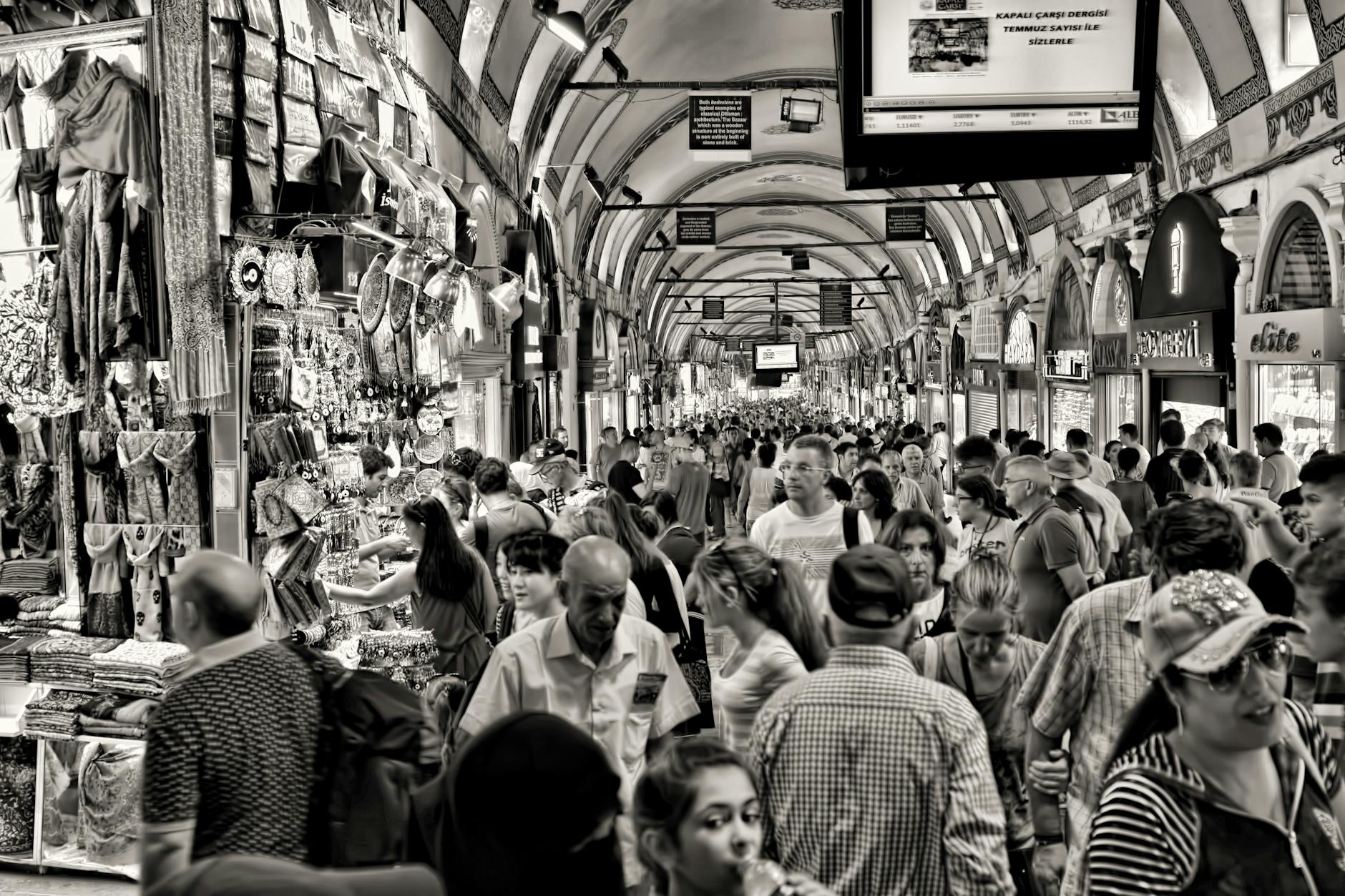
If Zincirli Han is a polished gemstone tucked into a velvet-lined box, then Büyük Valide Han is a massive, soot-stained iron chest that hasn’t been opened in a century. Walking from the refined, pink-walled corridors of the jewelry quarter toward the steep incline of Çakmakçılar Yokuşu is a physical transition that requires you to shed your expectations of “tourist-friendly” Istanbul. The air changes. You leave behind the scent of expensive oud and polished silver and enter a realm that smells of cold engine oil, damp basalt, and the charcoal smoke that drifts from the tiny tea-stalls tucked into alcoves.
I first stumbled into the Büyük Valide Han fifteen years ago, guided not by a map, but by the rhythmic, mechanical thumping of industrial looms. It is the largest caravanserai in the city, built in the 17th century by the powerful Kösem Sultan, a woman who understood that power in the Ottoman Empire was built as much on trade as it was on blood. This place wasn’t meant to be pretty; it was meant to be a fortress of commerce, a massive storehouse for the caravans arriving from the Silk Road. Today, it remains a monument to decay and resilience, a place where the stones feel like they are exhaling the history of ten thousand weary travelers.
Entering through the massive, arched gateway, you are immediately struck by the scale. Most hans have one courtyard; this one has three. The first is a chaotic sprawl of parked delivery scooters and stacks of cardboard boxes, but as you push deeper into the second courtyard, the “modern” world begins to peel away. The walls are a patchwork of Byzantine-era stones, Ottoman brickwork, and haphazard concrete repairs. The textures are visceral-you can run your hand along the crumbling masonry and feel the grit of centuries-old dust. It is a living ghost, a place where the grandeur of the Empire has been overtaken by the utilitarian grit of small-scale manufacturing.
Let’s be honest: Büyük Valide Han is not “scenic” in the traditional sense. It is a bruised, beautiful mess. If you are looking for a sanitized experience with clean bathrooms and English-speaking guides, stay away. This is a working building. You will hear the screech of metal saws, the high-pitched whine of sewing machines, and the constant, echoing shouts of men delivering rolls of heavy fabric. I’ve spent hours just sitting on a broken stone step here, watching the play of light and shadow through the sagging domed roofs. It’s a sensory overload of the industrial kind.
The han gained international “Instagram” fame a few years ago because of its roof. There was a specific dome where travelers would jump into the air for a photo, with the entire Golden Horn and the Bosporus as their backdrop. I’ll be blunt: I’m glad they closed it. The sheer volume of “influencers” stomping on 400-year-old lead-covered domes was an act of architectural vandalism. While you can still sometimes find a “keyman” (the legendary Mehmed or his successors) who might-for a few liras and if the mood strikes him-open a side door to a vantage point, the days of the “jumping photo” are thankfully over. Instead, look for the beauty in the shattered windows and the heavy iron rings still embedded in the walls where camels were once tethered.
One of the most profound experiences within these walls is the Iranian connection. In the late 19th century, this han became the hub for Persian merchants. Tucked away in a corner is a small, Shiite mosque-the Valide Han Mosque-adorned with turquoise tiles that stand in sharp contrast to the grey soot of the courtyard. The atmosphere here is different; it’s more somber, more intimate. If you happen to be there during the month of Muharram, the echoes of rhythmic chanting transform the cold stone corridors into something deeply spiritual and, at times, haunting.
| Category | Details & Expectations |
|---|---|
| Vibe | Industrial, gritty, ancient, and unapologetically unpolished. |
| Smells | Machine grease, heavy wool, charcoal tea, and old dust. |
| Difficulty | High. Steep stairs, uneven cobblestones, and very little signage. |
| Best Time | Tuesday or Wednesday mornings when the workshops are in full swing. |
| What to Bring | Sturdy shoes (essential) and a flashlight for the darker corridors. |
Berk’s Insider Tip: Don’t just look at the building; look at the craft. If a door is open and you hear the clatter of a loom, peek your head in and offer a polite “Kolay Gelsin” (May it be easy for you). This han is one of the few places left where you can see traditional hand-weaving of heavy Anatolian textiles. Many of these craftsmen are the last of their generation. If you buy a scarf or a piece of fabric directly from a workshop here, you aren’t just buying a souvenir; you’re funding the survival of a dying art form.
The transition from the second courtyard to the third is where the scale of the “Silk Road” really hits you. The third courtyard is largely abandoned, taken over by wild vines and stray cats who guard the ruins like furry janitors. There is a silence here that you won’t find anywhere else in the Grand Bazaar district. It’s a place that forces you to acknowledge the passage of time. The salty breeze from the Marmara Sea occasionally filters through the broken arches, a reminder that the water-and the wealth it brought-is just a few hundred meters away.
As you leave the Büyük Valide Han and begin the descent back toward the spice-laden air of Eminönü, the noise of the modern city feels jarring. You’ve spent an hour in a place that refuses to modernize, a place that is content to slowly crumble back into the earth from which it was built. It is the perfect antidote to the “trinket” culture of the main bazaar-a reminder that the real Istanbul isn’t found in a gift shop, but in the iron, sweat, and stone of its secret hans.
Çuhacı Han: Tracking the Legacy of the Gold Merchants
To step into Çuhacı Han is to abandon the sanitized, glittering facade of the Grand Bazaar’s main thoroughfares and enter the literal furnace of Istanbul’s wealth. While the tourists are busy haggling over machine-made “evil eye” bracelets on Kalpakçılar Street, I prefer to slip through a nondescript portal into a world that smells of sulfuric acid, butane torches, and old stone.
Built in the 18th century by Damat İbrahim Pasha, Çuhacı Han was originally the domain of the broadcloth merchants-the çuhacılar-but for centuries now, it has served as the nervous system of the city’s gold trade. This isn’t a place for browsing; it is a place of industrial alchemy. As I walk through the narrow, soot-stained arched entrance, the first thing that hits me isn’t the visual-it’s the sound. It is a discordant symphony of tiny hammers-tack, tack, tack-echoing from the upper galleries. It’s a rhythmic, hypnotic pulse that tells you work is being done, not for show, but for survival.
The architecture here is rugged and unapologetic. Unlike the renovated sections of the bazaar that feel like a theme park version of the Ottoman Empire, Çuhacı Han wears its grime like a badge of honor. The walls are blackened by the exhaust of centuries of melting gold. I’ve spent countless afternoons leaning against these cold, damp stones, watching the apprentices-the çıraks-scurry across the courtyard carrying small crucibles or trays of rough-cut stones. There is a specific, heavy heat that hangs in the air here, even in winter, generated by the hundreds of small gas burners roaring in workshops no bigger than a walk-in closet.
I’ll be blunt: if you are looking for a “boutique shopping experience,” stay away. Most of the masters here won’t even look up from their loupes when you pass. They are busy crafting the intricate Trabzon wicker bracelets or setting diamonds into 24-karat gold for the big jewelry houses. This is where the raw sweat of the soul is poured into the metal. I often find the atmosphere here more authentic than the polished, neon-lit displays near the Nuruosmaniye Gate. Those shops are the “end product,” often overpriced and designed to dazzle the uninitiated. Çuhacı Han is the brutal reality of the craft.
The air here carries a sharp, acrid bite-the scent of nitric acid used to test the purity of gold. It mixes with the smell of strong, bitter Turkish tea and the faint aroma of charcoal. It reminds me of the sensory overload I often feel on the other side of the city, though for entirely different reasons. When the grime of the bazaar becomes too suffocating, I often find myself retreating to the Anatolian side. Just as Çuhacı represents the ancient, gritty toil of the city, the shoreline of Kadıköy represents its modern, breathing lungs. If you find yourself needing a break from the claustrophobia of the hans, you should read my guide, A Local’s Secret: A Walking Tour of Kadıköy and the Moda Coastline, where the smell of the sea salt replaces the smell of the blowtorch.
In Çuhacı, I’ve watched masters like Usta Aris-a man whose fingers are permanently stained with jeweler’s rouge-transform a dull lump of silver into a delicate filigree earring using nothing but a hand-cranked rolling mill and a lifetime of muscle memory. These men are the last of a dying breed. They despise the 3D-printing revolution that is slowly encroaching on their trade. To them, gold is a living thing that must be coaxed and disciplined.
When you climb the narrow, uneven stone stairs to the second floor, notice the flooring. The wood is worn thin in the center of each step, carved out by generations of merchants carrying heavy loads. The upper gallery offers a vantage point where you can see the inner workings of the workshops. Look through the soot-covered windows and you’ll see the flicker of blue flames and the intense focus of men working under low-hanging bulbs. It’s a scene that hasn’t changed since the 1700s, save for the occasional smartphone sitting next to an anvil.
I’m often asked if it’s “safe” to buy gold here. The irony is that Çuhacı Han is probably the most honest place in the city because it operates on a code of reputation. If a craftsman here cheats a merchant, he’s finished. However, don’t expect a velvet box and a ribbon. If you buy a chain here, it’ll be weighed on a precision scale, priced based on the daily spot price of gold plus a “labor fee,” and handed to you in a plastic baggie. It’s unpretentious, transactional, and utterly real.
Berk’s Insider Tip: If you want to see the “gold melting” process, arrive around 4:00 PM. This is when many of the smaller ateliers consolidate their scrap. You can often watch from the courtyard as the crucibles are heated to a glowing orange. Also, look for the small tea station in the corner of the courtyard-the tea here is some of the strongest in the bazaar because the smiths need the caffeine to keep their hands steady for 12 hours a day.
The Han isn’t just a place of business; it’s a repository of stories. Every scratch on the workbenches, every stain on the walls, represents a piece of Istanbul’s economic history. It’s a stark contrast to the tourist traps just a few alleys away where “authentic” items are often mass-produced in factories outside the city. In Çuhacı, the lineage is direct. The master teaches the apprentice, who eventually becomes the master, occupying the same ten-square-meter space for forty years.
Leaving Çuhacı Han always feels like stepping out of a time capsule. The noise of the hawkers outside feels thinner, more superficial, after the heavy, metallic silence of the gold-smiths’ concentration. You walk out with the taste of copper in your mouth and a deeper understanding that Istanbul isn’t built on postcards-it’s built on fire, acid, and stone.
From here, the path leads deeper into the labyrinth, toward a place that trade forgot, where the echoes are even older and the shadows even longer.
Kalcılar Han: The Rhythmic Clang of the Silver and Coppersmiths
If Çuhacı Han is the refined, hushed parlor of the Grand Bazaar, then Kalcılar Han is its soot-stained, industrial engine room. To get here, you have to shed the polished veneer of the main thoroughfares where shopkeepers beckon you with “Genuine Fake Watches” and overpriced silk scarves. You leave the scent of rosewater and expensive perfume behind, replaced by something much more primal: the acrid tang of nitric acid, the dry heat of charcoal furnaces, and the omnipresent, metallic scent of raw silver.
I’ve lived in Istanbul for fifteen years, and I still find the transition into Kalcılar Han jarring in the best way possible. You step through a nondescript stone archway and the soundscape changes instantly. The muffled chatter of tourists is swallowed by a percussive symphony. It is a relentless, rhythmic tink-tink-tink of hammers hitting metal, a sound that has echoed against these 18th-century stone walls since the reign of the Sultans. This isn’t a show for visitors; this is the authentic, gritty heartbeat of Anatolian craftsmanship that the travel brochures usually sanitize.
Most people walk right past the entrance, and honestly, that’s exactly how the ustas (masters) like it. The Han is a fortress of three levels, built around a central courtyard that feels more like a construction site than a historic monument. Looking up, you see a chaotic web of electrical wires, sagging laundry, and rusted satellite dishes, all set against the grimy, soot-blackened vaults of the Ottoman architecture. It is beautiful in its decay, a stark contrast to the Disney-fied renovations happening closer to the Nuruosmaniye Gate.
The air here is thick. On a humid July afternoon, the heat from the smelting furnaces on the upper floors radiates downward, mingling with the smell of burnt coal and the sharp, nose-stinging aroma of the chemicals used to “whiten” or plate the silver. It reminds me of the engine rooms of the old steam-powered vapurlar (ferries) that cross the Bosphorus-a mixture of grease, hard work, and history. If you have sensitive lungs, the air in Kalcılar might feel heavy, but to me, it smells like honesty in a city that often tries to sell you a fantasy.
I spent an hour last Tuesday watching a silver-plater in a tiny, cramped atölye (workshop) no larger than a walk-in closet. His hands were permanently stained a dark, metallic grey-the “mark of the craft,” he told me with a shrug. There is no automation here. Each tray, each cezve (coffee pot), and each ornate mirror frame is touched by human hands, hammered into shape by men who have likely been doing this since they were çıraks (apprentices) at twelve years old.
Let’s be brutally honest: most of the “handmade” silver you see in the glittering windows of the main Bazaar streets is factory-milled junk from Italy or mass-produced in China. If you want the real thing, you have to brave the grime of Kalcılar. The shops on the ground floor are cluttered and chaotic. Don’t expect a velvet sofa or a glass of apple tea. Here, you sit on a stool that’s seen better decades, surrounded by stacks of raw copper bowls and tangled silver chains.
The critique I often have of the modern Grand Bazaar is that it has become a museum where everything is for sale but nothing is actually made. Kalcılar Han is the antidote to that. However, it is not “tourist-friendly” in the traditional sense. The floors are uneven, the lighting is dim, and the workers are busy. They won’t chase you down the hall; they’ll barely look up from their anvils. This is a place of production, not performance.
If you venture to the upper floors-climbing the steep, narrow stone stairs that have been worn into smooth bowls by three centuries of footsteps-you’ll find the real “secret” of the Han. The top floor is where the heavy smelting happens. The noise is louder here, the heat more intense. But if you look out from the arched windows, you get a view of the Bazaar’s lead-domed roofs that few ever see. You can see the seagulls circling the minarets of the Nuruosmaniye Mosque, and if the wind is right, a faint whiff of sea salt from the Golden Horn cuts through the smell of the furnaces.
Berk’s Insider Tip: Do not buy silver on the main streets of the Bazaar without visiting Kalcılar Han first to understand the weight and texture of real, hand-hammered metal. If you want a piece of jewelry or a decorative item that actually has a soul, look for the workshops on the second floor of this Han. Ask for “Gümüş” (Silver) and look for the masters who are actually working at a bench, not just standing behind a counter. Be prepared to negotiate, but remember: you are paying for a dying art, not just the weight of the metal.
The texture of Kalcılar is rough. It’s the feeling of cold, heavy silver against your palm and the grit of stone dust on your fingertips. It lacks the sparkle of the gold district, but it possesses a gravity that the rest of the Bazaar is losing. As I leave, the rhythmic clanging follows me out into the street, a stubborn reminder that despite the encroaching tide of cheap souvenirs, the old ways of Istanbul are still fighting to stay alive behind these heavy iron gates.
A Taste of Tradition: Hidden Eateries and Tea Rituals within the Hans
After an hour of navigating the labyrinthine, soot-stained corridors of Kalcılar Han, the metallic tang of copper dust begins to coat the back of your throat. This is the moment when the Bazaar demands a tribute-not in Lira for a pashmina, but in time for a ritual. You see, most tourists make the fatal mistake of eating at the flashy, glass-fronted restaurants lining the main “Kalpakçılar Caddesi.” They see a man in a chef’s hat carving a dry, grey slab of meat and think they’ve found “authentic” Istanbul. They haven’t. They’ve found a staged performance with a 300% markup.
To eat like someone who has spent fifteen years dodging carts in these alleys, you have to look for the smoke rising from the crevices of the stone walls. You have to follow the rhythmic clinking of a silver spoon against a tulip-shaped glass, a sound that serves as the heartbeat of the Grand Bazaar.
My first stop is always Gül Ebru Kantin, tucked away near the entrance of the Zincirli Han. This isn’t a place for a three-course meal; it’s a sanctuary for the perfect Döner. Forget the industrial, frozen logs of meat you see elsewhere. Here, the usta (master) stacks the lamb and beef by hand every morning. I’ve stood there many times, watching the charcoal embers glow as the fat renders and drips down the meat, causing tiny flares of scented smoke that smell of salt and ancient grease. When you order a dürüm, the bread is pressed against the rotating meat to soak up the juices before being wrapped around the shavings. It’s heavy, it’s primal, and it’s arguably the only honest meal within a five-block radius. If you see a place offering “Chicken Nuggets” or “French Fries” nearby, keep walking. They are catering to the uninitiated, and their food lacks the soul of the hearth.
But the food is only half the story. The true soul of the hans lies in the tea runner (çaycı) culture.
Observe the men carrying the askı-the hanging brass trays that swing precariously as they weave through the crowds. There is a specific physics to it, a dance perfected over decades. In the deeper hans, like Çuhacı Han, the tea isn’t just a beverage; it’s a social currency. I often sit on a low stool near the ocak (the tea boiler station), which is usually a tiny, blackened alcove no larger than a closet. The smell here is intoxicating: a mix of burning oak, boiling water, and the sharp, tannic scent of fermented black tea leaves.
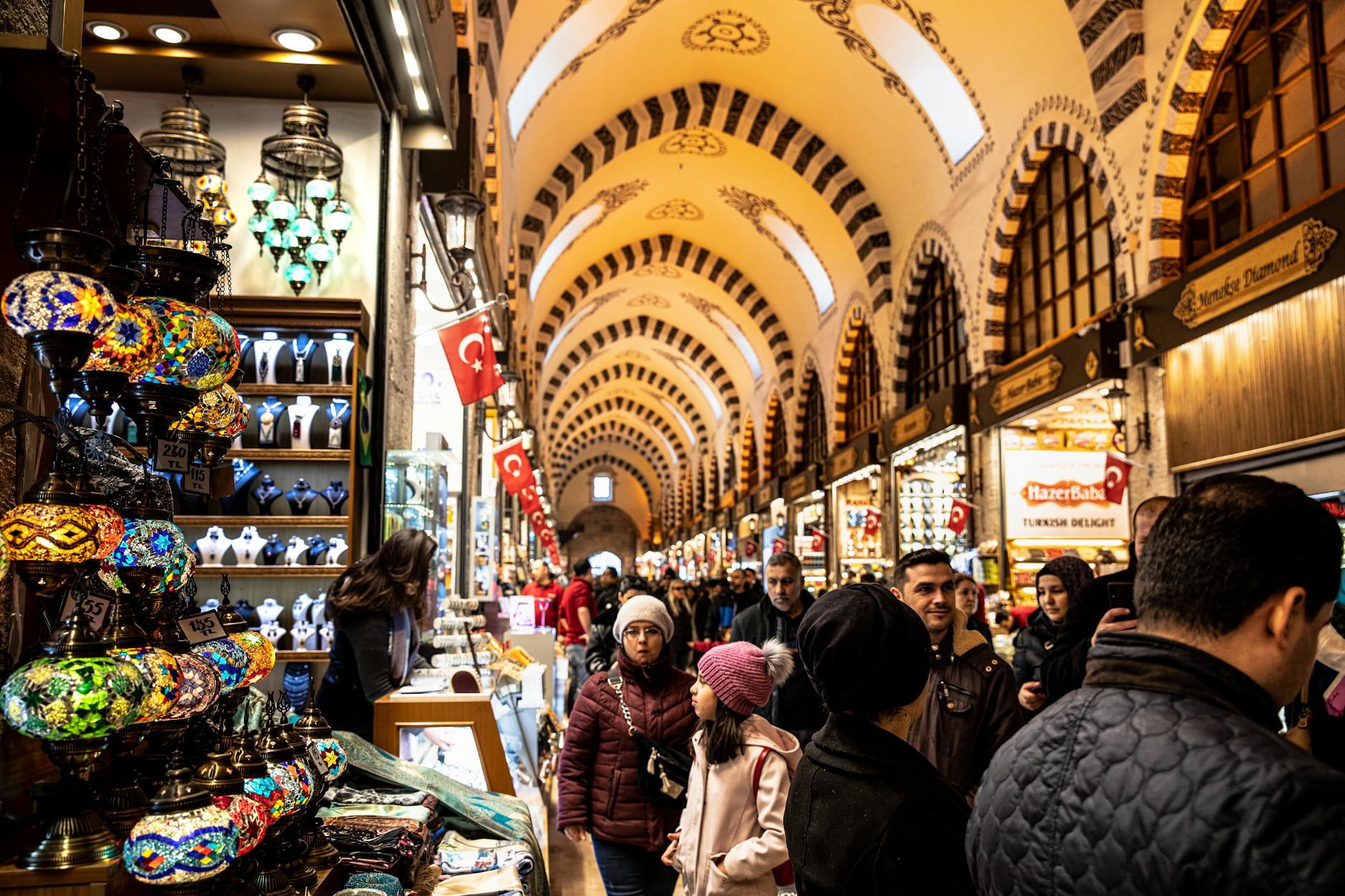
Berk’s Insider Tip: Never, under any circumstances, ask for “Apple Tea.” To a local shopkeeper or a seasoned resident, apple tea is a chemical abomination-a neon-colored powder dissolved in hot water for tourists who can’t handle the bitterness of the real thing. If you want respect, ask for your tea “Tavşan Kanı” (Rabbit’s Blood). It refers to the deep, translucent ruby color of perfectly brewed, high-steeped Turkish tea.
The ritual of the tea is where the real business of the Bazaar happens. You’ll see a diamond dealer in a three-thousand-dollar suit sitting on a rickety wooden stool next to a boy whose hands are stained black from polishing silver. They share the same tea, stirred with the same clacking tin spoon. The texture of the air in these tea corners is thick-heavy with the steam of the boiler and the low, gutteral hum of traders arguing over the price of gold. It is a sensory overload of clinking glass, sharp citrus notes of lemon peel, and the coarse grit of stone floors beneath your boots.
For a more prolonged escape, I head to Şark Kahvesi. Now, some will argue it’s become too popular, but I remain a loyalist for one reason: the sand-brewed coffee. They bury the long-handled copper cezve into a bed of hot, golden sand, allowing the heat to surround the coffee evenly. The result is a brew so thick and frothy it feels like velvet on the tongue. I like to sit in the back, away from the windows, where the walls are covered in fading kilims and the air carries the ghostly scent of cardamom and tobacco from decades past. You can feel the weight of the Bazaar here; it’s in the sagging wooden ceiling beams and the worn brass of the tables.
However, be critical of the sweets. If you see “Turkish Delight” piled in neon pyramids under harsh fluorescent lights, it’s likely stale and loaded with cornstarch. The real artisans, the ones who supply the han masters, hide their goods in plain boxes. Look for the locum that yields easily to the touch, smelling faintly of rosewater and roasted pistachios, not the rubbery cubes designed to survive a six-month shelf life in an airport gift shop.
The most authentic “esnaf” (tradesman) experience, though, is found at Bahar Restoran atop the Nuruosmaniye gate area. It is a “point-and-choose” canteen where the menu changes daily based on what’s fresh at the markets. Here, the textures are visceral: the silkiness of eggplant stewed in olive oil until it collapses (İmambayıldı), the crunch of pickled peppers that sting the back of your throat, and the steam rising from a bowl of lentil soup that has been simmering since dawn. There are no menus in English here, and the waiters don’t have time to coddle you. You point, you sit on a communal bench, and you eat amidst the cacophony of clattering plates and shouting orders. It’s loud, it’s cramped, and the smell of clarified butter clings to your clothes for hours afterward-a badge of honor that says you’ve actually been inside the heart of the machine.
As you finish your meal, the tea runner will inevitably appear with a fresh glass, even if you didn’t ask for it. This is the “ikram”-the hospitality of the hans. It is a gesture that transcends the commercial greed of the main thoroughfares. You aren’t just a customer here; for the length of a tea glass, you are part of the ancient, grinding machinery of Istanbul trade. You drink, you pay your few liras, and you step back out into the cool, damp air of the stone courtyards, the taste of bitter tea and charcoal smoke still lingering, ready to face the rhythmic hammers of the next han.
The Craftsman’s Code: Understanding the Usta-Çırak Relationship
To the casual traveler, the Grand Bazaar is a cacophony of commerce, a place where the loudest voice wins the sale. But when you step off the main arteries and into the limestone shadows of Zincirli Han or the soot-stained corridors of Kalcılar Han, the volume drops, and the rhythm changes. Here, the air doesn’t smell of cheap perfume or vacuum-sealed apple tea; it smells of sulfuric acid, molten silver, tobacco smoke, and the ancient, heavy scent of cold stone. This is the world of the Usta (Master) and the Çırak (Apprentice), a hierarchical lineage that predates the Ottoman Empire and remains the brittle backbone of Istanbul’s soul.
In my fifteen years of navigating these corridors, I have learned that the Usta-Çırak relationship is not a simple employment contract. It is a spiritual and moral inheritance. When you walk past a workshop that is no larger than a walk-in closet, you might see an old man with hands as gnarled as olive wood, hunched over a microscopic piece of filigree. Beside him, usually on a stool that has seen better centuries, sits a boy-perhaps fourteen or fifteen-watching. He isn’t allowed to touch the gold yet. He is there to watch, to sweep the precious metal dust from the floor with a soft brush, and to fetch the endless rounds of rabbit-blood red tea that fuel the labor.
I remember sitting with Usta Berk in the upper reaches of Çuhacı Han. The room was dim, lit only by a single flickering bulb and the blue-white hiss of a soldering torch. The walls were blackened by decades of carbon. Berk didn’t look at me when he spoke; his eyes were fixed on a ruby he was setting. “Berk,” he said, his voice like grinding gravel, “a boy doesn’t come here to learn how to make jewelry. He comes here to learn how to be a man.”
This is the part the guidebooks skip over because it isn’t “pretty.” The apprenticeship is often harsh. It is built on absolute submission. The Çırak is the first to arrive and the last to leave. He learns the Edep-the etiquette of the bazaar. He learns that you never speak over a Master, you never sit until invited, and you treat the tools of the trade with more reverence than your own dinner. If a tourist wanders into one of these shops and sees a Master shouting at a boy for a poorly cleaned workbench, they might see it as cruelty. I see it as the preservation of a dying standard.
Critically speaking, the “craft” you see in the main thoroughfares of the Bazaar-the sparkling “handmade” gold chains and the intricate “Ottoman” plates-is largely a lie. Most of it is mass-produced in factories in Zeytinburnu or imported from China, polished to a high sheen to blind the unsuspecting buyer. The real work-the imperfect, soul-infused labor-happens in these hans, where the Usta refuses to compromise. This is why the authentic workshops are shrinking. The modern world has no patience for a Çırak who spends three years just learning how to properly sharpen a chisel.
The sensory experience of these workshops is visceral. You feel the heat from the charcoal braziers radiating against your skin even in the dead of a Marmara winter. You hear the rhythmic clink-clink-clink of a hammer on an anvil, a sound that harmonizes with the distant, muffled call to prayer from the Nuruosmaniye Mosque. There is a specific texture to the air here-a mix of fine metallic grit that settles on your tongue and the velvet smoothness of the finished silk or gold that the Master finally deems “ready.”
The transition from Çırak to Kalfa (Journeyman) and finally to Usta is marked by a ritual known as Peştemal Kuşanma, where the master literally “girds” the apprentice with a symbolic apron. It is a “giving of the hand” (el vermek). When you buy a piece of jewelry from a true Usta in Zincirli Han, you aren’t just buying silver; you are buying the collective memory of every Master who came before him. You are buying the years that boy spent sweeping the floor and the decades the man spent perfecting his breath so his hand wouldn’t shake.
However, do not be fooled by every dusty room you find. There are “demonstration” workshops set up specifically for tour groups-stages where a man in a vest pretends to hammer copper while a salesperson waits in the wings to overcharge you for a piece of tinned junk. If the workshop is too clean, if the “Master” is too eager to explain his process in perfect English, or if there’s a credit card machine prominently displayed on a velvet cloth, you are in a tourist trap. The real workshops are messy, cluttered with oily rags and half-eaten loaves of simit, and the Master will likely ignore you for the first five minutes because his work is more important than your presence.
Berk’s Insider Tip: To see the real Usta-Çırak dynamic without feeling like an intruder, head to the second floor of Kalcılar Han (The Han of the Silversmiths). Don’t take photos immediately. Stand by the railing, watch the apprentices carry heavy trays of molds, and listen for the sound of the bellows. If you want to buy something, ask for a “sade” (plain) piece. The true test of a master’s hand is not how many stones he can encrust on a ring, but the perfection of the metal’s finish itself.
The tragedy of the modern Grand Bazaar is that this code is fraying. The younger generation in Istanbul would rather work in a shiny tech startup in Levent or a glass-walled mall in Maslak than spend ten years breathing in acid fumes for a pittance. Every time an Usta dies without a Çırak to take his “hand,” a library of human touch is burned to the ground. When you walk through these hans, you aren’t just looking at shops; you are witnessing a slow-motion vanishing act.
You can feel the weight of this loss in the silence of the abandoned rooms in Sağır Han. The floorboards there are grooved by the feet of centuries of apprentices, but the rooms are now used to store cheap plastic luggage. It’s a bitter pill to swallow for someone who loves the grit of this city. The “Secret Hans” are secret not because they are hidden, but because the modern eye has been trained to look past the grime and the labor in search of the “shiny.” But if you linger, if you wait for the Usta to finish his tea and look up, you might catch a glimpse of a tradition that refuses to go quietly.
The relationship is also about loyalty. An apprentice doesn’t just learn the trade; he learns the Master’s secrets-where the best raw stones are hidden, which scrap-dealer can be trusted, and how to tell if a shipment of silver has been debased with copper just by the sound it makes when dropped on a stone table. This arcane knowledge is never written down. It is whispered over the hiss of the torch, passed from one generation of calloused hands to the next, surviving despite the encroaching tide of globalized mediocrity that threatens to turn the entire Bazaar into a caricature of itself.
Planning Your Pilgrimage: Logistics, Maps, and Timings Table
To step into the Grand Bazaar without a strategic plan is to invite a specific, heavy kind of exhaustion-the sort that leaves your feet throbbing against the uneven Ottoman cobblestones and your wallet lighter for all the wrong reasons. After fifteen years of navigating these limestone arteries, I’ve learned that the Bazaar doesn’t reveal its secrets to the frantic or the unprepared. You have to approach it like a pilgrimage, honoring its rhythms and acknowledging that the map on your phone is, for all intents and purposes, a useless piece of digital vanity once you pass under the Nuruosmaniye Gate.
The first thing you must accept is that the “secret” hans I’ve described-the places where the scent of melting beeswax and the rhythmic clanging of copper replace the smell of cheap apple tea-are not located on the main thoroughfares. You will not find Zincirli Han or Kalcılar Han by following the neon signs. You find them by looking for the shadowed archways that everyone else is walking past. Look for the entrances that look like they haven’t been painted since the reign of Abdülhamid II.
The Logistics of Movement Start your journey at the Beyazıt Gate rather than the tourist-choked Sultanahmet side. This allows you to drift downhill through the bazaar toward the Spice Market, saving your knees from the incline. The air here usually carries a faint metallic tang, a mixture of old coins and the distant sea salt blowing up from the Golden Horn. Wear shoes with thick soles; the stone floors of the hans are notoriously damp and cold, a chilling moisture that seeps into your bones if you’re sporting thin sneakers.
Don’t trust the “helpful” gentlemen standing near the gates offering to show you the “best view.” They are almost certainly lead-ins for leather jacket showrooms. Instead, orient yourself by the roofline. The Grand Bazaar is a series of domes; if you find yourself in a space where the ceiling opens to the sky and you see tangled grapevines or laundry hanging from a window, you have successfully exited the “commercial” bazaar and entered a han. This is where the real Istanbul lives.
The Reality of the Map Physical maps of the Bazaar are beautiful souvenirs, but they are topographical lies. The interior is three-dimensional. You might be standing directly “above” a workshop, but to get there, you need to find a stone staircase tucked behind a stack of kilims. My advice? Abandon the GPS. It will spin in circles, confused by the thickness of the 15th-century masonry. Instead, navigate by landmark: the Sandal Bedesteni, the Old Book Bazaar (Sahaflar), and the Inner Bedesten. If you see a merchant sitting on a low stool drinking tea from a tulip glass that is stained dark with steeped Rize leaves, you are in the right neighborhood.
Berk’s Insider Tip: Do not buy “saffron” inside the Grand Bazaar. Nine times out of ten, it is safflower or dyed corn silk. If you want the real stuff, you must go to the back alleys of the Mısır Çarşısı (Spice Market) and look for the shops that keep their jars under the counter, away from the sunlight. If it’s cheap, it’s fake. Real saffron should smell like a mixture of sun-dried hay and ancient honey, and it should cost enough to make you wince.
Timings and the “Bazaar Pulse” Timing is the difference between a spiritual experience and a claustrophobic nightmare. The Bazaar has a pulse. In the early morning, it breathes slowly-the sound of iron shutters rattling upward echoes like gunfire in the empty halls. By mid-afternoon, it is a fever dream of shouting, dragging carts, and the smell of roasting doner meat that clings to your clothes.
| Time of Day | The Experience | Berk’s Verdict |
|---|---|---|
| 08:30 - 09:30 | The “Opening Prayer.” Merchants are sweeping their doorsteps and drinking their first tea. The hans are quiet, smelling of cold stone and dust. | The Golden Hour. Best for photography and seeing the architecture without the crowds. |
| 10:00 - 12:30 | The “Working Rhythm.” This is when the craftsmen are at their benches. You’ll hear the high-pitched whine of lathes and the tapping of jewelry hammers. | Prime Exploration. This is the time to visit Zincirli Han or Çuhacı Han to see the ustas in action. |
| 13:00 - 14:00 | The Lunch Lull. If it’s a Friday, the Bazaar effectively shuts down for Cuma Namazı (Friday Prayer). The silence is eerie and beautiful. | Be Respectful. Avoid trying to shop; instead, find a small esnaf lokantası (tradesman restaurant) nearby and eat what they’re eating. |
| 14:30 - 16:30 | The Peak Chaos. The cruise ship crowds arrive. The air becomes thick with perfume, sweat, and aggressive sales pitches. | Escape to the Rooftops. This is when you head to the fringes or find a hidden café on the second floor of a han to watch the madness from above. |
| 17:30 - 19:00 | The “Closing Scramble.” Merchants are eager to make their last sale. This is when the aggressive “best price” talk starts. | Avoid. It’s frantic and the light is fading. The hans become dark and difficult to navigate safely. |
The Critical Eye: Avoiding the “Tourist Trap” Fatigue You will be tempted by the sparkling mosaic lamps and the mountains of Turkish Delight piled high like colorful jewels. Be critical. If a shop looks like it belongs in an airport terminal, keep walking. The “authentic” silk scarves that feel like plastic are, in fact, polyester. If a shopkeeper calls you “my friend” before he knows your name, he is trying to bypass your skepticism.
The true treasures are found in the dimly lit workshops where there is no display window. I once spent three hours in a workshop no larger than a closet, watching an old man inlay silver into dark wood. There was no “sale,” no “special price for you.” There was only the smell of wood shavings and the quiet pride of a man who had been doing the same task for forty years.
Logistics of Sustenance Do not eat at the restaurants on the main “Gold Street.” They are overpriced, and the food is mediocre at best, designed for people who will never return. Instead, look for the delivery boys carrying circular trays of tea and small plates of pide. Follow them. They are heading to the hidden kitchens that feed the workers. These places won’t have a menu in English, and you might have to eat standing up, but the charcoal-grilled lamb will be the best thing you taste in Istanbul.
When your legs finally give out, do not head for a Starbucks. Find the Şark Kahvesi. It is an institution for a reason. Order the Turkish coffee cooked in sand. It arrives thick, bitter, and piping hot, with a layer of foam that holds the heat against the back of your throat. Sit there, let the scent of roasted beans ground you, and watch the light filter through the high windows, illuminating the dust motes that have been dancing in this building for over five centuries.
As you prepare to move from the logistical planning into the heart of the hans themselves, remember that your greatest tool is not a map, but your senses. Follow the sound of the hammer; follow the smell of the charcoal; follow the feeling of a cool breeze coming from an open courtyard. You aren’t just visiting a market; you are entering a living, breathing organism that has survived fires, earthquakes, and the fall of empires. Respect its gates, and it will let you in.
Navigating the Labyrinth: Insider Tips, Scams to Avoid, and Etiquette
Entering the Grand Bazaar isn’t like walking into a mall; it is an immersion into a living, breathing organism that has survived fires, earthquakes, and the relentless march of globalization. After fifteen years of navigating its subterranean chills and sun-drenched courtyards, I’ve learned that the “Bazaar” the tourists see-the one with the neon-bright Turkish delight and the “Genuine Fake” watches-is a superficial skin. To find the soul of the Hans, you have to shed your “tourist” skin and adopt the pace of a local.
The air here is thick, a heavy tapestry of acrid charcoal smoke from the tea-makers’ braziers, the faint, metallic scent of shaved copper, and the omnipresent, slightly sweet mustiness of five-hundred-year-old stone. If you listen closely, past the polyglot shouts of the main thoroughfares (Kalpakçılar Caddesi is a sensory nightmare I avoid at all costs), you’ll hear the rhythmic clink-clink-clink of a master artisan’s hammer echoing from a hidden upper floor. That is your North Star.
The Art of the Negotiated Respect
In the secret Hans, etiquette is the currency that matters more than the Lira. When you step into a workshop in Zincirli Han or the gritty, industrial Çuhacı Han, you are entering someone’s private sanctuary. These men-and they are almost exclusively men of a certain vintage-have been sitting on the same stools for forty years.
Never lead with a price. In fact, don’t even lead with a question about the object. The most important phrase in your vocabulary is “Kolay Gelsin” (May it come easy to you). It is a recognition of their labor. If you are offered a tulip-shaped glass of scalding, mahogany-colored çay, accept it. To refuse is to signal that your time is more valuable than their hospitality. I’ve spent hours sitting on low stools, my back against damp, peeling masonry, drinking tea that tasted of beetroot and iron, saying nothing at all. Only after the second glass does the “real” inventory come out from behind the counter.
The “Saffron” Trap and Other Illusions
Let’s be brutally honest: sixty percent of what you see in the main arteries of the Bazaar is mass-produced garbage. If you see a “hand-painted” ceramic bowl for 50 Lira, it was printed in a factory in Kütahya, not painted by a master.
The most egregious scam involves the “Saffron.” You will see mountains of crimson threads labeled “Iranian Saffron” at impossible prices. It is dyed corn silk. Real saffron doesn’t sit in open heaps losing its potency to the humid Istanbul air; it is kept in jars, smells faintly of honey and hay, and costs a small fortune. Similarly, “Pashmina” scarves sold for $10 are invariably viscose or polyester. Touch the fabric; if it feels cold to the touch, it’s synthetic. Real wool and silk should hold the warmth of your hand.
Common Scams to Dodge
| The Scam | How it Works | The Red Flag |
|---|---|---|
| The “Language Student” | A young, well-dressed man asks for help translating a letter or practicing English. | He eventually leads you to his “uncle’s” carpet shop for a “free” tea. |
| The “Closed” Gate | A helpful bystander tells you the Han you’re looking for is closed for prayer/restoration. | He offers to show you a “better, secret” Han nearby (which is just a high-commission shop). |
| The Scented “Leather” | Jackets are sprayed with a chemical leather scent to mask the smell of cheap bonded hide. | If the texture is perfectly uniform and smells like a perfume department, walk away. |
| The Currency Switch | You agree on a price in Lira, but they charge your card in Euros or Dollars at a predatory rate. | Always check the currency symbol on the card machine before tapping. |
Berk’s Insider Tip: If you find yourself being followed or pressured, do not head for the main gates. Instead, slip into a Mescit (small prayer room) or a busy Lokanta (cafeteria). The vultures of the Bazaar rarely follow you into spaces of worship or communal eating. For the best view of the chaos without the pressure, find the tiny, rickety staircase in Büyük Valide Han that leads to the roof. The “official” access is often locked, but a few Lira to the bekçi (watchman) usually buys you a sunset view over the Golden Horn that smells of sea salt and coal smoke.
The Physicality of the Labyrinth
You must prepare for the physical toll. The stones of the Hans are uneven, worn smooth by centuries of leather-soled shoes and the hooves of pack mules. They are treacherously slick when damp. I’ve seen many a traveler twist an ankle because they were looking at the vaulted ceilings instead of their feet.
Wear shoes with grip. Leave the “traveler’s backpack” at the hotel; in the narrow corridors of Kürkçü Han, a bulky bag is a weapon that knocks over displays and marks you as a target. Carry your belongings in a cross-body bag, held tightly to your front. Not because of rampant pickpocketing-the Bazaar is surprisingly safe in that regard-but because the crush of bodies in the afternoon is so intense that you’ll want to minimize your physical footprint.
As you move deeper into the Hans, the sounds of the city-the distant, melancholic wail of the ferry horns on the Bosporus and the frantic honking of Eminönü traffic-will fade. They are replaced by the interior hum of the Bazaar: the bubbling of a nargile, the clicking of tesbih (prayer beads), and the heavy silence of a place that knows it will outlast you. Navigate with your nose and your ears; the eyes are too easily deceived by the glitter of cheap brass.
Frequently Asked Questions for the Curious Traveler
Whenever I take friends from back home into the bowels of the Grand Bazaar, they usually start with the same look of wide-eyed terror. It’s the sensory overload-the scent of cloyingly sweet apple tea fighting against the heavy, masculine aroma of industrial leather and the sharp, metallic tang of shaved gold. By the time we reach the threshold of a han (a traditional caravanserai), the questions start pouring out. These aren’t the typical “where is the bathroom” queries; these are the questions of people who realize they’ve stepped off the map and into the city’s living, breathing attic.
”Berk, is it actually safe to wander into these crumbling courtyards?”
I get this one a lot, usually as we are standing in front of a doorway that looks like it hasn’t been oiled since the fall of the Ottomans. My answer is always a qualified “yes,” but with a caveat: safety is relative to your surroundings. Are you going to be mugged? Highly unlikely. The artisans and shopkeepers in these hans have a code of conduct that dates back centuries. However, your physical safety is a different matter. These structures are ancient, decaying, and beautifully neglected.
You need to watch your step. The stones are often slick with a mixture of centuries-old soot and spilled tea. In the winter, the dampness rises from the ground, smelling of wet limestone and ancient dust, making the uneven stairs a legitimate hazard. Don’t expect handrails or “Caution: Wet Floor” signs. If you wander into the upper floors of a place like Büyük Valide Han, you are stepping onto roofs that are literally shedding their skins. I’ve felt the precariousness of those lead-domed roofs under my boots; it’s a thrill, but it’s a fragile history. Respect the architecture, and it will (likely) hold you.
”Are the prices here actually better, or is this just ‘authentic’ theater?”
This is where I have to be brutally honest: Not every han is a bargain hunter’s paradise. In fact, some of them have become “Instagram traps.” Take Zincirli Han, for example. It is undeniably the most beautiful, with its climbing ivy and perfectly painted red shutters. But because it’s so photogenic, the prices for the jewelry and carpets there have climbed alongside the vines. You are paying for the ambiance.
If you want the real deals, you have to go where the floors are stained with engine oil and charcoal. In the back corners of Çuhacı Han, where the air is thick with the sulfurous smell of soldering, you are dealing with the actual makers. Here, the “showroom” is a cardboard box. If you see a master craftsman with fingers stained black by silver polish, you’ve found the source. They don’t have time for the theatrical haggling you find on the main Kalpakçılar Street. They will give you a price based on the weight of the metal and the labor of their hands. It’s honest, it’s raw, and it’s significantly cheaper-if you have the stomach for the gritty environment.
”How do I handle the ‘Buy a Carpet’ pressure without being rude?”
After fifteen years here, I’ve developed a thick skin, but I remember the initial guilt. In the hans, the pressure is different. It’s not the shouting “Yes, please!” of the main thoroughfares; it’s more intimate. A man will invite you for tea, and before you know it, he’s unrolling a kilim that smells of goat hair and woodsmoke.
My rule? Never accept the tea if you aren’t prepared to stay for twenty minutes. Once you drink that tea, you have entered a social contract. If you don’t want to buy, be firm but appreciative. I usually say, “Teşekkür ederim, sadece ustalara bakıyorum” (Thank you, I’m only looking at the masters). Use the word ‘Usta’ (Master). It shows you respect the craft, not just the commodity. If a place feels like a high-pressure trap-usually the ones with the most English signage-walk away. The real masters are often too busy hammering away at a copper plate to chase you down the hall.
”What is the best time of day to experience the ‘Secret’ Hans?”
Timing is everything. If you go at noon, you’re caught in the chaotic lunch rush, where delivery boys sprint through narrow corridors carrying trays of steaming pide and spicy lahmacun, the smell of charred meat momentarily masking the scent of the bazaar. It’s frantic and loud.
I prefer the soft, blue light of 9:00 AM. This is when the bazaar is waking up. The sound of heavy iron keys turning in ancient locks echoes through the stone corridors. You can hear the city breathing. The light filters through the high, dusty windows in slanted beams, illuminating the swirling dust motes and the steam rising from the first glasses of tea. Alternatively, come at 4:30 PM when the work is winding down. The artisans gather in the courtyards, the percussive clink of hammers slows to a steady rhythm, and the air cools, bringing in the brine of the Marmara Sea as the evening breeze kicks up.
| Han Name | Primary Sensory Vibe | Difficulty to Find | Berk’s Brutal Verdict |
|---|---|---|---|
| Zincirli Han | Ivy, red paint, polished silver. | Easy | Gorgeous but pricey. Go for the photo, buy elsewhere. |
| Büyük Valide Han | Rust, panoramic views, crumbling stone. | Hard | Essential for the soul, but the roof is increasingly restricted. |
| Çuhacı Han | Blowtorches, metal shavings, intense heat. | Medium | The real deal for silver. No frills, just craft. |
| Kızlarağası Han | Old books, dust, damp tobacco. | Medium | A quiet escape for those who hate the crowds. |
| Kalcılar Han | Melting wax, industrial grease, heavy labor. | Hard | Not for the faint of heart. Gritty, loud, and incredible. |
Berk’s Insider Tip: If you find yourself in Kalcılar Han, look for the small workshops on the second floor that specialize in “casting.” The air here is thick and metallic, smelling of molten brass. Ask to watch them pour a mold. It’s a visceral, dangerous-looking process that hasn’t changed in four hundred years. Just don’t stand too close; the heat will singe your eyebrows, and they won’t offer you a mask. It’s the most honest interaction you’ll have in the city-man, fire, and metal.
”Is it okay to take photos of the artisans?”
This is a point of contention. I’ve seen tourists shove a heavy DSLR lens inches from a master’s face while he’s trying to set a diamond. It’s remarkably disrespectful. Imagine someone doing that to you while you were filling out a spreadsheet.
Always ask. A simple nod and a gesture toward your camera is enough. Most of these men are proud of their work, but they aren’t zoo exhibits. If they say no, respect it. The best photos I’ve ever taken weren’t of the faces anyway; they were of the gnarled, calloused hands moving with a grace that contradicts the grime of the workshop. The way the light hits a half-polished emerald on a cluttered, oil-stained workbench tells a far deeper story than a posed portrait ever could.
The hans are the connective tissue of Istanbul. They are where the city’s history is still being hammered, woven, and melted into existence. They aren’t always pretty, and they certainly aren’t comfortable, but if you can handle the smell of coal smoke and the sound of a thousand hammers, you’ll find the heart of the city beating behind those heavy iron doors.
Preserving the Soul of Istanbul: Why the Hans are the Heart of the City
After fifteen years of navigating the labyrinthine veins of this city, I’ve come to realize that Istanbul is a place that survives in spite of itself. It is a city under constant siege by the new-by glass-and-steel skyscrapers, by the neon homogenization of global brands, and by a brand of “restoration” that often feels more like an eviction of history. But when the weight of the modern world feels too heavy, I retreat to the Hans of the Grand Bazaar. These aren’t just buildings; they are the city’s architectural DNA, the last bastions of a gritty, unfiltered reality that refuses to be “Instagrammed” into submission.
To understand why the Hans are the heart of the city, you have to stop looking at them as tourist sites and start feeling them as living organisms. When you step off the main, polished thoroughfares of the Grand Bazaar-the ones where the gold shops glitter under aggressive LED lights and the air is thick with the smell of expensive, synthetic perfume-you enter a different realm. The temperature drops. The sound of the crowds thins out, replaced by a symphony of labor.
I remember my first winter here, shivering as the damp Balkan winds whipped through the narrow corridors of Büyük Valide Han. The air there doesn’t smell like the spices sold to tourists; it smells of acrid charcoal smoke, the metallic tang of shaved copper, and the deep, earthy scent of rotting stone and sea salt blowing up from the Golden Horn. It’s a smell that gets into your clothes and stays there, a reminder that you’ve touched something real. This is the “soul” I’m talking about-the grit that hasn’t been scrubbed away by a municipal tourism board.
The Hans are the heart because they represent uninterrupted continuity. In the upper floors of these crumbling caravanserais, you find the ustas-the masters. These men (and they are almost exclusively men of a certain age) have spent forty, fifty years in the same 10-square-meter workshop. Their hands are permanently stained with silver polish or blackened by the grease of ancient lathes. When you watch a master engraver in Zincirli Han, you aren’t just watching a transaction; you are witnessing a lineage of movement that dates back to the Silk Road.
However, we must be critical of what is happening to these spaces. There is a dangerous trend in Istanbul right now where “preservation” is used as a synonym for “gentrification.” I’ve seen beautiful, soot-stained courtyards stripped of their character, painted a sterile white, and turned into boutique cafes that sell overpriced lattes to people who wouldn’t know a telkari from a tin can. To me, a pristine Han is a dead Han. The soul of these places lives in the cracked tiles, the sagging wooden beams, and the way the cats claim the ancient marble well-heads as their own. When we “fix” these buildings to make them palatable for the luxury traveler, we kill the very thing that makes them magnetic.
The true Hans-the ones like Çuhacı Han or the dizzying heights of Sağır Han-don’t care about your aesthetic. They are functional. They are noisy. They are crowded with rolls of fabric, stacks of leather, and the constant, rhythmic “tink-tink-tink” of hammers hitting metal. This is the industrial heartbeat of Istanbul. Without the Hans, the Grand Bazaar would be nothing more than a glorified, overpriced mall. It’s the production happening in the backrooms that gives the front windows their legitimacy.
Every time I climb the uneven, treacherous stone stairs of a Han, I feel the weight of the centuries. These steps have been hollowed out by millions of feet-janissaries, merchants from Isfahan, Armenian jewelers, and now, a weary writer looking for a bit of silence. There is a profound sense of shared humanity in these stones. They remind us that empires rise and fall, currencies collapse (as we know all too well here), and regimes change, but the need to create, to trade, and to share a glass of tea remains.
Speaking of tea, you haven’t truly experienced the soul of the city until you’ve watched a çaycı (tea runner) navigate the impossible slopes of a Han courtyard. They carry these brass trays suspended by three chains, moving with a grace that defies physics, delivering small glasses of tulip-shaped liquid gold to the masters. The sound of the spoon clinking against the glass is the true anthem of Istanbul. It’s a sound of pause, of breath, and of community. In the Hans, no one works alone; they are a collective, a guild-like structure that has survived the transition from the Ottoman Empire to the Republic.
Berk’s Insider Tip: Avoid any Han that has a “Welcome” sign in more than three languages. The best Hans are the ones where you feel like you’re trespassing. If you walk into a courtyard and the craftsmen look up at you with a mix of confusion and mild annoyance before offering you a seat and a tea, you’ve found the heart. Look for the Büyük Yeni Han-its massive stone pillars and weathered facade offer a somber, beautiful contrast to the kitschy “magic carpet” vibe of the more famous spots.
If we lose the Hans to the creeping rot of soulless tourism, we lose the ability to see the city’s bones. We lose the authenticity of struggle. Istanbul is not a museum; it is a chaotic, beautiful, dirty, and divine workshop. The Hans are the workbenches where the city’s identity is still being forged, one hammer blow at a time. They are the only places left where the air feels thick with the breath of history, rather than the stale exhaust of a tour bus. As the sun sets and the call to prayer echoes off the lead-covered domes, the Hans don’t just glow; they exhale. And in that exhale, you can hear the real Istanbul, if you’re willing to listen.
Explore the Grand Bazaar with a Local Guide
The hidden Hans are nearly impossible to find on your own — most entrances look like service doors, and the best workshops are tucked away on upper floors with no signage. We take you through these exact spots on our Tour 1: The Essential Istanbul, which includes the Grand Bazaar, the Spice Bazaar, and Topkapı Palace, all connected by routes that skip the tourist traps.
Want to see the real Bazaar, not the postcard version? Browse our private tours and book your spot →