The 2026 Şehir Hatları ferry from Kabataş to Büyükada costs 151.23 TL (3.02 EUR) on an Istanbulkart. From the pier, you walk past the late-Ottoman timber mansions along Çankaya Caddesi, climb the forest dirt path to the fenced perimeter of the Prinkipo Greek Orphanage, and follow the ridge trail down to Lunapark Square. The steep, one-kilometer cobblestone ascent from Lunapark to Aya Yorgi Church and the Yücetepe summit is polished slick from foot traffic; wear stiff rubber soles or buy a 30 TL hazelnut walking stick at the base stall. I once lost two hours stuck behind tour groups on the paved main descent; take the gravel western fire road down instead. You will reach the docks by 16:15, clearing the turnstiles before the 17:00 rush fills the Kabataş and Bostancı boats.
Step off the Şehir Hatları ferry at the Büyükada pier around 10:30 on a Saturday morning, and the scene is predictable: dozens of day-trippers funnel straight into a forty-minute queue for municipal electric minibuses, while others drift into the crowded, overpriced seafood cafes ringing the waterfront. Tapping your Istanbulkart at the Kabataş turnstile costs 151.23 TL (3.02 EUR) for the 2026 crossing, but joining that vehicle queue gives away the best part of the island before the morning even starts. Büyükada is built along a high central ridge, and the quietest dirt paths begin just ten minutes uphill from the dock.
A sensible Büyükada walking route bypasses the harbor confusion entirely, climbing through the Victorian-era timber mansions to the Greek Orphanage on İsa Tepesi before heading south along the ridgeline toward the Aya Yorgi church on Yüce Tepe. You trade congested lanes and electric shuttle horns for pine needles underfoot and open views across the Sea of Marmara toward Heybeliada. The route requires comfortable shoes and enough water to handle the steady climb, particularly on the steep cobblestones leading to the chapel, but tackling the island on foot turns what is often a chaotic excursion into a focused Princes’ Islands walking tour.
I timed the first leg of this climb last month, setting out from the clock tower at 9:15 AM while shopkeepers were still rolling up their shutters. By 9:55 AM, I had reached the perimeter fence of the Greek Orphanage with only four other people around, while the crowd of roughly 180 passengers from our Kabataş boat was still clustered at the mini-bus depot below. Catching an early departure on the Büyükada ferry in 2026 and starting your walk the minute you clear the turnstiles completely reshapes how you experience the island.
Ferry departures, terminals, and 2026 transit fares
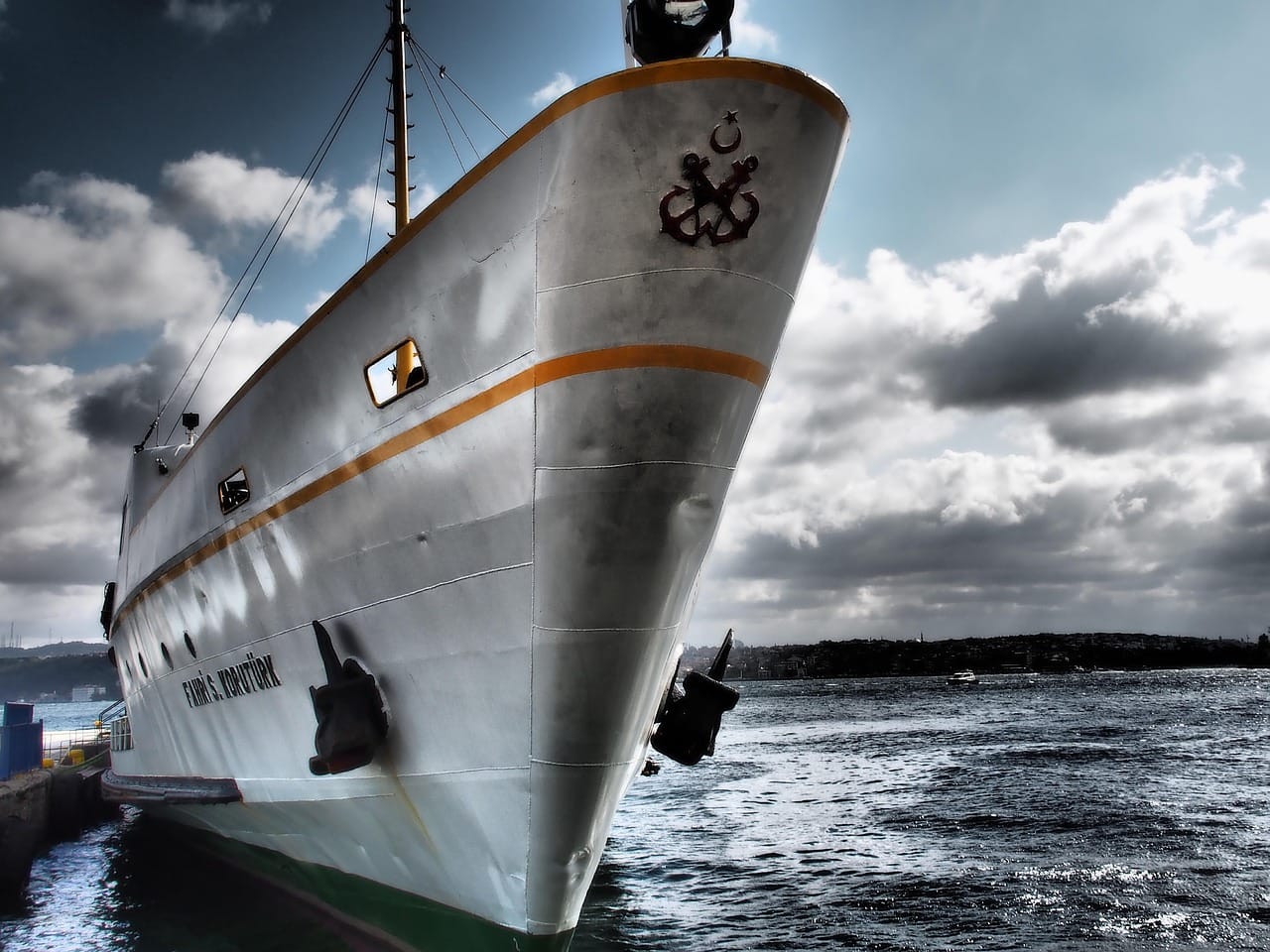
Reaching Büyükada from central Istanbul requires choosing between municipal Şehir Hatları passenger vessels and private motorboats operated by Mavi Marmara or Dentur. Municipal boats depart primarily from Kabataş Ferry Terminal and Kadıköy, alongside frequent feeder crossings from Bostancı Pier. A crossing aboard the municipal ferry costs 151.23 TL (3.02 EUR) using an Istanbulkart, while private lines charge 171.89 TL (3.44 EUR) per crossing at their dedicated turnstiles. Public vessels take 75 to 90 minutes from Kabataş across the Sea of Marmara, offering wide open decks and indoor tea counters. Private motorboats shave 15 to 20 minutes off the run, but their enclosed passenger cabins get noisy in rough water. If fixed schedules do not match your plans, check the Istanbul Water Taxi app booking and 2026 Bosphorus fares for private point-to-point charters.
Board the 09:15 AM Şehir Hatları ferry from Kabataş to secure open port-side outdoor seating before tour groups fill the upper deck at Kadıköy. On clear weekday mornings, reaching the turnstiles by 08:55 AM gets you a wooden bench outside without competition.
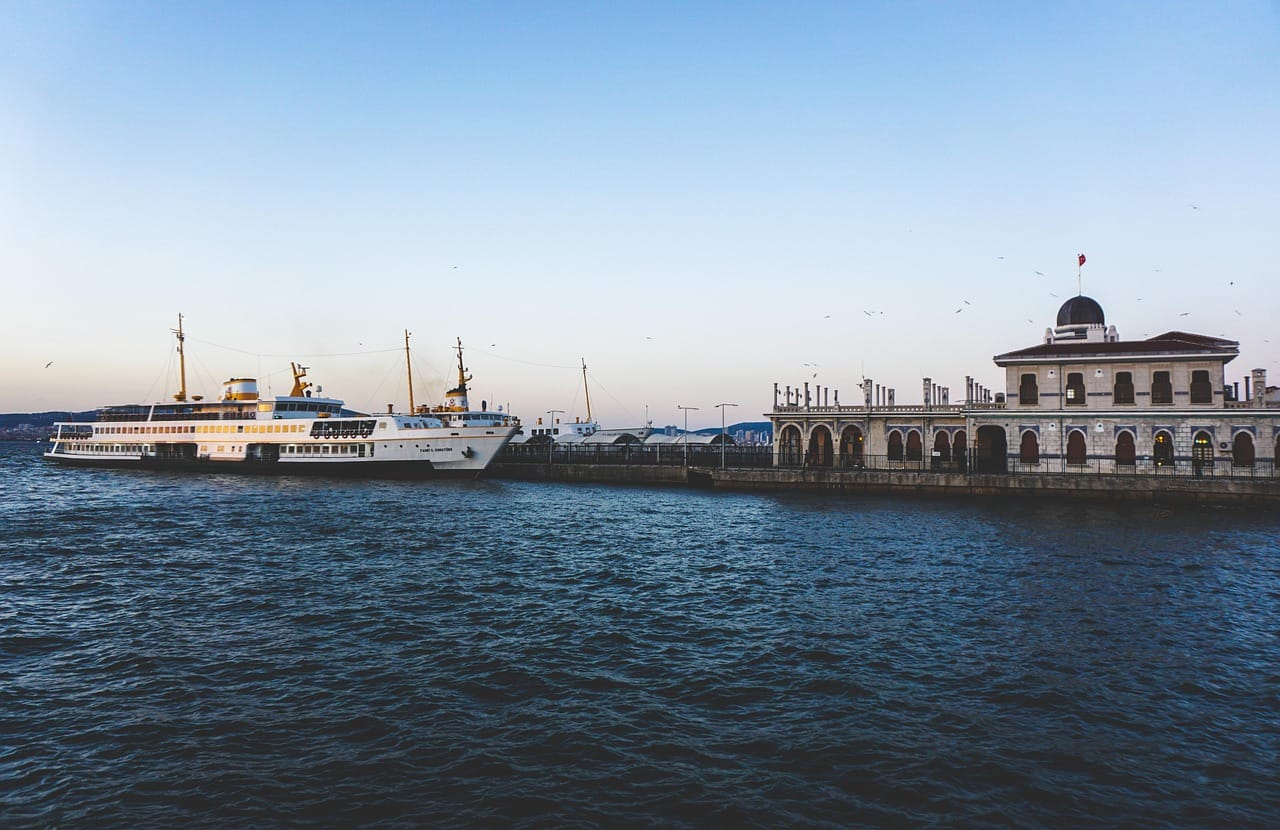
Berk’s Insider Tip: When you arrive at Büyükada pier, bypass the long queue of people buying paper single-use cards at the machines. Your standard Istanbulkart works on both municipal and private ferries, and you can top it up via the phone app inside the terminal.
For anyone planning a Princes’ Islands walking tour, selecting the departure pier sets the pace of the day. The table below compares the standard mainland routes for the Buyukada ferry 2026 timetable.
| Departure Terminal | Operator | Crossing Time | One-Way Fare | Practical Note |
|---|---|---|---|---|
| Kabataş Ferry Terminal | Şehir Hatları | 85 to 95 min | 151.23 TL (3.02 EUR) | Direct access from the T1 tram line and F1 funicular |
| Kadıköy Pier | Şehir Hatları | 65 to 75 min | 151.23 TL (3.02 EUR) | Boarding stop for the Kabataş boat; seats fill fast |
| Bostancı Pier | Şehir Hatları | 30 to 35 min | 151.23 TL (3.02 EUR) | Shortest crossing; connects to the Marmaray rail line |
| Kabataş Pier | Dentur / Mavi Marmara | 65 to 75 min | 171.89 TL (3.44 EUR) | Higher frequency departures between municipal runs |
| Bostancı Pier | Mavi Marmara | 25 to 30 min | 171.89 TL (3.44 EUR) | Operates the latest scheduled returns to the Asian shore |
The final scheduled Şehir Hatları return boat from Büyükada to Kabataş departs at 20:30 on weekdays, while Mavi Marmara runs night services back to Bostancı until 00:30.
Ascending Çankaya Caddesi through historic timber villas
From the ferry terminal exit at Saat Meydanı, the clock tower square, turn southwest past the ferry gates and follow 23 Nisan Caddesi until it becomes Çankaya Caddesi. Most visitors gather at the square to queue for municipal electric minibuses or negotiate golf-cart rentals, but walking this stretch on foot gives you direct access to the finest residential architecture on the island.
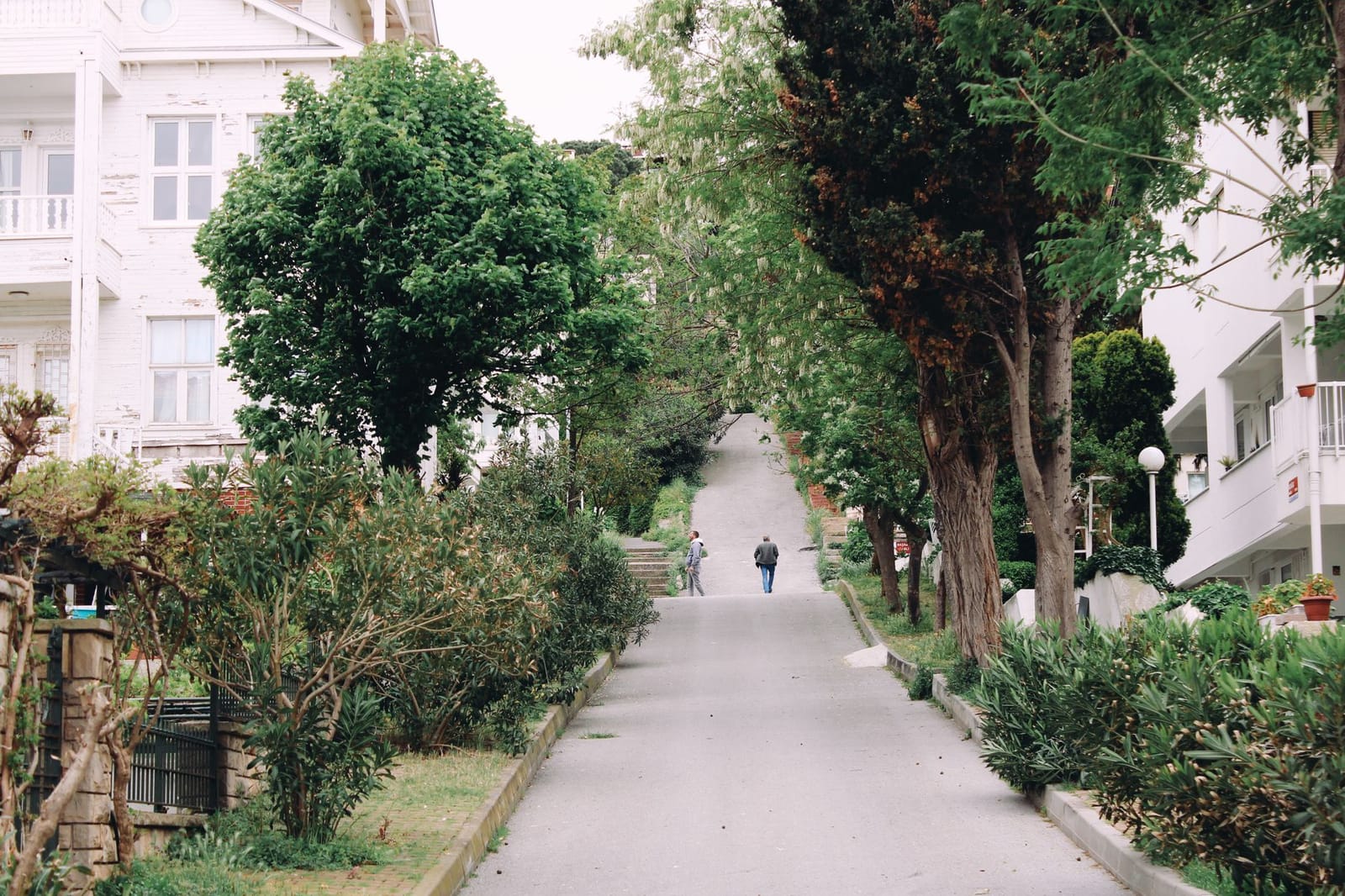
The route begins on paved surface before narrowing under stone pines and wisteria vines. Here, late nineteenth-century Ottoman timber mansions, known as ahşap köşkler, stand behind wrought-iron gates. Commissioned by Greek, Levantine, Armenian, and Ottoman civil servants who spent their summers away from the heat of the historic peninsula, these residences reflect a distinct Marmara architecture that combined Victorian fretwork, neoclassical pediments, and curvilinear Art Nouveau balconies. Because municipal fire regulations of the period prohibited unplastered brick on many island streets, builders constructed multi-story wooden frames over stone basements, finishing the exteriors in painted timber cladding.
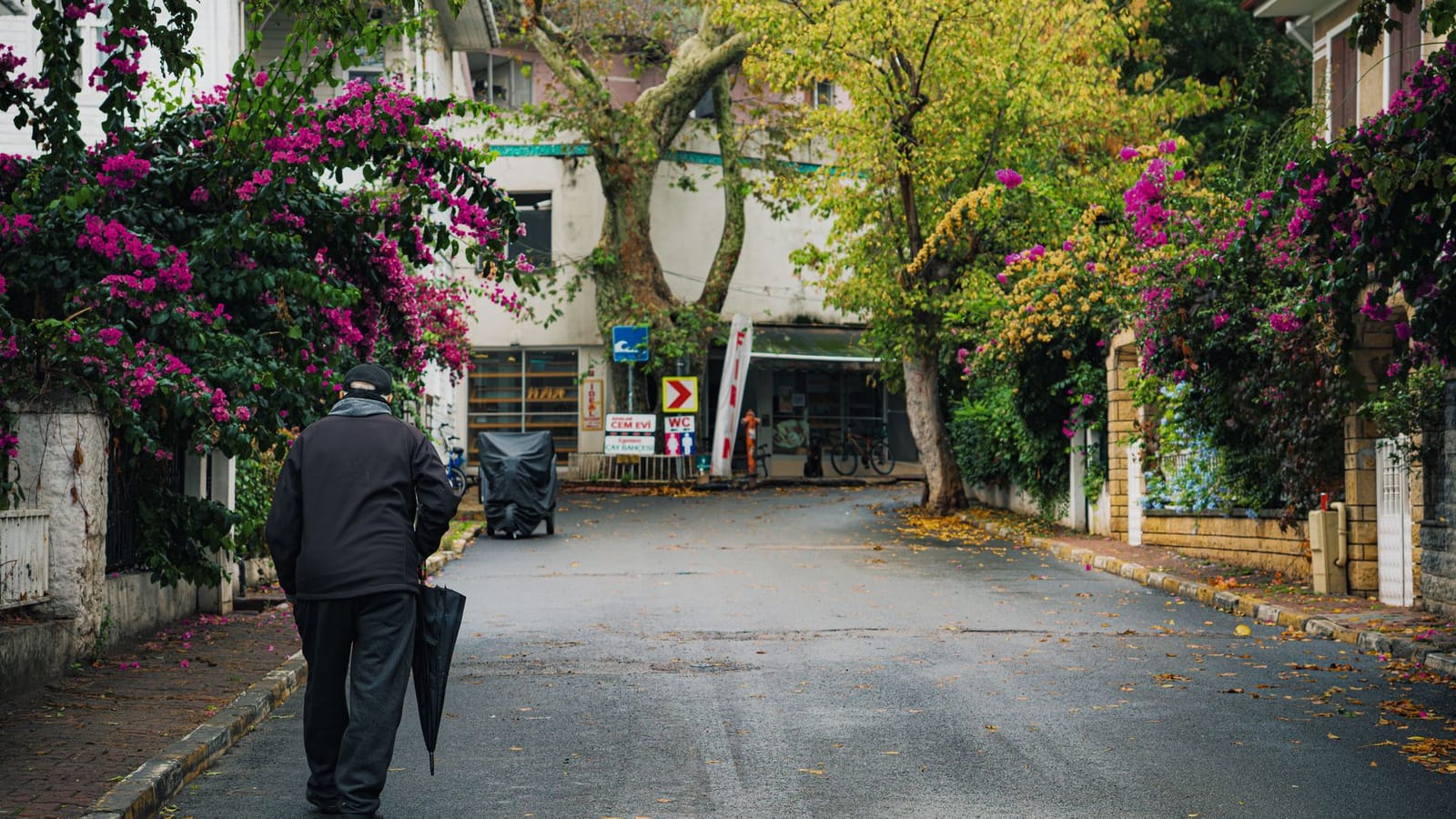
As you walk past grand properties such as the Yalman Mansion and Con Paşa Köşkü, take a brief detour down Hamlacı Sokak to see the Yanaros Mansion. Leon Trotsky lived here between 1932 and 1933 after his exile from the Soviet Union, writing his autobiography and fishing for bluefish with local island boatmen. The house is currently a roofless shell surrounded by a perimeter fence due to wall instability. You cannot enter the grounds, but the sea-facing masonry foundations and brick arches show how secluded the property was during his surveillance.
Berk’s Insider Tip: Electric island buses move quickly around the blind corners of Çankaya Caddesi, so walk on the uphill shoulder facing oncoming traffic. I always pick up an extra bottle of water from the grocery shops near the clock tower before leaving town, as residential lane stands sell drinks at double the price and there are no public water points until the Dilburnu fork.
The incline increases as you pass the turn toward the western shore. If you have negotiated steep urban paths before, such as the Public Staircases and Funicular Shortcuts Between Karaköy and Beyoğlu with 2026 Fares, you will find this route more gradual but sustained across two kilometers of uphill walking. Private electric golf carts are not allowed onto the unpaved pedestrian paths higher up the hill, making walking the practical choice for reaching the upper forest. These wooden estates share design sensibilities with the urban passages documented along the Beyoğlu passages and historical architecture walking route with 2026 cafe prices, though here the builders translated European masonry styles into island timber. Continuing south along the road, the residential plots give way to pine forest, where the pavement reaches the upper ridge road leading toward the Greek Orphanage.
Prinkipo Greek Orphanage perimeter and forest approach
Leaving the paved carriage loop behind at the junction near the municipal water depot, you turn right onto the unpaved forest track that climbs the northern flank of İsa Tepesi, historically known as Hristo Hill. The gradient steepens immediately, shifting the terrain from compacted earth to loose gravel and exposed pine roots. This unpaved ascent takes roughly twenty minutes on foot under the canopy of Turkish red pines, bypassing the electric minibus routes entirely.
French-Ottoman architect Alexandre Vallaury designed the massive timber building in 1898 for the Compagnie Internationale des Wagons-Lits, which intended to operate it as a luxury hotel and casino under the name Prinkipo Palace. Sultan Abdülhamid II refused to grant an operating license for gambling, prompting the company to sell the unfinished property to Eleni Zarifi, the widow of prominent banker George Zarifi. Zarifi donated the complex to the Ecumenical Patriarchate of Constantinople, which operated it as an orphanage and vocational boarding school for Greek children from 1903 until state authorities ordered its evacuation in 1964. Spanning five stories and over 20,000 square meters of floor area, the structure is recognized as the largest wooden building in Europe.
Berk’s Insider Tip: Plan your ascent to reach İsa Tepesi before 11:30 AM. The low morning angle brings direct sunlight across the eastern facade, illuminating the exposed timber joinery and deteriorating balcony brackets before the ridge line and the western eaves cast the entire elevation into deep shade.
The building is sealed behind a high chain-link security fence, and entry into the interior is strictly prohibited. Decades of exposure to maritime rain and winter winds have rotted the load-bearing beams, causing large portions of the central roof truss and upper floor joists to cave in. Europa Nostra classified the site among Europe’s most endangered cultural heritage assets, and municipal authorities maintain surveillance cameras along the perimeter wire to prevent trespassing due to severe structural collapse risks.
While you cannot enter, the exterior fence line permits clear views of Vallaury’s timber design. By skirting the perimeter wire counter-clockwise toward the eastern clearing, you leave the dense pine growth behind and reach an open dirt shelf. From this eastern perimeter line, you look directly up at the central pediment, the surviving multi-pane sash window frames, and the rear service wings.
Directly behind the orphanage grounds sits the smaller walled compound of the Hristo Monastery, founded in the Byzantine era and rebuilt in the eighteenth century. Much like the stone and brick masonry documented at the Byzantine architecture and pottery museum at Tekfur Palace with 2026 entry prices, the perimeter walls around this high sanctuary preserve original medieval mortar layers. The perimeter path levels out here at an elevation of 164 meters above sea level before descending toward the central island saddle at Lunapark Square.
Traversing the ridge trail to Lunapark Square
Leaving the perimeter fence of the Greek Orphanage, the trail immediately narrows into an unpaved, pine needle-strewn dirt path tracing the spine of the ridge south toward Birlik Meydanı, widely known to visitors as Lunapark Square. This packed-earth segment is an essential connector on any serious Büyükada walking route, offering continuous views of the eastern Marmara without vehicle noise. Loose limestone pebbles make the descending slopes slick after light rain or heavy morning mist. Solid footwear with deep rubber lugs will prevent falls on the loose scree.
The atmosphere along this midpoint shifted dramatically in 2020 when municipal authorities banned the island’s centuries-old horse carriage system. While this reform eliminated severe animal welfare problems and persistent street odors, it replaced them with a different hazard: the quiet, rapid vehicles of the Adalar electric transit network. Municipal electric minibuses and authorized service carts move swiftly along the paved sections that skirt the ridge. Because their electric motors emit virtually no sound, drivers rely on sudden horn blasts when approaching blind turns. You should walk on the left shoulder facing oncoming traffic and pause before passing protruding pine branches or garden walls where oncoming vehicles cannot see you.
Berk’s Insider Tip: The unpaved dirt trail running along the spine of İsa Tepesi behind the orphanage has no directional signage. Keep the water of the Marmara visible on your left shoulder to hit Lunapark Square without drifting down toward the coastal asphalt loop.
When the dirt trail descends into Birlik Meydanı, you enter the staging area for the climb to the island’s highest summit. The paved square contains a turnaround loop for electric transit shuttles, municipal benches under plane trees, and several seasonal refreshment kiosks. This is your final chance to buy supplies before tackling the cobblestones of the Yücetepe path. Kiosk vendors at the square sell half-liter bottles of cold spring water for 25 TL to 40 TL (0.50 EUR to 0.80 EUR) and mineral water for 30 TL (0.60 EUR). The cafe at the peak charges roughly triple these rates for bottled drinks. Because cellular payment terminals at the square frequently drop signal when weekend crowds overload the local transmitters, vendors often require physical cash or an exact change banknote.
The cobbled climb to Aya Yorgi Church and Yücetepe summit
From the trail junction at Lunapark Meydanı, reaching the island’s high point requires walking a 1-kilometer cobblestone ramp that averages an 18 percent incline. Electric island minibuses and rental bicycles cannot enter this final stretch of the Büyükada walking route, so you must leave rental bikes locked to the metal racks near the square. The path ascends through pine woods along a stone track bordered by low wire fences. On Saint George feast days (April 23 and September 24), thousands of visitors take part in an Orthodox pilgrimage ritual: unspooling a spool of sewing thread continuously along the trailside branches without breaking the filament, walking up in silence so their personal prayers are answered. Even on regular weekdays, the upper approach retains a solemn atmosphere. Church custodians ask that you keep shoulders and knees covered before entering the courtyard and refrain from playing loud audio along the path.
Last October, I made the mistake of starting up this Aya Yorgi cobble ramp at 1:15 PM wearing flat-soled canvas sneakers. Halfway up the 18 percent grade, my footing slipped twice on the polished granite stones right past the donkey stables, forcing me to stop and pay 40 TL for a bottle of water at the Lunapark kiosk just to catch my breath and reset. Now, I always wear lugged trail runners and clear the incline before the midday warmth sets in.
Berk’s Insider Tip: Wear shoes with actual rubber tread for the final Aya Yorgi ramp. Decades of footsteps have polished the granite cobbles slick, and coming down is where tourists slip if they attempt the slope in smooth-soled boat shoes or sandals.
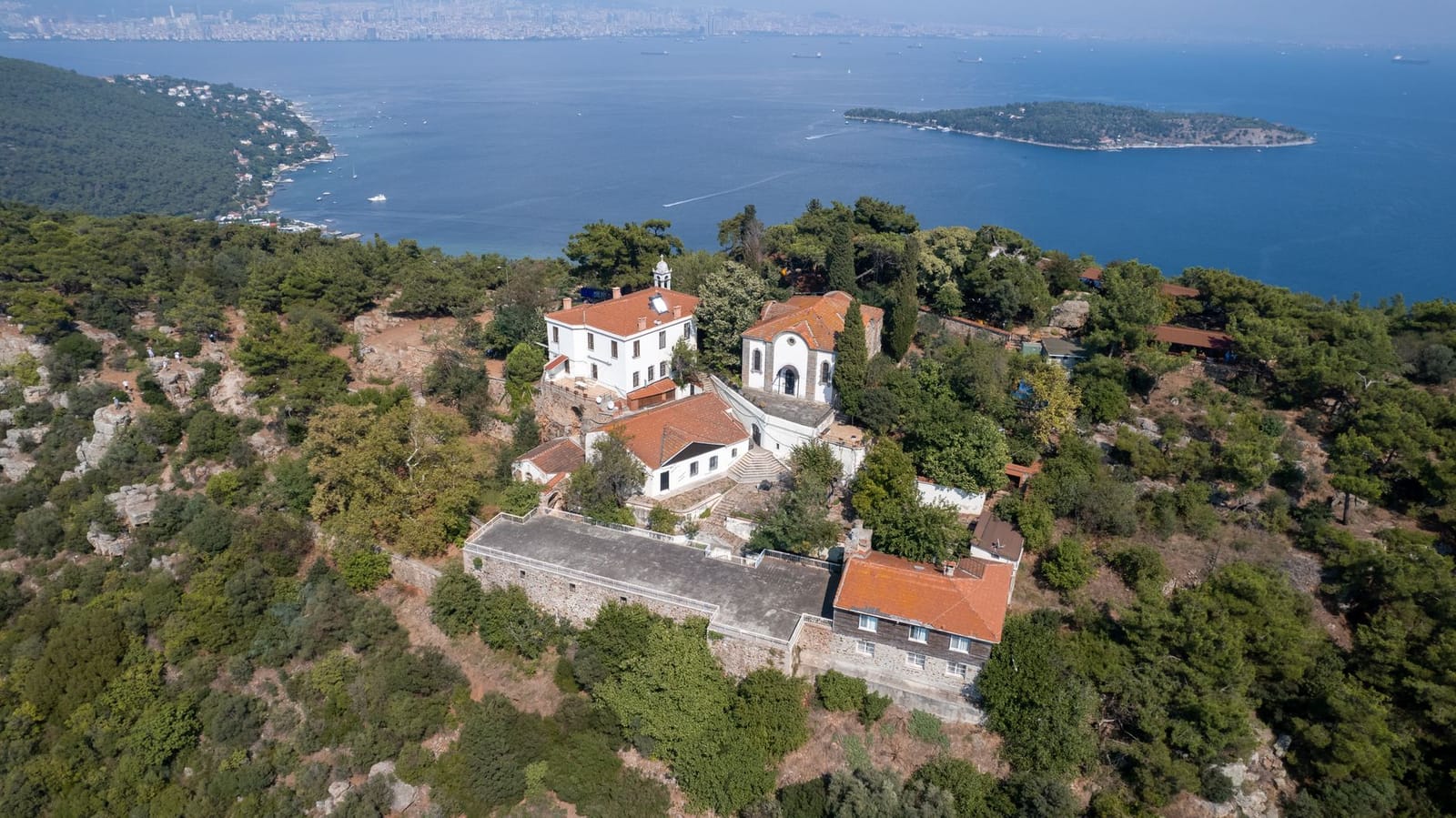
At the 202-meter crest of Yücetepe stands the Saint George Monastery compound, founded in 963 and rebuilt around its two-story stone chapel complex in 1751. The larger stone church on the terrace dates to 1905. Inside the inner sanctuary of Aya Yorgi church, silver votive tablets representing healed limbs and homes hang across the iconostasis, illuminated by thin beeswax tapers that visitors purchase at the entry door. Admission to the church is free, and small boxes accept cash contributions toward site maintenance and tapers.
Immediately outside the monastery gates sits Yücetepe Kır Gazinosu, a rustic outdoor cafe serving walkers along the cliff edge since 1978. Wooden benches face east across Sedef Island, the Kartal shoreline, and the open expanse toward the Gulf of İzmit. A standard plate of grilled köfte and homemade chips costs 420 TL (8.40 EUR), and the kitchen serves chilled draft beer alongside carafes of island red wine until the kitchen closes at dusk.
Descent routes and avoiding return ferry bottlenecks
From Lunapark Square below Aya Yorgi, the quietest descent branches away from the standard vehicle road onto the western fire trail leading toward Dilburnu Nature Park. This unpaved dirt track cuts through pine forest directly down to the shoreline, bypassing the electric shuttle traffic and clusters of rental bikes that pack the central paved spine. After following the coastal fringe past the promontory of Dilburnu, you can turn east toward the quieter residential lanes of the Maden Quarter. Walking through Maden brings you past preserved nineteenth-century timber mansions with gardens running down to the water, avoiding the commercial bottlenecks until you reach the harbor perimeter.
Managing your departure time is essential if you want to board without standing in an unmoving crowd. Between 18:00 and 19:30, the open square fronting Büyükada Pier fills rapidly, with queues for mainland departures stretching past the historic clock tower and routinely exceeding 500 people. You will avoid this bottleneck by timing your arrival for the 16:45 sailing. Tapping through the turnstiles for the Kabataş ferry costs 151.23 TL (3.02 EUR) on a standard adult Istanbulkart under the Buyukada ferry 2026 tariff. Arriving at the turnstiles twenty minutes prior to 16:45 allows you to step directly onto the boat, find a bench seat on the shaded upper deck, and clear the island before the commuter rush begins.
On a recent Tuesday at 16:25, I watched a line of over 120 people get turned away from the boarding gate because their cards lacked balance and both ticket machines near the exit were malfunctioning. Because I had topped up my balance with 350 TL at the Kabataş machines that morning, I passed straight through the turnstiles in three seconds, took a corner wooden bench on the upper deck, and ordered a 15 TL glass of black tea while the stragglers argued on the dock.
Berk’s Insider Tip: Reload your transit card before leaving the pier area in the morning. In the late afternoon, the island ticket machines develop long queues of stranded day-trippers struggling with change and broken card readers, so having your fare loaded in advance lets you walk straight through the gates.
If you have half an hour before the gates open, skip the ice cream sellers lined along the pier front, where queues spill into the walking paths and service is rushed. Walk two minutes inland to Çarşı Caddesi, where established parlors serve mastic and sour cherry ice cream in crisp waffle cones, and dry-fruit merchants roast fresh Gaziantep pistachios on site. While nuts on the island carry a slight premium compared to mainland neighborhood markets, roasters on Çarşı Caddesi sell warm 100-gram paper sacks for roughly 150 TL (3.00 EUR) straight from the drum.
Essential facts for walking Büyükada
A complete walking circuit around Büyükada covers roughly 12 kilometers and gains more than 200 meters of elevation between the ferry pier and the southern pine ridges.
Can you enter the Prinkipo Greek Orphanage?
No. The building is structurally unsafe and cordoned off behind high wire fencing for visitor safety. While the Ecumenical Patriarchate signed a redevelopment protocol with private developers in June 2026 to stabilize the timber structure, interior access remains forbidden to the public. You can view the five-story facade and collapsed roofline from the surrounding pine grove atop İsa Tepesi. Do not attempt to breach the fence, as municipal security guards monitor the property perimeter continuously.
How long does the complete Büyükada walking route take?
Plan for three to four hours of continuous walking to complete the standard 11-kilometer Büyükada walking route. The circuit leaves the ferry clock tower, heads south along Çankaya Caddesi, passes the orphanage, and reaches Lunapark Square before returning via the eastern shore road. If you add the detour up the steep 900-meter cobblestone path to Aya Yorgi church, budget an extra hour. That time accommodates the 20-degree incline and gives you fifteen minutes to view the hilltop chapel interior.
Are the electric island buses worth taking instead of walking?
The municipal electric shuttles, coordinated under the Princes’ Islands municipality transport framework, help cut out the long uphill walk from the pier to Lunapark Square. Boarding the BA-1 shuttle requires tapping an Istanbulkart balance for 158.35 TL (3.17 EUR) per passenger, because drivers do not accept cash. On weekend afternoons, passenger lines at the dockside terminal routinely take thirty minutes to clear. Walking south through the shaded residential streets avoids that queue entirely and takes about forty minutes at a steady pace.
Berk’s Insider Tip: The ticket machines at the island pier run out of cards by midday. Top up your Istanbulkart balance at Kabataş or Bostancı before boarding your Buyukada ferry 2026 departure. You need 151.23 TL (3.02 EUR) each way for the boat and 158.35 TL (3.17 EUR) if you board the island bus.
What footwear and clothing work best on the Aya Yorgi trail?
Standard walking footwear recommendations for the final climb prioritize aggressive tread over light padding. The path from Lunapark Square up to Aya Yorgi church has historic cobblestones that decades of foot traffic have polished to a slick finish. Running shoes with flat outsoles slip easily on the dry downhill slope. Wear trail shoes with sticky rubber lugs. Dress codes at the summit require covered knees and shoulders, and the chapel attendants turn away visitors wearing sleeveless shirts or running shorts.
Practical takeaways for walking Büyükada
The climb from the pier past the Greek Orphanage up to Aya Yorgi covers four kilometers of steep asphalt and loose cobblestone that demands sturdy walking shoes with solid grip. Catching an early morning departure from the mainland lets you clear the southern slopes before midday heat sets in and keeps you ahead of the urban rush that gathers by noon.
Skip stopping for tea at the Aya Yorgi summit terrace; the service is rushed, and carrying your own water up the hill saves both money and patience. For the trip back to the city, head to the historic Şehir Hatları terminal twenty minutes before the horn sounds, tap your Istanbulkart at the turnstile for the 151.23 TL (3.02 EUR) crossing, and board early to secure an open bench on the port side.