The 2026 blooms peak between April 10 and April 20. Taking a taxi up the coastal road on an April weekend traps you for two hours; take the Şehir Hatları ferry from Eminönü to the Emirgan pier instead, which leaves you a five-minute walk from the lower gate. Inside Emirgan Park, municipal Beltur cafes in the Yellow and White Pavilions charge roughly 50 lira for Turkish coffee and 120 lira for a pastry, though lines exceed thirty minutes by noon. Emirgan has steep hill paths, while Gülhane Park in the Old City offers flat walking routes, and Göztepe 60. Yıl Park on the Asian side bypasses central crowds entirely via the Marmaray train.
At 10:30 on an April Saturday, the single coastal lane of Sakıp Sabancı Caddesi outside Emirgan Park slows to a complete stop, trapping municipal buses and yellow taxis in a three-kilometer line stretching south toward Bebek. Every April, the Istanbul Metropolitan Municipality beds roughly eight million flower bulbs across municipal parks, turning public lawns into dense floral displays while creating monumental gridlock along the European coastal highway. Reaching the grounds by taxi or bus during the Istanbul Tulip Festival 2026 turns an otherwise straightforward fourteen-kilometer trip from central historic districts into a frustrating two-hour crawl.
Tracking early spring temperatures dictates the exact timing for the tulip festival bloom dates. The earliest plantings in warmer, sea-level plots begin opening in late March, but the main displays peak between April 10 and April 25 before shedding petals under late-month rains. The most extensive beds of Emirgan Park tulips spread across the park’s forty-seven hectares, sloping steeply up from the Bosphorus shoreline. Bypassing the coastal bottleneck requires using the water network: scheduled municipal ferries run from central piers directly to Emirgan Pier, leaving you a two-minute walk from the lower park gates.
First-Hand Anecdote: On an April Saturday at 09:30, I boarded the 25E bus from Kabataş heading north. The bus crept two kilometers in ninety minutes before getting wedged in an unmoving queue outside Arnavutköy, while the driver cut the engine and passengers banged on the doors to walk along the seaside. Since that bottleneck, I tap my Istanbulkart for 76.90 TL (1.54 EUR) at the Kabataş ferry turnstile at 07:45, board the morning boat, drink a 15 TL glass of black tea on the open deck, and step ashore at Emirgan Pier by 08:25 without touching coastal asphalt.
Blooming schedule and the best weeks to visit in 2026
The official Istanbul Tulip Festival runs from April 1 to April 30, but peak flowering across the city occurs between April 8 and April 20. Istanbul Metropolitan Municipality plants over twenty million bulbs across municipal parks each autumn, selecting cultivars of Tulipa gesneriana engineered to open in a staggered three-phase cycle. Early single and fosteriana varieties crack open in late March, mid-season triumph cultivars dominate during the middle of the month, and late-flowering fringed varieties sustain the displays until petal fall accelerates after April 22.
| Bloom Phase | Window | Display Characteristics | Best Observation Points |
|---|---|---|---|
| Phase 1: Emergence | March 25 – April 7 | Early cultivars open; compact buds on shaded slopes | Gülhane Park, Sultanahmet Square |
| Phase 2: Peak Bloom | April 8 – April 20 | Complete floral coverage; peak color saturation across beds | Emirgan Park, Göztepe 60. Yıl Parkı |
| Phase 3: Petal Fall | April 21 – April 30 | Dropping outer petals; late double and lily-flowered varieties open | Yıldız Park, Çamlıca Hill |
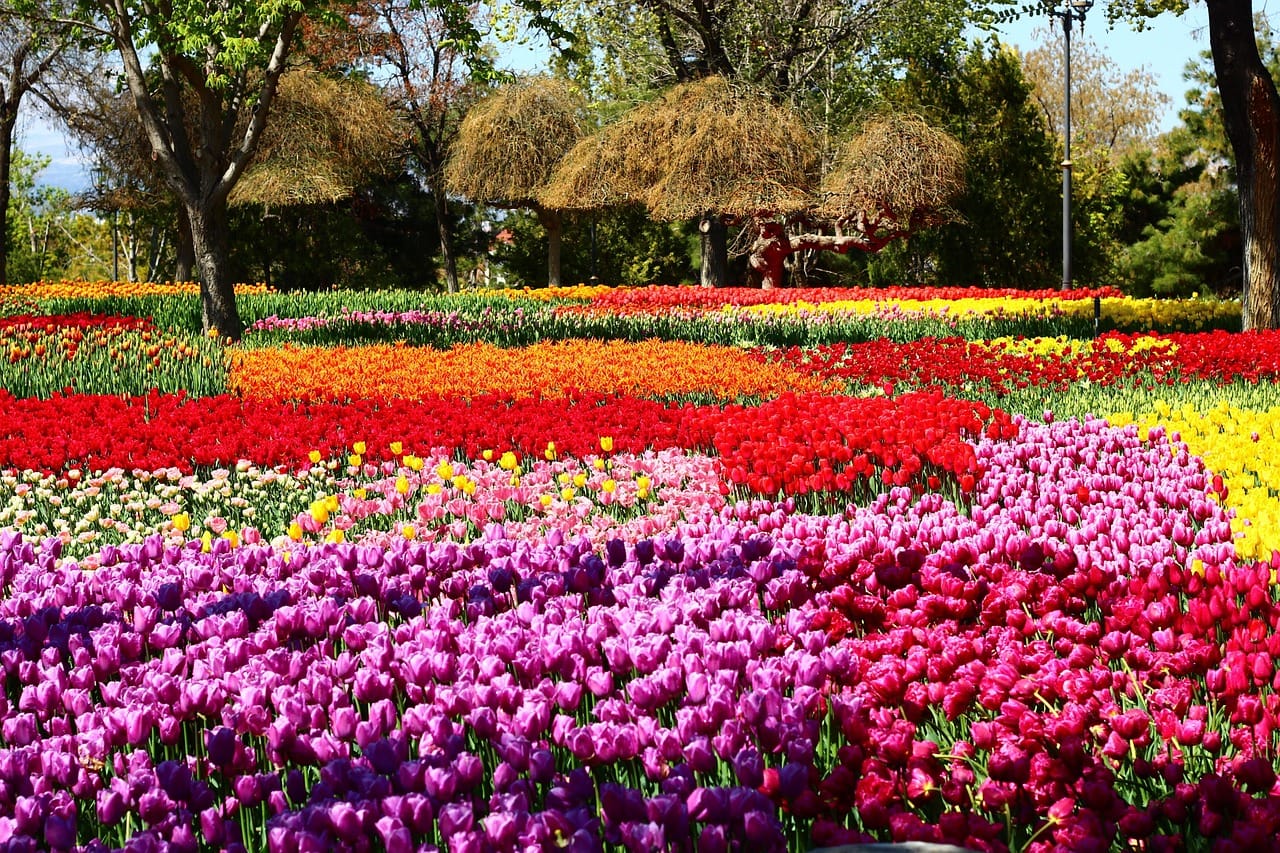
Citywide geography alters standard flowering calendars. The cold water mass moving through the Bosphorus strait acts as a thermal buffer, producing distinct microclimate zones between coastal parks and sheltered inland hollows. Waterfront beds exposed to northeast marine drafts encounter lower soil temperatures, causing them to break bud later. Coastal conditions delay flowering, whereas inland locations like Ihlamur Pavilion imperial gardens and baroque halls with 2026 ticket prices and cafe tips and valley depressions in Kadıköy bloom up to five days earlier than beds situated immediately along the shoreline. Scheduling inland walks for the first week of April and coastal sites for the second provides reliable timing for travelers tracking peak blooms.
Berk’s Insider Tip: I make a point to reach the main slope at Emirgan Park at 07:30 during the second week of April. Arriving before 08:00 gives you clear light and empty pathways before municipal groundskeepers turn on the overhead sprinkler lines, which leave the flower heads heavy with water and turn the stone paths slick until mid-morning.
Sustained spring temperatures above 18°C can shorten the display window of Tulipa gesneriana, forcing bulbs to drop petals in eight to ten days rather than the usual two weeks. For the Istanbul Tulip Festival 2026, checking March daytime temperatures gives an immediate reading on whether the peak will arrive early. Municipal maintenance teams begin lifting faded bulbs and preparing beds for summer annuals on April 28.
Navigating Emirgan Park without the coastal traffic
Driving along Sakıp Sabancı Caddesi during peak flowering weeks produces heavy gridlock that traps private vehicles, taxis, and city buses for hours. A municipal bus ride from Beşiktaş that takes thirty-five minutes on an off-season morning routinely stretches past two hours on April weekends, stranding riders between Ortaköy and Kuruçeşme. Metered taxis stuck on this single-lane coastal corridor rack up fares rapidly while moving at walking speed; paying 700 TL (approx. €14) for a cab ride that stalls before reaching Bebek happens frequently. The municipal ferry network avoids road delays completely. Tapping an Istanbulkart to board a municipal Bosphorus ferry costs 76.90 TL (approx. €1.54) at the Eminönü terminal and delivers a fixed travel time right to the water’s edge.
The municipal ferry network run by Şehir Hatları links central terminals directly to the historic Emirgan pier. Several scheduled ferry routes connect the park to neighboring stops including Bebek and İstinye on the European shore, alongside Çengelköy across the strait. Travelers connecting from Asian-side neighborhoods can use Beylerbeyi Palace Entry Tips and Bosphorus Ferry Routes to the Asian Side to coordinate maritime connections across the Bosphorus.
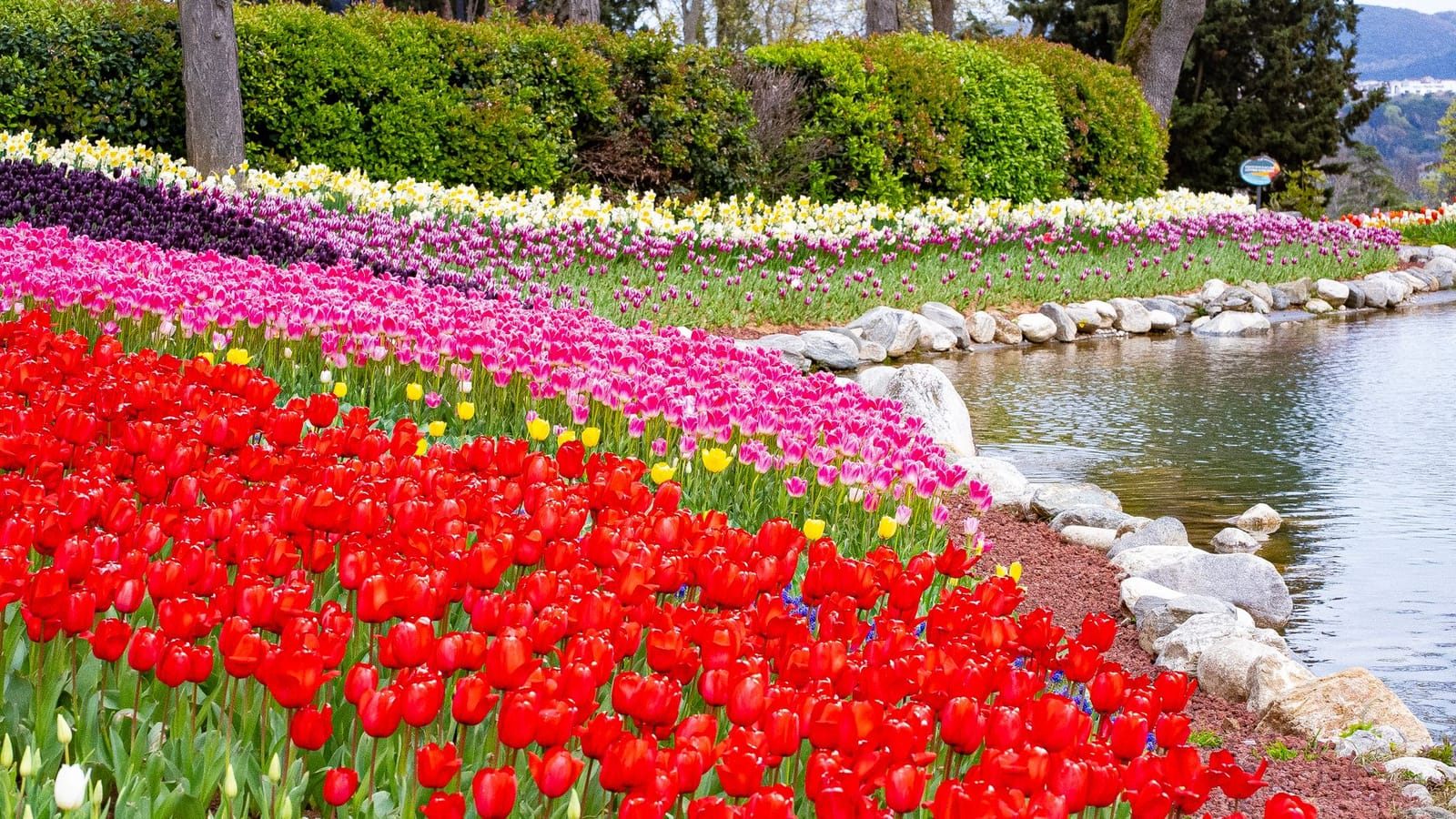
How to reach Emirgan Park by public ferry
- Top up your physical Istanbulkart with at least 100 TL at a tram or ferry ticket machine before entering the turnstiles.
- Check the daily timetable for the Şehir Hatları Bosphorus Line (Boğaz Hattı) at the Eminönü, Kabataş, or Beşiktaş docks.
- Board the scheduled northbound ferry calling at intermediate stops such as Bebek, Kanlıca, or Çengelköy.
- Exit onto the landing at the Emirgan terminal once the vessel ties up to the bollards.
- Walk north along the seaside footpath for two hundred meters to reach the park ascent rather than boarding road transit.
Berk’s Insider Tip: When you exit the Emirgan ferry pier, skip the queue for the municipal shuttle buses. The stone stairway starting two hundred meters north of the pier takes you directly into the lower gate of Emirgan Park in under eight minutes of walking.
Ferry departures from the Emirgan dock heading southbound toward Beşiktaş and Eminönü become less frequent after 17:00, with the final scheduled public boats pulling away from the slip before 20:30.
Historic pavilions and cafe costs inside Emirgan
Three 19th-century Ottoman mansions stand across the ridge of the grounds: Sarı Köşk (Yellow Pavilion), Pembe Köşk (Pink Pavilion), and Beyaz Köşk (White Pavilion). Built between 1871 and 1878 under Ottoman Viceroy of Egypt Khedive Ismail Pasha as summer residences and hunting lodges, all three buildings now operate as municipal cafes and restaurants managed by Beltur.
During the peak bloom of the emirgan park tulips, these pavilions draw heavy foot traffic. Service speeds at Beltur slow down considerably between 10:00 and 14:00 on weekends, with table waits exceeding forty minutes at Sarı Köşk. Arriving mid-morning means you should bypass the sit-down indoor dining rooms and order directly from outdoor takeaway kiosks to skip long queues.
Beltur prices remain set by the municipality, keeping dining accessible compared to private Bosphorus restaurants. A glass of Turkish tea costs 25 TL (0.50 EUR / 0.56 USD), while a standard municipal breakfast plate containing cheeses, olives, eggs, butter, and bread runs roughly 300 TL (6 EUR / 6.67 USD). If you prefer packing lunch in advance, Navigating local grocery stores and supermarkets in Istanbul with 2026 price tips details how to pick up provisions ahead of time to bypass pavilion cafeteria lines.
First-Hand Anecdote: During my visit to the Sarı Köşk terrace on an April Sunday at 11:15, thirty-eight patrons stood waiting in front of the sit-down dining room host stand. Instead of losing an hour of prime daylight, I walked thirty meters around the stone foundation to the quick-service Beltur kiosk. I paid 25 TL for a hot glass of tea and 45 TL for a fresh sesame simit, then carried both fifty meters uphill to an empty wooden bench overlooking the tulip beds with no wait at all.
Berk’s Insider Tip: The Beltur cafe inside Sarı Köşk stops accepting breakfast orders at 11:30 sharp on weekdays. If you miss that cutoff, walk fifty meters south to the outdoor tea garden overlooking the duck pond where fresh simit and tea are available until dusk.
Most tour bus groups unload near the lower coastal gates and congregate around Pembe Köşk. To leave the noise behind, walk past the ornamental waterfall and follow the paved path climbing uphill through the umbrella pines and cedar groves. Near the upper reservoir pond and Beyaz Köşk, the terrain levels out into open lawns with wooden benches where crowds thin out significantly. The municipal kiosk beside the upper reservoir serves hot tea from 08:00 until 21:00.
Historical tulip displays at Gülhane Park and the Old City
Gülhane Park requires none of the steep climbing demanded by the terraced hillsides of Emirgan. Its wide, paved promenade runs on a flat grade beneath centuries-old plane trees, flanked on both sides by manicured flower beds. During the Istanbul Tulip Festival 2026, the municipal parks department plants roughly two million bulbs here in ribbon bands and dense single-color blocks. Walking from the tram entrance down to the seaward gate takes about twenty minutes at a slow stroll, allowing smooth passage for strollers and wheelchairs.
Reaching the grounds avoids both road congestion and ferry timetables. The T1 tram stops directly outside the imperial perimeter at Gülhane station, where a standard Istanbulkart fare costs 76.90 TL (1.54 EUR). Stepping off the tram platform leaves you ten paces from the outer stone portal. You bypass taxi queues along the Bosphorus shore road and walk directly into the shade of the park walls.
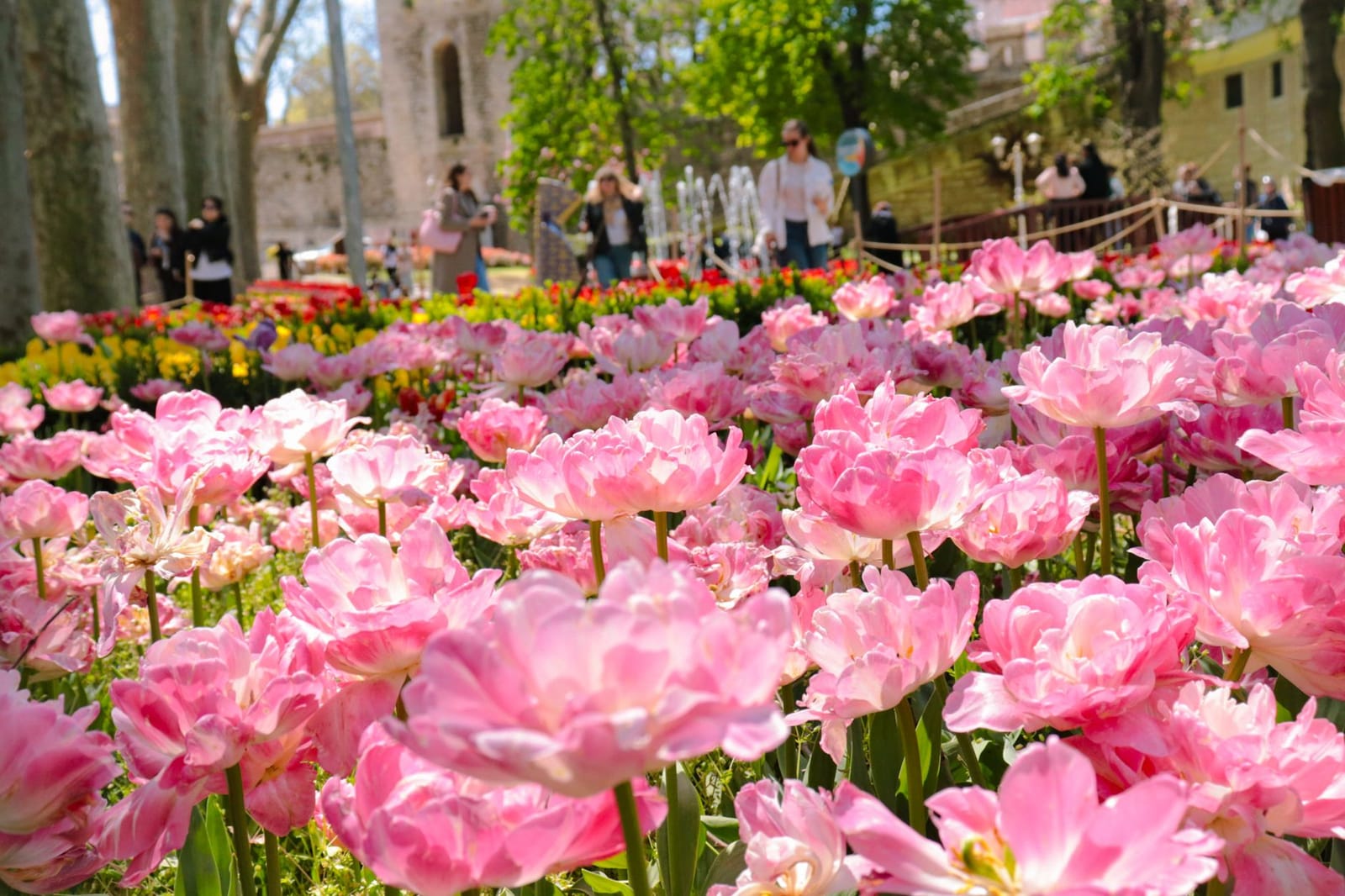
These grounds originally formed the outer royal gardens of Topkapı Palace, where court botanists bred the pointed petals favored by the Ottoman court. Sultan Ahmed III and his court cultivated their botanical collections inside these boundary walls during the eighteenth-century Tulip Era. While the municipal festival displays include modern bulb varieties rather than the needle-shaped petals of Ottoman miniatures, the setting retains its historical role as an imperial green space.
To view the gulhane park tulips in quiet conditions, enter the gates at 09:00. At that hour, the paths carry only municipal maintenance workers and ferry commuters walking up from the Sirkeci docks. By 10:30, large tour groups from the cruise port arrive and cluster along the main walkway. Leaving the park through the upper southern gate near the palace walls allows you to reach the Sultanahmet monuments before the main mid-day queues assemble. From this upper exit, you can continue down the back alleys toward the Iznik Tiles and Sacred Stones at the Sokullu Mehmed Pasha Mosque with 2026 Visiting Tips, where classic Ottoman tulip motifs decorate the interior Iznik tiles.
First-Hand Anecdote: On my visit to Gülhane Park on an April Tuesday at 08:45, I bypassed the crowded central alley where three cruise tour groups had already stopped four-wide to photograph the purple triumph beds. I veered right down the perimeter trail toward Sarayburnu, finding an empty stone bench facing the Bosphorus strait. I spent forty quiet minutes watching container ships and sipping a 25 TL tea from the seaside municipal booth, before walking ten minutes down to Eminönü for Handcrafted Baklava and Pistachio Desserts in Karaköy and Eminönü with 2026 Prices and Ordering Etiquette.
The park gates open every day from 06:00 until 22:00, and admission is free.
Secondary parks for crowds seeking alternate viewing sites
Emirgan Park draws over one hundred thousand visitors on peak April weekends, turning the narrow coastal road into a standstill and crowding the main pathways. To inspect municipal cultivar beds without fighting dense crowds, Istanbul manages several municipal groves across both continents that offer smaller crowds and simpler transit.
On the Asian side, Göztepe 60. Yıl Parkı in Kadıköy is the primary municipal exhibition space south of the Bosphorus. Unlike the steep ravines of Emirgan, this park is built on completely level terrain between Bağdat Avenue and the coastal road. You will find formal geometric parterres, labeled botanical plots, and broad stone walkways that accommodate strollers and wheelchairs effortlessly. The display relies on sharp, symmetrical blocks of color rather than naturalized woodland hillsides. You can reach the grounds by taking the Marmaray to Göztepe station and walking south for twelve minutes, or by boarding a coastal bus from the Kadıköy ferry terminal for 76.90 TL (1.54 EUR). Those spending their afternoon on the Anatolian side can also combine their garden walk with a trip to Industrial Architecture and Cultural Hubs at Müze Gazhane with Hasanpaşa Route Tips and 2026 Prices.
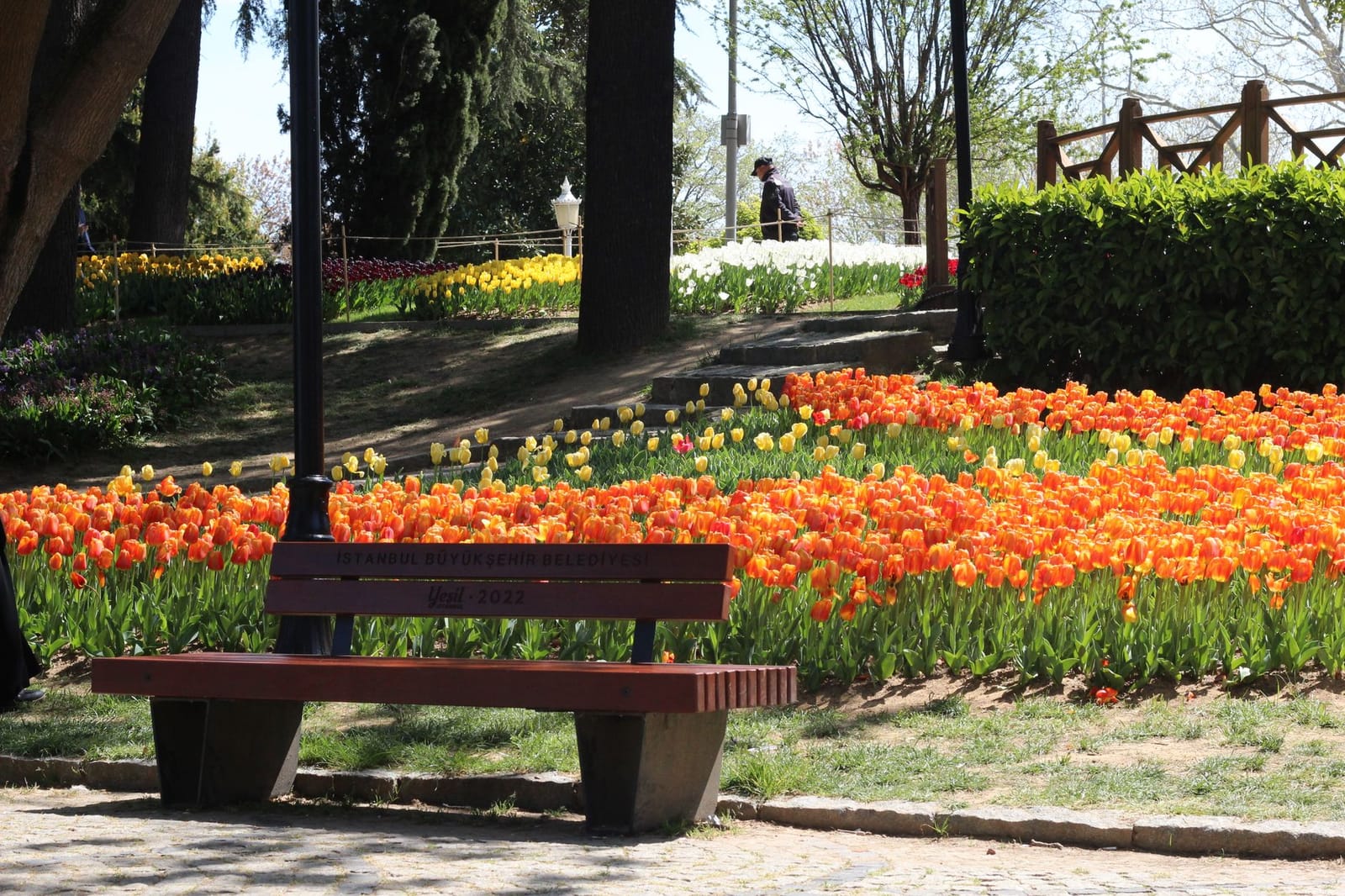
Walkers seeking forest canopies over open flower beds will find Yıldız Park in Beşiktaş a wilder alternative on the European shore. Because the municipality treats Yıldız as an ecological preserve rather than a formal floral display, gardeners plant bulbs in concentrated groupings around the Ottoman pavilions (the Malta Köşkü and the Çadır Köşkü) rather than across every embankment. The cobblestone roads incline steeply from the Çırağan entrance up to Balmumcu, requiring sturdy footwear.
Across the strait in Üsküdar, Fethi Paşa Korusu blankets a hillside directly overlooking the first suspension bridge. Reaching the upper terraces requires a continuous ten-minute uphill walk from the Paşalimanı shore road. However, the terraced municipal cafe areas afford direct sightlines of maritime traffic through gaps in the Judas trees and tulip beds.
Berk’s Insider Tip: When I want morning coffee during peak April blooms without competing for bench space, I board an early ferry from Karaköy to Üsküdar and walk north along the water to Fethi Paşa Korusu before 08:30. The municipal cafeteria serves fresh tea for 25 TL (0.50 EUR), and the upper wooden terrace stays peaceful until the lunch crowds arrive.
- Göztepe 60. Yıl Parkı – Level ground and formal geometric parterres allow barrier-free walking with wheelchairs and strollers without climbing hills.
- Yıldız Park Lower Grounds – Paved trails cut through mature forest canopy beside Ottoman royal pavilions, providing deep shade and steep valley paths.
- Fethi Paşa Korusu Upper Terraces – High hillside outlooks directly face the first suspension bridge, reached by a steady ten-minute climb from Paşalimanı.
- Gülhane Park Lower Loop – Flat gravel and asphalt loops trace the base of Topkapı Palace walls, easiest to walk before morning cruise crowds enter at 10:00.
- Hidiv Kasrı Grounds – Woodland plantings wrap an Art Nouveau mansion up in Beykoz, accessible by car or northbound coastal buses past the second bridge.
Public municipal parks across Istanbul charge no admission fees, operating daily from 06:00 until 23:00 throughout the blooming season.
Practical logistics for festival visitors
Entry to municipal parks across Istanbul is free, with no ticketing checkpoints or festival admissions required at the gates.
Are there admission fees to see the tulip displays?
The Istanbul Metropolitan Municipality manages the festival sites as public green spaces without admission charges. Strolling among the emirgan park tulips or walking through the former imperial gardens to view the gulhane park tulips costs nothing. You only need money if you use vehicle parking lots operated by İSPARK or purchase food and drinks at the historic municipal mansions.
How accessible are the grounds for strollers and wheelchairs?
The terrain differs sharply between the main display grounds. Gülhane Park is flat and paved with wide asphalt alleys that accommodate standard strollers and wheelchairs with minimal effort. In contrast, Emirgan Park sits on a steep hillside above the Bosphorus. Cobblestone paths, stone staircases, and heavy gradients make moving through side gardens exhausting with wheeled equipment.
Berk’s Insider Tip: I once watched a couple abandon their folding stroller near the Yellow Pavilion because the 15 percent stone gradient defeated them. If you visit Emirgan with wheels or limited mobility, take a taxi directly to the upper gate in Reşitpaşa and walk down along the central paved service road rather than climbing up from the coastal road.
Where are public restrooms located and what payment is accepted?
Sanitary cabins and permanent public restrooms operate near the central pavilions and main playgrounds in both parks. The municipal entry charge is 10 TL (0.20 EUR) per person. Turnstiles do not take paper currency or cash coins; you must tap a contactless bank card or an Istanbulkart to unlock the turnstile. Accessible stalls are present, though wait times peak between 13:00 and 15:30 on weekends.
What are the operational hours for the parks and on-site facilities?
Both municipal parks welcome visitors daily from 06:00 until 22:00. The tulip plantings and outdoor trails remain accessible throughout these hours. The heritage pavilions operated by Beltur serve breakfast, lunch, and tea between 09:00 and 21:00. Municipal security staff begin directing visitors toward the gates thirty minutes before the 22:00 park closure.
Final timing and route strategy
The realistic bloom window runs roughly from April 10 to April 25, but promotional calendar dates published months in advance are unreliable markers. Track daytime temperatures in Istanbul starting the final week of March: unseasonable warmth forces early bud breaks, while persistent cold rains delay the opening by ten days. Aim for an arrival at the upper gate of Emirgan Park by 07:45 on a Tuesday or Wednesday. This timing lets you walk the central terraces before municipal maintenance crews start their daily rounds and drag heavy hoses across the parterres at 08:30.
I skip the weekend displays around the Sarı Köşk entirely. The lawns fill up shoulder-to-shoulder, and the narrow footpaths quickly bottleneck. If you want a smooth departure, finish your loop by 09:15, exit through the southern perimeter gate, and walk down the stone steps toward the Emirgan ferry pier just as the morning car traffic on Sakıp Sabancı Caddesi comes to a complete halt.