Ihlamur Pavilion sits in a valley between Beşiktaş and Nişantaşı, built by architect Nikoğos Balyan for Sultan Abdülmecid in 1855. You pay 280 TL for the full museum entry to the Merasim Pavilion or 60 TL if you only walk the grounds. To get there, walk fifteen minutes uphill from the Beşiktaş ferry terminal, or exit the M2 metro at Osmanbey and walk down through Teşvikiye. Inside Merasim, you see the sultan’s ceremonial rooms with Austrian crystal chandeliers and French porcelain fireplaces. The courtyard cafe serves tea for 40 TL under the plane trees, but tour groups fill the outdoor tables by 11:00 AM. I wasted twenty minutes waiting for a seat on my last visit, so buy your ticket right at the 9:00 AM opening to sit immediately. Afterward, you can walk down to Beşiktaş for food or head up into Nişantaşı.
Ihlamur Pavilion sits behind high stone boundary walls along Hakkı Yeten Caddesi in the valley between Beşiktaş and Nişantaşı, where mature linden trees muffle street traffic. At 09:15 on a Tuesday morning, queues at the turnstiles are rare. You pay 280 TL (€5.60) for a foreign visitor ticket at the National Palaces booth, collect the handheld audio guide included in admission, and enter an imperial compound that many visitors bypass between the ferry docks and uphill retail streets.
Completed in 1855 under Sultan Abdülmecid I by imperial architect Nikogos Balyan, Ihlamur Kasrı is a compact nineteenth-century Ottoman baroque estate. The property comprises two preserved buildings: the ceremonial Merasim Köşkü, flanked by curved exterior staircases and high-relief stonework, and the Maiyet Köşkü, which once housed the court retinue and now holds a public cafe. The site provides a direct look at late Ottoman domestic palace architecture without the dense tour bus crowds found along the waterfront at Dolmabahçe Palace.
Berk’s Insider Tip: Walking down from Nişantaşı looks quick on a map, but the steep grade along Ihlamur Yolu strains knees and ankles. Take a ferry or bus to Beşiktaş port, then take a five-minute taxi to the lower gate on Şair Nedim Caddesi. If you enter right at 09:00, walk past the main hall immediately to claim an outdoor table at the Maiyet Köşkü cafe before neighborhood crowds fill the terrace around midday.
To experience the property properly, allow at least ninety minutes: forty-five minutes to tour the restored salons of Merasim Köşkü, followed by a walk through the gardens to inspect the imperial shooting target stones and the stone water basins across the grounds.
Origins and imperial function under Sultan Abdulmecid
Sultan Abdulmecid I commissioned Ihlamur Pavilion between 1849 and 1855, replacing a simple wooden hunting lodge with a pair of stone retreats. Imperial court architect Garabet Amira Balyan and his son Nikogos Balyan designed both structures with the carved stone detailing typical of late Istanbul baroque architecture. Sultan Abdulmecid I used the surrounding grounds for falconry, rifle target practice, and private meetings outside Dolmabahçe Palace’s formal court protocol, receiving foreign guests such as French poet Alphonse de Lamartine here.
Berk’s Insider Tip: Walking up from the Beşiktaş ferry terminal on a warm morning is easiest along Ihlamur Dere Caddesi. The gentle slope takes roughly twelve minutes and avoids the broken, steep steps cutting down from Teşvikiye.
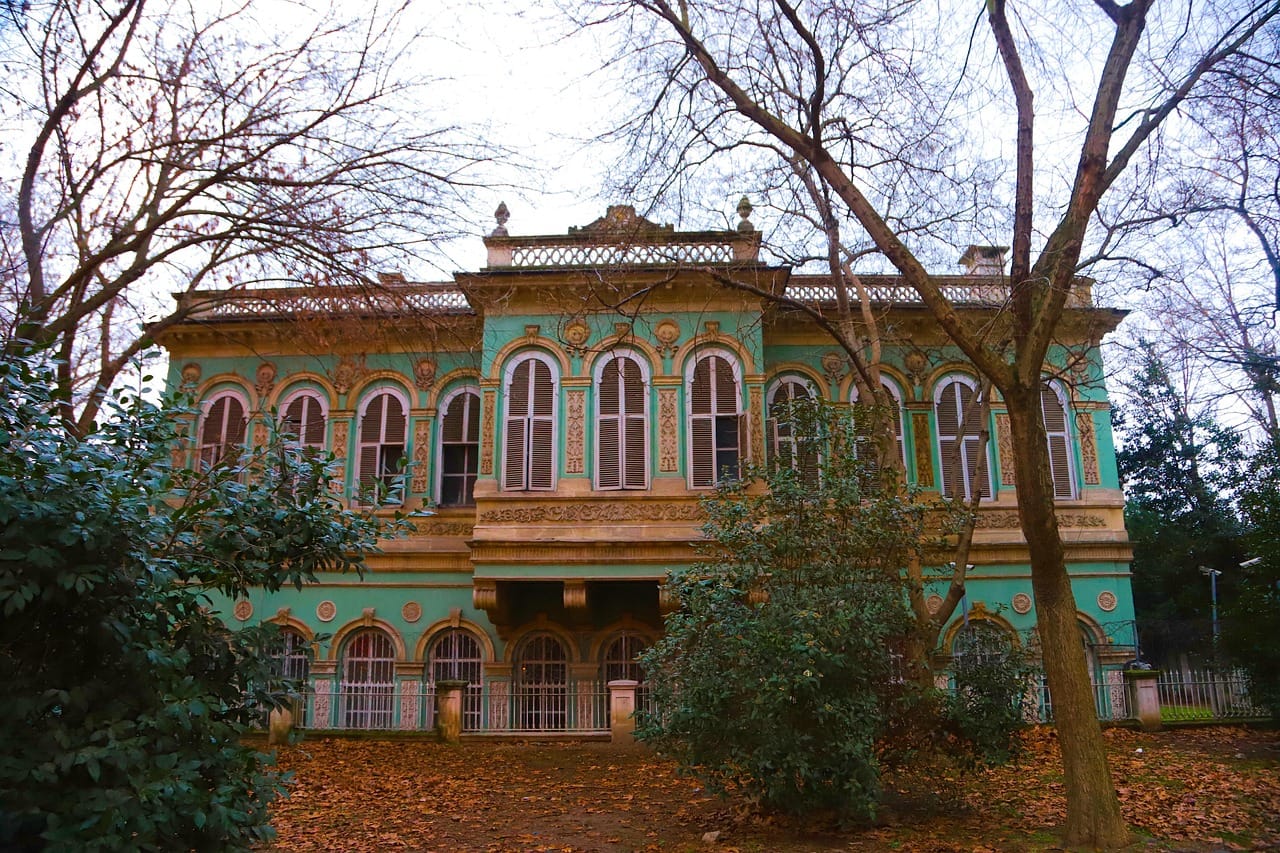
The estate preserves two separate buildings designed for distinct court functions. The primary structure, the Merasim Pavilion, was the ceremonial hall reserved for official state receptions and audiences with the sultan. Its exterior has curved double staircases, high-relief floral carvings in küfeki limestone, and European furnishings inside. A short distance to the north stands the Maiyet Pavilion, a two-story residence built for the imperial entourage, court officials, and occasionally the imperial family. While the Merasim Pavilion mirrors Western palace reception halls, the Maiyet Pavilion maintains the classic Ottoman layout of four corner rooms opening onto a central hall. Today, both buildings are among the surviving Beşiktaş historical landmarks showing how late Ottoman rulers used suburban green belts for administrative retreats.
Current 2026 ticket prices and operating hours
Foreign visitor admission to Ihlamur Kasrı costs 280 TL (5.60 EUR) for a combined ticket covering the palace interiors and grounds, while garden-only admission costs 60 TL (1.20 EUR). The complex operates under the Directorate of National Palaces (Milli Saraylar), opening Tuesday through Sunday from 09:00 to 17:30. Ticket windows close at 17:00, and the complex is closed on Mondays.
Turnstiles accept only electronic payment cards; cash is not accepted at the booths. Visitors with a Museum Pass Istanbul can bypass the ticket line and scan cards directly at the turnstiles. Handheld audio guides are included with the full palace ticket, but security staff require an original physical identification card or passport as collateral. Staff refuse smartphone photos of IDs.
During my visit on a brisk Tuesday morning at 09:20, I brought only a digital scan of my passport on my phone. The kiosk attendant refused to issue the audio guide receiver until I handed over my physical driver’s license. Keep a driver’s license or secondary photo ID in your wallet so your primary passport remains secure in your lodging.
| Category | Turkish Lira Rate | Access Scope |
|---|---|---|
| Palace and Gardens (Foreign) | 280 TL (5.60 EUR) | Merasim Pavilion interior exhibitions and grounds |
| Garden Only | 60 TL (1.20 EUR) | Surrounding parkland, ponds, and cafe terrace |
| Museum Pass Istanbul | Card validation | Direct turnstile entry to both palace interiors and grounds |
| Audio Guide Receiver | Free | Handheld device issued at the kiosk with physical ID deposit |
Berk’s Insider Tip: To photograph the Merasim Pavilion’s baroque staircase without maintenance gear or hoses in view, buy a garden ticket and enter at 09:00 on a weekday. Direct morning sunlight hits the south facade between 09:15 and 10:30.
Palace attendants begin ushering visitors out of the Merasim Pavilion interior at 17:15, and outer gate access closes at 17:00. Anyone arriving after 16:45 is restricted to the garden pathways.
Baroque and Rococo details inside the Merasim Pavilion
Architect Nigoğos Balyan completed the Merasim Pavilion between 1849 and 1855, incorporating European stylistic elements favored by Sultan Abdülmecid. Double curved staircases with stone balustrades rise to the main entrance along the symmetrical front facade. Deeply carved floral reliefs, acanthus leaves, and Rococo moldings cover the exterior limestone.
Inside, the Ceremonial Pavilion retains its original nineteenth-century decor. French Baccarat crystal chandeliers hang from ceilings detailed with gilded plaster and painted cartouches. Intricately patterned Hereke carpets cover parquet floors cut to match the dimensions of the central salon. Cylindrical Austrian porcelain stoves stand in corner niches, installed to warm the high-ceilinged reception rooms during winter retreats.
Berk’s Insider Tip: The exterior marble steps become slick when wet. When climbing them on rainy mornings, hold the inner metal handrail along the balustrade curve.
The Directorate of National Palaces enforces preservation protocols at the entrance. Visitors must pull plastic shoe covers (galoş) over their footwear before stepping onto the historic parquet floors. Daypacks, large bags, and umbrellas must be stored in the free lockers beside the security station. Non-flash handheld photography is allowed, while tripods and commercial recording equipment are prohibited.
How to reach the pavilion from Beşiktaş pier or Osmanbey metro
Ihlamur Kasrı sits in a valley between the heights of Nişantaşı and the Bosphorus shore, so your entry point determines whether you climb a steep hill or walk downhill.
If you arrive by sea at the Beşiktaş ferry pier, you are at the bottom of the basin. To reach the complex on foot, walk 15 minutes uphill along Ihlamurdere Caddesi. The incline is steep, and sidewalks are narrow and often blocked by delivery mopeds. Alternatively, walk two minutes to the main avenue bus stops and board bus 26, 26A, or 43 to the Ihlamur stop. A standard public transit tap costs 46.20 TL (0.92 EUR) on an Istanbulkart.
Berk’s Insider Tip: Skip hiking up Ihlamurdere Caddesi on foot from the ferry terminal on hot afternoons. Board the 26 or 43 bus from Akaretler, or arrive via Osmanbey metro station and walk downhill through Nişantaşı instead.
To avoid the climb entirely, use the metro line above the valley:
- Exit Osmanbey Metro Station on the M2 line through the Rumeli exit.
- Walk south on Rumeli Caddesi for 200 meters toward Nişantaşı.
- Turn left onto Vali Konağı Caddesi and proceed past the retail storefronts.
- Turn right onto Prof. Dr. Orhan Ersek Street to begin the descent.
- Follow the street down for 350 meters until it terminates near the palace wall gate on Hakkı Yeten Caddesi.
On a humid Tuesday afternoon around 2:00 PM, I watched two travelers attempt the climb from the pier in slick-soled leather loafers. After five minutes on the twenty-degree slope of Ihlamurdere dodging delivery mopeds, they gave up and paid the 230 TL (4.60 EUR) short-distance taxi fare. Steep backstreets here have polished cobblestones and broken curb edges. If you are staying in nearby quarters (as explained in this review of whether Kurtuluş is loud and the sidewalks are broken but you should stay there anyway), wear shoes with grooved rubber soles. The basalt pavers on Prof. Dr. Orhan Ersek Street become slick when shopkeepers wash down the sidewalks at mid-morning.
The garden cafe and courtyard tea service
The Maiyet Pavilion houses a public cafe operated by the National Palaces administration. The state manages counter service directly instead of leasing dining rights to commercial concessionaires, keeping prices lower than nearby private cafes in Beşiktaş and Nişantaşı. At the counter, a glass of black tea costs 40 TL (0.80 EUR), a Turkish coffee costs 90 TL (1.80 EUR), and bottled spring water costs 30 TL (0.60 EUR). Simple toasted sandwiches and pre-portioned cakes fill the display case.
When I ordered at 11:45 AM, the state-run banking terminal declined my foreign contactless card twice without prompting for a PIN. I had to pay with cash while other customers waited behind me.
Outdoor tables occupy the gravel terraces beside the Maiyet Pavilion beneath mature linden, plane, and magnolia trees surrounding a central stone basin. The setting remains quiet on weekday mornings, accompanied by ducks swimming in the basin and peacocks roaming the grounds. By midday on sunny weekends, outdoor tables fill quickly; arrive before 11:30 or take your tea to a bench along the perimeter wall.
Berk’s Insider Tip: The cafe card terminals run on a state banking network that frequently declines foreign contactless cards without chip-and-pin verification. Carry 150 to 200 TL in cash to avoid delays at the counter.
The cafe operates on a self-service model where you place orders at the indoor counter, receive your tray directly, and carry it to your chosen garden seat. Counter staff stop taking orders at 16:30 ahead of the garden gates closing at 17:00.
Where to head next in Beşiktaş and Nişantaşı
Ihlamur Kasrı sits at the base of a valley between the residential slopes of Teşvikiye and the commercial center of Beşiktaş. Following Ihlamurdere Caddesi south leads downhill into Beşiktaş Çarşı, where you can pair the morning grounds tour with casual neighborhood dining. The market quarter contains several established dining rooms serving Handmade Mantı and Garlic Yogurt Toppings in Kadıköy and Beşiktaş with 2026 Prices, alongside open-air fish stalls where you can sample Seasonal Bosphorus Fish and Neighborhood Seafood Restaurants with 2026 Ordering Tips.
Berk’s Insider Tip: The climb from Ihlamurdere up to the ridge of Teşvikiye strains leg muscles quickly. Walk downhill toward the water first, eat lunch in Beşiktaş Çarşı, and take a five-minute taxi up Barbaros Bulvarı to Nişantaşı to avoid walking up the steep residential stairs on a full stomach.
Climbing north out of the valley brings you directly to Teşvikiye Mosque and the upper avenues of Nişantaşı. The side streets around Ahmet Fetgari Sokak and Akkavak Sokak house independent art bookstores, design studios, and specialty coffee roasters that draw a quieter daytime crowd than the market streets below.
To connect the pavilion with other Beşiktaş landmarks without backtracking, use these walking intervals:
- Ihlamur Kasrı to Beşiktaş Çarşı: 12 minutes downhill along Ihlamurdere Caddesi.
- Beşiktaş Çarşı to Sinan Paşa Mosque and the ferry quays: 5 minutes across the pedestrian market square.
- Beşiktaş Çarşı to Teşvikiye Mosque: 20 minutes uphill along Süleyman Seba Caddesi.
- Ihlamur Kasrı to Teşvikiye Mosque: 12 minutes uphill via the steep grade of Prof. Dr. Orhan Ersek Sokak.
- Teşvikiye Mosque to Vali Konağı Caddesi: 6 minutes on level sidewalks past neighborhood roasters.
Practical planning summary for your visit
Allow 90 minutes for the complex: 45 minutes to tour the Merasim and Maiyet pavilions, and 45 minutes for tea on the garden terrace. A reliable route is to take a morning Şehir Hatları ferry to Beşiktaş Pier around 09:30, then walk 15 minutes up Ihlamurdere Caddesi before midday heat sets in.
If the queue at the gate stretches past the turnstiles, skip the interior of the Maiyet Pavilion; unlike the carved ceremonial halls of the Merasim building, its rooms are plain and function mainly as dining space. Order a glass of hot tea from the counter and watch the neighborhood cats congregate around the rear marble fountain at 11:00. The ticket booth closes at 17:00, and the garden gates lock at 17:30.