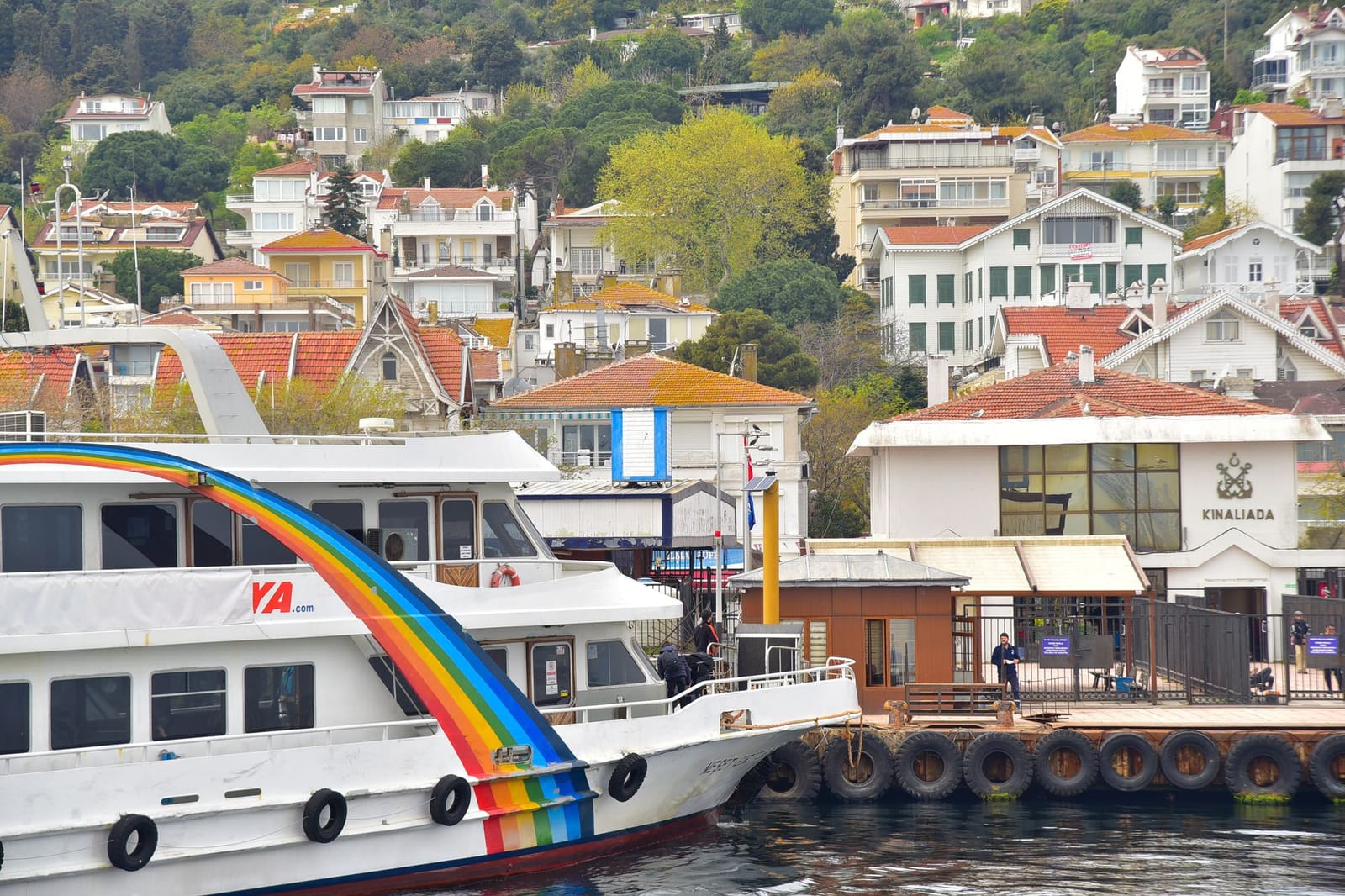
You take the 10:35 AM Şehir Hatları ferry from Eminönü to Anadolu Kavağı for 130 TL each way. Waterfront barkers at the pier push frozen calamari at inflated prices; walk straight past the village square instead. The walk up Feneryolu Caddesi to Yoros Castle takes 25 steep minutes on cracked asphalt with blind curves, so stay on the left shoulder to see oncoming traffic. I ruined a pair of thin leather loafers on the loose gravel here, so wear rubber soles. Entry to the Byzantine ramparts is free. At Yoros Çay Bahçesi right outside the gate, you pay 40 TL for tea and 120 TL for cheese gözleme overlooking the mouth of the Black Sea. You need to start walking down by 14:40 to catch the 15:00 return ferry, or you will wait for the slow 15A municipal bus to Kavacık.
At 12:15, the municipal Şehir Hatları ferry glides against the timber pilings of the Anadolu Kavağı pier, emptying two hundred passengers into a bottleneck of fish hawkers and souvenir stalls. Most visitors pay the 640 TL (€12.80) ticket for the official Long Bosphorus Tour, sit down for an overpriced lunch at the water’s edge, and wait around until the afternoon boat whistles for the return trip to Eminönü. They turn back at the northern mouth of the strait without ever looking past the village square.
A quieter walking route begins behind the restaurant alleys. A steep, cobbled track passes fig trees and Ottoman-era wooden cottages, leading directly upward toward the castle. Allow about thirty minutes of steady uphill walking to reach the hilltop, where the stone bastions of Yoros Castle overlook the entrance to the Black Sea. Wear walking shoes with decent tread because loose gravel covers the final asphalt bend before the outer gate, though the upper road replaces harbor crowds with quiet pine shade.
If you take the standard Bosphorus ferry to Anadolu Kavağı, your stay is constrained: the excursion timetable gives you roughly two hours ashore before the return run south. I learned years ago to avoid the excursion boat altogether. Take the M2 metro line north to Hacıosman, catch a bus down to the Sarıyer quay, and take the municipal cross-strait shuttle for 76.90 TL (€1.54) using an ordinary transit card. That small reroute unties your afternoon from the tour timetable, leaving you free to combine the fortress ruins with a longer Beykoz coastal walking tour through the quiet fishing hamlets further down the Asian shore.
Taking the long Bosphorus ferry to the edge of the Black Sea
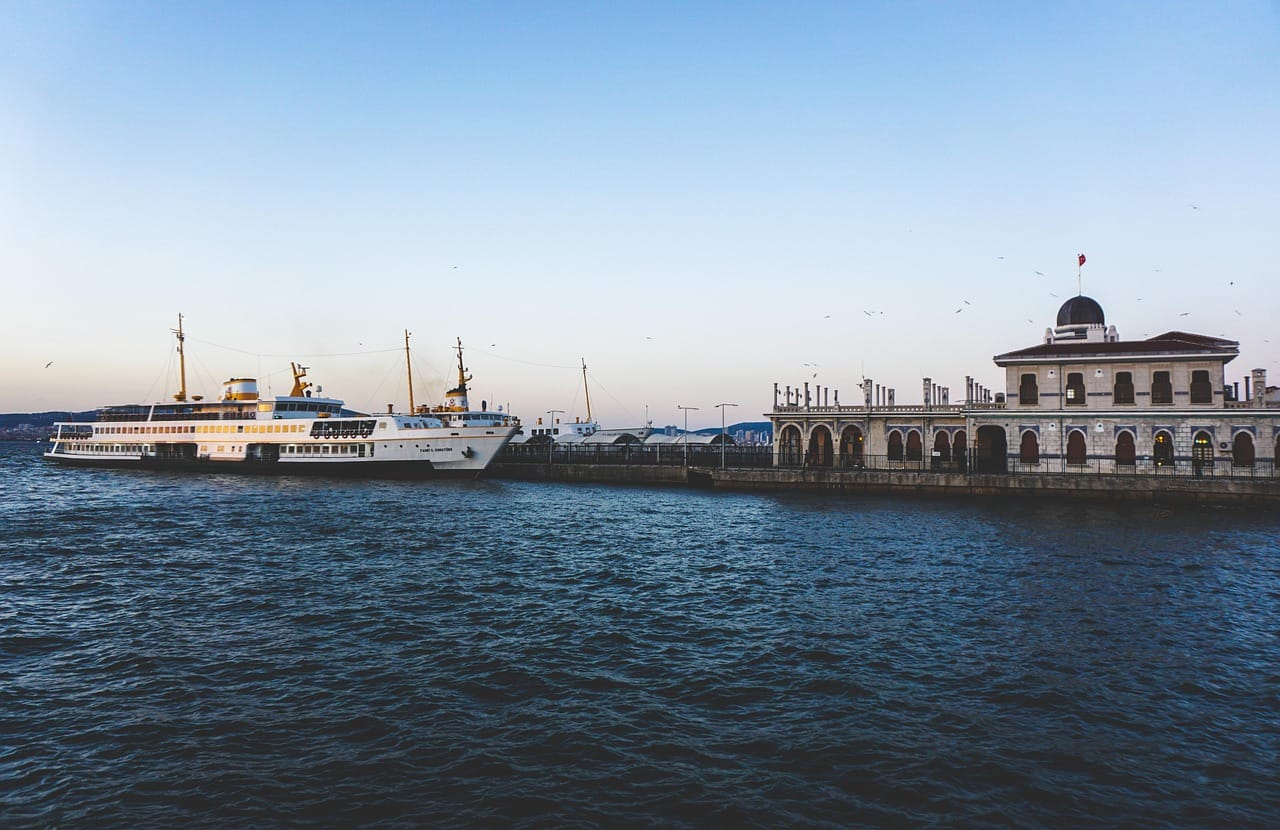
The municipal Şehir Hatları ferry departs Eminönü Pier promptly at 10:35 AM each morning on the Uzun Boğaz Turu, the traditional long Bosphorus run terminating at Anadolu Kavağı. This scheduled route takes approximately one hour and 50 minutes to navigate the 25 kilometers north toward the Black Sea mouth, docking along both the European and Asian shores before releasing passengers for a three-hour layover.
Arriving at Eminönü Pier at least 25 minutes prior to departure is necessary if you intend to secure an open-air starboard wooden bench on the upper deck. The starboard side faces east during the northbound run, keeping you bathed in morning sunlight while shielding you from the stiff northern wind blowing off the Black Sea. In winter, that offshore breeze turns the exposed upper deck frigid within fifteen minutes, making the lower indoor salon the smarter seat; during summer, passengers who arrive after 10:20 AM find the outdoor benches packed four across, forcing them into the shaded port-side draft or the enclosed cabin below.
Personal Anecdote: On a brisk Tuesday last October, I arrived at turnstile 2 at Eminönü at 10:12 AM with a 150 TL transit balance ready. Even 23 minutes ahead of departure, a line of forty passengers had already formed ahead of me, leaving only two dry starboard perimeter seats open by the time I stepped onto the upper deck. Travelers who tapped through the turnstiles at 10:30 AM spent the entire outbound voyage standing in the narrow interior companionway next to the tea counter.
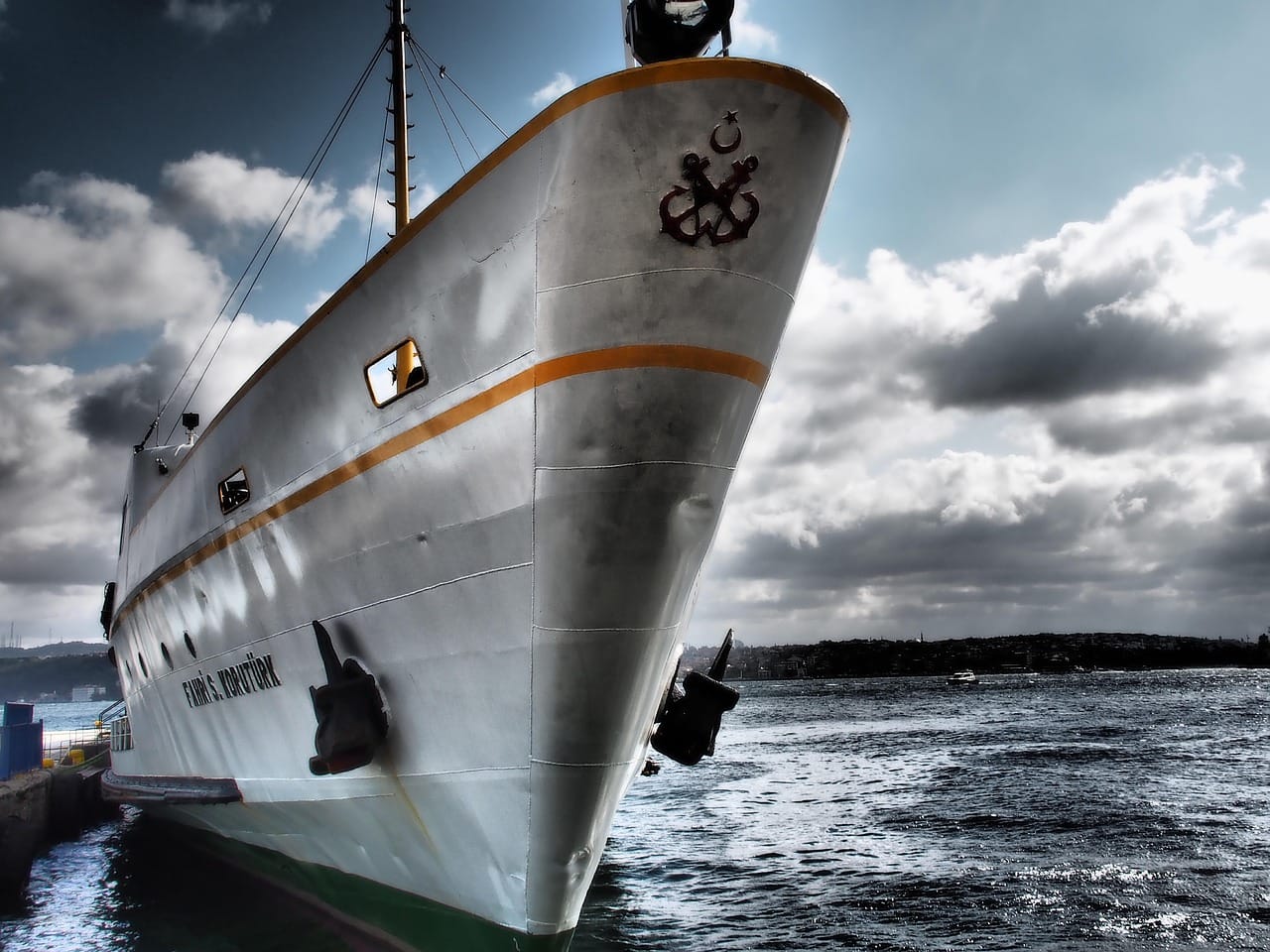
A standard round-trip ticket on the municipal ferry costs 150 TL (3 EUR / 3.33 USD) when charged via your reloadable Istanbulkart. Commercial ticket hawkers line the Eminönü waterfront trying to divert independent travelers onto private excursion vessels charging between 450 TL and 600 TL (9 to 12 EUR / 10 to 13.33 USD) for comparable distances. While private boats run on variable private timetables, the public municipal vessel delivers fixed docking windows and ample deck space. Relying on public transit here saves substantial money while keeping you on an official transit timetable.
| Route Option | Transit Time | Cost (TL / EUR / USD) | Key Trade-Off |
|---|---|---|---|
| Şehir Hatları Uzun Boğaz Turu | 105 minutes each way | 150 TL (3 EUR / 3.33 USD) round trip | Daily 10:35 AM departure; built-in three-hour village stop |
| Private Tour Boat | 90 to 105 minutes | 450–600 TL (9–12 EUR / 10–13.33 USD) | Triple the municipal fare; irregular departure windows |
| Sarıyer Shuttle Ferry | 15 minutes | 40 TL (0.80 EUR / 0.89 USD) one way | High departure frequency; requires transit to the northern suburbs |
| Metro M2 + Bus + Ferry | 75 minutes total | 95 TL (1.90 EUR / 2.11 USD) one way | Skips south-strait bottlenecks; frees you from the 3:00 PM return boat |
Berk’s Insider Tip: If the public ferry from Eminönü is crowded, board the metro line M2 to Hacıosman, catch a quick taxi or bus down to the Sarıyer pier, and take the 15-minute cross-strait shuttle boat directly to Anadolu Kavağı for 40 TL. It cuts out two hours of water idling.
The scheduled return ferry leaves the dock at Anadolu Kavağı at 3:00 PM, arriving back at Eminönü by 4:45 PM. Passengers who miss that single municipal return departure must walk 200 meters south to the local boat landing to catch the small passenger shuttles running to Sarıyer, which operate departures every 30 to 45 minutes until 8:00 PM.
Navigating the village square and avoiding the tourist seafood traps
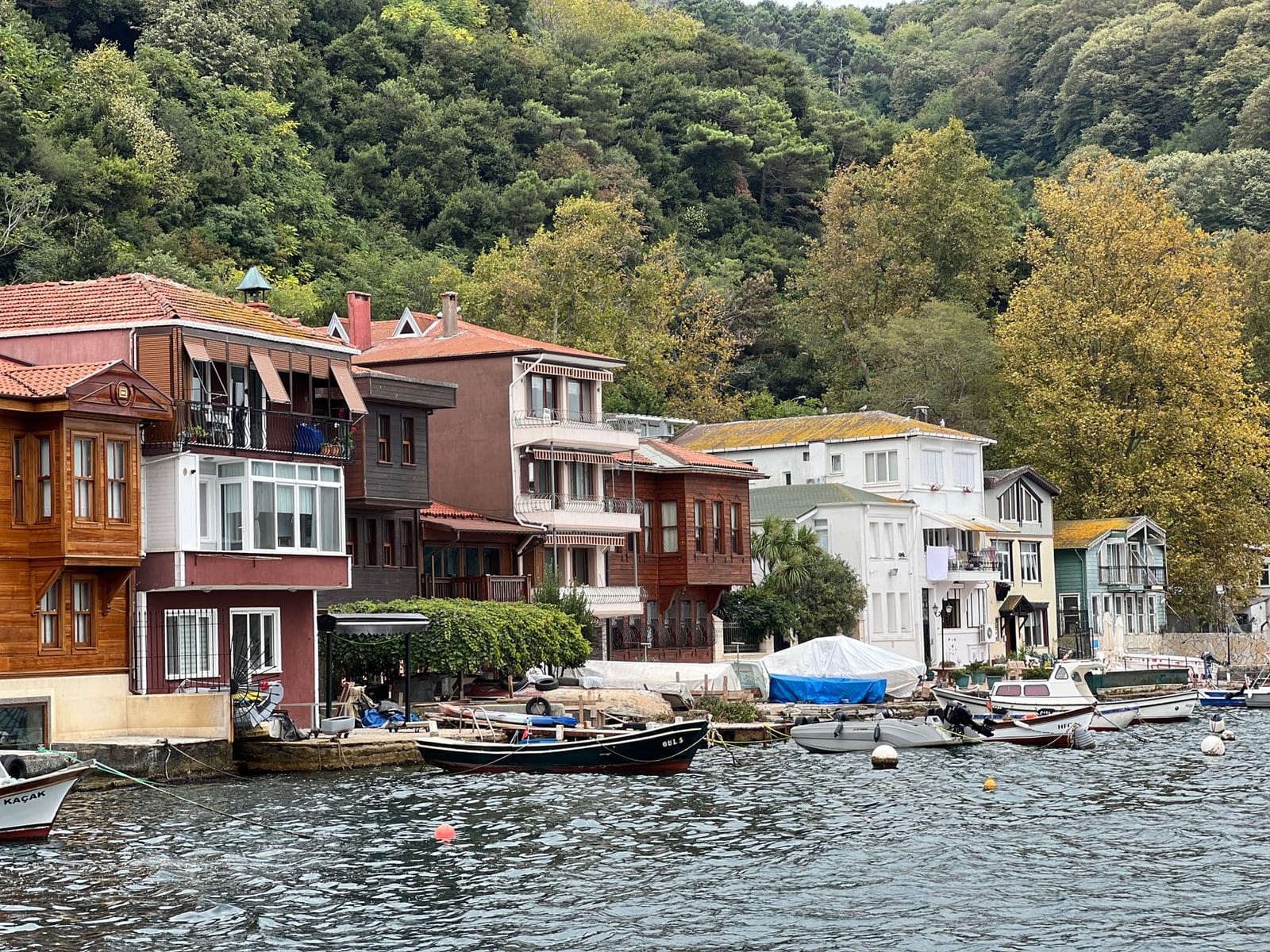
Stepping off the ferry ramp onto the stone quay of Anadolu Kavağı places you directly into a gauntlet of restaurant greeters waving laminated menus in three languages. Ferry timetables concentrate passenger arrivals into distinct waves, so waterfront dining terraces compete aggressively for foot traffic heading toward Yoros Castle. The weathered wooden houses lining the harbor echo the vernacular timber preservation seen in Zeyrek Istanbul: Old City, yet the ground floors here are dominated by tourist-facing dining rooms.
Most of these waterside terraces depend on transient day-trippers rather than repeat diners. As a result, menus frequently prioritize mass-market frozen items over actual Black Sea fish caught by the small boats moored fifty meters away. Autumn brings fresh palamut (bonito) and winter brings hamsi (anchovies), yet multiple establishments along the harbor front push defrosted kalamar tava fried in heavy batter. When evaluating an iced display case at any sit-down establishment, check the gills and eyes: fresh seasonal catch has bright, clear eyes and clean red gills, whereas thawed fish shows cloudy eyes and limp skin. If you are seeking high-level culinary technique, reserve an evening using our Fine Dining Guide to Michelin and Gault Millau Restaurants in Istanbul; meals here should focus strictly on simple, fresh catches.
Personal Anecdote: During a September visit at 12:30 PM, I sat down at a waterside terrace in Anadolu Kavağı and paid 450 TL for a plate of rubbery, defrosted squid rings that took thirty-five minutes to arrive while tour groups swarmed the adjacent tables. Since then, I always bypass the harbor front entirely and head seventy meters up Çamlı Kavak Caddesi to a back-alley grill, where a crisp, freshly cooked balık ekmek cost me just 180 TL with zero waiting time.
Price discrepancies between the shoreline and the alleys behind the square are substantial. A quick mid-day balık ekmek costs 180 TL (3.60 EUR / 4 USD) at small side stalls set back in the village streets, while sitting down for a fish sandwich on a water-facing dining terrace reaches 450 TL (9 EUR / 10 USD) before beverage and cover charges. For a light bite that keeps your Anadolu Kavağı walking route on schedule, look for independent stalls frying fresh midye tava (battered mussels on wooden skewers) served with garlicky walnut tarator sauce. Village bakeries along Çamlı Kavak Caddesi sell fresh simit for 20 TL (0.40 EUR / 0.44 USD) and bottled water for 10 TL (0.20 EUR / 0.22 USD), which cost triple that amount once you sit down at an open-air terrace table.
Berk’s Insider Tip: I watch the municipal tea garden next to the pier when assessing the village. If the local boatmen from Beykoz are drinking tea there rather than eating at the waterfront tables, bypass the sit-down dining rooms entirely and buy your fish sandwich directly from the side-street vendors behind the main square.
The uphill climb along Feneryolu Caddesi to Yoros Castle
The route from the Anadolu Kavağı pier to the fortress gates climbs approximately 130 meters of vertical elevation over a 1.2-kilometer distance. While relatively short on paper, this route requires sustained exertion comparable to navigating the Walking Route Through the Steep Alleys and Courtyards of Upper Üsküdar, making it one of the more physically demanding short Istanbul hill walks. The road surface transitions rapidly from village flagstones to worn asphalt, where dry pine needles and loose roadside gravel create slippery patches under smooth-soled footwear. Sturdy walking shoes with reliable tread prevent skidding on the steeper grades.
How to navigate the climb to Yoros Castle:
- Exit the Anadolu Kavağı ferry landing and walk straight past the square of fish restaurants, taking the narrow street just past the historic Cevriye Hatun fountain.
- Turn slightly right onto Feneryolu Caddesi, where the asphalt immediately angles upward past residential stone walls.
- Stay to the pedestrian verge on the left side of the road alongside the wire fence of the military installation, watching for occasional minibuses and local delivery vans navigating the narrow single lane.
- Follow the road through the hairpin right curve where the pine canopy ends and direct sun hits the roadway without overhead cover.
- Push up the final 400-meter straight incline along the Beykoz ridge until the medieval gate towers of Yoros Castle come into view at the crest.
Personal Anecdote: During a humid July afternoon climb at 1:15 PM, my flat-soled sneakers slipped repeatedly on the dry gravel alongside the blind bend near the Cevriye Hatun fountain. The 130-meter vertical rise took me thirty-five strenuous minutes, and I had to stop twice behind an idling bread delivery van while dust kicked up into my face.
The most taxing stretch occurs midway up the hill. Summer temperatures here feel noticeably hotter than at sea level due to the reflective stone walls and lack of breeze behind the ridge. Pacing yourself around this blind bend is essential, especially since descending delivery trucks and local taxis share the narrow road width without dedicated sidewalks.
Berk’s Insider Tip: Do not buy bottled water at the top near the castle gates where kiosks charge triple; buy two large chilled bottles at the small Şok supermarket tucked 40 meters behind the ferry terminal before starting the climb.
Once past the military perimeter wire and around the bend, the roadway levels out slightly into open hillside. The upper section reveals expansive views north toward the towers of the Yavuz Sultan Selim Bridge spanning the mouth of the Black Sea. The climb takes between 25 and 35 minutes at a steady pace, bringing you to the cluster of roadside tea gardens stationed directly below the southern curtain wall.
Exploring the Byzantine and Genoese ramparts of Yoros Castle
The interior of Yoros Castle remains closed behind wire fences and archaeological perimeter tape while municipal excavation and masonry restoration teams stabilize the site. Entry to the surrounding hill is free, so you will find no ticket booth or turnstiles at the summit. If you plan your expenses by Using the Museum Pass to skip lines and manage your 2026 sightseeing budget, you do not need to budget for admission here. The visible core consists of two semicircular towers built from layered limestone and bands of Roman brick. Although fortified by the Byzantine Empire to defend Constantinople against northern raids, the stronghold fell to the Republic of Genoa in 1352. The Genoese held the citadel through much of the fourteenth and early fifteenth centuries, transforming it into a collection point for maritime tolls on merchant vessels sailing toward Crimea.
The fortress occupies a 130-meter hill above the narrowest stretch of the northern Bosphorus. Coupled with a corresponding coastal fortification across the water at Rumeli Kavağı, the defensive position enabled garrison commanders to monitor passing ships and stretch a defensive harbor chain across the channel during naval conflicts.
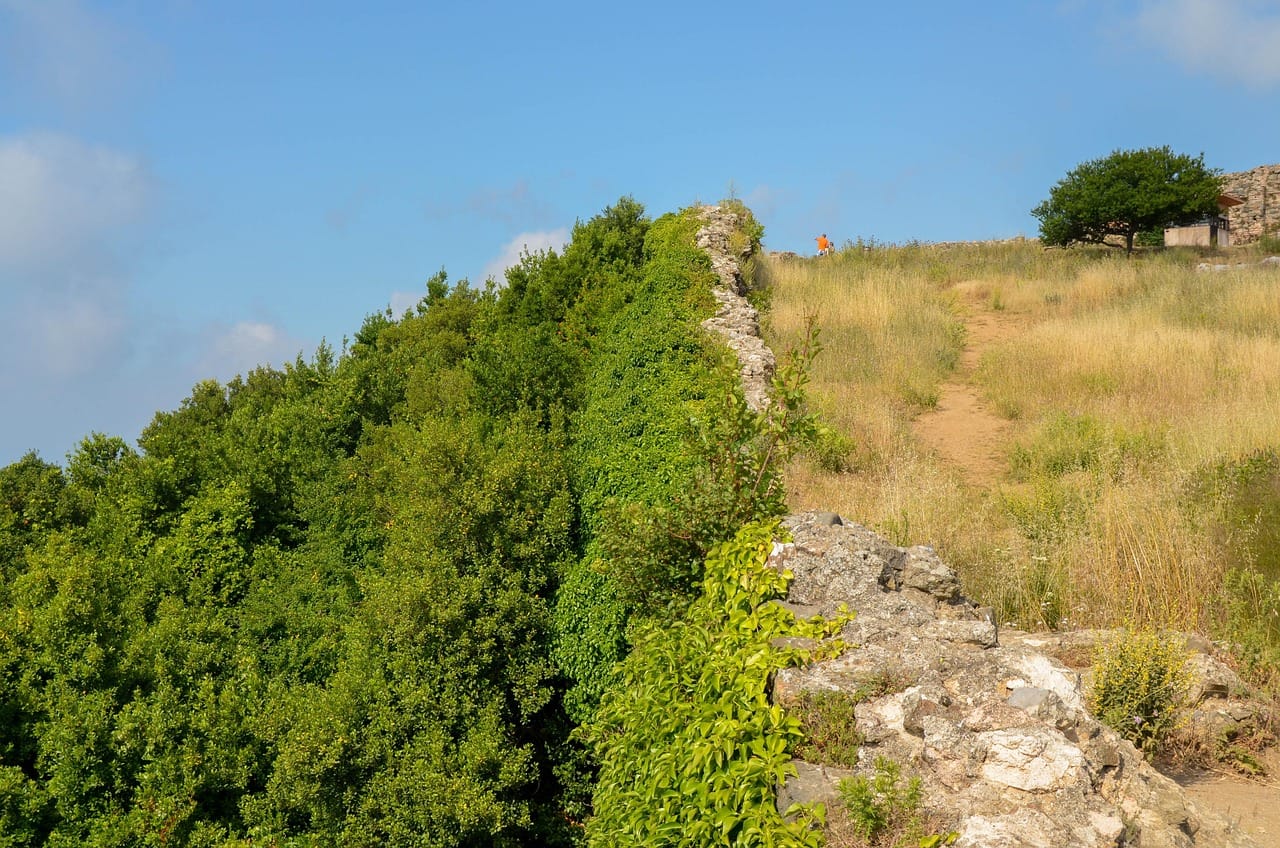
Berk’s Insider Tip: During a visit last October at 16:30, I watched three visitors climb past the archaeological warning tape onto an undercut ledge, which caused a patch of loose gravel to break away under their boots. The soil along the northern ramparts is fragile marl that gives way quickly, especially after rain.
To reach the primary Black Sea viewpoint from this hillside without crossing safety tape, follow the compacted dirt path that wraps fifty meters around the eastern curtain wall. The trail opens onto a wide grass bank that faces north. From this clearing, you look past the towers of the Yavuz Sultan Selim Bridge toward Poyrazköy and the open waters of the Black Sea entrance. The military naval boundary begins directly at the bottom of the northern drop, marked by wire fencing where the steep slope terminates at the shoreline.
Where to stop for tea, gözleme, and return logistics
A cluster of open-air family cafes sits along the hillside path roughly 100 meters below the fortress gate. Here, flat iron griddles produce freshly rolled spinach gözleme for 160 TL (3.20 EUR / 3.55 USD), paired with wood-fired samovar tea served in traditional glasses for 35 TL (0.70 EUR / 0.77 USD). The wooden benches provide open views where visitors can sit away from the castle’s perimeter fence, looking straight out toward the Third Bosphorus Bridge and the mouth of the strait.
Berk’s Insider Tip: Settle your bill at the hillside tea gardens by 14:15 when aiming for the 15:00 Şehir Hatları ferry. Giving yourself a 45-minute window leaves 25 minutes for an easy, controlled descent down Feneryolu Caddesi and 20 minutes to tap through the turnstiles before the single gangway bottlenecks.
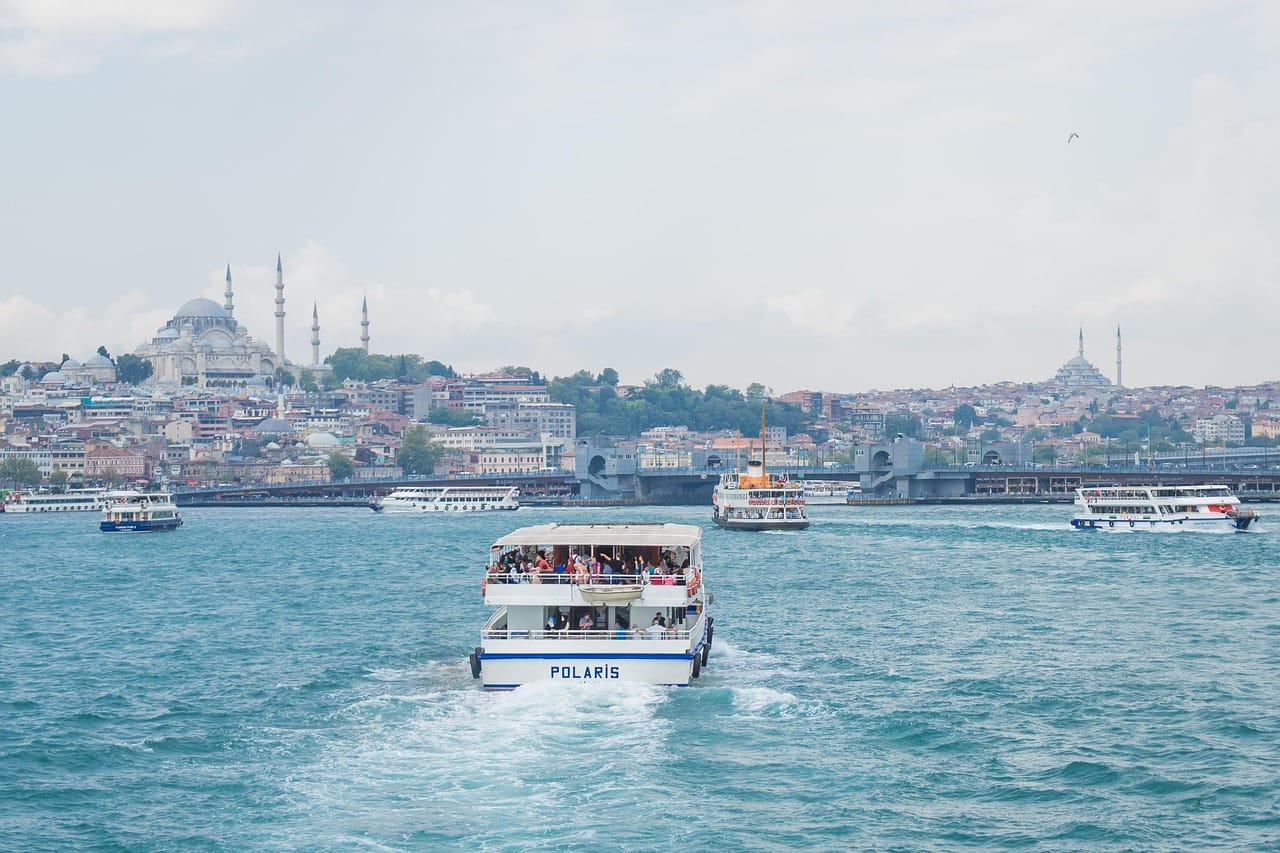
The steep walk back to the harbor requires caution because loose gravel on the tarmac and uneven curb stones can cause slips if you rush. Allocating 25 minutes to descend smoothly ensures you reach sea level without running into the thick crowds rushing for the same boat. If you linger too long over lunch and miss the return ferry, you do not need to wait hours for the next scheduled vessel or pay inflated taxi fares. You can integrate the trip into a broader Beykoz coastal walking tour using municipal overland transit.
Key return steps and transport backups include:
- Walking down Feneryolu Caddesi takes roughly 25 minutes at an easy pace, leading directly past village bakeries into the harbor square.
- The Şehir Hatları ferry dock boards scheduled afternoon departures using standard Istanbulkart readers, closing boarding gates right before the lines are cast off.
- The 15A bus line departs from the turnaround loop 150 meters east of the pier, running south toward Beykoz and Üsküdar every 25 to 40 minutes.
- Disembarking at Beykoz pier allows you to catch the municipal passenger ferry that crosses every 20 minutes to Yeniköy on the European shore.
- Riding further inland to the transit hub at Kavacık connects you to express bus routes running across the suspension bridge directly to the 4. Levent metro station.
Practical tips for your return voyage
Skip the seafood restaurants clustered around the Anadolu Kavağı pier; the menus are marked up for day-trippers and the fried calamari rarely justifies the bill. Spend that time at the open-air tea gardens along the ridge road below Yoros Castle, but keep 100 TL to 150 TL (2 EUR to 3 EUR) in cash ready. Cellular coverage drops on these northern Beykoz heights, frequently leaving mobile payment terminals without a connection.
Berk’s Insider Tip: I once lingered over coffee at the summit and missed the scheduled boat, turning a quiet sea passage into a slow crawl on the 15A municipal bus through Beykoz traffic. Now, I use the ship horn as my primary timer. It echoes across the valley thirty minutes before departure, giving you just enough time to walk down the hill.
Careful timing is necessary on this route. Şehir Hatları ferry schedules shift sharply between summer and winter timetables, and missing the return sailing leaves no sea alternative until the following morning on select routes. Confirm your return departure on the dock board when you step off the boat, start your descent as soon as the 30-minute return horn sounds from the harbor, and tap your Istanbulkart at the turnstiles ten minutes before the crew casts off the lines.