A single-portion künefe costs between 240 and 320 TL in Kadıköy, while a full Gaziantep katmer across Fatih runs between 380 and 520 TL in 2026. You get the exact locations for charcoal hearths near Kadınlar Pazarı and shops off Moda Caddesi, including Asi Künefeleri and Çanak. When I stopped in Fatih on a Friday evening, the kitchen rushed my katmer to clear the ten-minute queue, leaving the center doughy. Ask the baker for yours well-done (çift pişmiş) or visit between 2:00 PM and 5:00 PM to avoid the crowd. You will learn how to identify genuine water buffalo kaymak over semolina paste substitutes, when to ask for light syrup (az şerbetli) to keep the pastry base crisp, and how to sequence your dessert stop immediately after a büryan kebab lunch before walking to the ferry.
At 10:30 on a Friday night outside an open kitchen off Kadıköy’s Güneşlibahçe Sokak, hot syrup meets bubbling cheese in a battered copper pan while paper-thin phyllo blisters around clotted water buffalo cream and crushed green pistachios. You will see a queue of ten or twelve people waiting on the pavement, each watching the cook flip individual tins over a circular gas ring. A standard portion of cheese künefe here costs between 400 TL and 480 TL (8 EUR to 9.60 EUR), while an authentic Gaziantep katmer folded with fresh kaymak runs between 750 TL and 850 TL (15 EUR to 17 EUR).
Most visitors look for these regional specialties in the tourist corridors around Sultanahmet, where pre-cooked trays often pass for regional baking at inflated rates. Fresh künefe in Istanbul demands unsalted, low-moisture curd cheese from Hatay that pulls cleanly without turning rubbery, baked over gas until the shredded kadayıf pastry crisps. For genuine katmer in Istanbul, you have to follow southeastern culinary traditions to the specific enclaves where master bakers settled: the food alleys known for Kadıköy desserts on the Asian shore, and the dining streets around Fatih künefe shops on the European side.
Finding the proper versions requires precise timing and neighborhood transit knowledge. In Kadıköy, the dessert parlors cluster directly behind the central fish market, an easy five-minute walk from the Kadıköy ferry terminal. In Fatih, along the avenues near the Fatih Mosque complex and Akdeniz Caddesi, bakers pull katmer dough paper-thin on marble counters from early morning until late afternoon, serving pans straight from the oven before the clotted cream cools.
The fundamental differences between Antakya künefe and Gaziantep katmer
These two regional specialties rely on entirely different pastry structures, dairy profiles, and baking methods.
Künefe uses kadayıf, fresh strands of wheat batter shredded fine and packed into round, shallow copper plates. The top and bottom layers are pressed tight with clarified butter. Between them sits Hatay peyniri, a fresh, unsalted semi-soft cheese produced from a blend of cow and goat milk that melts into elastic ribbons without releasing excess whey. The cook rotates the copper plate over a low flame or charcoal hearth, flips it to brown both crusts, and pours boiling şerbet over the metal while the pastry sizzles.
Gaziantep katmer begins with an unleavened flour dough that the baker stretches by hand and throws overhead until it becomes translucent. Across this sheet, the baker distributes Boz fıstık—early-harvest emerald pistachios—along with granulated sugar and thick kaymak skimmed from water buffalo milk. The sheet is folded into a flat envelope and slid into a wood-fired stone oven for eight minutes. Unlike künefe, gaziantep katmer receives no poured syrup; the interior sugar crystals dissolve directly into the hot fat of the kaymak as the paper-thin crust blisters.
Insider tip: When ordering künefe in Fatih or Kadıköy, I always ask the usta to leave off the crushed pistachio garnish. A heavy layer of nut powder traps rising steam against the crust, softening the kadayıf strands within three minutes of leaving the burner.
Both preparations demand immediate consumption directly from the cooking vessel. Hatay peyniri congeals into a rubbery slab once the pan cools below 50 degrees Celsius, and the kadayıf becomes soggy as it absorbs cooling syrup. Katmer turns limp and greasy if the rendered kaymak cools inside the layers. When scouting künefe and katmer shops in Istanbul, order each plate one at a time rather than simultaneously. In 2026, single portions in specialized Kadıköy and Fatih dessert parlors cost 350 TL to 480 TL (7 EUR to 9.60 EUR) for künefe and 650 TL to 850 TL (13 EUR to 17 EUR) for katmer.
Where to find authentic künefe and katmer in Kadıköy
Stepping off the public ferry at the Kadıköy Ferry Terminal puts you within a six-minute walk of the central lanes of Caferağa, where the neighborhood’s highest concentration of regional dessert parlors operates. A standard crossing from Karaköy or Eminönü—perhaps after doing a Street Food Crawl and Fish Sandwiches in Eminönü and Karaköy with Local Prices—costs between 50 TL and 65 TL (€1.00 to €1.30) using an Istanbulkart. From the dock, cross Rıhtım Caddesi and walk uphill past the fish market into Güneşlibahçe Sokak, which connects directly with the pedestrian alleys running toward Moda Caddesi. Along these streets, independent masters bake regional pastries to order rather than reheating pre-assembled trays.
Queue conditions vary sharply by the clock. On Friday evenings between 18:30 and 21:30, and on Saturday afternoons starting at 14:00, outdoor tables along Güneşlibahçe Sokak fill completely. Diners often wait fifteen to twenty-five minutes on the pavement. Because table turnover is fast and staff rarely take names on clipboards, you must secure a table by waiting directly beside patrons finishing their tea. When visiting during peak evening crowds, walk straight to the counter to place your dessert order before claiming a chair, as kitchen preparation queues run parallel to seating delays.
I learned this protocol the hard way on a rainy Tuesday at 19:45 outside Asi Künefeleri on Yasa Caddesi. Seeing an open two-top, I sat down immediately without speaking to the counter first. Twenty minutes later, three groups who arrived after me were already tucking into their bubbling pans while my order had not even been written on the ticket pad. I had to walk up to the cashier, pay 280 TL up front, and wait another 14 minutes in the damp breeze before my hot tin arrived.
Several Kadıköy parlors stand out for specific preparations of katmer and regional künefe specialties:
- Asi Künefeleri (Yasa Caddesi, Caferağa): Specializes in Hatay cheese künefe cooked over direct gas rings until the shredded wheat shreds crisp without charring. A single cheese portion costs roughly 250 TL to 300 TL (€5.00 to €6.00).
- Çanak Kebap & Katmer (Acıbadem Caddesi): Uses a wood-fired stone oven to bake thin hand-stretched phyllo dough layered with buffalo milk kaymak and crushed Gaziantep pistachios. A full katmer costs between 450 TL and 500 TL (€9.00 to €10.00) and serves two.
- Kadıhan (Osmanağa): Operates open burners near the northern market edge until 04:00 daily, serving hot cheese kadayıf long after smaller retail shops shut down.
- Hatay Ekol Künefe (Caferağa): Known for hasır künefe, which uses unchopped, woven wheat strands wrapped tightly around unsalted curd for a firmer, stringy bite.
- Katfe Künefe & Katmer (Bahariye): Focuses on pan-fried katmer folded with light syrup, preserving the crunch of the outer crust without oversaturating the clotted cream.
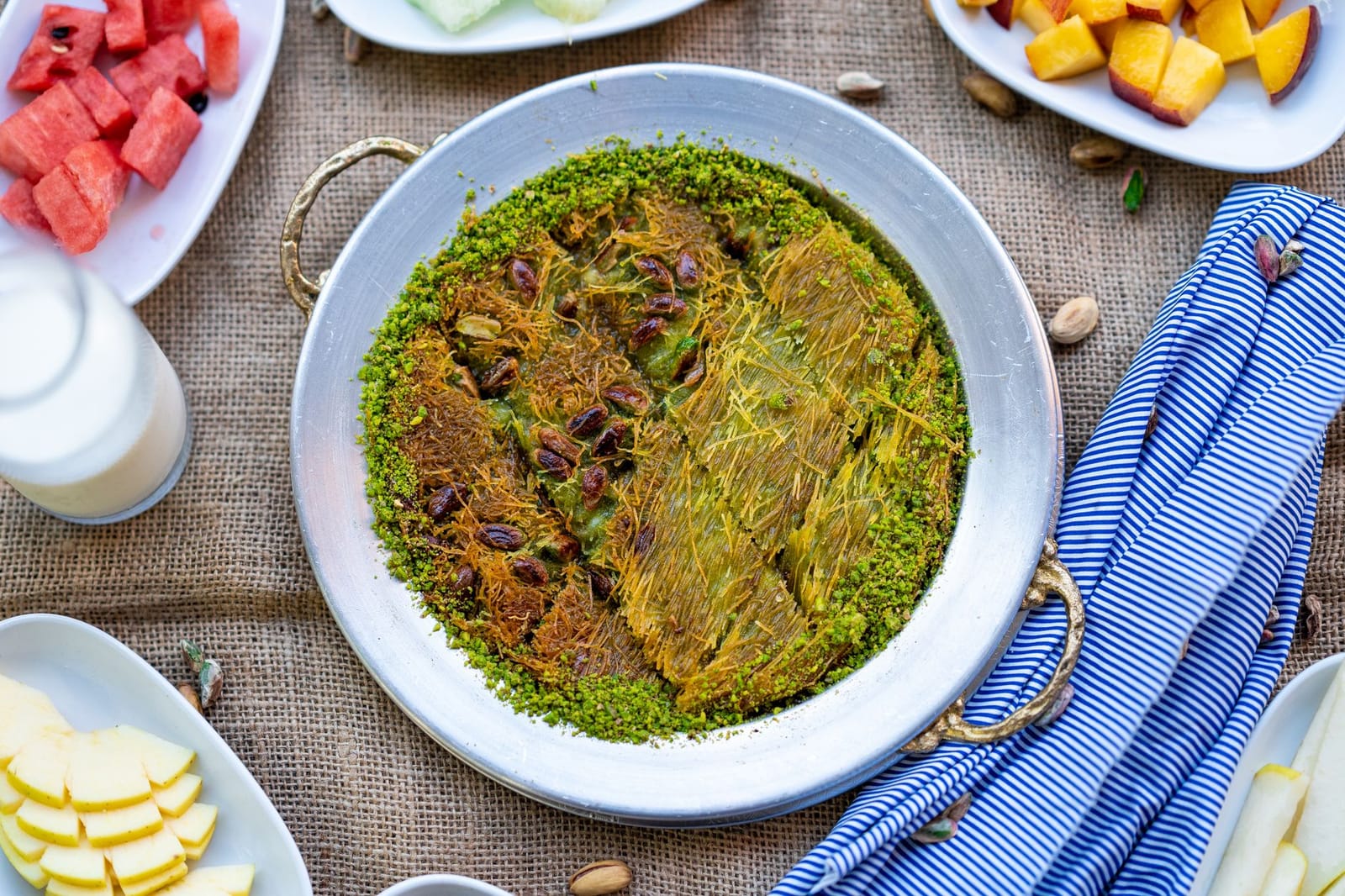
Berk’s Insider Tip: If a dessert parlor serves your künefe under three minutes after sitting down, it came from a pre-cooked warming tray. A genuine portion requires twelve to fifteen minutes over raw gas flames to melt the cheese core without blackening the kadayıf.
When coordinating an afternoon tasting through the Asian side, visit between 15:00 and 17:00 on weekdays to secure open tables and ensure the kitchen has freshly delivered pans of buffalo kaymak in stock. Most specialty pastry ovens in Caferağa turn off their burners between 23:30 and midnight on weeknights.
Historic peninsula hearths across Fatih and Kadınlar Pazarı
Under the stone arches of the fourth-century Valens Aqueduct, Kadınlar Pazarı operates as the historic peninsula’s primary hub for southeastern Anatolian baking traditions. Walking west from the aqueduct along Fevzi Paşa Caddesi, you will find dessert halls established by families from Hatay and Gaziantep who brought their regional metalware and recipes directly to Istanbul. Unlike the gas-powered chain bakeries in western neighborhoods, the specialized establishments in this quarter rely on kömür ateşi, a bed of low-burning charcoal embers that provides an even, dry radiant heat.
The masters rest shallow, two-handled copper plates directly on these glowing beds, turning each disk with measured turns of the wrist. This manual rotation keeps the shredded pastry base from scorching while the central disc of unsalted fresh cheese softens and expands. A single portion of künefe in Fatih prepared over coals costs between 450 TL to 550 TL (9 EUR to 11 EUR). Next to the rotating plates, bakeries prepare gaziantep katmer by stretching elastic dough over marble slabs until it is translucent, then filling the folds with granulated sugar, coarse Antep pistachio flour, and clotted buffalo cream. A freshly baked katmer portion costs between 600 TL to 850 TL (12 EUR to 17 EUR).
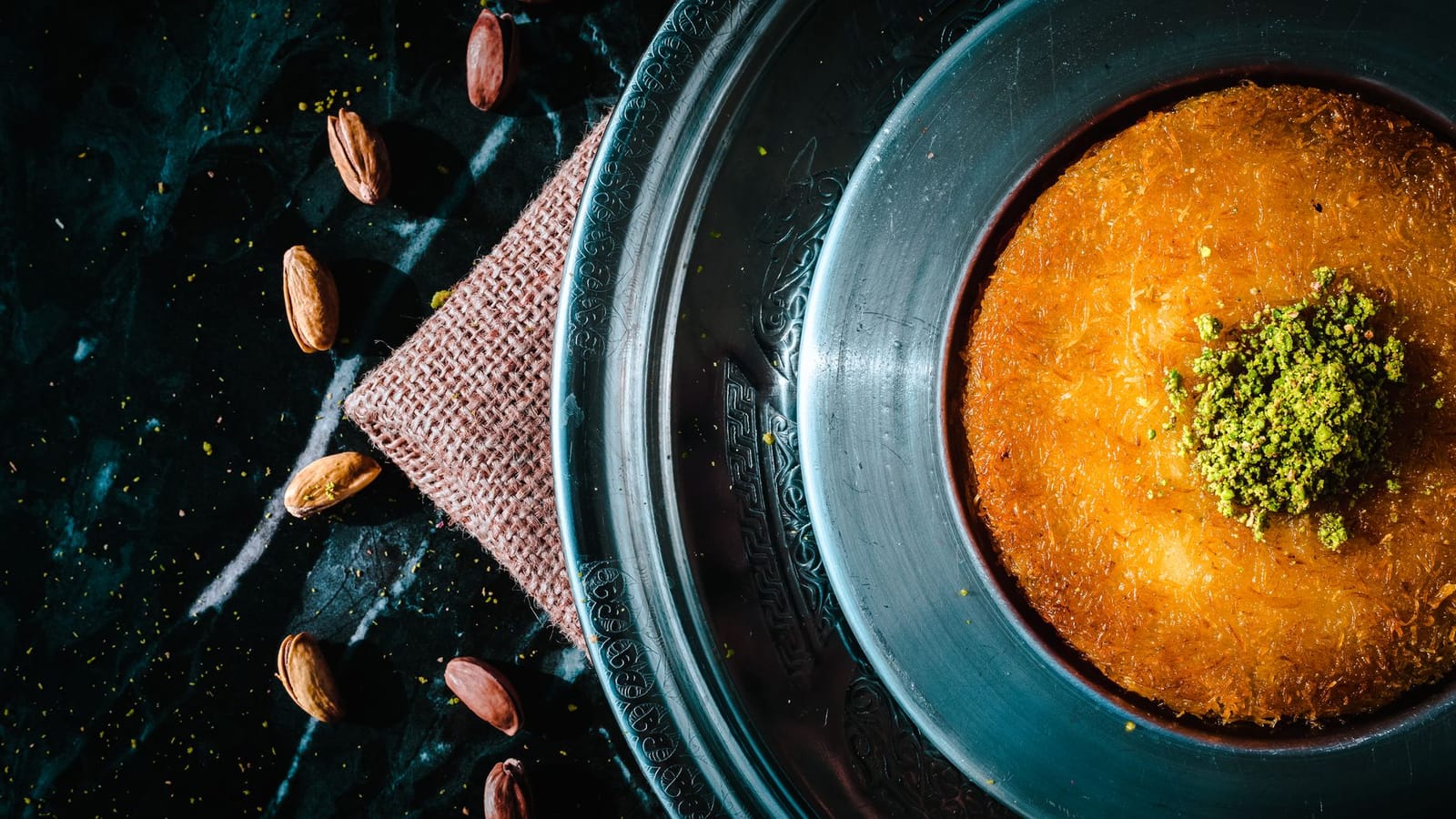
On a Thursday afternoon at 15:30 in Kadınlar Pazarı, I watched a visitor send back a fresh katmer because he mistook the rendered green liquid inside for artificial coloring. The master baker patiently scraped a pinch of raw Boz fıstık onto the marble counter to show him the natural, concentrated chlorophyll pigment that bleeds out when pure sheep butter hits 200-degree stone. That single 650 TL dish proved the difference: real katmer dough glistens deep emerald rather than the pale hue of supermarket phyllo.
Operating rhythms across Fatih track the neighborhood’s religious calendar and daily prayer schedule rather than standard tourist meal hours. On Fridays between 12:45 and 14:00, kitchens reduce production as staff attend noon prayers at nearby Fatih Mosque. An immediate influx fills the dining rooms by 14:15, creating queues out the door. The second daily peak follows the evening prayer (Yatsı), when families gather for late-night sweets before closing at midnight. During religious holidays and Ramadan, these dessert rooms operate well past 02:00, with waits exceeding forty minutes.
Insider tip: I avoid ordering katmer from the heated display counter. Tell the master you will wait ten minutes for one prepared fresh from the charcoal oven, and order a glass of cold milk instead of black tea, which cuts through the heavy sheep’s milk fat much better.
If you encounter full tables at the Kadınlar Pazarı strip, walk five hundred meters up the incline toward Fevzi Paşa Caddesi, where secondary branches seat patrons immediately. The closest transit access is via the Vezneciler station on the M2 metro line, or by taking municipal bus 87 from Taksim to the Fatih İtfaiye stop, located two hundred meters from the market entrance.
Portion standards and realistic 2026 dessert prices
A single portion of künefe in Istanbul weighs between 150 and 180 grams, while a standard katmer arrives on a wide metal plate meant for two people. Dessert venues in Kadıköy and Fatih price these items individually rather than by weight, with rates reflecting the steep cost of quality Urfa butter, Antep pistachios, and fresh unsalted cheese.
| Dessert Item | Portion Standard | Price Range (TL) | Price in EUR (€) | Price in USD ($) |
|---|---|---|---|---|
| Plain Künefe | Single skillet (approx. 160g) | 220 TL – 280 TL | 4.40 € – 5.60 € | 4.88 $ – 6.22 $ |
| Double-Cheese Künefe | Single skillet, extra Hatay cheese | 320 TL – 360 TL | 6.40 € – 7.20 € | 7.11 $ – 8.00 $ |
| Gaziantep Katmer | Full round plate (serves 2) | 400 TL – 520 TL | 8.00 € – 10.40 € | 8.88 $ – 11.55 $ |
| Dondurma Topping | Single slice plain Maraş ice cream | 70 TL – 100 TL | 1.40 € – 2.00 € | 1.55 $ – 2.22 $ |
Plain künefe costs between 220 TL and 280 TL (4.40 to 5.60 EUR / 4.88 to 6.22 USD) across neighbourhood shops in Kadıköy and historic tea corridors in Fatih. If you order a version layered with extra cheese or topped with kaymak, expect the bill to rise to 320 TL to 360 TL (6.40 to 7.20 EUR / 7.11 to 8.00 USD). A whole katmer plate, folded with clotted cream and crushed pistachios, runs 400 TL to 520 TL (8.00 to 10.40 EUR / 8.88 to 11.55 USD). One whole plate provides plenty for two diners; ordering separate plates for everyone at the table often results in half the pastry going uneaten.
Payment customs vary between modern strips and older enclaves. Almost every shop in Kadıköy’s central market accepts card payment at the till, where you can say kredi kartı before tapping your chip. In contrast, smaller family establishments near Fatih’s women’s bazaar often prefer cash for small orders of tea and single desserts, sometimes quoting a broken terminal during busy evening rushes. Reviewing handling cash and card payments with 2026 exchange rates and tipping tips prevents friction when settling your table check.
Insider tip: At an unpretentious shop near Kadıköy’s fish market, I watched a server charge a 100 TL service surcharge on a card transaction without itemizing it on the paper slip. Now, I always ask to inspect the itemized adisyon before touching my card to the terminal.
When paying with a foreign credit card, the terminal will frequently ask you to choose between settlement in your home currency or Turkish Lira. Always select Turkish Lira on the screen to avoid the bank’s conversion fee. Dessert shops do not include table service charges on standard menus, though leaving 10 to 20 TL in small cash on the tray remains common practice for good table service.
How to order and eat hot syrup desserts correctly
Fresh pan desserts baked in Istanbul künefe shops demand immediate consumption before the melted cheese solidifies and the hot sugar syrup turns heavy. In authentic shops across the city, desserts are prepared individually on small circular aluminum plates over rotating gas flames or charcoal, which requires ten to fifteen minutes of baking time. Ordering requires practical timing: if you dine at a kebab house that bakes its own sweets, place your dessert order halfway through your savory meal so the pan arrives the minute your grill plates are cleared.
A common misstep is smothering fresh Gaziantep katmer or hot künefe under a heavy slab of commercial Maraş dondurması. Industrial ice cream contains thick emulsifiers and vegetable gums that melt slowly, dropping the pastry temperature rapidly and causing the animal butter and kaymak to congeal on your palate. Low-grade dessert shops frequently use this ice cream layer to conceal stale nuts or skimpy pistachio dust. The traditional counterweight to rich syrup is soğuk süt (cold whole milk). The fats and casein in cold milk wash over your tastebuds, neutralizing the intense hit of boiled sugar without hardening the melted cheese.
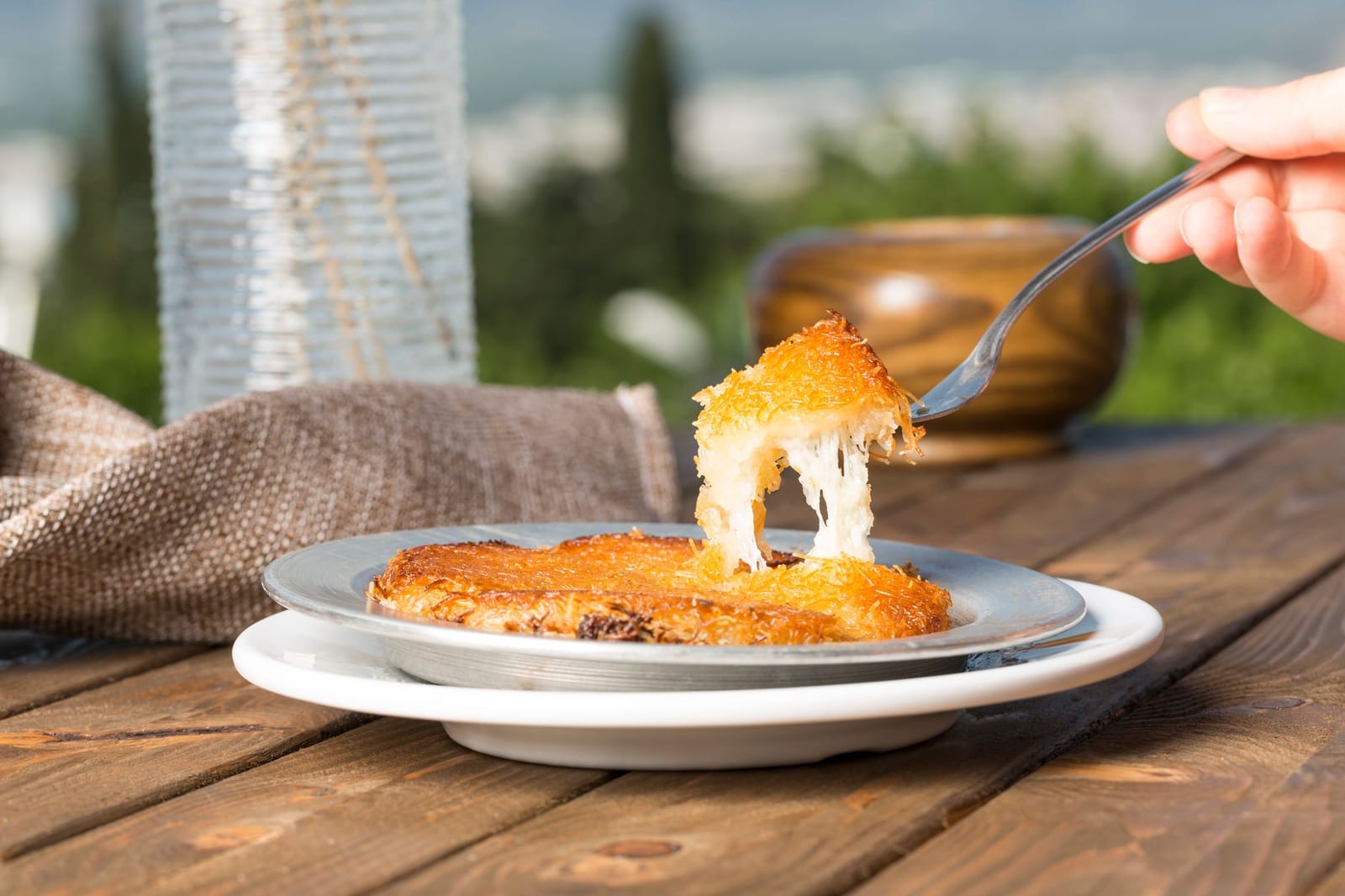
Berk’s Insider Tip: Skip the Maraş ice cream slab on top of hot katmer. The cold dairy hardens the clotted cream and dulls the aromatic oil of fresh Gaziantep Boz pistachios. Drink a glass of cold milk instead.
Follow this table protocol to eat hot pan desserts properly:
- Order your portion immediately upon sitting, specifying whether you want classic unsalted Hatay cheese or extra pistachio.
- Ask for a glass of soğuk süt alongside the order, which runs about 30 TL to 40 TL (0.60 to 0.80 EUR) in dedicated dessert shops.
- Check the bubbling rim the moment the waiter places the hot metal plate on your wooden trivet.
- Cut into the crust using the side of your fork and pull the slice upward to test the cheese stretch, which should extend freely without snapping.
- Consume the hot center wedges first while the core remains molten and crisp, leaving the slightly firmer outer rim for last.
- Order a fresh glass of unsweetened çay only after you finish the dessert, as hot black tea with syrup while eating overstimulates the sweet receptors on your tongue.
Last month at a künefe shop off Akdeniz Caddesi in Fatih, a standard portion cost 320 TL (6.40 EUR), and the kitchen served çay in tulip glasses free of charge once the table cleared.
Pairing dessert stops with local savory meals
A heavy syrup pastry ruins an appetite if you schedule it immediately after a full sit-down dinner. In Kadıköy Balık Pazarı, the practical approach begins at the street counters with quick savory plates, such as fried mussels and calamari in the fish markets of Beşiktaş and Kadıköy with 2026 menu prices served on wooden skewers with garlicky walnut tarator, which cost between 275 TL and 350 TL (5.50 EUR to 7 EUR).
Instead of ordering dessert at the market stalls, take a twenty-minute uphill walk toward Moda along Caferağa. This interval creates the necessary digestive buffer between hot frying oil and clarified sheep butter. When exploring Kadıköy desserts, portion management is essential: order one dessert for every two people. A single copper pan of künefe or folded katmer contains roughly 200 grams of dense kaymak or unsalted Hatay cheese, which overpowers your stomach if eaten as an individual portion after seafood.
Timing determines whether you get freshly stretched dough or a hurried preparation. Dessert parlors in both Kadıköy and the historic streets around Fatih Camii hit their peak crowd between 8:00 PM and 9:30 PM, when local families finish home dinners and fill every open table. Arriving during this rush results in twenty-minute queues, and oven staff often pull pans out early to keep up with orders. Plan your savory meal for 6:00 PM to reach the dessert counter by 7:15 PM. At this hour, the brass ovens are fully heated, the pistachio bins are fresh, and staff prepare each pan without rushing.
Insider tip: Whenever I take friends out for katmer in Kadıköy, I never let them order black tea right away. Ask for a cold glass of whole milk (süt) instead. Cold milk cuts the hot syrup, coats your stomach, and makes the walk down to the shoreline comfortable.
Around Fatih Camii, savory meals focus on wood-fired lamb stews and Büryan kebab, which have higher fat contents than seafood. Counteract that density by walking at least fifteen minutes down Fevzipaşa Caddesi before entering a dessert shop. The bakeries in this district operate until midnight, with the last daily trays of Gaziantep katmer entering the deck ovens at 11:15 PM.
How to tell fresh baking from reheated trays
Fresh künefe and katmer demand direct heat and patience. If a shop brings your plate out three minutes after you order, the kitchen reheated an earlier batch. Raw kadayıf pastry, unsalted Hatay cheese, and Gaziantep kaymak require live fire on the spot. Skip the high-volume dessert parlors along Muvakkithane Caddesi in Kadıköy. The high turnover keeps tables full, but staff often pull the aluminum pans off the gas flames early to clear seats, leaving the lower strands pale and soggy from lukewarm syrup.
Give the kitchen the twelve to fifteen minutes necessary to brown each portion to order. Look for the crust pulling clean away from the rim of the metal pan before the cook ladles the syrup over the top, and budget that cooking time into your schedule before walking down to the Kadıköy ferry pier.