A Gothic Secret in the Heart of Karaköy: Why I Love the Unique Arap Mosque
You’re about to discover one of my favorite “hidden in plain sight” landmarks: the Arap Mosque. In this guide, I will show you why this building is a fascinating architectural anomaly—a former Dominican church that still retains the sharp, soaring lines of 14th-century Gothic style. By the end of this piece, you’ll understand how this single site encapsulates Istanbul’s complex identity as a Mediterranean hub where Latin and Islamic histories are layered directly onto one another.
Imagine walking through the clanging metal workshops and narrow hardware alleys of Karaköy, where the air smells of machine oil and sea salt. Suddenly, you turn a corner and see a square bell tower that looks like it was plucked straight out of medieval Florence. That’s the Arap Mosque—a 700-year-old Gothic secret that reminds us Istanbul was once a vital crossroads for the Genoese long before it became the Ottoman capital. I’ve lived in this city for fifteen years, and every time I lead a friend through these gritty backstreets, this is the moment they realize Istanbul’s true beauty lies in these unexpected, multi-faith layers. Let’s step inside and peel back the history together.
The History of Arap Mosque: From Dominican Friars to the Spanish Refugees
The Arap Mosque history began in the early 14th century as the Church of San Domenico, built by the Dominican Order within the Genoese Galata district, before it was converted into a mosque for Andalusian Moors fleeing the Spanish Inquisition in the late 15th century. This building stands as the only remaining religious structure in Istanbul built in the religious Gothic style, a stark contrast to the Byzantine domes and Ottoman minarets that define the city’s skyline.
The Genoese Colony and the Dominican Order
During the 13th and 14th centuries, the Galata district was a semi-independent trade colony governed by the Republic of Genoa. Following the end of the Latin Empire and the restoration of Byzantine rule in 1261, the Genoese secured their presence in Constantinople. They constructed various administrative and religious buildings, including the Church of San Domenico in 1325.
The Dominican Order established this church as their primary place of worship in the East. When you look at the structure today, the most striking feature is the square bell tower. Unlike the rounded or polygonal minarets found on other Ottoman mosques, this tower retains its original Italian character. It served as a landmark for Mediterranean sailors and merchants from Italian city-states like Genoa, Venice, and Pisa who docked their ships at the nearby Golden Horn.
From Church to Mosque: The Post-1453 Transformation
When Sultan Mehmed II conquered Constantinople in 1453, he granted the Genoese of Galata certain privileges to ensure trade continued. However, between 1475 and 1478, the Church of San Domenico was converted into a mosque. This transition was part of a broader urban plan to Islamize the key trade hubs of the city.
The building’s architectural DNA remained largely intact. While the interior was rearranged to face Mecca, the pointed Gothic windows and the steep wooden roof—rare in Istanbul’s architecture—were preserved. This era saw many transformations of defensive and religious sites, similar to how the city repurposed its fortifications, including the ancient Theodosian Walls which protected the historic peninsula for over 1,000 years.
The Arrival of the Andalusian Moors
The mosque earned its current name, Arap Mosque (Arab Mosque), due to a significant wave of migration in 1492. Following the Fall of Granada and the Spanish Inquisition, Sultan Bayezid II invited thousands of Muslim refugees, known as Andalusian Moors, to settle in Istanbul.
These refugees were primarily concentrated in the streets surrounding this building in Karaköy. Because they were Arabic-speaking Muslims from the Iberian Peninsula, the locals began referring to the building as the “Mosque of the Arabs.” This community brought new crafts, culinary traditions, and intellectual knowledge to the Ottoman capital, leaving a permanent mark on the neighborhood’s social fabric.
Key Historical Milestones of Arap Mosque
| Period | Event | Key Figures | Architectural Change |
|---|---|---|---|
| 1233 - 1325 | Construction of the original chapel and later San Domenico church | Dominican Order | Gothic arches and square bell tower |
| 1475 | Conversion of the church into a mosque | Sultan Mehmed II | Addition of Mihrab and Minbar |
| 1492 | Settlement of Andalusian refugees in the neighborhood | Sultan Bayezid II | Named “Arap Mosque” by locals |
| 1868 | Major restoration after city fires | Adile Sultan (Daughter of Mahmud II) | Interior woodwork and fountain added |
A Living Museum of Migration
Walking into the courtyard today, you can still feel the layers of 700 years of history. The transition from a Catholic friary to a sanctuary for Spanish refugees reflects Istanbul’s role as a historic safe haven. The building survived several Great Fires, such as those in 1731 and 1868, but always emerged with its Gothic soul intact. It is a rare spot where you can see 14th-century Italian masonry supporting a 15th-century Ottoman roof, standing in a neighborhood that has welcomed migrants for 7 centuries.
Architectural Style: Why It’s the Only Gothic Mosque in Istanbul
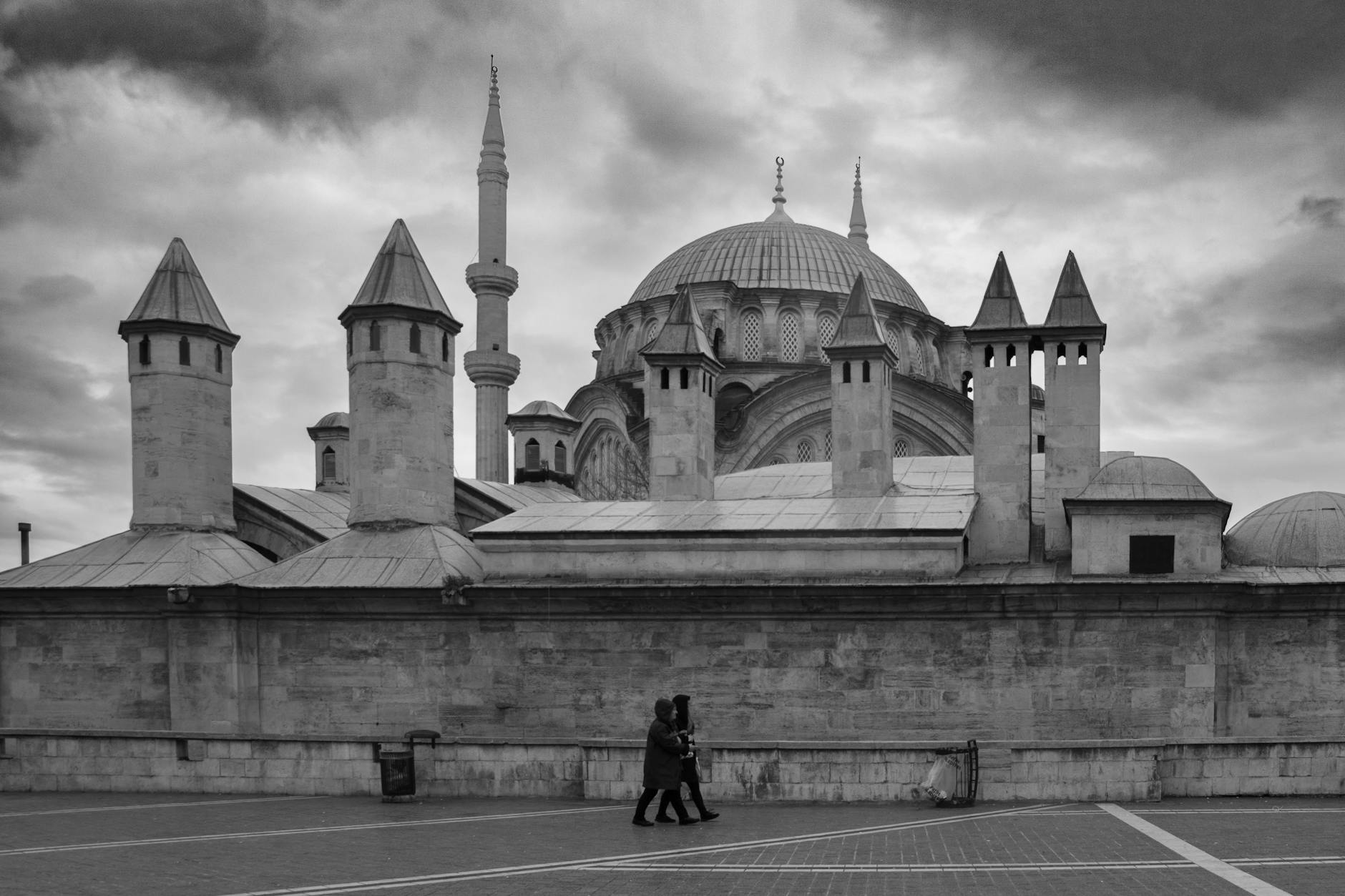
Arap Mosque is the only truly Gothic mosque in Istanbul because it retains the original 14th-century structure of a Dominican church, featuring a rectangular floor plan, lancet windows, and a square belfry that defies the traditional Ottoman domed aesthetic. Unlike the hundreds of mosques built from scratch during the imperial era, this building was originally the Church of San Domenico, constructed by the Genoese in 1325. When you stand in front of it, you aren’t looking at the typical silhouette of a Turkish house of worship; you are looking at a piece of medieval Europe that has been seamlessly woven into the fabric of Karaköy.
The Rectangular Floor Plan and Italian Foundations
The first thing that strikes you about this site is the lack of a central dome. Most unique mosques in Istanbul follow a square or octagonal layout designed to support a massive, soaring dome. In contrast, the Arap Mosque follows a long, rectangular basilic plan characteristic of Italian architecture from the late Middle Ages. This layout creates a deep, linear space that feels more like a cathedral than a traditional mosque.
The building sits on the foundations of a 6th-century Byzantine church, but the structure we see today is the result of the Dominican friars’ work in the 14th century. For 15 years, I have walked past this building, and I am still amazed by how its 3-aisled interior creates a sense of solemnity that is entirely different from the airy, light-filled spaces of Sinan’s masterpieces. While the Mihrimah Sultan Mosque represents the height of Ottoman verticality and light, the Arap Mosque offers a grounded, solid presence that reflects the defensive nature of the old Galata district.
Lancet Windows and the Steep-Pitched Roof
The exterior facade is a masterclass in Gothic architecture Istanbul rarely displays elsewhere. You will notice the iconic lancet windows—tall, narrow openings with pointed arches—that allow slivers of light to pierce the thick stone walls. These windows are a hallmark of the Gothic style, designed to draw the eye upward and provide structural integrity without the need for massive, solid walls.
Topping the structure is a steep-pitched wooden roof, which is a significant departure from the lead-covered domes seen on the city skyline. This roof was originally designed to shed the heavy rains and occasional snow of the northern climates that influenced the Genoese builders. Inside, this translates to magnificent vaulted ceilings. Although much of the original stonework is now covered by 19th-century wooden decorations added during various Ottoman restorations, the skeletal structure remains purely medieval.
The Arap Mosque Minaret: A Former Belfry
The most recognizable feature of the building is the Arap Mosque minaret, which is arguably the most unusual in the city. It is not the slender, pencil-shaped minaret you see at the Blue Mosque or Suleymaniye. Instead, it is a massive, square tower that served as the church’s belfry for nearly 200 years.
When the building was converted into a mosque in 1492 to accommodate refugees from Spain, the belfry was simply repurposed. A conical roof was added to the top to give it a more traditional Islamic silhouette, but the base remains a sturdy, square Genoese tower. It is one of the few places in Istanbul where you can see such a literal “clash” of functions—a bell tower that now echoes with the call to prayer 5 times a day.
Interior Heritage and Italian Tombstones
If you look closely at the interior details, you will find traces of the building’s complex past. During major restorations in 102, workers discovered over 100 Italian tombstones beneath the floorboards. these stones belonged to the noble Genoese families who lived in Galata, featuring Latin inscriptions and family coats of arms.
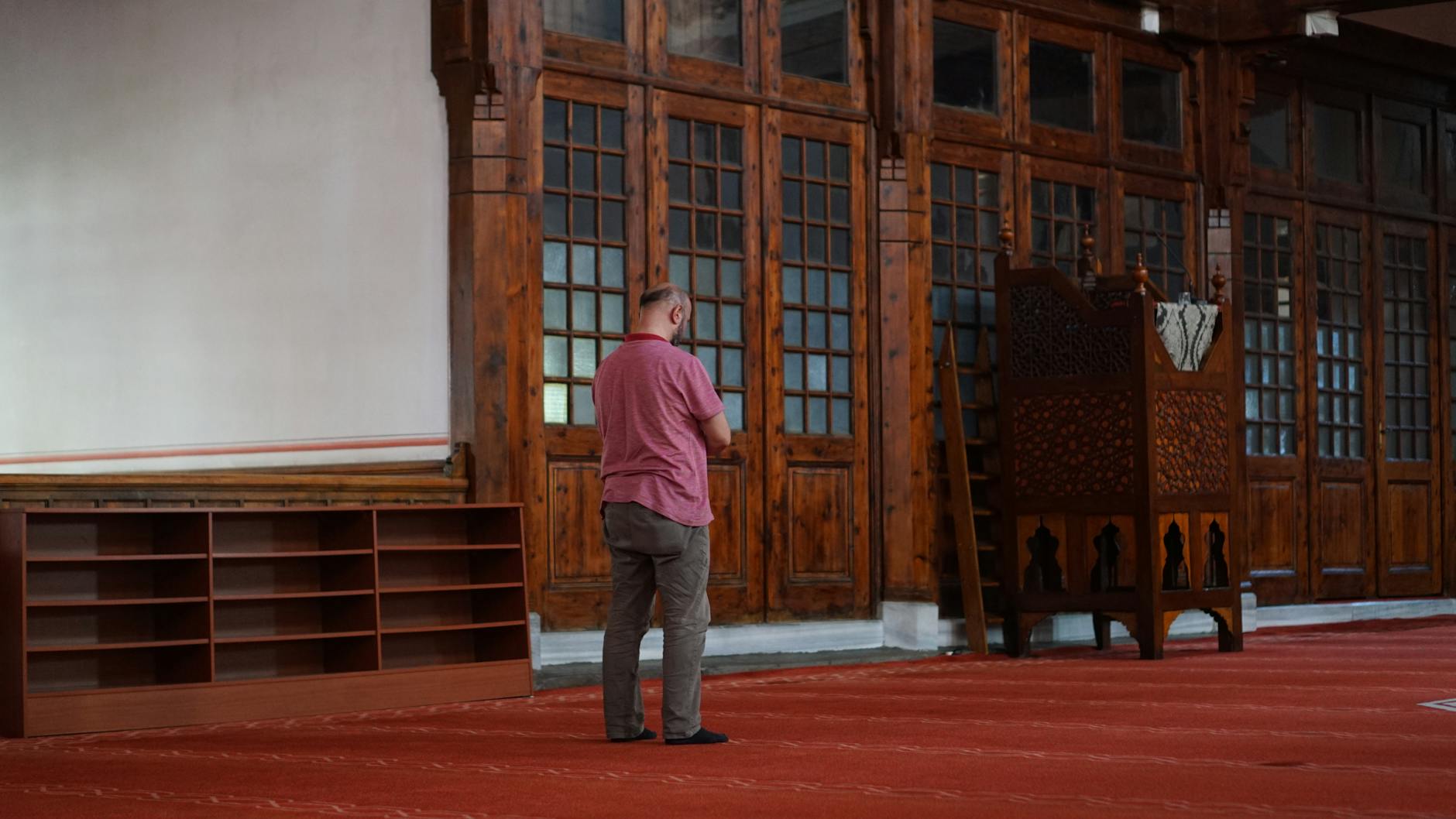
The current interior is a beautiful hybrid. You have the Gothic proportions of the Dominican friars, but it is dressed in Ottoman finery. The wooden carvings, the Mihrab (prayer niche), and the Minbar (pulpit) are crafted with exquisite Turkish woodwork that softens the austere stone of the original church. It is this layers-of-history approach that makes the building so captivating for anyone interested in how cultures overlap.
Berk’s Insider Tip: Don’t just look at the building; look at the ground. Many of the original Genoese tombstones found during restorations are now in the Archaeological Museum, but the atmosphere still feels like old Galata.
Walking through the courtyard, you feel the weight of 7 centuries. The brickwork and stone masonry are typical of 14th-century Mediterranean construction, using materials like local limestone and thin Roman-style bricks. This isn’t just a mosque; it is a survivor of earthquakes, fires, and the massive social shifts that turned Constantinople into Istanbul.
How to Get to Arap Mosque and Navigating the Perşembe Pazarı
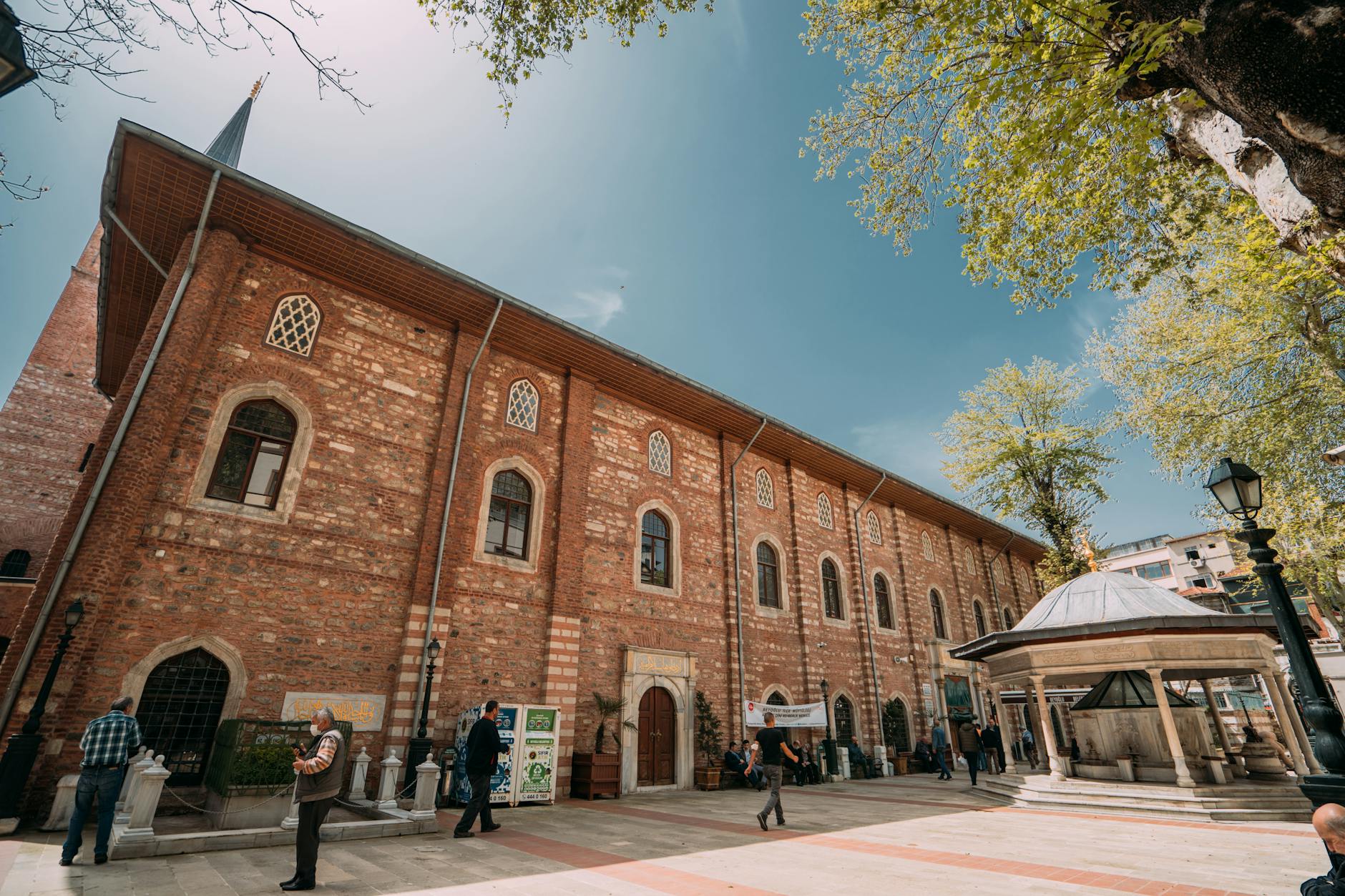
Reaching the Arap Mosque involves a short 5-minute walk through the historic Perşembe Pazarı district, easily accessible from the Karaköy Pier or the T1 Tram line station. This journey is less of a standard commute and more of an immersion into the industrial soul of the city, placing you directly into the heart of the ancient Hardware District.
Navigating from the Transport Hubs
To begin your journey, arrive at the Karaköy transport hub via the T1 Tram or one of the many ferries docking at Karaköy Pier. Once you step off the vessel or the tram, head west toward the Galata Bridge. Instead of crossing the bridge toward Eminönü, cross the street toward the inland side of the Golden Horn. You will see a cluster of narrow streets tucked behind the modern waterfront buildings.
To find this hidden mosque in Istanbul, follow these steps:
- Exit the Karaköy Pier or T1 Tram station and walk toward the Galata Bridge underpass.
- Cross the main road (Kemeraltı Caddesi) and enter the street named Tersane Caddesi.
- Turn right into the narrow alleys of Perşembe Pazarı, specifically looking for Galata Mahkemesi Street.
- Follow the sound of metalwork and the scent of machine oil for 300 meters until the distinctive rectangular minaret appears above the rooftops.
The Industrial Atmosphere of Perşembe Pazarı
The walk takes you through Perşembe Pazarı, which translates to “Thursday Market,” though it functions as a bustling trade hub 6 days a week. This is the oldest industrial market in the city, a place where the Byzantine and Ottoman trade traditions never truly died. Unlike the polished boutiques of upper Karaköy, this area is a gritty, authentic Hardware District filled with shops selling specialized equipment like heavy-duty marine chains, brass valves, industrial pulleys, and thick hemp ropes.
As you walk, you will see merchants moving goods on traditional wooden carts and hear the rhythmic clinking of metal on metal. This area serves as a living museum of Istanbul’s commercial history. You will pass by historic structures such as the Kurşunlu Han, a 16th-century caravanserai that still houses small workshops. The contrast between these rough-hewn trade shops and the sudden, elegant appearance of the Gothic architecture of the mosque is one of the most striking visual experiences in the city.
Why Getting Lost is Essential for Karaköy Sightseeing
While a map might show a direct route, the true magic of Karaköy sightseeing is found by venturing into the side alleys that branch off from the main path. These streets are a labyrinth of shortcuts and dead ends that reveal the layered history of the neighborhood. You might stumble upon tiny storefronts serving high-quality “esnaf lokantası” (tradesman restaurants) dishes like slow-cooked beans or seasoned lamb.
Getting lost here allows you to see how the mosque is integrated into the local life. It is not cordoned off like a museum; it is a functioning part of the community, surrounded by tool shops and small tea houses where 3 or 4 craftsmen might be seen sharing a conversation during a break. The mosque’s minaret, which was originally a 14th-century belfry, acts as your North Star—look up, and it will guide you back to the center of the maze.
Berk’s Insider Tip: The mosque is located in the middle of a working hardware district. Visit on a weekday morning to see the ‘real’ Istanbul trade culture in full swing, but come on a Sunday if you want total silence.
Visitor Information: Opening Hours and Etiquette
The Arap Mosque is open to visitors every day between sunrise and sunset, provided you avoid the 5 daily prayer times known as Namaz. Because it remains an active place of worship rather than a museum, there are no tickets or fixed “Arap Mosque opening hours” in the traditional sense, but the most respectful time for a visit is between 09:00 AM and 12:00 PM.
Navigating the Call to Prayer
To plan your visit effectively, you must understand the rhythm of the Ezan (the call to prayer). In Istanbul, the call echoes from minarets 5 times a day, and the Prayer hall is closed to visitors for approximately 30 minutes following each call to allow the congregation to pray in private. As a local expert, I recommend checking a prayer time app or website for the “Dhuhr” (noon) prayer time; ensure you arrive at least 45 minutes before this or 1 hour after it starts. If you arrive during prayer, use the time to explore nearby artisan workshops like reclaimed wood ateliers or local felt makers in the surrounding backstreets of Karaköy.
Dress Code for Men and Women
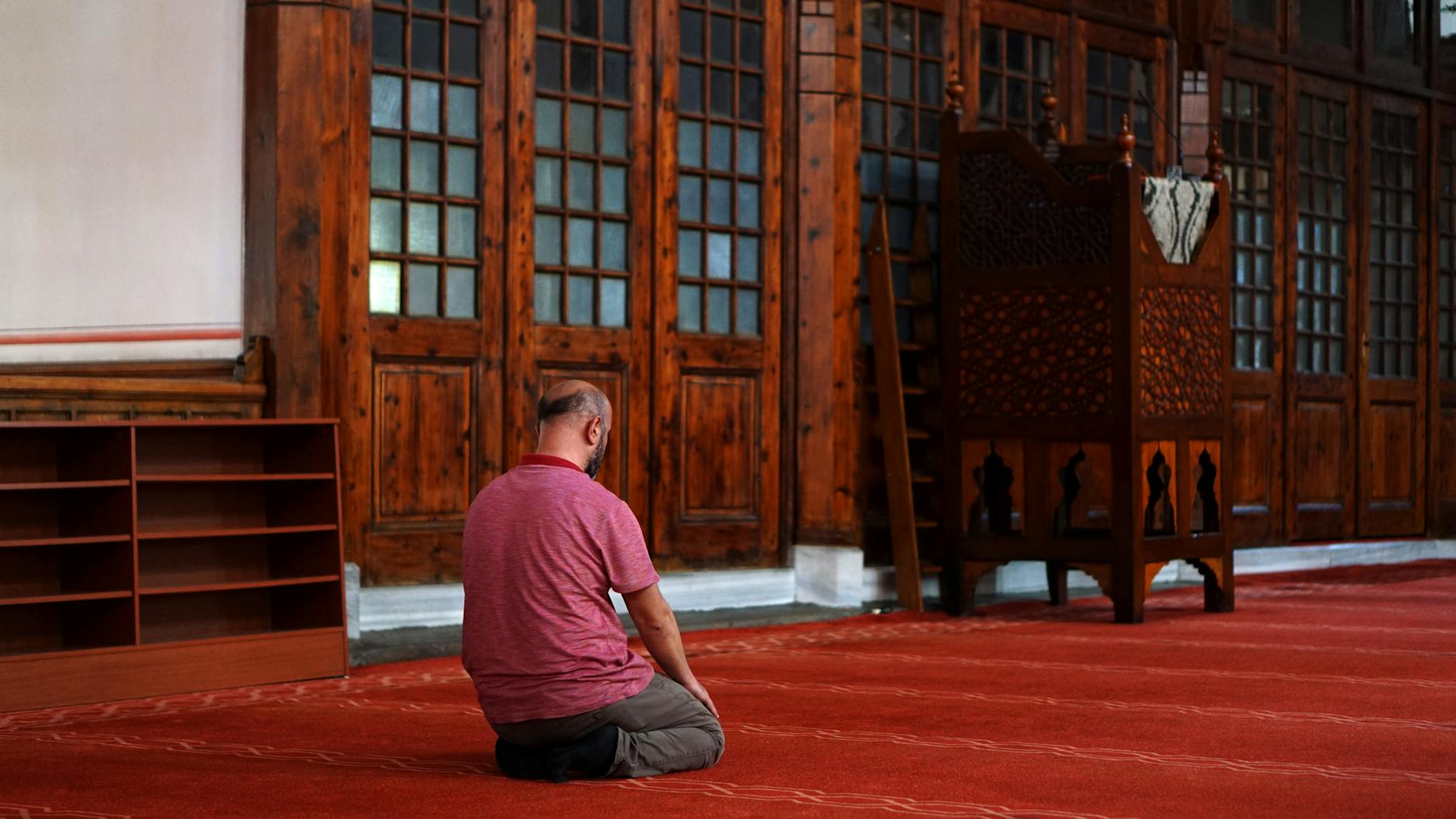
When visiting mosques in Turkey, modesty is the primary rule to show respect for the community. Women must cover their heads with a Headscarf and ensure their shoulders and legs are not visible. If you are exploring the city in summer attire, the mosque usually provides clean scarves and long robes at the entrance for guests to use free of charge. Men should avoid wearing shorts that end above the knee or sleeveless tank tops. Before entering the carpeted Prayer hall, you must remove your shoes and place them in the wooden shoe racks provided near the door.
Photography and Inner Conduct
Capturing the stunning Gothic windows and 14th-century Italian architectural remnants is permitted, but you must adhere to strict photography rules. Never use a flash, as it disrupts the spiritual atmosphere, and avoid taking photos of individuals performing their Namaz or using the Ablution area (the fountain where worshippers wash before prayer). Keep your voice at a whisper and turn your mobile phone to silent before stepping inside. Following these simple Istanbul travel tips ensures that you are treated as a welcome guest rather than a temporary intruder in this sacred, historic space.
Where to Eat Nearby: Finding the Best Local Food in Karaköy
The best local food in Karaköy is found hidden within the hardware stalls of the Perşembe Pazarı market at traditional tradesmen restaurants, where authentic home-style Turkish cuisine is served at a fraction of the price of the tourist-heavy waterfront cafes. While the revitalized pier area offers trendy views, the real soul of the neighborhood’s culinary scene remains tucked away in the narrow alleys surrounding the Arap Mosque. To experience the best food in Karaköy, you must look past the neon signs and follow the local shopkeepers when the clock strikes 12:00 PM.
The Authenticity of the Esnaf Lokantası
For those seeking local Istanbul eats, skipping the overpriced tourist cafes is a mandatory rule. These “Instagrammable” spots often prioritize aesthetics over flavor, charging 3 times the price for a meal that lacks the depth of traditional seasoning. Instead, look for an Esnaf Lokantası, which is a “tradesmen restaurant” designed to feed the local workforce. These establishments are the backbone of Turkish culinary culture, offering a rotating menu of daily-prepared dishes that taste exactly like a home-cooked meal.
The tradition of the Esnaf Lokantası dates back centuries, serving as a communal dining room for everyone from blacksmiths to bank managers. In these spots, you don’t order from a printed menu; you walk up to the heated glass counter and point to what looks best. 15 years of living in this city has taught me that if the place is crowded with locals wearing aprons or carrying toolkits, the food is guaranteed to be exceptional.
What to Order for a Quick, Authentic Lunch
When navigating Karaköy restaurants near the Arap Mosque, focus on the staples of the Turkish midday diet. The gold standard for a satisfying lunch is Kuru Fasulye, a rich white bean stew cooked with buttery tomato sauce, often featuring small pieces of cured beef or lamb. Pair this with a side of Plov (buttery Turkish rice pilaf) and a bowl of chilled cacık (yogurt with cucumber and mint) to balance the flavors.
For a specific recommendation, head 2 minutes south of the mosque to the small eateries located on the street corners of the hardware district. These spots specialize in “tencere yemeği” (pot meals) like stuffed peppers, eggplant moussaka, and slow-cooked lamb shanks. These dishes are prepared early in the morning and are often sold out by 3:00 PM, so arriving early is essential to get the best selection.
Berk’s Insider Tip: Look for the small tea house near the entrance. It’s one of the most peaceful spots in Karaköy to grab a ‘çay’ and admire the belfry-turned-minaret away from the crowds.
Finishing with a Local Legend
No culinary exploration of this area is complete without visiting Karaköy Güllüoğlu. Located just a 5-minute walk from the mosque, this is widely considered the temple of Turkish sweets. Unlike the generic shops found in Sultanahmet, this family-run institution focuses on precision. Order a portion of classic pistachio baklava and pair it with a glass of Turkish tea to cut through the sweetness. It is the perfect way to conclude a day of exploring the Gothic secrets of the neighborhood while supporting businesses that have been part of the city’s fabric for decades.
Arap Mosque vs. The Bulgarian Iron Church: Istanbul’s Architectural Outliers
Arap Mosque and the Bulgarian Iron Church stand as the 2 most distinct architectural anomalies in the city, representing a fascinating intersection where European Gothic forms meet the historical layers of Ottoman Istanbul. While both structures deviate sharply from the traditional dome-and-minaret skyline, they tell different stories of the city’s 1,600-year evolution through their unique materials and cultural origins.
The Contrast of Stone and Metal: Gothic vs. Neo-Gothic
The architectural dialogue between these 2 Istanbul hidden gems begins with their construction. Arap Mosque, originally built by Dominican friars in the 14th century as the Church of San Domenico, is a masterclass in Italian Gothic masonry. Its defining feature is the rectangular bell tower, which now serves as a minaret but retains its unmistakably medieval European silhouette. The structure relies on heavy stone walls and pointed arches that echo the cathedrals of Southern Europe.
In contrast, St. Stephen’s Church, commonly known as the Bulgarian Iron Church, is a feat of 19th-century industrial engineering. Completed in 1898, this structure is made entirely of prefabricated cast iron architecture. Because the ground in Balat was too weak to support a heavy stone building, the community commissioned 500 tons of iron components from Rudolph von Wagner in Vienna. These pieces traveled via the Danube and the Black Sea to reach the Golden Horn. While Arap Mosque is an organic piece of medieval history, the Iron Church is a Neo-Gothic marvel of the industrial age, gleaming with white paint and gold-plated ornaments that shimmer against the water.
Karaköy Hardware vs. Balat’s Bohemian Pulse
The environments surrounding these unique churches Istanbul offers are as different as the buildings themselves. Arap Mosque is tucked away in the labyrinthine “Perşembe Pazarı” district of Karaköy. This area is the city’s industrial heartbeat, filled with shops selling specialized hardware like 10-millimeter drill bits, heavy-duty chains, and maritime pulleys. Walking to the mosque involves navigating narrow alleys where the air smells of machine oil and brewed tea. It is a gritty, authentic experience that rewards the traveler who isn’t afraid of a little urban chaos.
Crossing over to the shores of the Golden Horn, the atmosphere shifts entirely in Balat. The neighborhood surrounding the Bulgarian Iron Church is famous for its vibrant social fabric. Here, you find colorful historic houses, vintage auction houses (mezat), and third-wave coffee shops. While Karaköy’s Arap Mosque is surrounded by the clinking of metal tools, Balat is defined by the sound of children playing in the streets and the chatter of locals in centuries-old tea gardens. These 2 districts perfectly illustrate the duality of multicultural Istanbul: one side focused on the commerce and trade that built the empire, the other on the communal life of its diverse residents.
Why These Outliers Define the City’s DNA
Understanding these buildings is essential for any discerning traveler because they challenge the “East meets West” cliché with actual physical evidence. They prove that Istanbul was never a monolithic culture. Instead, it functioned as a laboratory for architectural experimentation.
The presence of a 14th-century Gothic tower in a hardware market and a prefabricated metal church on a Balkan shoreline highlights the city’s historical tolerance and appetite for global trends. These structures are not just religious sites; they are monuments to the communities—Latins, Genoese, and Bulgarians—who left their permanent mark on the city’s map. Exploring both sites provides a comprehensive view of how different eras and different materials created the complex, layered city we navigate today.
Frequently Asked Questions About Arap Mosque
The Arap Mosque is a free-to-visit historical site that serves as the only remaining Gothic religious structure in Istanbul dating back to the early 14th century. This former Dominican church represents a unique fusion of Italian architecture and Ottoman spirituality, making it a cornerstone of any Karaköy travel guide.
Is there an entrance fee for the Arap Mosque?
There is no entrance fee to visit the Arap Mosque. As an active place of worship, it is open to the public without charge, similar to other Istanbul mosque facts regarding major sites like the Blue Mosque or the New Mosque. Visitors are welcome to explore the interior and courtyard, though donations for the upkeep of the 700-year-old structure are appreciated by the local community.
Why is it called the “Arab” Mosque?
The name “Arap” (Arab) refers to the Spanish Muslims who were expelled from Spain during the Inquisition in 1492. Sultan Bayezid II settled these refugees in this specific neighborhood of Galata. While some local legends suggest the building dates back to an 8th-century Arab siege of Constantinople, architectural evidence confirms it was originally the Church of San Domenico, built in 1325. The name became permanent as the area transformed into a vibrant hub for the Arab diaspora during the Ottoman era.
Can non-Muslims enter during prayer?
Tourist access is restricted during the 5 daily prayer sessions to ensure a peaceful environment for worshippers. It is best to plan your visit between prayer times—typically mid-morning or mid-afternoon—to fully appreciate the Gothic arches and intricate wood carvings. When entering, visitors should follow standard etiquette:
- Remove your shoes before stepping onto the carpets.
- Dress modestly, ensuring shoulders and knees are covered.
- Women must cover their hair with a scarf, which is often provided for free at the entrance.
- Avoid flash photography, especially if there are individuals praying in the corners of the hall.
How old is the building exactly?
The foundation of the current structure dates back to 1325, making the building nearly 700 years old. It was constructed by the Genoese during the 14th century as a Roman Catholic church. Following the 1453 conquest of Istanbul, the building was converted into a mosque. Its most striking feature, the tall square bell tower, was modified into a minaret but still retains its original Italian Gothic silhouette, which stands out among the traditional domes of the city.
Conclusion
For me, the Arap Mosque is the ultimate embodiment of why I’ve called this city home for fifteen years. It is the “hidden in plain sight” philosophy personified. In a city that often screams its history through massive domes and towering minarets, this building whispers. It’s a Gothic secret wrapped in an Islamic soul, standing as a stubborn reminder that Istanbul doesn’t just change—it layers.
When you look up at that square belfry—which has served as a campanile for Dominican friars and now as a minaret for the faithful—you aren’t just looking at architecture. You’re looking at the Genoese, the Arabs of Andalusia, and the Ottomans all sharing the same footprint. My personal verdict? If you want to understand the true DNA of Istanbul, you don’t find it only in the grand mosaics of the Hagia Sophia; you find it here, tucked away between the hardware stores and tea houses of Karaköy.
I often come here when the frantic energy of the city starts to feel a bit too loud. Just a few steps outside the courtyard, the streets are a chaotic symphony of clattering trolley carts and the scent of industrial grease. But once you step through that small entrance, the world softens.
My final advice for you isn’t about which bus to take or what time the doors open. It’s simply this: sit down. Find a spot on one of the wooden benches in the courtyard, stay quiet, and just listen. Beyond the stone walls, you’ll hear the muffled, rhythmic pulse of the city—the distant, haunting whistle of a ferry docking at the Karaköy pier and the low hum of the Bosphorus. It’s in these moments of stillness that Istanbul truly reveals itself. Don’t just rush to tick another “sight” off your list. Slow down, look at the sharp Gothic arches against our chaotic skyline, and let the city’s layers settle into your mind. The best parts of Istanbul aren’t the ones you find on a map; they’re the ones you feel when you finally stop looking for them.
Comments
Share your thoughts with us