There’s a specific kind of salt-heavy breeze that hits you when you walk along the Golden Horn in the late afternoon. It’s the scent of old Istanbul—a mix of the sea, roasting coffee from a nearby stall, and the faint, dusty aroma of centuries-old brick. I’ve spent fifteen years wandering these shorelines, and yet, every time I round the corner from the ferry terminal into Balat, one particular sight still makes me stop in my tracks.
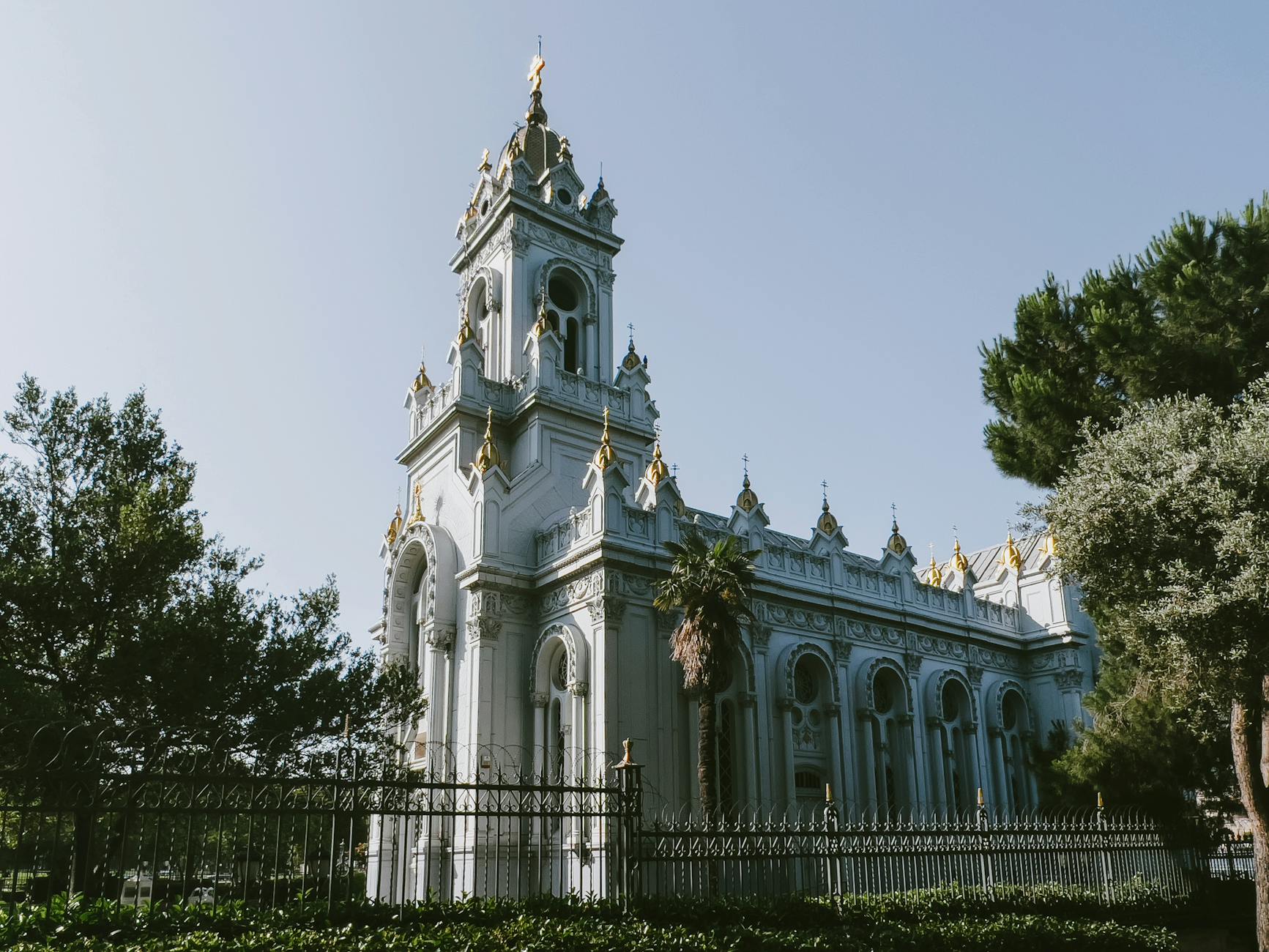
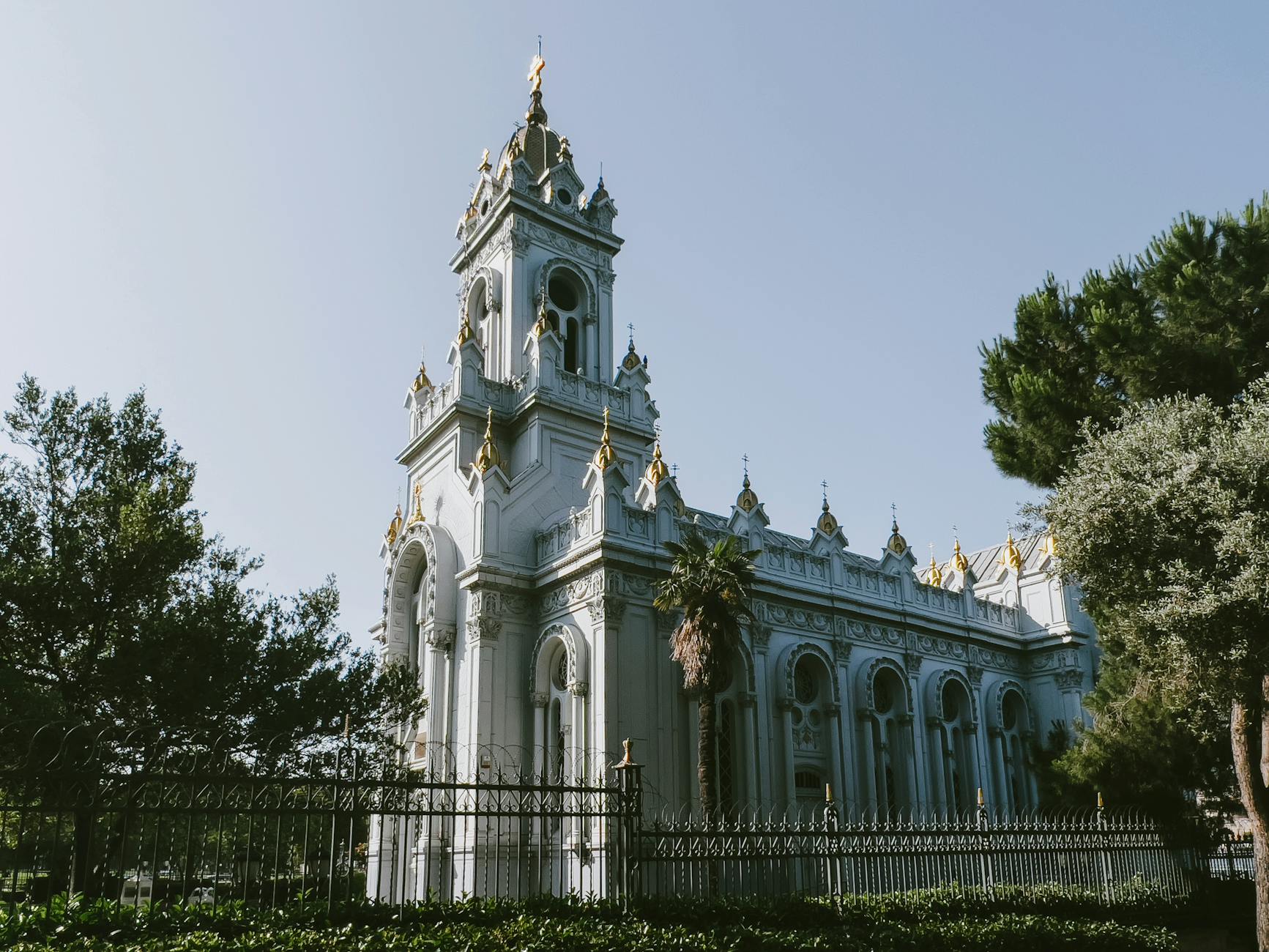
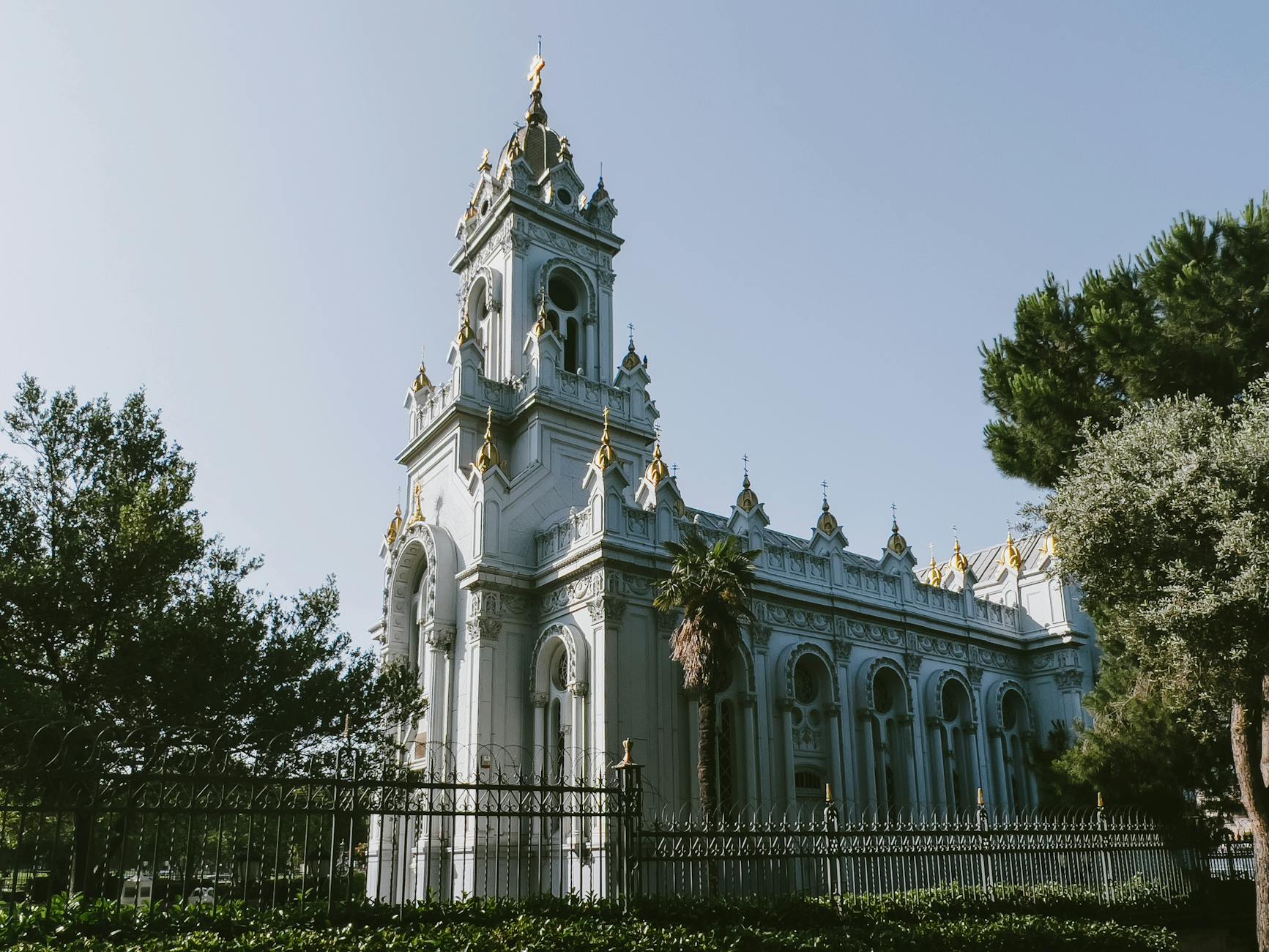
Amidst the iconic, colorful houses that have made Balat a photographer’s dream, there is a structure that looks like it was plucked straight out of a Victorian fairy tale and dropped onto the banks of the Haliç. It gleams with a pale, rhythmic elegance, its neo-Gothic towers reaching toward the sky. To the casual observer, it looks like a grand stone cathedral. But walk up to it, give the exterior wall a light tap with your knuckles, and you’ll hear something entirely unexpected: a hollow, metallic clink.
This is the Sveti Stefan, better known to us locals as the Bulgarian Iron Church. In a city built on layers of Byzantine stone and Ottoman wood, this building is a glorious anomaly. It is, quite literally, a giant 19th-century “Lego set” made of five hundred tons of prefabricated cast iron.
Back in the day, the ground here was too soft to support a traditional stone structure, so the engineers of the time came up with a radical solution: they forged the entire church in Vienna, shipped it down the Danube on barges, and bolted it together right here on the waterfront. It is a triumph of industrial-age ingenuity and religious devotion, standing as a testament to the diverse, multi-layered soul of the neighborhood.
Whenever friends visit me from abroad, I tell them that if they want to understand the true “melting pot” nature of Istanbul, they have to see the Iron Church. It’s not just a monument; it’s a survivor of fires, earthquakes, and the shifting tides of history. Let me take you through the heavy doors and show you why this metallic masterpiece is the heart and soul of Balat.
A Neighborhood of Layers: Finding Sveti Stefan in Balat
If Istanbul is a tapestry, Balat is the section where the threads are the most colorful, slightly frayed, and rich with the scent of history and sea salt. Having lived in this city for fifteen years, I’ve seen neighborhoods rise and fall in popularity, but Balat—the historic Jewish Quarter—remains the place I take my friends when they want to see the city’s soul.
In 2026, Balat has hit a beautiful stride. It’s no longer just a “hidden gem,” but it hasn’t lost its grit either. As you walk down from the upper slopes, past the laundry lines strung between brightly painted houses, you’ll feel a sensory shift. The air gets cooler as you approach the Golden Horn (which we locals call the Haliç), and the sound of distant ferry horns starts to mingle with the chatter of neighborhood kids playing football.
One thing I always tell people is that to truly appreciate this city, you have to get out of the Sultanahmet bubble. While the Blue Mosque is stunning, it can feel like a museum. If you want to wake up in a place where the local bakery owner knows your name after two days, you should look for a real Istanbul vibe in neighborhoods that actually breathe.
The Magic of the Golden Horn Waterfront
When you finally reach the waterfront, the atmosphere changes. The Golden Horn is a horn-shaped fjord that divides the historic peninsula from the “newer” side of the city. In the morning light of 2026, the water has a shimmering, metallic quality that perfectly mirrors the structure we’ve come to see.
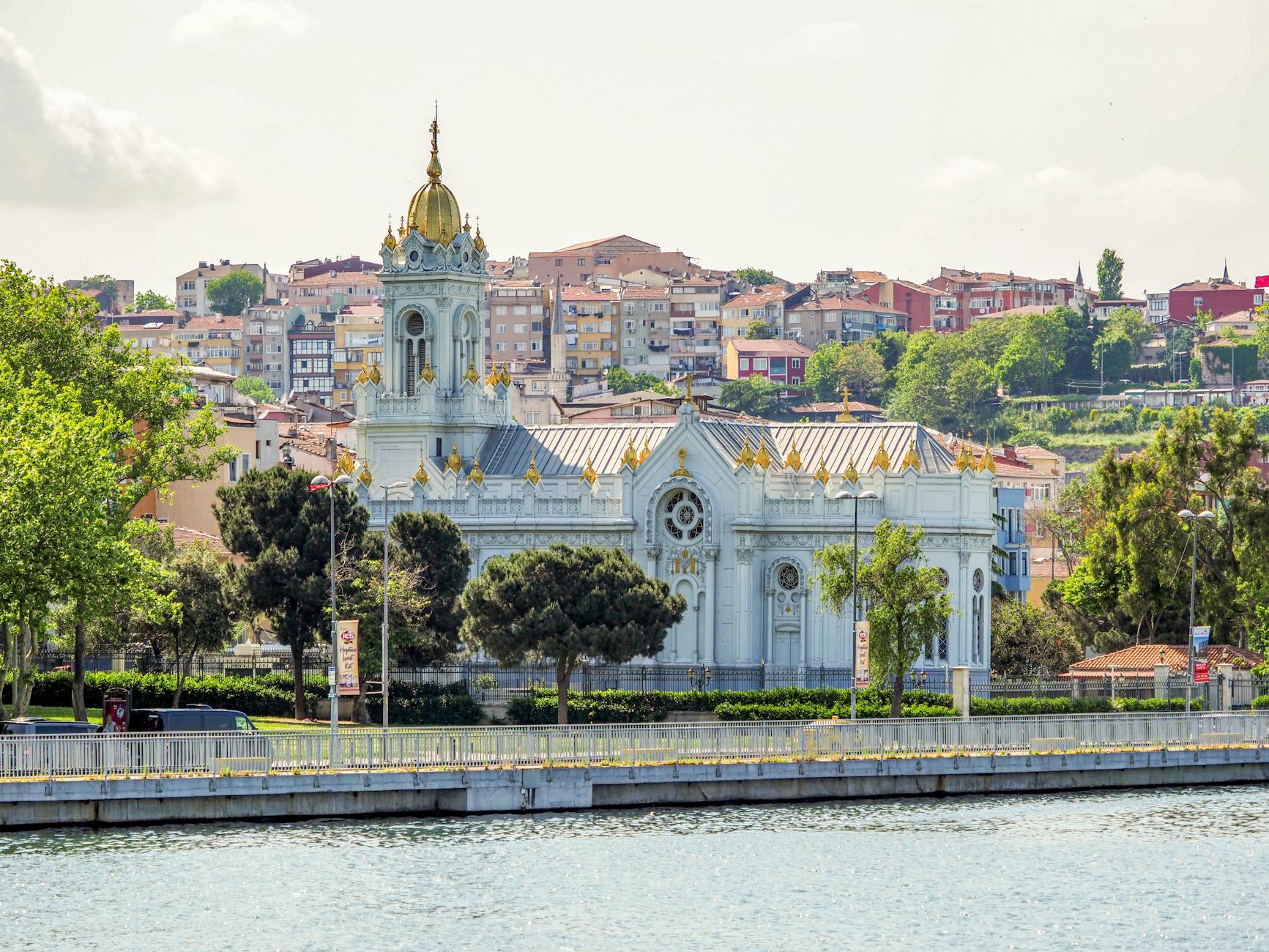
Walking along the shore, you’re hit with a distinct sensory experience. There’s the briny smell of the water, the sight of retirees fishing with rhythmic patience, and the sudden, startling appearance of a building that looks like it was transported from 19th-century Vienna and dropped onto the Istanbul shoreline. This is Sveti Stefan, the Bulgarian Iron Church.
An Industrial Jewel Among the Ruins
What makes Sveti Stefan so striking is how it defies your expectations of Istanbul architecture. Most of our historic landmarks are heavy—massive stone walls, thick Ottoman bricks, and lead-domed mosques that feel anchored deep into the earth.
Then, you see this.
It is delicate, ornate, and impossibly white, shimmering against the blue of the Haliç. It’s a masterpiece of neo-Gothic and neo-Baroque design, but here’s the kicker: it’s made entirely of prefabricated cast iron. In a city of stone, it is a machine-age marvel. As a local, I still find myself stopping to stare at it. While a Simit (our famous sesame-crusted bread) might cost you 20 TL and a decent coffee around 100 TL (roughly 2 USD) in the nearby cafes, the view of this iron giant reflecting in the water remains one of the most priceless experiences in the city. It represents a layer of our history—the Bulgarian community’s struggle for independence—cast in metal and standing tall against the salt air for over a century.
The Miracle of Metal: Why Wood and Stone Weren’t Enough
If you’ve spent any time walking through the historic neighborhoods of the Golden Horn, you’ve probably noticed a pattern. Istanbul is a city of layers, usually built from heavy Anatolian stone or the fragile, weathered wood of Ottoman-era mansions. But when you stand in front of Sveti Stefan (St. Stephen), something feels “off” in the most fascinating way. It doesn’t look like it belongs to the earth; it looks like it was engineered.
And that’s because it was. To understand why this church is made of iron, you have to understand the two biggest enemies of 19th-century Istanbul: fire and mud.
The Ghost of the Wooden Church
Back in 1849, the Bulgarian community didn’t have this shimmering monument. They started small, with a modest wooden house donated by a statesman named Stefan Bogoridi. For a while, it served its purpose, but in a city where neighborhoods could be leveled by a single stray spark, wood was a gamble. After a devastating fire damaged the original structure, the community knew they needed something permanent.
They wanted a grand cathedral that represented their growing national identity. However, they hit a literal “soft spot” in the geography of the city. While the quiet streets of Zeyrek still showcase the beautiful, haunting charm of traditional wooden architecture, the Bulgarians in Balat realized that rebuilding in wood was a recipe for heartbreak. They needed something that could survive the frequent fires that plagued the Golden Horn.
The Golden Horn’s Muddy Secret
You might look at the calm waters of the Golden Horn and think it’s the perfect place to build. Local architects will tell you otherwise. The shoreline here is essentially a swampy basin. If you try to build a massive, traditional stone church on this soil, physics will eventually win. The weight of the marble and granite would cause the building to tilt or sink into the mud—a problem that has plagued many waterfront structures in Istanbul for centuries.
By the 1890s, the Bulgarian community faced a dilemma: stone was too heavy for the ground, and wood was too dangerous for the fire-prone neighborhood. They needed a Third Way. They needed something light enough to sit on the soft silt of the Golden Horn but strong enough to stand as a monumental house of worship.
1890s High-Tech: The Prefabricated Revolution
Enter the cutting-edge solution of the late Victorian era: Iron. In the 1890s, iron was the “tech” of the world. Think of the Eiffel Tower (1889)—metal was the material of progress.
An Armenian architect from Istanbul, Hovsep Aznavur, won the design competition with a radical idea. He suggested a prefabricated iron church. The components were cast in Vienna by a company called Rudolf Waagner, then shipped down the Danube River, through the Black Sea, and right into the Bosphorus.
It was essentially a 500-ton “Lego set” for adults. They drove 500 wooden piles into the mud to create a foundation and then bolted the iron plates together. It was a masterpiece of problem-solving. Today, in 2026, it remains one of the only surviving prefabricated iron churches in the world.
| Feature | Wooden Church (1849) | Stone Traditional | Sveti Stefan (Iron) |
|---|---|---|---|
| Fire Resistance | Extremely Low | High | High |
| Weight | Very Light | Extremely Heavy | Moderate (Ideal) |
| Durability in Mud | Decent | Poor (Sinking) | Excellent |
| Construction Origin | Local | Local | Vienna, Austria |
| Current Status | Gone (Fire) | N/A | Fully Restored |
Walking through Balat today, you’ll see plenty of colorful cafes where a quick Çay (Turkish tea) will run you about 60 TL (just over 1 Euro in our current 2026 economy). But as you sip your tea, look toward the water. That silver-white glow isn’t just paint; it’s a 19th-century engineering miracle that refused to sink into the Istanbul mud.
From Vienna to the Horn: The Great Danube Journey
When you stand in front of the Sveti Stefan (St. Stephen’s) today, it feels like it has always been a permanent fixture of the Balat shoreline. But the truth is, this church is a world traveler. To understand why it’s made of iron, you have to understand the ground it sits on. Back in the 19th century, the shoreline of the Golden Horn was notoriously soft and silty. A traditional stone structure of this size would have likely sunk or cracked over time.
The solution? Prefabricated iron. It was lighter, sturdier, and—crucially for the era—fireproof.
The Vision of Rudolph von Wagner
To bring this vision to life, the Bulgarian community looked toward the engineering capital of the world at the time: Vienna. They commissioned the Waagner Company, led by the renowned Rudolph von Wagner, to design and manufacture the church.
Wagner didn’t just treat this as a construction project; he treated it as a feat of industrial art. Every single piece, from the massive support beams to the delicate floral motifs on the altar, was cast in Vienna. By the time they were finished, they had produced over 500 tons of iron. This wasn’t just a building; it was a giant, 19th-century engineering marvel waiting to be assembled.
500 Tons Across a Continent
Now, imagine the logistical nightmare of 1892. There were no cargo planes or heavy-duty trucks to move 500 tons of metal across Europe. Instead, the church began an epic journey down the Danube River.
The components were loaded onto massive barges in Vienna and sailed the length of the Danube, passing through the heart of the Austro-Hungarian Empire, navigating the treacherous “Iron Gates” gorge, and finally spilling out into the Black Sea. From there, the shipment braved the open waves before finally entering the Bosphorus.
Whenever I’m enjoying a ferry-hopping tour along the coast today, I often look out at the mouth of the Golden Horn and try to visualize those barges arriving. Even in 2026, with our modern tankers, the sight of a “flat-pack” cathedral arriving by sea would be a spectacle. In the 1890s, it must have been nothing short of a miracle for the locals watching from the shore.
A Giant 3D Puzzle
Once the parts arrived in Balat, the real work began. This wasn’t a job for traditional masons, but for engineers and riveters. For a year and a half, the shoreline echoed with the sound of hammers and bolts. The assembly process was essentially a giant 3D puzzle; every plate was numbered and fitted with precision.
While the cost at the time was roughly 4 million silver rubles, today’s visitors will find Balat a bit more accessible, though the city has certainly gotten pricier recently. As we move through 2026, expect to pay around 150 TL (about 3 Euros) for a solid Türk Kahvesi (Turkish Coffee) in the nearby cafes—a small price to pay for a view of such a masterpiece.
Berk’s Insider Tip: Look closely at the exterior base of the church—you can still find the original stamps of the Waagner company from Vienna, proof of its long journey down the Danube.
The fact that this structure survived the salty air of the Golden Horn for over 130 years is a testament to the Bulgarian Iron Church history and the sheer quality of Viennese craftsmanship. It’s a piece of Central Europe that found its soul in the heart of Istanbul.
Neo-Byzantine Elegance: An Architectural Deep Dive
If you’ve spent any time wandering the hilly backstreets of Balat, you know that Istanbul is a city of stone, brick, and mortar. But as you step toward the shore of the Golden Horn, St. Stephen of the Bulgars—or Sveti Stefan as we locals call it—stands out like a shimmering anomaly. It doesn’t just look different; it feels different. After 15 years of showing friends around this neighborhood, I still get a little thrill when I see those golden domes catching the late afternoon sun.
In 2026, with the Golden Horn waterfront more vibrant than ever, the church remains the undisputed crown jewel of the district. But to truly appreciate it, you have to look past the “iron church” label and understand the sheer architectural ambition that brought this place to life.
A Stylistic Melting Pot: Gothic Meets Baroque
The Church is a fascinating study in what we call Neo-Byzantine architecture, but it doesn’t stop there. Because it was designed by an Ottoman Armenian architect, Hovsep Aznavur, and fabricated in Vienna by Rudolph von Wagner, it carries a very European soul within an Istanbul body.
As you walk around the exterior, you’ll notice a beautiful tension between styles. The verticality and the pointed window frames scream Neo-Gothic, reaching for the heavens with a certain sharp discipline. Yet, the decorative flourishes—the swirls, the floral motifs, and the ornate cornices—are pure Neo-Baroque. It’s a “best of both worlds” approach that was very fashionable in the late 19th century, reflecting an empire that was looking toward Europe while trying to maintain its own distinct identity.
The Prefabricated Marvel
It’s easy to forget when looking at the elegant facade, but you are essentially standing inside a giant jigsaw puzzle. The entire structure, weighing nearly 500 tons, was cast in Austria and shipped down the Danube and through the Black Sea.
Here are the details that always stop me in my tracks:
- The Rivets: If you look closely at the exterior joints, you can see the massive rivets holding the plates together. It’s a reminder that this is as much a feat of industrial engineering as it is a religious site.
- The Cast-Iron Details: Notice the repeating patterns on the exterior walls. Because these were made from molds, the level of precision is something stone carvers of the era could only dream of.
- The Golden Domes: In the 2026 light, the recently restored gilding on the domes is breathtaking. When the sun begins to dip behind the Eyüp hills, the domes glow with a deep, honeyed amber.
The Heart of the Church: The Iconostasis
Once you step through the heavy doors, the “industrial” feel of the cast iron architecture vanishes, replaced by a warmth that feels almost impossible for a metal building. This is largely due to the Orthodox iconostasis.
In most churches, the iconostasis—the ceremonial wall of icons separating the nave from the sanctuary—is carved from local wood. Here, the contrast is deliberate. While the shell of the building is cold, rigid iron, the iconostasis is a masterpiece of intricate, hand-carved wood, shimmering with gold leaf. It follows the traditional Russian style of the era, and the scent of beeswax and incense that lingers around it makes you forget you’re essentially standing inside a metal box.
The icons themselves are windows into another world, painted with that classic Eastern Orthodox depth. Looking at the dark, soulful eyes of the saints against the backdrop of the white-painted iron ribs of the ceiling creates a visual harmony you won’t find anywhere else in Istanbul.
Berk’s Insider Tip: While most people stay on the ground floor, try to access the choir gallery if it’s open. The perspective of the iron ribs and the way the light hits the altar from above is breathtaking.
Currently, entry to the church is around 100 TL (which, at today’s rate of about 2 Euros, is the best bargain in the city), but the experience of watching the light filter through the Neo-Gothic windows is priceless. It’s a place where 19th-century industrial might meets timeless spiritual grace—a true Balat essential.
The Bulgarian Heart of Istanbul: Culture and Independence
When you step inside the Iron Church, it’s easy to get lost in the gold-leafed grandeur and the rhythmic echoes of the Golden Horn outside. But as someone who has lived in this city for fifteen years, I always tell my friends that the “iron” in this church isn’t just about the architecture—it’s about the steely resolve of the people who built it.
Back in the 19th century, Istanbul was a boiling pot of national awakenings. For the Bulgarians living here, the church wasn’t just a place to light a candle; it was the front line of their fight for identity.
The Struggle for a Voice
To understand why this building is so special, you have to understand the tension of the era. For centuries, under the Ottoman Millet system, the Bulgarian Orthodox community was spiritually governed by the Ecumenical Patriarchate in Fener—just a short walk down the road. However, the Patriarchate was predominantly Greek in character and language.
By the mid-1800s, during the height of the Bulgarian National Revival, the community wanted more than just a place to pray; they wanted to hear the liturgy in their own tongue and to have their own leaders. They wanted spiritual independence from the Patriarchate, which was a massive political scandal at the time. This church became the symbol of that “divorce.” It was a statement of existence in a city that was the heart of two different empires.
Stefan Bogoridi: The Architect of Identity
You can’t talk about this site without mentioning Stefan Bogoridi. He was a fascinating figure—a high-ranking Ottoman statesman of Bulgarian descent who managed to navigate the complex corridors of the Sublime Porte. In 1849, he did something incredibly brave: he donated his own estate, including a large wooden house right here on the water, to be used as a Bulgarian chapel.
That wooden house was the predecessor to the iron masterpiece you see today. Bogoridi’s contribution provided the physical and legal ground for the Bulgarian community to stand on. It’s a classic Istanbul story: a bridge-builder using his influence to carve out a space for his culture. Today, as we look back from 2026, Bogoridi remains a hero for his ability to balance his loyalty to the Sultan with his love for his roots.
A Legacy of Resilience
Visiting in 2026, you’ll notice that the area around the church has become quite vibrant. If you stop for a quick Türk Kahvesi (Turkish coffee) at one of the nearby stalls—expect to pay about 90 TL (roughly 2 USD or 1.80 Euro) for a good one—take a moment to look at the church from a distance.
The building was a “prefab” miracle, shipped in pieces from Vienna because the ground by the Golden Horn was too soft for a heavy stone structure. But to the Bulgarians of the time, the choice of metal was poetic. Stone can crumble, and wood can burn, but their resolve was as unyielding as the iron plates themselves.
The Ecumenical Patriarchate eventually recognized the Bulgarian Exarchate, but the road to that recognition was paved with the determination you feel when you touch these walls. When you walk through those doors, remember that you aren’t just entering a museum or a house of worship; you’re entering a monument to a people who refused to let their culture be silenced. It’s a story of survival, written in iron, standing proudly against the Istanbul skyline.
Rescuing a Masterpiece: The 2018 Restoration
If you had walked with me along the Balat shoreline about fifteen years ago, I would have pointed toward the Bulgarian Iron Church with a bit of a heavy heart. Back then, Sveti Stefan (St. Stephen of the Bulgars) looked more like a ghost ship than a “Pearl of the Golden Horn.” Having lived in this city for 15 years, I’ve seen many monuments face the test of time, but the Iron Church faced a very specific, relentless enemy: the sea itself.
The Battle Against Corrosion and Salt
The very thing that makes this church so poetic—its location right on the edge of the Golden Horn—was nearly its undoing. While building a church out of 500 tons of prefabricated iron was a stroke of genius in the 1890s, iron has a mortal weakness. For over a century, the humid, salty air of the Marmara and the direct spray from the Haliç (Golden Horn) worked their way into every rivet and joint.
By the early 2000s, the church restoration was no longer a choice; it was an emergency. The salt water had caused catastrophic corrosion, eating through the metal plates and threatening the structural integrity of the entire building. The once-proud white exterior had faded into a rusty, flaking brown, and many of the intricate Neo-Gothic ornaments were literally crumbling into the water.
A Seven-Year Labor of Love
What followed was one of the most ambitious Istanbul preservation projects of the modern era. This wasn’t a simple “fix-it” job. Starting in 2011, a massive joint initiative between the Turkish and Bulgarian governments began a seven-year marathon to save the structure.
The process was fascinating to watch as a local. Engineers and artisans had to treat the iron plates one by one. They used specialized sandblasting techniques to remove decades of rust without damaging the original 19th-century metal. In cases where the iron was too far gone, new pieces were forged using the original Austrian blueprints. They also reinforced the ground—which is essentially mud and silt—to ensure the 500-ton giant wouldn’t lean or sink.
The Transformation: Then vs. Now
Fast forward to today in 2026, and the difference is night and day. If you saw the church ten years ago, you wouldn’t recognize it now. The dull, rusted shell has been replaced by a gleaming, pristine white facade that looks as though it was just delivered from Vienna yesterday. The gold-leaf details on the bell tower catch the Istanbul sun so brilliantly that you might need your sunglasses just to look at it from the ferry.
Inside, the restoration is even more impressive. The icons have been meticulously cleaned, and the iron walls, now protected by advanced anti-corrosive coatings, provide a luminous backdrop that you won’t find in any stone cathedral. As you walk through Balat today, where a local Türk Kahvesi (Turkish Coffee) might cost you around 100 TL (about 2 Euros or slightly over 2 USD at current rates), the Iron Church stands as a gleaming testament to what happens when a city decides its history is worth the fight.
Planning Your Visit: Logistics, Etiquette, and Timing
Now that you’re ready to see this metallic marvel for yourself, let’s talk about how to make the most of your trip to Balat. Since I’ve been navigating these streets for 15 years, I’ve learned that timing is everything when it comes to capturing the soul of the Golden Horn.
The Best Light for Your Lens
If you are coming for Balat sightseeing, you’ll want to time your arrival at Sveti Stefan for the late afternoon. As we approach sunset in 2026, the “Golden Hour” isn’t just a photography term—it’s a literal transformation. The low sun hits the white-painted iron plates, making the entire structure glow against the deep blue of the water. For the best interior shots, aim for midday when the sun streams through the stained glass, casting vibrant patterns across the golden altar.
Respecting the Sanctuary
While the Bulgarian Iron Church is a masterpiece of engineering, it remains a sacred space for the local Orthodox community. Sveti Stefan visiting hours are generally from 09:00 to 17:00 daily. Entry is free, but I always suggest leaving a small donation to help with the upkeep of the ironwork.
Photography is allowed, but please, keep the flash off and maintain a respectful silence. It’s not uncommon to see a small liturgy or a local family lighting candles; in these moments, I usually put my camera away and just soak in the incense-scented air. Before you begin your exploration, I highly recommend starting your day like a local. Fuel up with a slow, traditional Turkish breakfast at one of the nearby cafes in Balat; it’s the best way to prepare for a day of walking.
Getting There: Golden Horn Transport
Reaching Balat from the tourist hubs of Eminönü or Karaköy has never been easier. In 2026, the T5 Tramline is your best friend. It runs right along the coast of the Golden Horn. A single trip on your Istanbulkart will cost you about 40 TL (less than 1 Euro or 1 USD at our current rates of 50 TL/Euro).
Alternatively, take the public ferry (Şehir Hatları) from Eminönü or Karaköy to the Balat pier. It’s a breezy 15-minute ride that offers the best view of the church’s silhouette from the water.
Berk’s Insider Tip: The church is exceptionally quiet on Tuesday mornings. If you want the iron halls to yourself for photography or reflection, that’s your window.
The Berk Way: Making a Day of the Golden Horn
Look, I’ve lived in this city for fifteen years, and if there is one mistake I see travelers make, it’s treating the Bulgarian Iron Church as a standalone photo op. They hop out of a taxi, snap the silver-and-white facade, and head straight back to Sultanahmet. To really feel the soul of the Golden Horn, you have to let the neighborhood slow you down. Here is how I’d spend the afternoon if you were visiting me here in 2026.
A Tale of Two Neighborhoods: Fener and Balat
The Iron Church sits right on the border of Fener and Balat, two neighborhoods that are often mentioned in the same breath but have distinct personalities. After you’ve marveled at the cast-iron details of Sveti Stefan, put your phone in your pocket and walk uphill into Fener.
While Balat is famous for its vibrant, candy-colored houses and vintage shops, Fener is the “intellectual” sibling. This was the historic heart of the Greek community (the Rum people) during the Ottoman era. As you walk the winding cobblestones, you’ll see laundry hanging between 19th-century stone houses and elderly locals chatting on doorsteps. It’s an Istanbul walking tour in its purest form—unscripted, slightly crumbling, but deeply authentic.
Finding the ‘Red Castle’
If you look up from the church, you’ll see a massive, crimson brick structure looming over the hillside like a fortress. That’s the Phanar Greek Orthodox College. Locally, we call it Kırmızı Mektep (The Red School). Even in 2026, it remains one of the most prestigious schools in the city.
Getting to it involves a bit of a climb—these hills don’t play fair—but the architecture is staggering. It’s not a museum, so you generally can’t go inside, but standing at its gate gives you a sense of the grandeur this neighborhood once held. It’s a reminder that Istanbul isn’t just a Turkish city; it’s a Mediterranean mosaic of Greek, Armenian, Jewish, and Bulgarian heritage.
The Perfect Finish: Tea with a View
By now, your legs will be asking for a break. For my discerning traveler tips, skip the crowded “Instagram cafes” with the plastic flowers. Instead, find a quiet terrace overlooking the water. My favorite spots are the small, family-run cafes tucked behind the Fener Greek Patriarchate.
Order a Türk çayı (Turkish tea) and perhaps a small plate of Kurabiye (local flour cookies). In today’s 2026 economy, a glass of tea will set you back about 65 TL—which is roughly 1.30 Euros or 1.45 USD. As you sip, look back down toward the Golden Horn. From the right angle, you can see the sun glinting off the iron domes of the Bulgarian Church against the blue of the water. It’s the best way to digest the history you’ve just walked through: quiet, golden, and perfectly Istanbul.
Conclusion
To me, Sveti Stefan is more than just a marvel of 19th-century engineering; it’s the quiet heartbeat of the Golden Horn. In a city built on layers of stone and ancient brick, this iron cathedral stands as a defiant, beautiful anomaly. It reminds us that Istanbul has always been a sanctuary for different voices—a place where the Bulgarian community could ship a church in pieces from Vienna and bolt it into the very fabric of Ottoman life.
My personal verdict? If you leave Balat without stepping inside these iron walls, you haven’t truly seen the neighborhood. While the famous colorful houses nearby get all the social media fame, this is where the real history lives. It’s a testament to the grit and elegance of our multicultural soul—a structure that should, by all laws of nature, have succumbed to the salty air of the sea long ago, yet it stands firmer than ever after its recent restoration.
Instead of rushing off to your next stop, I have one specific piece of advice. After you’ve marveled at the intricate Neo-Baroque details and the surprisingly warm interior, walk across the street to the green space bordering the water. Find a quiet spot on a bench, turn your back to the traffic, and just look out over the Golden Horn toward the shipyards and the distant minarets of the Old City.
If you sit there long enough, the city noise starts to fade, and you’ll hear it: the rhythmic, heavy tolling of the church bells echoing over the water. It’s a sound that has signaled peace and presence here for over a century. Close your eyes, breathe in the salt air, and let that sound wash over you. That is the Istanbul I want you to remember—not just a collection of monuments, but a living, breathing symphony of history.