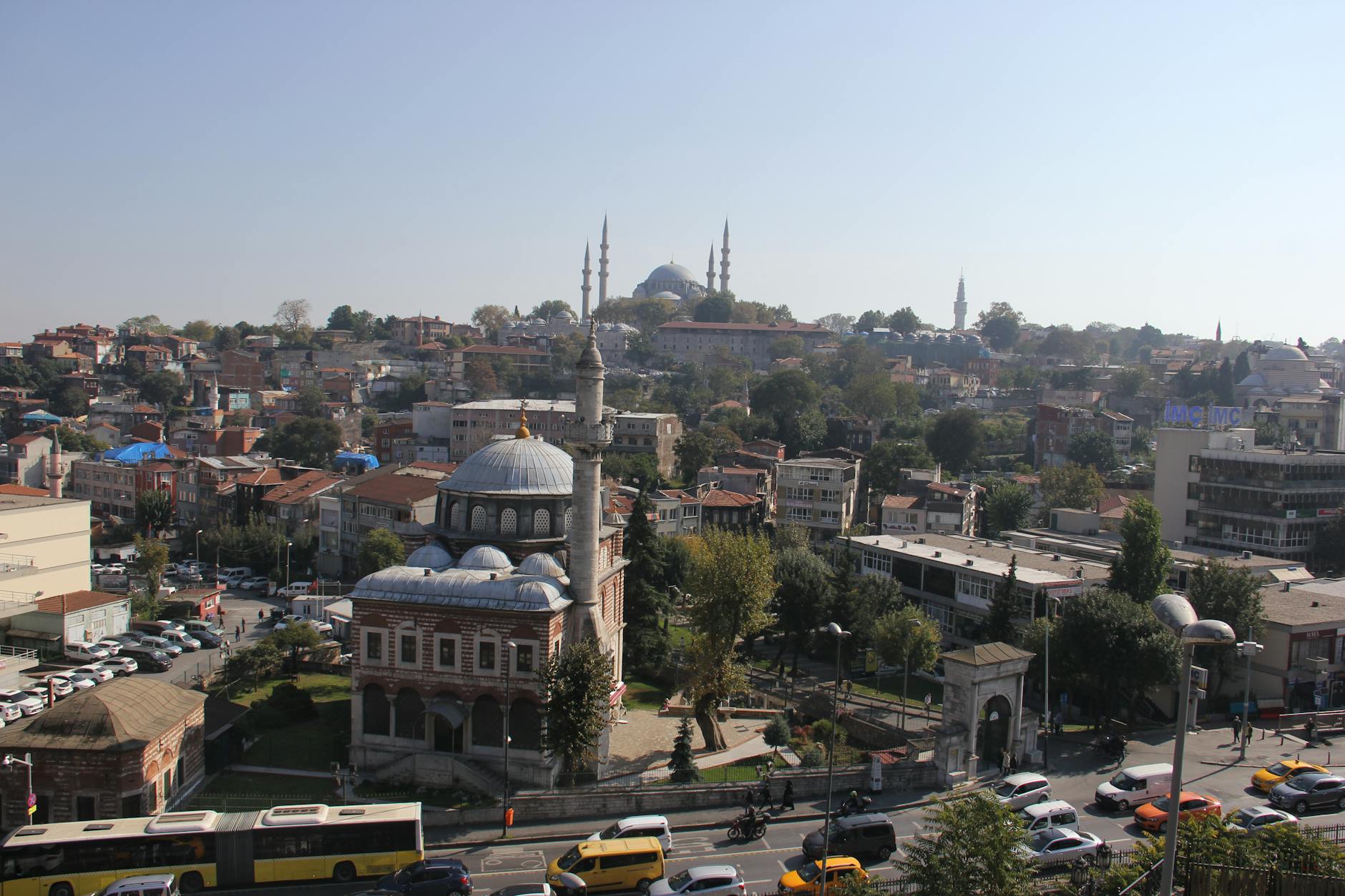
I remember the first time I stumbled into Zeyrek; I had missed my turn heading down toward the Golden Horn and suddenly found myself standing before a sea of weathered timber houses that looked like they were leaning on each other for support. One moment, I was navigating the frantic energy of the Fatih district, and the next, the modern roar of Istanbul simply… vanished. The air smelled of woodsmoke and fresh bread from a nearby stone oven, and the only sound was the distant chime of a tea spoon against a glass.
It’s a rare thing in a city of sixteen million to find a place that feels like it’s holding its breath. For fifteen years, I’ve mapped out the veins of this city—from the busiest ferry terminals to the most obscure transit routes—yet I always find myself returning to these steep, cobblestone hills. Zeyrek isn’t just a neighborhood; it’s a living time capsule. While the crowds are busy jostling for the perfect camera angle at the Blue Mosque, life here moves at the contemplative pace of a slow-brewed Turkish tea.
This corner of the city is a designated UNESCO World Heritage site, but don’t let the formal title fool you. There are no velvet ropes or ticket booths here. It is wonderfully raw and unpolished. You’ll see laundry strung between the jutting bays of Ottoman-era mansions and hear the rhythmic clatter of backgammon pieces from a local kahvehane (traditional coffeehouse). This is the heart of authentic Istanbul—the kind of place where history isn’t something you view behind a glass partition, but something you walk through, touch, and breathe.
If you’re the kind of traveler who prefers the quiet hum of a neighborhood waking up over the artificial flash of a tourist trap, Zeyrek is where you belong. It is the ultimate destination for slow travel, a place where getting lost is actually the point of the journey.
Let me take you through these winding alleys and show you why this neighborhood remains my favorite escape, and how you can experience its quiet, enduring magic for yourself.
A Step Back in Time: The Timeless Allure of Zeyrek
I’ve lived in this magnificent, chaotic city for 15 years now, and people often ask me if the “Old Istanbul” they’ve read about in history books still exists. In 2026, with the city growing faster than ever, it’s a fair question. My answer is always the same: you just have to know which hill to climb.
Stepping into Zeyrek isn’t just a change of scenery; it’s a change of pace. As you leave the roar of the traffic at Unkapanı behind and begin the ascent, the air seems to thicken with history. Your shoes will immediately tell you where you are—the steep, cobbled streets here haven’t been smoothed over for tour buses. They are uneven, stubborn, and utterly charming.
The Living Heart of the Mahalle
What makes Zeyrek one of the city’s truest hidden gems is that it refuses to be a museum. In nearby Sultanahmet, the history is polished, roped off, and priced in Euros. But here, the “mahalle” (neighborhood) culture is pulsing with life.
As you walk, look up. You’ll see laundry lines stretched across narrow alleys, colorful clothes dancing in the breeze between centuries-old Ottoman timber houses. You’ll hear the clinking of spoons against tulip-shaped glasses as neighbors share a tea on a doorstep. This is local life in its rawest, most beautiful form. While many visitors get stuck in the “Sultanahmet Bubble,” I always tell my friends that if they want a real Istanbul vibe, they need to look toward these living breathing districts where the city’s soul still resides.
A Sensory Journey Through Old Istanbul
The sensory experience here is unlike anywhere else in the city. There’s the scent of wood smoke in the winter and the earthy aroma of roasting peppers in the summer. You’ll pass small grocery stores where the owner likely knows the name of every person on the block.
Even with the current economy—where 1 Euro now fetches 50 TL and a USD sits at 45 TL—Zeyrek remains remarkably grounded. You can still find a small esnaf lokantası (a tradesman’s restaurant) serving a steaming bowl of lentil soup for a handful of Lira, a far cry from the inflated prices of the tourist traps.
Why Zeyrek Matters in 2026
In a world that feels increasingly digital and temporary, Zeyrek feels permanent. It’s a place where the 12th-century masonry of the Zeyrek Mosque (the former Monastery of the Pantokrator) stands in the shadow of 19th-century wooden mansions, all while kids chase a football down the street.
When you spend an afternoon here, you aren’t just a spectator; you are part of the scenery. You’ll be greeted with a “Merhaba” (Hello) or a curious, friendly nod from a local craftsman. It’s this warmth—this feeling of being welcomed into a private world—that captures the true Old Istanbul. It’s not just about the buildings; it’s about the people who refuse to let the modern world rush them. Zeyrek reminds us that the best way to see Istanbul is to slow down, find a perch on a high stone step, and simply watch the city breathe.
The Ghost of the Byzantine Empire: The Pantokrator Monastery
When you finally crest the hill and stand before the Zeyrek Mosque, take a moment to catch your breath—not just from the climb, but from the sheer weight of history staring back at you. For me, this is the most hauntingly beautiful spot in Istanbul. While the crowds are currently queuing for hours at the Hagia Sophia, here in 2026, Zeyrek remains a place where you can actually hear your own footsteps echoing against 12th-century brickwork.
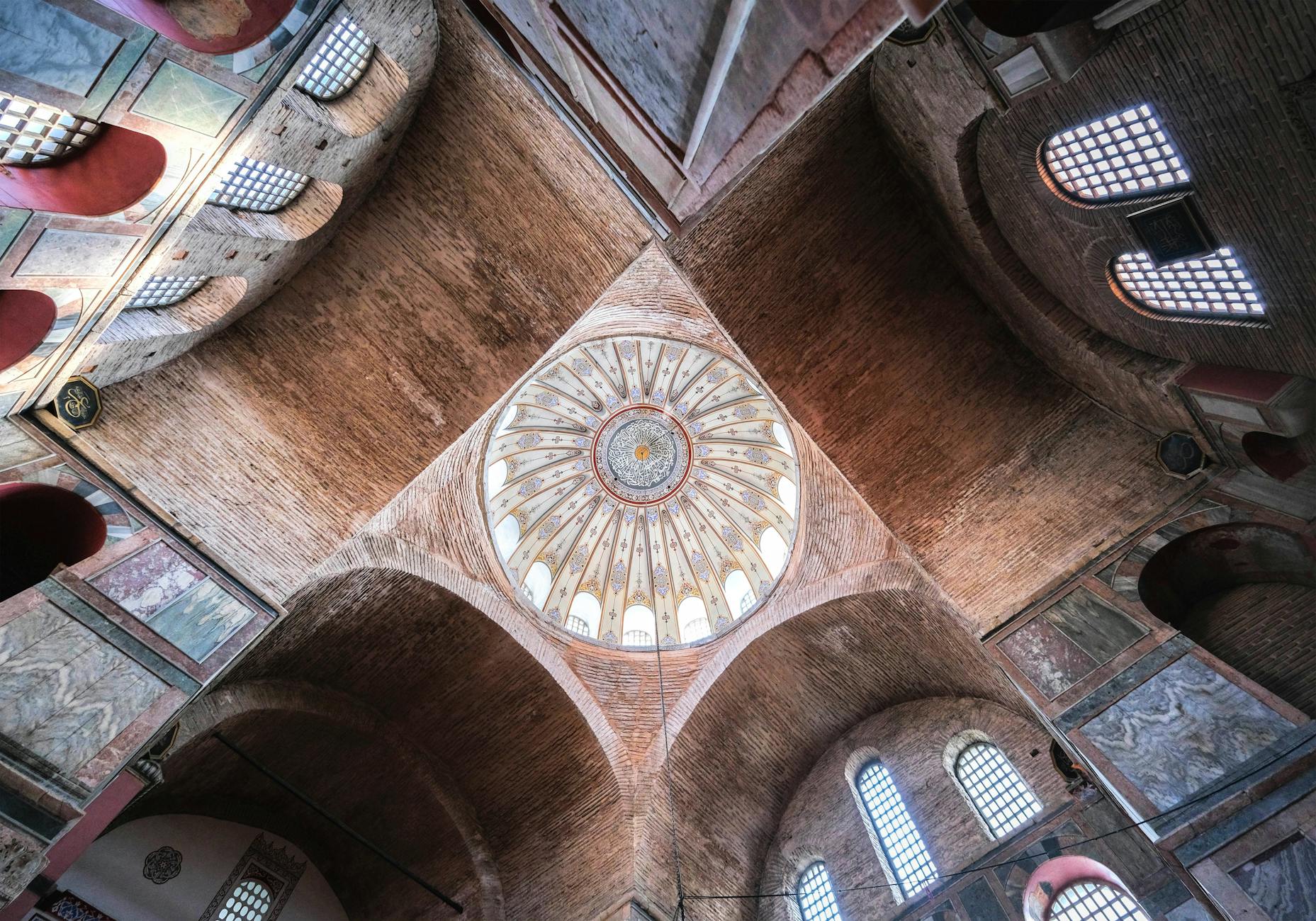
To understand Zeyrek, you have to look past its current life as a mosque and see the “ghost” of the Monastery of the Pantokrator. Built between 1118 and 1136 by Empress Irene and her husband, Emperor John II Comnenus, this wasn’t just a church; it was the largest and most organized social complex in the Byzantine world. It housed a world-class hospital, a library, and an almshouse.
A Trinity of Stone and Faith
What makes this structure architecturally unique is that it isn’t just one building—it’s three. As you walk around the exterior, you can see the distinct “recessed brick” technique that was the height of Comnenian fashion. The complex consists of:
- The South Church: The earliest and most lavish, dedicated to Christ Pantokrator (Christ the Almighty).
- The North Church: Added shortly after and dedicated to the Virgin Eleousa (the Merciful).
- The Middle Chapel: This is the “glue” that bound the two together. Dedicated to Saint Michael the Archangel, it served as the imperial burial chapel for the Comnenian and Palaiologan dynasties.
Imagine, for a second, the imperial processions that once wound through these halls. This was the final resting place for the some of the most powerful men and women of the Middle Ages. Even after the Fourth Crusade saw the monastery looted of its most precious relics—many of which ended up in San Marco in Venice—the structure itself remained a symbol of imperial resilience.
From Imperial Tombs to Ottoman Scholarship
The transition from a Byzantine monastery to an Ottoman mosque is one of my favorite stories of Istanbul’s “survival of the fittest” architecture. After the conquest of 1453, Sultan Mehmed II didn’t tear it down. Instead, he recognized its intellectual pedigree and converted it into the city’s first Madrasah (an Islamic theological school).
The name “Zeyrek” actually comes from the nickname of the famous scholar who taught here, Molla Zeyrek (meaning “the quick-witted”). I find it poetic that a site dedicated to Byzantine healing and learning transitioned so seamlessly into an Ottoman center for the same pursuits.
The architectural shift is fascinating to observe. You’ll see where the Byzantine mosaics were covered with Ottoman plaster and where the Mihrab (the prayer niche indicating the direction of Mecca) was positioned at an angle to align with the faith, creating a unique visual tension with the original Greek floor plan. Much like the way the Theodosius Cistern displays the engineering brilliance of the city’s water systems, Zeyrek displays the mastery of its spiritual and social engineering.
Berk’s Insider Tip: Don’t just look at the Zeyrek Mosque from the outside. If it’s open, head inside to see the incredible Opus Sectile floor—it’s one of the most beautiful Byzantine remains in the city, often hidden under the carpets.
Why the Architecture Still Matters Today
In 2026, the restoration efforts have finally allowed us to see the building in a way my parents’ generation never could. The deep red bricks and the elegant domes represent a “Byzantine Renaissance” that focused on verticality and light.
When you sit in the courtyard today, you might see a local student sipping tea or an elder from the neighborhood counting prayer beads. A small glass of çay (Turkish tea) at the nearby cafe will run you about 25 TL—a bargain considering the 50 TL to 1 Euro exchange rate—and it gives you the best seat in the house to watch the light change on the ancient masonry.
What to look for when you visit:
- The Masonry: Look for the alternating rows of stone and brick that give the building its striped, textured appearance.
- The Domes: There are five in total, creating a rhythm that mimics the rolling hills of the city itself.
- The Window Frames: Notice the slender, triple-arched windows that were designed to flood the interior with “divine light.”
Walking through Zeyrek is a reminder that Istanbul doesn’t delete its past; it just keeps building on top of it. It’s a place where the Byzantine Orthodox heritage and the Ottoman Islamic tradition live in a quiet, respectful embrace, far removed from the neon lights of the modern shopping malls.
Fading Grandeur: The Timber-Framed Houses of Zeyrek
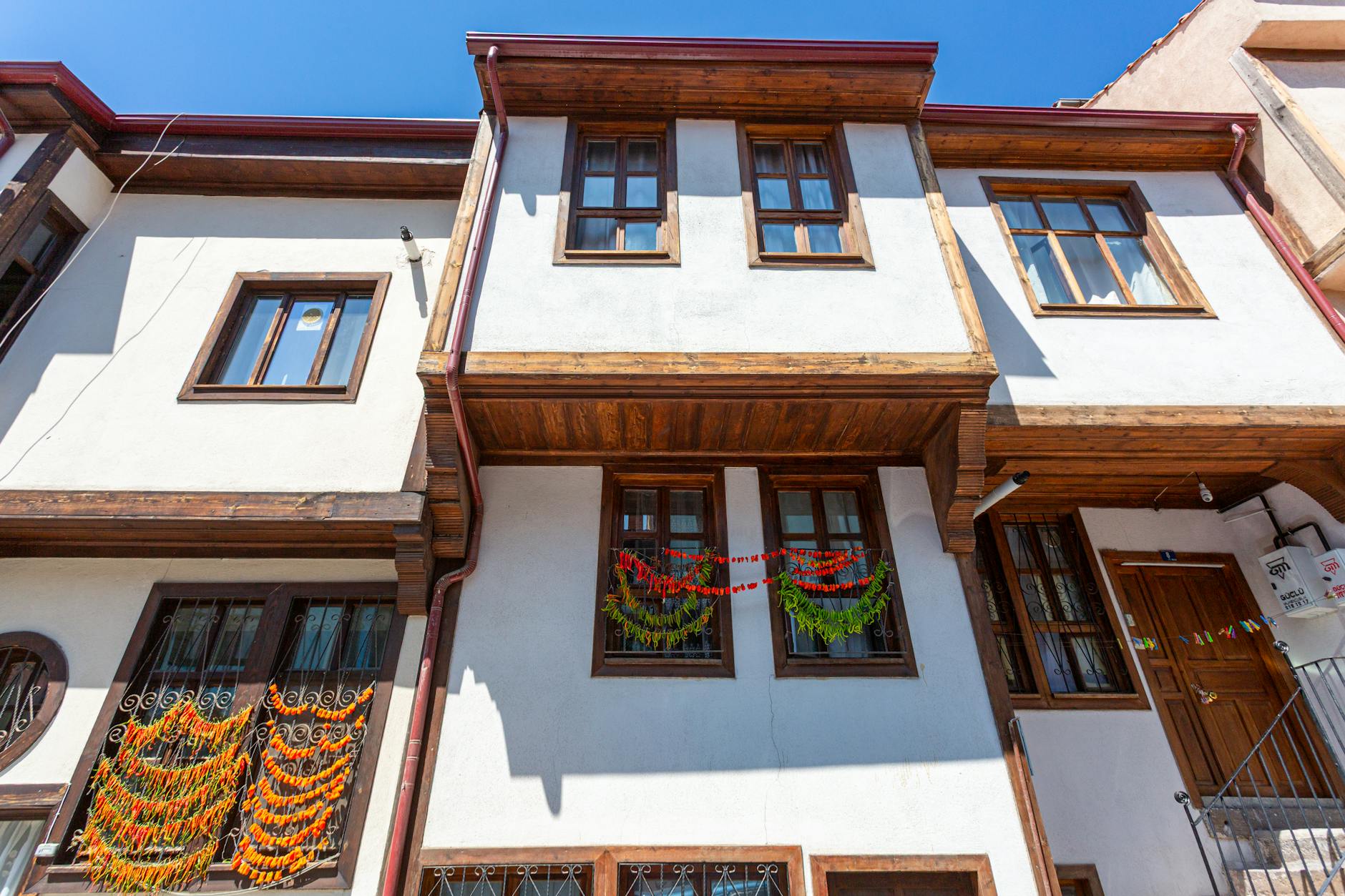
If you close your eyes for a moment and listen to the rhythmic tapping of a carpenter’s hammer echoing through the narrow alleys, you can almost feel the 19th century breathing down your neck. As I walk through Zeyrek in this spring of 2024, heading into 2026, the air smells of charcoal, salty sea breeze from the Golden Horn, and the unmistakable scent of aging cedar. This is where the soul of Ottoman Istanbul resides, trapped within the fragile, tilting skeletons of the city’s remaining wooden houses.
To understand Zeyrek, you have to look up. You’ll see the Cumba—the iconic Ottoman bay window—hanging precariously over the cobblestones. These aren’t just architectural flourishes; they were the “social media” of a bygone era. I remember sitting with my friend Selim last week near the Zeyrek Mosque. We watched an elderly woman peering out from her cumba, her elbows resting on a lace cushion, observing the street life below without ever being fully seen herself. In the heat of the summer, these windows were designed to catch the cross-breeze from the Bosphorus, keeping the interior cool while providing a private stage for the residents to stay connected to the mahalle (neighborhood).
The Architecture of Intimacy
The timber-framed houses of Zeyrek are a testament to a philosophy of living that prioritized warmth and flexibility. Unlike the cold, stony apartments of Galata, these structures were built with bağdadi—a technique of fixing thin wooden laths to a frame and plastering them over. It allowed the houses to “breathe” and even “dance” during the tremors that occasionally shake this city.
However, time and neglect are harsher critics than any earthquake. As I walk past a house with ochre paint peeling like sunburned skin, I notice the intricate fretwork around the eaves. It’s heartbreakingly beautiful. You see, a century ago, these were the homes of high-ranking officials and scholars. Today, they are a patchwork of survival. Many have been divided into smaller units to house families who have migrated here, seeking a foothold in the city.
A Fragile UNESCO Legacy
Zeyrek is part of the UNESCO World Heritage list, a designation that brings both prestige and a heavy burden of bureaucracy. Preserving these fragile structures is an uphill battle. It’s 2026, and while the city has made strides in restoration, the economic reality is stark. With the exchange rate hovering around 1 Euro to 50 TL and 1 USD to 45 TL, the cost of imported high-quality timber and specialized labor has skyrocketed.
I recently spoke with an architect friend who works on these heritage sites. He told me that “restoring one of these houses isn’t just about wood; it’s about heart.” To do it right, you need to use traditional methods, which are expensive. Often, the owners are caught in a Catch-22: they aren’t allowed to tear the houses down because of their historical status, but they cannot afford the astronomical costs of a “heritage-approved” renovation. This has led to a bittersweet aesthetic—a neighborhood that feels like a living museum, yet one that is slowly crumbling under the weight of its own history.
The Voices of the Mahalle
What keeps me coming back isn’t just the Ottoman architecture, but the people who refuse to leave. Last Tuesday, I was invited for tea by “Amca” (Uncle) Hikmet, a man who has lived in the same three-story wooden house for seventy years.
“Berk,” he said, handing me a glass of dark, steaming tea (which, by the way, still only costs about 15-20 TL in these local spots, despite the inflation), “this house is like an old relative. It groans at night, it leaks when it rains, and it’s a nightmare to heat in the winter. But I know every creak in the floorboards. If I move to a concrete apartment in Başakşehir, I’ll stop hearing the city.”
His story is the story of Zeyrek. There is a profound, slightly melancholic attachment to the past here. As we sat there, the light filtered through the wooden slats of the cumba, casting long, striped shadows across the room. It felt like being inside a giant, ancient birdcage.
Walking away from Hikmet’s home, I realized that while the grand palaces of the Sultan get all the glory, it’s these tilting, timber-framed houses that hold the true DNA of Istanbul. They represent a time when the city was made of wood and fire, when neighbors were family, and when a window was a bridge to the world. If you visit, don’t just take photos; stop and listen to the wood. It has a lot to tell you before it’s gone.
The Women’s Bazaar: A Culinary Journey to the East
After the meditative silence of Zeyrek’s wooden houses, I usually find my stomach leading the way. Just a five-minute walk toward the towering arches of the Valens Aqueduct lies a place that feels less like Istanbul and more like a mountain outpost in the Southeast. This is the Kadınlar Pazarı (The Women’s Bazaar), and if you’re a food lover, it is your holy grail.
Don’t let the name confuse you. While it was historically a place where local women sold their garden produce, today it is a vibrant hub dominated by the flavors of Siirt, Bitlis, and Van. It’s a sensory overload in the best possible way: the smell of roasting lamb, the sight of golden honeycombs dripping in shop windows, and the sound of shopkeepers greeting each other in Kurdish and Turkish dialects. If you’ve just come from exploring the Suleymaniye Mosque, it’s only a ten-minute walk through the winding backstreets to get here.
The Masterpiece: Büryan Kebab
You haven’t truly “eaten” in Istanbul until you’ve tried Büryan Kebab. This isn’t your average late-night doner. It’s a specialty from the city of Siirt, and the preparation is an art form. The lamb is lowered into a deep, sealed pit and slow-roasted over wood coals for hours.
When you sit down at one of the local spots—I personally swear by Siirt Şeref Büryan—the master carves the meat right in front of you. It’s served on top of a fresh, pillowy pide (flatbread) that has been dipped in the lamb’s own juices. The meat is so tender it literally falls apart at the touch of a fork, with a smoky, charred skin that provides a perfect crunch.
In this part of town, we eat Büryan early. It’s a traditional breakfast or early lunch dish, and by 3:00 PM, the best cuts are usually gone. In 2026, a generous portion will cost you around 450 TL (about $10 or €9), which is an absolute steal for a meal that took six hours to prepare.
Honey, Cheese, and the Taste of the Highlands
Between the kebab houses, you’ll find small grocers that look like treasure chests of Eastern Anatolian produce. This is where I stock my own pantry. Look for the Otlu Peynir (herbed cheese) from Van. It’s a salty, crumbly sheep’s milk cheese packed with wild garlic and mountain herbs. It’s pungent, bold, and unlike anything you’ll find in a supermarket.
Then there is the honey. You’ll see massive wooden barrels and even “Karakovan” hives—hollowed-out logs where bees make honey in total darkness. This is the real deal, untouched by processed sugars. The shopkeepers are usually more than happy to give you a spoonful to taste. It tastes of wildflowers and high-altitude sunshine.
Berk’s Insider Tip: For the most authentic experience at the Women’s Bazaar, look for the shops selling ‘Pestil’ (fruit leather). It’s the real deal here, made without added sugars, brought in from the mountain villages.
To help you plan your tasting tour, I’ve put together a quick guide to what you can expect to pay for these regional delicacies this year:
| Item | Description | Est. Price (2026) |
|---|---|---|
| Büryan Kebab | Pit-roasted lamb (Portion) | 450 TL ($10 / €9) |
| Otlu Peynir | Van herbed cheese (per kg) | 600 TL ($13 / €12) |
| Karakovan Honey | High-quality organic honey (per kg) | 1,500 TL ($33 / €30) |
| Perde Pilavı | Peppery chicken & rice in a pastry crust | 350 TL ($8 / €7) |
Sitting Among the Locals
The best part about the Kadınlar Pazarı isn’t just the food; it’s the atmosphere. Grab a tea at one of the small stools under the trees in the central square. You’ll see old men playing backgammon, kids running around the ancient Roman aqueduct, and a sense of community that is slowly disappearing in the more “polished” parts of the city. It’s raw, it’s loud, and it’s deliciously authentic.
Finding Perspective: The Best Views Over the Golden Horn
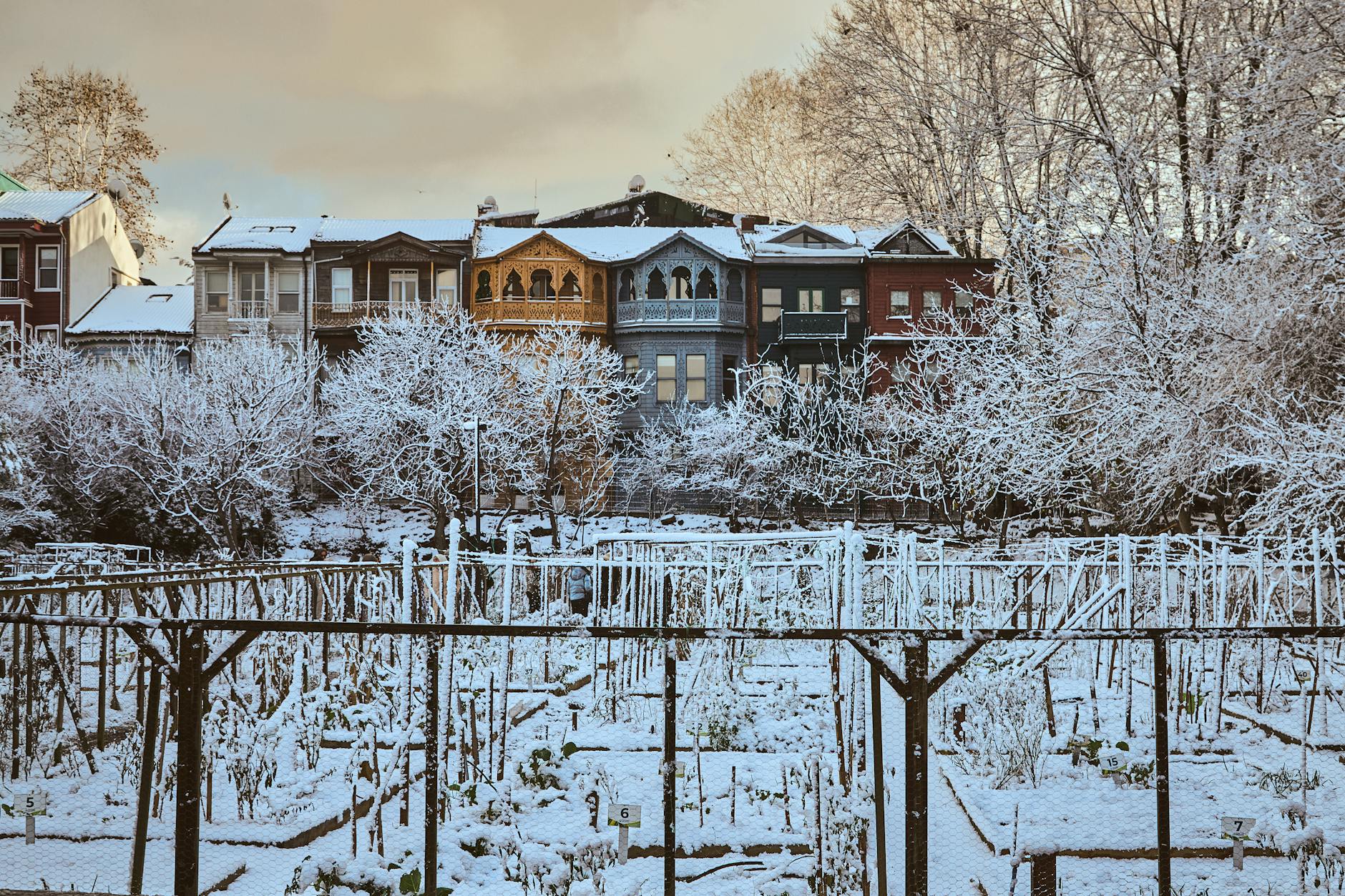
After fifteen years of navigating the labyrinthine streets of this city, I’ve learned that Istanbul doesn’t reveal its true face from the window of a luxury hotel or the glass-enclosed deck of a skyscraper. To truly understand the scale of this “Second Rome,” you have to climb its hills. Zeyrek sits proudly on the fourth hill of Istanbul, and in my humble opinion, it offers a vantage point that no commercial observation deck can replicate.
While the modern towers in Levent or the crowded balcony of the Galata Tower offer height, Zeyrek offers intimacy. From here, you aren’t just looking at the city; you are part of its breathing, historical fabric.
The Vantage Point That Money Can’t Buy
In 2026, as the city becomes increasingly globalized and expensive—with 1 Euro now hovering around 50 TL and 1 USD at 45 TL—finding a place that feels authentic and accessible is a rare treasure. Most tourists will pay upwards of 700 or 800 TL to stand in a queue for a “bird’s-eye view” elsewhere. But here in Zeyrek, the best photography spots are tucked away at the end of quiet cobblestone alleys or on the terrace of a modest neighborhood çay bahçesi (tea garden).
When you stand on the ridge near the Zeyrek Mosque—the former Monastery of the Pantokrator—the Istanbul skyline unfolds before you like a living map. To your right, the massive dome of the Süleymaniye Mosque anchors the Third Hill, its minarets piercing the sky like stone lances. Directly below, the Golden Horn views (or Haliç, as we locals call it) are unobstructed. You can see the ferries crisscrossing the water, leaving white trails behind them like stitches on a blue velvet cloth, connecting the historic peninsula to the bustling shores of Karaköy and Galata.
There is something grounding about this perspective. From this height, the chaos of Istanbul’s traffic fades into a distant hum, replaced by the domestic sounds of the neighborhood: a vendor calling out, a cat scurrying across a tiled roof, or the clink of a small spoon against a tulip-shaped tea glass.
The Symphony of the Sunset
If you time your visit correctly, I suggest arriving about thirty minutes before the sun begins to dip behind the city’s ancient walls. This is when Zeyrek transforms. The weathered wooden houses, some centuries old, take on a golden hue that matches the shimmering surface of the water below.
The highlight of the experience, however, isn’t just visual; it’s auditory. As the sun touches the horizon, the Ezan (the call to prayer) begins to echo across the valley. It starts at one mosque—perhaps the Sultanahmet in the distance—and is answered by the Süleymaniye, then the Fatih Mosque behind you, until the entire Golden Horn is filled with a stereophonic wave of sound.
Watching the sunset from this specific hill, you realize that Zeyrek is the “soul” of the city because it remains unpretentious. It doesn’t try to impress you with neon lights or overpriced cocktails. It simply offers you a seat on its ancient shoulders and invites you to look. It’s a moment of pure huzur—a Turkish word we use for deep inner peace and tranquility. In a city of 16 million people, finding a spot where you can hear your own thoughts while overlooking the center of the world is, for me, the ultimate luxury.
From Zeyrek to Balat: The Ultimate Walking Route
Once you’ve soaked in the meditative silence of Zeyrek’s timber houses, it’s time to head toward the Golden Horn. This isn’t just a walk; it’s a descent through layers of history. In my fifteen years here, I’ve found that the best way to experience the city is to let the gravity of the hills guide you. We’re moving from the rugged, monastic atmosphere of Zeyrek into the vibrant, multicultural tapestry of Fener and Balat.
The Art of Getting Lost (Properly)
The secret to this route is to avoid the main boulevards at all costs. From the Zeyrek Mosque (the former Pantokrator Monastery), start weaving your way down the steep back alleys (what we locals call yokuş) toward the neighborhood of Cibali.
Don’t worry about your GPS—it will likely struggle with these narrow stone passages anyway. Instead, look for the laundry hanging between windows and the elderly men playing backgammon outside small teahouses. In 2026, even as parts of Istanbul modernize at light speed, these alleys remain remarkably frozen. You’ll pass by small neighborhood fountains, or çeşmes. Many of these Ottoman-era stone structures still have water running; they were the social hubs of the city for centuries. Take a moment to look at the intricate stone carvings—they are the “street art” of the 18th century.
Passing Through the Ancient Walls
As you descend, you’ll encounter fragments of the Byzantine Sea Walls. These aren’t polished museum pieces; they are integrated into the city’s life. You might see a small auto-repair shop built right into a thousand-year-old archway or a vegetable garden (bostan) thriving in the shade of a crumbling tower.
By staying off the main roads, you avoid the “Instagram queues” that have become common in the more famous parts of the district. You get to see the real deal: the smell of fresh bread from a stone oven, the sound of kids playing football against ancient bricks, and the genuine hospitality of a shopkeeper who might offer you a glass of tea just because you look like you’re enjoying the view.
If you find yourself feeling the “good” kind of tired and want to dive even deeper into the history of the Greek Patriarchate or the hidden synagogues, you can transition into my more detailed fener and balat walking tour once you reach the shoreline.
Navigating the 2026 Economy and Tourist Traps
By now, you’ll notice that Fener and Balat have become quite trendy. In 2026, with the exchange rate sitting at 1 Euro to 50 TL (and 1 USD to 45 TL), the prices in the “design cafes” on the main streets can be surprisingly high—sometimes 150 TL for a simple latte.
My advice? Stick to the off the beaten path spots. A few streets up from the colorful houses of Fener, you can still find a traditional Esnaf Lokantası (a tradesman’s restaurant) where a hearty plate of beans and rice will cost you about 120 TL (roughly 2.50 USD), and the tea is often on the house.
As you approach the Red School (Phanar Greek Orthodox College), the crowds will thicken. This is your cue to duck back into the side streets. Look for the “Iron Church” (St. Stephen of the Bulgars) on the coast, but approach it from the uphill residential side. You’ll get a spectacular view of its neo-Gothic silhouette against the blue of the Golden Horn without having to elbow your way through a tour group. This transition from the quietude of Zeyrek to the chaotic beauty of the shoreline is, for me, the very definition of the Istanbul spirit.
Practical Magic: Planning Your Visit to Zeyrek
Zeyrek isn’t a place you just stumble upon by accident; it’s a destination you choose with intention. Even though it feels like a world frozen in time, getting here in 2026 is actually quite simple, thanks to Istanbul’s ever-expanding transit network. However, because this is a living, breathing mahalle (neighborhood) and not a curated museum, a little bit of local know-how goes a long way.
Getting There: Metro or Tram?
If you are coming from the modern hubs of Beyoğlu or Maslak, take the M2 Metro (the Green Line). You’ll want to get off at the Haliç station, which is literally suspended over the Golden Horn. From there, it’s a brisk ten-minute walk uphill. It’ll get your heart rate up, but the view of the ancient city walls appearing before you is worth the effort.
Alternatively, if you’re staying near the water, the T5 Tramway is your best friend. This line runs along the edge of the Golden Horn; hop off at the Cibali or Fener stops. From the coast, you’ll wind your way up through the narrow backstreets. By 2026 standards, a single journey on your Istanbulkart will cost you about 40 TL (roughly 0.80 USD), making it the most efficient way to travel like a local.
Respecting the Mahalle Culture
Zeyrek is a conservative, traditional neighborhood. People here are incredibly hospitable, but they value their privacy and traditions. To truly blend in and show respect, I recommend dressing modestly—think of it as “smart casual” that covers shoulders and knees.
When you’re wandering with your camera, remember that these beautiful timber houses are people’s homes. It’s always polite to nod and offer a “Merhaba” (Hello) or ask “Müsait mi?” (Is it okay?) before snapping a photo of a local craftsman or a group of elders chatting at a tea house. This isn’t just about etiquette; it’s how you open the door to genuine conversation.
Chasing the Golden Hour
If you want to see the “Old Istanbul” of postcards, timing is everything. I always tell my friends to arrive in the late afternoon. As the sun begins to dip, the light hits the weathered wooden facades—the ahşap evler—turning the grey timber into deep shades of amber and gold. This is the best time to capture the texture of the city. Plus, as evening approaches, the smell of fresh bread from the local fırın (bakery) begins to fill the air, signaling the neighborhood’s transition into the quiet intimacy of night.
Berk’s Insider Tip: Wear shoes with a good grip! The stones in Zeyrek have been polished by centuries of footsteps and can be incredibly slippery, especially if there’s even a hint of rain.
Conclusion
For me, Zeyrek is where Istanbul stops trying to impress you and simply starts being itself. After fifteen years of navigating this chaotic, beautiful metropolis, this is the neighborhood I return to whenever I need to remember why I fell in love with this city in the first place. While the crowds in Sultanahmet are busy checking boxes and snapping photos of monuments, Zeyrek is busy living.
It represents the “true” Istanbul because it is a living collage of every era this city has survived. You’ll see a Byzantine brick wall leaning against an Ottoman wooden konak (mansion), which in turn houses a family that has likely lived there for generations. It’s authentic because it’s unpolished; it doesn’t wear a mask for tourists. It smells of woodsmoke, fresh bread from the local fırın, and the salty breeze blowing up from the Golden Horn.
My final piece of advice? Put your phone in your pocket and intentionally lose your way. The labyrinthine streets of the fourth hill aren’t meant to be “navigated” by a GPS—they are meant to be felt. If you find yourself in a dead-end alley with laundry hanging overhead and a stray cat eyeing you from a crumbling windowsill, you’ve found the heart of the city.
Before you leave the area, make your way down toward the Kadınlar Pazarı (the Women’s Bazaar). Find a spot to sit and order a plate of Büryan Kebap—a tender, pit-roasted lamb specialty that is a rite of passage in this neighborhood. Wash it down with a glass of frothy, salty Ayran. Sit there, soak in the chatter of the locals, and realize that while Istanbul continues to rush toward the future, the soul of the city is right here, perfectly preserved in the quiet shadows of Zeyrek.