I’ve stood at the edge of Taksim Square at 1:15 AM more times than I care to admit, watching the last flicker of the M2 metro line vanish and realizing the ferries have long been tucked away for the night. This is the moment when most visitors panic and start a losing battle with taxi drivers over “fixed prices,” but the locals know better. We just walk toward that line of bright yellow Ford Transits parked near the Atatürk Cultural Center.
The yellow dolmuş is the unsung hero of Istanbul’s late-night pulse. It literally means “stuffed” or “full,” which tells you everything you need to know about the boarding process—the van doesn’t move until every seat is taken. Last Thursday, I hopped into the Kadıköy-bound line at 11:30 PM. There were six of us waiting; within three minutes, two more people sprinted over, the driver clicked his tongue, and we were flying across the Bosphorus Bridge. For about 70 TL (roughly $2.15), I was back on the Asian side in twenty minutes, a trip that would have cost me 400 TL in a private cab.
It’s a gritty, efficient system that operates on a level of trust you won’t find in the sterile corridors of the Marmaray. You don’t use your Istanbulkart here; this is a cash-only world. You’ll see the “ritual of the shoulder tap”—a passenger in the back row tapping the person in front to pass a crumpled 100 TL note up to the driver. It’s perfectly normal to see a high-heeled professional and a student in a band t-shirt working together to make sure everyone gets their change back mid-transit.
While the seating can be a bit of a squeeze—especially if you’re carrying a large backpack—the tradeoff is sheer speed and the ability to jump out almost anywhere along the route. If the driver is weaving through the Beşiktaş traffic like he’s in a getaway film, don’t worry; it’s just the standard pace. If you need to get out before the final stop, a simple “Müsait bir yerde” (at a convenient spot) is your ticket to the sidewalk. It’s the most authentic, albeit slightly caffeinated, way to navigate the triangle between Taksim, Beşiktaş, and Kadıköy when the city’s official heart stops beating for the night.
The Yellow Dolmuş: Istanbul’s Most Efficient Secret
If you are standing in Taksim Square after midnight and the Metro has ground to a halt, the yellow dolmuş is quite literally the only friend you have. These bright yellow, eight-seater vans operate in the sweet spot between a private taxi and a bulky public bus. While tourists often flock to the nostalgic trams or the subterranean Metro, locals who want to cross continents or neighborhoods quickly look for the yellow signboards.
Knowing Your Yellow from Your Blue
Don’t confuse these with the larger blue or green minibuses (minibüs) you see darting through the suburbs. While those larger vans can be a chaotic, standing-room-only experience, the yellow dolmuş is a guaranteed seat. By law, they cannot take more than eight passengers. They are cleaner, faster, and navigate the hilly backstreets of Beşiktaş or the long stretch of Bağdat Avenue with a surgical precision. If you’ve spent the morning soaking in the silence when I am done with the Sultanahmet crowds so I go to Little Hagia Sophia instead, the transition back into the high-speed dolmuş world will be a sensory shock.
The “Fills and Goes” Philosophy
The dolmuş name literally means “stuffed.” There is no fixed departure schedule. The driver waits until the eighth seat is occupied, then he hits the gas. I remember standing at the Beşiktaş terminal last Wednesday at 2:00 PM; I was the seventh person to board. I barely had time to pull out my wallet before an eighth passenger hopped in and we were instantly weaving through traffic toward Taksim.
The wait is rarely longer than five minutes at major hubs. If you find yourself the first person in a van during a quiet hour, the wait might feel a bit long. Look for the van that already has four or five people in it and jump in there to ensure a near-instant departure. It’s a purely demand-driven system that works flawlessly in a city that never really sleeps. For a fare of about 30 TL to 40 TL (roughly 0.85 to 1.15 EUR) depending on the distance, you get a front-row seat to the city’s madness without the stress of driving it yourself.
Mastering the Taksim Hub: Where to Find Your Ride
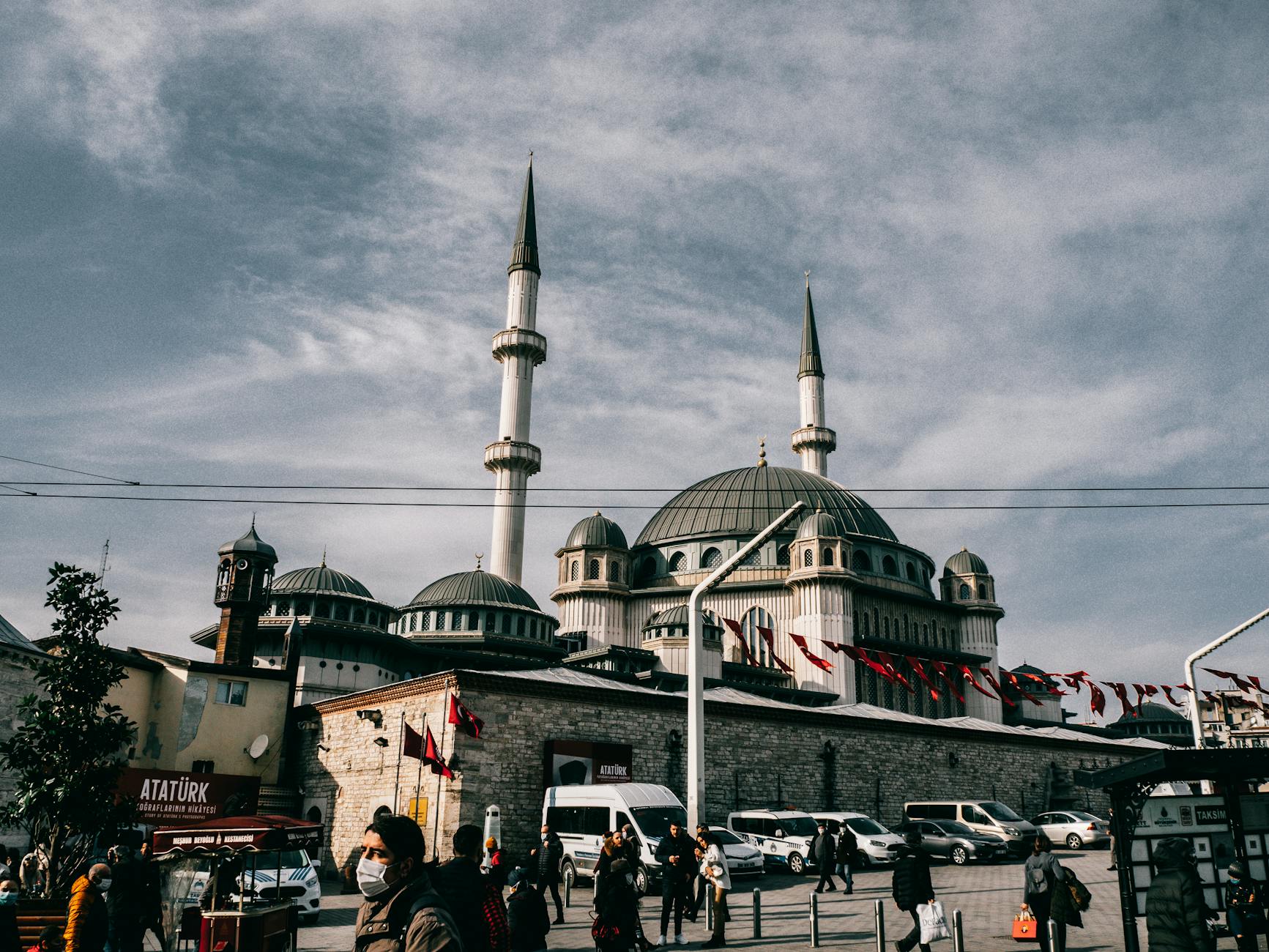
Taksim Square can feel like a chaotic whirlpool of people, but the yellow dolmuş ranks are remarkably organized if you know which landmark to lean on. Don’t waste your time looking for official bus shelters; these vans operate from their own pockets of the square. If you are standing with your back to the Republic Monument and looking toward the Ataturk Cultural Center (AKM), you have two main directions to choose from: the Marmara Hotel side for the Asian side, and the Gezi Park side for the coastal run to Beşiktaş.
Locating the Ranks
The Kadıköy line is tucked away right behind the Marmara Hotel. You’ll see a constant stream of yellow vans idling on the slope heading down toward Gümüşsuyu. On a typical Tuesday night around 11 PM, I rarely wait more than three minutes for a van to fill up. If you’ve spent the afternoon on a Street Food Crawl and Fish Sandwiches in Eminönü and Karaköy with Local Prices, this is your fastest ticket back to the Asian side to sleep it off. If you prefer the quiet of the Underground Echoes: Why the Theodosius Cistern is My Favorite Alternative to the Crowds, the bustle of the Taksim rank will be a sharp return to reality.
Beşiktaş vs. Kadıköy: Which Queue?
The biggest mistake visitors make is standing in the wrong line because they assume all yellow vans go to the same place. They don’t. The queues are usually single-file and move with military precision. If you’re unsure, just catch the eye of a driver and say “Beşiktaş?” or “Kadıköy?”—they’ll give you a quick nod.
Berk’s Insider Tip: During rush hour (5 PM - 7 PM), the Taksim-Beşiktaş line can get long, but it moves five times faster than the bus queue because vans depart every 60 seconds. Last Friday, I timed my wait at the Marmara Hotel rank at exactly 11:14 PM. Despite a line of twelve people, I was in a seat and moving toward the bridge by 11:18 PM.
How to Board a Taksim Dolmuş
- Locate the specific rank near the Marmara Hotel (for Kadıköy) or Gezi Park (for Beşiktaş).
- Verify the destination on the van’s front window sign before stepping inside.
- Board the van and fill the seats from back to front to avoid blocking others.
- Hand your cash to the passenger in front of you if you are sitting in the back.
- State your stop clearly if it is before the final destination.
Crossing Continents: The Taksim to Kadıköy Run
The yellow dolmuş from Taksim to Kadıköy is the ultimate late-night lifeline. When the ferries stop running and the metro settles into its midnight slumber, these bright yellow shuttles become the fastest, most reliable way to bridge the gap between Europe and Asia. There is still nothing quite like the 2:00 AM sprint across the Bosphorus Bridge. Seeing the bridge pylons glowing purple against a pitch-black sky while the driver navigates with absolute confidence is a quintessential Istanbul experience.
Last month, I caught one of these at 1:45 AM after a long dinner in Cihangir. There were four of us waiting at the stand near the Atatürk Cultural Center (AKM); within three minutes, the van was full. You should expect to pay 75 TL for this cross-continental trip, which is roughly 2.25 EUR. It is a flat fee. Just pass your cash forward to the passenger in front of you; the “dolmuş chain” of passing money and change back is a silent system of trust.
Once you cross the bridge and enter the Asian Side, the driver will eventually pull into the Rıhtım area, right by the main Kadıköy ferry pier. From this drop-off point, the vibrant streets of the fish market are just a short walk away. This is the perfect jumping-off point for a walking tour of Kadıköy and the Moda coastline, where the pace of life feels just a bit more intentional than the chaotic energy of Taksim.
Cash Etiquette and the ‘Hand-it-Forward’ System
Your Istanbulkart is a miracle for the ferry, but inside a yellow dolmuş, it is essentially a useless piece of plastic. This is a cash-only operation. I’ve seen countless visitors stand awkwardly at the door waiting for a card reader that doesn’t exist. Have your Turkish Lira ready before you even step inside.
Small bills are your best friend. While drivers can technically change a 100 TL note, doing so in heavy traffic is a recipe for a very grumpy driver. Last Tuesday at 6:45 PM, I made the classic rookie error of trying to break a 200 TL note for a 30 TL ride to Beşiktaş; the driver didn’t say a word, just pointed at the “Bozuk yok” (no change) sign on his dashboard until a kind stranger swapped my bill for smaller ones.
The “hand-it-forward” system is where the social contract happens. If you are sitting in the back, you don’t need to reach the driver. Simply tap the shoulder of the person in front of you and hand them your money. When the change comes back, it follows the same human chain.
When you’re ready to hop out, don’t look for a “stop” button. Use your voice. The phrase is “Müsait bir yerde,” which means “at a convenient spot.” If you say this as you approach your destination, the driver will pull over at the next safe opening.
FAQ: Navigating the Yellow Dolmuş
Can I pay for a dolmuş with a credit card?
No, the yellow dolmuş system is strictly cash-based. There are no card readers or digital payment options available. Ensure you have small denominations of Turkish Lira. If you only have large bills, break them at a local büfe (kiosk) before joining the queue.
How do I know how much the fare is?
Fares are fixed and usually posted on a small printed sign near the driver’s mirror. For popular routes like Taksim to Kadıköy, the price is currently around 75 TL. If you aren’t sure, watch what the locals are handing forward or ask the driver “Ne kadar?” (How much?).
Does the dolmuş have fixed stops?
While there are main hubs where they start and end, they don’t have strictly numbered stops. They follow a set route but can drop you off anywhere along that path as long as traffic allows. Just use the phrase “Müsait bir yerde” when you see your street.
Ranked: Top 5 Yellow Dolmuş Routes by Utility
- Taksim – Kadıköy: This is the most critical late-night link for crossing between Europe and Asia after ferries stop.
- Taksim – Beşiktaş: The fastest way to reach the Bosphorus coast and skip the gridlocked Akaretler traffic.
- Taksim – Bostancı: The primary long-distance route for locals heading to the deeper residential Asian suburbs.
- Beşiktaş – Harbiye: A vital uphill connection that saves you from a grueling 20-minute steep walk.
- Taksim – Aksaray: A central connector linking the modern square to the old city’s main transport nodes.
Quick Reference: Routes, Rates, and Ranks
The Beşiktaş-Taksim line is a functional sprint, but the Taksim-Kadıköy route is the true legend. While the former saves you a steep uphill climb, the latter is often the only sane way to cross the Bosphorus after the ferries stop running.
Comparing the Main Arteries
The Beşiktaş-Taksim run is lightning fast, usually taking about 10 to 15 minutes unless Akaretler is completely choked. It’s my go-to when I’m meeting friends for dinner near Gezi Park. On the other hand, the Taksim-Kadıköy line is the backbone of the city’s nightlife. Even if the queue looks fifty people deep, it moves in ten minutes because the vans depart constantly.
- The Pro: You’ll fly past the sluggish IETT buses and pay roughly 75 TL ($2.25) for a cross-continental trip that would cost 450 TL in a taxi.
- The Con: Driving styles can be ambitious. I once watched a driver navigate the turn toward the Bosphorus Bridge with such “Formula 1” aspirations that my fellow passengers and I all shared a silent, wide-eyed look.
- The Fix: These drivers are professionals. If the speed unnerves you, sit in the back row away from the windshield and focus on the bridge lights.
Route Comparison
| Route | Est. Time (Off-Peak) | Price (Approx) | Best For |
|---|---|---|---|
| Beşiktaş ⇄ Taksim | 10-15 Mins | 30 TL ($0.90) | Avoiding the steep uphill hike |
| Taksim ⇄ Kadıköy | 25-35 Mins | 75 TL ($2.25) | Late-night Bosphorus crossings |
| Bostancı ⇄ Taksim | 45-55 Mins | 85 TL ($2.55) | Reaching the far Asian suburbs |
| Teşvikiye ⇄ Beşiktaş | 10 Mins | 30 TL ($0.90) | Quick hop down from Nişantaşı |
The Final Shoulder Tap
There is a specific moment when you stop being a visitor and start being part of the city’s pulse. It usually happens mid-sentence, while you’re debating the merits of a specific meyhane in Kadıköy with a friend, and you instinctively pass a 100 TL note forward through a line of strangers to the driver. You don’t break eye contact with your companion, and you don’t stop talking. When the exact change comes back to you three seats later, passed hand-to-hand by people you’ve never met, you’ve passed the ultimate Istanbul litmus test. You aren’t just a passenger; you’re a link in the chain.
Last Tuesday, while waiting at the Beşiktaş-Taksim stand right across from the Sinan Paşa Mosque around 7:00 PM, the queue looked dauntingly deep. In any other city, I would have given up and walked, but the yellow vans arrived like clockwork, clearing thirty people in under five minutes. It is that frantic, functional efficiency that defines the real urban experience here. Now that you’ve mastered the silent hand-off, don’t let the night end in a hotel lobby. Hop in, lean back, and let a dolmuş whisk you toward the bars of Kadıköy.