I am done with the Sultanahmet crowds so I go to Little Hagia Sophia instead
I’m standing by the Obelisk of Theodosius and I’m losing my mind. A cruise ship mob—maybe eighty people in identical beige hats—nearly mowed me down while sprinting after a man waving a yellow umbrella like it’s a sacred relic. My head is throbbing. It’s a cacophony of the noon call to prayer fighting with the mechanical shutter clicks of a thousand cameras. It’s fake. It’s Disney-fied. I hate it. This isn’t my Istanbul; it’s a theme park for people who want the postcard without the soul.
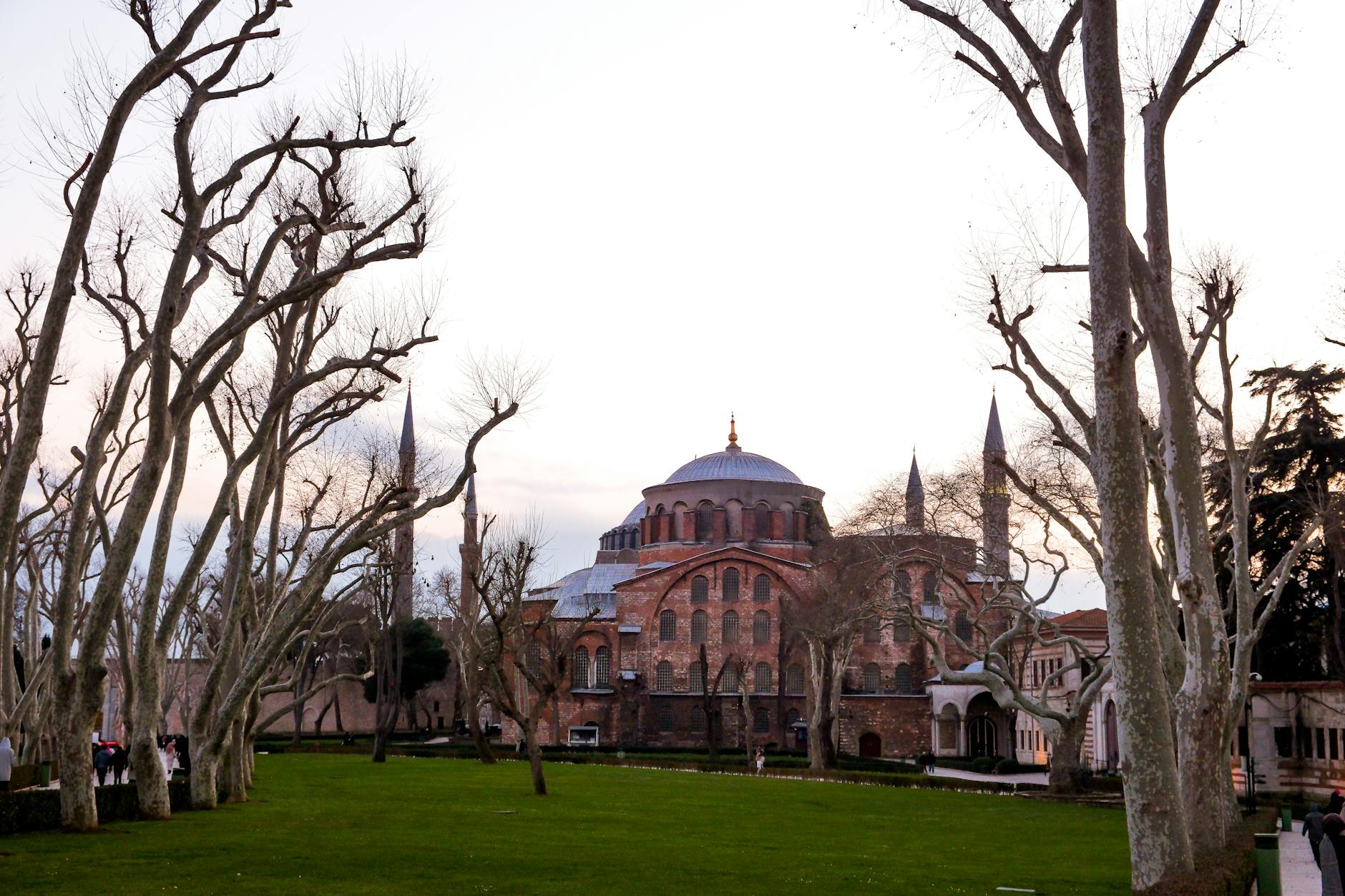
I shoved my way out and headed south, down those steep, ankle-breaking cobblestones where the city actually lives. The air changed. The scent of those greasy, overpriced tourist kebabs faded, replaced by the sharp, honest stench of old exhaust and salty sea air. I tripped over a loose brick—typical—and dodged a cat that clearly owned the sidewalk. Suddenly, the screaming vendors were gone. Silence, mostly. I ended up at Küçük Ayasofya. It’s a former church that doesn’t care if you’re there or not. No lines. No beige hats. Just cold stone and the heavy weight of centuries that hasn’t been polished for Instagram. Finally, I could breathe.
Why Sultanahmet square makes me want to scream
Sultanahmet Square is a plastic-wrapped theme park that has absolutely nothing to do with the city I’ve called home for 15 years. I avoid it like the plague during the day. If you see me there, I’m either lost or someone is paying me a lot of money to be miserable. The whole place feels like a staged performance where the actors are tired and the audience is mostly interested in taking the same photo as the 40000 people who stood in that exact spot yesterday. It’s loud, it’s expensive, and frankly, it smells like exhaust and overcooked kebabs.
The selfie stick gauntlet
You can’t walk 5 meters without nearly losing an eye to a selfie stick. It’s a literal minefield. I’ve seen people spend 20 minutes posing in front of the Blue Mosque—or Sultan Ahmed Mosque if we’re being accurate—without actually looking at the building once. They see the world through a 6-inch screen. It’s depressing. Then you have the tour guides. They carry those neon umbrellas like they’re leading an infantry charge into a battle of boredom. They shout dates and names that nobody remembers. Overtourism isn’t just a buzzword here; it’s a physical weight that crushes the soul of the place. You’re not experiencing Istanbul history; you’re consuming a sterilized, bite-sized version of it while 3 different people try to step on your toes.
Berk’s Insider Tip: Don’t buy ‘antique’ coins from the guys hanging around the cemetery outside. They are fakes made in a workshop in Zeytinburnu last Tuesday.
The “Brotherhood” of the carpet shops
Then come the sharks. I’m talking about the carpet sellers who magically know 12 languages but can’t understand the word “no.” They have this uncanny ability to spot a foreigner from a mile away. “My friend! My brother! Where are you from? California? I have a cousin in San Diego!” No, you don’t. You have a shop full of overpriced rugs and a rehearsed script. I hate the fake friendliness. It’s predatory. They want to lure you in with apple tea—which no self-respecting Turk actually drinks, by the way, we drink black tea—and then guilt you into spending 2000 Dollars on something you don’t need. It’s a game. A tiring, greasy game that makes me want to walk into traffic just to escape the conversation.
Sanitized myths versus the gritty truth
The history sold in these tourist traps is a joke. They give you the “Grand Ottoman” fantasy, all gold and glory, while ignoring the fact that the side streets are crumbling. I prefer the mess. I prefer the reality of the cracked pavement, the stray cats fighting over a fish head, and the laundry hanging from 19th-century windows. In Sultanahmet, everything is polished and fake. The restaurants serve mediocre food at 4 times the price you’d pay in a real neighborhood. I once saw a guy pay 80 Lira for a bottle of water there. I almost had a stroke. It’s a bubble. A loud, crowded, frantic bubble that forgets that Istanbul is a living, breathing, dirty, magnificent city, not just a backdrop for your Instagram feed. Why stay in that noise when the real city is just a 10-minute walk down the hill? Honestly, just get out. Go find something real.
Church of Saints Sergius and Bacchus vs Hagia Sophia
The big Hagia Sophia is a masterpiece, sure, but it feels like a factory now; the Küçük Ayasofya is where you actually feel the ghost of the Byzantine Empire. If you want to understand how Justinian I and his powerhouse wife Theodora fundamentally changed the world’s skyline, you don’t start with the giant dome. You start here. This isn’t just a “smaller version.” It’s the messy, brilliant rough draft of Byzantine architecture.
The Architectural DNA of a Prototype
I’ve lived in this city for 15 years and I still get a kick out of how tourists ignore this place. They call it the “Little Hagia Sophia,” but its real name is the Church of Saints Sergius and Bacchus. Built around 530 AD. That’s a few years before the big one up the hill. Think of it as the beta version. Justinian I was testing out new ideas. Can we put a massive dome on an irregular shape? Can we make marble look like lace? The architects were playing with physics here before they went big.
I think the “Little” sister is actually more impressive because of its flaws. In the big Hagia Sophia, the scale is so massive it becomes abstract. You can’t wrap your head around it. Here? You can see the thumbprints of the masons. It’s an Orthodox Church that was turned into a mosque in the early 1500s, but the original bones are still screaming at you.
| Feature | Hagia Sophia (The Giant) | Küçük Ayasofya (The Prototype) |
|---|---|---|
| Crowd Level | 11/10 (Suffocating) | 2/10 (Ghost town) |
| Architecture | Massive, intimidating dome | Wonky, human-scale octagon |
| Vibe | Museum-turned-mosque circus | Quiet, dusty neighborhood sanctuary |
| Entry | Expensive & 2-hour lines | Free & walk right in |
| Sound | Echoing screams of kids | Distant train hum and birds |
The Wonky Octagon
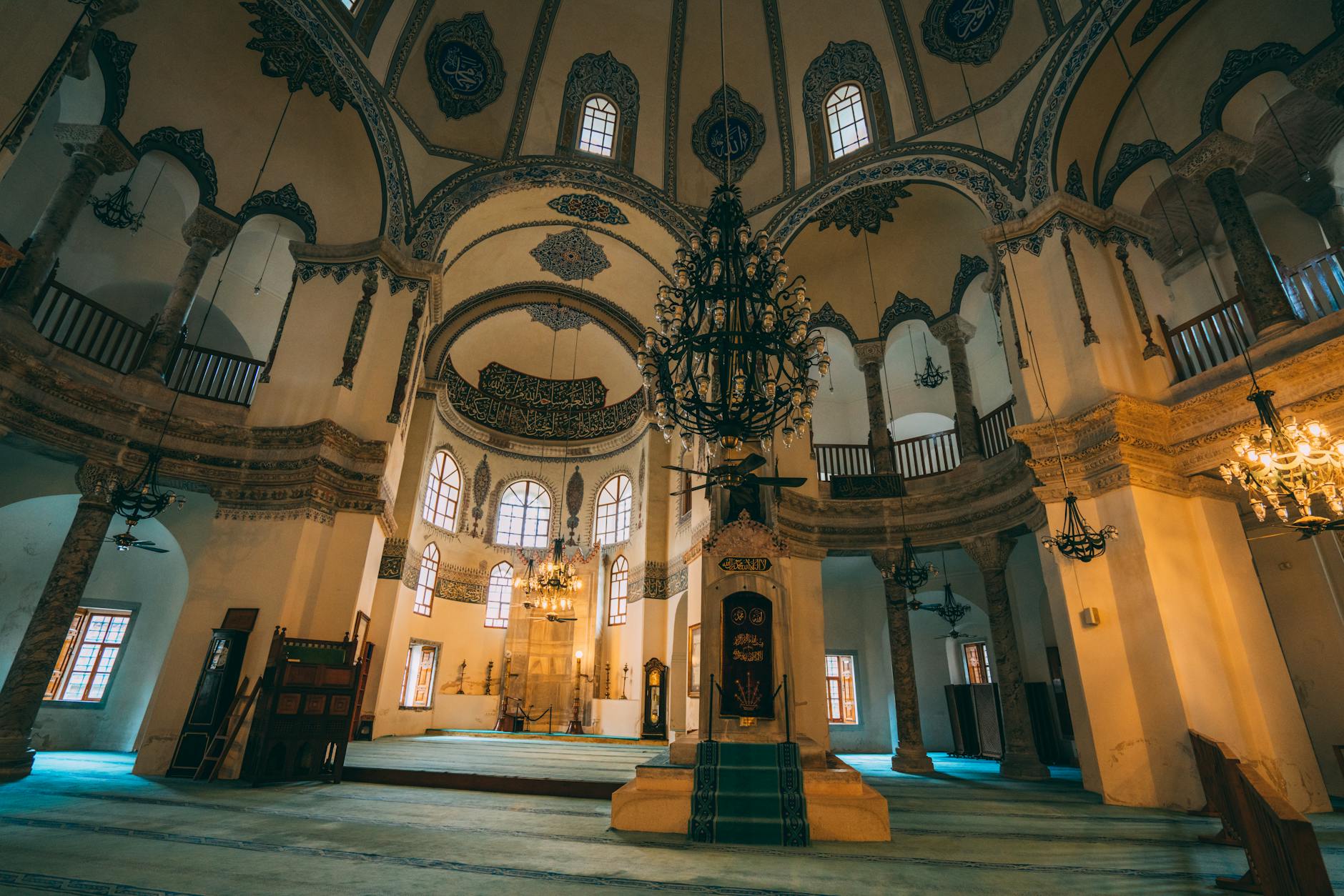
Nothing is straight here. Seriously. Walk inside and look up at the dome. It’s an irregular octagon. It feels weirdly organic, like it was grown rather than built. It’s not that polished, clinical perfection you see in modern restorations. It’s wonky. It’s human.
I remember sitting there 3 years ago when a stray cat just walked across the carpet like he owned the place. Nobody cared. You try that in the main Hagia Sophia and security would tackle you. The columns are all different. Some have the monograms of Justinian and Theodora carved into the capitals. It feels like they just left the room. Most people don’t even look up at the Greek frieze running around the nave. I spent 40 minutes once just trying to trace the letters while a grumpy old man vacuumed the rug. The contrast is what kills me. On one hand, you have high-level Istanbul history that defined an era. On the other, it’s tucked away in a corner where laundry hangs from windows across the street and the air smells like cheap coal in the winter.
Survival Against the Odds
The location is honestly a bit of a disaster, which is why I love it. It’s squeezed between the old city walls and the railway line. For decades, the old suburban trains used to rattle the very foundations of this building. You’d be standing there, trying to soak in 1,500 years of Byzantine Istanbul, and then clack-clack-clack-clack—the train would scream past, shaking the dust off the 6th-century marble.
The dampness from the Marmara Sea is a constant battle. The walls look like they’ve seen too much. They’ve survived earthquakes, fires, and the total collapse of empires. The trains are quieter now because of the new Marmaray project, but the tracks are still there, acting like a rusted scar between the church and the sea. I remember walking there during a particularly nasty rainstorm last November. The mud was everywhere. My shoes were ruined. But looking at the red brick of the church against a grey, miserable sky? That’s the real Istanbul. Not some postcard version designed to sell magnets to people from cruises.
Don’t bother with the audio guides at the big sites. Just come here, stand under this lopsided dome, and listen to the silence. It tells you way more about the city than any tour group ever could.
How to get to Küçük Ayasofya without losing your mind
Don’t even think about taking a taxi from Sultanahmet Square unless you enjoy paying someone to sit in gridlock while you inhale diesel fumes. I’ve lived in this city for 15 years, and the traffic around the Old City is a special kind of hell that no GPS can predict. You walk. That is the only way to do this right.
The knee-shattering descent
Start at the Hippodrome. Find the Egyptian Obelisk—the big stone needle—and start heading downhill toward the sea. My knees usually start complaining about 4 minutes into this trek. The slope is steep. Really steep. It’s the kind of incline that makes you lean backward just to stay upright. If you’re wearing slick-soled shoes, you’re going to end up on your backside. I’ve seen it happen to tourists and locals alike. It’s not pretty.
As you drop down toward Cankurtaran, the polished, fake version of Istanbul disappears. You’ll pass these massive Ottoman wooden houses that are literally falling apart. Some are propped up by steel beams; others just seem to stay standing out of habit. These aren’t museum pieces. People live here. You’ll see old men smoking on stoops, kids kicking a deflated football against 200-year-old walls, and laundry hanging across the street like festive bunting. It’s loud, it’s a bit dusty, and the sidewalk—if you can call it that—is a minefield of loose cobblestones and cat bowls.
Navigating the rails
If you’re coming from further out, you need to understand Istanbul transport or you’ll end up in a suburb you never intended to visit. Most people stick to the T1 Tram. Get off at Sultanahmet or Çemberlitaş. If you get off at Çemberlitaş, the walk is more of a winding maze through the leather district. You’ll smell glue and cheap tea. You will definitely get lost. I still do. Just keep heading “down.”
The Marmaray is the other option. If you’re coming from the Asian side, get off at Sirkeci. From there, you can either catch the tram for 2 stops or just walk along the coast near Kennedy Caddesi. The walk along the water is flat, which is a blessing for your joints, but you’ll have to deal with the roar of cars speeding toward Bakırköy. It’s a trade-off. Quiet but hilly, or flat but noisy. I usually pick the hills because the backstreets have more character, even if I’m huffing like a freight train by the time I reach the mosque.
Don’t expect the Sultanahmet mosques’ level of signage here. This isn’t a theme park. You’ll turn a corner, dodge a delivery scooter doing 40km/h in a pedestrian zone, and suddenly there it is. The Little Hagia Sophia. No queues. No guys trying to sell you “authentic” Roman coins. Just a bit of peace in a city that rarely shuts up.
Berk’s Insider Tip: The walk back up to Sultanahmet is brutal. If you’re lazy, walk five minutes further to the coast road and hail a yellow taxi, but make sure he turns the meter on.
Is the walk worth the effort? Every time. Just don’t blame me when your calves are burning the next morning. It’s part of the price you pay for seeing the real city.
The tea garden and the calligraphy workshops
If you want to sit in a place that doesn’t treat you like a walking ATM, skip the Sultanahmet main square and come straight to this courtyard. Most people are too busy fighting for a selfie spot at the Blue Mosque to notice this place exists. Their loss, honestly. I’ve lived in this city for 15 years, and I still think the Little Hagia Sophia garden is one of the few spots left where the silence actually carries weight. You step through the gate and the roar of the tour buses just… stops.
The courtyard is wrapped in what used to be a Madrasa—religious school cells built by Hüseyin Ağa back in the day. These aren’t polished, soulless museum rooms. They are cramped, slightly damp, and smell like a mix of old stone and wet paper. Today, they’re used as tiny workshops for Turkish calligraphy and other traditional arts. I’ve spent hours poking my head into these rooms. It’s not a show for tourists; it’s just people working.
Ink, soot, and patience
The artists here aren’t interested in your “fast-paced” life. I once watched a calligrapher spend 20 minutes just prepping his reed pen. The air in those cells is thick. You can smell the soot ink—it’s earthy, almost metallic. It’s a far cry from the mass-produced junk they sell in the souvenir shops near the tram line. If you want to see where the real work happens, this is it. It reminds me of the grit you find when exploring the secret hans of the Grand Bazaar, where the real craftsmen hide away from the neon lights.
You might see someone hunched over a desk, their eyes inches from the paper, ignoring the world. Don’t expect a big “Welcome!” from everyone. Some are friendly, others are grumpy and just want to finish their work. I prefer the grumpy ones. They’re authentic. They aren’t trying to sell you a 500-dollar rug. They’re just trying to get the curve of a letter exactly right.
The tea garden chaos
Outside the cells, the çay garden is where the stillness gets a bit more “Istanbul.” By that, I mean the cats. There are dozens of them. I watched two tabbies have an absolute screaming match over a stray piece of simit yesterday. It’s loud, it’s messy, and it’s perfect.
The tables are those classic, rickety wooden things that always feel like they might collapse if you lean too hard. The tea is served in the standard tulip glasses—piping hot, dark, and strong enough to wake the dead. It usually costs about 1/3 of what you’d pay 10 minutes up the hill. I usually grab a seat under the old trees and just breathe. You can hear the call to prayer from the minaret above, but here, it doesn’t feel like a performance. It’s just the rhythm of the neighborhood.
I’ve sat here in the rain, too. The smell of the damp earth in the garden is better than any perfume. There’s usually a bit of trash in the corner—an old plastic bottle or a crumpled napkin—because nothing in this city is perfectly clean. If you want “perfect,” go to a hotel lobby. If you want a place that feels like it has a soul, sit here.
Why the silence matters
In a city of 16 million people, true silence is a luxury. The Little Hagia Sophia offers a specific kind of quiet. It’s not “dead” quiet. You can hear the distant honk of a ferry on the Marmara and the faint hum of the Kennedy Avenue traffic, but it feels miles away. It’s a buffer zone.
I come here when the city gets to be too much. When the heat and the crowds and the aggressive “Where are you from?” questions start to grate on my nerves. You can sit for 2 hours with a single glass of tea and nobody will bother you. The waiter might ignore you for 10 minutes before taking your order, but that’s just part of the charm. He isn’t being rude; he’s just not in a hurry. Neither should you be.
Architecture details that don’t care about your photos
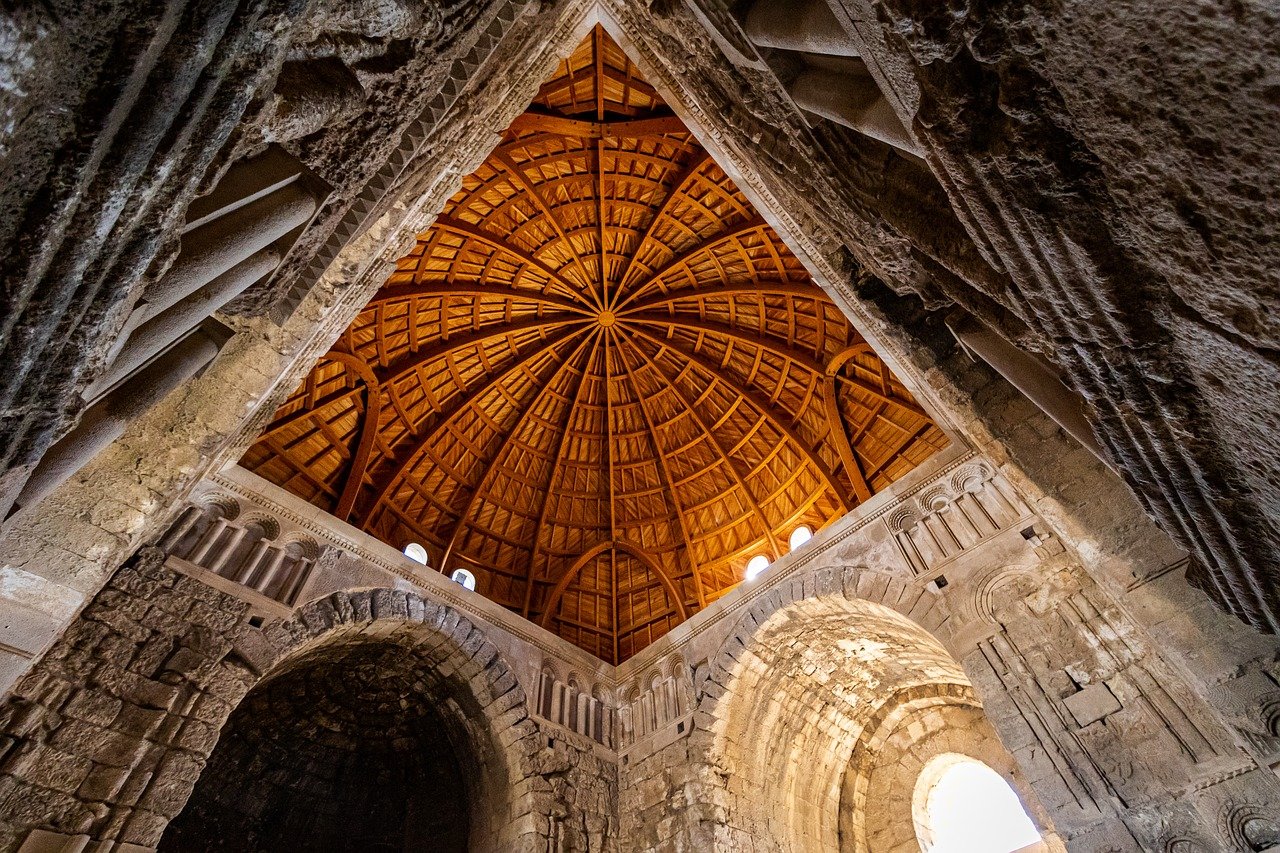
If you’re looking for the sparkling gold mosaics that make tourists drool at the main Hagia Sophia, you’re in the wrong place and quite frankly, you’re missing the point of Byzantine Istanbul. This building doesn’t give a damn about your Instagram feed. It’s an architectural middle finger to the polished, sterilized versions of history you see in the guidebooks. I’ve lived here for 15 years, and every time I step inside this place, I’m reminded that real history is jagged, repurposed, and often quite plain in a way that feels totally honest. It’s not a museum piece; it’s a survivor.
The mess of “recycling”
Most people look at a row of columns and expect symmetry. Not here. Look closer at these Byzantine columns. They’re a mess. I call it “Byzantine IKEA”—they basically grabbed whatever was lying around in the ruins of the city. In technical terms, it’s called spolia. It’s the ultimate ancient hack.
- Some columns are deep green marble (Verde Antico), others are reddish.
- The heights don’t always match up perfectly, like a set of teeth that needs braces.
- The capitals are carved with a precision that makes modern masonry look like a joke, but they’re all slightly different.
- The bases look like they were dragged through the mud 1,000 years ago—because they were.
The builders didn’t care about a “cohesive aesthetic.” They cared about keeping the dome structure from collapsing on their heads. I once saw a tourist complaining to his poor wife that the columns “looked mismatched.” I almost laughed. The mismatch is the whole point. It’s a physical record of the city’s collapse and rebirth.
Read the walls (if you can)
There is a massive Greek inscription running along the frieze. It’s not a decorative pattern. It’s a poem. A boastful, loud-mouthed dedication to Emperor Justinian and Empress Theodora. I see people walk right under it while staring at their phones, looking for the “good light.” They’re literally walking under a 1,500-year-old political statement and they don’t even see it. The letters are chunky and deep, carved into the stone back when this city was still New Rome. It’s raw. It’s heavy. It’s better than gold because it’s survived the fire, the earthquakes, and the total lack of maintenance.
The dome that shouldn’t work
The dome here is a weird one. It’s not a perfect circle. It’s an irregular octagon crammed into a square base. When you stand in the middle, it feels slightly off, like the building is leaning in to whisper a secret. I hate those perfectly symmetrical modern buildings—they feel like hospitals. This place feels like a living organism. The walls are covered in plain white plaster. No glitz. No glitter. Just the weight of the stone and the way the shadows crawl across the floor. You can hear the muffled roar of the Marmaray train passing nearby, vibrating through the 6th-century bricks. It’s a reminder that the city is still moving, even if this building is trying to stay still.
Berk’s Insider Tip: Go around 10:30 AM. The light hits the interior dome in a way that makes the peeling plaster look like art, and you’ll miss the noon prayer rush.
It’s not “pretty.” It’s profound. The lack of gold means you actually have to look at the craftsmanship. I spent 20 minutes the other day just staring at one column base that was slightly chipped. 1,500 years of people kicking that same stone. You don’t get that in Sultanahmet. There, you’re just part of a human conveyor belt. Here? You’re just a guest in a very old, very grumpy house. If the smell of old carpets and damp stone bothers you, go back to the hotel. This is the real deal.
Where to eat after the quiet
If you sit down at any place that has a “Set Menu” sign in English, you’ve already lost. I mean it. You’ve surrendered your palate to a factory of frozen kofte and lukewarm soup. I’ve lived here 15 years and I still get a twitch in my eye when I see tourists being ushered into those brightly lit traps on the main road. The Sultanahmet food scene is mostly a curated lie designed to separate you from your Lira as fast as possible. I don’t care if they offer you “free tea” or a “special discount.” The bread will be stale, and the meat will be sad.
The rule of five languages
Here is my golden rule: if the menu is printed in 5 different languages, keep walking. Why? Because a kitchen that tries to speak to everyone ends up saying nothing at all. I want a menu that’s a greasy piece of paper with 10 items on it, tops. Maybe it’s only in Turkish. Good. Use your phone to translate it or just point at what the guy at the next table is eating.
I once spent 40 minutes arguing with a waiter near the Hippodrome because he tried to charge me a “service fee” that wasn’t on the menu. Total scam. These local eateries tucked away in the backstreets don’t pull that nonsense. They don’t have time for it. They’re too busy feeding the neighborhood.
Head up the hill to Kadırga
Once you’ve finished at the Little Hagia Sophia, don’t walk back toward the tram line. Instead, start climbing. Head toward the Kadırga neighborhood. Your legs will probably ache—the hills here are no joke and the pavement is a disaster of loose stones and cat poop—but the reward is real food.
This is where the workers eat. The lighting in these places is usually terrible—think “interrogation room” fluorescent—but the flavor is unmatched. You’re looking for a spot where the owner is sitting in the corner drinking tea and scowling at a newspaper. That’s how you know it’s legit.
Find the fire
In these backstreets, you’ll find the real soul of Istanbul dining. I’m talking about the smell of charred fat and oak charcoal. You haven’t actually experienced this city until you’ve sat at a proper ocakbaşı where the master (the usta) is literally sweating over the coals.
I remember a rainy Tuesday last November when I stumbled into a tiny hole-in-the-wall near the Kadırga park. The windows were steamed up, the chairs were cheap plastic, and the waiter ignored me for 10 minutes. But then came the çöp şiş. Small bits of lamb, perfectly charred, served on thin lavaş that soaked up all the juices. No fancy garnish. No “tourist tax.” Just smoke and salt.
Don’t be afraid of the grit. If a place looks too polished, it’s probably not for you. You want the place where the walls are stained by years of grill smoke and the only “view” is a guy fixing a motorbike on the sidewalk. That’s where the magic happens.
Küçük Ayasofya Visitor FAQ
It costs exactly 0 Lira to walk through the door, so if some guy in a cheap suit tries to sell you Küçük Ayasofya tickets, tell him to get lost. Seriously. I’ve seen scammers lurking near the Hippodrome trying to “help” tourists with fake entry passes. This is a functioning mosque, not a Disney attraction. There is no entrance fee. None. If you feel the urge to spend, drop a few bills in the donation box inside. I usually toss in 50 or 100 Lira because the maintenance on a 1,500-year-old building is a nightmare.
What should I wear?
Don’t show up in your gym shorts or a tank top. I don’t care how hot the Istanbul sun is hitting. This is a holy site, and the dress code is non-negotiable. Men need long pants. Women must cover their heads and shoulders. They usually have a rack of shared scarves and skirts at the entrance, but they’ve been worn by 1,000 other people and probably smell like it. Just bring your own silk scarf in your bag. It’s better for everyone. Also, you have to take your shoes off. If you have a hole in your sock, the world will see it.
When is the best time to visit?
Avoid prayer times. I once accidentally walked in right as the Friday sermon started and felt like a complete idiot. The opening hours are basically from dawn until dusk, but the place shuts down for visitors during the 5 daily prayers. Check a prayer timing app. If you hear the call to prayer blaring from the minaret, go grab a tea and wait 30 minutes. My favorite time is mid-morning, around 10:30 AM. The light hits the dome just right, and the school kids nearby are usually tucked away in class.
Can I take photos?
Yes, but don’t be a nuisance. Put your phone on silent. No flash—it ruins the mood and bugs the people actually trying to pray. I see tourists hauling giant tripods into these small spaces and I just want to kick the legs out from under them. It’s a place of worship, not your personal film set. Keep it low-key. If someone is kneeling on the carpet, don’t stand in front of them with your wide-angle lens. Use your head. Mosque etiquette is mostly just about not being a loud, oblivious jerk. Simple, right?
Conclusion
Stay in the circus if you must. Spend your entire afternoon dodging selfie sticks and getting hassled by guys in cheap suits selling “authentic” rugs that were probably made in a factory in China last week. It’s your funeral. Personally, I’m done with that plastic, polished version of my city. Sultanahmet is basically a theme park for people who are afraid of a little grime and some real silence. It’s exhausting. It’s loud. It’s a trap.
But step away. Just walk down the hill until the noise of the tour groups fades into a dull, distant hum. Down here, near the Little Hagia Sophia, the walls are crumbling and the laundry is hanging from the windows of houses that look like they might fall over if you sneeze too hard. But at least nobody is trying to scam me into a “free” tea or a guided tour of a gift shop. It’s quiet. Properly quiet. You can actually hear the low, rhythmic slap of the Marmara Sea hitting the rocks just past the train tracks. You can smell the salt air mixing with the scent of old, damp stone and the occasional whiff of diesel. It’s not perfect. It’s better.
The real Istanbul doesn’t give a damn about your itinerary. It’s messy. It’s a bit broken. It’s stubborn. If you’re brave enough to get lost in these backstreets where the paint is peeling and the street cats own the pavement, you might actually feel something real. Or you can go back to the square and pay way too much for a lukewarm kebab and a view of a tour bus. Your call. I’m staying right here.
Comments
Share your thoughts with us