The Yedikule Dungeons are the only honest place left in the city
How to get to Yedikule Fortress
Forget about the tourist shuttle buses or trying to negotiate with a taxi driver who’ll likely pretend his meter is broken the moment you mention the word “Yedikule.” If you aren’t taking the Marmaray train, you’re basically asking to be stuck in a 40-minute gridlock while paying for the privilege of breathing in pure diesel exhaust. I’ve lived here for 15 years, and I still haven’t found a single cabbie who doesn’t groan when I ask to go this far west along the old walls. It’s a trek. Accept it.
The subterranean descent at Sirkeci
Your journey starts at Sirkeci. Not the grand, old terminal with the nostalgic Orient Express vibes—that’s for people who want to buy overpriced postcards. You need the Marmaray station, which is buried so deep underground it feels like you’re descending into a Cold War bunker. The escalators are endless. Seriously, I once finished a whole simit just waiting to reach the platform.
The air down there is weirdly pressurized and always smells like damp concrete. And the wind? When that train approaches, the tunnel creates a draft that’ll ruin your hair and probably blow your 20-lira note right out of your hand. Use your Istanbulkart. Make sure it’s loaded with at least 50 or 60 lira because the Marmaray charges based on distance. You tap in, you pay the full fare, and you tap out at the end to get your refund. It’s a bureaucratic mess, but it’s our mess.
The grit of Kazlıçeşme
Get off at Kazlıçeşme. Don’t expect a welcome party. This isn’t the sanitized version of Istanbul they show in the airline magazines. When you step off that platform, you’re greeted by the harsh reality of an industrial neighborhood that’s seen better days. The wind coming off the Marmara Sea here is brutal. It doesn’t “caress” you; it slaps you in the face with the scent of salt and old leather factories.
I remember walking this route last November when the rain was coming down sideways. I was soaked in 3 minutes, and a stray dog decided to follow me for a mile just to judge my life choices. You’ll walk past scrapyards, some questionable-looking workshops, and plenty of gravel. It’s ugly. It’s loud. But it’s the only way to reach the fortress without losing your mind in traffic. If you’ve already spent the morning trying to find some soul at the Little Hagia Sophia to escape the Sultanahmet circus, the silence of these backstreets—save for the occasional truck—will feel like a relief.
Why you should ignore the taxis
Every time I see a tourist trying to hail a yellow cab near the station to go that last kilometer, I want to shake them.
- The “Traffic” Excuse: The driver will tell you the road along the coast is closed. It’s usually not.
- The Price Hike: They’ll try to charge you a “flat rate” of 200 lira for a 3-minute drive.
- The Attitude: Honestly, they don’t want to go there because there’s no return fare. They’d rather sit and smoke.
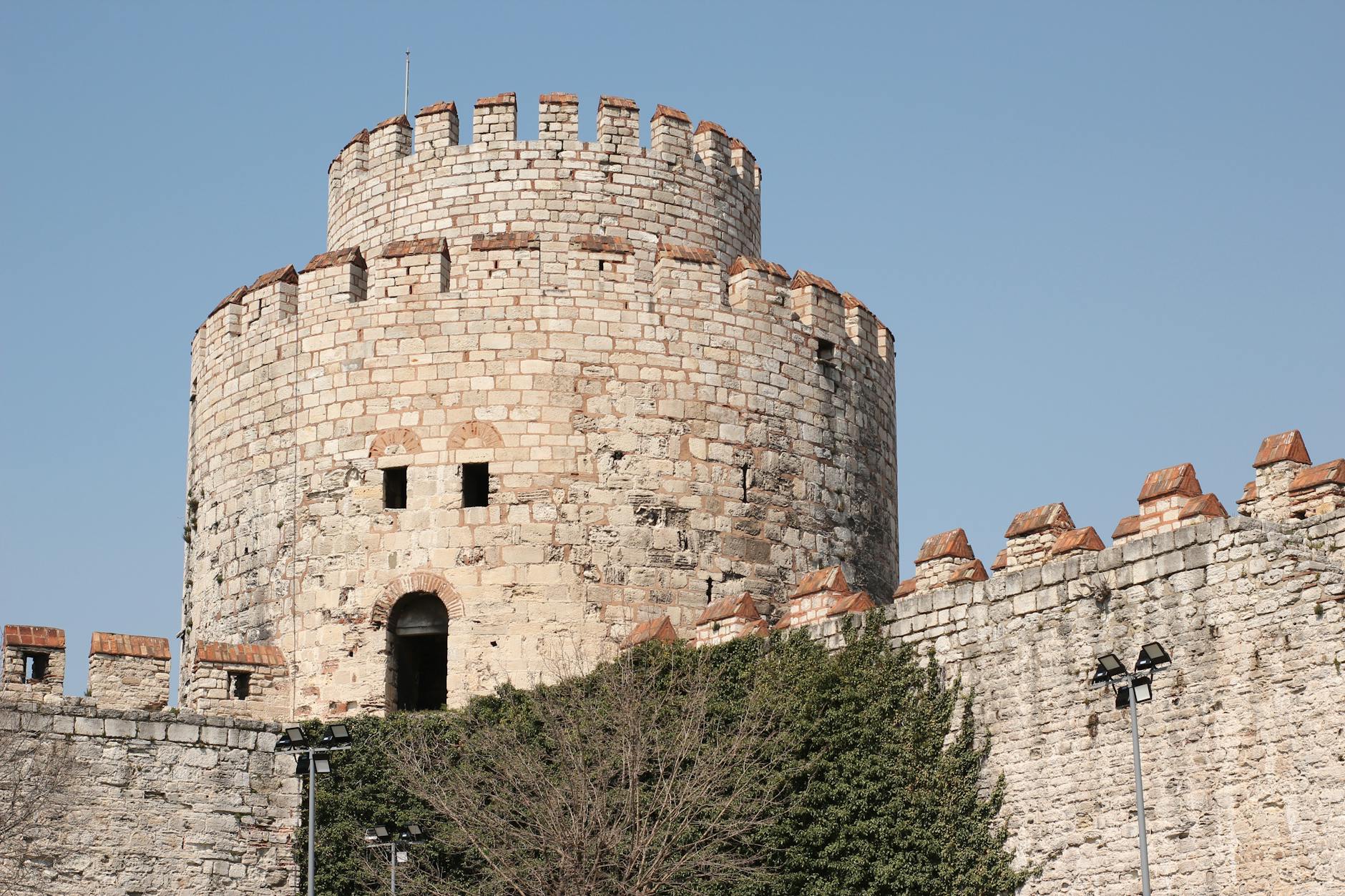
Just walk. It’s 15 minutes of your life. Follow the massive Theodosian Walls. You can’t miss them—they’re the giant, crumbling piles of rock that have been standing there since the 5th century. If they can survive the Attila the Hun, you can survive a bit of dust and a cracked sidewalk.
Berk’s Insider Tip: Don’t wear your fancy sneakers. The dust here is thousand-year-old limestone and it will ruin your suede in ten minutes.
- Locate the Marmaray entrance at Sirkeci (follow the blue signs).
- Tap your Istanbulkart (and ignore the broken refund machines on your way out).
- Exit at Kazlıçeşme and head south-east toward the sea.
- Follow the walls. Keep the stone towers on your left and keep walking until you see the entrance to the dungeons.
The walk is a test. If you can handle the industrial gloom and the uneven pavement, you deserve the view from the top of the Golden Gate. If you can’t? Well, there’s always the hotel bar in Eminönü.
The Golden Gate and Byzantine History
The Golden Gate is the most arrogant piece of architecture in the history of this city, and honestly, I love it for its sheer lack of humility. Most people look at these ruins and see a “monument,” but I see an ancient ego trip that went south. Theodosius II wasn’t building a doorway; he was building a billboard. He wanted every visitor coming from Europe to know that Constantinople was bigger, richer, and more untouchable than their muddy little villages. It’s pure, unadulterated flexing in marble and gold.
I’ve stood in the shadow of the Porta Aurea on days when the wind from the Marmara Sea cuts through your coat like a knife. It’s cold, it’s gray, and the air smells like a mix of salt spray and the diesel fumes from the nearby highway. There’s nothing “magical” about it. It’s heavy. It’s brutal. That’s why it’s real.
The Triumph of the Ego
The Byzantine Empire was obsessed with theater. When an emperor returned from war, he didn’t just slip through a side door. He marched through these three massive arches. Originally, the central arch was plated in gold. Imagine the sun hitting that while some general rode through on a white horse, probably thinking he was a god. It’s the kind of over-the-top display that modern dictators would envy.
But look at it now. It’s bricked up. The Ottomans saw the gate and basically said, “No more parades for you.” There’s a legend that the last Byzantine emperor would return through this gate to reclaim the city, so the Sultans sealed it shut. It’s a 500-year-old middle finger to the past. I think about that every time I see the mismatched masonry. It’s messy. It’s petty. It’s exactly how history actually works—one group of people trying to erase the bragging rights of the group that came before them.
Walls That Actually Worked
You can’t talk about the gate without talking about the Theodosian Walls. Forget those cute, manicured castle walls you see in England. These things are monsters. 6 kilometers of triple-layered defenses. I once tried to walk a significant portion of the perimeter, and I ended up covered in dust, dodging stray dogs and tripping over literal piles of trash. The city doesn’t keep this place clean for tourists, and frankly, I prefer it that way. You get to see the stones for what they are: scarred, broken, and ancient.
While the mosaics in the northern part of the city show the delicate, spiritual side of the Byzantines, these walls show their paranoia. They were terrified of the world outside, and for good reason. For 1,000 years, these walls were the only thing keeping the city from being wiped off the map. It’s the ultimate survivalist project.
From Gold to Gloom
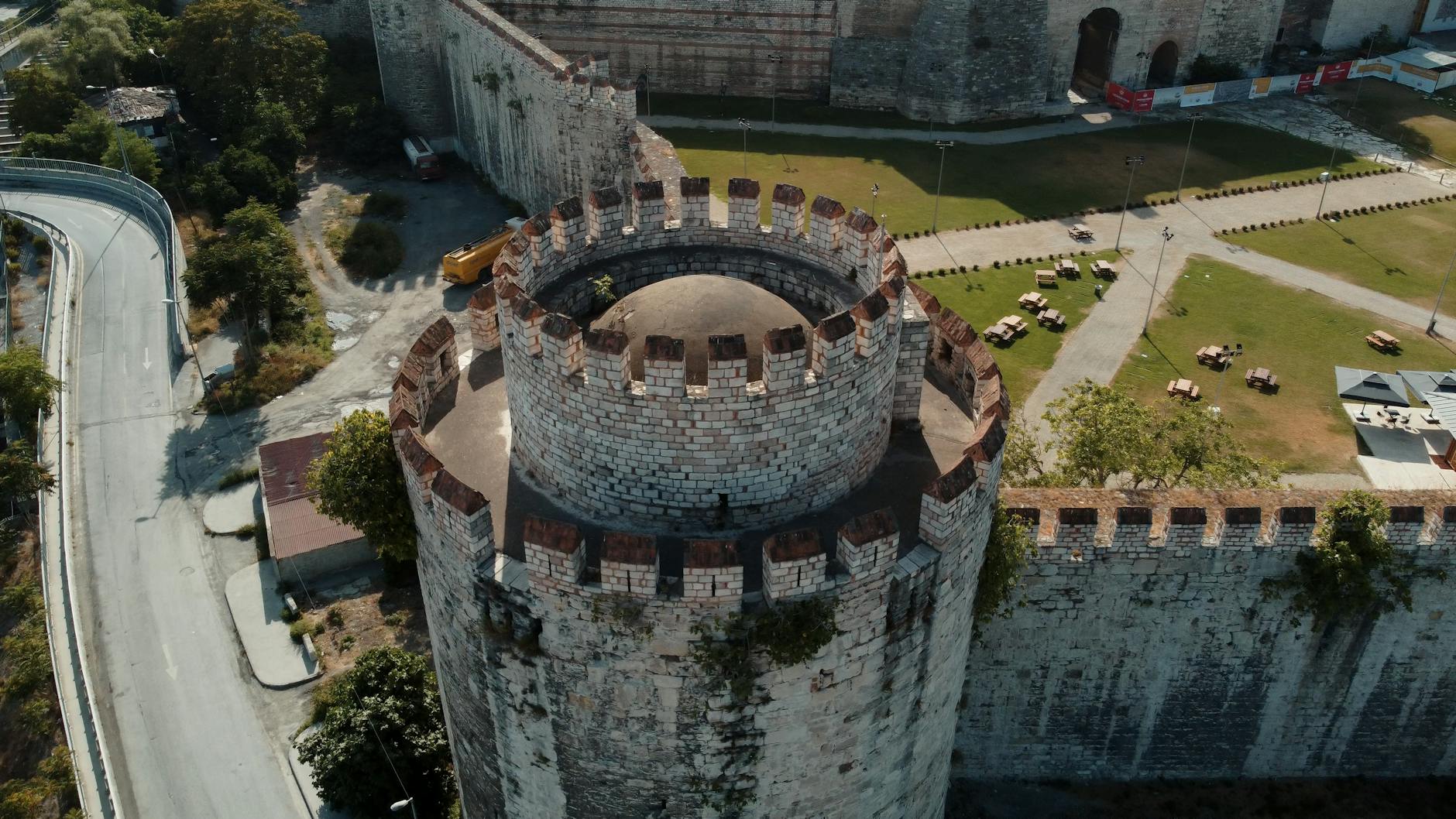
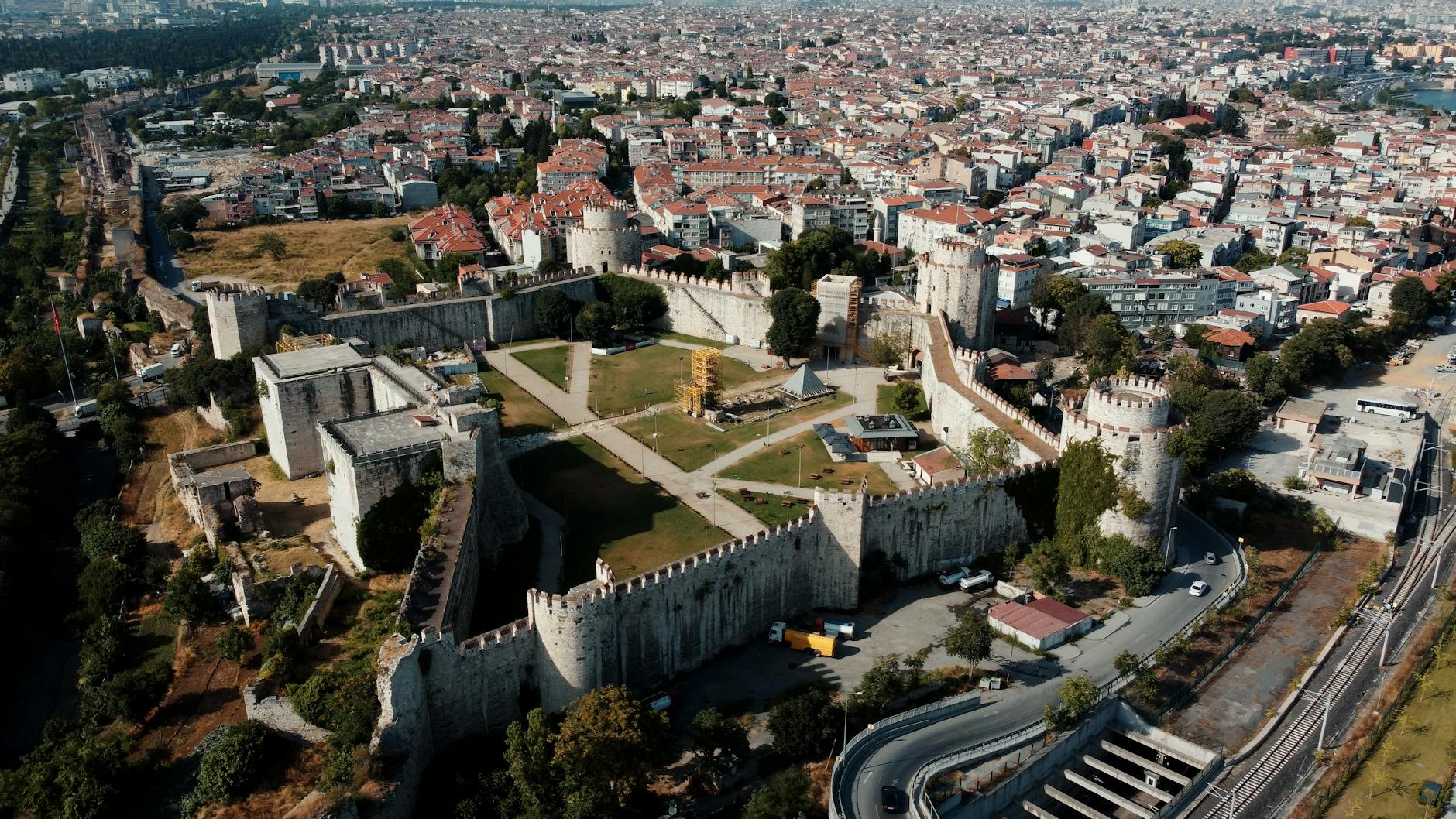
The transition from Roman triumph to the Ottoman Empire using this place as a fortress and prison is the ultimate irony. The Ottomans added three more towers to the existing four, creating the Seven Towers (Yedikule). They took a place meant for celebrating life and turned it into a place where life went to end.
I’ve spent time in the inner courtyard, and the vibe is oppressive. It’s not just the height of the walls; it’s the weight of what happened here. This wasn’t a “glamorous” prison. It was a hole. You were sent here if you were a political problem that needed to disappear. I’ve seen the “Inscriptions Tower” where prisoners were kept. The air in there is thick. It’s damp. It’s the kind of place that makes you want to leave and find the nearest bar for a stiff drink.
Berk’s Insider Tip: Look for the inscriptions left by foreign ambassadors who were jailed here; it’s the ultimate 17th-century ‘I was here’ graffiti.
It’s hilarious, in a dark way. These guys were high-ranking diplomats one day and rotting in a tower the next because the Sultan had a bad morning. They carved their names and dates into the stone with whatever they could find. It’s pathetic and human. No “grand history,” just a bunch of guys who were bored and scared, leaving a mark on the wall.
The Fortress doesn’t care about your feelings. It doesn’t care about the “spirit of the city.” It’s a giant pile of rock that has watched empires rise, flex their muscles, and then get choked out by the next guy. If you want a pretty story, go to the Blue Mosque. If you want the truth about how power works, you come here.
Yedikule Dungeons Ticket Prices and Hours
Don’t trust any price you read on a blog from six months ago because the ticket booth at Yedikule treats the Turkish Lira like a suggestion rather than a currency. Right now, expect to shell out 500 TL if you aren’t a local. It’s expensive. Is it a bit of a shakedown? Absolutely. But unlike the Hagia Sophia, where you pay double that to stand in a line that stretches to Bulgaria, here you’re paying for the privilege of not being surrounded by people holding selfie sticks.
The Damage to Your Wallet
I went there last Tuesday and the guy at the ticket booth looked like he hadn’t slept since the fall of the empire. He took my money with a grunt. No “welcome,” no “enjoy your stay.” Just a cold exchange of cash for a piece of paper. You need to bring your credit card or plenty of cash because they rarely have change for a 200 TL note.
The most annoying part? The Museum Pass Istanbul is completely useless here. I’ve seen tourists waving their plastic cards at the gate, looking confused and heartbroken. Don’t be that person. Yedikule is run by the Fatih Municipality, not the Ministry of Culture, which means they want their own slice of the pie. It’s a separate fee, no exceptions.
| Category | Detail | Berk’s Take |
|---|---|---|
| Foreigner Ticket | 500 TL | Pricey, but keeps the riff-raff out. |
| Museum Pass Istanbul | Not Valid | A total bureaucratic mess. |
| Opening Times | 09:00 - 18:00 | They start closing at 17:30. Don’t push it. |
| Best Time | Tuesday Morning | Skip the weekend chaos. |
Timing Your Escape
The opening times are technically 09:00 to 18:00, but “18:00” in Istanbul means the guards want to be on a bus home by 18:05. If you show up at 17:15, expect some heavy sighs and pointed looks at the gate.
My advice? Get there at 09:00 sharp. Why? School groups. Around 10:30, buses show up and unload 40 screaming kids who treat the dungeons like a jungle gym. I once got stuck behind a field trip of 10-year-olds while trying to contemplate the fate of Sultan Osman II. It ruined the mood. The wind howling through the stone towers is much better when you aren’t hearing a teacher blow a whistle every 30 seconds.
Go on a weekday. The smell of exhaust from the nearby Kennedy Avenue is less aggressive, and you might actually get 10 minutes of silence in the yard. Just watch your step—the stones are uneven, the grass is overgrown, and nobody is going to hold your hand. It’s raw. That’s why I like it.
Climbing the Towers and Safety
If you have a fear of heights or knees that belong to a 90-year-old, stay the hell away from the stairs at Yedikule. I’m serious. This isn’t some sanitized European heritage site where they’ve bolted neon yellow handrails and non-slip rubber mats onto every surface. This is a medieval fortress that wants to remind you exactly how small and fragile you are.
I’ve climbed these Stone stairs dozens of times over my 15 years in this city, and my legs still turn to jelly every single time. The steps are uneven, worn down by centuries of soldiers and prisoners, and tilted at angles that defy basic physics. One step is 5 inches high; the next is 15. It’s a workout that will make you hate me the next morning. Your quads will burn, your lungs will scream for air that isn’t filled with the dust of the Byzantine Empire, and you will probably question your life choices halfway up.
But that’s the point. It’s honest.
The Grip of Vertigo
There is a moment, usually about 3/4 of the way up one of the main Watchtowers, where the light from the narrow slits in the wall disappears and you’re left in a sort of gray limbo. The air gets heavy and smells like damp earth and old ego. If you suffer from Vertigo, this is where it hits. There is nothing to hold onto. You lean into the cold wall, palms flat against the rough masonry, feeling the grit of the city under your fingernails. I once saw a guy just sit down mid-stairwell and refuse to move for 20 minutes. I didn’t blame him. I just stepped over him.
The safety “features” here are basically non-existent. You fall? That’s on you. The Turkish authorities have left it raw, which is why I love it. It’s the polar opposite of a plastic, overpriced Bosphorus ferry ride where everything is served on a silver platter. Here, you earn the view.
The Anti-Bosphorus View
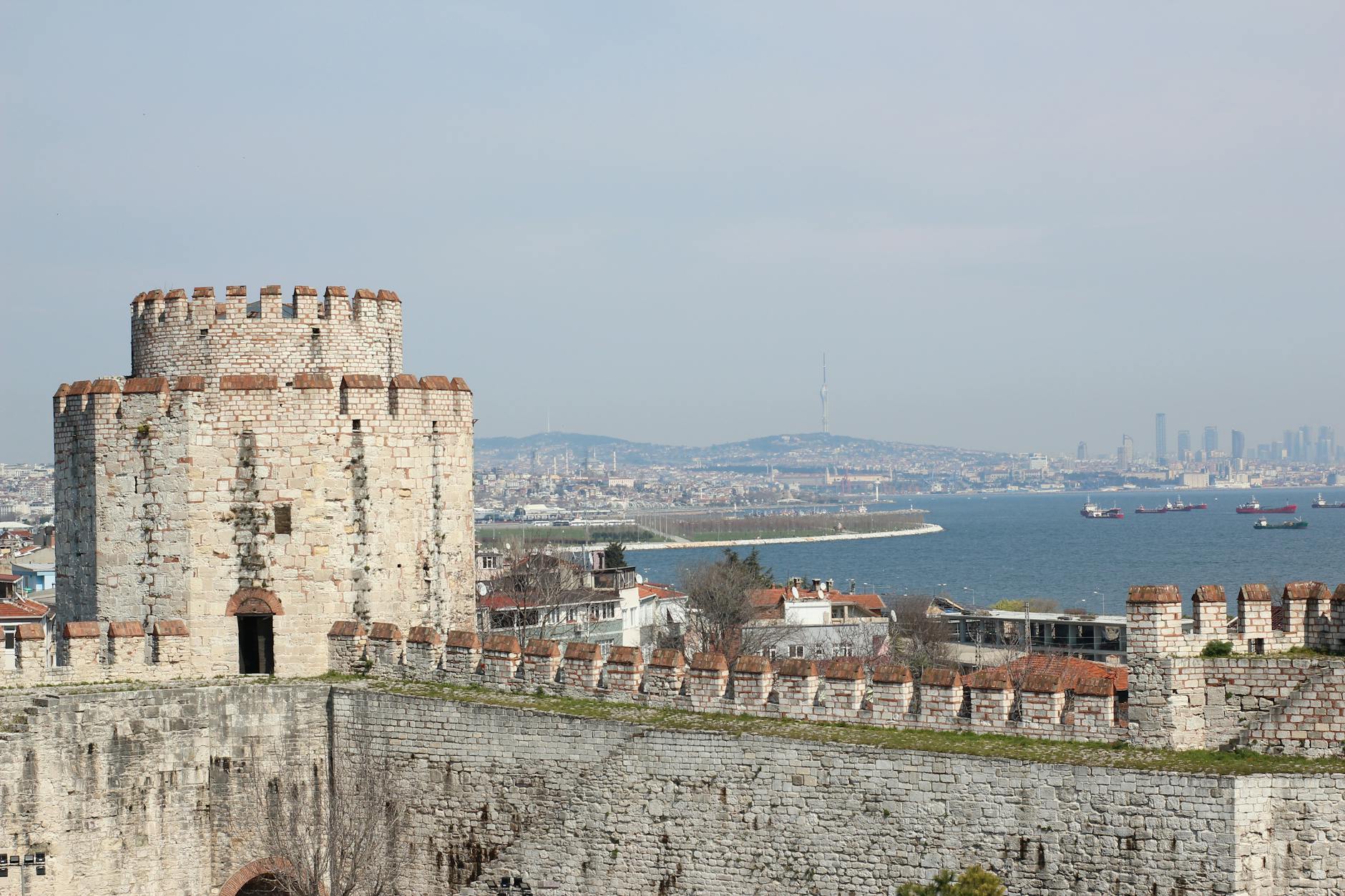
Once you finally scramble onto the ramparts, don’t expect the postcard version of Istanbul. You won’t see the glittering lights of the bridges or the manicured gardens of the palaces. What you get is the Marmara Sea, looking gray and muscular, stretching out toward the horizon like a sheet of hammered lead.
I stood up there last Tuesday. The wind was howling, nearly knocking my glasses off my face. Below me, the old train tracks cut through the landscape like a scar. You can hear the low rumble of the Marmaray trains passing by every few minutes, a metallic screech that bounces off the ancient walls. It’s noisy. It’s industrial. It’s real. To your left, the sprawl of the city goes on forever—roofs covered in satellite dishes, laundry hanging from balconies, and the constant, low-frequency hum of 16 million people trying to survive the day.
Why Your Knees Will Hate You
The descent is actually worse. Going down those stairs is a lesson in humility. You’ll find yourself crab-walking or sliding on your backside because the pitch is so steep. By the time I hit the grass at the bottom, my knees feel like they’ve been worked over by a Turkish bath attendant with a grudge.
Is it worth the pain? Yes. Because when you’re standing on top of those walls, looking at the cargo ships waiting to enter the Bosphorus, you realize this is the only part of the city that hasn’t been turned into a gift shop. It’s just stone, wind, and the smell of diesel from the coast road. It’s brutal. It’s exhausting. It’s the best spot in the city.
The Yedikule Bostanları and Local Life
If you don’t smell the literal manure and wet earth when you step outside the fortress walls, you’ve missed the entire point of being here. Most travelers stick to the stone and the history books, but the real soul of this place is in the mud. These gardens, or Bostan as we call them, have been feeding this city since the Byzantines were arguing over theology. It’s not “pretty” in a postcard way. It’s messy, there’s plastic waste caught in the brambles, and the ground is uneven. But it’s the only part of Istanbul that still feels like it hasn’t been scrubbed clean by some soulless municipal “beautification” project.
The Last Stand of Real Agriculture
I’ve walked these rows of lettuce and kale for 15 years, and every time I see a tractor near the walls, my heart sinks. You see, the local farmers here are fighting a war. On one side, you have families who have tilled this dirt for generations. On the other, you have developers and city officials who think “progress” looks like luxury flats and sterile parks with plastic benches.
The urban gardening here isn’t a hobby for hipsters in overpriced aprons. It’s grit. It’s Agriculture in its rawest form, right in the shadow of the monstrous Theodosian fortifications. I once saw a guy hauling a crate of arugula while a tour bus honked its head off nearby. He didn’t even look up. That’s the Yedikule attitude. They’ve seen empires fall; they aren’t scared of a bus.
Gentrification is a Disease
It makes me furious when I hear people talk about “rehabilitating” this area. Usually, that’s just code for kicking out the people who actually live here. Gentrification is eating Istanbul alive, turning every neighborhood into a copy-paste version of a European shopping street. But the Bostan resists. It’s stubborn. The soil is rich, dark, and smells of life—which is a hell of a lot better than the smell of exhaust and cheap perfume you get in Taksim.
I remember 1 day back in 2013 when they tried to dump loads of sand over the crops to start a “park” project. The local community stood their ground. They knew that once you pave over 1,500 years of history, you never get it back. You can’t eat a marble walkway.
Berk’s Insider Tip: There is a tiny tea house near the gate where the workers sit. Don’t expect a menu. Just sit down and say ‘Çay’.
Why You Should Care
You might think, “Berk, why are you telling me to look at a cabbage patch?” Because it’s the last honest thing left. When you stand on the heights of the Dungeons and look down at the green strips of land, you see the survival of a lifestyle. It’s the contrast that kills me—the massive, blood-soaked history of the prison towers standing right next to a guy watering his parsley.
It’s quiet here, mostly. Except for the occasional train or a stray dog barking at a shadow. If you want a “sanitized” experience, go to a museum. If you want to see how Istanbul actually breathes, walk through the dirt. Don’t worry about your shoes getting ruined. The mud is part of the story. Just watch where you step; the irrigation ditches are deeper than they look. Seriously. I ruined a pair of boots in 2018 because I was too busy looking at the masonry.
This isn’t a “sight” to see. It’s a place to feel the weight of time. The local spirit isn’t in the gift shops. It’s in the calloused hands of the people still growing food in the ruins of an empire. Don’t let anyone tell you this place needs “fixing.” It’s perfect exactly how it is: dirty, green, and defiant.
FAQ
Don’t expect a gift shop or a velvet rope because Yedikule doesn’t care about your comfort. Most “museums” in this city have been scrubbed clean of their soul, but this place still feels like a punch in the gut. I’ve been coming here for 15 years, and every time I step through that gate, the air gets 5 degrees colder and the silence gets heavier. It’s not a place that tries to be liked. It just exists.
Is Yedikule safe for solo travelers?
I get asked this constantly by people who haven’t left the bubble of İstiklal Avenue. Yes, it’s safe, but don’t be an idiot. The neighborhood surrounding the fortress isn’t the polished, fake version of Istanbul you see on Instagram. It’s a working-class area. You’ll see old men drinking tea, kids playing football against 1,600-year-old stones, and maybe some trash piled up near the entrance. It smells like diesel and charcoal smoke.
If you’re walking there alone, keep your wits about you, mostly because the sidewalks are uneven and you might twist an ankle. I’ve walked these streets at 10:00 AM and 4:00 PM; nobody bothered me. But would I wander the dark alleys outside the walls at 11:00 PM? No. Why would you? There’s nothing there but shadows and stray cats. Stick to daylight, look like you know where you’re going, and you’ll be fine. The “danger” people talk about is usually just a fear of seeing how the other half of the city actually lives.
Can you bring kids to the dungeons?
Only if your kids are tough and you don’t mind a bit of trauma. Seriously, this isn’t a playground. I saw a family there last month trying to haul a stroller up the stone steps. It was pathetic. The stairs are narrow, slippery, and half of them don’t have railings. One wrong move and you’re tumbling down a path that hasn’t been repaired since the Ottomans were in charge.
Beyond the physical risk, it’s a dungeon. A literal place of execution and misery. If your kid scares easily, the “Inscriptions Room” where prisoners carved their final thoughts into the stone will probably give them nightmares. I love the grit, but I wouldn’t bring a 5-year-old here unless I wanted to spend the whole day carrying them while sweating through my shirt.
Is there a cafe inside?
Forget about getting a decent latte here. There is no “Food and drink” scene inside the walls. I once found a guy selling lukewarm water near the entrance, but that’s about it. If you’re hungry, you have to head back into the neighborhood. Most of the spots nearby serve basic pide or kebap that tastes fine but won’t win any awards. I usually grab a simit from a street cart on the way in and call it a day.
The lack of a fancy cafe is actually a blessing. It keeps the “brunch crowd” away. You’re here to see where sultans were strangled, not to take photos of your avocado toast.
Berk’s Essential Survival List:
- Walking shoes: If you wear sandals or heels, you deserve the blisters you’re going to get. The ground is treacherous.
- Water: Bring a liter. The climb up the towers is a workout, and the air inside is dry and dusty.
- Flashlight: Your phone’s LED is okay, but a real light helps you see the graffiti left by 17th-century prisoners in the dark corners.
- Cash: Don’t expect the small shops nearby to take your fancy travel credit card.
- A jacket: Even in July, the stone walls hold the cold. It feels like a tomb because, well, it often was.
Is it a “pleasant” afternoon? Probably not. Is it the most honest experience you’ll have in Istanbul? Absolutely. Just don’t blame me if you ruin your sneakers.
Conclusion
Look, you can keep your overpriced pomegranate juice and the guy in Sultanahmet trying to sell you a rug he “found in a village.” That’s not Istanbul. That’s a theme park for people who are afraid of getting their shoes dirty. If you want the version of this city that doesn’t wear makeup, stay out here at Yedikule until the sun starts to dip and the wind off the Marmara begins to bite through your coat.
It’s miserable. It’s cold. The stone feels like it’s sweating. Good.
I’ve lived here fifteen years and I’m tired of the “polished” lie they’re selling in Galata. The real Istanbul isn’t a postcard; it’s a bruise. It’s the smell of damp earth, the silence of a cell where an Emperor lost his head, and the absolute indifference of these towers to your existence. They don’t care about your Instagram feed. They don’t want your five-star review.
The city’s soul isn’t found under a spotlight or behind a velvet rope. It’s hiding right here in the dark and the rot. If you can’t handle the chill in your bones, go back to the hotel. But don’t tell me you’ve seen the city. You’ve just seen the gift shop. Grab a stale simit, walk back to the Marmaray station through the slush and the grey exhaust fumes, and try to shake the feeling of those walls. You won’t. That’s the point. The towers are still there, watching the sea, waiting for the next empire to fall. That’s the only truth we’ve got left.
Comments
Share your thoughts with us