
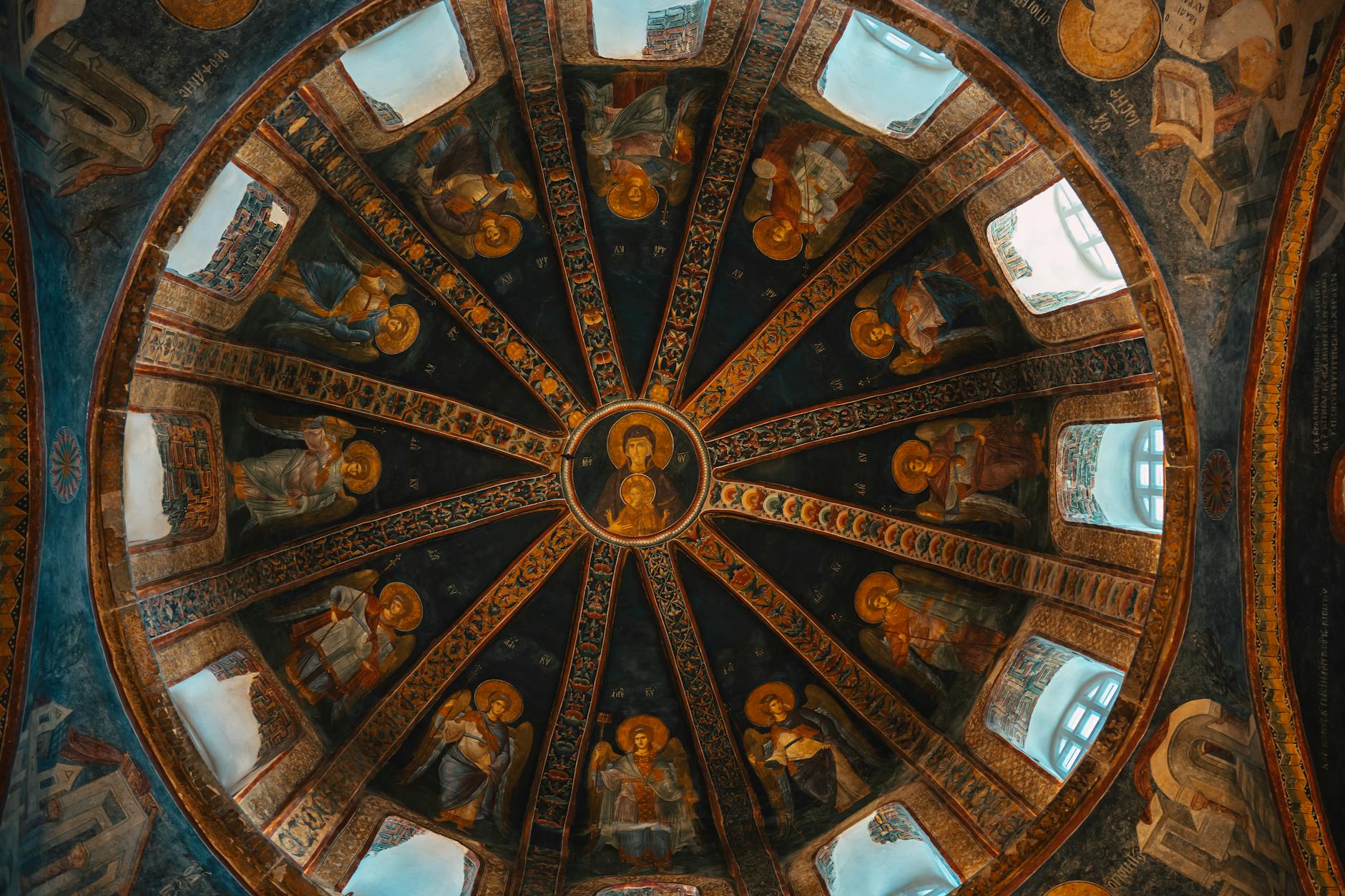
Whenever friends visit me here, I usually give them a piece of advice that sounds almost like heresy: if you want to truly feel the heartbeat of Byzantine Istanbul, don’t spend your entire afternoon standing in a three-hour queue under the Sultanahmet sun. Instead, let’s hop on a bus or take a long, winding walk toward the ancient Theodosian Walls. We’re heading to Edirnekapı, a neighborhood that still feels like the old soul of the city, to a place that has been my personal sanctuary for fifteen years.
I remember the first time I walked into the Kariye. I had been living in Istanbul for only a few months, still trying to navigate the complex layers of this “City of the World’s Desire.” I stepped inside, and the noise of the street—the honking yellow taxis, the shouting vendors, the distant call to prayer—simply evaporated. In its place was a silence that felt weighted with history. As I looked up, the light hit the golden mosaics just right, and for a second, I felt like the gold was actually breathing.
For those who know it as the Chora Church, or its current incarnation as the Kariye Mosque, this space is far more than just a monument. It is a masterclass in human devotion and artistic precision. While the Blue Mosque offers grandeur and the Hagia Sophia offers scale, the Kariye offers intimacy. Every inch of the ceiling tells a story written in tile and light, preserved through centuries of change. It’s where the monumental becomes personal.
In this corner of the city, the air is a little cooler, the tea is a little stronger, and the history feels close enough to touch. People often ask me why I keep coming back here after a decade and a half. The answer is simple: every time I look at those mosaics, I see something I missed before—a detail in a robe, a flicker of emotion in a saint’s eye, or the way the afternoon sun makes the vaulting glow.
So, let’s leave the crowds behind and head toward the city walls. I want to show you why this isn’t just a stop on a map, but the very place where Istanbul’s layers of faith and art are most beautifully intertwined.
The Journey to the Edge of the Byzantine World
Look, I love the Blue Mosque and the Hagia Sophia as much as any local, but if you really want to feel the soul of this city, you need to leave the Sultanahmet bubble behind. Don’t get me wrong; those landmarks are the crown jewels, but after living here for 15 years, I’ve realized that the “real” Istanbul—the one that breathes, sighs, and tells secrets—is often found where the tourists stop looking.
To find my absolute favorite corner of the city, we have to head west, away from the cruise ship crowds and the overpriced Sultanahmet menus. We are going to Edirnekapı.
Stepping into the Real “Mahalle”
Even here in 2026, as Istanbul continues its dizzying transformation into a futuristic mega-metropolis, Edirnekapı remains a portal to the past. This isn’t a curated museum district; it is a living, breathing mahalle (neighborhood). When you step off the T4 tram or jump out of a yellow taxi, the air changes. It feels heavier, thicker with history, yet surprisingly intimate.
In Edirnekapı, you won’t find flashy boutiques. Instead, you’ll see elderly men sipping çay (Turkish tea) outside a century-old barbershop, and children playing football in the shadow of history. The prices reflect this local life, too. While a coffee in the posh districts might cost you a fortune, here, a glass of dark, steeped tea is still about 25 TL—barely 50 cents in Euro terms (given our current 1 Euro = 50 TL rate). It’s the kind of place where people still know their neighbors’ names, and as a visitor, you aren’t just a customer; you’re a guest.
The Might of the Theodosian Walls
The first thing you’ll notice—the thing that literally looms over everything—are the Istanbul city walls. Specifically, the Theodosian Walls. These aren’t just some crumbling ruins; they are a massive, five-mile-long defensive system that protected the capital of the Roman and Byzantine Empires for over a thousand years.
Walking alongside these fortifications provides a physical sense of “the edge.” For centuries, this was where the civilized world ended and the unknown began. The sheer scale of the stone and brickwork is a humbling reminder of the city’s endurance. When I’m doing some Edirnekapı sightseeing, I always start by standing at the base of these walls. They provide a dramatic, rugged backdrop that makes the delicate art we are about to see inside the Kariye Mosque (the Chora Church) feel even more miraculous.
Why You’ll Love This Escape
If you are still on the fence about leaving the comforts of the city center, let me tell you why this trek is worth it. Edirnekapı offers a sensory experience that the polished tourist zones simply cannot replicate:
- The Soundscape: Instead of megaphones and tour guides, you hear the melodic call to prayer echoing off ancient stone and the distant clink of tea spoons.
- The Architecture: You’ll see traditional Ottoman wooden houses nestled right up against Roman masonry.
- The Pace: Everything slows down. You are forced to walk, to look up, and to appreciate the local atmosphere that hasn’t been “sanitized” for postcards.
- The Authenticity: This is where the layers of Istanbul—Greek, Roman, Byzantine, and Ottoman—are physically stacked on top of one another.
Leaving the center isn’t just about seeing a different building; it’s about understanding the geography of an empire. As we walk through the narrow, sloping streets toward the Kariye, you’ll start to see why I’ve spent the last decade telling anyone who will listen that this is where the heart of the city truly beats.
Layers of History: From the Chora Monastery to Kariye Mosque
To understand why I’ve spent countless Sunday mornings wandering through this building, you first have to understand its name. Before it was the Kariye Mosque, it was the Church of the Holy Saviour in Chora. In Greek, Chora means “in the country” or “outside the city.”
It sounds a bit funny today, doesn’t it? If you’ve taken the T4 tram or a taxi through the bustling, narrow streets of Edirnekapı lately, you know it feels like the very heart of the old city. But back in the 4th century, when the first stones were laid, this spot was literally out in the wild, sitting just outside the original Walls of Constantine. Even after the massive Theodosian Walls were built in the 5th century—swallowing the monastery into the city limits—the name “Chora” stuck. It became a symbol of a place that was in the city, but not of it. A sanctuary of quietude.
The Passion Project of Theodore Metochites
While the foundations are ancient, the Kariye we see today is really the vision of one man: Theodore Metochites. Walking through the nave in 2026, I still find myself mesmerized by his audacity. Theodore was the Byzantine equivalent of a Prime Minister—a brilliant scholar, poet, and the Grand Logothete (basically the Emperor’s right-hand man) in the early 14th century.
Between 1315 and 1321, he poured his personal fortune and his intellectual soul into restoring the monastery. This was during the “Palaiologan Renaissance,” a final, brilliant flash of artistic genius before the empire’s eventual decline. Theodore didn’t just want a church; he wanted a masterpiece of Byzantine art. If you look up above the entrance to the main nave, you’ll see a mosaic of the man himself, dressed in an incredibly flamboyant turban-like hat, kneeling and presenting a model of the church to Christ. It’s a very human moment captured in glass and stone—a powerful man seeking a legacy that would outlive his political career.
From Monastery to Mosque: A Paradox of Preservation
History is full of ironies, and Kariye is perhaps Istanbul’s greatest. About half a century after the Ottoman conquest, in 1511, the church was converted into a mosque by Hadım Ali Pasha. In most other parts of the world, 14th-century Christian frescoes and mosaics might have been destroyed during such a transition.
However, because Islamic tradition prohibits figurative imagery in prayer spaces, the Ottomans chose to cover the masterpieces with fine layers of plaster and wooden shutters. Paradoxically, this act of “hiding” the art is exactly what saved it. For centuries, the vibrant blues, deep golds, and emotional expressions of the biblical scenes were protected from light, soot, and wear. When the building was restored and turned into a museum in the mid-20th century (and later transitioned back to a mosque in recent years), the world was stunned to find the most complete cycle of Byzantine mosaics and frescoes anywhere on earth.
A Different Kind of Grandeur
When my friends visit, they often ask how Kariye compares to the Hagia Sophia. I always tell them that if the Hagia Sophia is about the “wow” factor of scale, Kariye is about the “wow” factor of intimacy.
While massive structures like the Valens Aqueduct remind us of the sheer engineering might of the Roman Empire, Kariye reminds us of their emotional and spiritual depth. In the 15 years I’ve lived here, I’ve realized that you need both to understand Istanbul. You need the towering arches of the aqueduct to feel the city’s bones, but you need the golden mosaics of Kariye to feel its heartbeat.
Even with the 2026 entrance adjustments—with the foreign visitor gallery ticket sitting at around 25 Euros (roughly 1,250 TL given the current 1 Euro = 50 TL rate)—it remains an essential pilgrimage. You aren’t just paying for a view; you’re paying for a front-row seat to the 14th century.
The Art of the Inner and Outer Narthex
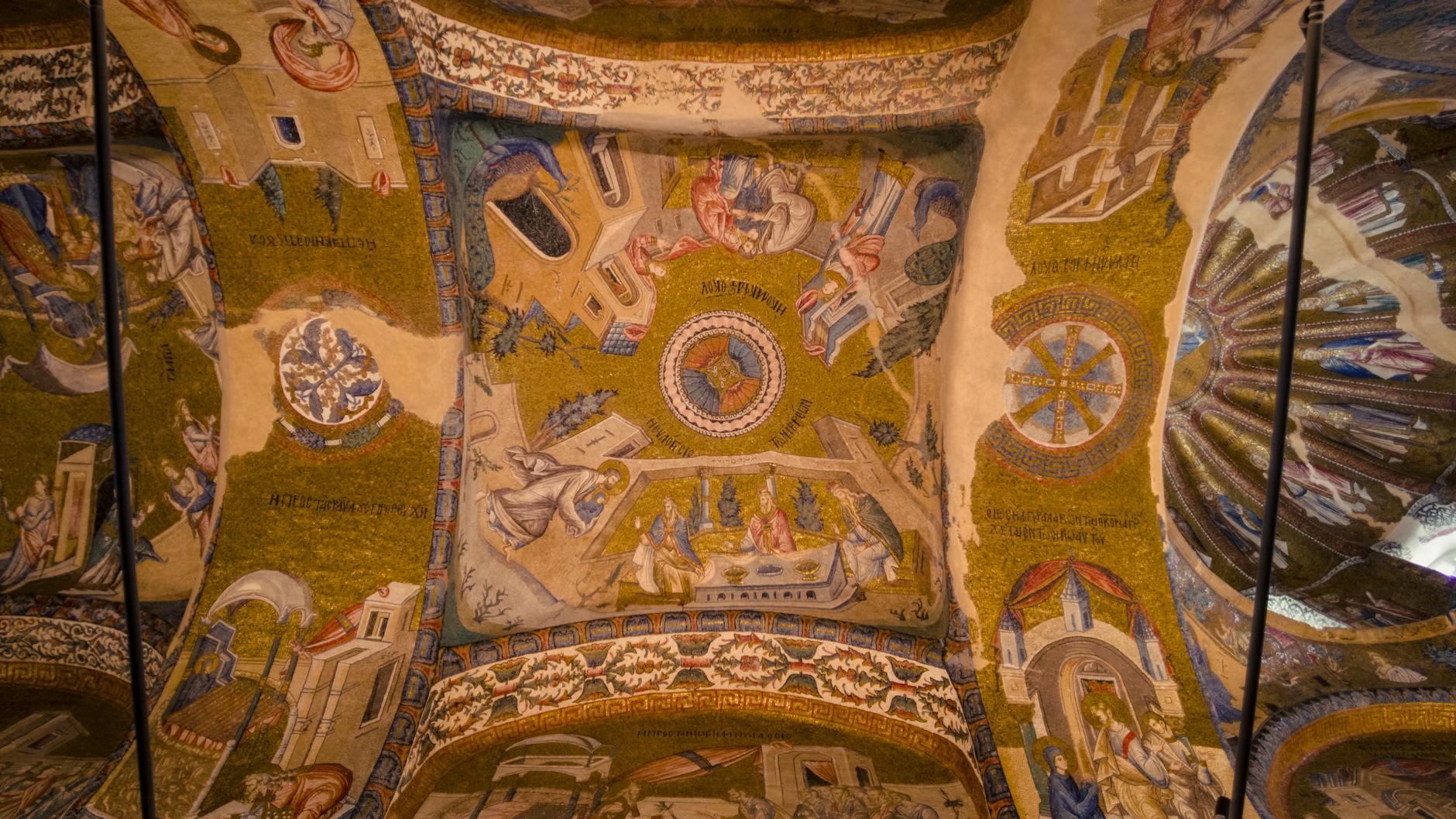
As you step through the main entrance of the Chora Church, or Kariye as we locals have called it for centuries, I want you to take a deep breath. Forget the bustling streets of Edirnekapı outside. Here, the air feels different—cooler, heavier with the scent of ancient stone and a thousand years of prayer. We are standing in the Narthex, the architectural “porch” of the Byzantine world, but calling it a porch is like calling the Bosphorus a “stream.” It is a masterpiece.
In these two corridors—the Outer and Inner Narthex—you aren’t just looking at religious iconography; you are witnessing the pinnacle of the Palaiologan Renaissance. This was the final, brilliant flowering of Byzantine art in the 14th century, and Kariye is its crown jewel.
A Graphic Novel in Gold: The Life of the Virgin Mary
If you turn your eyes to the Inner Narthex, you’ll see something truly special. Most people expect Byzantine art to be stiff and distant, but here, it’s remarkably human. The ceiling and walls serve as a chronological visual biography of the Virgin Mary.
Walking through these cycles feels like reading an illuminated manuscript that has come to life on the ceiling. You see the Annunciation to Saint Anne (Mary’s mother), the Birth of the Virgin, and her First Seven Steps. There is a tenderness in these mosaics that always stops me in my tracks. Look at the way the artists captured the movement of fabric and the subtle, emotional expressions on the faces. In 2026, after the extensive restorations we’ve seen over the last few years, these colors—the deep indigo, the vibrant ochre, and the shimmering gold—pop with a clarity that hasn’t been seen in centuries.
As an Istanbulite who has visited this spot dozens of times over the last 15 years, I still find myself standing here for twenty minutes just following the narrative flow. It’s the 14th-century version of a high-definition cinema, designed to tell a story to those who couldn’t read, and even today, the story remains crystal clear.
The Gaze that Follows You: Christ the Pantocrator
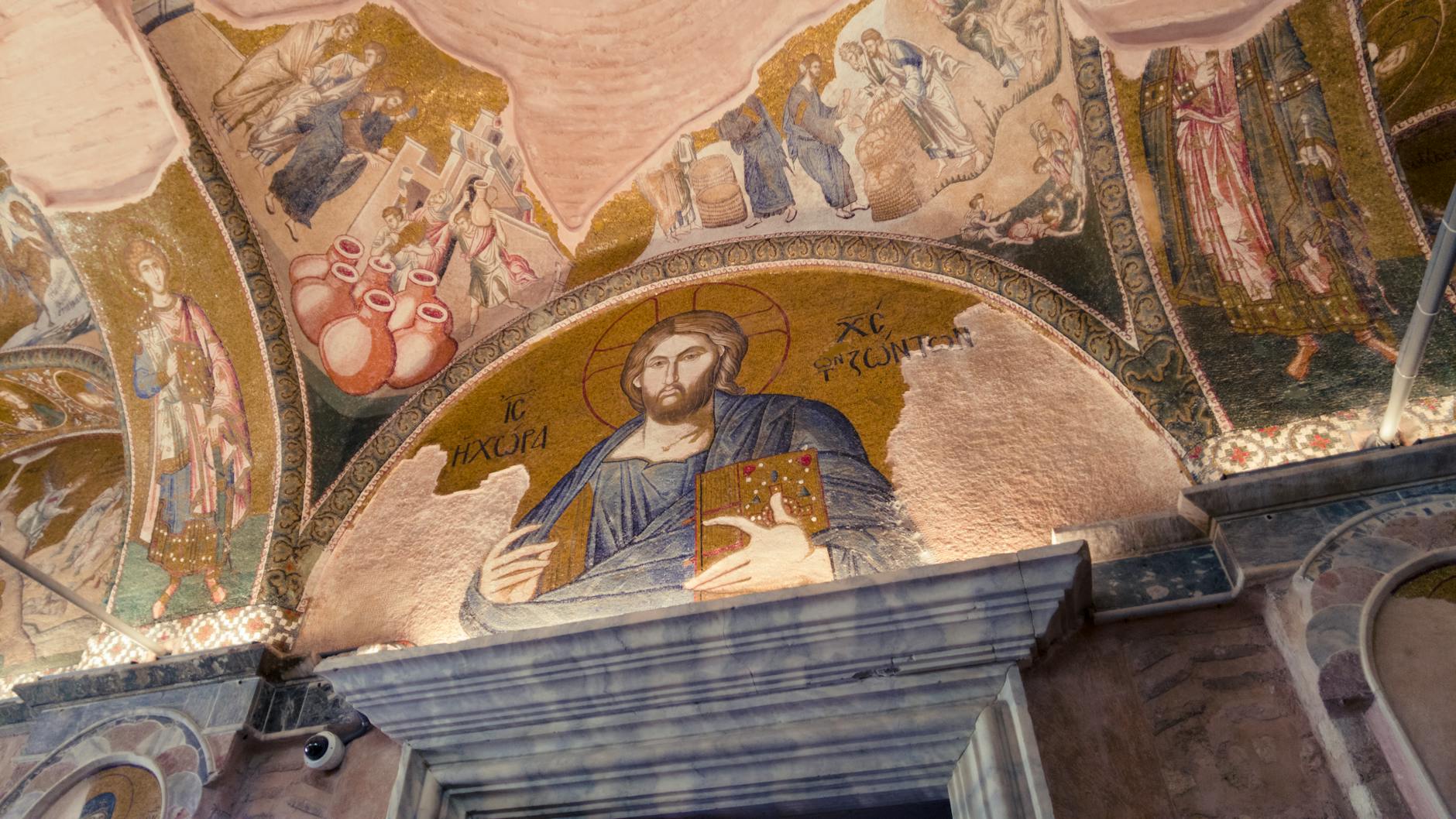
Between the outer and inner sections, you will encounter the Enthroned Christ, or Christ Pantocrator (the Ruler of All). This isn’t just a mosaic; it is a presence. Positioned over the door, Christ sits upon a magnificent throne, holding the Gospels.
What I love about this particular mosaic is the technical mastery of the Byzantine mosaics. The artists used a technique called tesserae—tiny cubes of stone, glass, and gold—tilted at specific angles to catch the flickering light of candles (or, in our case, the soft gallery lighting of 2026). The result is a gaze that is both piercing and compassionate. Whether you move to the left or right, it feels as though His eyes are subtly following you, judging and welcoming you all at once.
At today’s exchange rate, with the Euro at 50 TL and the USD at 45 TL, the entry fee for the museum might seem like a small investment, but standing under this gaze makes every kuruş worth it. It’s a connection to the 1300s that feels impossibly immediate.
The Palaiologan Revolution: Humanizing the Divine
Why does this art feel so different from the mosaics you might see in Ravenna or early Hagia Sophia? It’s the technical brilliance of the Palaiologan era. By the 14th century, Byzantine artists had begun to experiment with perspective and depth in a way that pre-dated the Italian Renaissance.
Notice the background of the scenes. Instead of flat, gold voids, you see architectural elements, mountains, and trees that attempt to create a three-dimensional world. The figures have weight; they occupy space. This was a “renaissance” in every sense of the word—a return to naturalism and an infusion of Greek classical grace into Christian themes. It is sophisticated, intellectual, and deeply moving.
When you look at the ‘Journey to Bethlehem’ or the ‘Enrolment for Taxation,’ you aren’t just looking at icons; you’re looking at characters in a drama. The folds of their robes swirl with a life of their own, and the architecture in the background seems to lean into the frame. It is the peak of medieval artistic achievement, preserved right here in our backyard.
Berk’s Insider Tip: Look for the tiny details in the ‘Journey to Bethlehem’ mosaic—you can see the wear and tear of the centuries in the stones, which only adds to their beauty.
The Parekklesion: A Glimpse into the Afterlife
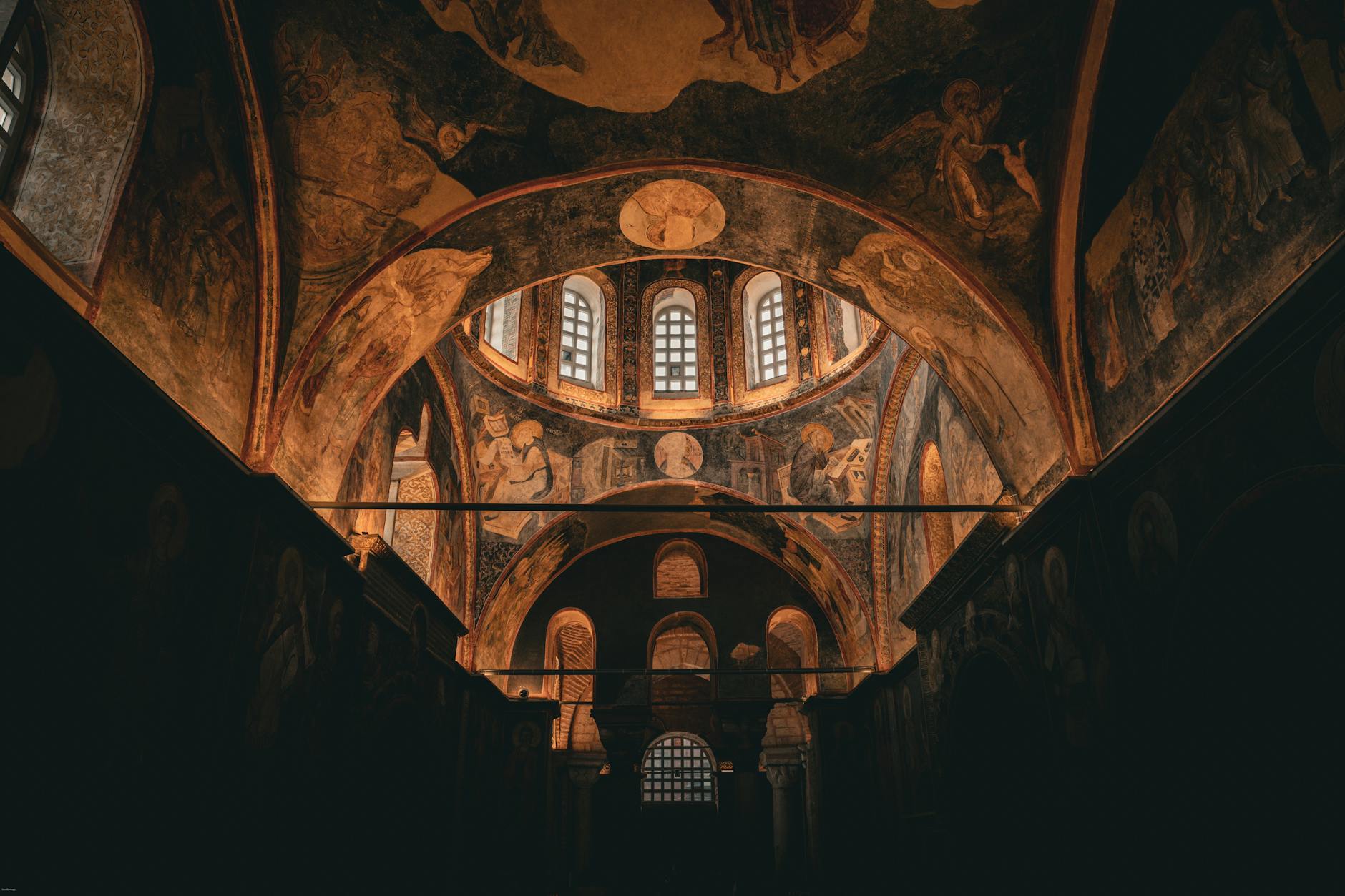
If the inner narthex of the Kariye is a symphony of shimmering gold, the Parekklesion is a soft, moonlit sonata. As you step out of the main corridor and into this side chapel, the atmosphere shifts instantly. There is a weight here, but it isn’t heavy—it’s the weight of silence, history, and a very human longing for what lies beyond.
In Byzantine architecture, a parekklesion was often used as a funeral chapel, and this space was no different. It was commissioned by the Great Logothete Theodore Metochites, the man responsible for the Kariye’s 14th-century renaissance, as his final resting place. When you walk along the walls, you’ll notice deep niches—these are arcosolia, where the remains of the patron and his family once rested. It was designed to be a bridge between the living world and the eternal one, and even now, in 2026, with the light filtering through the high windows, that bridge feels remarkably short.
The Masterpiece: The Anastasis
You cannot talk about the Kariye Mosque interior without standing in front of the Anastasis. Located in the apse of the Parekklesion, this fresco—the “Harrowing of Hell”—is, in my opinion, the most powerful piece of art in all of Istanbul.
Unlike the static, formal poses you might expect from medieval religious art, the Anastasis is pure energy. Christ stands at the center, his robes a luminous, celestial white that seems to glow from within. He isn’t just standing; he is in motion. He has just smashed the gates of Hades—you can see the locks and bolts scattered beneath his feet—and he is literally hauling Adam and Eve out of their tombs.
The way he grips their wrists is what always gets me. It isn’t a gentle hand-hold; it’s a rescue. He is pulling them back into life with such force that you can almost feel the wind of his movement. For a moment, forget the theology and just look at the human drama. It is a scene of pure hope. Even after fifteen years of visiting this spot, the sheer dynamism of these Byzantine frescoes still gives me goosebumps.
A Different Palette of Devotion
What makes the Parekklesion so striking is the visual departure from the rest of the building. While the main areas are covered in intricate mosaics, this chapel is almost entirely frescoed. The medium changes the mood. Instead of the reflective, flickering gold that responds to every candle or flashlight, the frescoes offer a matte, deep, and soul-stirring depth.
The color palette here is dominated by vibrant blues and whites. These aren’t just any colors; they used ground lapis lazuli to achieve those deep, midnight tones in the backgrounds. This creates a sense of infinite space, making the walls feel as though they are opening up into the heavens. Compared to the imperial grandeur of the Suleymaniye Mosque, which speaks to the power and scale of an empire, the Parekklesion feels like a private conversation with the divine. It is intimate, fragile, and incredibly sophisticated.
In the dome above you, you’ll see the Virgin and Child surrounded by angels. The detail is so fine that you can see the individual brushstrokes of the artists who worked here seven centuries ago. There is a sense of “quiet” in the blue tones here that I always find grounding. After the sensory overload of the Istanbul streets—where a simple glass of tea might now cost you 50 TL (exactly 1 Euro these days!)—stepping into this cool, blue-hued sanctuary is the ultimate reset button for the soul.
Berk’s Insider Tip: The Parekklesion’s acoustics are hauntingly beautiful; if you find a moment of silence when there are no crowds, just stand in the center and breathe—the space feels alive.
Standing here, you realize that the Kariye isn’t just a museum or a place of worship; it’s a testament to the fact that even in our darkest hours—much like the era when Byzantium was fading—humans have an incredible capacity to create beauty that lasts forever.
Decoding the Mosaics: A Guide to the Masterpieces
Walking into the inner narthex of the Kariye Mosque in 2026, you’ll notice that even after all these years, the gold leaf still captures the light in a way that feels almost supernatural. Whenever I bring friends here, I tell them: don’t just look—read. These aren’t just decorations; they are a visual library, a “Bible for the illiterate” as they called it back in the day, but executed with the sophistication of the world’s then-greatest empire.
Where the Story Begins: The Human Side of the Divine
For your first time, I suggest you start with the Life of the Virgin series in the inner narthex. What makes Byzantine art here so special—and why I personally prefer it over the Hagia Sophia—is the raw emotion. Look closely at the scene of the First Seven Steps of the Virgin. You can see the trepidation in the toddler’s posture.
Another “must-see” is the Enrollment for Taxation before Governor Quirinius. It sounds like a boring bureaucratic event, doesn’t it? But look at the Mary figure. She is depicted as a weary traveler, heavy with child. This humanization of divine figures was revolutionary for the 14th century. In most other places, Byzantine figures are stiff and two-dimensional, but here in Kariye, they have weight, movement, and shadows.
Reading Between the Golden Lines: Mosaic Interpretation
To truly appreciate mosaic interpretation, you have to understand the light. Each of those tiny glass cubes, or tesserae, was set at a slight angle. This wasn’t a mistake by the artisans. They did it so that as you move, or as the sun shifts through the windows, the light “dances” across the walls.
Notice the use of the Mandorla—that almond-shaped aura of light surrounding Christ in the Anastasis (the Resurrection) in the side chapel. It’s not just a circle; it represents a bridge between the physical and spiritual worlds. When you see deep blues and vibrant golds used together, it’s a signal of the highest celestial importance. As a local who has spent fifteen years studying these walls, I still find new details in the folds of the garments every time I visit.
The Man Behind the Masterpiece: The Donor Portrait
You cannot leave without paying your respects to the man who paid for all of this: Theodore Metochites. You’ll find him right above the entrance to the main nave, kneeling before Christ.
This donor portrait is fascinating because of the “Skiadion” he’s wearing—that massive, striped, turban-like hat. It was the height of fashion for a “Grand Logothete” (essentially the Prime Minister) of the Byzantine Empire in 1315. He is shown offering a model of the church to Christ. It’s a brilliant piece of political and spiritual branding; he’s saying, “I used my worldly wealth to build this heavenly gate, so please remember me in the next life.” In 2026, with the TL-Euro exchange rate where it is, we might joke about the cost of such a renovation, but for Metochites, this was his ticket to immortality.
| Notable Scene | Location | Key Symbolism to Watch For |
|---|---|---|
| The Anastasis | Parekklesion (Side Chapel) | Christ pulling Adam and Eve from their tombs; victory over death. |
| The Virgin’s First Steps | Inner Narthex | Rare domestic tenderness; the beginning of the narrative cycle. |
| The Donor Portrait | Over the Nave Door | Theodore Metochites’ hat; the blending of secular power and piety. |
| The Journey to Bethlehem | Outer Narthex | Detailed landscape and architectural elements (rare in this era). |
Berk’s Tip: If you want to buy a high-quality guide specifically about the symbols, the museum shop has a great edition for about 750 TL (around 15 Euros or 16 USD). It’s worth every kuruş if you want to geek out on the iconography back at your hotel over a glass of tea.
Beyond the Threshold: Exploring Edirnekapı and Balat
After you’ve spent an hour or two under the golden gaze of the Kariye mosaics, your mind will likely be buzzing. I’ve lived here for 15 years, and even now, the sheer detail of those frescoes leaves me needing a moment of reflection. The best way to process that beauty isn’t by hopping straight into a taxi; it’s by letting your feet lead you down the hill.
Kariye is situated in Edirnekapı, one of the highest points of the historic peninsula. It serves as the perfect starting point for an afternoon of Edirnekapı sightseeing because, from here, the city literally unfolds beneath you. You are standing near the mighty Theodosian Walls, and the path from the heights of the Byzantine palace district down to the shores of the Golden Horn is, in my opinion, the most atmospheric walk in Istanbul.
From Byzantine Walls to Ottoman Streets
Leaving the museum, I always suggest heading toward the dramatic ruins of the Palace of the Porphyrogenitus (Tekfur Sarayı). It’s only a five-minute walk. Standing there, looking at the triple-layered defense system that protected this city for a millennium, you really feel the weight of the ages. But as you begin your descent toward the water, the gray stone of the fortifications slowly gives way to the vibrant, chaotic, and utterly charming streets of the neighborhoods below.
This transition is what makes an Istanbul neighborhood guide so hard to write in a single paragraph—the city changes its character every few hundred meters. As you walk down the winding slopes, the quiet, residential feel of Edirnekapı begins to blend into the bohemian energy of the lower districts. You’ll see laundry hanging between centuries-old wooden houses and hear the clinking of tea glasses from neighborhood coffee houses.
Descending into the Colors of Balat
As the slope steepens, you’ll find yourself entering the heart of the old Jewish and Greek quarters. Combining your Kariye visit with a Fener Balat walk is a logistical dream. While Kariye gives you the spiritual and imperial history, Fener and Balat give you the lived-in, “real” Istanbul.
The streets here are a labyrinth of pastel-painted houses, vintage shops, and art workshops. It’s easy to get lost, but that’s actually the goal. To help you navigate the maze of steep stairs and hidden churches, I’ve mapped out my favorite Fener Balat walk that takes you past the most iconic photo spots and local haunts without the stress of checking your GPS every two minutes.
Berk’s Insider Tip: After your visit, walk two minutes to the ‘Asitane’ restaurant nearby. They serve rediscovered recipes from the Ottoman palace kitchens—the closest you’ll get to eating like a Sultan.
Finding Your Zen: Tea and Coffee with a View
By the time you reach the midpoint of the hill, you’ll likely want to rest your legs. This area is famous for its Çay Bahçesi (tea gardens) and third-wave coffee shops. If you want the “local” experience, look for a small spot with low stools on the sidewalk.
In 2026, even with the city’s growth, these corners remain remarkably affordable. A glass of Çay (Turkish tea) will usually cost you around 30 to 40 TL (less than a Euro!), while a finely brewed Türk Kahvesi (Turkish coffee) might be 80-100 TL. For a spectacular view, I often stop at the Molla Aşkı Terrace. It’s a bit of a detour, but sitting there with a view of the Golden Horn while the afternoon Ezan (call to prayer) echoes from a dozen minarets is an experience you won’t soon forget. It’s the perfect bridge between the silent mosaics of Kariye and the bustling life of the city below.
An Insider’s Logistics Guide to Kariye
Now that I’ve hopefully convinced you that this neighborhood is the soul of old Istanbul, let’s talk about the “how-to.” Navigating the city in 2026 is a bit different than it used to be, and Kariye itself has undergone a massive transformation. After years of restoration, it has transitioned from the “Chora Museum” back into a functioning mosque—the Kariye Mosque.
This change means the atmosphere is more spiritual and less “gallery-like,” which I personally find adds a beautiful layer of living history. However, it does require a bit more planning than your average museum visit.
Respecting the Sacred and the Secular
Since it is an active place of worship, you’ll need to balance your desire to photograph those world-famous mosaics with the quiet devotion of the locals. The prayer hall (the naos) is where the community gathers for Namaz (Islamic prayer). While the mosaics in the narthex (the entry corridors) are usually accessible at all times, the main hall may be restricted during prayer times.
Here are my top Edirnekapı tips for a seamless visit:
- Mind the Clock: Check the Kariye Mosque visiting hours before you set out. Generally, it’s open from 09:00 to 19:00, but it closes to visitors five times a day for about 30 minutes during prayer. Avoid arriving right at noon or mid-afternoon.
- Dress the Part: Like any mosque in Istanbul, modesty is key. Ladies, keep a light pashmina in your bag to cover your hair. Both men and women should ensure shoulders and knees are covered.
- The Shoe Rule: You’ll be asked to remove your shoes before stepping onto the carpets of the inner sanctum. I always recommend wearing “easy-on, easy-off” shoes for this trip!
- Budgeting: While entrance to mosques is traditionally free, there may be specific ticketing for the gallery sections or preservation fees. With the current 2026 exchange rates (1 Euro = 50 TL | 1 USD = 45 TL), even a 500 TL “contribution” or ticket is only about 10-11 Dollars—a small price for such a preserved treasure.
Catching the Golden Hour
If you want to see the mosaics as they were meant to be seen, timing is everything. I always tell my friends to aim for the “Golden Hour”—that sweet spot about two hours before sunset.
The gold leaf embedded in the glass tesserae reacts magically to the shifting light. As the sun begins to dip over the ancient Theodosian Walls nearby, the light filters through the high windows, making the mosaics of the Virgin Mary and the Genealogies of Christ glow as if they are illuminated from within. It’s a meditative experience that a camera flash (which is strictly forbidden anyway!) could never capture. After you’re done, grab a glass of hot tea at a nearby café for about 30 TL and watch the neighborhood settle into the evening.
Conclusion
For me, Kariye isn’t just another stop on a sightseeing list; it is the very soul of Byzantine Istanbul. While the grand domes of the Sultanahmet district are undeniably breathtaking, they can often feel overwhelming in their sheer scale. Kariye is different. It’s intimate. It is a place where you can actually feel the breath of the 14th century on your neck.
Every time I stand beneath that golden ceiling, I am reminded why I fell in love with this city fifteen years ago. It’s the human mastery captured in those mosaics—the way a tiny, gilded stone can convey the profound grief in a mother’s eyes or the divine energy of the Anastasis (the Resurrection) fresco in the side chapel. To me, this is the most sophisticated art the world has ever seen, tucked away in a quiet neighborhood that many travelers unfortunately breeze past. It doesn’t scream for your attention; it waits for you to reach out and find its secrets.
So, here is my final piece of advice: don’t rush back to the bus or the tram the moment you step out. The transition from the spiritual stillness of those mosaics to the chaotic, vibrant energy of modern Edirnekapı can be a bit of a shock. Instead, find a spot in the small garden just outside the building. Order a glass of dark, steaming çay, watch the local neighborhood life unfold against the backdrop of the ancient Theodosian walls, and just sit. Let the weight of all that history sink in. There is a specific kind of peace found here—a quiet conversation between the Byzantine past and the Turkish present—that you won’t find anywhere else in this sprawling metropolis. Take a deep breath, finish your tea, and only then, let the city’s modern rhythm pull you back in.