
I’ve spent fifteen years walking these streets, and I can tell you exactly when a döner is a masterpiece and when it’s just industrial filler: it’s all in the way the light hits the yaprak (leaf) layers and the faint scent of oak wood smoke that hits you two blocks away. Most people think of döner as a late-night compromise, but in Istanbul, when done properly over a wood fire, it is a culinary high-wire act. If you see a giant, perfectly smooth, gray cone that looks like it was shaped in a factory mold, keep walking. You are looking for the craggy, hand-stacked texture of real ribeye and leg of lamb slices, glistening with just enough fat to catch the flame.
Last Tuesday, I found myself in Beşiktaş around 11:45 AM, which is the “golden hour” at Karadeniz Döner Asım Usta. If you arrive at 1:00 PM, you’re fighting a hundred hungry locals; if you arrive at 3:30 PM, they’ve usually sold out and are already cleaning the spit. I stood in the fast-moving queue for twelve minutes, watching the master shave off translucent ribbons of meat with a blade as long as my arm. I paid 500 TL—exactly 10 EUR—for a portion that felt like a gift. There is a specific quiet that falls over a table when the meat is this good; the outside world stays in the bustle of the street, and it’s just you and the smoke-kissed beef.
Walking into a Fatih meat house at noon is a sensory overload of clacking copper and the sharp hiss of fat hitting charcoal. You might feel a bit rushed by a waiter who has been carrying heavy copper trays for twenty years, but that brusqueness isn’t rudeness—it’s the rhythm of a place that knows exactly what it’s doing. I once made the mistake of asking for ‘sos’ (sauce) in a legendary spot near the bazaar; the usta simply pointed at the meat and shook his head—the fat is the sauce. The key is to know your dürüm from your porsiyon and to understand that a real master won’t mask the flavor of high-quality meat with heavy seasonings. If a place offers you fries inside your döner, they are likely hiding something; look instead for the places where the only accompaniment is a charred green pepper and a side of frothy, salty ayran.
The Architecture of a Real Yaprak Döner
If the meat on a spinning spit looks as smooth and uniform as a giant supermarket sausage, you are about to eat an industrial disappointment. A genuine Yaprak Döner is a structural masterpiece built by hand, slice by slice, and the texture should tell the story of the animal it came from. In Istanbul, the distinction between kıyma (ground meat) and yaprak (leaf) is the difference between a quick snack and a culinary pilgrimage.
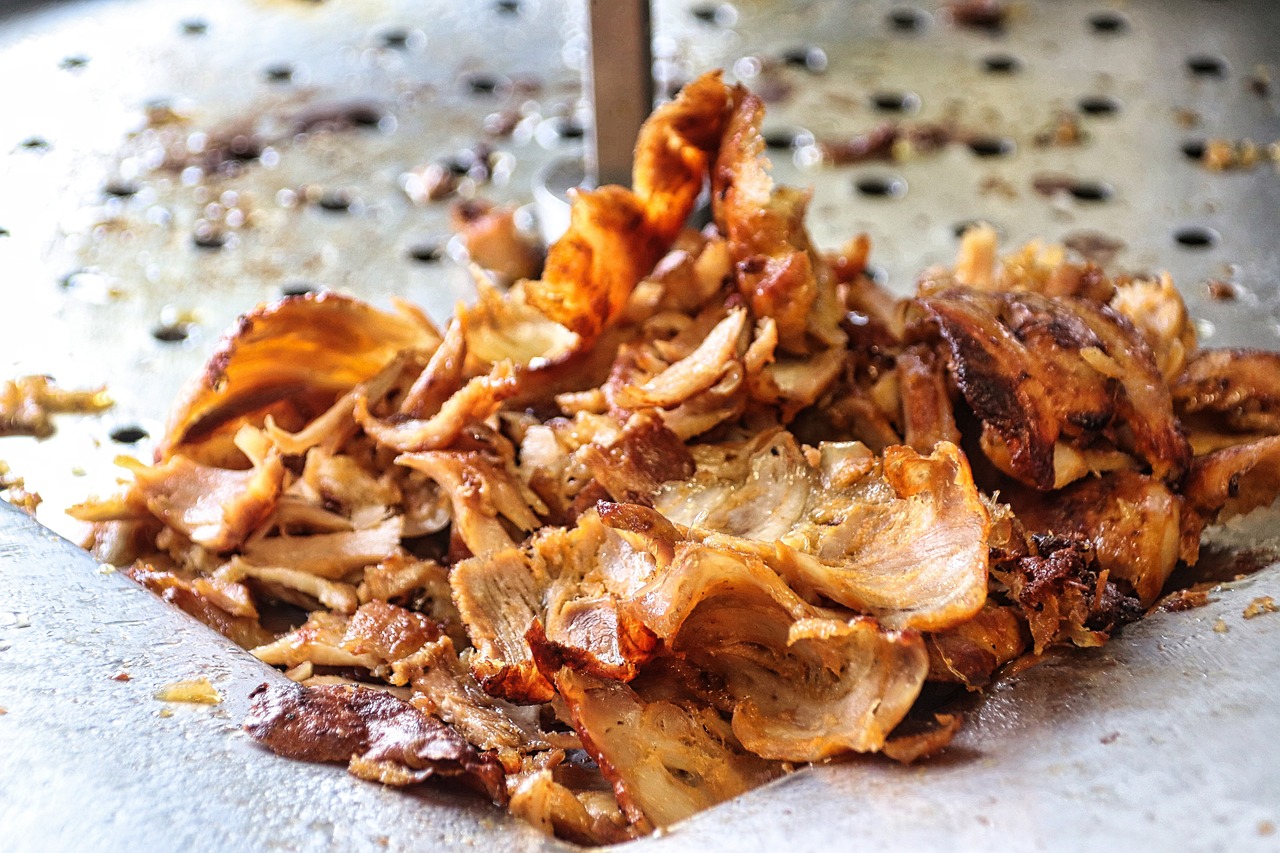
The term yaprak literally means “leaf,” referring to the thin, marinated steaks of milk-fed lamb and prime beef that are stacked atop one another. When you look at a high-quality spit, you should see the individual layers and the glistening intramuscular fat—not a grey, homogenized paste. I’ve seen too many travelers settle for the rubbery texture of ground meat versions sold in the high-traffic zones of Sultanahmet.
The goal is a bite that offers resistance and then melts. To achieve this, a master craftsman balances the lean meat with bits of tail fat (kuyruk yağı) between the layers. As it rotates, that fat renders down, self-basting the meat and creating those crispy, mahogany edges that are the hallmark of a true master. You’ll notice many shops use electric or gas heating elements—these are fine for convenience, but they lack the aggressive, smoky character of oak charcoal. A traditional wood-fired grill provides an uneven, dancing heat that chars the outer “leaves” while keeping the interior succulent.
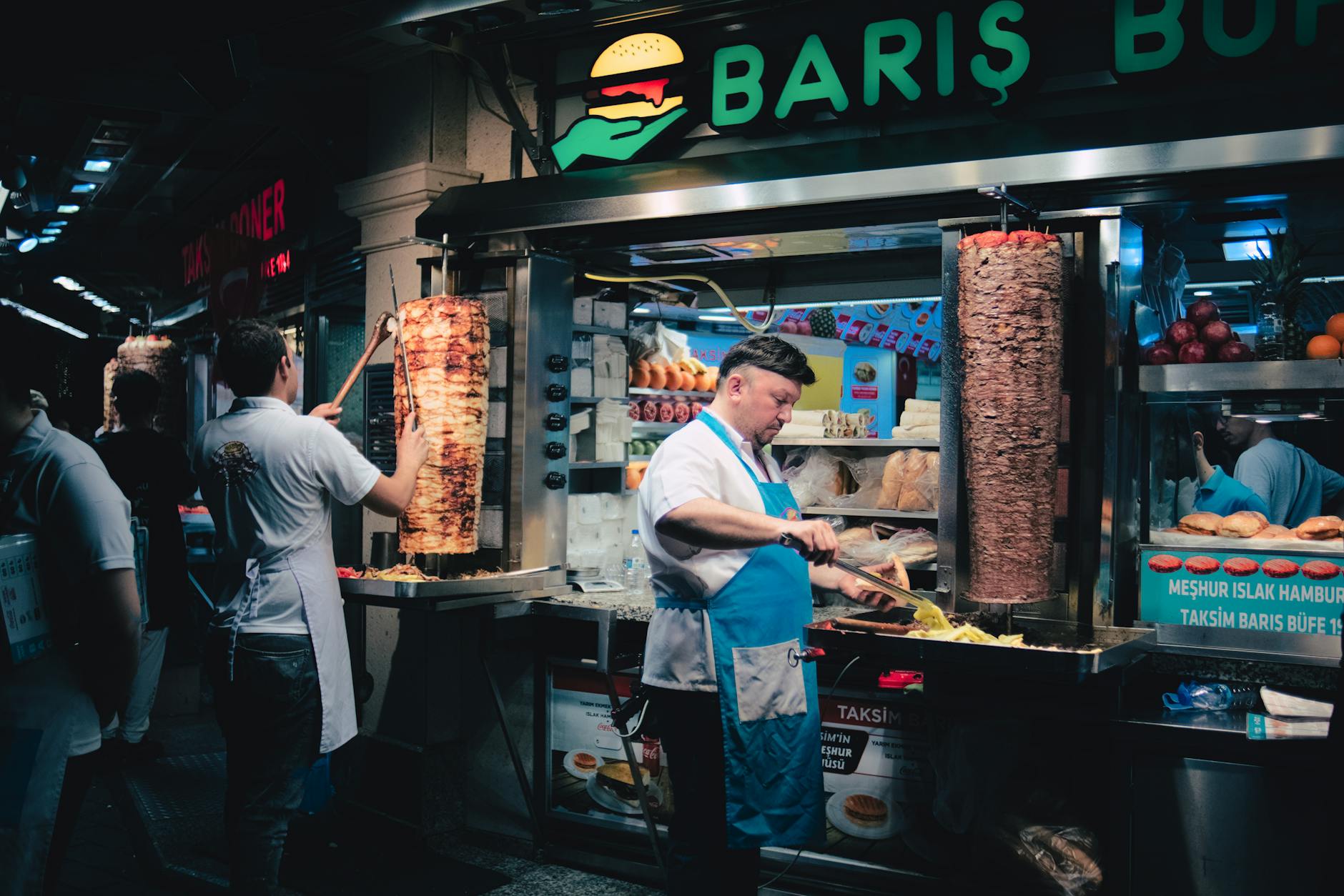
Berk’s Insider Tip: If you see a döner spit that looks perfectly smooth like a giant sausage, keep walking. That’s ‘kıyma’ (ground meat). You want the one that looks like a stack of ragged leaves—that’s the real deal.
Beşiktaş: The 10:30 AM Ritual
You don’t go to Karadeniz Döner Asım Usta for a leisurely sit-down dinner; you go because you want the gold standard of Istanbul beef döner before it’s gone for the day. If you show up at 5 PM expecting a meal, you’ll be greeted by a clean, empty spit and a “closed” sign. I’ve learned the hard way that in the heart of the Beşiktaş Market, timing is everything.
Last Tuesday, I arrived at 11:15 AM—just as the first layers of meat had been properly kissed by the wood fire—and still had to wait in a 15-minute queue. The line moves with a rhythmic, military precision, but don’t let the crowd intimidate you. It is a mix of local shopkeepers and students who all know the unwritten rule: the meat usually runs out by 4 PM. When the chaos of the market gets too loud, I often find myself wishing I could teleport to the silence of the Theodosian Walls: Istanbul where the only sound is the wind against the stone, but the first bite of that fatty, salted beef usually grounds me right back in Beşiktaş.
How to Identify and Order Authentic Döner
To get the most out of your visit to a traditional usta (master), follow these essential steps to ensure you’re eating like a local and not a tourist:
- Examine the spit texture to ensure you see jagged, hand-stacked “leaf” meat rather than a smooth, grey industrial cylinder.
- Arrive before 12:00 PM to catch the meat when it is most succulent and has just begun to develop its smoky wood-fired char.
- Select the ‘tombik’ bread option if you want a crusty, circular bun that absorbs the meat juices better than a standard thin wrap.
- Decline additional sauces or fries to avoid masking the high-quality fat and oak-smoke seasoning that defines real Turkish döner.
- Order a frothy ‘açık ayran’ to act as a cold, salty palate cleanser that cuts through the richness of the beef.
Fatih: Small Stalls and Serious Meat
Fatih is where the soul of the city’s trade meets its stomach. The real magic happens in the narrow capillaries of the neighborhood, in stalls barely wider than a doorway where the masters have been slicing meat since before the Bosphorus bridges were even a blueprint.
The Legend of Dönerci Şahin Usta
Tucked into a tiny corner just outside the Nuruosmaniye Gate of the Grand Bazaar, Dönerci Şahin Usta is a masterclass in minimalism. There are no chairs, no fancy decor, and certainly no fusion toppings. I made the mistake once of arriving at 2:30 PM thinking the lunch rush had passed; I found Şahin Usta wiping down his counter because they had already sold out.
To experience this properly, you need to arrive by 11:45 AM. You’ll pay roughly 500 TL (about 10 EUR) for a generous portion tucked into a fresh, airy pide bread. While you wait, you can watch the rhythmic “shave” of the long knife. While navigating the Grand Bazaar Hans: Secret Artisan Workshops Guide 2026 nearby, this is the fuel you actually need.
Choosing Your Vessel
Ordering döner in a high-end Istanbul meat house is a performance. I remember my first few months living in Beşiktaş; I stood at the counter of a legendary spot near the ferry terminal, overthinking my choice. The guy behind me, wearing a sharp suit and looking like he had five minutes for lunch, simply barked “Tombik, bol etli!” (Fat bread, extra meat) and moved to the side.
The bread you choose defines your experience. If you want the meat to be the star, go for a Dürüm (thin lavash wrap). If you’re ravenous, the Pide is a thick, pillowy flatbread. However, my favorite is the Tombik—a circular, crusty bun that stays crispy on the outside while the steam from the meat softens the inside.
The Porsiyon vs. Ekmek Arası Debate
An Ekmek Arası (meat in bread) is the quintessential Istanbul street lunch. It’s mobile and efficient. But if you have thirty minutes, order a Porsiyon (plate). It arrives on a bed of buttered pide bits with grilled peppers and tomatoes. This is the only way to truly appreciate the char from the wood fire without the bread masking the aroma.
The Top 5 Döner Destinations in Istanbul
- Karadeniz Döner Asım Usta (Beşiktaş): The undisputed local favorite for massive beef-based yaprak spits and morning-only service.
- Dönerci Şahin Usta (Fatih): A legendary minimalist stall near the Grand Bazaar known for its pure, hand-stacked meat quality.
- Bayramoğlu Döner (Kavacık): Widely considered the gold standard for wood-fired thin-slice döner on the Asian side of the city.
- Dönerci Engin (Beyoğlu): A hidden gem that maintains a perfect balance of prime lamb and savory tail fat.
- Zümrüt Büfe (Eminönü): A unique institution famous for its ultra-tender meat and a signature thin layer of mashed potatoes.
2026 Price Guide and Value Comparison
You should expect to pay a premium for authentic, wood-fired leaf döner because the labor and meat quality are worlds apart from industrial rolls. As of early 2026, the Istanbul food cost for a top-tier meal has stabilized. Using our current exchange rates of 1 USD = 45 TL and 1 EUR = 50 TL, here is how you should budget:
| Dining Item | Price in Turkish Lira (TL) | Price in USD ($) | Price in EUR (€) |
|---|---|---|---|
| Standard Portion (100g) | 500 TL | $11.10 | €10.00 |
| 1.5 “Big” Portion (150g) | 750 TL | $16.65 | €15.00 |
| Frothy Open Ayran & Pickles | 100 TL | $2.20 | €2.00 |
| Complete Meal Budget | 850 - 1,000 TL | $18.90 - $22.20 | €17.00 - €20.00 |
If you find yourself wandering the historic streets after an Anadoluhisarı and Kanlıca walking route with ferry tips and yogurt stops, you might notice prices fluctuate by 50-100 TL depending on the neighborhood’s prestige.
The Sidekicks: Ayran and Pickled Peppers
To truly unlock the richness of the meat, you need the sharp, salty contrast of Açık Ayran. Unlike factory-sealed cups, açık (open) ayran is whisked until it develops a thick, creamy head of foam. I remember sitting at a tiny stool last Tuesday in a back alley where the ayran was so frothy I had to wait ten seconds just to find the liquid under the bubbles. It usually costs around 45-50 TL.
Handling the Biber Turşusu
On every table, you’ll find a jar of tiny, neon-green Biber Turşusu (pickled peppers). These are the “volcanoes” of the Turkish table. Some are mild, but others will catch you off guard with a sharp, vinegary sting. Never bite into one whole if you aren’t sure of your spice tolerance; nibble the tip first.
The “No Fries” Mandate
Authentic meat houses—the ones with lines out the door—will never put french fries inside your pide or dürüm. In the world of discerning Istanbulites, fries are a cheap filler used to hide subpar meat. A true master believes the only thing that should touch the bread is the meat, a few slices of onion with sumac, and perhaps a sliver of tomato.
Timing Your Meat Pilgrimage
I learned the hard way that if you aren’t standing near the spit by 11:30 AM, you’re already late. Last month, I made a tactical error while exploring the Fish markets and Bosphorus mansions of Sarıyer and Büyükdere with ferry route tips. It was 2:15 PM, and I was starving. I saw a spinning cone that looked roughly like meat and paid 400 TL for a ‘kıyma’ wrap. It was a textureless mistake that reminded me why I usually wait for the leaf-cut shops.
If you’re wandering the backstreets of Eminönü and smell that distinct, heavy scent of wood fire and rendered lamb fat hitting the coals, follow it immediately. Don’t wait until after you visit one more site. I once returned to a favorite stall at 3 PM only to find a “Sold Out” sign and an usta already cleaning his station for the day. Trust the smoke, arrive while the spit is still thick, and you’ll never have to settle for a mediocre, industrial wrap again.