
Public libraries and historic reading rooms in Fatih and Beyoğlu with 2026 visitor tips
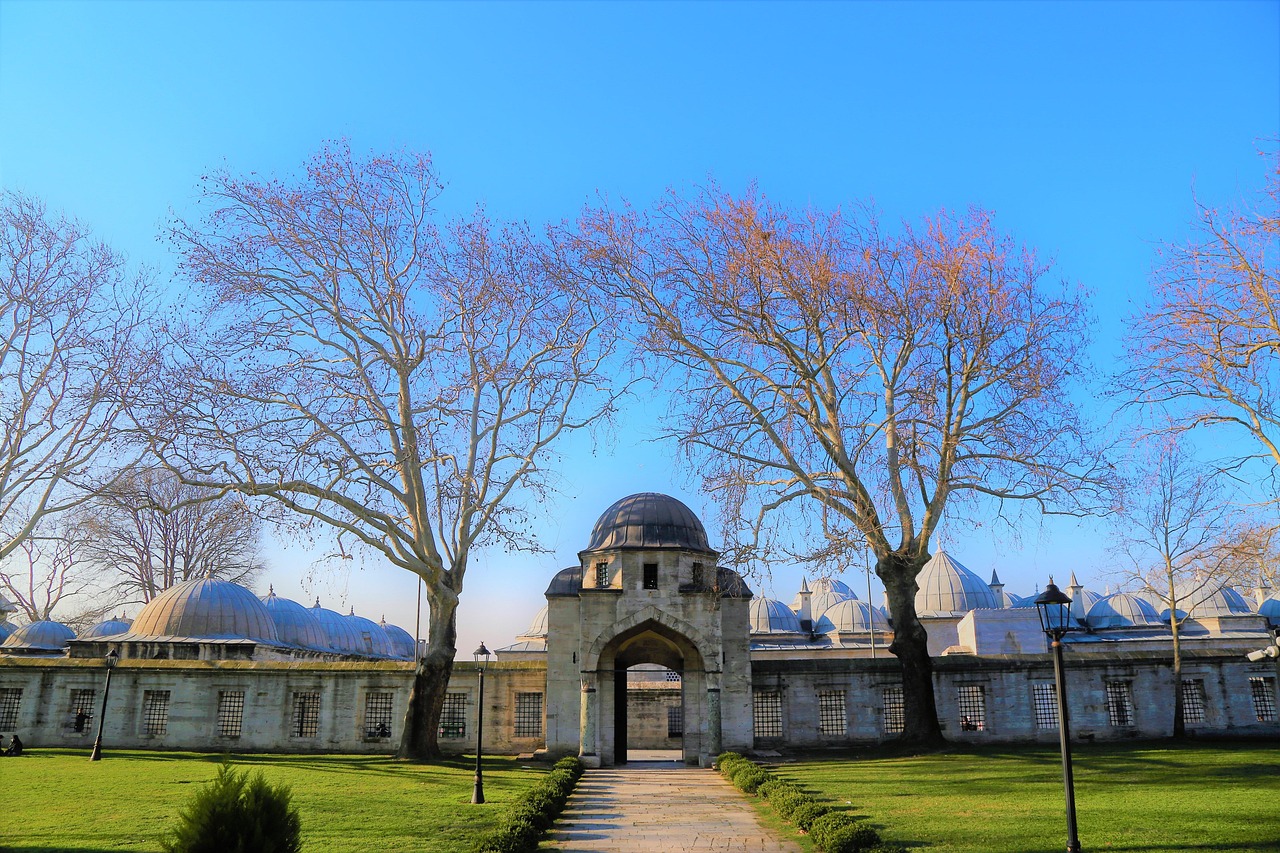
Finding a quiet corner in a city of sixteen million people feels like discovering a secret passage; most travelers walk right past the heavy brass doors of Istanbul’s libraries without realizing that some of the world’s most breathtaking ‘offices’ are hidden inside. Last Tuesday, around 10:15 AM, I stood outside the Beyazıt State Library, just a stone’s throw from the chaotic surge of the Grand Bazaar. The contrast was jarring. While the T1 tram rattled nearby and vendors shouted their morning prices, I pushed through the entrance and was immediately swallowed by a silence so thick you could almost hear the dust motes settling.
I remember bringing a friend here who was desperate to finish some remote work but was losing his mind in the clatter of Sultanahmet’s cafes. We stopped at a street cart for a simit and a quick tea—totaling about 45 TL, or exactly 1.35 USD at the current rate—and then stepped into the minimalist, glass-encased reading rooms designed by Tabanlıoğlu Architects. He sat under a 19th-century dome, his laptop glowing against ancient stone walls, and I realized then that many visitors treat Fatih and Beyoğlu purely as open-air museums. They miss the living, breathing intellectual pulse that exists behind these stone facades.
In these districts, the libraries aren’t just for students cramming for exams; they are sanctuaries of Ottoman architecture and modern Turkish design. You might occasionally find a line at the more popular spots like Salt Galata if you arrive after 11:00 AM, or you might find the registration process at some state-run rooms a bit bureaucratic, requiring a quick passport check at the desk. But these are minor hurdles. When you’re sitting in a renovated soup kitchen from the 1500s that has been converted into a high-tech study space, the effort feels negligible. These rooms offer a dignity and a sense of belonging to the city’s history that no hotel lobby could ever replicate.
The Marble Silence of Salt Galata
Most people walk past the massive brass doors of the former Imperial Ottoman Bank on Bankalar Caddesi without realizing they are standing in front of the finest quiet work space in the city. Salt Galata isn’t just a library; it’s an architectural palate cleanser. The transition is jarring in the best way possible. One moment you are dodging delivery scooters and the deafening clatter of the Karaköy tram, and the next, you are enveloped in a cool, marble-clad hush that feels like it belongs to another century.
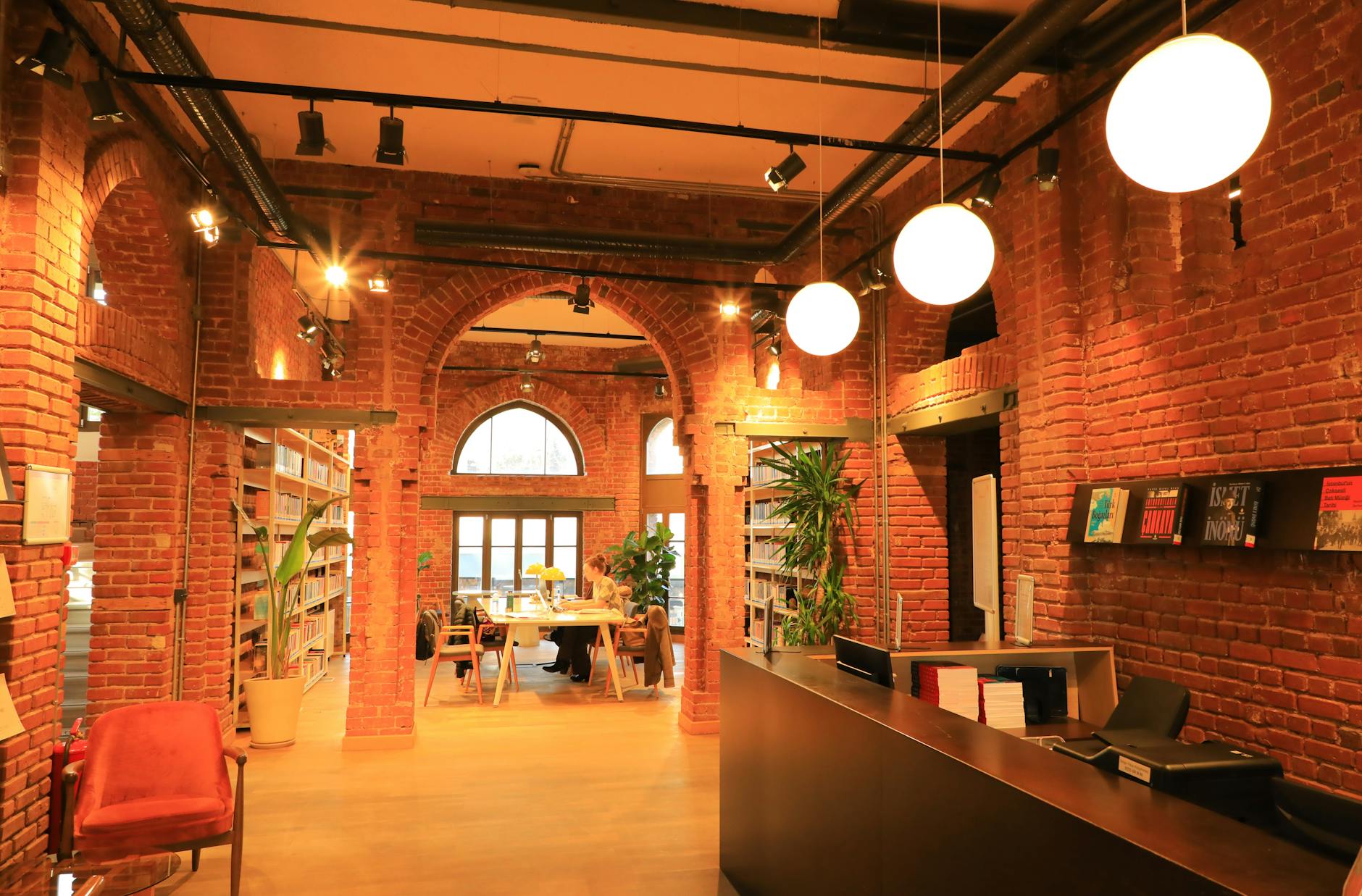
Finding Your Corner on the Research Floor
If you want a seat at the long, iconic shared tables, you have to be tactical. I’ve made the mistake of showing up at noon on a Thursday, only to find every single chair occupied by local architecture students and digital nomads. My rule of thumb: arrive by 10:30 AM. That’s the sweet spot after the doors open but before the mid-morning rush. If you miss this window, don’t panic—grab a quick look at the temporary art exhibitions in the basement and circle back in twenty minutes when someone inevitably leaves for a smoke break.
The ‘Research’ floor is where the magic happens. The floor-to-ceiling bookshelves are packed with titles on urbanism and art, but the real distraction is the view. The tall, narrow windows offer a framed, cinematic perspective of the Golden Horn. It is one of the few places in Karaköy where you can enjoy the historic skyline without the tourist crowds of the Galata Tower. This focus on repurposed utility reminds me of the Industrial Architecture and Cultural Hubs at Müze Gazhane, where old energy works are now vibrant study halls.
Navigating the Space Like a Local
One minor downside is the ground-floor cafe; while beautiful, it can be a bit of a tourist trap with prices that don’t always match the quality. A standard latte will run you about 125 TL (roughly 3.70 USD). Use the library for the silence and the view, but save your appetite for the street food vendors tucked into the nearby alleys. While you are wandering those backstreets, make sure to visit the Arap Mosque, a stunning Gothic remnant that perfectly complements the historical weight of Salt Galata.
Berk’s Insider Tip: If you are at Salt Galata, the ‘secret’ lockers are in the basement. They are free to use and perfect if you want to explore Karaköy unencumbered after your study session.
Beyazıt State Library: A Minimalist Masterpiece in the Old City
Beyazıt State Library is the most sophisticated sanctuary in the Old City, proving that you can modernize a 19th-century soup kitchen without erasing its soul. Most restorations in Istanbul tend toward the “shiny and new,” but the Tabanlıoğlu Architects’ 2016 overhaul of this space did the opposite. They stripped away the clutter, revealing the raw, rhythmic beauty of the multi-domed structure that once served food to the neighborhood’s poor.
Whenever I feel the Grand Bazaar vibrating in my teeth—usually after an hour of dodging persistent shopkeepers and the sheer sensory overload of the market—I walk the 200 meters to this library. It is an immediate decompression chamber. You move from the shouting matches of the square into a courtyard where the only sound is the rustle of a turning page.
The Sci-Fi Intervention
The centerpiece of the library is something you’d expect to see in a Ridley Scott film rather than a Byzantine-adjacent structure. To protect rare Ottoman manuscripts from the elements, the architects installed massive, glass-enclosed “black boxes.” These monolithic climate-controlled cubes sit inside the ancient stone rooms, creating a jarring, beautiful contrast between 19th-century masonry and 21st-century technology. Watching a scholar examine a centuries-old text inside a glowing glass cube while the sunlight filters through the old domes is one of those moments that justifies the flight here.
Logistics and Location
Getting here is effortless if you are staying in Sultanahmet or Sirkeci. It’s a literal two-minute walk from the Beyazıt-Kapalıçarşı stop on the T1 Tram. I usually suggest navigating the T1 Tram through the Old City during the mid-morning lull (around 10:30 AM) to avoid the “sardine can” experience of rush hour. A single tram fare in 2026 is 25 TL, which is the cheapest therapy session you’ll find in Fatih.
Berk’s Insider Tip: At Beyazıt State Library, silence is strictly enforced. Even a loud zipper on a backpack can get you a stern look from the librarian. Move like a cat.
Historical Hubs: From Süleymaniye to Gülhane
Beyond the main state library, the Fatih district holds smaller, more specialized collections that offer even deeper isolation. Last month, I attempted to visit the Süleymaniye Library without checking the prayer times. I arrived at the gateway at 12:45 PM just as the midday call to prayer started. The sheer volume of the speakers against the stone domes was incredible, but the library staff was on a lunch break. I spent 45 minutes and 60 TL on a bowl of dry beans (kuru fasulye) at a nearby worker’s lokanta before they reopened the gates at 1:30 PM sharp. The wait was worth it to see the vaulted ceilings where Ottoman scholars once worked.
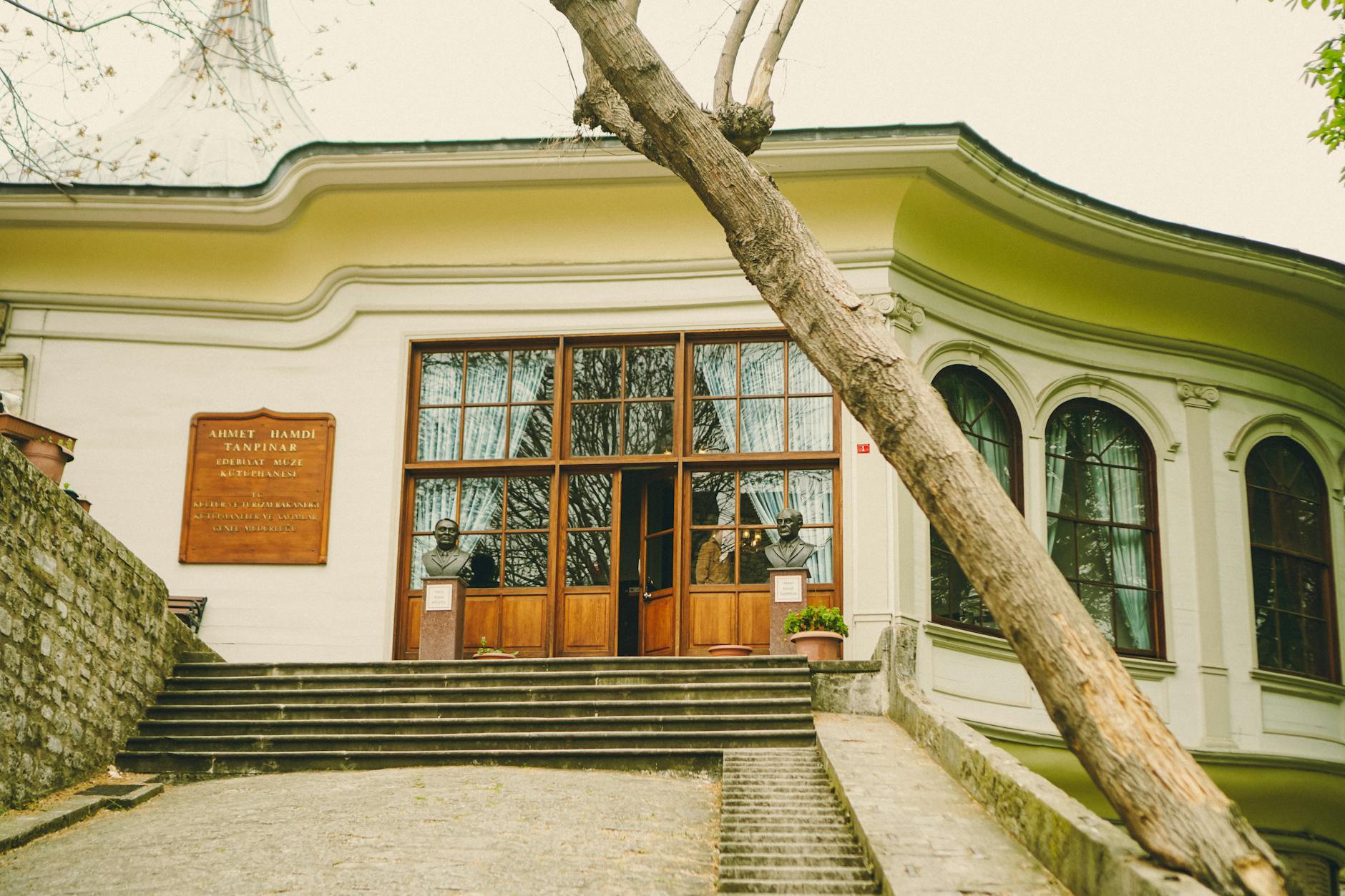
Another personal favorite is the Ahmet Hamdi Tanpinar Literature Museum Library. I once lost forty minutes looking for the entrance in Gülhane Park. It’s housed in the Procession Kiosk (Alay Köşkü), and if you approach from the wrong side of the hill, you end up staring at a stone wall. I finally found the heavy wooden door at 2:15 PM on a Tuesday, paid my respects to the museum guard, and realized the 100 TL entry for the museum part was a small price for the silence of the circular reading room.
The Massive Scale of Rami Library
Rami Library is the new heavyweight champion of Istanbul’s cultural scene, and the sheer size of the place is enough to make your jaw drop. This isn’t just a building; it’s an 18th-century army barracks that has been painstakingly restored into a sprawling academic fortress. While most tourists are fighting for elbow room in Sultanahmet, you can find me here, enjoying the silence of a courtyard that feels large enough to house a small village.
The volume of quiet work spaces available is a game-changer. I remember heading there last March around 4:00 AM because of a lingering case of jet lag after a trip abroad. The 24/7 reading rooms were a sanctuary—bright, warm, and filled with a few dedicated students. If you’re a traveler struggling with a time-zone shift and need to catch up on emails or plan your next week, there is no better place in the city to find focus in the middle of the night.
The budget-friendly nature of the facility is another massive plus. While a tea in a tourist-trap cafe near the Blue Mosque might set you back a ridiculous amount, the internal cafe at Rami serves a proper glass of Turkish tea for just 25 TL. You can pair that with a decent toasted sandwich for 100 TL, making it one of the most affordable spots to refuel while surrounded by history. To get here, you’ll want to use the T4 tram line; just ensure you’ve finished purchasing and loading the Istanbulkart before you board, as the ticket machines at the smaller tram stops can occasionally be temperamental with international credit cards.
Where to Eat Nearby: The Librarian’s Lunch
A three-hour deep dive into a manuscript at Beyazıt or a research marathon at Rami leaves you with a very specific kind of hunger that only salt and dough can fix. When your brain is fried from intense focus, you don’t want a “concept” cafe; you want the heavy, wood-fired honesty found in the backstreets of Fatih.
The Beyazıt Backstreet Routine
If you are working at the Beyazıt State Library, the move is to exit the monumental gates and walk exactly five minutes toward the small, narrow alleys leading away from the Grand Bazaar. This is where the local shopkeepers and students eat. I vividly remember a rainy Tuesday last November when I was neck-deep in research; the damp chill of the city had settled into my bones. I rewarded myself at a tiny hole-in-the-wall where the dough is still fired in wood ovens that haven’t been turned off in decades.
I ordered a Kıymalı Pide (minced meat pide)—the saltiness is the perfect brain fuel after hours of quiet contemplation. There is something grounding about the transition from the silent, hallowed halls of a library to the rhythmic thwack-thwack of a dough master at work.
Comparing Istanbul’s Best Study Hubs
If you are looking for the absolute sweet spot between aesthetic inspiration and actual output, Salt Galata is a strong contender, though it comes with social pressure. Unlike the more democratic, student-heavy libraries in Fatih, the study spaces in Beyoğlu and Taksim cater to a mix of digital nomads and creative professionals. Selecting the right spot depends entirely on whether you prioritize a stable fiber connection or a panoramic view of the water.
Atatürk Library in Taksim is an architectural masterpiece that I visit whenever I need to clear a mental block. I remember sitting there last October, watching a massive container ship glide toward the Marmara Sea through those floor-to-ceiling hexagonal windows. The catch: the iconic 1970s wooden chairs are brutal on the lower back. If you plan to stay longer than two hours, bring a small travel cushion or do what I do—take a five-minute walk every hour to the nearby stairs to stretch.
| Location | Primary Vibe | Wi-Fi Quality | Best For… |
|---|---|---|---|
| Salt Galata | Chic & Professional | High-Speed (Fiber) | Deep work and research |
| Atatürk Library | Quiet & Nostalgic | Moderate | Creative thinking with a view |
| Rami Library | Vast & Modern | Reliable | Avoiding crowds/finding a seat |
| Beyazıt State | Historic & Sacred | Basic | Pure silence and atmosphere |
Logistics and 2026 Entry Requirements
Showing up to a historic library in Fatih without your identification is the fastest way to ruin a morning of research. These aren’t just community centers; many are high-security state institutions. You must have your physical passport or a clear photocopy with you. I’ve seen guards turn away perfectly polite students because they only had a digital photo of their ID on their phone. Don’t risk it; keep the paper copy in your bag.
The competition for a seat is fierce, especially as more digital nomads flock to the city. Take Salt Galata as the prime example. If you aren’t standing in the queue by 10:45 AM, you’ve already lost. By 11:15 AM, the main hall is packed, and you’ll find yourself relegated to sitting on the cold marble stairs or nursing a 150 TL coffee in the upstairs cafe just to get table space.
Internet access is the other major hurdle. Most state-run libraries require a Turkish mobile number to receive an SMS verification code for Wi-Fi. It’s a frustrating barrier for travelers. The practical fix is to use the Eduroam network if you are a student or academic with active credentials from your home institution—it works seamlessly in most Turkish university-affiliated spaces. If you don’t have Eduroam, prioritize Salt Galata or the Atatürk Library, which offer more accessible guest logins that don’t require a local SIM card.
Frequently Asked Questions about Istanbul Libraries
Do I need to pay an entrance fee to visit these libraries?
Most public and state-run libraries in Istanbul, including the stunning Beyazıt State Library, are entirely free to enter. You are paying with your patience for the security check instead. Some private museum-affiliated libraries might require a museum ticket, but for the spots I’ve mentioned in Fatih and Beyoğlu, your only real expense will be a glass of tea at a nearby kıraathane, which usually runs about 25 TL.
What are the typical opening hours for historic reading rooms?
It varies wildly. State libraries like the Atatürk Library near Taksim are technically open 24/7, making them a godsend for night owls. However, specialized historic rooms in Fatih often stick to a 09:00 to 18:00 schedule. A major trap for visitors is Salt Galata, which is closed every Monday. Always check the specific institution’s website the night before, as local holidays can trigger unexpected closures.
Can I bring my own food and drinks into the reading rooms?
The short answer is no. Security is very protective of the manuscripts and historic furniture. You can usually carry a bottle of water in your bag, but drinking it at the mahogany desks is often frowned upon or strictly forbidden. If you’re planning a long session, eat a hearty simit breakfast beforehand. Most libraries have a designated “kantin” or garden area where you can take a break.
There is a specific kind of silence in the historic reading rooms of Fatih that you simply won’t find at the Blue Mosque or the Hagia Sophia. In the mosques, you are part of a spiritual tide; in the Grand Bazaar, you are part of a commercial machine. But when you step into a place like the Beyazıt State Library, you are tapping into the city’s actual pulse—the intellectual one that has survived every fire, earthquake, and political shift this city has ever seen.
I often find myself at the Atatürk Library in Taksim when the weight of the city gets a bit too heavy. It stays open 24 hours, and there is a particular magic to it around 11:00 PM. While the rest of Beyoğlu is shouting over loud music and clinking glasses, I’ll grab a tea from the small canteen for about 25 TL and find a seat by the floor-to-ceiling windows. Watching the lights of the Bosphorus tankers crawl across the dark water while surrounded by the soft rustle of pages is the most grounded you will ever feel in Istanbul. It’s a reminder that you aren’t just a spectator here; you’re a participant in a tradition of learning that predates almost everything else on your itinerary.
Comments
Share your thoughts with us