I remember missing the last 12A bus back in 2014 and having to trudge past the rusted iron gates of the Hasanpaşa Gasworks at 1 AM; the only light came from a single flickering bulb at the security shack of what was then a haunting skeleton of the industrial age. Today, it’s the heartbeat of Kadıköy’s creative scene. It is a bit surreal to see the transformation. I used to hop off the Metrobus at Söğütlüçeşme—which is still the smartest way to get here, just a five-minute walk from the station—and look at those looming brick towers wondering if they’d ever be more than a home for the neighborhood cats.
Last Tuesday, around 2 PM, I found myself sitting in the shadows of the massive iron tanks with a flat white from the on-site Beltur café. It cost me 90 TL (exactly 2 USD), and while the service can be a bit slow when the student crowd rushes in during finals week, the atmosphere is unbeatable. There was no queue for the Climate Museum, though the digital art space had a short five-minute wait.
That’s the beauty of Müze Gazhane; it isn’t a sterilized, “don’t-touch-the-art” kind of museum. It is loud, functional, and deeply tied to the working-class roots of the Hasanpaşa district. You’ll see the occasional photographer posing against the rivets of the 19th-century boilers, but you’re just as likely to see an old-timer from the nearby tea houses sitting on a bench, looking slightly bemused that the plant which once lit Istanbul’s streets is now a hub for jazz concerts and co-working. The courtyard can act like a wind tunnel, so even if it’s a clear day in Kadıköy, keep a scarf in your bag. It’s a small price to pay for standing inside one of the finest examples of industrial preservation in the Mediterranean.
Landing in Hasanpaşa: The Logistics of Getting Here
Forget taking a taxi if you’re heading to Hasanpaşa; the gridlock around the stadium and the central Söğütlüçeşme junction will turn a five-minute drive into a thirty-minute test of patience. I’ve made the mistake of trying to “arrive in style” on a Tuesday afternoon, only to end up hopping out of the cab mid-traffic because walking was literally twice as fast. The real way to get here is by rail.
The Rail Strategy: Marmaray vs. Metrobus
The Söğütlüçeşme station is the heart of this district. If you are staying along the historical peninsula, the Marmaray is your best friend. A single ride in 2026 will set you back roughly 60 TL (1.20 EUR). However, if you are coming from the European business hubs like Mecidiyeköy or Zincirlikuyu, I always recommend the Metrobus. It has its own dedicated lane, meaning you fly over the Bosphorus Bridge while cars sit at a standstill. It’s crowded, yes, but it’s predictably fast. For a deeper breakdown of these systems, check out my advice on Navigating the Marmaray and Metrobus with 2026 Fares and Transfer Tips before you tap your Istanbulkart.
The Final 10-Minute Stroll
Once you descend the stairs at Söğütlüçeşme, you’re just a 10-minute stroll from the industrial gates of Müze Gazhane. The walk takes you past local tea houses and small auto-repair shops that still cling to the neighborhood’s blue-collar roots.
How to walk from Söğütlüçeşme to Müze Gazhane:
- Exit the Söğütlüçeşme Marmaray station following the “Hasanpaşa” or “Municipality” (Belediye) signs.
- Walk underneath the high-speed train viaduct towards the main road, keeping the canal on your left.
- Cross the street at the traffic lights near the Kadıköy Municipality building—drivers here can be aggressive, so wait for the green man. I once tried to cut through the parking lot of the municipality building to save time, only to be turned back by a very polite but firm guard near the barrier—stick to the sidewalk on Fahrettin Kerim Gökay Avenue; it saves exactly zero minutes to trespass.
- Follow Fahrettin Kerim Gökay Avenue for about 400 meters; you’ll start seeing the massive iron cylinders of the old gas works.
- Enter through the main gate of Müze Gazhane, which is clearly marked and usually manned by friendly security.
The Ghost in the Machine: 130 Years of Industrial History
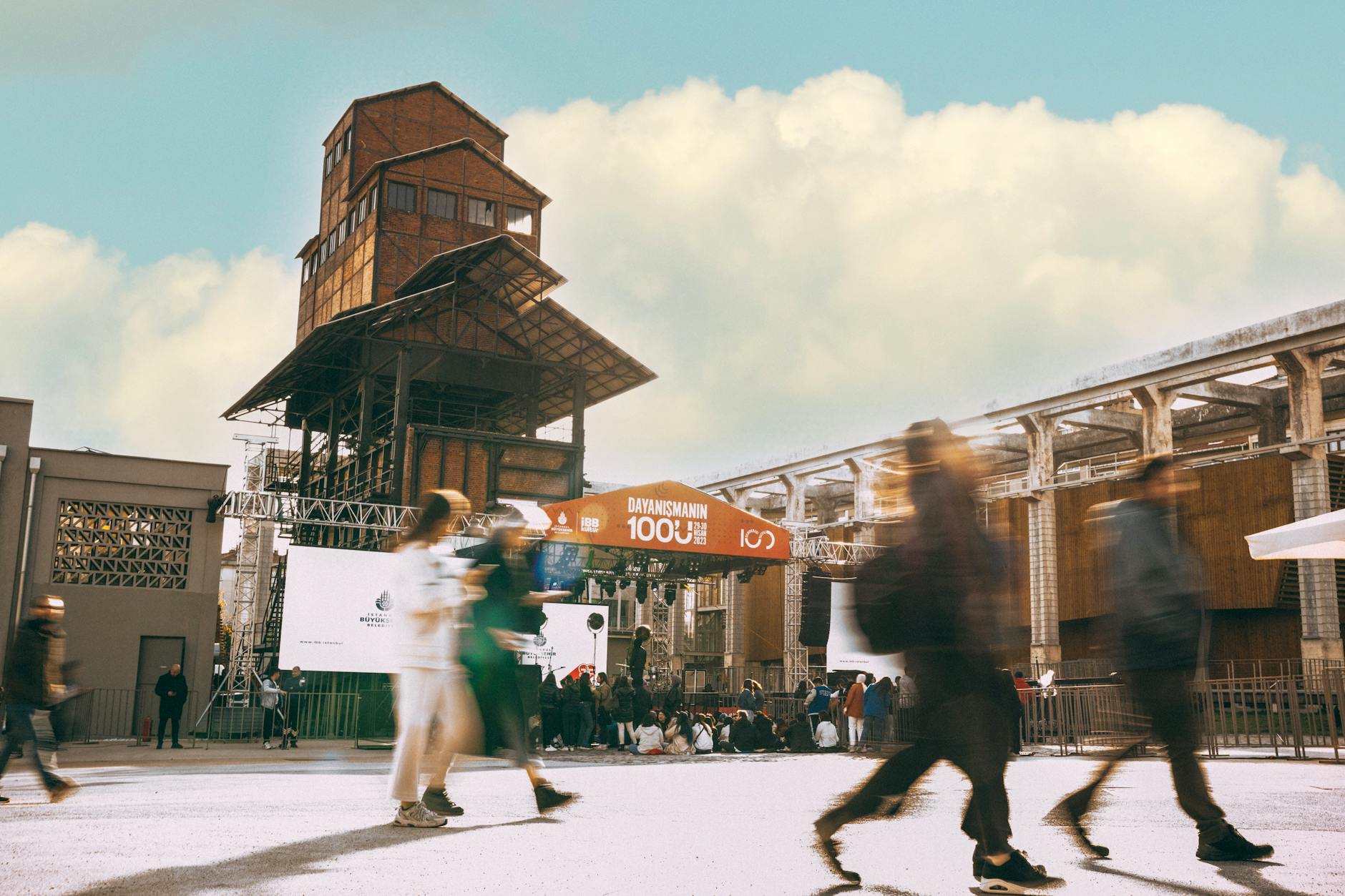
Walking into the Gazhane complex feels like stepping into the literal engine room that kept Kadıköy’s streetlamps glowing since 1892. It is a rare piece of industrial heritage that didn’t get bulldozed for a luxury hotel or another shopping mall, and for that alone, it deserves your morning. This wasn’t just a factory; the Hasanpaşa Gasworks was the beating heart of the late Ottoman Empire’s push for modernization on the Anatolian side, turning coal into the light that defined Istanbul’s first steps into the 20th century.
From Coal to Culture
I’ve lived in this city for fifteen years, and I remember when this place was nothing more than a rusted, skeletal ruin behind a chain-link fence. The transformation is staggering. As you walk through the central courtyard, look up at the massive steel structures. The contrast is sharp and intentional: the heavy iron rivets and soot-stained masonry of the 19th-century Industrial Revolution stand bolted directly against sleek, 2026-style glass facades. It’s a visual conversation between the city’s hardworking past and its creative future.
The Texture of the Past
There is a specific sensory experience you shouldn’t rush past. Near the entrance of the Climate Museum, stop for a second. There is a specific smell of old brick and sun-warmed iron that hits you—a mix of damp earth and ancient dust that has survived over a century of fire and production. It’s the most honest part of the site.
If you’re visiting on a weekend, the crowds can get a bit thick with students and families, which sometimes kills the “industrial ghost” vibe. My advice? Get here around 10:00 AM on a Tuesday. You’ll have the echoes of the old machinery to yourself. While the signage is much better than it used to be, some of the deeper historical technicalities are still only in Turkish. Don’t let that bother you; just use a visual translation app on the plaques or, better yet, just let the scale of the retorts and gas holders tell the story. Even in 2026, with a flat white in your hand—which will cost you about 110 TL (roughly 2.20 EUR) at the onsite cafe—the sheer industrial weight of the place makes you feel small in the best way possible.
Navigating the Hub: What to See Inside the Gates
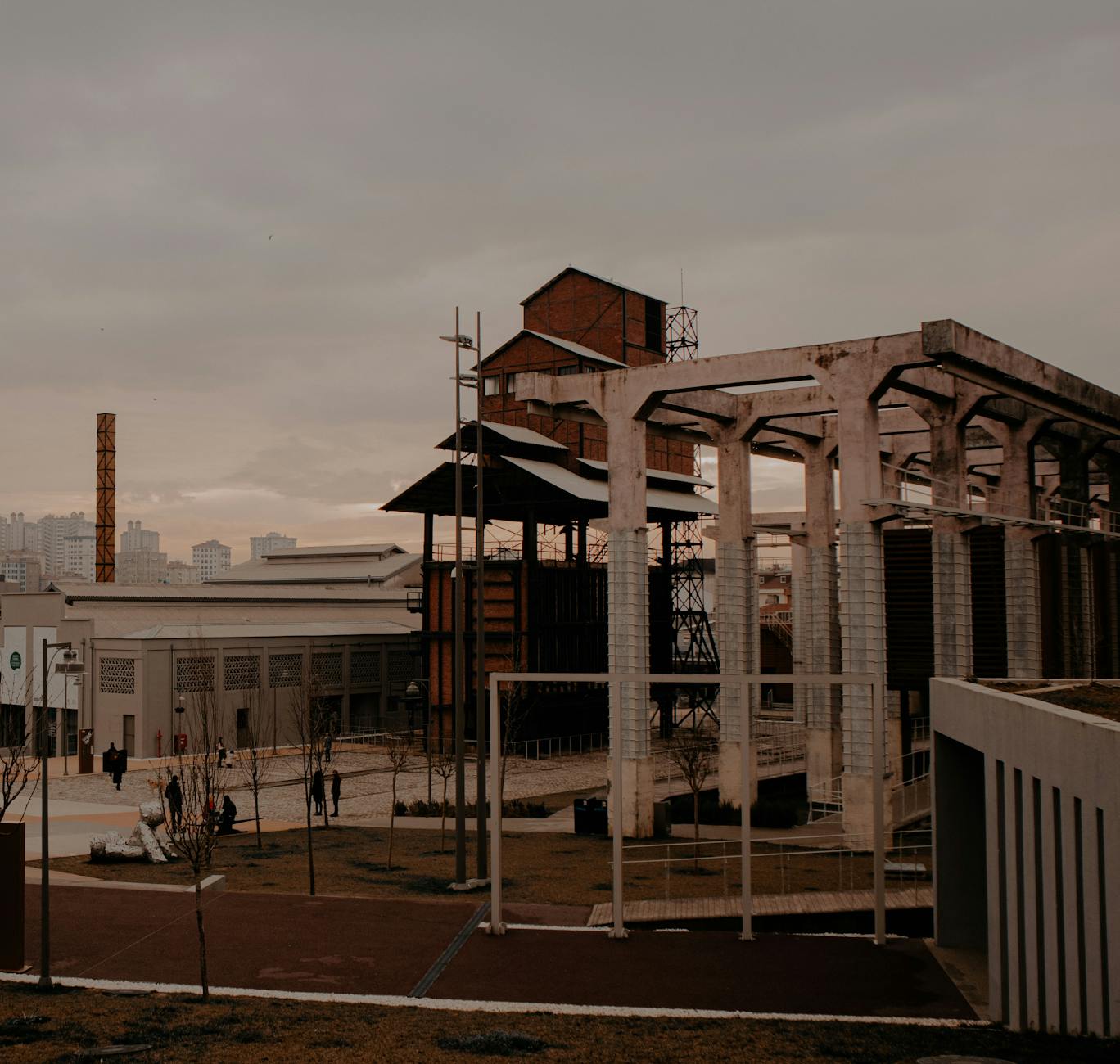
You shouldn’t try to see everything at Müze Gazhane in one go unless you have calves of steel and a massive attention span. The site is a sprawl of restored brickwork and steel, and while it’s tempting to just wander, you’ll want to prioritize the spots that actually speak to the city’s soul.
The Biting Wit of the Cartoon and Humor Museum
Turkish humor is famously sharp—it’s how we’ve navigated the “beautiful chaos” of Istanbul for centuries. This museum isn’t just about Sunday funnies; it’s a deep dive into social satire. I spent an hour here last Tuesday looking at 1970s political caricatures that feel surprisingly relevant today. You’ll see why the Turkish sense of humor is described as “biting.” Most of the captions are in Turkish, but the visual storytelling is universal. If you see a drawing of a man hanging off the side of a crowded T4 tram, trust me, we’ve all been there.
The Climate Museum: Education and Escape
The Climate Museum is arguably the most polished space in the complex. It’s heavy on interactive displays that explain the global crisis, making it a mandatory stop if you’re traveling with kids who need to burn off energy. Personally, I have a more pragmatic reason for visiting: in the middle of a 35°C August afternoon, this building has the most reliable air conditioning in Hasanpaşa. It’s free to enter, so ducking in to cool off while learning about carbon footprints is a win-win.
Performance Art at the Afife Jale Stage
For a local evening experience, check the schedule at the Afife Jale Stage. Named after the first Turkish Muslim theater actress, this space hosts everything from avant-garde plays to jazz sessions. Tickets for municipal theater plays are incredibly affordable, usually around 200 TL (4 EUR), but they sell out days in advance. I once caught a percussion workshop here on a whim just by showing up 20 minutes early—sometimes the “sold out” signs aren’t as final as they look.
Berk’s Insider Tip: Most tourists miss the basement level of the Science Center; it has some of the coolest original piping and brickwork of the entire gasworks complex.
Top 5 Spots to Visit in Müze Gazhane
- The Gallery Sergileme Alanı: A massive hall for rotating contemporary art that highlights emerging Istanbul artists.
- The Afife Jale Stage: Essential for catching high-quality, subsidized theater performances in an intimate setting.
- The Cartoon and Humor Museum: The best place to understand the rebellious and satirical side of Turkish culture.
- The Climate Museum: Great for interactive learning and, more importantly, escaping the summer heat.
- The Q-Boutique: A small shop where you can find unique Gazhane-themed souvenirs that aren’t the typical tourist kitsch.
Caffeine and Costs: The 2026 Pricing Reality
If you’re tired of overpaying for mediocre beans in Kadıköy’s trendier backstreets, the municipal-run Beltur outlets inside Müze Gazhane are a massive relief for your wallet. While private cafes nearby have hiked prices through the roof, Beltur keeps things accessible, making this one of the few spots where you can actually enjoy a second cup without checking your bank app.
| Item | Price (TL) | Price (EUR/USD) | Berk’s Verdict |
|---|---|---|---|
| Turkish Coffee | 80 TL | 1.60 EUR | Solid, traditional, and consistent. |
| Latte / Cappuccino | 110 TL | 2.20 USD | Better value than any chain brand. |
| Simit / Pastry | 45 TL | 0.90 EUR | Quick fix for a walking snack. |
| Bottled Water | 20 TL | 0.40 EUR | Essential for those summer walks. |
The Library Logistics
Don’t expect to just stroll into the Sesli Kütüphane (Audio Library) and find a plush seat mid-afternoon. Last Tuesday, I arrived at 2:10 PM hoping to catch up on some reading, and every single chair was claimed by students and remote workers. The library is almost always packed by 2 PM. If you’re a morning person, aim for 10 AM to secure a spot. If you miss out, don’t sweat it—take your coffee to the outdoor seating steps; the Wi-Fi usually reaches the first few rows of the amphitheater anyway.
Snacks and the “Lawn Policy”
One thing I love about this place is the lack of “security theater” regarding food. While the sit-down restaurants have their own menus, nobody is going to harass you for bringing a small snack or a sandwich to eat on the grass. I often grab a couple of poğaça from a bakery near the yellow dolmuş stop in Kadıköy before heading up. Just keep it low-key—don’t be the person setting up a full-scale picnic spread with a samovar. As long as you clean up after yourself, the staff is incredibly relaxed about “outside” food on the lawn.
Stepping Outside: The Authentic Hasanpaşa Loop
Hasanpaşa is the grit that gives the polished Müze Gazhane its context, and you haven’t truly seen the area until you’ve wandered five minutes past the museum’s perimeter. While the museum grounds feel like a vision of a futurist Istanbul, the surrounding streets are a stubborn reminder of the city’s working-class soul. It is a neighborhood of sharp contrasts, where the smell of fresh sawdust from old-school workshops still competes with the exhaust of the E-5 highway.
The Kurbağalıdere Reality Check
Walking the path along the Kurbağalıdere (Froggy Creek) is a local rite of passage, but do not treat it like a pristine canal in Amsterdam. I made the mistake of walking this route last August right after a flash summer storm; the humidity turned the creek’s “historic” scent into something truly legendary. While the city has spent years cleaning it up, the smell can still be a bit much after heavy rain. The fix: If it’s been pouring, stick to the higher residential streets. On a dry day, though, the path is a straight shot that serves as a great transition point if you’re planning a wider Kadıköy walking tour.
Sawdust and Peeling Paint
The side streets of Hasanpaşa are home to small carpenter workshops that have so far resisted the wave of gentrification hitting the rest of Kadıköy. I spent twenty minutes last week watching an elderly usta (master) hand-carve a chair leg in a shop no bigger than a shipping container. There is something deeply grounding about seeing these sawdust-covered spaces sitting right next to the polished steel and glass of the Gazhane. You’ll see laundry hanging from balconies with peeling ochre paint overlooking a multi-million lira cultural investment. It’s messy, it’s loud, and it’s the most authentic version of the city you’ll find in this district. If you’re wandering late and the summer heat gives you a headache, remember that finding an open pharmacy at night in Hasanpaşa involves checking the list posted on the door of the nearest closed one, as the ‘nöbetçi’ system is strictly enforced.
Berk’s Insider Tip: If the Gazhane library is too loud, walk three blocks into Hasanpaşa to find ‘Mahalle Kahvesi’—much cheaper tea (30 TL) and actual silence.
Where to Eat: From Gazhane to Local Grills
You cannot wander through an industrial art space for two hours and expect your stomach not to stage a loud protest. While Müze Gazhane has its own cafeteria, it’s a bit too sterile for my taste when the streets of Hasanpaşa are right outside the gate.
The first thing you’ll encounter as you exit is the midye dolma (stuffed mussels) sellers. These guys are local fixtures. Last Tuesday, around 6:00 PM, I watched a group of students take down thirty mussels in five minutes flat. If you’re hesitant about street seafood, just make sure the seller is keeping them on ice and that he gives you a fresh squeeze of lemon. It’s the perfect “bridge” snack to keep you going while you walk.
For a proper sit-down experience, you need to head deeper into the neighborhood. A 15-minute walk away from the main road leads you to the heart of the local Ocakbaşı scene. This is where you’ll find authentic grill culture at its best—unpretentious, smoky, and incredibly flavorful. You’ll know you’ve found the right spot when you see a long copper hood and a u-shaped counter.
In 2026, a full Kebap dinner in Hasanpaşa—including a couple of cold mezzes, a spicy Adana or Urfa kebab, and a glass of ayran—typically runs between 700 and 900 TL (14-18 EUR) per person. One minor annoyance is that these local spots can get incredibly loud during football matches; if you want a quiet conversation, check the Beşiktaş or Fenerbahçe match schedule before you sit down. If the TV is blaring, just head one block further in; there is always another grill around the corner.
Frequently Asked Questions about Dining near Müze Gazhane
Is the food inside Müze Gazhane worth the price?
The onsite Beltur cafeteria is reliable and clean, but it’s more of a quick-stop spot for a toasted sandwich or a tea. It’s affordable, usually under 250 TL (5 EUR) for a light snack. However, if you want to experience the culinary soul of Istanbul art spaces, I always recommend walking five minutes into the Hasanpaşa side streets for something more authentic.
What is the best street food to try right outside the gates?
Look for the midye dolma sellers. These stuffed mussels are a staple of the Kadıköy district. Make sure to ask for plenty of lemon. If you aren’t a fan of seafood, keep an eye out for the “Simit” carts. A fresh, sesame-crusted bread ring should cost no more than 20-25 TL (0.40-0.50 EUR) and is the perfect fuel for more walking.
Do I need to make a reservation for an Ocakbaşı in Hasanpaşa?
Generally, no. Most of the grills in this specific neighborhood cater to locals and don’t require booking. However, if you are visiting on a Friday or Saturday night, the popular spots fill up by 7:30 PM. My advice is to arrive around 6:30 PM; you’ll beat the dinner rush and get the best seat right at the counter to watch the chef in action.
The Afterglow of Hasanpaşa
It’s rare to see Istanbul’s municipal machine get it right, but Gazhane is that one-in-a-hundred success story where history wasn’t just painted over, it was actually invited back in. Most of the time, our industrial heritage gets gutted for high-rise condos or hollowed out for luxury hotels, but here, the iron and brick still feel heavy and real. I was there last Thursday around 4 PM, grabbing a quick espresso at the Beltur café for 75 TL—that’s exactly 1.50 EUR or about 1.65 USD—and the place was buzzing with genuine energy, mostly art students and neighborhood elders, rather than the usual tourist crowds you’d find at Galataport.
The library inside is magnificent, though it can get packed with locals studying for exams; if the silence in there feels too heavy, just take your drink out to the central courtyard. My advice is to time your exit for just before the sun drops. Skip the urge to call a car and instead walk the fifteen minutes back toward the Söğütlüçeşme Marmaray station through the Hasanpaşa side streets. You’ll pass small repair shops and local tea houses where the neighborhood fabric hasn’t been completely sanitized yet. Seeing the massive silhouette of the gasworks towers glowing against a bruised purple sunset is one of those “this is why I live here” moments that usually stays hidden from the average traveler. It’s the perfect end to a day spent off the beaten path.