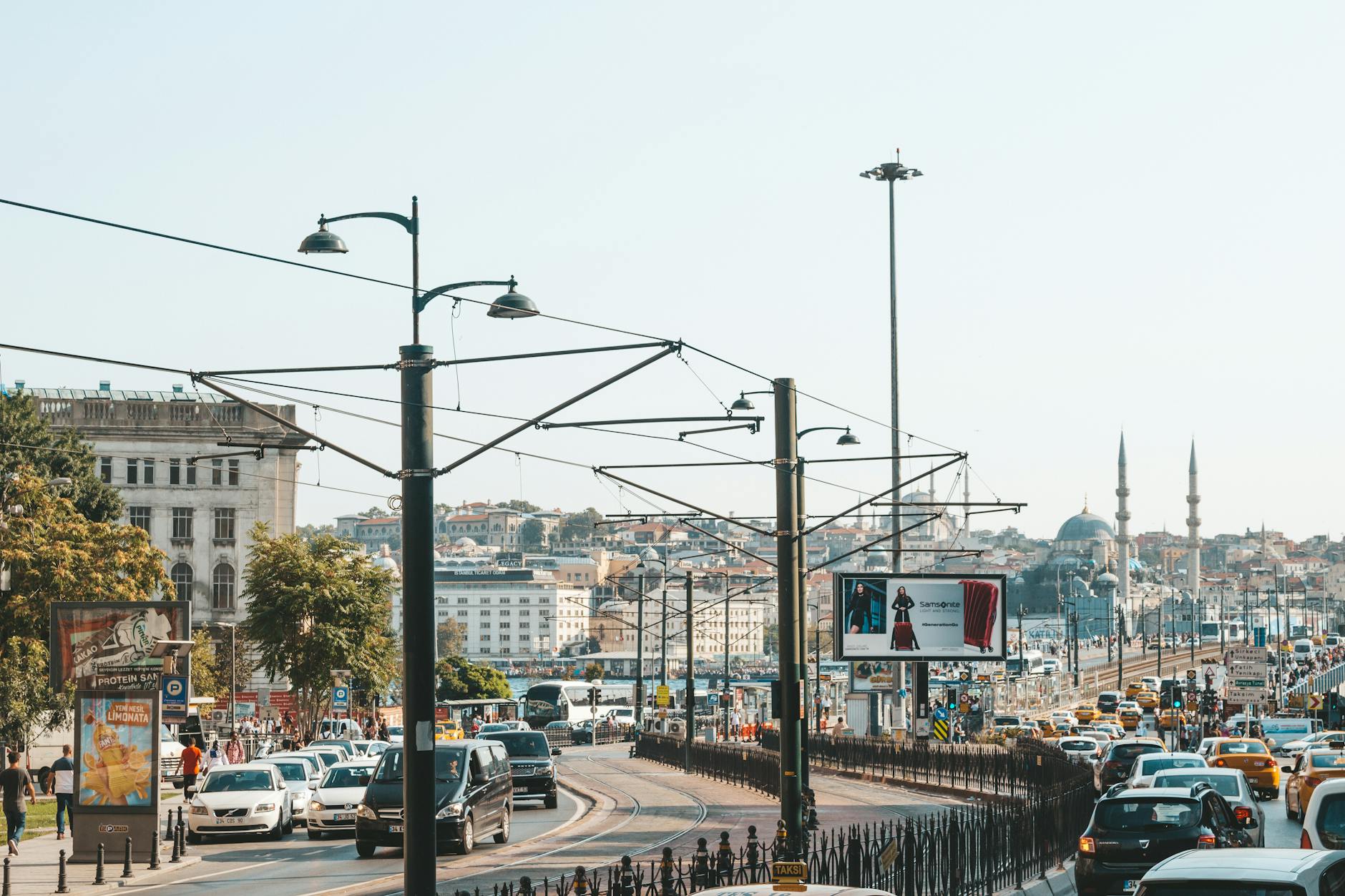
Standing at the Sultanahmet tram station at 5:00 PM is the closest you’ll get to understanding the true density of Istanbul without actually moving into a shared flat in Esenyurt. It’s a sensory overload—the scent of roasted chestnuts wafting from a nearby street cart, the rhythmic screech of the T1’s wheels, and the frantic, syncopated beep-beep of the Istanbulkart readers. This tram line is the heavy-lifting champion of the city, dragging millions of us past the Blue Mosque and across the Galata Bridge every single day. It’s a marvel of engineering and efficiency, provided you don’t mind the occasional shoulder-to-shoulder intimacy with a stranger from halfway across the globe.
Last Tuesday, I was at the Karaköy stop around 4:30 PM, watching a pair of travelers stare at the yellow Biletmatik machine with the kind of intense concentration usually reserved for neurosurgery. They were trying to figure out why their 50 TL note wasn’t enough for a single ride anymore. With the current 2026 rates, a single journey on an anonymous Istanbulkart now costs 40 TL—exactly 0.80 EUR or about 0.88 USD. It remains a bargain for a ride that doubles as a historical tour, but only if you have your card topped up and ready before the tram pulls in.
The crowd can be daunting, especially when the doors slide open and a wall of humans pushes out while another wave tries to shove in. The mistake most people make is huddling right by the turnstiles. If you’re waiting at the platform, walk to the very ends—the first or last carriage usually offers a sliver more breathing room. If you find yourself squeezed in the middle, just remember that the person leaning against you is likely just as overwhelmed by the view of the Golden Horn as you are. It’s a shared Istanbul experience, a bit messy and very loud, but it’s the pulse of the city moving in real-time.
The 2026 Wallet Check: Fares and the Istanbulkart Shuffle
If you’re waiting for Istanbul’s transit prices to stop climbing, you’re better off waiting for a snowstorm in July. A single hop on the T1 tram now sits at 40 TL, which translates to exactly 0.80 EUR or roughly 0.88 USD at our current 2026 rates. While that might sound like a bargain to anyone coming from London or New York, the real sting isn’t the price itself—it’s the logistical dance required to actually pay it.
I once stood at the Sirkeci station for 12 minutes in the rain because the queue for the only working Biletmatik stretched 25 people deep toward the Marmaray entrance, all because I’d forgotten to top up my card at a quieter kiosk. I spent twenty minutes last Tuesday at the Eminönü stop watching a bewildered group from Lyon try to feed a crumpled 200 TL note into a Biletmatik machine that was clearly having a mid-life crisis. While locals now breeze through the turnstiles by scanning a QR code from their phones, most travelers are still tethered to the physical Istanbulkart. It’s a classic divide: we use the “Istanbul Senin” app to bypass the queues, while you’re likely stuck hunting for a machine that actually accepts your cash or contactless card.
Don’t Fall for the “Limited” Trap
Whatever you do, ignore the siren song of the “Limited Use” cards (the three-ride or five-ride versions). They are a mathematical middle finger to your travel budget. These disposable passes carry a massive surcharge that makes every trip significantly more expensive than just buying the standard reloadable Istanbulkart. If you’re in the city for more than 48 hours, the reloadable card is the only way to fly. You’ll pay a one-time fee for the card itself, but it pays for itself by the time you’ve hit the Grand Bazaar and headed back to Sultanahmet for dinner.
2026 Fare Breakdown
| Pass Type | Cost (TL) | Berk’s Verdict |
|---|---|---|
| Standard Istanbulkart | 40 TL per ride | The gold standard. Get it, load it, love it. |
| 3-Ride Limited Card | 160 TL | A tourist trap for the mathematically challenged. |
| 5-Ride Limited Card | 250 TL | Slightly better than the 3-ride, but still a rip-off. |
| Contactless (Credit Card) | 60 TL | Convenient, but you’re paying a “lazy tax” per tap. |
Local Pro-Tip: If the Biletmatik machine at a major station like Sultanahmet or Sirkeci has a line thirty people deep, walk two minutes to a nearby “büfe” (small kiosk). Most of them sell and top up cards for a tiny service fee, saving you from a meltdown in the midday sun.
Timing Your Escape: How to Not Become a Human Sardine
If you value your personal space and your sanity, boarding the T1 tram at Zeytinburnu at 8:30 AM is a mistake you only make once. At that hour, the carriages heading toward Eminönü aren’t just transport; they are high-pressure containers of industrial-strength cologne and collective desperation. I once spent a twenty-minute ride squeezed so tightly against a commuter’s wool coat that I could tell you exactly what he’d had for breakfast (it was definitely sucuklu yumurta). It’s a sensory overload that no amount of historic sightseeing can immediately fix.
The Morning Meat Grinder vs. The Golden Window
The secret to enjoying this route—and actually seeing the Blue Mosque through the window instead of someone’s armpit—is the “Golden Window.” Between 10:30 AM and 3:00 PM, the T1 transforms. The frantic rush of office workers and wholesalers disappears, leaving the tram to us and the more relaxed locals. You might even snag a seat, which is the Istanbul equivalent of winning the lottery. If you miss this window, you’ll likely end up in the frantic sweaty madness of a walk through Mahmutpaşa and Tahtakale feeling already exhausted before you’ve even started bargaining for spices.
The Sultanahmet “Panic Train” Maneuver
When you’re standing on the platform at Sultanahmet, you’ll see it: the “Panic Train.” This is the first tram that arrives after a five-minute gap. Tourists, terrified it might be the last vehicle leaving the Old City forever, will pack themselves into the doorways like Tetris blocks. Don’t be that person.
Last Tuesday, I boarded at Karaköy at 5:15 PM and spent the entire ride with a stranger’s damp umbrella resting against my shin—a 40 TL lesson in why the afternoon rush is better avoided. I always let the first one go. Invariably, a second tram is trailing exactly ninety seconds behind it. Because the first train sucked up all the “panic,” the second one is often half-empty. You’ll pay your 40 TL (about $0.88 USD or €0.80 EUR based on our 2026 rates) and glide toward the Galata Bridge in relative comfort while the people on the train ahead of you are still fighting for a square inch of floor space.
How to Master the T1 Schedule
- Check the platform display for the “next train” countdown before tapping your Istanbulkart.
- Let the first crowded tram pass if the digital display shows another one arriving within 2 minutes.
- Position yourself at the far ends of the platform; the middle carriages near the turnstiles are always the most congested.
- Board between 10:30 AM and 3:00 PM to ensure you can actually see the Golden Horn as you cross the bridge.
- Keep your backpack on your front not just for security, but to reclaim a few inches of “breathing room” in a crowd.
Navigating the ‘Big Three’ Stops: Sultanahmet, Eminönü, and Karaköy
If you survive the T1’s central gauntlet during rush hour without losing your temper or your toes, you’ve officially earned your Istanbul stripes. These three stops are the high-stakes theater of the city’s public transport, where the platform space is a premium and the history is literally inches from the tracks.
Sultanahmet: The Narrow Squeeze
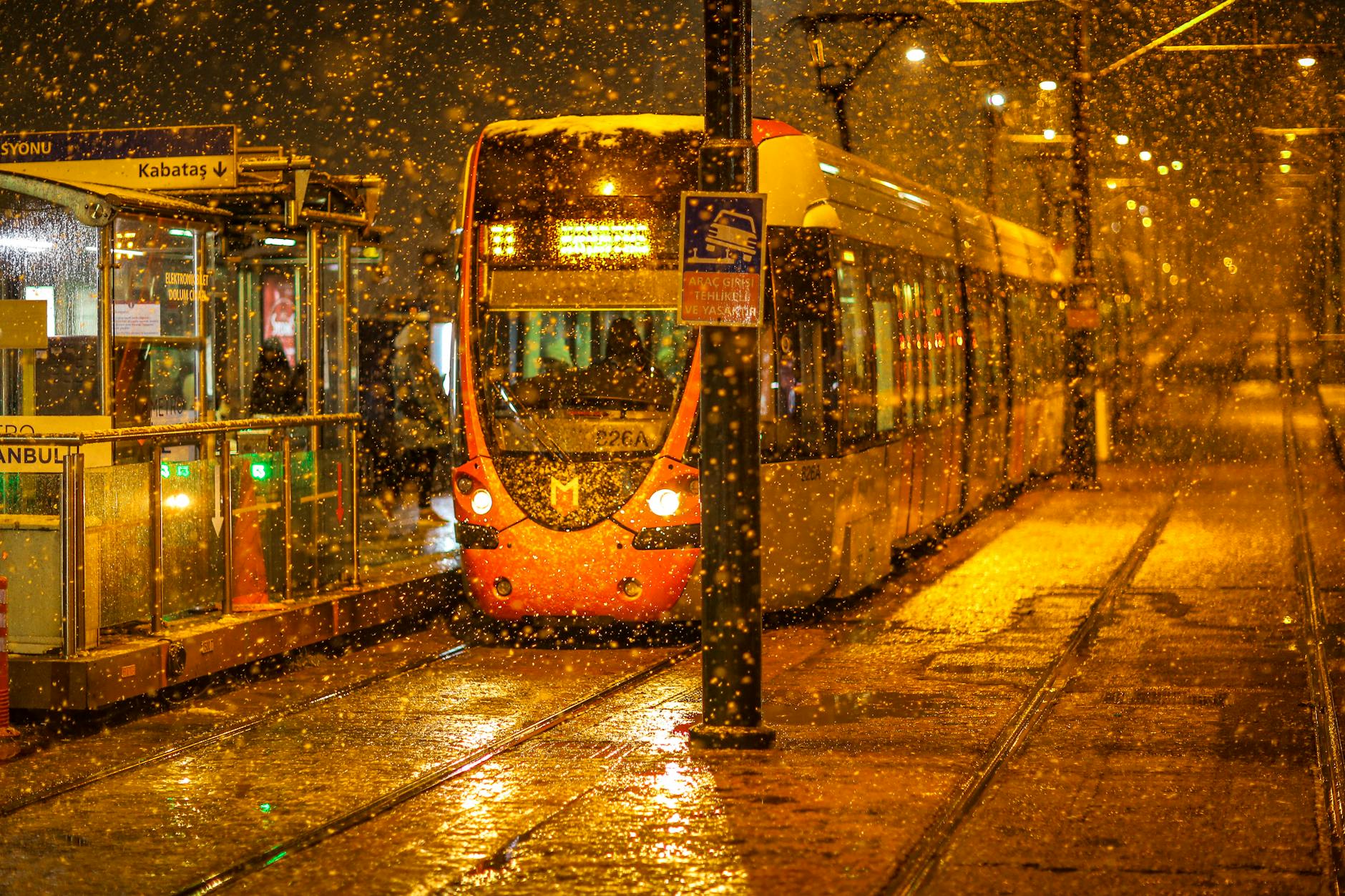
The Sultanahmet station is arguably the most stressful fifty meters of pavement in the city. The platform is precariously narrow; I once watched a traveler try to unfold a giant paper map right as the tram bell—that sharp, rhythmic “ding-ding”—announced a 50-ton vehicle’s arrival. He nearly lost his map and his balance. The golden rule here: step back from the yellow line. There are no barriers, and the tram passes close enough to ruffle your hair. If the platform is packed, don’t force it; walk five minutes uphill to Çemberlitaş where it’s quieter. From there, you can easily find the Architecture and Gardens of the Şehzade Mosque with Visiting Tips and 2026 Entry Prices for a peaceful escape from the T1 chaos.
Eminönü: The Transfer Hub of the Gods
Eminönü is where the city’s heart beats the fastest. This is the ultimate transfer hub where the tram, ferries, and buses collide in a beautiful, smelling-of-grilled-mackerel mess. If you’re heading to the Spice Bazaar, this is your stop, but be prepared for the “ferry surge.” When a boat from Kadıköy empties, a wave of hundreds of people will wash across the tram lines. Practical fix: Don’t try to fight the current. Stand by the station turnstiles and wait sixty seconds for the wave to pass before you try to navigate toward the Galata Bridge.
Karaköy: The 40 TL Million-Dollar View
Crossing the Galata Bridge from Eminönü to Karaköy is the best value sightseeing tour on the planet. For exactly 40 TL (which is about €0.80 or $0.89 USD), you get a panoramic view of the Golden Horn, the Topkapı Palace silhouette, and the hovering seagulls. It only takes three minutes, but it marks the transition from the ancient Old City to the “cool,” neo-Bohemian side of Istanbul. Keep your eyes peeled for the fishermen’s lines dangling from the bridge above; sometimes a stray bait might even tap the tram window.
Berk’s Insider Tip: If you’re boarding at Kabataş (the start of the line), don’t rush for the first seat you see. The seats at the very front and back ends of the tram offer the best views of the Dolmabahçe and the Bosphorus as you pull away.
The Luggage Dilemma: Why the T1 is Not Your Airport Shuttle
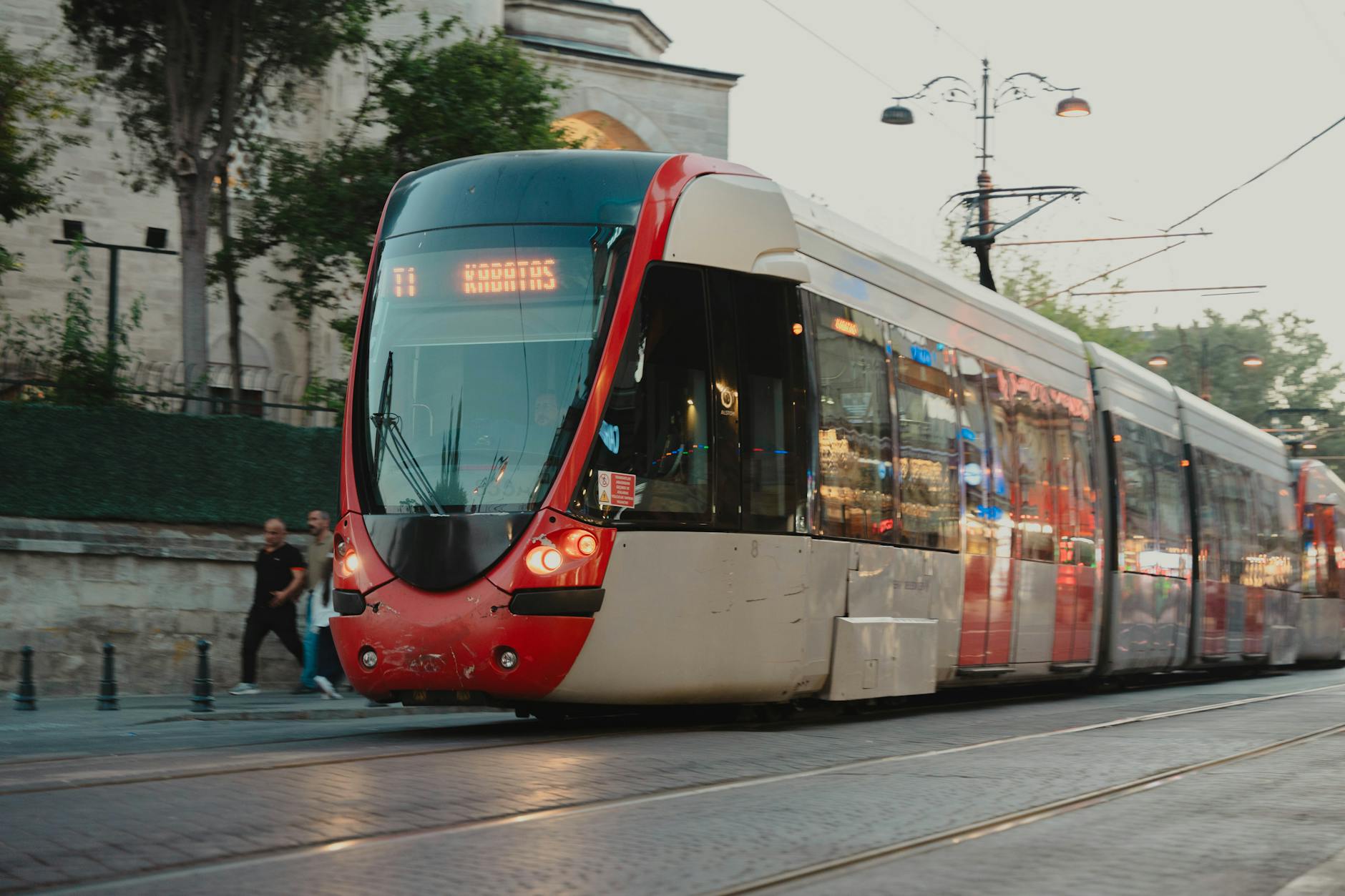
If you try to board the T1 at Sirkeci around 6:00 PM dragging three oversized hardshell suitcases, you aren’t just a traveler; you’re a moving roadblock. I’ve lived here for fifteen years, and nothing evokes the “tst-tst” sound—that rhythmic Turkish tongue-click of disapproval—quite like someone trying to jam a Samsonite monolith into a car already packed with tired commuters. The T1 is a high-frequency urban artery designed for moving people, not freight, and during rush hour, every square inch is contested territory.
The 20-Minute Dance of Apologies
The internal layout of these trams is notoriously narrow. If you find yourself caught with bags during the peak squeeze, your only option is to hug the tram doors and pray. You will spend the next 20 minutes performing a frantic dance, shuffling your gear onto the platform at every single stop to let people off, then wrestling it back inside before the doors hiss shut. I once watched a guy lose a wheel in the gap at Eminönü because he was rushing to clear the way for a wave of passengers. It’s stressful, it’s sweaty, and it’s entirely avoidable.
Use the Hubs, Not the Aisle
If you are transitioning between hotels or have a late flight out of IST, do yourself and the city a favor: ditch the weight. You can find several secure Luggage Storage and Locker Locations at Transport Hubs with 2026 Prices that will save you the social etiquette nightmare. For a small fee—usually around 225 TL (about 4.50 EUR or 5 USD)—you can leave your bags in a locker near Sirkeci or Sultanahmet. It’s a small price to pay to avoid being the person everyone is staring at while they try to get home from work. If your bags are non-negotiable and it’s rush hour, just take a taxi or a private transfer; your sanity is worth more than the fare.
Tram Etiquette and Safety: Keeping Your Wits (and Wallet)
If you board the T1 expecting a quiet, orderly commute, you’re in for a rude awakening. The tram is a contact sport, but one played with a certain unwritten code that makes the chaos manageable.
The Backpack Turtle Maneuver
Wear your backpack on your chest. I once saw a traveler at Sultanahmet spin around to admire a minaret and accidentally sweep two school kids off their feet with his oversized hiking pack. Beyond preventing pickpockets—who are rare but opportunistic in heavy crowds—the “front-pack” style is basic manners. When the driver slams the brakes near the Gülhane curve, you don’t want to be the person inadvertently elbowing a local in the ribs with your gear. It keeps your valuables under your chin and creates a little “buffer zone” for your personal space.
Respect the Teyze
The most powerful entity in Istanbul isn’t a politician; it’s a Teyze (auntie) boarding at Laleli with three massive bags of textiles. If an older woman boards, you stand up. It doesn’t matter how tired your legs are from walking through the Old City. If you remain seated while a Teyze stands, the silent judgment from the rest of the carriage will be heavy enough to physically pin you to your seat. Standing up isn’t just a suggestion; it’s a requirement for being a decent human being in this city.
The 2026 Cost of Convenience
By 2026, every turnstile accepts contactless payment via credit card, but convenience comes with a “convenience fee.” Tapping your Visa or Mastercard will set you back 60 TL (about 1.20 EUR or 1.33 USD). Meanwhile, using a physical Istanbulkart keeps you at the “local” rate of 40 TL (0.80 EUR or 0.88 USD). Last month, I made the mistake of trying to use a credit card tap at the Kabataş turnstile at 11:15 PM, only to realize I was being charged 60 TL instead of the 40 TL on my card—a small but annoying ‘convenience tax’ for a three-stop ride.
Berk’s Insider Tip: The transfer at Zeytinburnu to the Metro is a long walk. If you’re tired, stay on the tram until the very end at Bağcılar only if you really need that specific connection; otherwise, switch at Sirkeci for the Marmaray instead.
Frequently Asked Questions about the T1 Tram
Is the T1 tram safe to use late at night?
Yes, it is generally very safe. I’ve ridden the T1 at 11:30 PM many times after grabbing a late bite in Karaköy. While the crowds thin out, the stations are well-lit and usually staffed by security near the turnstiles. Just stay alert as you would in any major metropolis. If you find yourself in a nearly empty carriage, move to the front car closer to the driver for extra peace of mind.
Can I use one Istanbulkart for my entire group?
You certainly can. You can tap the same card for up to five passengers in quick succession. However, keep in mind that only the first person gets the discounted transfer rate if you switch to a bus or ferry within 90 minutes. In 2026, with a single ride costing 40 TL, it is often more economical for long-term visitors to buy individual cards to maximize those transfer discounts during a full day of sightseeing.
What should I do if the tram is too crowded to board?
During the afternoon rush (around 5:00 PM to 7:00 PM), trams at Eminönü can be packed to the rafters. Don’t try to squeeze into a car where people are already pressed against the glass. Trams run every 2 to 4 minutes during peak hours. If the first one looks like a sardine can, just wait for the next one. Usually, the second or third tram following a “clog” will have significantly more breathing room.
The Final Word on the T1
You’ll probably spend at least one leg of your journey wondering why you didn’t just walk, especially when a stray backpack nudges your ribs near the chaotic intersection of Laleli. But there is a reason I still tap my Istanbulkart and squeeze into the fray, even after fifteen years of calling these streets home. It is the city’s most authentic, albeit cramped, social experiment.
I remember standing near the doors last Tuesday around 5:45 PM—just as the 40 TL fare (exactly 0.88 USD) flashed on the sensor—and watching an elderly man in a flat cap offer his seat to a weary backpacker without saying a single word. That’s the T1; it’s a shared struggle that somehow works. If the platform at Eminönü looks like a scene from a disaster movie, don’t panic. Just let one tram go by. The next one arrives in ninety seconds and usually offers an extra inch of breathing room.
Despite the humidity and the occasional elbow, this line remains the undisputed heartbeat of Istanbul. As the tram eases its way onto the Galata Bridge, the frantic energy of the bazaar fades into the background. Lean your forehead against the cool glass and just watch. When the sun begins its final descent over the Golden Horn, casting a heavy, burnt-orange glow across the minarets of the Süleymaniye, the noise inside the carriage finally goes quiet. For those few minutes, as you glide over the water with the wind whipping past the metal frame, you aren’t just a visitor—you’re part of the city’s pulse.