
If I see one more traveler wilting in a three-hour queue under the Sultanahmet sun, I’m going to start hand-delivering maps to the Fatih district. I’ve lived here for fifteen years, and it still baffles me how thousands of people will stand shoulder-to-shoulder for a thirty-second glimpse of a ceiling while Mimar Sinan’s first true masterpiece sits twenty minutes up the hill in near-total silence.
Last Tuesday, around 10:30 AM, I took that exact walk. The trek up the slope from the tram line is a bit of a calf-burner, and you’ll have to navigate the perpetually narrow, crowded sidewalks near the Valens Aqueduct, but the moment you step through the gate of the Şehzade Mosque, the city noise just… stops. I sat on a stone bench in the courtyard, watching a stray tabby cat nap on a 16th-century column base, and for twenty minutes, I was the only soul there.
Sinan called this his “apprentice work,” which is the ultimate architectural humble-brag. It’s the first time he achieved that perfect, floating symmetry with the central dome, and unlike the Blue Mosque—where you’re often ushered through like cattle—here you can actually hear your own breathing. The gardens are meticulously kept, offering a shade that feels five degrees cooler than the street.
Entry is currently free, though if you want to leave a small donation for the complex’s upkeep, 100 TL is a respectful gesture (that’s about 2 USD or 2 EUR given our current rates of 45 TL to the Dollar and 50 TL to the Euro). It’s a small price to pay for escaping the tourist circus and finally seeing the soul of the city without someone’s selfie stick poking you in the ribs.
The Masterpiece Born of Grief
Suleiman the Magnificent didn’t build the Şehzade Mosque to project imperial strength; he built it because his heart was shattered. When his favorite son, Prince Mehmet, died of smallpox at just 21, the Sultan was so devastated he reportedly sat by the body for three days. This isn’t just a building; it’s a 16th-century elegy in stone. While most travelers mindlessly follow the crowds to the Blue Mosque, they miss the fact that this site is where the Classical Ottoman style actually achieved its first perfect form.
A Master’s “Apprenticeship”
Mimar Sinan, the legendary architect who essentially drew the blueprint for Istanbul’s soul, famously dismissed this mosque as his “apprenticeship” work. To me, that’s the ultimate architectural flex. If this is a beginner’s effort, the rest of us are playing with Legos. Unlike his later, more experimental works, the Şehzade (Prince’s) Mosque is obsessed with perfect symmetry. I’ve spent dozens of hours in this courtyard, and the way the four half-domes support the central one creates a visual balance that feels like a deep exhale.
Getting There Like a Local
The logistical mistake most people make is trying to navigate the crowded, suitcase-clogged streets of Laleli. Instead, take the M2 Metro line to Vezneciler. It’s a clean, efficient ride, and from the station exit, it’s exactly a 4-minute walk to the mosque gate. I once took the wrong exit at Vezneciler station—following the ‘University’ signs instead of ‘Şehzadebaşı’—and ended up wandering toward the main gate of the campus for ten minutes. Avoid that extra uphill loop by checking the platform signs carefully.
If you are still figuring out Where to Stay in Istanbul: Authentic Neighborhoods for Locals, look into neighborhoods that offer this kind of direct metro access rather than relying on the aging tram lines. If you are coming from across the Golden Horn, skip the crowded ferry and check the Istanbul Water Taxi app booking and 2026 Bosphorus fares for a direct drop-off at Eminönü before the walk up.
I remember visiting last Tuesday around 9:15 AM. While the Hagia Sophia likely had a queue stretching halfway to Asia, I walked through the Şehzade gates and shared the entire courtyard with exactly three pigeons. If you encounter a rare school group or a stray tour party, don’t sweat it—just head to the shaded garden benches for five minutes. They never stay long, and the silence that follows is the best free souvenir in the city.
Geometry and Peace in the Forecourt
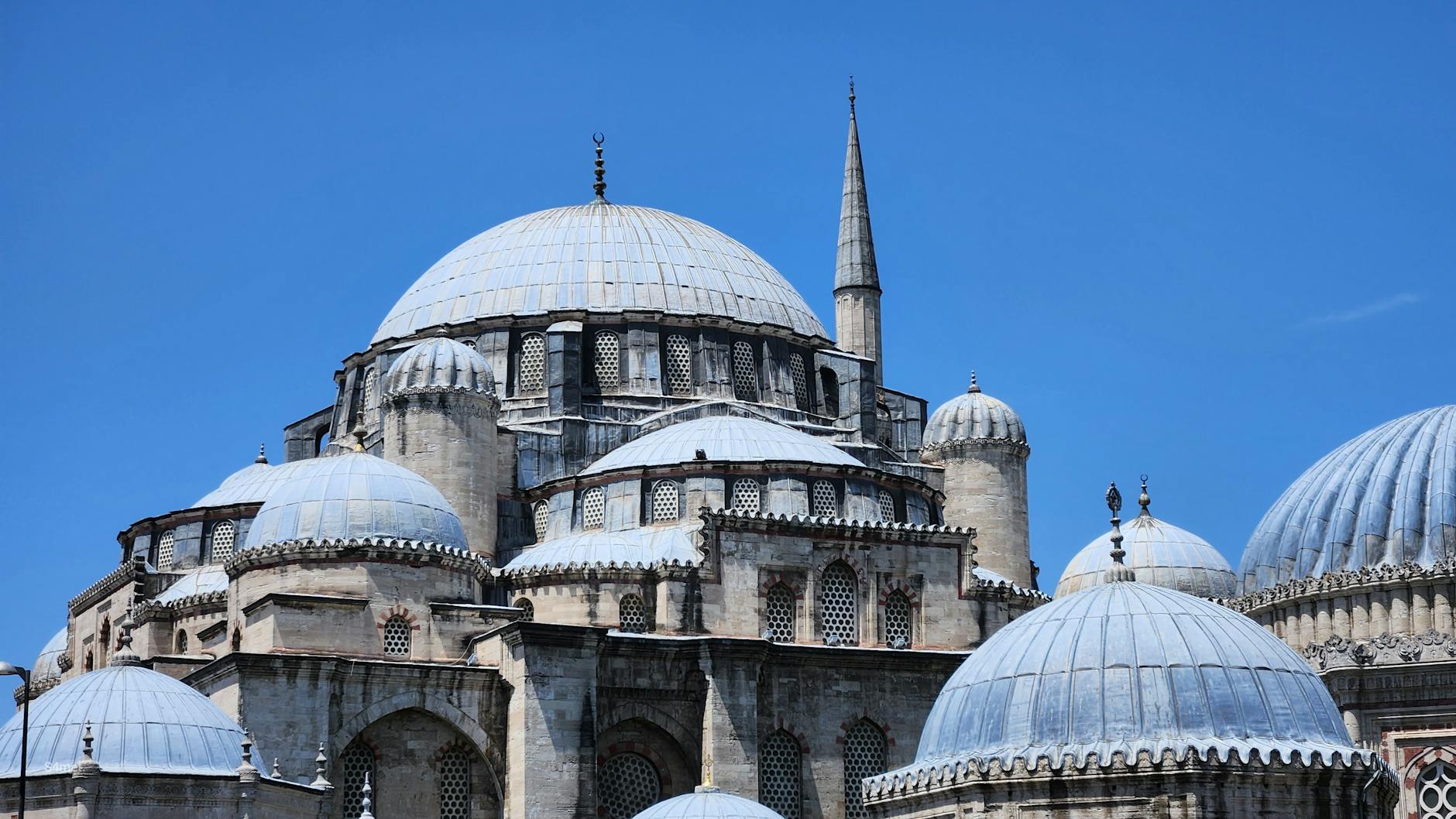
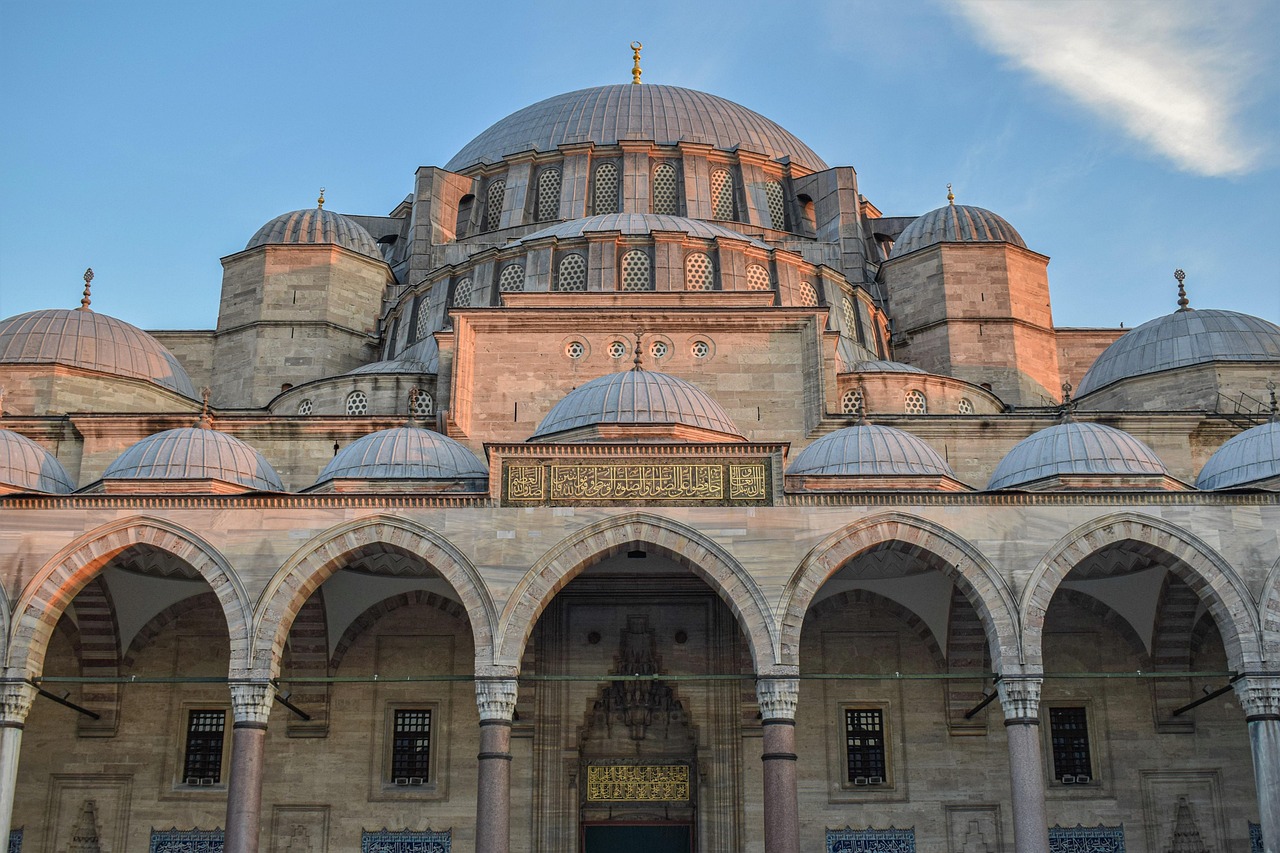
The symmetry of the Şehzade Mosque’s courtyard is arguably the most satisfying architectural layout in the city. While the Blue Mosque gets the crowds, Mimar Sinan’s work here feels more intimate and mathematically “right.” The forecourt is a perfect square, exactly the same size as the prayer hall itself, creating a sense of balance that you feel the moment you step through the gate.
I usually make it a point to be here by 10:30 AM. At this hour, the sun hits the porticos at a sharp angle, casting long, rhythmic shadows across the marble pavement that make for incredible photos without the midday glare. Last Tuesday, I sat by the şadırvan (the central ablution fountain) for twenty minutes just watching the light move. It’s one of the few places in Fatih where the city’s roar—the honking buses on Macar Kardeşler Avenue—fades into a soft hum. If you find a tour group blocking the fountain, simply move to the far corners of the portico; the acoustics of the domes dampen the chatter remarkably well.
Before you walk inside, look up at the two minarets. They are unique in Istanbul for their deep, geometric stone carvings. Most imperial mosques have smooth minarets, but these are decorated with terracotta-like patterns that Sinan rarely repeated. If you’ve come from across the Golden Horn, I hope you’ve fueled up with morning simit and savory pastries from the historic bakeries of Karaköy and Galata with current prices—a 20 TL (0.40 EUR) boyoz or poğaça is the perfect fuel for the uphill walk to this precinct.
Key Architectural Details to Spot:
- The 1:1 Ratio: The courtyard footprint perfectly mirrors the interior dimensions of the mosque.
- Unique Minaret Carvings: Intricate relief work that is much more decorative than the later, more austere Süleymaniye style.
- The Portico Columns: Notice the varying colors of the marble and granite columns—many were repurposed from Byzantine-era structures.
- Ablution Taps: Even if you aren’t washing for prayer, the craftsmanship of the brass faucets at the şadırvan is worth a close look.
- Polychrome Arches: The alternating red and white stones (voussoirs) above the arches are a classic nodding gesture to earlier Seljuk and Mamluk aesthetics.
Berk’s Insider Tip: Look for the green stone (serpentine) column in the corner of the outer wall near the intersection—local legend says it marks the exact center of old Istanbul.
Stepping Inside the Prayer Hall
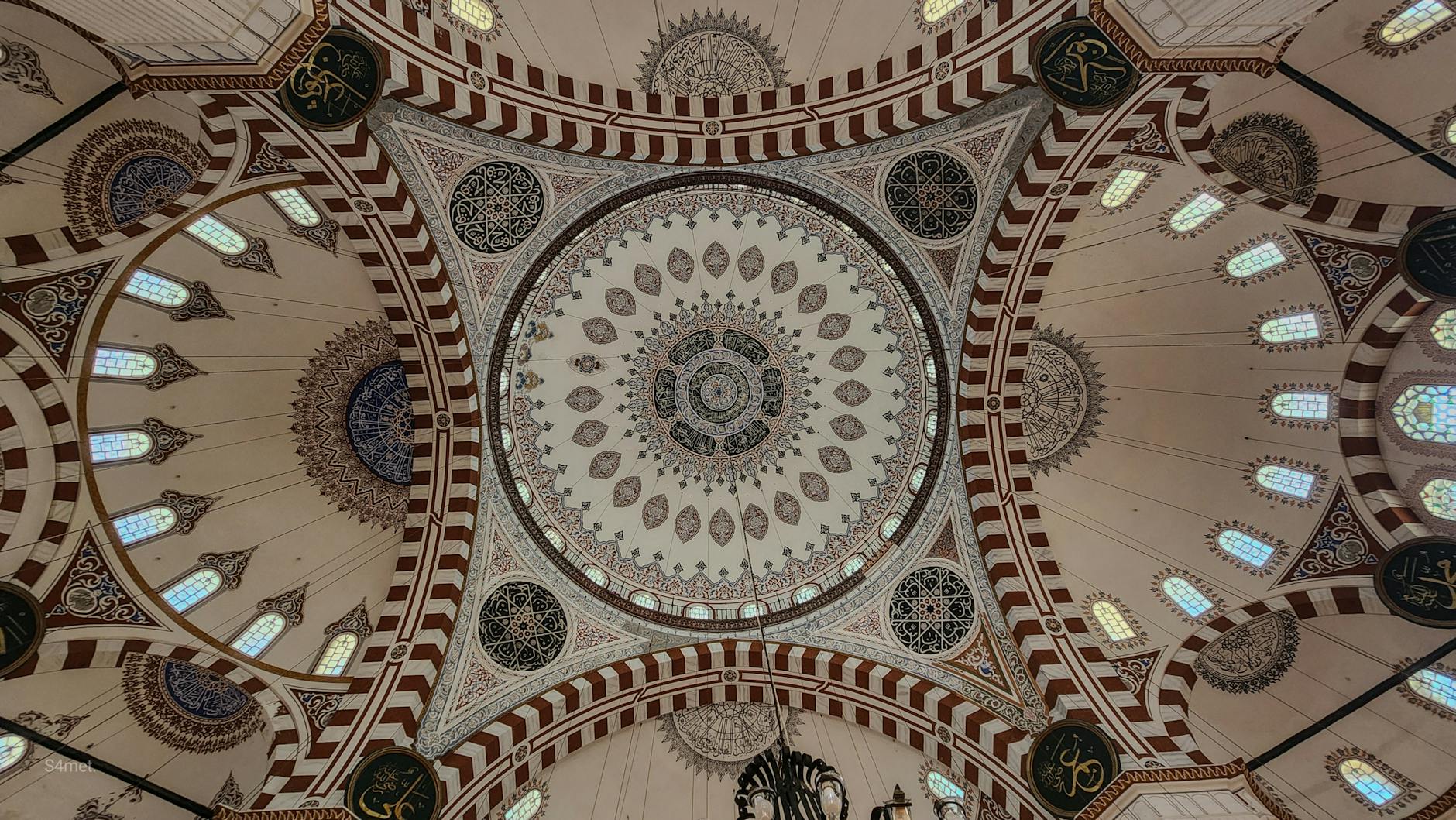
The first thing you’ll notice is that Şehzade doesn’t feel like it’s trying to crush you with its weight. Most people rush to the Süleymaniye to see Sinan’s “master” work, but I’ve always found the interior of this “apprentice” mosque more intimate and geometrically perfect. It uses what architects call a four-leaf clover plan. By placing a central dome supported by four half-domes, Sinan managed to eliminate those massive, sight-blocking “elephant foot” pillars you see in the Blue Mosque.
Geometry That Breathes
When I walked in last Tuesday around 10:30 AM, the morning light was hitting the red-and-gold patterns of the dome, and the symmetry was staggering. Because the weight is distributed so evenly into the side walls, the central area stays wide open. You get this immense sense of volume without feeling like you’re standing in a stone fortress. It is the purest expression of an imperial mosque’s interior design—balanced, airy, and focused. If you find the crowds at the Hagia Sophia a bit claustrophobic, come here; there were barely ten other people inside during my last visit, and the silence was heavy in the best way possible.
Access and Atmosphere
One of my biggest gripes with the major tourist spots is the waist-high wooden “tourist barriers” that keep you 30 meters away from the action. At Şehzade, they are much more relaxed. You can actually walk up and appreciate the intricate stonework of the Mihrab (the niche facing Mecca) and the towering Minbar (the pulpit) without a security guard whistling at you.
The acoustics are a feat of engineering. Despite the chaotic honking of Fatih traffic just outside the courtyard walls, the interior filters the noise into a low, meditative hum. Just a heads-up: the floor can be chilly in the winter months, so wear thick socks. If you forget, there’s no “fix” other than rushing your visit, which would be a waste of a perfectly peaceful moment.
Frequently Asked Questions
Is there an entrance fee for the Şehzade Mosque in 2026?
No, entry to the Şehzade Mosque remains completely free for all visitors, as it is an active place of worship. You don’t need to buy a ticket or book in advance. However, I usually recommend carrying a small amount of cash, perhaps a 50 TL note (which is exactly 1 EUR or about 1.10 USD), to drop into the donation box near the exit. This helps with the upkeep of the historic carpets and the gardens you just enjoyed.
What is the best time of day to visit to avoid prayer times?
To see the interior without interrupting worshippers, aim for the mid-morning window between 9:00 AM and 11:30 AM, or the afternoon gap between 2:00 PM and 4:00 PM. Avoid visiting on Fridays before 3:00 PM, as the midday congregational prayer draws a large local crowd and the mosque is closed to tourists. If you arrive during prayer, simply wait in the courtyard for about 20 minutes; the experience of hearing the call to prayer echo off the stone walls is worth the wait.
Do I need to bring my own headscarf or long clothing?
While it is always better to be prepared, the mosque provides clean headscarves and wrap-around skirts at the entrance free of charge. Just look for the wooden rack near the heavy leather door curtains. Make sure your shoulders and knees are covered before stepping onto the carpet. If you’re worried about hygiene, a simple light pashmina from a local shop—usually costing around 250 TL (5 EUR)—is a great investment for your entire Istanbul trip.
The Secret Garden of Tombs (Hazire)
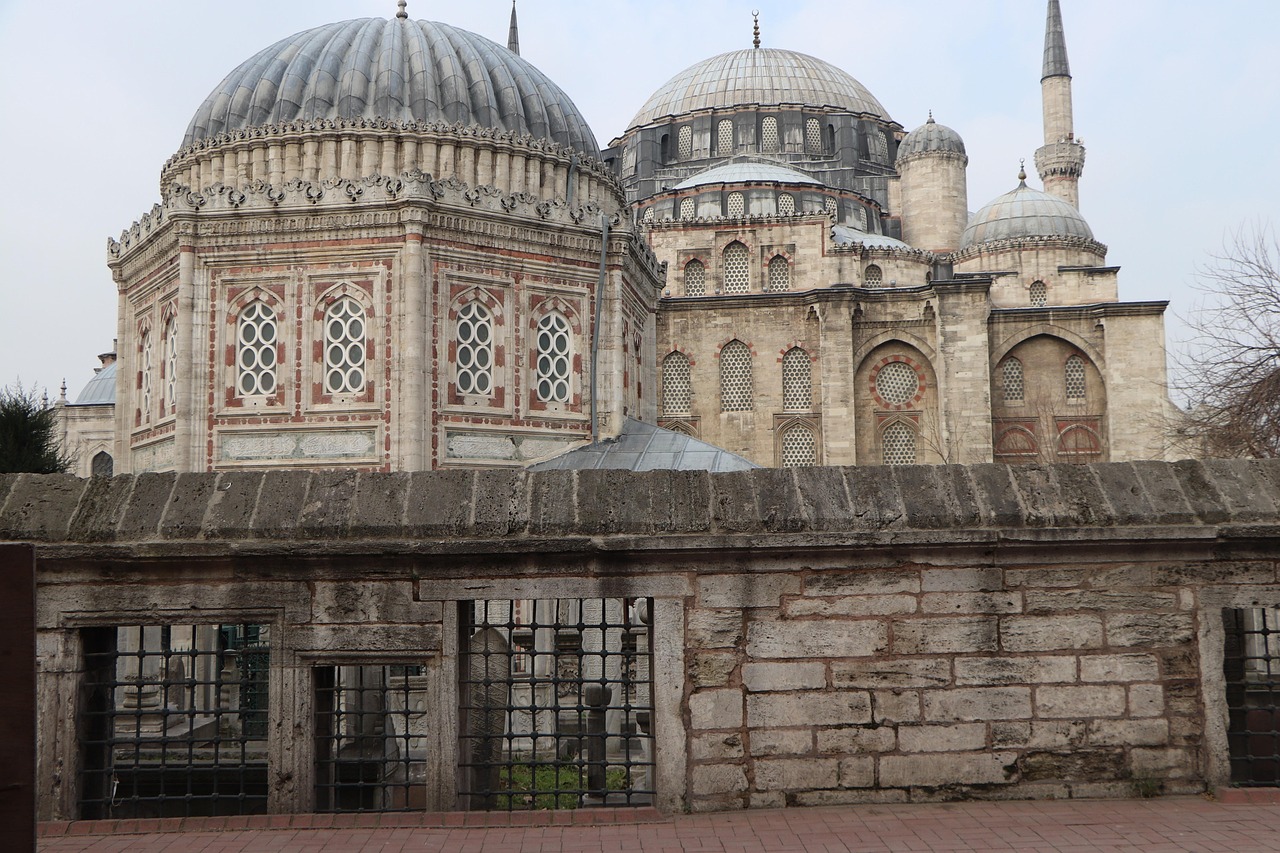
Most people rush into the main mosque and leave, but they’re missing the soul of the complex: the hazire. This garden of tombs is the most peaceful corner of Fatih. Even when the Sarachane traffic is roaring outside, this space stays silent, guarded by ancient cypress trees. I’ve noticed that in the peak of July, the garden stays at least 3 degrees Celsius cooler than the street. It’s my go-to spot to decompress after a long walk through the district; I usually grab a water from a nearby kiosk and just sit on a stone ledge for ten minutes to reset my senses.
The Masterpiece of Mourning: Prince Mehmet’s Türbe
If you only see one tomb in Istanbul, make it the Türbe of Prince Mehmet. It’s the architectural equivalent of a heartbreak. Sinan outdid himself here, creating a structure that feels more like a palace than a grave. The Iznik ceramics inside are legendary—specifically the vibrant yellow and green tiles. These colors are incredibly rare because the famous “Iznik red” hadn’t been perfected yet, making this a unique aesthetic snapshot of the mid-16th century. For a deeper dive into how these styles evolved and to see the precursors to this work, I highly recommend checking out the Ancient sarcophagi and Tiled Kiosk ceramics at the Istanbul Archaeological Museums with entry tips and prices.
Power and Silence
The garden also hosts the resting places of some of the Empire’s most powerful (and notorious) men. You’ll find the tombs of Grand Viziers like Rüstem Pasha and Ibrahim Pasha here. Standing between these structures, you get a sense of the sheer weight of Ottoman history that isn’t found in a textbook. It’s a literal “who’s who” of the Golden Age.
Berk’s Insider Tip: If the tomb area (Hazire) gates look locked, wait five minutes; the caretaker is usually just around the corner and will open it for a respectful visitor. A small tip of 50 TL (1 EUR) is a nice gesture but not mandatory.
5 Details to Spot in the Şehzade Garden
- Cuerda Seca Tiles: Look for the multi-colored floral patterns in Prince Mehmet’s tomb that predate the standard underglaze techniques.
- The Symbolic Throne: Notice the wooden structure over Mehmet’s sarcophagus, a rare feature signifying his status as the Sultan’s preferred heir.
- Janissary Headstones: Scan the smaller graves to find “stone turbans” carved with specific folds that indicate the rank of the soldier buried there.
- The Rüstem Pasha Türbe: Compare this exterior to Mehmet’s; it’s more restrained but shows Sinan’s maturing sense of proportion.
- Ancient Cypress Roots: Observe how the trees have integrated into the stone walls over 400 years, providing that natural “AC” effect during the summer.
2026 Entry Logistics and Visitor Etiquette
Skipping the massive ticket lines at the Sultanahmet landmarks to come here is the smartest move you’ll make in Fatih. Entry to the Şehzade Mosque remains free in 2026, which is a rare gift in a city where museum prices are climbing. While there is no mandatory fee, I usually suggest dropping 100 TL or 150 TL (about 2 or 3 Euros) into the donation box. It’s a small gesture that goes directly toward the meticulous upkeep of Sinan’s first masterpiece.
Timing Your Visit
The most common mistake I see is travelers showing up right at noon and looking confused when the doors are temporarily restricted. I was there last Thursday around 1:15 PM; the Adhan (call to prayer) had just finished, and a frustrated group was being turned away from the main hall. To avoid this, plan your visit around the five daily prayers. The mosque is strictly for worshippers for about 30 minutes after each call to prayer. If you do get caught by the timing, don’t just leave—use those 30 minutes to explore the courtyard or the beautiful, quiet tombs (türbes) in the rear garden, which usually stay accessible.
What to Wear
Respect is the “currency” here. You’ll need to cover your shoulders and knees, and women must cover their hair. While the staff provides free rental wraps at the entrance, they often look like a tired “tourist uniform.” My advice? Pack your own light linen scarf. It’s more hygienic, looks better in your photos, and saves you from fumbling with the communal rentals at the door.
| Feature | 2026 Policy/Requirement | Berk’s Local Insight |
|---|---|---|
| Admission Fee | Free (100–150 TL donation suggested) | Keep small bills ready for the donation box. |
| Dress Code | Shoulders, knees, and hair (women) covered | Bring your own scarf to avoid the rental wraps. |
| Prayer Closures | Closed to visitors for ~30 mins after Adhan | Use this time to photograph the outer courtyard. |
| Photography | Permitted (No flash, no tripod) | Never photograph people while they are praying. |
Where to Go from Here: The Vefa Connection
Leaving the serene courtyard of Şehzade Mosque without venturing into the surrounding neighborhood is a half-finished story. You’re standing in the heart of old Fatih, and just five minutes away lies a time capsule called Vefa. I always tell my friends to skip the overpriced “tourist tea gardens” huddled right against the mosque gates; they charge double for tea that has usually been sitting in the pot too long. Instead, walk a block further into the residential streets where the prices drop and the atmosphere becomes authentically local.
I stopped at a small tea house just behind the complex wall yesterday at 2:00 PM; a glass was only 15 TL (0.30 EUR), whereas the cafe right by the main gate was asking 40 TL (0.85 EUR) for the same brew. That price difference pays for your water for the rest of the day.
Navigating Toward Zeyrek
The walk north toward the Valens Aqueduct is one of my favorite stretches in the city. Seeing those massive 4th-century Roman arches loom over modern traffic is a “only in Istanbul” moment that never gets old. If you’re looking for a deep dive, you can follow the wooden houses and boza stops on a walking route through Vefa and Zeyrek to see the city’s architectural evolution.
Your primary target should be Vefa Bozacısı. This historic shop has been serving boza—a thick, fermented millet drink—since 1876. A glass costs about 75 TL (1.50 EUR). Don’t forget to buy a pocketful of roasted chickpeas (leblebi) from the shop across the street to sprinkle on top; the tart, creamy drink needs that crunch. I remember bringing a visitor here last December; he was skeptical of “fermented grain juice” until he saw the silver cup Atatürk drank from, which is still displayed in a glass case. One sip and he was a convert.
Berk’s Insider Tip: For a quiet lunch after, walk 200 meters to the ‘Kuru Fasulyeci’ stalls near the Süleymaniye—a plate of beans and rice will cost you about 250 TL (5 EUR) and it’s the ultimate local fuel.
How to Extend Your Walk
- Exit the Şehzade Mosque complex via the northern gate facing the Dede Efendi street.
- Walk past the Şehzade Park, ignoring the first two cafes to find better-priced tea further down the alley.
- Head toward the Valens Aqueduct (Bozdoğan Kemeri) to appreciate the scale of Roman engineering.
- Enter Vefa Bozacısı and order a glass of boza—look for the historic Atatürk glass on the wall.
- Follow the sloping streets down toward Zeyrek to discover the neighborhood’s crumbling but beautiful Ottoman wooden houses.
Summary of the Experience
The noise of the traffic on Şehzadebaşı Street—that constant hum of buses and honking taxis—somehow dies the moment you pass under the stone portal into the outer courtyard. I’ve lived here for fifteen years, and I still find it jarring how quickly the city’s chaos evaporates in this specific spot. While the crowds at the Blue Mosque are currently elbowing each other for a selfie, you’re likely to have this garden mostly to yourself, shared only with a few local students from the nearby university and the occasional sleepy street cat.
Do yourself a favor and don’t just “check” this off your list. Find one of the weathered wooden benches in the outer garden, right near the base of the monumental plane trees. Sit there for fifteen minutes. Watch how the light hits the pale pinkish stones of the minarets—Sinan’s first real masterpiece—and listen to the calls of the pigeons. It’s in these quiet, unhurried moments that you actually “get” Istanbul. You aren’t being sold a carpet or shoved through a turnstile; you’re just existing in a space that has offered the same sanctuary for five centuries.
If you’re feeling parched after your walk, there’s a small kiosk just outside the main gate where a cold bottle of water will set you back about 25 TL (exactly 0.50 EUR). It’s a small price to pay to sit back and appreciate the fact that you found the city’s pulse while everyone else was still stuck in the Sultanahmet queues. This isn’t just a monument to a lost prince; for me, it’s the place where Istanbul finally slows down and lets you breathe.