I’ve spent fifteen years watching Istanbul’s taxi drivers perform what I can only describe as urban interpretive dance—sometimes they’re your best friend, sometimes they’re ‘changing shifts’ just as the rain starts. Last Tuesday at 6:30 PM, I stood on the windy corner near the Galata Tower, watching a line of yellow Fiats cruise past with their “Dolu” (Full) lights mockingly bright. It was that classic Istanbul moment where a five-kilometer trip to Beşiktaş feels like an expedition to the moon. When I finally flagged down a driver who wasn’t “heading to the garage,” the meter started at the 2026 base rate, and by the time we crawled through the evening gridlock at Dolmabahçe, the display hit 350 TL—roughly 7 Euros or just under 8 USD. It’s a fair price for the spectacle, provided you know the unspoken rules of the game.
Getting around this city is about knowing when to play along with the local theater and when to let technology take the wheel. If you’ve ever been told a destination is “too close” or “too far” while standing in a downpour in Karaköy, you’ve experienced the gatekeeping of the yellow maze. However, the frustration usually melts away once you’re inside, listening to the driver’s unsolicited (but often brilliant) political commentary over a crackling radio. To skip the “shift change” drama and the occasional creative route-planning, savvy locals have shifted toward ride-hailing apps. These tools bring the car to your exact GPS pin, ensuring the meter stays honest and the route remains transparent. It turns a potential headache into just another part of the Istanbul rhythm—fast-paced, slightly unpredictable, but always moving.
How to Successfully Catch a Taxi in Istanbul
- Check the Roof Light: Look for the green “Boş” (Empty) light, but remember it’s an invitation to negotiate, not a guarantee.
- Master the ‘Destination Shout’: Before opening the door, lean in and tell the driver your destination to ensure it aligns with his route or shift change.
- Insist on the ‘Taksimetre’: Ensure the meter is turned on immediately; it should start at the 2026 base rate of 45 TL.
- Monitor the Route on Your Phone: Keep your own GPS map open and visible to discourage “scenic” detours through heavy traffic.
- Dig for the Seatbelt: If you are safety-conscious, be prepared to dig between the rear seat cushions to find the buckles, which are often tucked away.
- Pay with Small Notes: Always carry 100 or 200 TL bills to avoid the “no change” scenario at the end of your trip.
The Golden Rules of the Yellow Fleet
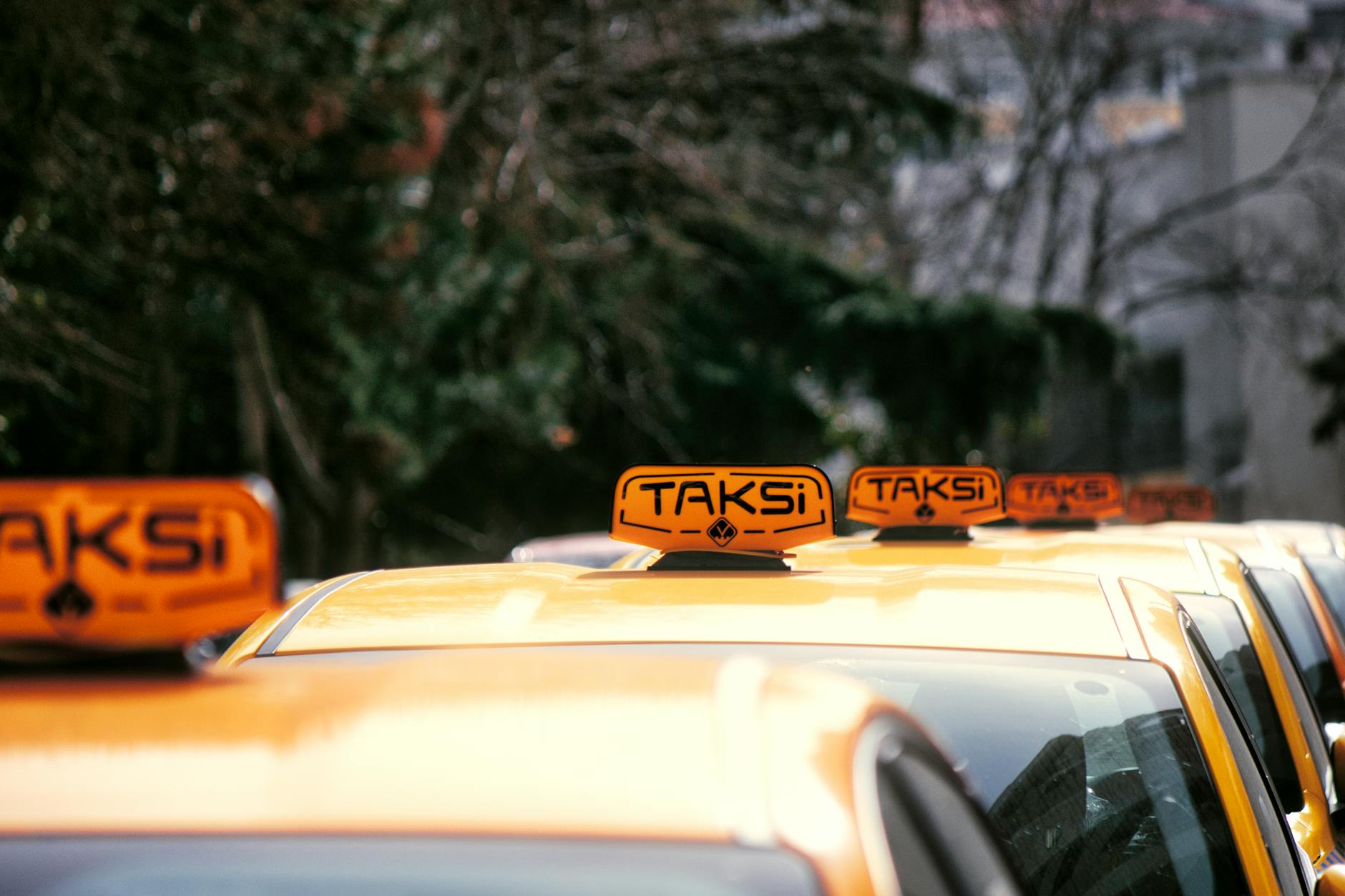
Hailing a taxi in Istanbul is less of a transport service and more of a high-stakes social negotiation where the driver usually holds the better hand. If you think a green “Boş” light on the roof is a guarantee that the car will stop for you, you’re mistaken. That light is merely an indication that the driver is currently auditioning passengers; he’s looking for a destination that aligns perfectly with his shift change, his hunger levels, or his desire to avoid the bridge traffic.
The 4:00 PM Paradox
I remember standing near the flower stalls at Taksim Square last Tuesday at exactly 4:10 PM. Three empty Yellow Taxi cabs cruised past me despite my frantic waving. When a fourth finally pulled over, I leaned into the window and said “Beşiktaş.” The driver sighed as if I’d asked him to drive to the moon. “Traffic is too much, brother, I’m handing the car over,” he muttered before speeding off. In Istanbul, Beşiktaş—a mere fifteen-minute downhill roll—becomes “too far” the moment the clock strikes four. If you hit this wall, don’t stand there getting frustrated. It’s the perfect excuse to start walking toward the student alleys and historic row houses of Beşiktaş and grab a proper breakfast or a tea instead. You’ll almost certainly beat a Fiat Egea stuck in the afternoon crawl.
The Rear-Seat Prayer
Once you actually secure a ride, safety often takes on a spiritual dimension. In the back of a standard cab, the seatbelts are frequently tucked away beneath custom velvet covers or buried deep within the upholstery, turning the rear middle seat into a place of silent prayer. Istanbul transport is a contact sport, and while our drivers are surprisingly skilled at threading needles through gaps that look physically impossible, the lack of a clicking belt can be unnerving for the uninitiated. My practical fix? Be persistent. Dig between the cushions until you find the buckle. If the driver gives you a confused look in the rearview mirror, just smile and mention you’re a bit “titiz” (meticulous)—he’ll usually nod and return to his radio.
Doing the Math: 2026 Fare Breakdown
Anyone telling you that Istanbul taxis are a bargain hasn’t tried to cross the city during the Friday evening rush, but the numbers themselves are actually quite straightforward if you know what to look for on that glowing red mirror display. The opening fee for a yellow taxi in 2026 starts at exactly 45 TL, which—conveniently for your mental math—is exactly 1 USD. From there, the meter ticks up at a rate of approximately 30 TL per kilometer.
The Minimum Fare Reality
In Istanbul, we have a concept for short distances that usually involves more time spent idling in traffic than actually moving. The minimum fare (known locally as indi-bindi) is 150 TL, which is exactly 3 EUR (or roughly 3.33 USD). Even if you’re only going six blocks because the seven hills of the city have finally defeated your calves, the moment you shut that door, you’ve committed to the 150 TL base.
Last month at the Eminönü ferry terminal around 10:15 PM, I watched a couple try to negotiate a ride to the Rustem Pasha Mosque area, which is barely an 800-meter walk. The driver insisted on 300 TL (6.60 USD) “because of the traffic,” even though the 150 TL minimum would have covered it on the meter. I stepped in to suggest they just walk the five minutes past the sandwich boats—they saved enough for three balik ekmek and avoided the argument entirely.
2026 Quick Reference Table
| Route Step / Service | Price in Turkish Lira (TL) | Price in USD / EUR (Approx) |
|---|---|---|
| Meter Opening | 45 TL | $1.00 USD |
| Rate per Kilometer | ~30 TL | $0.66 USD |
| Minimum Fare (Short Hop) | 150 TL | €3.00 EUR |
| Istanbul Airport to Sultanahmet | ~1,550 - 1,750 TL | €31 - €35 EUR |
Avoiding the “Flat Rate” Trap
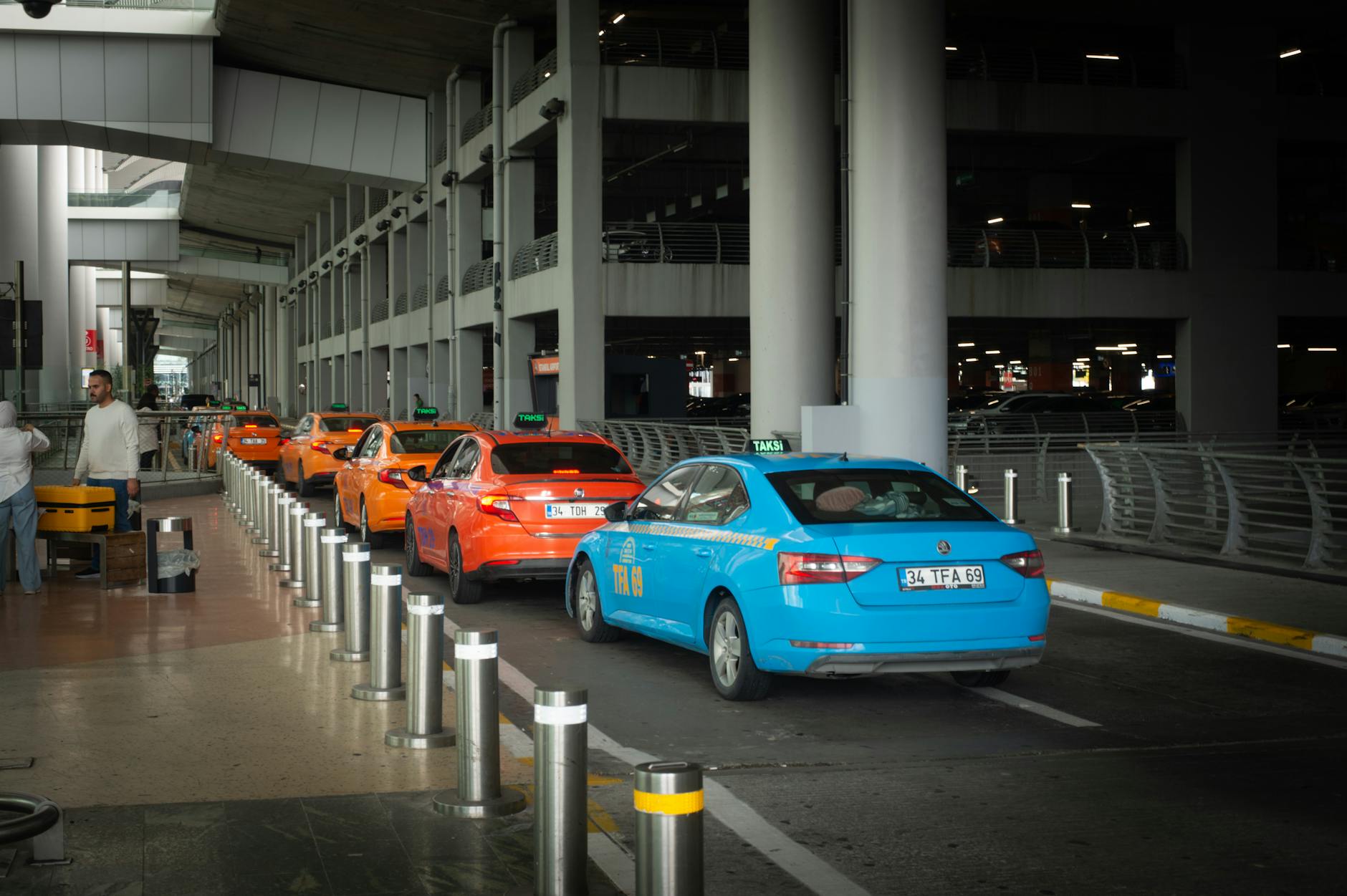
I recently stood behind a group of travelers at the Karaköy ferry pier who were being quoted a “special flat rate” of 500 TL for a ride up to Nişantaşı. It was broad daylight, and while the traffic was typical, it wasn’t a standstill. In reality, that 5km ride from Karaköy to Nişantaşı should run you about 195 to 210 TL including the opening fee. Paying 500 TL is essentially gifting the driver a luxury dinner at your expense. If a driver refuses the meter because of “heavy traffic,” they are usually exaggerating the delay to pad their pockets. Insist on the meter or move to the next car in the queue; there is always another yellow door waiting a few meters away. If you find yourself in the soul of Old Istanbul near Zeyrek, you’ll notice drivers are much more willing to use the meter than in the heavy tourist zones.
Berk’s Insider Tip: If a driver says the meter is ‘broken,’ simply start getting out of the car. It miraculously fixes itself 99% of the time.
The Digital Handshake: BiTaksi and Uber
If you aren’t using an app to hail a ride in Istanbul, you’re basically playing a high-stakes game of charades on a busy street corner. BiTaksi is the undisputed heavyweight champion here, while Uber has evolved into a sleek digital skin that mostly summons the exact same yellow taxis you’d find on the street. I always tell my friends: download BiTaksi before you even clear passport control. It’s local, it’s integrated, and it usually has a higher density of drivers willing to play ball with the digital map.
The Great Card vs. Cash Debate
Even in 2026, you will encounter the classic Istanbul taxi friction: the payment method. While both BiTaksi and Uber allow you to link a credit card, many drivers still have a nostalgic attachment to cold, hard cash. It’s common for a driver to ask “Nakit?” (Cash?) the moment you slide into the backseat. They prefer it because it avoids the app’s commission delay.
If you prefer card—which I recommend for a digital paper trail—just be firm but polite. If a short hop costs you 150 TL (exactly 3 EUR or about 3.30 USD), and they insist on cash, I usually just tap my phone screen and smile. If you do carry cash, make sure you have small denominations. Handing a driver a 500 TL note for a 200 TL (4.40 USD) ride is a recipe for a “sorry, I have no change” conversation that nobody wants to have at 2:00 AM.
Quality Control and the 4.8 Rule
My rule for sanity is the rating system. Last month, I was leaving a late-night dinner in Kadıköy around 11:00 PM. The Rıhtım area was a sea of humanity and idling engines. I opened BiTaksi and saw a driver with a 4.9-star rating just two minutes away. That 0.1 difference from a 4.7 is everything. He didn’t even attempt the main artery; he navigated the narrow backstreets of Moda with the precision of a getaway driver, bypassing the gridlock entirely.
The Bridge, The Tunnel, and The Tolls
Tolls in Istanbul are essentially a “sanity tax” that you should pay gladly if you value your time. While the base fare on the meter looks predictable, the extras for crossing the Bosphorus can catch travelers off guard if they aren’t looking at the overhead signs.
The Deep Dive: The Eurasia Tunnel
The Eurasia Tunnel (Avrasya Tüneli) is a marvel of engineering that goes right under the seabed, and it’s the ultimate “get out of traffic free” card. In 2026, the toll sits at 150 TL (3 EUR). It might sound steep for a five-minute drive, but trust me, it’s the best money you’ll spend.
Just last month, I was heading to Sabiha Gökçen Airport for a weekend escape. The traffic on the 15th July Martyrs Bridge looked like a stationary parking lot. I told my driver, “Avrasya, lütfen,” and we plunged underground. We emerged on the Asian side having shaved 40 minutes off the journey. When you’re staring at a “Gate Closing” sign, that 3 EUR feels like a bargain. Just remember: the passenger is responsible for the toll, and the driver will add it to the final meter price.
Crossing the Bridges
The iconic Bosphorus bridges have a quirk: you only pay the toll when traveling from Europe to Asia. The return trip to the European side is technically “free,” though your driver might still be navigating the dense traffic near the Arnavutköy and Bebek coastline. If a driver tries to charge you a bridge toll while heading back toward Sultanahmet or Beşiktaş, politely point out that it’s a one-way fee.
The ‘Shift Change’ Survival Guide
If you find yourself standing on a street corner between 2:30 PM and 4:00 PM wondering why every taxi driver is treating you like you’re invisible, welcome to the “Shift Change.” During this window, taxis in this city become as rare as a quiet, pigeon-free afternoon in Eminönü. It is the one time of day when the driver is the boss, and your destination is the only thing that matters—not your money.
The Art of the ‘Destination Shout’
In most cities, you hail a cab, get in, and then say where you’re going. In Istanbul during shift change, that’s a rookie mistake that will result in a very awkward exit. Instead, you must master the Destination Shout. As the cab slows down, lean toward the passenger window and yell your neighborhood—“Beşiktaş!” or “Taksim!”—before your hand even touches the door handle.
The drivers are usually heading to a specific garage to hand over the car to the night-shift driver. If your destination isn’t on their direct path to Zeytinburnu or wherever their hub is, they will simply shake their head and drive off. It feels personal, but it’s just logistics.
A Lesson Learned at the Spice Bazaar
I remember standing near the Spice Bazaar at exactly 3:15 PM last month. I had three heavy bags and a very optimistic attitude. I waved down four different cabs. Every single one slowed down just enough for the driver to give me that “swiveling hand” gesture that means “I’m changing shifts.” One guy finally stopped, only to tell me he was heading to the garage in Zeytinburnu and wouldn’t go toward Galata for any amount of money.
Instead of getting frustrated and wasting another thirty minutes on the curb, I took my own advice: I walked the five minutes to the nearest T1 tram stop. If the tram is too crowded, my go-to move is to find a nearby grill to wait it out. A 150 TL (about $3.30 USD) plate of grilled liver is a much better investment than an hour of stress on a dusty sidewalk. By 4:15 PM, the “new” drivers are fresh, caffeinated, and ready to actually take you where you need to go.
When the Yellow Car Fails You: Switching to Steel
If the sky turns gray and your watch hits 4:00 PM, stop waving your arm at passing yellow cars; you are simply performing fruitless street aerobics. When the “shift change” dance begins or the first raindrop hits the pavement, Istanbul’s taxi ecosystem effectively hibernates. While a taxi driver might spend twenty minutes explaining why they “can’t go to that side,” the Marmaray is already halfway under the sea, indifferent to the gridlock above.
On a humid Saturday at 2:00 PM in Arnavutköy, the taxi stand queue had twelve people waiting and not a single yellow car in sight. Instead of joining the line, I walked three minutes to the bus stop and caught the 42T. For just 20 TL (0.45 USD), I was back in Taksim while that same group of twelve was likely still squinting at the horizon for a vacant light.
Efficiency Over Ego
Choosing the Marmaray and Metrobus isn’t just about being frugal—though at 30 TL (0.60 EUR) for a ferry ride, the savings are significant. It is about reclaiming your afternoon. A taxi ride across the Bosphorus is a gamble that usually ends in a 250 TL bill and a headache. The ferry, conversely, offers a world-class view and a guaranteed schedule.
- Marmaray for Intercontinental Sprints: Use this deep-tunnel rail to cross between Europe and Asia in minutes, completely bypassing the bridge tolls and traffic.
- City Line Ferries for Comfort: For 30 TL, you get a seat on the water and a tea service, avoiding the 250 TL “scenic route” a taxi might force on you.
- M2 Metro for North-South Speed: This line connects the Old City to the business hubs of Levent without a single traffic light.
- Metrobus for Highway Dominance: If you must travel the long distance toward the outskirts, these buses have their own dedicated lanes in the middle of the highway, flying past thousands of stationary cars.
Berk’s Insider Tip: Always use Google Maps on your own phone to track the route. If the driver sees you’re watching the map, they’re much less likely to take the ‘scenic’ (read: expensive) way through the backstreets of Beyoğlu.
Conclusion
Look, I’ve spent fifteen years watching these yellow Fiats weave through traffic that would make a New York cabbie weep. Just last Tuesday, while catching a ride from the Karaköy waterfront back up toward Pera, my driver managed to squeeze through a gap between two delivery trucks that I am fairly certain defied the laws of physics. It’s all part of the theatre of being here.
Embrace the chaos, but keep your eyes on the dashboard. The moment your driver shifts into gear, ensure that “taksimetre” glows to life with the opening fare. If the screen stays dark while the car is moving, that’s your cue to politely point at it—usually, a simple “Pardon, taksimetre?” does the trick without ruining the vibe.
Keep a small stack of 100 and 200 TL notes tucked in your pocket. Trying to break a 500 TL note for a short 300 TL trip (which is exactly 6 EUR or about $6.60 at today’s rates) is an invitation for a theatrical sigh you just don’t need in your life. Consider the occasional creative detour or the frantic lane changes as your initiation. It’s a rite of passage, a bit like your first glass of scalding tea on a crowded ferry; once you’ve survived a cross-continental dash at sunset with a driver humming along to old Anatolian rock, you’re not just a visitor anymore—you’re finally part of the city’s pulse.