Rustem Pasha Mosque: Eminönü's Iznik Tile Haven
If you’ve spent more than ten minutes in Eminönü, you know exactly what I’m talking about. It is the glorious, frantic heart of Istanbul—a sensory overload where the briny scent of Balık Ekmek (fish sandwiches) wafting from the Golden Horn meets the heady, sharp aroma of freshly ground coffee from the backstreets of the Spice Bazaar. It’s a place of shouting ferry horns, clinking tea glasses, and a tide of people that never seems to ebb. I love it, but even after fifteen years of living here, there are moments when the chaos of the city feels like it’s closing in.
Whenever that happens, I don’t head for a park or a quiet café. Instead, I duck into a narrow, easily missed stone staircase tucked between the hardware shops and textile stalls of the Hasırcılar Market.
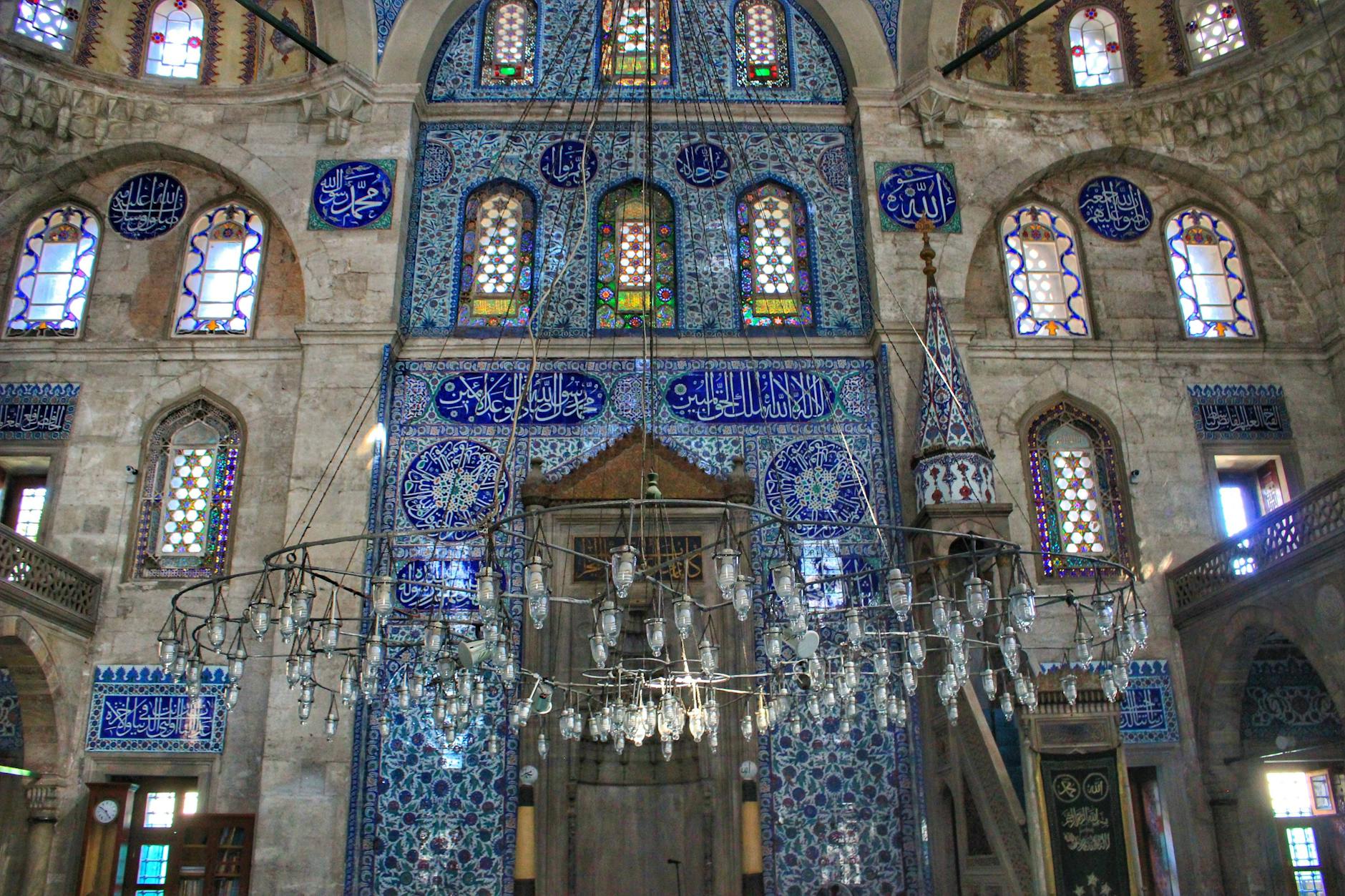
As you climb those worn steps, the roar of the city begins to fade, replaced by a heavy, reverent silence. When you emerge onto the elevated courtyard of the Rustem Pasha Mosque, it feels as though you’ve stepped through a portal. Suddenly, you aren’t in a crowded commercial hub anymore; you’re standing in a garden of Iznik tiles that has been blooming in shades of cobalt, turquoise, and tomato red since the 16th century.
Designed by the legendary imperial architect Mimar Sinan, this isn’t just another historical site to tick off a list. For me, it’s a sanctuary. While the crowds flock to the Blue Mosque across the hill, Rustem Pasha remains Istanbul’s best-kept secret—a masterclass in Ottoman architecture that houses perhaps the most exquisite collection of ceramic tilework in the world.
Every time I bring a friend here, I tell them the same thing: don’t just look at the walls; feel the atmosphere. It is one of the few places left where you can truly hear the heartbeat of old Istanbul without the noise of the modern world drowning it out. Let’s take a closer look at why this “hidden” masterpiece is worth the climb, and how you can experience its quiet magic for yourself.
Finding the Hidden Entrance: The Ascent Above the Chaos
It’s 2026, and despite the world moving faster, this corner of Istanbul remains gloriously, unapologetically chaotic. Between the shouts of ferry touts and the scent of grilled mackerel blowing off the Golden Horn, it’s easy to feel like you’re being swept away by a human tide. Most travelers fight the current toward the Spice Bazaar, but I want to take you somewhere else—somewhere right under their noses, yet worlds apart.
To find my favorite Eminönü hidden gems, we have to dive into the Hasırcılar Çarşısı (the Strawmat-makers Market). This narrow artery is the soul of old-world commerce. Even now, with the exchange rate hovering around 50 TL to the Euro, the grit and hustle here haven’t changed. You’ll dodge porters carrying bales of fabric twice their size and catch the intoxicating aroma of freshly ground coffee from Kurukahveci Mehmet Efendi. But look up. Above the shop awnings, there is a sanctuary that most people walk right past.
The Mosque Above the Market
The Rüstem Pasha Mosque is an architectural anomaly. While the great imperial mosques like the Blue Mosque sit on massive, sprawling courtyards, Mimar Sinan—the genius architect of the Ottoman Empire—had a different vision for the Grand Vizier Rüstem Pasha. Because the land here was so valuable and cramped, Sinan built the mosque on a raised terrace.
This is what I call a “feudal” layout of sorts; the mosque literally sits on top of a vaulted substructure of shops. In the 16th century, the rent from these shops paid for the mosque’s upkeep. Today, those same stone vaults still house bustling businesses selling everything from kitchenware to artisanal honey. It’s a perfect metaphor for Istanbul: the spiritual and the commercial living in a vertical embrace.
The Secret Ascent
Finding the way in feels like discovering a portal. There are no grand gates here. Instead, you have to look for one of the two unassuming, narrow stone staircases tucked away in the side streets of the Hasırcılar Çarşısı. They are dark, steep, and look like they might lead to a private warehouse rather than a masterpiece of world architecture.
As you climb these worn steps, the noise of the market begins to change. The frantic shouting of prices and the clatter of trolleys start to muffle. By the time you reach the top of the stairs and emerge onto the elevated courtyard, the transformation is total. It’s one of the most dramatic Istanbul hidden spots because of this sensory shift. One moment you are shoulder-to-shoulder with thousands of people, and the next, you are standing on a serene terrace, looking out over the lead-domed roofs of the city. I often tell my friends that if they want to experience a local vibe that captures the city’s layers, this is where they must start.
A Masterclass in Iznik Tiles: Why the Red Matters
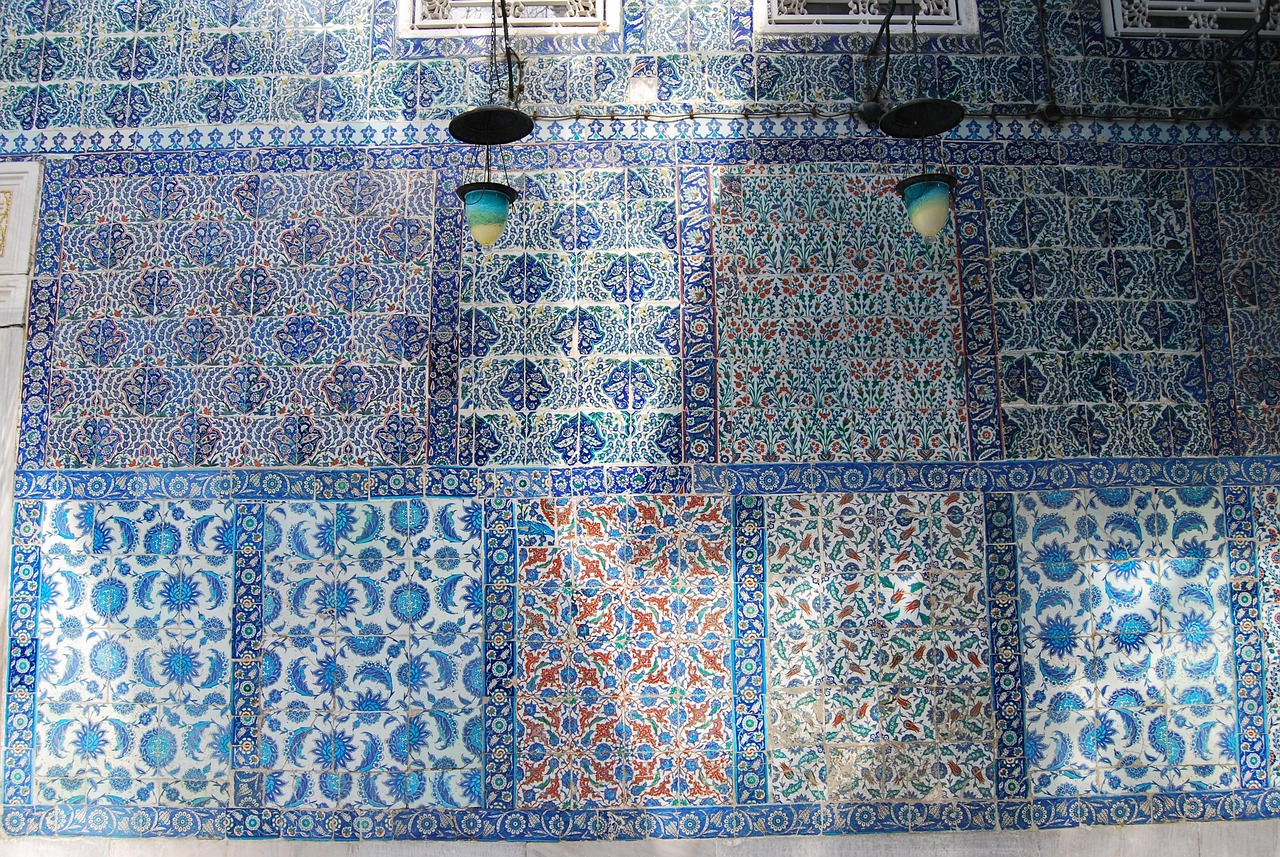
Step inside, and I promise you’ll need a moment to catch your breath. While the exterior of the Rüstem Pasha Mosque is intentionally modest, the interior is an explosion of color that feels like walking into a jeweler’s vault. As someone who has spent fifteen years wandering these streets, I can tell you that even in 2026, with all our digital distractions, nothing compares to the analog brilliance of 16th-century Iznik tiles.
But to truly appreciate what you’re looking at, we need to talk about a very specific color: tomato red.
In the world of Ottoman ceramics, this specific shade of red—often called “coral red” or mercan kırmızısı—is the holy grail. If you look closely at the walls here, you’ll see a vibrant, slightly raised red that looks almost like it’s still wet. Achieving this color was the pinnacle of Ottoman art. It required a very specific iron-rich clay and a firing temperature so precise that it was frequently lost. In fact, by the early 17th century, the secret to making this brilliant red was largely forgotten, replaced by a duller brownish-orange.
When you see this vibrant red in Rüstem Pasha, you are looking at the absolute “Golden Age” of Turkish pottery. In 1563, when this mosque was completed, the Iznik kilns were producing their finest work for the Grand Vizier, Rüstem Pasha.
A Garden That Never Wilts: Symbolism in the Clay
It’s easy to get overwhelmed by the sheer volume of patterns, but if you slow down, you’ll notice a recurring botanical theme. The walls aren’t just decorated; they are planted. You are standing in a symbolic representation of the Garden of Paradise.
Every flower you see was chosen for a reason:
- The Tulip (Lale): In Ottoman culture, the tulip was more than just a flower. Because the letters used to spell “Lale” in Arabic are the same as those for “Allah,” the tulip became a symbol of the Divine. You’ll see them everywhere here—curved, elegant, and reaching upward.
- The Carnation: These represent peace and abundance. Their jagged edges provide a beautiful geometric contrast to the smooth curves of the tulips.
- The Lily and Hyacinth: These symbolize the fleeting nature of life and the scent of heaven.
The way these motifs intertwine is a technique called Hatai, a style that blends Chinese influence with local Persian and Turkish aesthetics. It’s a visual conversation between East and West, frozen in ceramic.
More Tiles Than the Blue Mosque?
You might find this hard to believe, especially if you’ve already stood under the massive domes of the Blue Mosque (Sultan Ahmed Mosque). While the Blue Mosque is famous for its 20,000 tiles, it is also gargantuan. The tiles there are often high up, making them feel distant.
Rüstem Pasha is different. It is an intimate space, and nearly every square inch of the interior walls—from the floor to the base of the dome—is encased in tilework. Because the mosque is smaller, the concentration of Turkish ceramics is much higher. You are literally surrounded by them at eye level. You can see the brushstrokes of the 16th-century artists; you can see the slight variations in the blue cobalt and the turquoise copper glazes.
What to Look for in the Patterns
To help you navigate this visual feast, keep an eye out for these specific elements as you move around the prayer hall:
- The “Sıraltı” Technique: This is the underglaze method where the design is painted on the biscuit-fired tile, covered with a transparent lead glaze, and fired again. It’s what gives the tiles that glass-like depth.
- Geometric Borders: Notice how the floral panels are framed by rigid geometric borders. This represents the order of the universe containing the wild beauty of nature.
- The Varying Blues: From deep navy (cobalt) to the bright “Turkish Blue” (turquoise), the range of blues used here was meant to mimic the sky at different times of the day.
- The Spandrels: Look at the curved sections above the arches. The way the artists forced complex floral patterns to fit into these awkward triangular shapes is a masterclass in spatial design.
Berk’s Insider Tip: Look for the single tile panel that features a depiction of the Kaaba in Mecca; it’s a rare and beautiful find tucked away in the portico.
Even now, with the 2026 exchange rates making imported luxury goods expensive (remember, 1 Euro is roughly 50 TL and 1 USD is 45 TL), the beauty here remains entirely free to experience.
Mimar Sinan’s Intimate Experiment
When you step inside the prayer hall, you’ll notice something immediately different from the sprawling, airy majesty of the Blue Mosque or the Süleymaniye. There is an intensity here—a sense that every inch of space was calculated with a jeweler’s precision. To understand why this building feels so unique, you have to understand the man behind the blueprints: Mimar Sinan, the legendary Chief Architect of the Ottoman Empire.
The Octagonal Secret
Because the mosque is built on a raised terrace atop a complex of shops, Sinan couldn’t rely on massive, thick walls to support a heavy dome. Instead, he designed a brilliant octagonal support system.
If you look closely at the interior, you’ll see eight massive pillars—four free-standing and four integrated into the walls—that form the base for the dome. This was a radical departure from the traditional square-based designs of the era. By using an octagon, Sinan was able to push the weight of the dome outward and downward more efficiently, allowing for more windows and, crucially, more wall space for those incredible Iznik tiles.
A Prelude to Greatness
I always tell my friends that Rüstem Pasha is the “laboratory” where Sinan perfected the techniques he would later use for his masterpiece, the Selimiye Mosque in Edirne. He was playing with Istanbul architecture in a way that felt personal. He was testing how a dome could sit on an octagonal drum, experimenting with how light would hit the ceramic surfaces, and seeing just how much “visual noise” a space could handle before it felt cluttered.
While the scale here is smaller, the ambition is arguably higher. He managed to create a sanctuary that feels both grand and incredibly private. In fact, when the crowds in Eminönü become too much for me in this 2026 heat, I often split my time between here and exploring the soul of old Istanbul in the nearby neighborhood of Zeyrek.
Comparing Sinan’s Structural Milestones
| Mosque | Year Completed | Support Structure | Vibe | 2026 Entry Fee |
|---|---|---|---|---|
| Şehzade Mosque | 1548 | Square (4 pillars) | Balanced & Symmetrical | Free (Donation) |
| Rüstem Pasha | 1563 | Octagonal | Intimate & Decorative | Free (Donation) |
| Süleymaniye | 1557 | Rectangular | Grand & Imperial | Free (Donation) |
| Selimiye (Edirne) | 1575 | Octagonal (8 pillars) | The “Perfect” Dome | Free (Donation) |
Note: While entry is free, I usually recommend leaving about 100 TL to 150 TL (approx. $3 USD / €2.50) in the donation box to help with the ongoing 2026 preservation efforts of the ceramics.
Comparing the Greats: Rustem Pasha vs. The Blue Mosque
If you’ve spent any time researching your trip to Istanbul for 2026, the Sultan Ahmed Mosque—better known as the Blue Mosque—is likely at the top of your list. But after living here for 15 years, I’ve let you in on a little secret: while the Blue Mosque is a grand imperial statement, the Rustem Pasha Mosque is an intimate masterpiece.
Grand Imperial vs. Intimate Masterpiece
The Blue Mosque was built to showcase the power of the Ottoman Empire at its peak. When you walk inside, you are meant to feel small. Rustem Pasha, tucked away on a raised terrace above the markets of Eminönü, offers the exact opposite experience. Because it was commissioned by a Grand Vizier rather than a Sultan, the scale is human. You aren’t looking at tiles from thirty meters away; you are inches from them. You can see the brushstrokes of the 16th-century artisans.
The Battle of the Tiles: Why Rustem Pasha Wins
The Blue Mosque earned its nickname from its 20,000 tiles, but by the time it was built in the early 17th century, the famous İznik kilns were already starting to lose their luster. In contrast, Rustem Pasha was decorated during the “Golden Age” of İznik ceramics. This is where you find the legendary “Tomato Red”—a vibrant, raised pigment that the potters later lost the recipe for. Every square inch of the interior, from the Mihrab to the Minbar, is wrapped in these floral and geometric wonders.
Escaping the 2026 Crowds
Let’s talk logistics. In 2026, the Sultanahmet square is busier than ever. With the exchange rate sitting at 1 USD to 45 TL and 1 Euro to 50 TL, the city is seeing record numbers of visitors. At the Blue Mosque, you might find yourself waiting in a security line for 45 minutes. At Rustem Pasha, there is rarely a line. You climb the hidden stone stairs, leave the noise of the spice market behind, and suddenly, the silence hits you. It’s the same sense of relief I feel when I recommend the Theodosius Cistern to travelers who are tired of the two-hour wait times at the Basilica Cistern.
The Sensory Experience: Light, Silence, and Incense
When you step inside Rüstem Pasha, I want you to take a moment. Don’t just reach for your camera immediately. In my fifteen years of navigating this city’s chaotic beauty, I’ve found that few places in Istanbul manage to recalibrate your senses as quickly as this hidden sanctuary.
A Dance of Refracted Light
The first thing you’ll notice isn’t the tiles themselves, but how the light interacts with them. The mosque features beautiful stained glass windows that filter the harsh Istanbul sun into soft, jewel-toned beams. When these rays hit the Iznik tiles, the light doesn’t just bounce off them; it seems to glow from within the walls. I often visit around mid-morning when the sun is at the perfect angle. You’ll see the famous “Iznik Red” vibrating under the light.
The Sound of Stillness
The transition from the street to the interior is a sonic shock. Just fifty meters away, the vendors at the Mısır Çarşısı are shouting prices—expect to hear “100 TL for a tea!”—and the ferries are blasting their horns. But once you cross the threshold, the world goes quiet. The acoustics of the prayer hall are designed to carry the Imam’s voice to every corner without effort, yet the space seems to swallow the ambient noise of the city.
Grounded in History: Textures and Scents
Finally, pay attention to what’s beneath you. In Turkey, we remove our shoes before entering a mosque. The transition from the cool, smooth marble of the outer portico to the deep, plush warmth of the carpets is an essential part of the experience. The carpets here carry a faint, nostalgic scent—a mix of old wool, rosewater, and a hint of the incense used during cleaning. It feels grounded.
Exploring the Neighborhood: What to Do After Your Visit
Stepping back into the streets of Eminönü is always a bit of a sensory shock. Now that you’ve had your spiritual fill, it’s time to feed your other senses.
The Irresistible Aroma of Kurukahveci Mehmet Efendi
As you walk down the stairs from the mosque towards the Spice Bazaar, just follow your nose. You will smell it before you see it: the deep, earthy scent of freshly roasted coffee beans. This is Kurukahveci Mehmet Efendi, an Istanbul institution since 1871. Even today, in 2026, a small 100g packet will cost you about 120 TL (roughly $2.60 or €2.40), and it’s arguably the best souvenir you can carry home.
Lunch Like a Local: Navigating the Backstreets
By now, you’ve probably worked up an appetite. Head into the narrow backstreets—the real Istanbul local food scene. Look for an Esnaf Lokantası (a tradesman’s restaurant). If you missed out on a heavy meal, check out my tips on enjoying a slow Turkish breakfast. For lunch, look for “Döner” or “Lahmacun.” In 2026, a high-quality lunch in these backstreets will set you back around 500 TL ($11 or €10).
Wind in Your Hair: The Eminönü Waterfront Ritual
To wrap up your afternoon, head back toward the Golden Horn. Skip the tourist trap sandwiches and head straight for the ferry piers. For about 35 TL (less than $1), you can catch a boat to Kadıköy or Üsküdar. Find a seat on the outdoor deck, order a Çay from the roaming waiter, and watch the silhouette of the Old City fade into the distance.
Practicalities: Timing Your Visit and Etiquette
I want you to feel as comfortable as I do when I walk through those heavy wooden doors.
Respecting the Rhythm of Prayer
The mosque is closed to visitors during prayer times, which last about 30 minutes. It is especially important to avoid the mosque during the noon prayer on Fridays. When you enter, stay behind the demarcation line to ensure those praying have their privacy.
What to Wear: The Dress Code
Both men and women should be dressed modestly. No shorts or sleeveless tops. Ladies, you will need to cover your head with a scarf. There are usually clean wraps available at the entrance.
Capturing the Beauty (Without the Flash)
Photography is strictly forbidden during prayer times, and even when the mosque is open, you must turn off your flash. Flash photography can damage the delicate glazes of the 16th-century tiles over time.
Berk’s Insider Tip: Plan your visit for a Tuesday or Wednesday morning around 10:00 AM for the most peaceful experience.
As of early 2026, there is no formal entrance fee, but I always suggest leaving a small donation (100 or 200 TL) for the upkeep of these world-class ceramics.
Conclusion
Leaving the chaotic energy of the Spice Bazaar behind and climbing those narrow, inconspicuous stairs feels like a secret handshake with the city. For me, after fifteen years of navigating these hills, Rustem Pasha remains the ultimate reminder of why I fell in love with Istanbul. It represents that “stepping out of time” sensation that defines the city’s true soul.
While the Blue Mosque is grand and breathtaking, it belongs to the world; Rustem Pasha feels like it belongs to you. Standing in that courtyard, surrounded by the most exquisite Iznik tiles ever fired, you aren’t just a spectator—you’re a guest in a private garden of cobalt and turquoise.
Berk’s Final Advice: Don’t rush the exit. Sit on a low stool at a nearby tea shop, watch the merchants hurry by, and realize that you’ve just seen something most travelers walk right past. Look for the hidden staircase; the best things in this city are always tucked away where you least expect them.
Comments
Share your thoughts with us