
Standing in the outer courtyard of Topkapı Palace, I often watch crowds sprint toward the harem or the treasury while completely ignoring the weathered brickwork of Hagia Irene—the only Byzantine church in the city that never felt the need to wear the skin of a mosque. It sits there, stoic and slightly detached, under the shade of century-old plane trees. Last Tuesday, around 10:45 AM, I stood by the entrance and counted exactly three people entering while a queue of nearly two hundred snaked around the corner for the main palace gates.
It’s a quiet win for those of us who prefer history without the elbowing. While the rest of the Sultanahmet district can feel like a frantic race against cruise ship schedules, the interior of Aya İrini—as we locals call it—retains a haunting, hollow silence. I remember attending a cello concerto here during a past Istanbul Music Festival; the acoustics in that bare, domed space are so sharp they almost vibrate in your chest. There are no gold-leafed mosaics here to dazzle the eye anymore; instead, you get the raw, structural honesty of the 4th century and a giant, simple black cross in the apse that predates the decorative excesses of later eras.
Getting here is a simple T1 tram ride to the Sultanahmet station, followed by a short walk past the Fountain of Ahmed III. The logistics, however, are where most people stumble. A standalone ticket currently costs 750 TL (exactly 15 EUR), which might seem steep for a building that is essentially “empty” compared to the neighboring Hagia Sophia. But for anyone carrying the 2026 Istanbul Museum Pass, it’s a seamless entry. If you’re paying out of pocket, don’t waste time at the main palace ticket booths where the lines are soul-crushing. There is a small, often overlooked kiosk right near the Hagia Irene gate that usually has zero wait time. Spending those few minutes saved to just sit on a stone bench inside the nave, watching the dust motes dance in the light of the high windows, is the best way to transition from the chaos of the city into the layered depths of old Constantinople.
The Church That Refused to Change
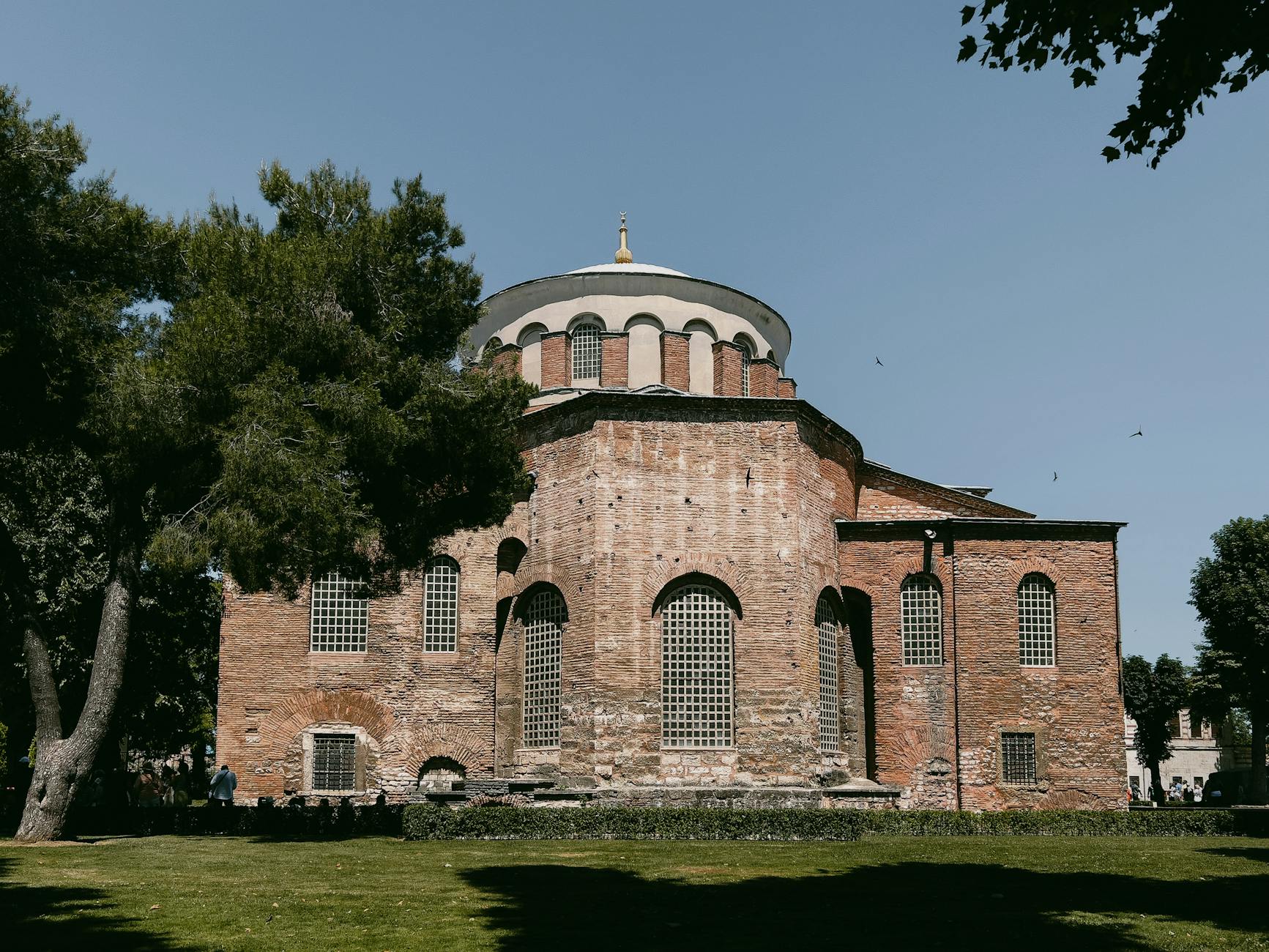
If you are standing in Sultanahmet feeling suffocated by the sheer volume of megaphones and tour groups, turn your back on the main square and walk into the First Courtyard of Topkapı Palace. Most people walk right past Hagia Irene (Aya İrini) because it doesn’t beg for your attention with minarets or massive domes. It is a rugged, brick-red survivor that looks more like a fortress than a cathedral, and that is exactly why it remains my favorite sanctuary in the historic peninsula. While its neighbor, the Hagia Sophia, is a whirlwind of gold and marble, Hagia Irene is raw, exposed, and wonderfully silent.
A Fortress of Silence in a Loud City
I was there last Tuesday around 3:30 PM, and while the queue for the palace was stretching toward the fountain, there were exactly six people inside the nave of Hagia Irene. I paid my 750 TL entry fee (which is exactly 15 EUR or about 16.60 USD) and felt that immediate drop in temperature and volume that only 1,500-year-old stone can provide. It is the only church from the Byzantine Empire era that was never converted into a mosque. This wasn’t out of some pluralistic sentimentality from the Ottomans, but rather pure pragmatism.
From Holy Peace to Janissary Steel
The historical irony here is delicious. Commissioned by Constantine the Great, the “Church of Holy Peace” spent most of its Ottoman life as an arsenal, or Cebehane, for the Janissary corps. Because it was used to store weapons and trophies rather than as a place of worship, the original cross-plan architecture remained largely untouched. You won’t find intricate mosaics here—most were lost to earthquakes or the iconoclasm—but you will find the most hauntingly beautiful black-and-outline mosaic of a cross in the apse.
If you appreciate this kind of unpolished, gritty history, you’ll find a similar vibe along the Kuzguncuk Walking Tour: Istanbul, where the architecture feels similarly frozen in time despite the city’s growth. The downside of Hagia Irene is that it can feel “empty” if you’re looking for a museum-style experience with placards every five feet. It isn’t that. It’s an atmospheric void. To get the most out of it, stand directly under the dome and just listen to the way the city noise disappears. If you’re lucky enough to visit during a concert, the acoustics will make the hair on your arms stand up.
Stripped Bare: The Iconoclastic Interior
Walking into Hagia Irene is like stepping into a skeletal memory of the Byzantine Empire. Most people expect the overwhelming gold of the Hagia Sophia, but Aya İrini is different; it is raw, unadorned, and hauntingly silent. If you are looking for a place where the history isn’t buried under layers of Ottoman paint or modern restoration, this is it. Those interested in how old structures are repurposed for modern culture should also see the Industrial Architecture and Cultural Hubs at Müze Gazhane with Hasanpaşa Route Tips and 2026 Prices.
The Power of the Empty Apse
The first thing that hits you is the absence of faces. I remember standing in the nave around 10:00 AM last Tuesday—the exact time when the morning light pierces through the upper windows and catches the grain of the 6th-century brickwork. In that light, the massive black mosaic cross in the apse glows with a strange, minimalist power. This is a rare relic of the Iconoclastic period, a time when religious figures were banned and stripped away. It feels surprisingly modern, almost like a piece of contemporary art set against a thousand-year-old backdrop.
The Seats of the Clergy
Looking toward the altar, you’ll see the Synthronon. These are the six semicircular tiers of stone seats where the high clergy once sat during liturgy. It is arguably the best-preserved example of its kind in the world. It looks like a miniature Roman stadium built for priests. Standing in the center of the nave, you can almost hear the echoes of the Second Ecumenical Council that took place right here in 381 AD. The acoustics are so sharp that even a whispered conversation near the Narthex carries all the way to the Atrium.
Berk’s Insider Tip: If you are visiting in summer, Hagia Irene is naturally about 5 degrees cooler than the outside air—it’s the best place to escape the midday Sultanahmet sun without dealing with the ‘no shoes’ policy of the mosques.
Architectural Highlights to Notice
- The Iconoclastic Cross: A stark black outline on a gold mosaic ground, representing the triumph of the cross over imagery.
- The Synthronon: The stepped marble benches in the apse; don’t just glance at them, notice the wear on the stone from centuries of use.
- The Atrium: This is the only Byzantine church in Istanbul that still retains its original forecourt structure.
- Justinian Brickwork: Look for the massive support piers; the rough texture is a direct link to the 6th-century rebuilding of the city.
- The Dome Transition: Observe how the weight of the dome is distributed—it’s a primitive precursor to the architectural genius seen next door at Hagia Sophia.
Acoustic Perfection: Hagia Irene as a Concert Venue
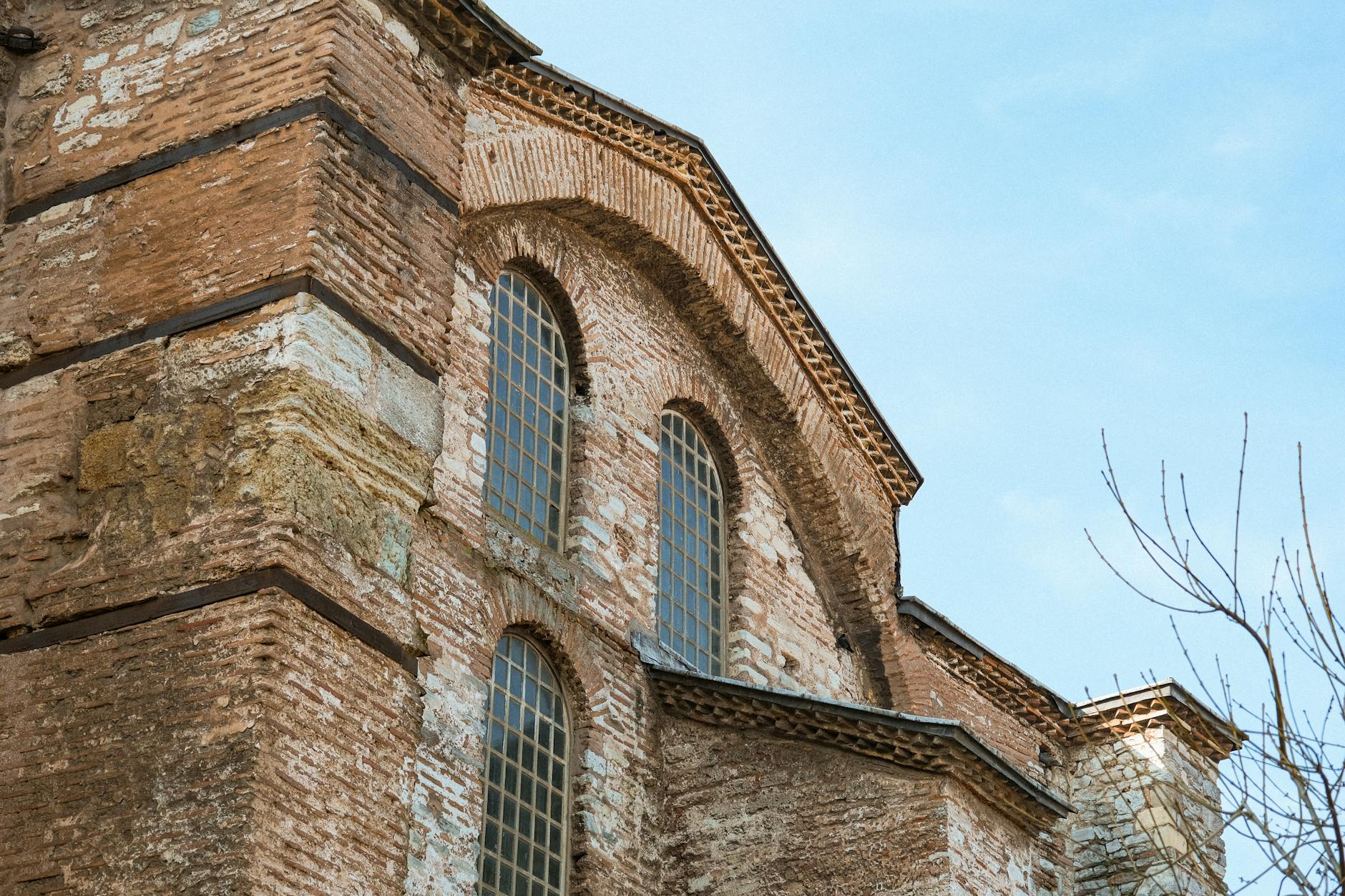
To me, Hagia Irene isn’t just a museum; it is quite literally the finest musical instrument in the city. Most visitors walk through the nave in five minutes, but they miss the soul of the space because they are hearing it in silence.
The Five-Second Echo
The architecture here creates a legendary five-second reverb that is both a blessing and a challenge for world-class musicians. It’s the primary reason the Istanbul Music Festival (IKSV) makes this their flagship venue every June. I vividly remember a performance by a solo cellist a few years back during a particularly humid June evening. As he drew his bow across the strings for a Bach suite, the sound didn’t just reach my ears; I felt the vibration climbing up through my soles from the ancient stone floor. It’s a physical, immersive sensation you simply won’t get at the more modern concert halls across the Golden Horn.
Planning Your Visit for 2026
If you are planning your trip for late May or June 2026, checking the IKSV (Istanbul Foundation for Culture and Arts) calendar several months in advance is non-negotiable. While a standard museum entry is great for seeing the architecture, a concert ticket—which typically starts around 1,250 TL (25 EUR or approx. 28 USD) for decent seats—buys you an evening of atmosphere that most tourists never touch.
One practical downside is the seating; the festival often uses temporary chairs that aren’t exactly designed for lumbar support. To mitigate this, I always suggest arriving at the Topkapı Palace main gate at least 40 minutes before the performance. This allows you to clear the security checkpoints without rushing and gives you time to enjoy the twilight glow over the First Courtyard. The walk from the T1 Sultanahmet tram stop is a gentle incline, but in the summer heat, give yourself plenty of time so you aren’t breathless when the first notes hit that Byzantine dome.
2026 Entry Logistics: Avoiding the Topkapı Crush
Waiting in line at the Topkapı Palace outer gate is the fastest way to ruin a perfectly good morning in Sultanahmet. Most travelers make the mistake of grouping Hagia Irene with a grueling four-hour marathon through the Harem and the Treasury, resulting in a rushed, claustrophobic experience that does no justice to the church’s 4th-century acoustics. If you want to actually feel the history here, you have to treat it as its own destination.
Prices and Passes
A standalone ticket for Hagia Irene currently costs 750 TL (approximately 15 EUR or 16.60 USD). I’ve watched many visitors stand in the baking sun for forty minutes at the main Kiosk just to buy this single entry—it’s a waste of your limited time. If you are in the city for more than three days, the Istanbul Museum Pass is a smart move. At 105 EUR (5,250 TL), it covers almost every major site and, more importantly, lets you bypass the primary ticket queues. I always suggest loading the digital pass on your phone the night before to avoid technical hiccups at the gate.
The 9:00 AM Rule
The gates to the First Courtyard open at 9:00 AM, and that is exactly when you should be stepping through the Imperial Gate. I usually suggest a morning start here before moving on to quieter neighborhoods like the Anadoluhisarı and Kanlıca walking route with ferry tips and yogurt stops. By arriving at 9:00 AM sharp, you get a solid hour of relative silence before the massive tour groups—which I’ve seen swell to fifty people per guide by 11:00 AM—clog the nave.
| Entry Option | Price (2026) | Best For… |
|---|---|---|
| Standalone Ticket | 750 TL | Travelers visiting only Hagia Irene. |
| Istanbul Museum Pass | 5,250 TL (105 EUR) | Deep-dive explorers hitting 5+ sites. |
| Combined Palace Ticket | 1,500 TL | Those doing the Palace and Harem same day. |
| Museum Pass (Mobile) | 105 EUR | Skipping the physical ticket window entirely. |
Berk’s Insider Tip: Don’t buy the ‘Topkapı + Harem + Hagia Irene’ combined ticket if you only have two hours; Hagia Irene deserves its own focused 45 minutes of silence. Use the Museum Pass to keep your schedule flexible.
Common Questions About Visiting Aya İrini
Aya İrini is one of the few major Byzantine structures in the city that hasn’t been repurposed for worship in the modern era; it remains a dedicated museum and a world-class concert venue. Unlike its neighbor Hagia Sophia, you don’t need to plan your visit around prayer times or adhere to specific religious dress codes like headscarves. It’s a raw, stripped-back experience of history. Just be aware that because it hasn’t been “modernized,” there is no climate control. I visited last February during a cold snap, and the interior felt like a refrigerator—if you’re coming in winter, keep your layers on or you’ll be shivering before you reach the apse.
Is Aya İrini still an active church or a mosque?
Neither. It functions strictly as a museum under the Directorate of National Palaces. Because it was used as an armory for centuries rather than a mosque, it lacks the Islamic calligraphic shields or mihrabs seen elsewhere. This makes it a pure architectural time capsule. You can walk in with your regular touring clothes, though out of respect for its history as the “Church of Holy Peace,” I usually suggest keeping the volume down. It’s a place for quiet contemplation.
What are the rules for photography inside the museum?
Handheld photography is perfectly fine and encouraged, but tripods and professional lighting rigs are strictly forbidden. Security guards are eagle-eyed about this. Last month, I saw a traveler get stopped at the gate because his stabilizer looked a bit too “pro” for their liking. If you want to capture the golden hue of the brickwork without a flash, lean your shoulder against one of the massive piers to steady your shot. The best light hits the main nave around 2:30 PM, casting long, dramatic shadows that are perfect for moody interior shots.
Is the site accessible for travelers with mobility issues?
The interior of Aya İrini is relatively flat, but the brutal cobblestones of the First Courtyard of Topkapı Palace are a major hurdle. If you are using a wheelchair or have difficulty walking, those stones will rattle your bones. To make it easier, look for the narrow, smoother stone paths laid into the sides of the courtyard—they are much easier to navigate than the uneven center path. Once you pass the ticket barrier, the transition into the church is manageable, though some of the original floorings remain slightly pitted and worn.
Reflections from the Stone Benches
Hagia Irene doesn’t beg for your attention with glittering mosaics or intricate tilework, and that is exactly why it remains my favorite corner of the historic peninsula. It is a raw, stripped-back testament to endurance. While much of Istanbul is a riot of color and constant renovation, these red bricks have spent centuries just being. It is the only major Byzantine church that wasn’t converted into a mosque, serving instead as an armory and a storehouse—a quirk of history that preserved its hollow, echoing soul.
I remember leaning against the cool interior wall during a rehearsal for the Istanbul Music Festival a few years back; the way the cello notes gripped the unadorned stone was more moving than any gold-leafed dome could ever be. If the 750 TL (15 EUR) entry fee feels high for a building that is essentially “empty,” remind yourself that you are paying for the luxury of silence—a rare commodity in Sultanahmet. It is one of the few places where the layers of the city aren’t competing for space; they are simply resting.
When you finish your walk through the nave, don’t immediately check your phone or rush toward the exit of the Topkapi grounds. Instead, find one of the weathered stone benches under the massive plane trees just outside the church’s main entrance. I usually spend fifteen minutes here, right around 4:00 PM when the light hits the upper arches of the facade. It’s the perfect vantage point to watch the transition from the austerity of the Byzantine era to the sprawling complexity of the Ottoman palace. Just sit, breathe in the scent of the nearby gardens, and let the weight of the city’s survival sink in before you head back out into the beautiful chaos of the streets.