Navigating Istanbul During Religious Holidays with 2026 Opening Hours and Prices
I woke up at 3:30 AM last year to the rhythmic, thumping beat of the Ramazan drummer passing under my window in Kurtuluş. It wasn’t an alarm clock; it was a deep, resonating invitation to witness Istanbul shifting its heartbeat. For someone like me, who has navigated these seven hills for fifteen years, that sound marks the beginning of a month where the city’s usual frenetic energy yields to something more ancient and communal. If you are deciding Where to Stay in Istanbul: Authentic Neighborhoods for Locals, Kurtuluş offers this raw, unfiltered connection to the city’s rhythms.
In 2026, as Ramazan stretches across the early spring, you’ll notice a distinct split in the city’s personality. By day, the backstreets of Fatih or the tea gardens in Üsküdar feel slower, almost meditative. But as the sun dips below the horizon, the silence breaks into a vibrant, shared celebration. I remember standing near the Sultanahmet Square last April just before iftar—the breaking of the fast. The air was thick with the scent of toasted sesame from fresh pide flatbreads. I picked up a warm loaf from a local bakery for 45 TL—exactly 1 USD according to our current 2026 rates—and watched as thousands of families spread blankets on the grass. The logistics can be a shock if you aren’t prepared. The “iftar rush” between 6:30 PM and 8:30 PM turns the city’s traffic into a standstill as everyone races home to their dinner table. If you’re trying to catch a taxi at 7:00 PM, you’re better off walking or taking the Metro, which stays reliable while the roads freeze.
The transition from the month of Ramazan into the three-day Bayram (Eid) holiday brings another shift. While many travelers worry that the city “shuts down,” the reality is actually the opposite: it overflows. Public transport—the ferries, the Marmaray, and the trams—is often free during these three days to encourage family visits. While this is great for your budget, it means the Eminönü ferry docks become a literal sea of humanity. Last Bayram, I arrived at the Eminönü Turyol pier at 1:45 PM. The line for the ferry was over 120 meters long, stretching past the fish-bread boats towards the bridge. I realized my error immediately: don’t travel at peak “visiting hours.” I pivoted and walked toward the backstreets instead, where the holiday rush feels more like a gentle neighborhood stroll. Most museums and the Grand Bazaar will close for the first morning of the holiday, typically reopening by 1:00 PM, so use those quiet morning hours for a long, slow breakfast in a residential neighborhood instead of banging on the closed gates of a palace.
The Changing Pulse of Ramazan in 2026
Ramazan in Istanbul isn’t a period of closure; it’s a profound shift in the city’s temporal landscape. In 2026, as the holy month falls during the crisp days of late winter and early spring, you’ll notice a distinct “split-screen” reality: the afternoons are eerily quiet and perfect for sightseeing without the usual chaos, while the nights explode into a carnival of light and shared plates.
If you head to the Sultanahmet district at 3:00 PM, you’ll find the queues for the major monuments significantly shorter than usual. However, be aware that many small, family-run tradesmen restaurants might close their shutters at noon. If you’re looking for a proper meal during the day, your favorite spots in tourist-heavy zones like Galata or Beşiktaş remain fully operational, though the vibe is more subdued.
The Sunset Surge and the Mahya Lights
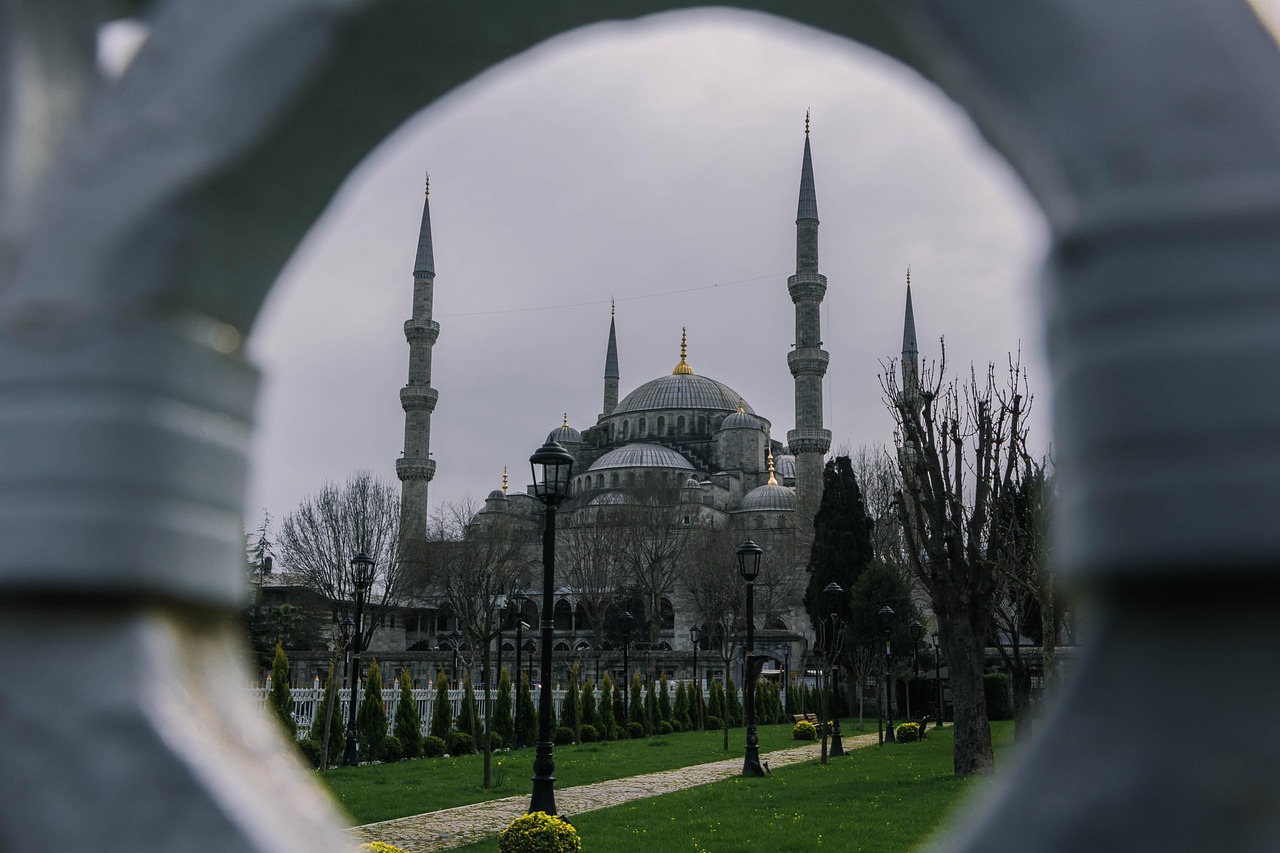
As the sun begins to dip toward the Marmara Sea, the atmosphere tightens with anticipation. Look up at the minarets of the Blue Mosque or Suleymaniye; you’ll see the Mahya—shimmering strings of oil lamps (now LEDs) suspended between the towers, spelling out messages of peace and charity. It is the only time of year the skyline literally speaks to you.
I generally advise avoiding the “Ramazan Special” menus offered by the restaurants directly facing the Hippodrome. They are often overpriced and the service can be rushed. Instead, I take the T1 tram a few stops down or walk into the backstreets of Fatih. Last March, I found myself in a small courtyard near the Fatih Mosque just as the evening call to prayer began. For 450 TL (approx. 10 USD), I shared a communal table with three generations of a local family, breaking bread with dates, lentil soup, and a steaming plate of Hünkar Beğendi. The authenticity of that moment—the collective sigh of relief as the first sip of water is taken—is something no five-star hotel can replicate.
Navigating the Iftar Rush
The hour before Iftar is the most stressful time for transport. Taxi drivers are eager to get home, and buses are packed. My rule of thumb: be exactly where you want to eat by 5:30 PM, or prepare to wait until 8:00 PM to find a free vehicle.
Last Ramazan, I stood in line at a bakery in Kurtuluş at exactly 6:15 PM. There were 14 people ahead of me, and the baker was sweating as he pulled out the final batch of ‘yumurtalı’ (egg-topped) pide. I paid 55 TL for two, but the mistake I made was carrying them without a bag; the steam from the bread literally soaked through my shirt by the time I walked the 400 meters back home.
Berk’s Insider Tip: If you are in Sultanahmet during the Iftar cannon fire, don’t try to find a table at a restaurant. Instead, grab a ‘pide’ from a local bakery for 30 TL (0.60 EUR) and sit on the grass with the locals—the atmosphere is far more authentic.
Navigating the First Day of Bayram
If you try to hit the streets for an early morning shopping spree on the first day of Bayram, you will likely find yourself staring at a lot of closed metal shutters. In my fifteen years here, I’ve seen countless travelers wander into the Sultanahmet square at 9:00 AM on the first morning of Eid al-Fitr, looking confused because the city feels like a ghost town. The reality is that the first morning is strictly for family; people are at the mosque or having a massive breakfast at home.
The “Afternoon Awakening” Rule
On the first day of both Eid al-Fitr (March 20) and Eid al-Adha (May 27), almost every major historical site and the Grand Bazaar will remain firmly shut until at least 1:00 PM or 2:00 PM. I once made the mistake of trying to take a cousin to the bazaar at noon, only to sit on a curb for an hour waiting for the gates to creak open. For a deeper look at the shopping districts when they are at their peak intensity, see The frantic sweaty madness of my walk through Mahmutpaşa and Tahtakale.
Managing the Crowd Surge
By the second day of the holiday, the “quiet city” vibe evaporates completely. This is when the local rush starts. If you have your heart set on the Galata Tower, do not show up at mid-day; you’ll easily face a 45-minute queue wrapping around the cobblestones. My advice is to be there 15 minutes before the morning opening on day two. While the standard entry fees for smaller local cultural sites usually stay the same during holidays, the sheer volume of visitors means you should pre-book tickets for the major landmarks whenever possible to avoid wasting your day in a line.
| Site / Attraction | First Day Opening (March 20 / May 27) | Strategy for Visitors |
|---|---|---|
| Grand Bazaar | Closed until 1:00 PM or 2:00 PM | Avoid day 1 entirely; shops are slow to open. |
| Galata Tower | Usually opens at 1:00 PM | Go early on Day 2 to avoid 45-minute queues. |
| Local Museums | Most shut until 1:00 PM | Pre-book online to skip the holiday ticket line. |
| Small Boutiques | Varies; many stay closed all day | Stick to the main Istiklal Street for retail. |
If you find yourself stuck behind a long queue at a major monument, pivot immediately. Walk five minutes into a side street. Istanbul’s beauty during Bayram isn’t just in the monuments; it’s in the neighborhood bakeries that stay open to sell fresh pide or the older men handing out hard candies to children. Grab a tea, pay your 25 TL, and watch the city wake up at its own pace.
Transport Survival: Free Rides and Water Taxis
Free public transport is a generous gift from the municipality, but for a traveler, it is often a beautiful trap. During the three days of Bayram, your Istanbulkart will grant you “free” passage on the Metrobüs, Marmaray, and city ferries, but remember that “free” means joining millions of locals on their way to visit elders.
Last Bayram, I made the mistake of trying to catch the 2:00 PM ferry from Eminönü to Kadıköy. The queue didn’t just fill the pier; it snaked back toward the Spice Market like a weary iron dragon. I watched three ferries depart completely full before I came to my senses. If you value your sanity, avoid the central ferry hubs between 11:00 AM and 5:00 PM.
While the main lines are free, don’t let your Istanbulkart balance run dry. Some private blue buses and specific Dolmuş routes don’t always participate in the free transit scheme. I suggest keeping at least 300 TL (6 EUR) on your card to cover these outliers and avoid the “red light” beep of shame at the turnstile.
Berk’s Insider Tip: On the first morning of Bayram, the ferries to the Princes’ Islands are a nightmare. If you want peace, consider the Coastal route through Florya and Yeşilköy with Atatürk Marine Mansion tips and 2026 fares via the Marmaray; the beaches are less hectic before noon.
The Sweet Etiquette of Bayram Visits
Showing up to a Turkish home empty-handed during a religious holiday is a missed opportunity to connect with the very heart of Istanbul’s hospitality. In my fifteen years here, I’ve learned that the “sugar” in Şeker Bayramı (the Sugar Feast) isn’t just about the food—it’s the social lubricant that opens doors. If you find yourself invited for coffee or a meal, your first stop must be a reputable pastane (pastry shop).
The moment you cross a threshold, expect to be greeted with Kolonya. This lemon-scented cologne is splashed onto your palms as a gesture of refreshment. Don’t wipe it off immediately; rub your hands together and breathe in that sharp, citrus zing. It’s the official scent of an Istanbul holiday.
When it comes to the gift, skip the generic supermarket chocolate boxes. They lack the “soul” locals look for. Instead, head to a specialized confectioner. Visit your chosen shop the evening before the holiday starts, or be there the moment they open at 8:00 AM.
Health and Emergencies During the Holidays
Getting sick during a major religious holiday in Istanbul is a test of patience, but the city’s Nöbetçi Eczane (on-duty pharmacy) system is remarkably efficient. While nearly every local business shutters for the first day of Bayram, pharmacies operate on a strict rotation. In any given neighborhood, you will find only one or two pharmacies open 24/7.
I learned this the hard way during a previous Kurban Bayramı when a late-night feast of spicy Adana kebap led to a search for antacids. I walked past six dark storefronts in Moda before realizing I needed to check the digital list posted on every pharmacy window. If you find yourself in a similar spot, don’t wander aimlessly. Every closed pharmacy is legally required to post the address and phone number of the nearest open one in their window.
For a full breakdown of what to expect, check my specific tips on Finding an Open Pharmacy at Night and 2026 Prices for Common Medicine.
Pharmacy and Health FAQ
Are private hospitals open during the Bayram holidays?
Yes, the emergency rooms (Acil) of all private and public hospitals remain open 24/7 throughout the entire holiday period. However, outpatient clinics and specialist appointments are usually unavailable until the holiday ends. Most major hospitals like American Hospital or Acıbadem have English-speaking staff on hand.
How do I find the address of the on-duty pharmacy quickly?
The most reliable way is to use the official “Türk Eczacıları Birliği” app, but for a quicker local fix, simply look for the nearest pharmacy storefront. Even if it’s closed, there will be a sign in the window labeled “Nöbetçi Eczane” with a map or address of the one currently open.
Will medicine prices be higher during the religious holidays?
No, medicine prices in Turkey are fixed by the Ministry of Health and do not fluctuate based on holidays. Whether you buy a pack of paracetamol on a regular Tuesday or on the first morning of Eid, the price remains the same.
Istanbul during the holidays isn’t a city you “conquer” with a spreadsheet. It is a living, breathing entity that decides its own pace. I remember waiting for the Kadıköy boat last Bayram, squeezed between a family carrying trays of homemade baklava and a group of teenagers in their sharpest holiday suits. The wait was nearly forty minutes—double the usual time—but the atmosphere wasn’t one of frustration. When I finally boarded and paid my fare, the air was thick with the scent of heavy colognes and sugar. I offered a simple “Hayırlı Bayramlar” to the ticket collector, and the tired grimace on his face vanished, replaced by a genuine, wide grin. Give the city your patience, and Istanbul will give you its heart in return. Happy travels, or as we say here, İyi Bayramlar.
Comments
Share your thoughts with us