Real water buffalo kaymak costs between 180 and 250 TL per plate with comb honey across central Istanbul. You will learn whether to take the Marmaray to Kumkapı for Boris’in Yeri, where a buffalo portion with Karakovan honey costs 210 TL, or navigate the morning crowds in Beşiktaş near the former shop of Pando Kaymakçı. Many storefronts now mix cow milk into their pans to cut costs, but you can identify authentic buffalo kaymak by its thick, porcelain crust and dull sheen before you sit down. Last month I arrived at Boris’in Yeri at 10:30 AM on a Sunday and waited forty minutes on the sidewalk; arrive before 9:00 AM to get warm somun bread alongside cream skimmed that morning.
At 07:15 on a Tuesday morning on Ördekli Bakkal Sokak in Kumkapı, the wooden shutters at Boris’in Yeri rattle open to an empty alley. A saucer of fresh water buffalo cream costs 160 TL (3.20 EUR), paired with a 100 TL (2 EUR) pool of pine honey. For 260 TL (5.20 EUR) before tea, the plate arrives with a dense, ivory roll that cuts like soft cheese rather than whipped fat.
Commercial dairies across Turkey have steadily phased out pure water buffalo milk over the past two decades, cutting daily supplies with pasteurized cow milk to reduce feed costs and extend refrigeration life. What passes for turkish clotted cream honey on hotel breakfast trays is usually airy, pale, and quick to melt into warm bread. Authentic manda kaymağı in Istanbul relies on unpasteurized milk simmered slowly and chilled overnight until a thick curd forms on top, retaining roughly sixty percent butterfat.
To track down the best bal kaymak Istanbul retains in 2026, you must step away from the multi-plate breakfast spreads lining the Bosphorus waterfront and head into the old milk shops of Kumkapı and Beşiktaş. Kumkapı remains quiet, centered around residential streets near the commuter rail line, whereas Beşiktaş concentrates its dairies into a compact alley that fills with college students and office workers by 09:30. Showing up before 08:30 avoids the forty-minute line at the door and ensures the kitchen has not sold out of the morning skimming.
Berk’s Insider Tip: After fifteen years of ordering breakfast across this city, I always bypass the set menu (serpme kahvaltı) when a shop skims its own pans. Order a plate of kaymak, a dish of thyme or pine honey, a basket of fresh bread, and two glasses of black tea à la carte. You spend a third of the set-breakfast price and get the actual specialty at peak freshness.
What water buffalo milk changes in traditional kaymak
Water buffalo milk contains roughly 8 percent butterfat, whereas standard cow milk averages between 3.5 and 4 percent. This biological disparity dictates the structure and mouthfeel of traditional Turkish clotted cream honey combinations. Because water buffalo convert dietary beta-carotene into vitamin A before it reaches the mammary gland, the cream contains no yellow tint; it sets into a porcelain-white curd. That density allows it to hold its shape beneath a heavy pour of unfiltered pine or wildflower honey without collapsing into liquid whey.
Most supermarket tubs labeled as kaymak rely on cow milk artificially thickened with cornstarch, gelatin, or vegetable stabilizers to fake that density. Authentic manda kaymağı from Thrace pastoral farming requires only gentle simmering and gradual cooling over twenty-four hours to separate the lipids naturally. Commercial substitutes turn into a slack, runny paste within ten minutes of sitting on a warm breakfast table. Pure water buffalo cream maintains a firm, spreadable crumb with a faint lactic tang that cuts the sweetness of the honey.
Berk’s Insider Tip: When I watch early morning crate deliveries at Boris’in Yeri in Kumkapı around 07:00, the knife test never fails. The shopkeeper cuts the cold slab with a flat, unheated knife; genuine buffalo cream cleaves into clean, squared blocks with sharp edges, whereas cow milk blends smear like whipped butter across the blade.
You will find authentic manda kaymağı purveyors sourcing directly from small wetland herds in the Çatalca and Arnavutköy districts northwest of the city. At traditional dairy counters such as Boris’in Yeri, a standalone portion of pure buffalo kaymak costs 160 TL (3.20 EUR), with wild honey priced separately at 100 TL (2.00 EUR). The shop serves the curd at cellar temperature alongside fresh somun bread, letting the residual heat of the loaf soften the dairy fat on the palate without liquefying the plate.
Boris’in Yeri and the dairy heritage of Kumkapı
Boris Küçükyan opened his dairy shop on Ördekli Bakkal Sokak in 1936, establishing a neighborhood milk parlor that still serves fresh dairy out of the same ground-floor space. For decades, water buffalo herds grazing the damp pastures of northern Istanbul provided the raw milk for cream shops throughout the historic peninsula. While industrial processors replaced most small dairies across the city, Boris’in Yeri maintained direct relationships with Thracian farms, making it one of the few places to find unadulterated manda kaymağı Istanbul locals still seek out.
Timing dictates the quality of your visit. You should plan to arrive between 07:30 and 09:30 before the morning supply of fresh buffalo cream sells out. Sitting on the plain wooden stools at 08:15, you can watch the staff lift wide tin trays from the display counter, slicing the clotted cream into thick rectangles before spooning dark pine honey from Muğla across the plate. If you arrive after 11:00, the cream quality remains fine, but comb honey portions thin out as the early kitchen stock empties.
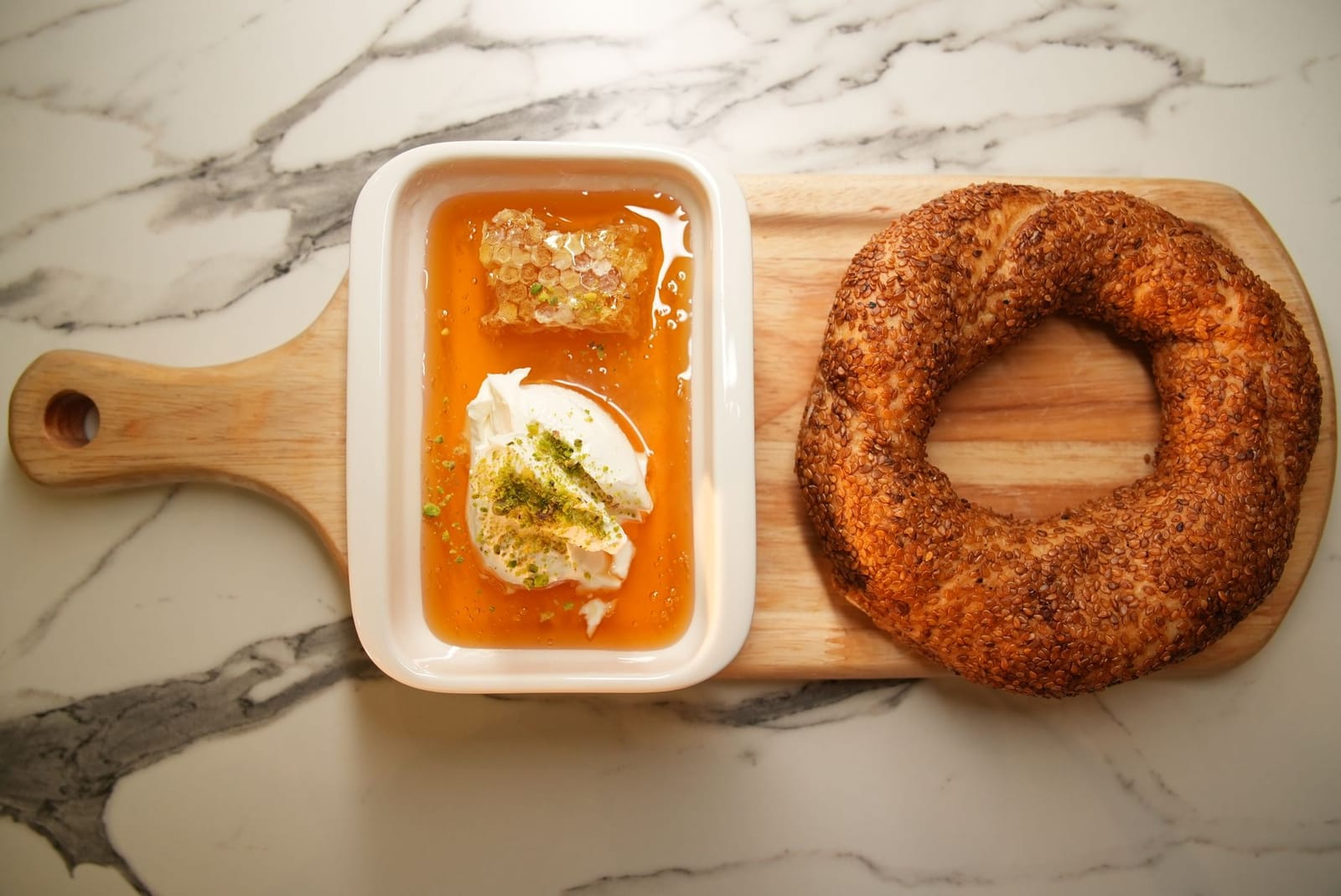
First-hand micro anecdote: During my first visit to Boris’in Yeri on an icy Tuesday morning at 07:45, I made the rookie mistake of ordering the 160 TL kaymak alongside steaming flatbread fresh from the stone oven down the alley. Within ninety seconds, the piping steam turned the porcelain curd into a pool of yellow liquid grease before I finished my first glass of tea. The veteran waiter saw my disappointment, cleared the ruined plate, and showed me how to break the loaf open and let the crumb vent until warm to the touch before dipping.
Berk’s Insider Tip: At Boris’in Yeri, ask the server for kara kovan balı if they have it behind the counter. It costs roughly 40 TL extra than standard comb honey, but the darker comb collected from hollow tree trunks cuts through the heavy fat of the buffalo cream with a sharp, resinous bite.
Reaching Boris’in Yeri in Kumkapı requires an eight-minute walk inland from the Kumkapı Marmaray station, navigating narrow residential streets lined with small workshops. The walk climbs steadily northward, making it straightforward to combine breakfast with historical sites on the surrounding hills before spending an afternoon exploring the Beyoğlu passages and historical architecture walking route with 2026 cafe prices.
A full plate of buffalo kaymak with comb honey costs 260 TL (5.20 EUR / 5.78 USD), served with a basket of fresh bread. Black tea from the samovar costs 40 TL (0.80 EUR / 0.89 USD) per glass, payable by cash or card at the counter by the entrance.
Historic breakfast streets of Beşiktaş and the legacy of Pando
The dense grid of pedestrian lanes in Beşiktaş çarşı became Istanbul’s breakfast center through wholesale dairy trades that predated the arrival of commercial brunch cafes. For generations, the focal point was Pando Shestakof, whose shop served freshly skimmed buffalo cream from 1895 until its closure in 2014. While Pando’s physical counter is gone, the neighborhood preserved its dairy sourcing through dedicated shops clustered along Çelebi Oğlu Sokak and Mumcu Bakkal Sokak. Purveyors connected to Pando’s legacy and veteran suppliers still receive direct morning deliveries from mandıra farms in Çatalca and the wetland pastures where Silivri water buffalo herds graze.
You will encounter two distinct breakfast cultures operating side by side in Beşiktaş. On Şair Veysi Sokak, widely labeled as Breakfast Street, dozens of neon-lit cafes cater to student crowds with identical platters. Most of these establishments purchase factory-sealed, pasteurized dairy tubs stiffened with cow milk and starch. Walking two blocks away to traditional establishments like Çakmak Kahvaltı Salonu on Çelebi Oğlu Sokak reveals genuine Beşiktaş breakfast kaymak: thick, slightly yellow, unpasteurized buffalo cream served alongside comb honey for roughly 190 TL (3.80 EUR). This contrast marks the search for the best bal kaymak in Istanbul in 2026, where the proper texture yields under a spoon without rubbery resistance.
First-hand micro anecdote: On a Saturday morning at 08:50, I hit a 35-person queue wrapping past the front door at Çakmak Kahvaltı Salonu on Çelebi Oğlu Sokak. Shivering in the wind, I gave up and slipped into a flashy modern café on Şair Veysi Sokak, paying 220 TL for what the menu labeled as “pasture buffalo cream.” What arrived was a rubbery, cornstarch-stabilized cow milk disc that wouldn’t cling to the bread. I left half of it on the plate, resolved never to compromise for convenience, and walked twenty minutes uphill to visit the Ihlamur Pavilion imperial gardens and baroque halls with 2026 ticket prices and cafe tips instead.
Berk’s Insider Tip: If you reach the Beşiktaş breakfast quarter after 09:30 on a Saturday, bypass the 40-person queue at Çakmak by walking two blocks north to the small dairy counters inside the fish market. They will slice 150 grams of fresh buffalo cream into a parchment sheet to eat with fresh loaves from the neighboring stone oven.
Weekend foot traffic peaks sharply after 10:00, creating long waits on narrow sidewalks. To secure a table without delays, arrive at the central market before 09:00 via the Şehir Hatları ferry to Beşiktaş İskelesi, or take the Yellow dolmuş routes and payment tips for faster travel between Beşiktaş, Taksim, and Kadıköy from Taksim directly to the Sinanpaşa transfer stop. Daily milk runs from the Thracian pastures arrive at the market stalls between 05:30 and 06:30 each morning.
Comparing classic breakfast spots for authentic kaymak
Four historic dairy shops set the quality standard for authentic bal kaymak in 2026 by maintaining direct regional milk supplies. While general breakfast cafes rely on commercial cow milk tubs thickened with starch, these specialized morning venues serve fresh buffalo cream paired with unblended honey varieties.
| Venue and Neighborhood | Dairy Base | Honey Profile | Morning Hours | 2026 Portion Price |
|---|---|---|---|---|
| Boris’in Yeri (Kumkapı) | 100% water buffalo | Strained wildflower | 06:30 – 19:00 | 260 TL (5.20 EUR) |
| Karaköy Özsüt (Karaköy) | 100% water buffalo | Meadow floral with raw honeycomb | 07:00 – 19:00 | 270 TL (5.40 EUR) |
| Çakmak Kahvaltı Salonu (Beşiktaş) | Water buffalo and cow blend | Erzincan mountain blossom | 07:00 – 17:30 | 220 TL (4.40 EUR) |
| Beşiktaş Kaymakçısı (Beşiktaş) | 100% water buffalo | Thracian wildflower | 07:00 – 18:00 | 240 TL (4.80 EUR) |
You will encounter the most direct service at Boris’in Yeri in Kumkapı, which has operated on Ördekli Bakkal Sokak since 1936. The shop pairs heavy buffalo cream with a light blossom honey that avoids masking the dairy fats. In Beyoğlu, Karaköy Özsüt differentiates its portions by spooning the cream over intact honeycomb cut straight from the cedar frame.
For those visiting the market district near the ferry terminal, Çakmak Kahvaltı Salonu anchors the local scene for Beşiktaş breakfast kaymak on Çelebi Oğlu Sokak. Çakmak cuts its buffalo cream with cow milk, creating a softer texture that spreads easily on warm bread. Two streets over, Beşiktaş Kaymakçısı serves denser slabs made entirely from whole buffalo milk.
Evaluating 2026 breakfast pricing requires tracking side charges on your final receipt. Traditional milk bars keep tea affordable, serving fresh black tea in tulip glasses for under 30 TL (0.60 EUR). Broad-menu commercial cafes around Sultanahmet and Galata routinely charge upwards of 75 TL (1.50 EUR) for tea while serving packaged industrial spreads.
Berk’s Insider Tip: Arrive at Boris’in Yeri before 08:30 on weekday mornings. Arriving after 10:00 means the early batch of crusty sourdough is gone, and the kitchen will substitute generic pre-sliced white bread from the grocery store.
To reach the Kumkapı shops, take the Marmaray rail line to Yenikapı and walk ten minutes east past the Armenian patriarchate to bypass traffic on Kennedy Caddesi.
Step-by-step etiquette for ordering and eating bal kaymak
A traditional serving of bal kaymak arrives as a cold medallion of dense water buffalo cream resting in a pool of honey, and keeping its texture intact depends on how you handle your bread.
- Specify your honey type when placing your order. Servers default to süzme bal (liquid strained honey), but you can ask for petek bal if you prefer a cut section of honeycomb alongside the cream.
- Pair your dairy with eggs that do not introduce competing cooking fats. Fried eggs cooked in butter overpower the buffalo milk; select plain menemen without cheese or soft-boiled eggs to keep the palate clean.
- Tear a single bite-sized piece of crusty loaf instead of slicing an entire round.
- Let the torn bread vent its interior steam for a few seconds so the dough is warm rather than hot.
- Scoop a portion of cream and honey upward together onto the bread, leaving the fat intact on top rather than smearing it flat.
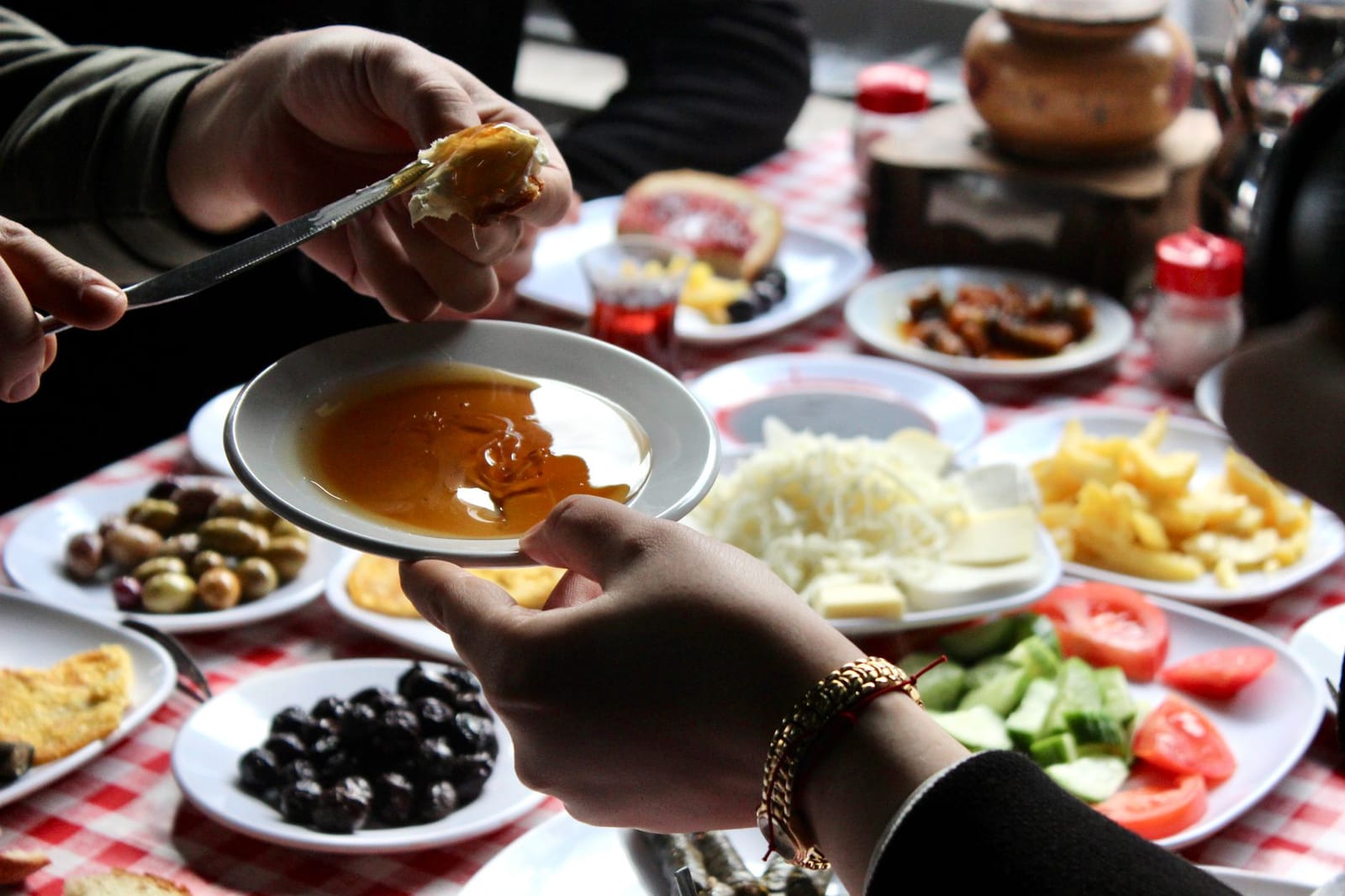
Berk’s Insider Tip: At breakfast shops in Kumkapı, visitors often spread kaymak flat like butter across steaming pide. The trapped steam melts the milk solids instantly into clear grease. Break the crust, let the heat escape, and use the bread purely as an edible spoon.
Traditional bakeries deliver standard white crust bread (somun ekmek) twice every morning, between 06:30 and 08:30, which provides the rigid bottom crust required to lift dense cream without tearing. A standard side portion of manda kaymağı measures roughly 60 grams per serving.
Sourcing and transport realities for Istanbul water buffalo herds
Istanbul relies on a dairy supply chain anchored in the city’s far northwest, roughly fifty kilometers from the historic center. The northern wetlands of Arnavutköy and the pastures around Lake Terkos maintain the remaining Anatolian water buffalo herds feeding Istanbul. Northern Arnavutköy consists of oak scrub, flooded marshes, and rural villages where farmers graze herds in freshwater shallows. These animals feed on wild mint, reeds, and sedges, yielding raw milk with roughly eight percent butterfat, nearly double that of commercial cow milk.
What reaches your breakfast table reflects subtle shifts in forage across the calendar. Buffalo cream produced in late spring and early autumn carries a faint yellow tinge derived from carotenoids in green marsh vegetation. Winter production turns stark white and holds higher moisture levels, as herds move indoors onto dry hay and grain feeds. Because specialized purveyors of authentic manda kaymağı reject gelatin or sheep-milk cuts, raw buffalo milk costs wholesale shops between 80 TL and 100 TL (€1.60 to €2) per liter, placing finished breakfast counter cream between 1,200 TL and 1,500 TL (€24 to €30) per kilogram.
Berk’s Insider Tip: Central neighborhood dairies receive their supplies before dawn in chilled aluminum churns. If you buy a container to take back to your apartment, refrigerate it immediately; unchilled cream left past noon separates and irreversibly loses its layered structure.
Essential breakfast rules and questions about kaymak
Fresh water buffalo cream is an unaged dairy food governed by delicate thermal chemistry and narrow temperature tolerances.
Is traditional buffalo kaymak pasteurized and safe to eat?
Traditional makers simmer raw water buffalo milk at roughly 90 degrees Celsius for hours before chilling it so the fat layer separates and solidifies. This extended thermal processing fulfills standard pasteurization requirements, eliminating pathogens while preserving the sweet, velvety texture. A strict refrigeration timeline is mandatory because the product contains no chemical stabilizers. Keep unopened containers chilled at 4 degrees Celsius, where they last up to four days. Once sliced open, finish the portion within 48 hours.
Can you pack fresh kaymak in your luggage for an international flight?
Genuine buffalo kaymak cannot withstand standard travel storage in airplane luggage. The emulsion is structurally delicate: without active refrigeration, separation begins within three hours at ambient temperatures. Standard thermal pouches and freezer gel packs merely delay melting rather than preventing it, leaving you with an unappetizing puddle of separated oil upon arrival. If you wish to bring edible dairy souvenirs home across borders, select vacuum-packed aged cheeses like Kars kaşarı or hard goat tulum from city markets instead.
Berk’s Insider Tip: I once bought two tins of buffalo kaymak in Beşiktaş at 10:00 AM, packed them in an insulated pouch with ice packs, and boarded an evening flight. By the time I unpacked four hours later, the structure had dissolved into warm liquid fat. Eat it fresh at the marble table where it is served.
What does a traditional breakfast cost in 2026, and where should you go on the Asian side?
A dedicated plate of Turkish clotted cream with honey served with crusty bread and black tea costs between 180 TL and 270 TL (€3.60 to €5.40). For an extensive sit-down spread with eggs, olives, and regional cheeses, expect an average spend of 450 TL to 750 TL (€9 to €15) per person. If you are staying across the Bosphorus, pair a visit to the historic Atik Valide Mosque architecture and 2026 visiting tips for the Üsküdar complex with the small delicatessens around the local bazaar, where several neighborhood dairy counters stock fresh manda cream delivered directly from Thrace.
Morning routing for authentic kaymak
Kumkapı preserves the measured routine of an older neighborhood dairy, whereas Beşiktaş trades that quiet for speed and student volume. If you want genuine water buffalo kaymak, you need to arrive before 10:00 AM. Modern breakfast chains on both sides of the Bosphorus routinely cut their cream with cow milk and thickeners to preserve margins, and the small family shops sell out their daily yield from Thracian farms early.
Skip the pedestrian breakfast street in Beşiktaş if dairy quality is your priority; those kitchens cater to volume, and most serve commercial cow-milk substitutes. Take the Marmaray to Yenikapı by 8:30 AM, walk five minutes up into Kumkapı, and order at Boris’in Yeri on Ördekli Bakkal Sokak. Look into the display fridge before sitting down: genuine buffalo kaymak sets with an irregular, porcelain-white skin rather than the smooth, yellowish sheen of industrial cream. Finish your plate with bal and fresh somun bread before the mid-morning orders clear the tray, then walk down toward the shoreline.