Saint Anthony of Padua on Istiklal Avenue is open daily from 8:00 to 19:30, and entry is free. You will find the red-brick courtyard halfway down the street, an eight-minute walk south from Taksim Square. I once arrived at 10:00 on a Sunday and found the interior roped off for the Italian Mass; visit on a weekday morning before 11:00 to walk the aisles without waiting outside. Inside, you can light a candle by dropping 20 to 50 Turkish lira cash into the donation box by the side altar. You will get the active service schedules in English, Italian, and Turkish, guidelines on photography during prayer, and practical walking directions toward the Şişhane metro station.
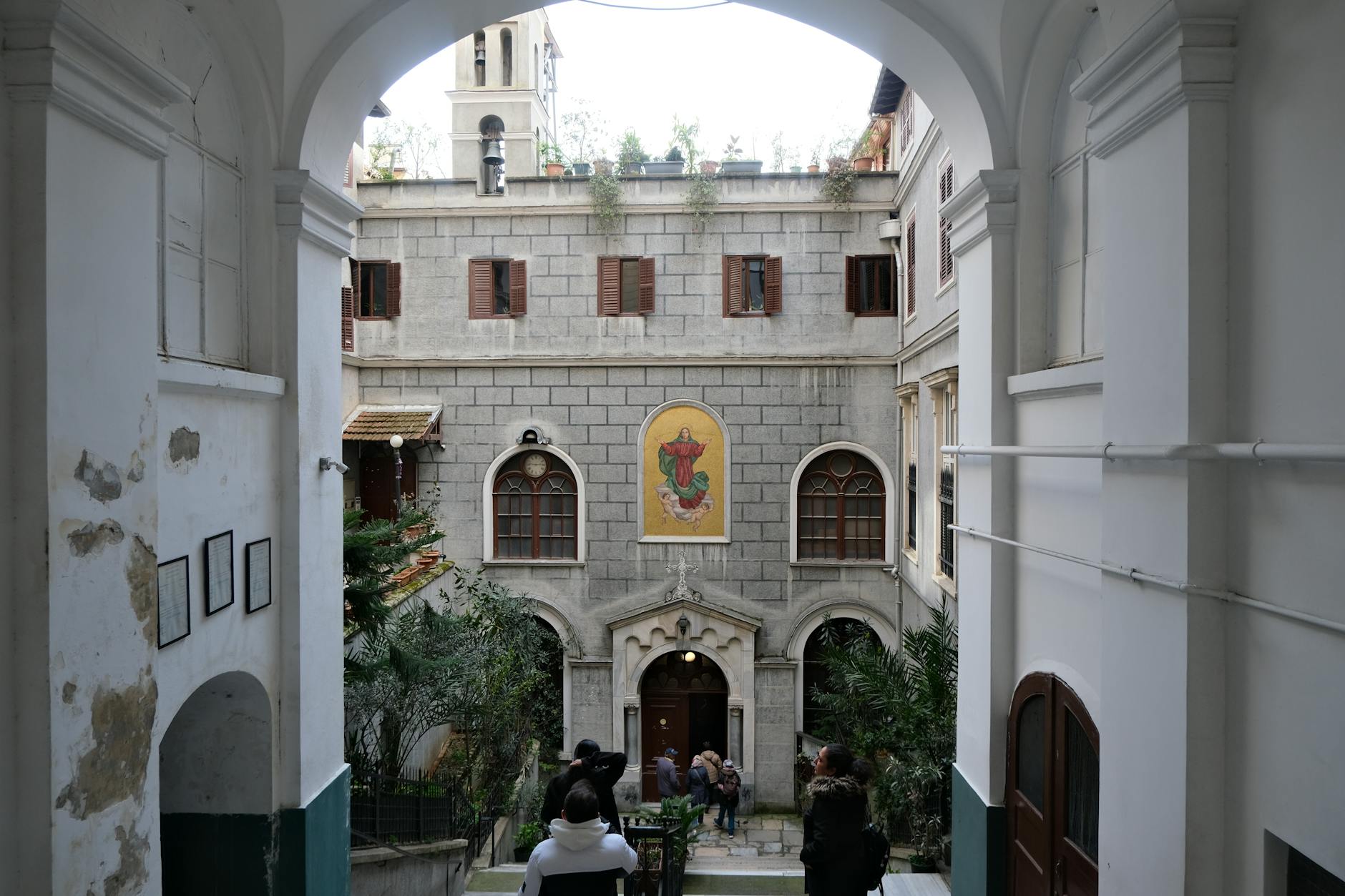
Stepping off the tram tracks of Istiklal Avenue through the stone archway at number 171 drops the ambient street volume immediately. The clanging bell of the red T2 vintage tram and the chatter of passing crowds fade behind two six-story apartment blocks. Across the courtyard sits the red-brick facade of Saint Anthony of Padua Church, known across the city as Sent Antuan Kilisesi. You are standing before the largest of the active Istanbul Catholic churches, though on weekend afternoons between noon and 4:00 PM, the stone perimeter fills quickly with tour groups and casual strollers.
Completed in 1912 by architect Giulio Mongeri, the basilica remains a functional parish with free admission daily from 8:00 AM to 7:00 PM. Most visitors include the building among standard Istiklal Avenue attractions, treating it as a quick two-minute detour during the walk from Taksim Square down toward Galata. Problems arise when visitors treat the nave like an exhibition hall. Walking straight up the central aisle during a service with phone cameras raised draws immediate reprimands from the church attendants, who monitor the pews closely.
Insider tip: After fifteen years of living near Beyoğlu, I only enter on weekday mornings around 9:00 AM. The courtyard is empty, morning light hits the high rose window directly, and you can sit inside without staff reminding people to lower their voices.
Visiting Sent Antuan properly requires treating it as an active sanctuary rather than an open museum. Planning your entry around the multilingual Mass schedule and adhering to modest dress standards will ensure you examine the Neo-Gothic interior without interrupting local worshipers.
History and the Venetian Neo-Gothic design on Istiklal Avenue
The Franciscan Order established its original parish on this street in 1724, serving the Latin Catholic and Levantine populations that lived above Galata. When municipal tramway expansion required the demolition of that earlier eighteenth-century structure at the turn of the twentieth century, the community secured the present plot further up the avenue. Construction of the current building began in 1906 and finished in 1912 under the direction of Istanbul-born Italian architect Giulio Mongeri.
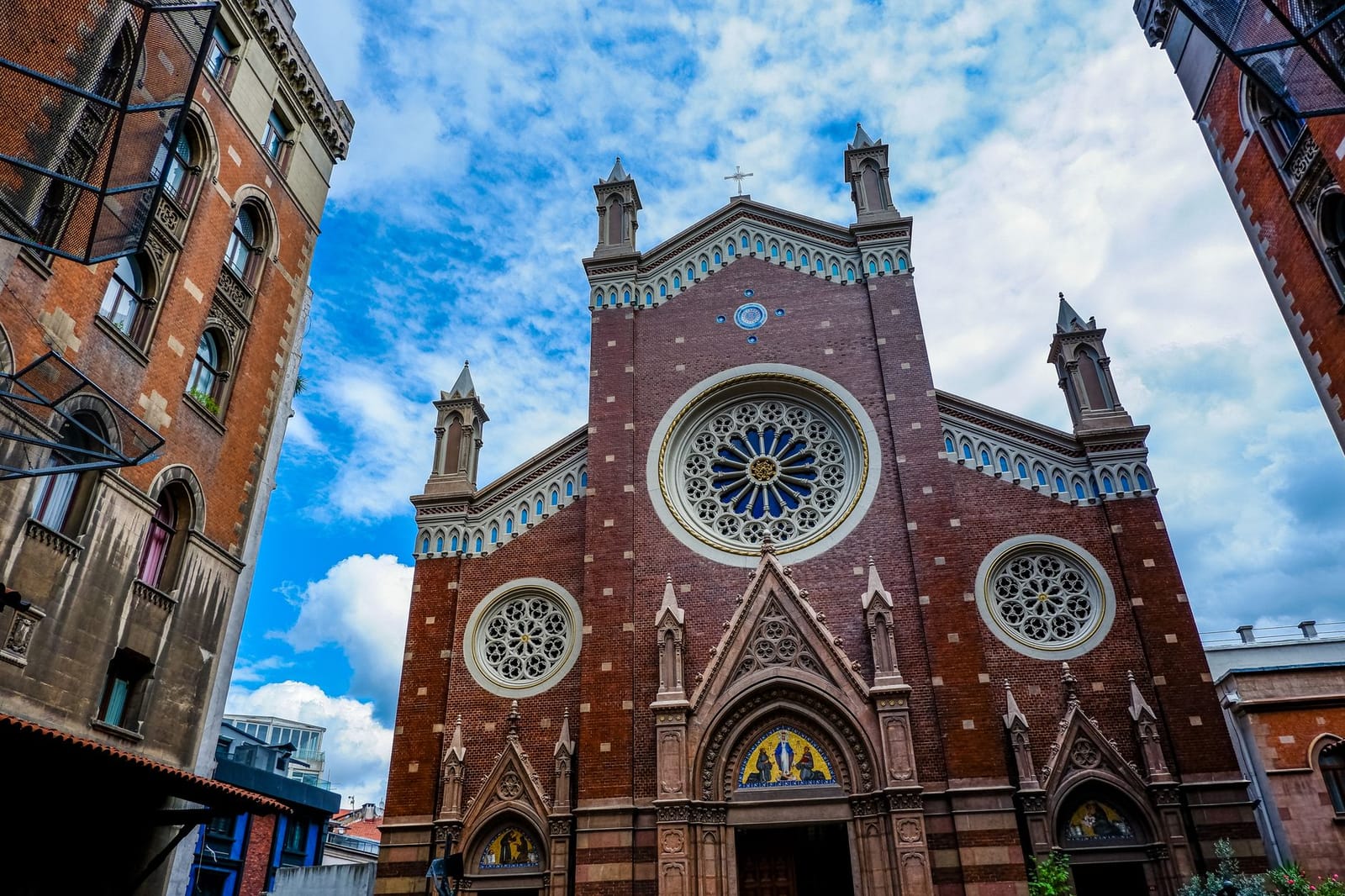
Unlike the stone-dressed neoclassical and Art Nouveau facades that define modern Beyoglu historic churches, Saint Anthony of Padua Church, known in Turkish as Sent Antuan Kilisesi, relies on exposed red brick and Venetian Neo-Gothic forms. Mongeri integrated two six-storey residential blocks directly onto the street line to flank the entry gates. This layout served a specific financial purpose: the street-facing apartments provided ongoing rental income for the parish, while their bulk formed a sunken courtyard that buffered the sanctuary from streetcars and commercial crowds.
Insider tip: Walking into the courtyard at 08:30 on a weekday morning gives you clear sightlines. The Istiklal tram is already running, but the street noise drops noticeably the moment you step beneath the residential arch, and the courtyard stays empty until the shops open around 10:00.
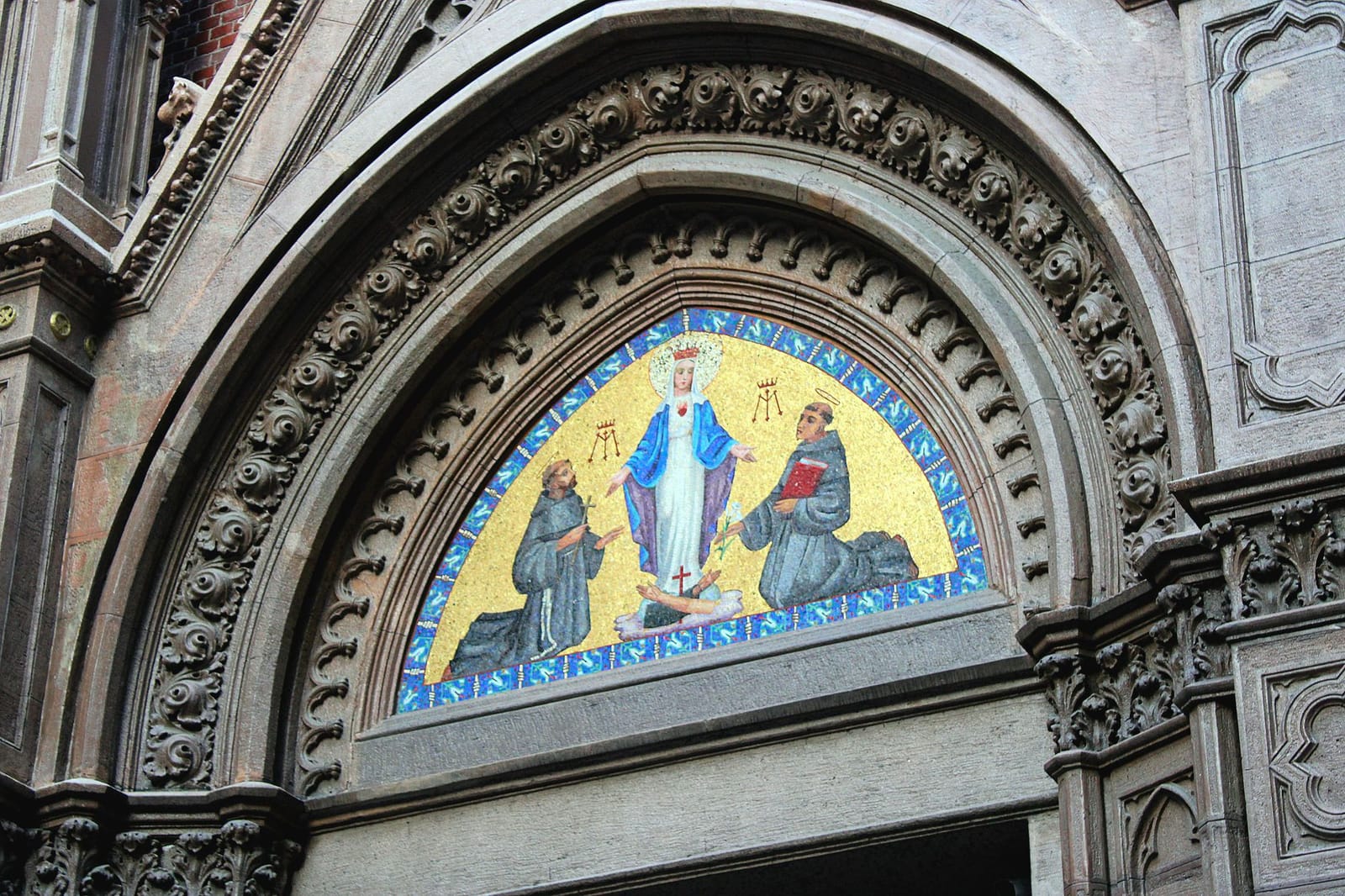
Mongeri used reinforced concrete alongside load-bearing brick, making the complex an early adoption of modern structural framing in late Ottoman Istanbul. The main basilica sits at the rear of the courtyard with a Latin cross floor plan, three portal bays, pointed lancet windows, and a central rose window framed by white stone tracery. The twin apartment blocks framing the approach mirror these details with pointed window arches and brick corbeling, binding the domestic and ecclesiastical units into a single geometric plot.
Courtyard layout and navigating the entry gates
The church stands at Istiklal Caddesi No: 171, approximately 250 meters south of Galatasaray Square on the eastern side of the avenue. Unlike most Istiklal Avenue attractions that open directly onto the pavement, Sent Antuan Kilisesi sits recessed behind twin six-story red-brick apartment buildings designed by architect Giulio Mongeri. Built between 1906 and 1912, the Mongeri apartments originally provided rental revenue for the parish while acting as a physical sound buffer against the avenue.
Passing under the vaulted central archway brings you out of the street noise and into an expansive, elevated stone courtyard. The space opens up to display the full Venetian Neo-Gothic facade of the basilica, with administrative offices and parish facilities lining the flanking wings.
I remember one visit last October at 14:15 when I learned the strict bag rule through an annoying mistake. Arriving straight from a hotel checkout near Şişhane with a small wheeled cabin trolley, the security attendant at the iron gate stopped me in my tracks. Because the church has no luggage storage lockers, I had to walk 400 meters uphill to a private luggage hold on Meşrutiyet Caddesi and pay 120 TL just to store my bag for forty minutes before I could enter the courtyard.
During peak weekend hours, private security staff set up waist-high metal barriers beneath the entry archway. You must submit backpacks, camera bags, and large purses for visual inspection before you can step onto the courtyard paving stones. While you can visit nearby cultural venues and Istanbul Art Exhibitions & Museums: What to See in Spring–Summer 2026 without bag screenings, this courtyard remains private church property subject to parish entry controls. The iron entry gates close to incoming visitors at 19:30 daily.
Interior nave, altar features, and lighting candles
The interior follows a Latin cross plan, where twenty-meter ribbed brick vaults direct the eye straight down the central nave toward the high altar. Tall lancet windows set with stained glass depict Francis of Assisi and scenes from Franciscan history, filtering morning daylight across the polished marble flooring. Unlike smaller Istanbul Catholic churches tucked behind defensive perimeter gates, Saint Anthony of Padua Church has a spacious interior hall planned to accommodate several hundred worshippers across three parallel aisles.
During one visit on a rainy Tuesday morning at 09:15, I walked up to the northern candle station hoping to light a votive taper, only to realize I held nothing smaller than a 200 TL note. The attendant politely pointed to the locked metal donation slot; staff cannot make change under any circumstances. I had to backtrack through the rain to a bakery across Istiklal, buy a 45 TL simit and tea just to break the note, and return with an exact 50 TL bill to drop into the box.
Insider tip: If you want to view the interior without weekend tourist crowds, arrive at 08:30 on a Tuesday morning. The light hits the east stained glass directly, and you will share the entire nave with only the church custodian.
Votive candles stand near the side altars along both perimeter walls. Church wardens monitor these stations to protect the wood carvings and plasterwork from soot accumulation. Visitors lighting votive tapers follow a specific procedure:
- Approach the candle stand located at either the north or south side altar.
- Prepare an exact cash donation of 20 TL to 50 TL (0.40 EUR to 1 EUR) per wax taper, as attendants do not make change.
- Deposit your money directly into the slotted metal donation box attached to the stand.
- Pick up an unlit wax candle from the tray beside the sand box.
- Touch the wick against the single, permanently burning pilot taper anchored in the center of the tier.
- Press the candle base firmly into the sand tray or metal spike rack without using pocket lighters or personal matches.
Church regulations strictly prohibit striking external matches or using butane lighters inside the sanctuary, because open sulfur flames leave residue on the surrounding statuary and create an unnecessary fire hazard near the altar drapery. Extinguished candle stubs are cleared by staff twice daily, at 12:00 and 18:00.
Mass schedules, language services, and visitor entry rules
Saint Anthony of Padua conducts daily religious services in four languages, serving local parish families, diplomatic staff, and international visitors. The basilica functions primarily as an active house of worship rather than a museum. Most visitors overlook how strictly the church divides active liturgical zones from general tourist transit, particularly on weekends.
| Day | Service Time | Language | Nave Status |
|---|---|---|---|
| Monday–Saturday | 08:00 | English | Open with rear access |
| Monday–Saturday | 19:00 | Turkish | Open with rear access |
| Sunday | 10:00 | English | Reserved for worshippers |
| Sunday | 11:30 | Italian and Polish | Reserved for worshippers |
| Sunday | 19:00 | Turkish | Reserved for worshippers |
The published Mass timetable draws heavy attendance, with the 11:30 Sunday Mass serving both the Italian and Polish communities. During liturgy, parish staff draw rope barriers across the main nave. The central pews are reserved exclusively for congregants participating in the Eucharist. You will find that security attendants redirect casual observers toward the rear narthex and outer ambulatory aisles.
Etiquette policies require strict decorum inside the sanctuary. Photography and video recording are prohibited during all active worship services, and flash photography remains forbidden at all times. As with other historic Istanbul Catholic churches, attire rules are enforced at the door. Sleeveless shirts, bare midriffs, and shorts above the knee are not permitted. Similar standards of modest dress and heritage preservation are practiced across Istanbul’s historic religious sites.
Insider tip: During an 11:30 Sunday service last winter, I watched church wardens turn away several people carrying takeout coffee and bulky shopping bags at the entrance. Travel light, switch your phone to silent before passing the courtyard gates, and take a seat at the back pews at least ten minutes before the bells start if you plan to attend the service.
For regular visits, schedule general interior visits between 13:00 and 17:00 on weekdays, when no liturgical services occupy the high altar.
Pope John XXIII connection and local religious coexistence
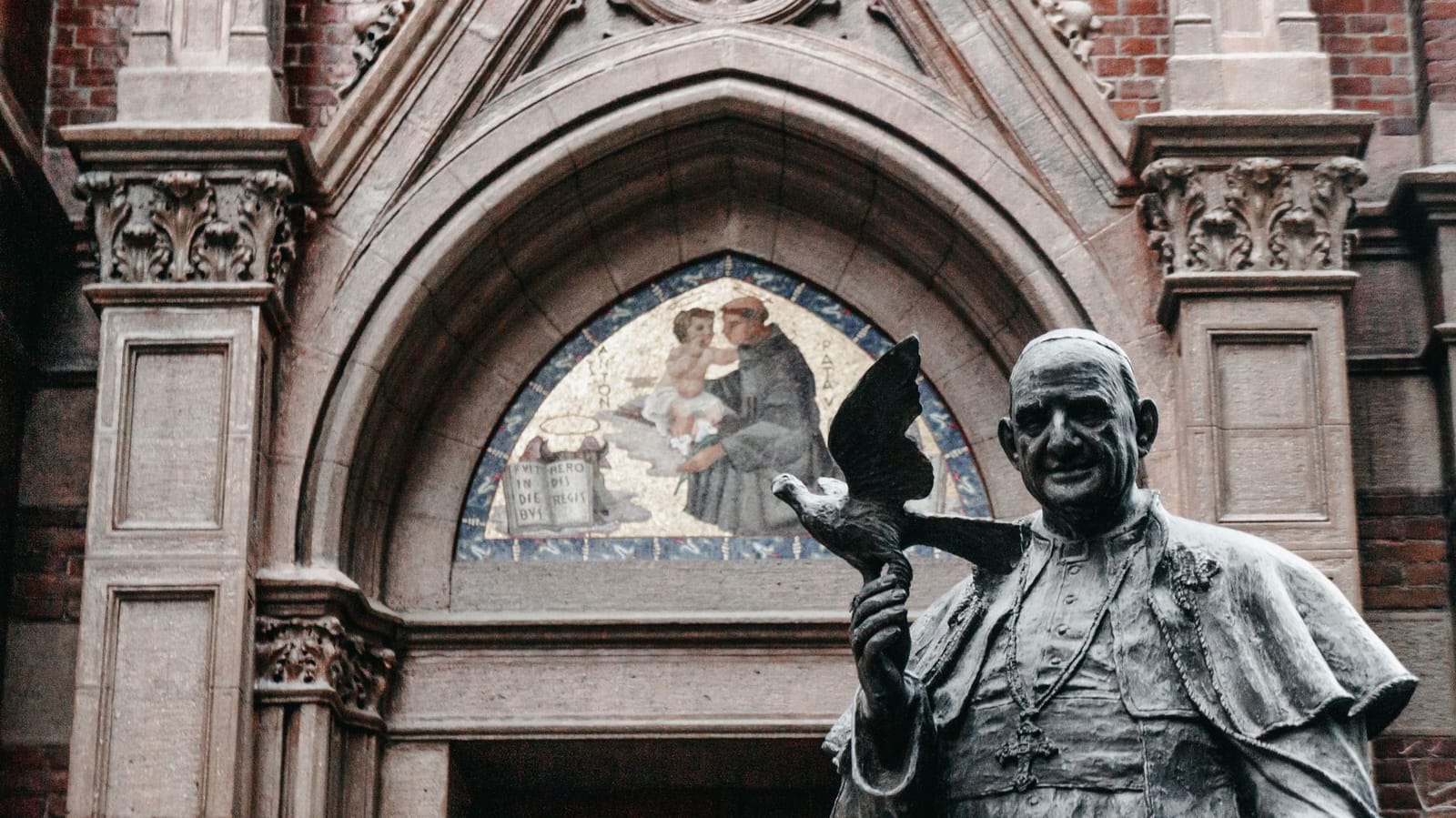
A life-size bronze statue stands in the paved courtyard to the left of the church entrance, depicting Archbishop Angelo Giuseppe Roncalli, who served as the Apostolic Delegate to Turkey from 1935 to 1944. Long before his election as Pope John XXIII in 1958 and his convocation of the Second Vatican Council, Roncalli preached regularly from the pulpit of Saint Anthony of Padua Church. During his decade in Istanbul, he took the unusual step of reading the Gospel in Turkish and incorporating Turkish phrases into liturgical blessings, decades before vernacular languages became standard in Catholic mass. His deliberate engagement with Turkish officials and ordinary citizens earned him the local moniker “the Turkish Pope.”
Insider tip: When I walk through the courtyard around 08:30 on a weekday before Istiklal Avenue wakes up, you can see older neighborhood residents pause at the statue to pay their respects while the groundskeeper washes down the red brick steps. It is the quietest thirty minutes you will get at this site all day.
The church served as the primary place of worship for the Latin Catholic Levantine community of Pera, whose families had managed shipping, diplomacy, and trade in Istanbul for generations. Beyoğlu historic churches reflect this shared urban fabric; Saint Anthony sits within a short walk of the Greek Orthodox church of Hagia Triada, the Armenian Catholic Church of Saint Mary, and the Ottoman-era Hüseyin Ağa Mosque. For travelers interested in how non-Muslim communities established roots outside the traditional center of Pera, following the Büyükada Walking Route to the Greek Orphanage and Aya Yorgi with 2026 Ferry Tips across the Princes islands offers a parallel look at historic Christian sanctuaries.
The bronze pedestal plaque beside the church steps is inscribed in Turkish, Italian, and English, detailing Roncalli’s wartime efforts from his Istanbul office to issue transit documents that saved thousands of Jewish refugees from occupied eastern Europe.
Planning your visit, opening hours, and nearby walking links
The courtyard gates on Istiklal Avenue open daily at 08:00 and close at 19:30. Admission is free, though voluntary parish donation boxes stand near the rear exits if you wish to support building maintenance and social outreach programs. Visiting between 09:00 and 11:00 gives you the quietest conditions, before foot traffic on the avenue peaks and tour groups gather in the nave.
Major crowd surges occur twice a year: the Feast of Saint Anthony on June 13 and Christmas Eve on December 24. On June 13, local devotees line up out to the street to light candles and receive bread blessed in honor of the saint. On Christmas Eve, police establish metal barricades along the courtyard to filter crowds into controlled batches from 18:00 onward. If your trip coincides with these dates, arrive well before the scheduled service or plan your architectural visit for an alternate morning to avoid standing in long security lines.
The church sits at the midpoint of Istiklal Avenue, making it a natural pivot for walking routes through Beyoğlu. Walking north takes you toward Taksim Square in roughly twelve minutes, passing historic passages and consulates. Walking south brings you to Tünel square in six minutes, where the street narrows down Galip Dede Caddesi toward Galata Tower and Karaköy pier. If you are heading down to the waterfront to cross the strait, look into Istanbul Water Taxi app booking and 2026 Bosphorus fares for fast on-demand rides. If you exit into the evening air and want dinner, turning west into the side streets of Asmalımescit leads to century-old taverns where the Istanbul Meyhane Guide: Rakı Etiquette & Local Secrets helps ensure a smooth table experience.
Insider tip: Do not carry large shopping bags from Istiklal through the main entry during late afternoon; the security screening table narrows the entrance gate, and staff will ask you to open every parcel, which stalls the queue.
Frequently asked questions
What should you wear when visiting Saint Anthony of Padua?
Modest attire is required because this is an active parish rather than a state museum. Keep shoulders and knees covered, and remove hats or hoods upon stepping through the inner doors. Unlike mosques, women do not need to cover their heads with scarves. If you arrive in summer wearing shorts or sleeveless shirts, security staff may ask you to wait outside or zip up a light jacket before entering the nave.
Is photography allowed inside the sanctuary?
Non-flash interior photography is permitted during regular visiting hours from the aisles and rear vestibule. Do not cross into the altar area or stand directly in front of worshippers praying before the side shrines. During active liturgical services, photography and video recording are strictly prohibited. Ushers will ask you to pocket phones or cameras immediately if you raise them during prayers or the distribution of communion.
How do you reach the church using public transport?
Take the M2 metro line to either Şişhane or Taksim station. From the Şişhane exit, walk north along Istiklal Avenue for roughly 500 meters to reach the gate on your left. Alternatively, ride the historic F2 Tünel funicular from Karaköy up to Tünel square and walk north for five minutes. The historic red tram also stops directly opposite the courtyard entrance at the Galatasaray stop.
Practical advice for your visit
The passageway running beneath the red-brick apartment blocks on İstiklal Caddesi creates a clear buffer in central Beyoğlu. As you step past the outer gate, the sharp mechanical clang of the T2 tram bell cuts off, replaced by flat stone silence between the residential wings. The courtyard absorbs the street noise entirely before you reach the church steps, giving you a quiet minute to adjust before entering the narthex.
Skip Saturday and Sunday afternoons. Crowds pack the courtyard steps for photos, and parish attendants restrict access to the nave to prepare for services, meaning you will wait outside or be turned away at the door. I skip weekends and go at 09:00 on a Tuesday or Wednesday instead. You can walk through the side aisles without an usher waving you back, and the church gates open daily at 08:00 with no admission fee.