Istanbul runs two municipal cable cars: the TF1 across the Maçka valley between Taşkışla and Nişantaşı, and the TF2 from Eyüpsultan up to Pierre Loti. Both lines charge the standard Istanbulkart fare of 46.20 TL at the turnstiles. You reach the TF1 Taşkışla terminal via an eight-minute walk from Taksim metro station, bypassing the steep park stairs. For TF2, ride the T5 tram directly to the Eyüpsultan Teleferik stop. Weekend lines at Pierre Loti regularly exceed forty minutes for a three-minute cabin ride; I skip the return queue and walk the paved cemetery path back to the mosque in eight minutes. High winds suspend operations without prior notice, so check the Metro Istanbul network board before heading to either platform.
I remember standing at the Maçka station turnstile at 8:45 AM on a damp Tuesday, watching a group of engineering students tap their cards and step into a six-person cabin. Instead of trudging through twenty minutes of steep, wet staircases down and up the ravine of Demokrasi Park, they crossed above the tree canopy to Taşkışla in under four minutes. The turnstile deducted the standard municipal transit fare of 46.20 TL (0.92 EUR), the exact same charge as boarding a regular city bus.
Metro Istanbul runs two aerial cable cars built specifically to bypass the city’s severe vertical topography. The TF1 Maçka–Taşkışla line links Harbiye with the edge of Taksim across a deep park valley, while the TF2 Eyüp–Piyer Loti line carries passengers from the Golden Horn waterfront up the cemetery ridge to the Pierre Loti viewpoint. Both lines operate under standard Istanbulkart fares, honor consecutive transfer discounts from connecting buses or trams, and require no separate tourist tokens.
The operational reality between the two lines differs sharply, and misjudging them often costs visitors considerable time. The Macka cable car functions as a quiet commuter link where you will rarely wait more than five minutes to board outside peak campus class changes. In contrast, the Eyup teleferik draws heavy visitor traffic, producing queues that can stretch past forty minutes on sunny weekend afternoons. Using these cable cars efficiently requires understanding their turnstile rules, timing the lines, and coordinating your transfers from the T5 tramway or the ferry docks below.
Understanding Istanbul two municipal cable car lines
Istanbul operates two municipal aerial cable car lines under the transit authority Metro Istanbul. The agency built both routes to conquer steep terrain for daily commuters and residents. The older line, TF1 Taskisla, operates in the modern city center between Harbiye and Maçka, functioning as an urban commuter link across a deep ravine. By contrast, TF2 Pierre Loti sits several kilometers west along the Golden Horn, operating primarily as a passenger link between the waterfront district of Eyüpsultan and the elevated viewing terrace at the crest of the hill. Both routes integrate into the municipal transit ticketing network, meaning standard Istanbul cable car fares apply: a ride costs 46.20 TL (0.92 EUR) when tapping an anonymous or personal Istanbulkart.
The physical designs of the two lines reflect their differing terrain and urban purposes. Built in 1993, the TF1 system covers a 333-meter span across the wooded valley of Democracy Park without any intermediary support towers. It carries four cabins arranged in pairs: two cars move simultaneously in each direction, accommodating six seated passengers per cabin for a total capacity of 12 passengers per dispatch. The ride takes roughly 3.5 minutes to climb 42 meters between Taşkışla and Maçka. This link connects two campuses of Istanbul Technical University and spares pedestrians a 15-minute detour down concrete stairwells and up steep road grades.
The TF2 line opened in 2005 to manage visitor and pilgrim foot traffic along the Golden Horn. The track covers a 420-meter ascent supported by a single intermediate tower, rising directly over the terraced marble gravestones of the historic Eyüp hillside cemetery. Its four larger cabins each hold eight passengers (16 passengers per direction), operating at a speed of 4 meters per second to complete the one-way climb in just under three minutes.
| System Specification | TF1 Taskisla (Maçka) | TF2 Pierre Loti (Eyüp) |
|---|---|---|
| Track Length | 333.5 meters (towerless span) | 420 meters (single support tower) |
| Cabin Capacity | 6 passengers per car (12 per direction) | 8 passengers per car (16 per direction) |
| Trip Duration | 3.5 minutes | 2.75 to 3.25 minutes |
| Summer Hours | 08:00 to 20:00 | 08:00 to 23:00 |
| Winter Hours | 08:00 to 19:00 | 08:00 to 22:00 |
| Single Ride Fare | 46.20 TL (0.92 EUR) | 46.20 TL (0.92 EUR) |
Operating timetables vary across the two installations. TF2 runs from 08:00 to 23:00 during the summer season and closes at 22:00 in winter. TF1 operates on shorter hours, running from 08:00 to 20:00 in summer and closing at 19:00 during winter months. Both lines halt service during sustained high winds exceeding operational safety limits and during scheduled morning maintenance intervals, which Metro Istanbul posts on station noticeboards.
Insider tip: When I board TF1 at Taşkışla around 18:30 on weekdays, the platform is almost empty because commuters walk to Osmanbey instead, but TF2 at Eyüp regularly produces a 40-minute queue on weekend afternoons. If you encounter a line trailing out the doors toward the mosque plaza, walk the cobblestone path through the cemetery; the uphill walk takes twelve minutes and bypasses the line completely.
The physical layouts of the terminals also differ sharply. Taşkışla station lacks ticket turnstiles on entry; you tap your Istanbulkart at the exit turnstile when arriving at Maçka, whereas TF2 requires validation through turnstiles at both the lower Eyüp and upper Pierre Loti gates before boarding.
Riding TF1 across the Maçka valley between Taşkışla and Nişantaşı
The TF1 aerial cable car spans 333 meters across the deep Maçka ravine, connecting the plateau behind Taksim directly with the residential ridge of Nişantaşı in roughly three and a half minutes. Walking between these two ridges on foot forces you down a steep flight of stone stairs into the base of Maçka Democracy Park, followed by an equally punishing climb up the opposing hillside. By boarding this line, you eliminate a strenuous twenty-minute trek and bypass the surface traffic crawling along Kadırgalar Caddesi below.
The northern terminus sits at Taşkışla station, positioned beside the 19th-century Istanbul Technical University architecture faculty building, a short walk from the northeastern edge of Taksim. Boarding requires a standard tap of your Istanbulkart at the turnstiles, costing 46.20 TL (0.92 EUR). Each cabin carries up to six passengers, departing every five minutes during peak periods.
Field anecdote: During my morning commute across this valley last October on a rainy Tuesday at 8:40 AM, I learned the hard way not to tackle the park stairs after an autumn downpour. Slithering down the slick stone steps toward Kadırgalar Caddesi cost me twenty minutes and covered my trousers in mud before a 9:15 AM meeting on Abdi İpekçi Caddesi. Ever since, I tap the turnstile at Taşkışla; the car glides above the trees in three and a half minutes for 46.20 TL, keeping my shoes completely dry.
As the car lifts away from the Taşkışla pylon, the terrain drops sharply beneath the glass cabin windows. You float forty meters above the dense canopy of lime and plane trees, gaining an unobstructed visual line directly into the tiered stone amphitheater of the Harbiye Cemil Topuzlu Open-Air Theatre. Sound checks often echo up into the cabin during afternoon flights between May and September. To the south, the tree-filled valley slopes downward toward the Bosphorus, with clear angles toward the waterfront district around Dolmabahçe.
Berk’s Insider Tip: If you take the TF1 cable car from Taşkışla to Maçka, do not rush down the hill toward Beşiktaş immediately. Cross the street into the upper tier of Maçka Democracy Park where you can find small municipal çay gardens serving tea for 15 TL with views of the Bosphorus strait through the tree clearings.
Arriving at Maçka station places you at the threshold of the shopping avenues of Nişantaşı and the transit junctions of Harbiye. From here, you can descend eastward toward the waterfront to track down lunch, following recommendations for Sizzling Iskender Kebab in Kadıköy and Beşiktaş with 2026 Prices and Ordering Tips, or walk northwest across Halaskargazi Caddesi toward Kurtuluş. The TF1 line operates daily until 20:00 in summer and 19:00 in winter.
Ascending the Eyüp hillside to Pierre Loti on the TF2 line
The lower terminal of the TF2 line sits a two-minute walk from the Golden Horn ferry landing, directly opposite the T5 tram platform at Eyüpsultan Teleferik. Boarding this Eyüp teleferik requires tapping an Istanbulkart at the turnstiles, which deducts the standard municipal transit fare of 46.20 TL (0.92 EUR). The line uses two pairs of eight-passenger cabins that travel across a 420-meter cable span to reach Pierre Loti Hill in just under three minutes.
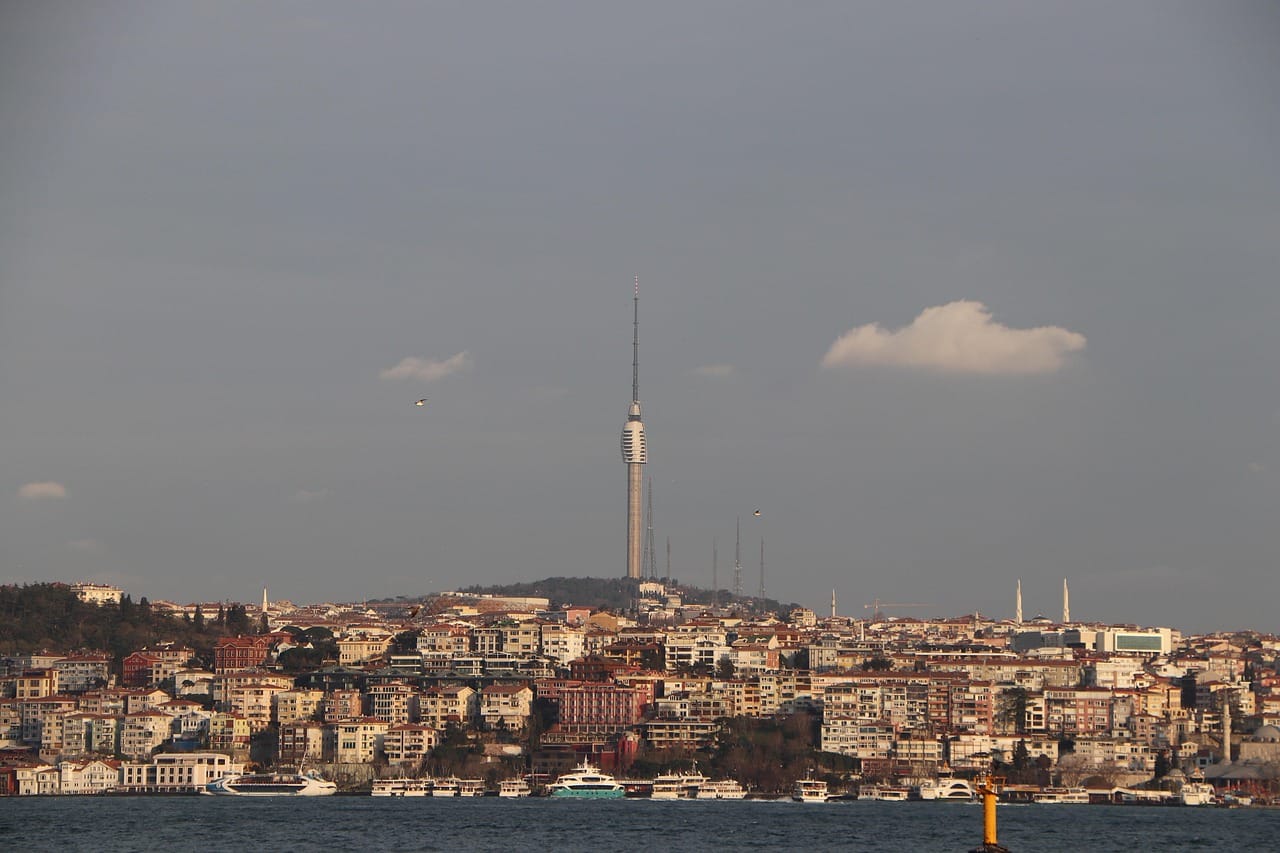
Once the cabin leaves the dock area, the elevation increases rapidly over the terraced marble headstones and mature trees of Eyüp Cemetery. Looking back toward the water, you see across the Golden Horn to the historical peninsula, the domes of the Süleymaniye complex, and the traffic on the Haliç Bridge. Standing by the rear cabin glass provides the clearest view of the water and the minarets before the car enters the upper terminal enclosure.
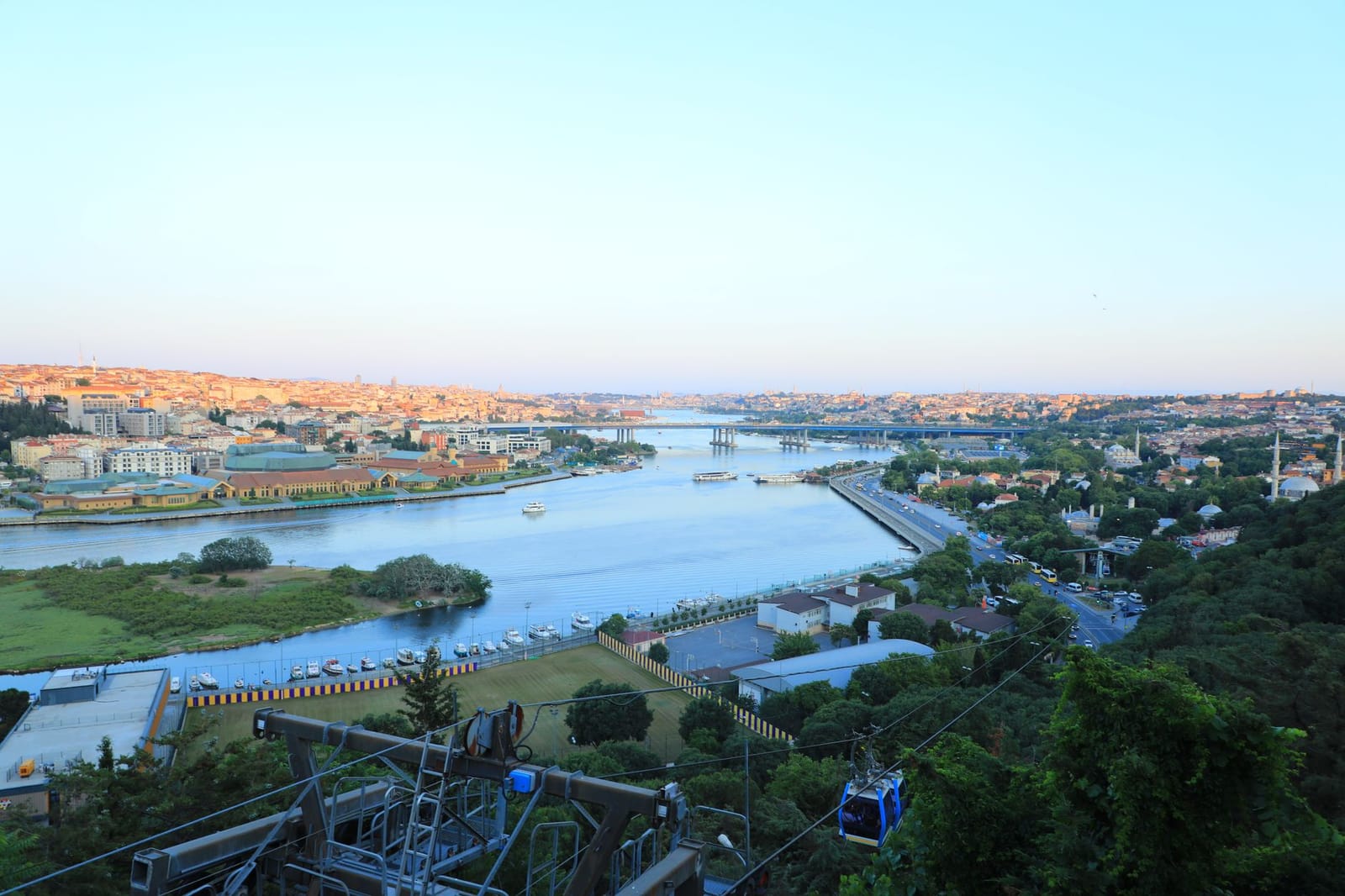
Because the line has an hourly maximum capacity of only 576 passengers, lines at the base form quickly. On weekends between 13:00 and 17:00, queues at the lower terminal routinely spill out of the station doors and extend across the plaza, with wait times often exceeding 40 minutes.
Field anecdote: During a sunny Sunday visit at 14:15, I arrived at Eyüpsultan to find an 80-person line stretching past the metal barriers outside the lower station. I stubbornly waited 48 minutes just to board a 165-second ride up to Pierre Loti. On the descent, seeing an even worse queue snaking past the summit platform, I took the cobblestone staircase down through the cemetery. It took me exactly nine minutes to walk back to the mosque courtyard, completely bypassing the 45-minute wait at the upper gate.
The panorama from Pierre Loti offers a wide, open horizon down the Golden Horn, which pairs naturally with planning city viewpoints like those described in Galata Tower Visiting Rules and Balcony Access with 2026 Ticket Prices.
Berk’s Insider Tip: When queues at the upper Pierre Loti station snake past the turnstiles on Sunday afternoons, skip the return ride entirely. The stone pathway down through the cypress-shaded Ottoman cemetery takes less than ten minutes to walk and drops you straight behind the courtyard of Eyüp Sultan Mosque.
The upper ridge terminal opens straight onto the public lookout platform and the historic open-air kahve gardens. Metro İstanbul runs the TF2 cabins daily from 08:00 to 23:00 during the summer season, shifting to an 08:00 to 22:00 closing schedule during winter months.
Istanbulkart fares payment rules and turnstile mechanics
Both the Maçka (TF1) and Eyüp (TF2) lines operate under the municipal Metro Istanbul transit network, setting standard single-ride boarding at 46.20 TL (€0.92) per passenger when using a reloadable Istanbulkart. While past municipal fare brackets sat between 27 TL and 35 TL, recent transit adjustments established this unified flat rate across the city rail and aerial systems.
Turnstiles accept open-loop contactless bank cards and digital phone wallets directly at the glass reader plates, but convenience carries a penalty. Metro Istanbul bills contactless bank cards at the single-use electronic ticket rate of 65 TL (€1.30), adding an open-loop surcharge of nearly 40 percent over standard card deductions. Disposable paper cards purchased from the yellow Biletmatik machines follow this higher pricing tier: a single-ride BİRgeç card costs 65 TL (€1.30), while a two-ride İKİgeç card costs 120 TL (€2.40). Because a physical anonymous Istanbulkart costs 165 TL (€3.30) to purchase before loading credit, travelers making fewer than four transit trips across their entire stay might accept the contactless bank rate to save time. For any longer itinerary combining ferries, trams, and the hillside cabins, the dedicated plastic card delivers substantial savings.
Transfer discounts require careful planning. Under municipal fare regulations, discounted transfer windows (aktarma) apply exclusively to personalized cards held by Turkish citizens and resident permit holders. Visitors using standard anonymous cards pay the base 46.20 TL (€0.92) at every gate, regardless of whether you just stepped off the T5 tram in Eyüp or the M2 metro line near Taksim. You can validate up to five passengers using a single physical card by tapping consecutively at the turnstile, provided you pause two seconds between each swipe to let the reader cycle.
Insider tip: I watched a family of four wait twenty minutes in the Eyüp queue only to discover their overseas debit cards failed to clear Istanbul turnstile readers due to international transit fraud locks. I keep an anonymous card loaded with 200 TL (€4.00) in cash notes at the yellow terminal kiosks before getting in line, which bypasses card processor dropouts during busy weekend afternoons.
If you arrive with bags directly from an airport transit link, consulting Luggage Storage and Locker Locations at Transport Hubs with 2026 Prices prevents physical jams at the narrow tripod turnstiles that guard both aerial cable car stations. Station turnstiles process payments through standard Visa and Mastercard contactless protocols, while yellow Biletmatik kiosks accept cash notes of 10, 20, 50, 100, and 200 TL without dispensing coin change.
Connecting transit routes to reach Maçka and Eyüp terminals
The TF1 Taşkışla cable car station sits 650 meters north of Taksim Square, reachable on foot in eight minutes from the Taksim metro station on the M2 Metro line. You leave the underground concourse via the Gezi Park exit, walk past the Atatürk Cultural Center along Asker Ocağı Caddesi, and cross the street directly opposite the Istanbul Technical University architecture faculty building. If you approach from Nişantaşı instead, exit the M2 Metro at Osmanbey, walk downhill along Rumeli Caddesi for twelve minutes, and enter the lower Maçka terminal located inside Maçka Democracy Park.
To reach the Golden Horn terminal of the TF2 Pierre Loti cable car, the T5 Tram line provides direct rail transit running along the shoreline from the transport hub at Eminönü.
- Board the T5 Tram at the dedicated waterfront platform in Eminönü, situated just down the street from the historic Iznik tile collections at Rustem Pasha Mosque: Eminönü and directly opposite the main ferry piers.
- Tap your Istanbulkart on the turnstile readers at the station entrance, which debits 46.20 TL (0.92 EUR) from your balance.
- Ride the tram northwest along the Golden Horn waterfront for seven stops.
- Alight at the Eyüpsultan Teleferik tram station after approximately 16 minutes of travel time.
- Exit the tram platform and cross the pedestrian promenade heading toward the base of the hillside cemetery, where the lower TF2 Pierre Loti cable car gates stand 40 meters away.
Water transit offers a scenic route to Eyüp that completely bypasses surface road congestion along the Golden Horn. The Şehir Hatları Golden Horn ferry line departs from the Üsküdar pier on the Asian shore, calls at Karaköy on the northern side of Galata Bridge, and docks at Eyüp Pier roughly every 45 to 60 minutes. From the water landing at Eyüp Pier, walk 450 meters inland past the historic Eyüp Sultan Mosque courtyard to reach the TF2 Pierre Loti base station.
Insider tip: When taking the T5 tram on weekend afternoons, the line at the Eminönü turnstiles backs up heavily because passengers wait to buy disposable tickets at the yellow vending machines. I always top up my Istanbulkart using the Istanbulkart mobile app before arriving, which lets me skip past the ticket queue and catch the departing tram immediately.
Both cable car lines integrate fully into the municipal fare structure. A standard single ride on either the TF1 Taşkışla or TF2 Pierre Loti costs 46.20 TL (0.92 EUR) per adult on an anonymous Istanbulkart. When transferring from the M2 Metro to TF1 or from the T5 Tram to TF2 within a two-hour window, the transit system applies standard step-down transfer deductions: a first transfer registers at 34.40 TL (0.69 EUR), and a second consecutive transfer drops to 26.42 TL (0.53 EUR). The turnstiles at both aerial lines accept standard plastic cards, city mobile QR codes, and contactless bank cards, though contactless bank transactions process at flat single-fare rates without transfer discounts.
Weather constraints crowd strategies and return alternatives
Anemometers on the support pylons of the TF1 Maçka-Taşkışla and TF2 Eyüp-Piyer Loti lines trigger automatic shutdowns whenever southwesterly Lodos winds exceed gusts of 40 kilometers per hour. The cabins remain locked at the terminal stations until wind speeds stay below safety thresholds for fifteen consecutive minutes. You should check the operational announcements on the Metro İstanbul mobile application or their official social feeds before traveling during stormy weather, because sudden squalls can halt service without advance warning.
Rain does not stop the cables, but autumn and winter downpours drastically reduce visibility. Low cloud cover over the Golden Horn obscures the view from the Eyup teleferik, while the cabin windows of the Macka cable car fog up rapidly in cold weather, blocking the sightline down into Demokrasi Park. When heavy precipitation sets in, exploring strategies in Navigating Istanbul on Rainy Days with Covered Passages, Ferry Cabins, and Dry Walking Routes offers a sensible alternative to queueing in exposed outdoor stations.
Insider tip: I once stood forty minutes in the upper terminal queue at Pierre Loti on a Sunday afternoon just to ride two minutes back down. Now I skip the return queue entirely and take the stairs, which gets me to the waterfront before the cabin I was waiting for even boards.
Crowds at the upper Piyer Loti station peak between 14:00 and 18:00 on weekends, generating lines that take forty-five minutes to clear. Walking down via the Eyüp cemetery trail takes ten minutes. A paved pedestrian staircase winds down the hillside beneath cypress trees and centuries-old Ottoman headstones, leading you directly into the rear courtyard of Eyüp Sultan Mosque. The stone steps become slick in rain, so proper footwear with rubber grip is necessary. At the base, flat Golden Horn walking paths connect the mosque square directly to the Eyüpsultan stop on the T5 tram line and the adjacent ferry pier.
Practical verdict on Istanbul aerial cable cars
If your schedule only allows for one cable car, skip the TF2 line at Eyüp on weekend afternoons. The queue at the lower turnstiles regularly backs up past the cemetery entrance into the courtyard, turning a three-minute ascent into a forty-minute wait. You will reach the top faster by walking the paved footpath through the historic graveyard, or by heading across town to the TF1 line, where students and commuters cross the valley between Maçka and Taşkışla with minimal delay.
Both lines work best as practical transit shortcuts. When the queue at Eyüp stretches toward the street, bypass the cabins, walk two minutes down to the T5 tram, or board a ferry at Eyüpsultan Pier. Both cable cars deduct the standard municipal transit fare of 46.20 TL (0.92 EUR) on an Istanbulkart, which makes them efficient transit links only when you fold them into an ongoing walking route instead of waiting in line for an out-and-back ride.