
Forget Everything You Know About Pharmacies
If you are coming from the UK, the US, or most of Northern Europe, the word “pharmacy” probably makes you think of a large chain store — a Boots, a CVS, a Walgreens, or a dm — where you wander through aisles of shampoo, snacks, and cosmetics before eventually finding the prescription counter hidden in the back corner.
Turkey does not work like that. Not even close.
In Istanbul, a pharmacy is called an Eczane (pronounced ej-zah-neh), and it is a standalone, independently owned medical dispensary. There are no aisles of chocolate bars. No loyalty cards. No “meal deal” promotions. You walk in, you tell the pharmacist what you need, and they hand it to you — often without a prescription for medicines that would require one in the UK or the US.
The Green Cross and the Red “E”
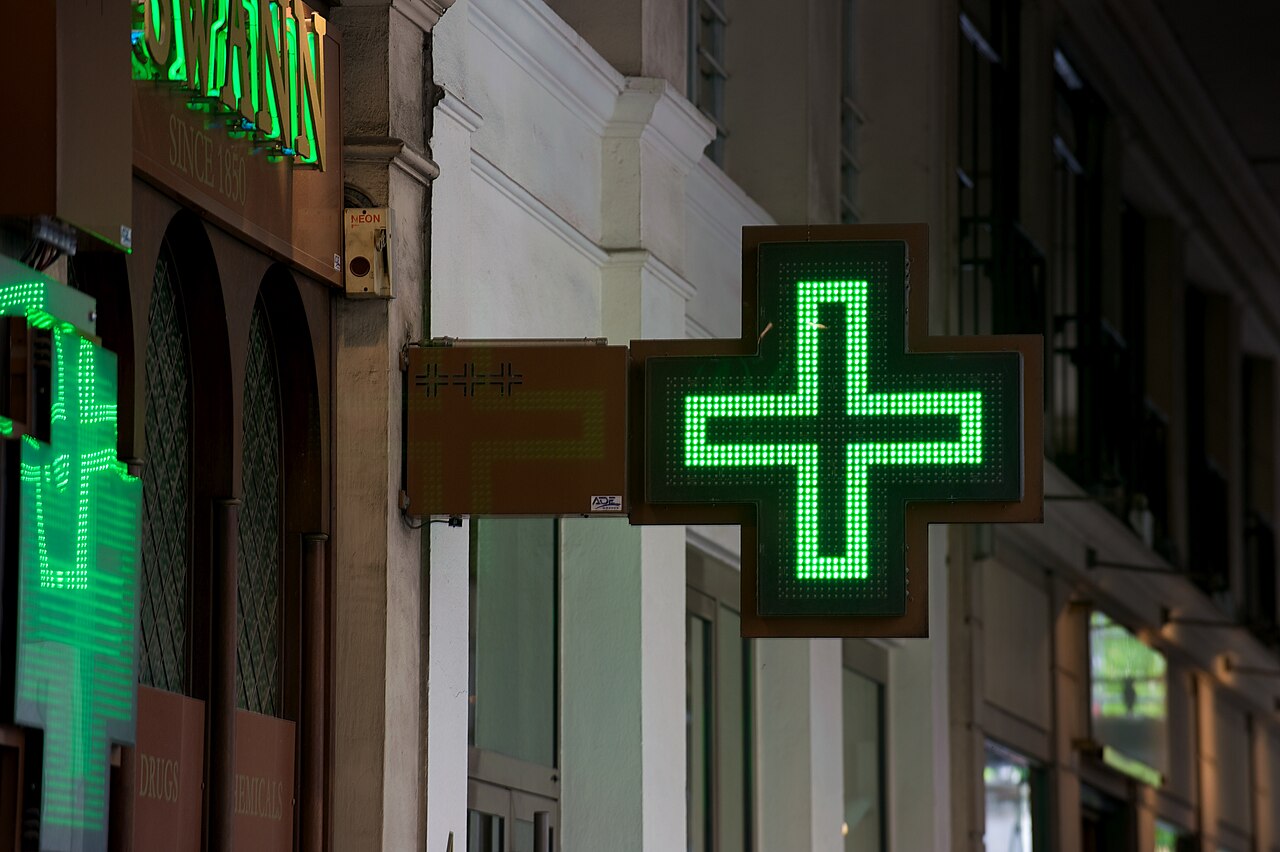
The universal symbol you are looking for on the street is the green cross ✚ — the same symbol used across continental Europe. Most Turkish pharmacies display an illuminated green cross sign that juts out from the building facade, making them visible from a distance even in narrow streets.
However, there is a uniquely Turkish addition: the letter “E” — often in red or green — displayed prominently on the shopfront. This stands for Eczane. If you see a green cross and a bold E on a storefront, you have found your pharmacy.
💡 Quick Recognition Guide: Green cross + red or green “E” on the facade = Eczane. If it also says “Nöbetçi” underneath, it means this pharmacy is on night duty and is currently open outside normal hours.
How Turkish Pharmacies Differ from UK and US Models
| Feature | Turkey (Eczane) | UK (Boots, Lloyds) | US (CVS, Walgreens) |
|---|---|---|---|
| Store type | Small, independent shop | Large chain retail store | Large chain retail store |
| Sells groceries/cosmetics? | No — medicine and basic health products only | Yes — huge cosmetics and snack aisles | Yes — entire grocery sections |
| Prescription needed? | Many medicines sold over the counter | Strict prescription requirements | Strict prescription requirements |
| Pharmacist interaction | You talk directly to the pharmacist at the counter | Counter is at the back of a large store | Counter is at the back of a large store |
| Open at night? | Nöbetçi (duty) system — one pharmacy per neighborhood stays open | Limited late-night options | Some 24-hour locations |
| Size | Small shopfront, usually 30–50 sqm | Large retail floor, 200+ sqm | Large retail floor, 500+ sqm |
The biggest cultural difference: in Turkey, the pharmacist is a healthcare professional you consult directly. You walk in, describe your symptoms, and they will recommend and sell you the appropriate medicine — often painkillers, stomach medication, or even erectile dysfunction pills that would require a doctor’s visit in the UK or US. This is normal and completely legal. Note that antibiotics do require a prescription in Turkey.
What Is a Nöbetçi Eczane?
Every neighborhood in Istanbul operates a duty pharmacy rotation system called Nöbetçi Eczane (pronounced nö-bet-chee ej-zah-neh). This means that even when all regular pharmacies close at night (usually around 19:00–20:00), one pharmacy per district stays open 24 hours on a rotating schedule.
How to find the Nöbetçi Eczane
- Look at the door of any closed pharmacy — they are required by law to post the name and address of the nearest Nöbetçi Eczane on their door or window
- Google “Nöbetçi Eczane + [your neighborhood]” — results are always up to date
- Use the app: The official “Nöbetçi Eczane” app (available on iOS and Android) shows you the nearest on-duty pharmacy with GPS directions
- Ask your hotel reception — they will know immediately
💡 Insider Tip: The Nöbetçi Eczane rotates daily. The one that was open last night will not be the same one tonight. Always check fresh — don’t rely on yesterday’s information.
What Can You Buy Without a Prescription?
This surprises many visitors: Turkey is significantly more relaxed about over-the-counter sales than the UK or the US. At most Eczanes, you can buy the following without a prescription:
- Strong painkillers (including some codeine-based options)
- Stomach medication (omeprazole, etc.)
- Allergy medication (antihistamines)
- Eye drops, ear drops, skin creams
- Cold and flu remedies
- Erectile dysfunction medication (Viagra, Cialis — sold over the counter, just ask the pharmacist)
What you cannot buy without a prescription: Antibiotics (amoxicillin, azithromycin, etc.), controlled substances, strong opioids, psychiatric medication, and insulin. Turkey enforces a strict digital prescription system for antibiotics — you will need to visit a local doctor or hospital emergency room to get an electronic prescription code before any pharmacist can sell them to you.
The pharmacist will ask you what is wrong, recommend something, and often tell you the correct dosage on the spot. It is efficient, personal, and — for visitors used to booking a GP appointment just to get basic painkillers or stomach medication — refreshingly straightforward.
Prices: Much Cheaper Than You Expect
Medicine prices in Turkey are government-regulated and significantly lower than in Western Europe or the US. A box of painkillers that might cost $15–30 in the US can be bought for 30–60 TL (roughly $1–2 EUR) in Istanbul. Allergy pills, stomach medication, and even Viagra are similarly affordable — a fraction of what you would pay back home.
No insurance needed. You pay cash or card at the counter. That’s it.
Practical Tips for Visitors
- Learn the word “Eczane” — it is the only word you need. Point at it on your phone if pronunciation is difficult
- The pharmacist speaks some English — especially in tourist areas like Sultanahmet, Taksim, and Kadıköy
- Bring your empty box — if you take regular medication at home, bring the box or a photo of it. The pharmacist can usually find the Turkish equivalent immediately
- Don’t panic at night — the Nöbetçi system means there is always a pharmacy open somewhere nearby
- Prices are fixed — unlike taxis or bazaars, medicine prices are government-controlled. You will never be overcharged
Need more practical tips for navigating Istanbul? Check out our Travel Guides for in-depth local knowledge, or plan your perfect day with one of our curated itineraries.