Foreign visitors pay 20 euros to enter Chora Mosque, purchased at the ticket booths outside the south entrance. You walk through the outer and inner narthex to view the 14th-century mosaics, but motorized curtains cover the apse figures during the five daily prayer windows. When I arrived at 12:45 PM on a Friday, guards held our group outside until 1:45 PM; arrive at 9:00 AM instead to see the nave without waiting. Women must cover their hair, everyone removes their shoes at the inner entrance, and security turns away anyone wearing shorts above the knee. Take the T4 tram to the Edirnekapı stop, then walk five hundred meters downhill along the Theodosian land walls to reach the entrance.
Foreign visitors arriving at the outer gate along Kariye Türbesi Sokak in Edirnekapı often stop short at the ticket booth. The monument no longer operates as a secular museum. Under the Directorate General of Foundations, the Chora Church entrance fee is no longer covered by the nationwide museum pass. Instead, foreign nationals pay the official Kariye Mosque 2026 ticket price of 1,000 TL (€20) at the card terminal before passing through the security turnstile.
Understanding the Chora Mosque visiting rules prevents long waits on the pavement outside. Tourist access stops fifteen minutes before each of the five daily prayer calls and resumes only after congregational worship concludes. On Fridays, the entire interior remains reserved exclusively for worship until roughly 14:30. Inside, motorized curtains cover the figural scenes in the central nave during services, though the narthexes and the southern funerary chapel remain visible to ticketed visitors. To inspect the 14th-century Istanbul Byzantine mosaics and Parekklesion frescoes in adequate natural light, plan your visit between 09:00 and 11:30 on Saturday through Thursday.
Insider tip: On my last walk through Edirnekapı, three visitors were turned away at the garden gate because their knees were exposed. The ticket booth sells disposable synthetic coverings for 150 TL (€3) and headscarves for 75 TL (€1.50), but packing your own lightweight scarf saves both the expense and the wait in the queue.
Following practical Edirnekapı visitor tips saves considerable transit time from the historic peninsula. To reach the site from Sultanahmet, board the T1 tram to Topkapı, transfer to the T4 light rail line northward to the Edirnekapı stop, and walk eight minutes downhill beside the fifth-century Theodosian walls. Arriving with a pre-downloaded audio tour, shoes that slip off easily, and a verified prayer schedule ensures you navigate the entrance checkpoint and study the Palaiologan artwork without delays.
Current admission fees and ticketing regulations
Admission for foreign tourists is set at 1,000 TL (20 EUR) per person, establishing the official Chora Church entrance fee under the visitor management structure administered by the Directorate of Foundations. This ticket provides access to the outer narthex, the inner narthex, and the side chapel (parekklesion), where the fourteenth-century mosaics and wall paintings are located. Children under eight years old enter free of charge upon presentation of a valid foreign passport at the manned control booth.
| Visitor Category | Admission Fee | Entry Requirements and Validity |
|---|---|---|
| Foreign Tourist Adult | 1,000 TL (20 EUR) | Single-entry ticket purchased on site |
| Child (Under 8 Years) | Free | Physical passport inspection at the gate |
| Turkish Citizen | Free | Republic of Türkiye national ID card |
| Museum Pass Turkey Holder | 1,000 TL (20 EUR) | Museum passes not accepted; full rate applies |
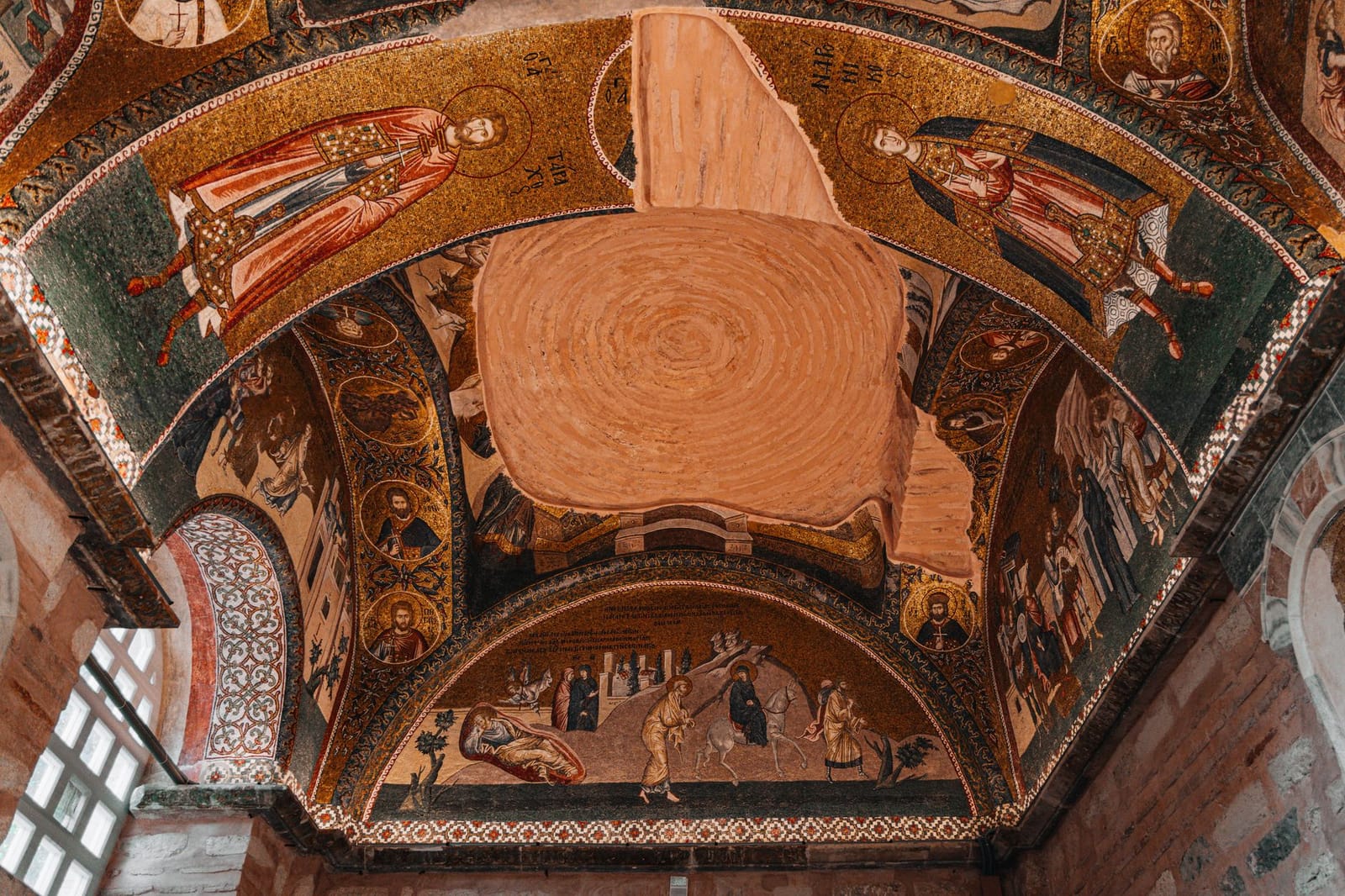
The Museum Pass Turkey and the Istanbul Museum Pass cannot be used at this site. When the building ceased functioning as a secular museum under the Ministry of Culture and Tourism and transferred to the Directorate of Foundations as a functioning house of worship, it was removed from the national museum pass network. Every foreign visitor holding a city pass must buy a separate ticket at the Kariye Mosque 2026 ticket price to pass the security turnstiles.
I learned this the hard way during my visit on a damp Thursday morning at 09:15: I joined a queue of roughly 35 people outside the Kariye Türbesi Sokak ticket booth just as the cellular POS terminal crashed, forcing anyone without cash to wait in the drizzle for 20 minutes while technicians rebooted the machine. Carrying exact paper notes in Turkish Lira allowed me to step out of the stalled queue and clear the manned turnstile immediately.
Visitors can purchase admission at the automated kiosks located near the northern garden entrance on Kariye Türbesi Sokak, or at the staffed booth adjacent to them. The automated machines are equipped with a chip-and-PIN POS terminal that processes Visa and Mastercard, though mobile network delays in the Edirnekapı district occasionally freeze card approvals. For broader advice on handling transactions across the city, consult our breakdown on Handling Cash and Card Payments with 2026 Exchange Rates and Tipping Tips. Ticket sales halt at 17:55 each day, five minutes before visitor access ends at 18:00.
Visiting hours and prayer time restrictions
The outer courtyard ticket turnstiles admit visitors starting at 09:00 every day of the week. Closing time is 19:00 during the summer season, which runs from April through October, shifting to 17:00 in winter when afternoon daylight fades early along the Theodosian walls. Arriving at 08:45 avoids the initial morning queue of private tour groups that assemble by 09:15. If you reach the gate after 09:30, plan for an entrance wait of twenty to thirty minutes on weekdays, extending past forty minutes on weekends.
Because the building functions under the joint management of the Ministry of Culture and Tourism and the Presidency of Religious Affairs (Diyanet), Chora Mosque visiting rules pause tourist admissions thirty minutes before each Adhan and reopen the galleries fifteen minutes after congregational prayers conclude. Security guards close the ticket booths and clear the entry corridor during these intervals. If you enter forty-five minutes before a scheduled prayer, you will be directed toward the exits before finishing a thorough inspection of the mosaics. Checking daily prayer times on the official Diyanet timetable before leaving your hotel prevents lost viewing time.
I remember when I made the mistake of arriving at the Edirnekapı gate at 12:15 on a Friday last November, assuming tourist access operated continuously without interruption. A security officer turned away thirty-five foreign visitors who had taken the T4 tram to Edirnekapı without checking the schedule, leaving everyone stranded on the stone square until afternoon entry resumed at 14:30. Unlike smaller historic complexes such as the Iznik Tiles and Sacred Stones at the Sokullu Mehmed Pasha Mosque with 2026 Visiting Tips, where visitors can wait quietly in an open courtyard, Chora seals its exterior barrier during Friday services.
Berk’s Insider Tip: The ticket office staff change shifts right before the Dhuhr noon prayer. Arrive at 10:45 on a Tuesday or Wednesday; you get an hour of soft southern light through the clerestory windows of the parekklesion, and the large tour buses from Sultanahmet will have departed for lunch.
Ticket sales end forty-five minutes prior to the seasonal closing time, and guards sweep the gallery corridors at 18:45 during summer and 16:45 in winter.
Accessible zones and mosaic viewing conditions
Foreign visitors pay 1,000 TL (20 EUR) for dedicated access to the designated heritage circuit, which includes the exonarthex, esonarthex, and the lateral parekklesion funeral chapel. Statesman and scholar Theodore Metochites funded this architectural overhaul between 1315 and 1321, commissioning the dense narrative cycles that defined the Palaiologan Renaissance. Today, these perimeter corridors hold the city’s best-preserved Istanbul Byzantine mosaics, organized across the vaults to depict the childhood of Mary and the miracles of Christ.
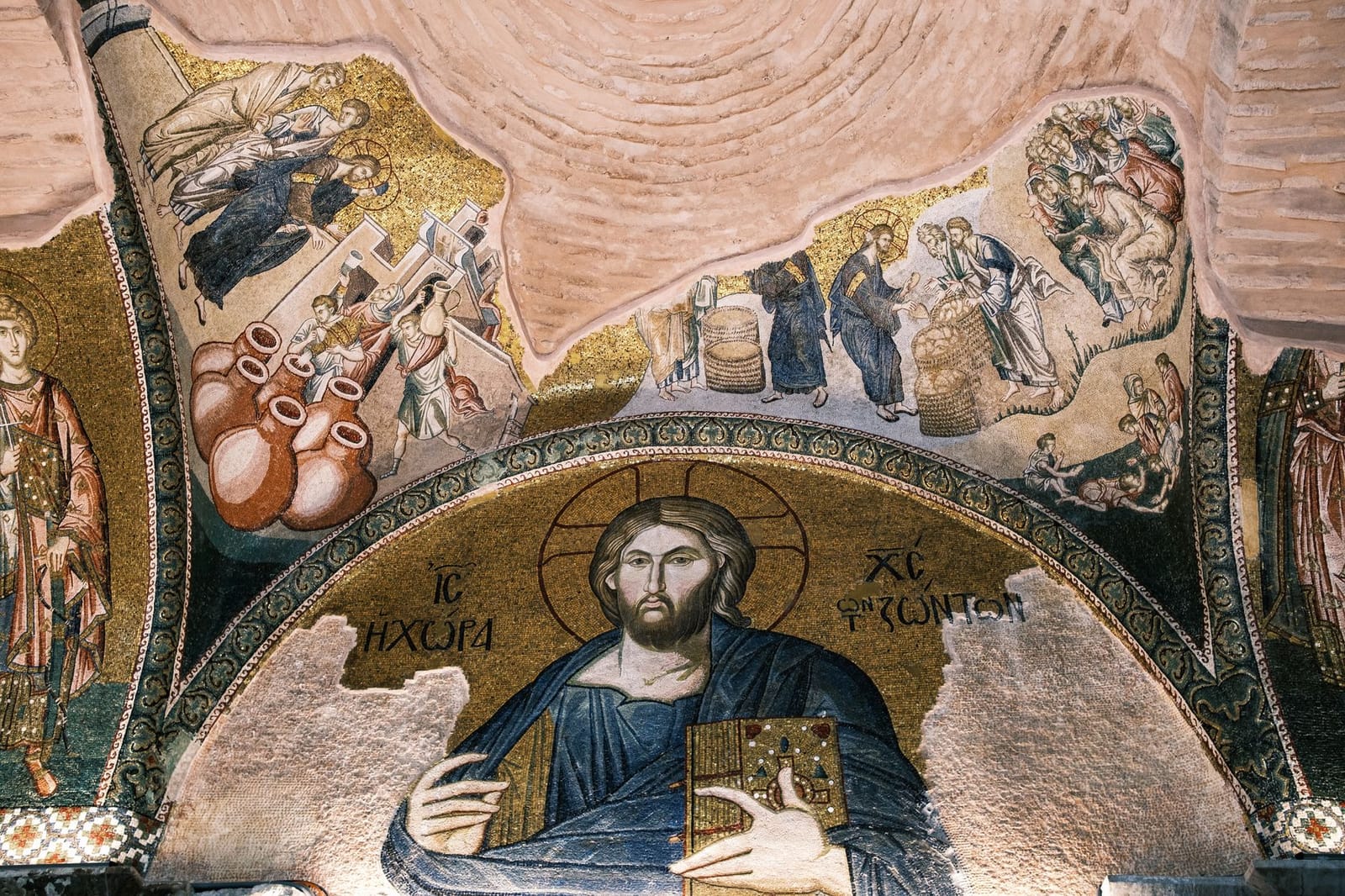
Security protocols at the perimeter gate on Kariye Türbesi Sokak are strict. Tripods, gimbals, and flash photography are confiscated at the bag screening x-ray machine before you reach the outer doorway. Guards tag these items, hold them in storage lockers near the ticket booth, and return them when you leave the complex. Handheld photography without flash or supplemental lighting is permitted throughout the accessible visitor route.
The central naos is the active congregational prayer hall, meaning public movement through the main floor is restricted. Above the main interior entrance on the western wall of the naos sits the Dormition of the Virgin mosaic, depicting Christ holding Mary’s soul in the form of an infant. Because the naos functions as a working mosque, motorized roller blinds lower over this composition and adjacent Christian figures during the five daily prayer services. Between prayer calls, visitors can view the Dormition of the Virgin from a cordoned barrier separating the esonarthex from the prayer rugs, though sightlines depend on how far back the stanchions are placed.
Insider tip: During my visit on a Tuesday at 12:45 PM, the call to the midday prayer prompted guards to lower the roller blinds and route all tour groups out of the central portal into the side corridors. You will get cleaner sightlines and far fewer crowds if you step into the narthex roughly thirty minutes after a prayer service concludes.
Along the southern side of the church, the fourteenth-century Anastasis fresco in the parekklesion remains visible to ticket holders without fabric covers throughout the day. This vaulted burial chapel is not an active prayer space, so the monumental scene of Christ pulling Adam and Eve from their tombs in the apse semi-dome stays unobscured. Natural illumination enters through the southern lancet windows, meaning the plastered surfaces reflect direct light in the morning and fall into heavy shadow by late afternoon.
Entry etiquette, dress code, and security checkpoints
Security guards at the Kariye turnstiles inspect your clothing before you reach the ticket barcode scanner. Because the complex functions as an active house of worship under Diyanet administration while receiving international sightseers, Chora Mosque visiting rules follow strict protocol.
The dress protocol requires specific coverage before entering the outer narthex:
- Women must drape a head covering over their hair and neck, keeping shoulders and upper arms fully concealed.
- Men must wear trousers extending past the knee, as shorts and sleeveless tank tops are barred at the security turnstiles.
- Midriffs, transparent fabrics, and low-cut tops must remain covered throughout the perimeter.
- Visitors must leave all outdoor shoes in the numbered wooden shoe cubbies outside the threshold before stepping onto the carpeted bays.
- Plastic shoe covers are handed out at the entrance on rainy days to prevent wet dirt from transferring onto the marble flagstones.
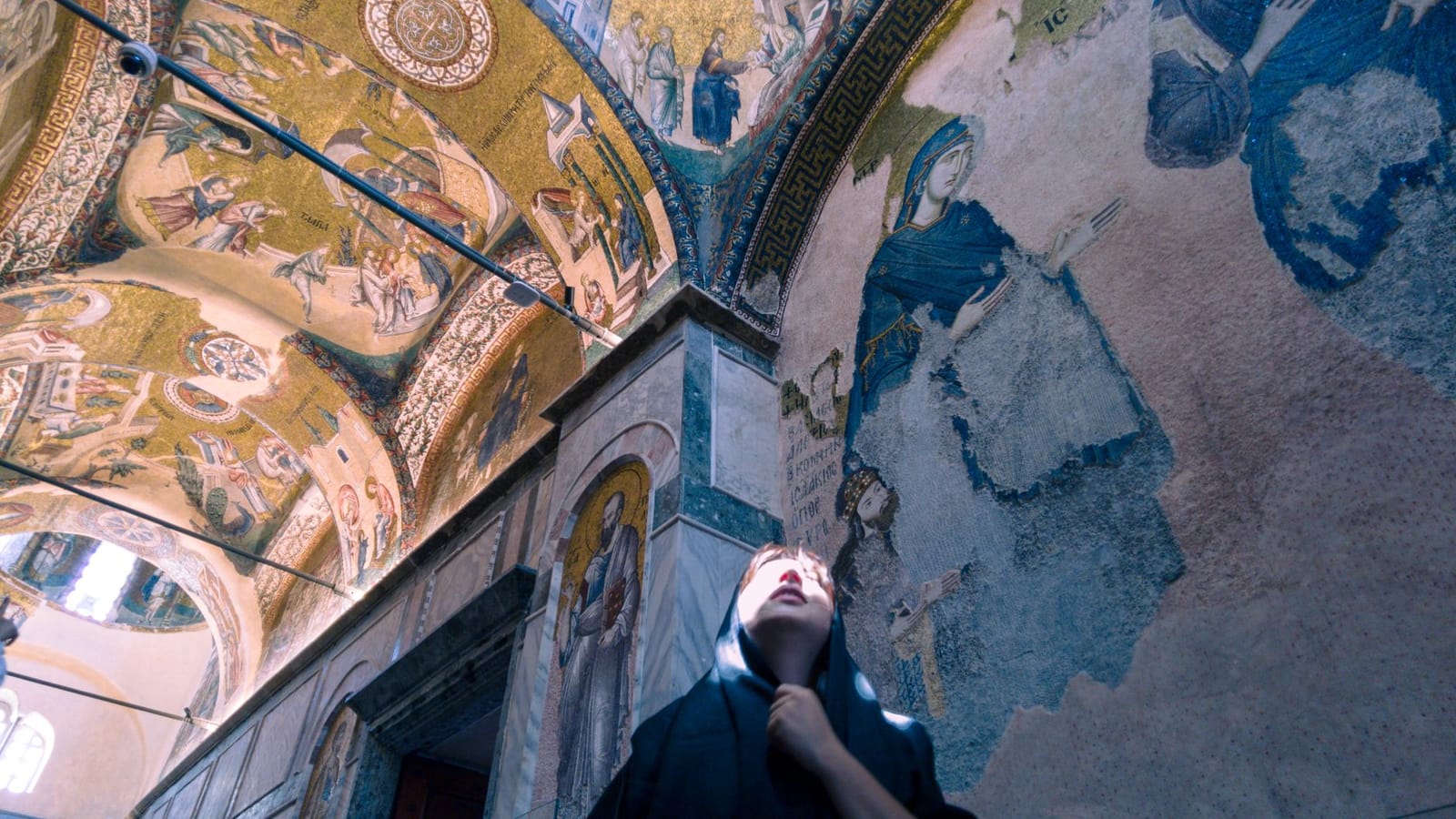
Insider tip: I watched a visitor lose thirty minutes of daylight trying to enter in running shorts, only to get redirected to the neighborhood shops down the hill. If you arrive unprepared, you can purchase disposable synthetic shawls and wrap skirts at the adjacent guard booth for 75 TL (1.50 EUR).
The footwear requirement here contrasts sharply with the Hagia Sophia upper gallery, where tourists walk on timber ramps with their shoes on. At Chora, staff vacuum the carpets continuously, and stepping past the shoe boundary in socks is strictly enforced. You can carry your shoes inside a tote bag if you prefer not to leave them on the open shelves, though lockers are not provided for oversized backpacks.
Large tripods, selfie sticks, and luggage exceeding airline cabin dimensions are stopped at the x-ray conveyor. The baggage scanner operates at the south gate, and items left behind must be picked up immediately upon exit at the Kariye Cami Çıkmazı gate.
Transit routes to Edirnekapı and approach logistics
Chora Mosque stands roughly three kilometers northwest of Sultanahmet, situated immediately inside the Theodosian Walls in the Edirnekapı quarter. Taxis rarely accept short fares from Sultanahmet during peak traffic hours, often refusing the run or demanding arbitrary flat rates. Using the municipal transit network guarantees arrival within predictable timeframes, with standard rides costing 46.20 TL (0.92 EUR) per boarding on an Istanbulkart.
For visitors staying near the historical core, taking the M2 metro to Vezneciler plus the 86V bus offers reliable timing under 40 minutes:
- Walk northwest from Sultanahmet past Beyazıt Square to reach the Vezneciler transit area.
- Board the 86V municipal bus from the platform on 16 Mart Şehitleri Caddesi.
- Tap your Istanbulkart on the validator reader upon boarding.
- Disembark at the Edirnekapı bus stop beside the preserved ramparts.
- Walk east down Kariye Bostanı Sokak for eight minutes along the gentle descent to the site gate.
The T4 light rail Edirnekapı route provides another practical connection if you are traveling along the central expressway corridor or transferring from the metro interchange at Topkapı. The T4 tramway stops at Edirnekapı station, which sits underground beneath the roadway. After riding the line, you exit onto street level where an eight-minute downhill walk through Kariye Bostanı Sokak takes you into the older residential streets around the mosque, bringing you directly to the entrance beneath the preserved frescoed domes.
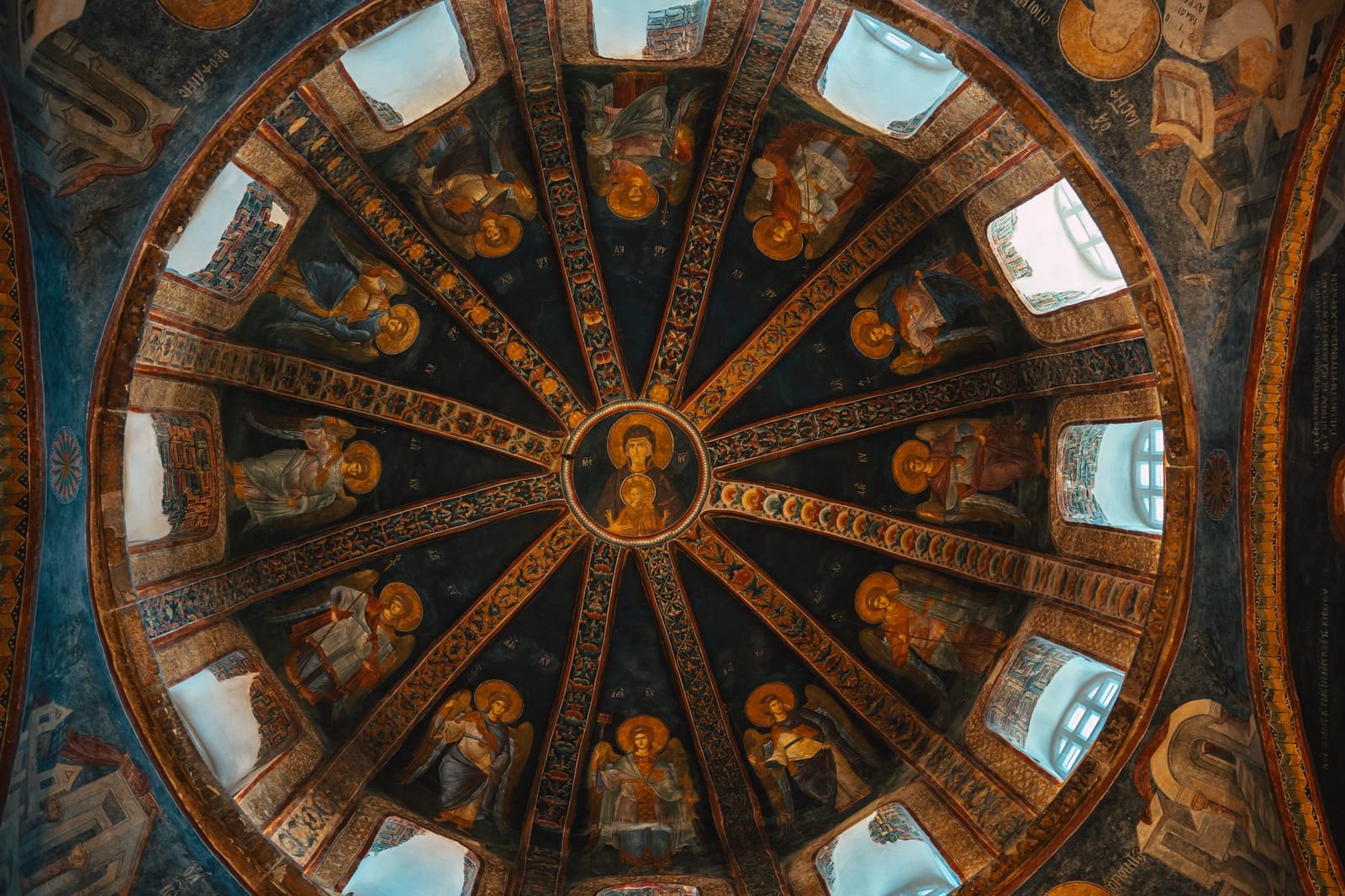
Berk’s Insider Tip: If you take the T4 tramway to Edirnekapı, use the southern station elevator to surface right beside the Byzantine wall rampart. Walking down Dervişali Sokak rather than the main avenue cuts through quiet residential alleys and saves you five minutes of dodging minibuses.
You can also reach the area from the water by combining the T5 tram along the Golden Horn to Balat with an uphill walk through the historic Fener staircases, which takes roughly 20 minutes. Practical Edirnekapı visitor tips dictate checking your foot gear before attempting this climb: the street inclines rise more than 50 meters through stone paths that can be slippery after morning rain. Once at the top ridge, following Sarmaşık Sokak brings you straight to the foreign visitor entrance gates outside the restored narthex.
Common visitor queries for Chora Mosque
The Kariye Mosque 2026 ticket price is set at 1,000 TL (20 EUR) for foreign visitors, and entrance protocols reflect its status as an active place of worship.
Is an audio guide included in the Kariye Mosque ticket price?
The 1,000 TL (20 EUR) ticket covers access to an official digital audio guide via QR codes posted along the entrance barriers, rather than a physical handheld device. You stream the commentary directly on your smartphone. Staff do not provide complimentary headphones, and cellular reception drops behind the exterior brickwork, so bring personal earphones and open the web portal before stepping inside.
Insider tip: When I walked in on a Tuesday at 12:40 PM, my phone dropped to one signal bar under the stone arches. Download the audio guide data while standing outside near the ticket window on Kariye Türbesi Sokak, or you will spend ten minutes waiting for the narthex mosaic explanations to buffer.
How accessible is the building for wheelchairs and strollers?
Navigating the interior with wheels is difficult due to historical preservation limits. The path from the garden turnstile into the narthex and the side parecclesion crosses raised marble thresholds measuring up to 15 centimeters. Strollers are prohibited inside the corridors and must remain outside at the security checkpoint. Wheelchair users require physical assistance over the stone door sills, as structural ramps cannot be installed over the original floor.
How much time is needed to inspect the mosaics between prayer calls?
Budget 60 to 75 minutes to examine the wall art thoroughly. Under current Chora Mosque visiting rules, tourists must step out of the naos 15 minutes before each adhan, during which automated screens cover the figures around the prayer space. The narrative cycles of Christ and Mary in the outer and inner narthexes stay visible, but arriving an hour clear of the midday prayer ensures an unhurried visit.
Are there luggage storage facilities near the mosque?
Kariye Mosque has no cloakroom or storage lockers, and security personnel turn away rolling suitcases and large travel packs at the gate. The nearby Edirnekapı light rail stop also lacks storage lockers. Leave your bags at storage lockers around Sirkeci or reserve verified space at neighborhood shops through LuggageHero or Nannybag before boarding the bus.
Best arrival strategy and closing recommendations
The single most reliable weekday arrival window is between 09:00 and 10:30. The noon prayer call sounds around 13:00, which closes the main nave to visitors and draws the motorized curtains over the apse mosaics. Arriving at 09:30 gives you two uninterrupted hours to inspect the vault mosaics and the parekklesion frescoes before crowds bottleneck the narrow corridors. If I were visiting again, I would skip waiting out the prayer cycle in hopes of seeing the nave floor; the major narrative sequences are located in the inner and outer narthexes, and waiting in the garden while staff clear the hall wastes an hour for very little extra access.
To arrive on schedule, take the T4 tram to Edirnekapı instead of sitting in Fatih road traffic in a taxi. From the Edirnekapı tram station, exit toward the Theodosian land walls and walk down Kariye Türbesi Sokak. When the entry queue outside the turnstile stretches past the wooden ticket booth steps (a pattern that sets in around 11:15 on weekdays), guards begin batching visitors and moving everyone through in single file. Boarding the T4 by 08:45 puts you at the door before that bottleneck begins. Once you complete your morning visit and walk back toward the tram or down the Fener hill to the waterfront, continue across the Golden Horn for Handcrafted Baklava and Pistachio Desserts in Karaköy and Eminönü with 2026 Prices and Ordering Etiquette.