Full combined admission to Topkapı Palace, the Imperial Harem, and Hagia Irene costs 2,750 TL (55 EUR) in 2026. Arriving at 10:00 AM often results in a 45-minute wait at the Gate of Salutation; buy your ticket in advance or arrive at the physical booths by 08:45 AM to enter right at 09:00 AM. You move through four courtyards, from the Imperial Kitchens in the Second Courtyard to the Baghdad Kiosk overlooking the Bosphorus in the Fourth. To beat peak crowd volume, head straight into the Imperial Harem corridors first thing in the morning before tour groups bottleneck the narrow residential passages, then visit the Sacred Relics and Imperial Treasury in the Third Courtyard.
At 08:45 on a weekday morning outside the Bab-ı Hümayun gate, the queue for the ticket windows already curls along the stone wall behind Hagia Sophia. For foreign visitors, the combined ticket covering the main palace grounds, the Imperial Harem, and Hagia Irene costs 2,750 TL (55 EUR). Topkapı Palace is an administrative complex built across four open courtyards on Sarayburnu point, where the Golden Horn meets the Sea of Marmara.
Having lived in Istanbul for fifteen years, I routinely see visitors make the same logistical misstep: they stop to inspect the Imperial Council chambers in the Second Courtyard, linger on the outer paths, and reach the Imperial Harem around 11:00, when tour groups pack the narrow stone corridors. The practical fix is straightforward. Clear the Gate of Salutation right as the turnstiles open at 09:00, walk immediately to the Harem entrance on the left side of the Second Courtyard, and explore those private residential quarters before the bulk of the crowds arrive.
You will need at least three hours to cover the courtyards and the residential pavilions without rushing. Between the uneven historical cobblestones and separate security lines at specific exhibition halls, navigating the complex requires deliberate pacing and accurate local information.
Current admission prices and ticketing logistics for 2026
Foreign visitors entering Topkapı Palace must purchase a unified admission ticket covering the main palace grounds, the Imperial Harem, and Hagia Irene. While earlier seasonal pricing stood at 1,750 TL (35 EUR / approximately 39 USD) for international travelers, the Directorate of National Palaces has set the official box office rate for Topkapi Palace tickets 2026 at 2,750 TL (55 EUR / approximately 61 USD). Standalone entry to the palace grounds without the auxiliary sections is no longer issued for foreign passport holders.
| Ticket Category | Price (TL) | Price (EUR / USD) | Included Access |
|---|---|---|---|
| Combined Foreign Ticket | 2,750 TL | 55 EUR / ~61 USD | Main Palace, Imperial Harem, Hagia Irene |
| Harem Standalone (Select tiers) | 1,050 TL | 21 EUR / ~23 USD | Imperial Harem quarters only |
| Hagia Irene Standalone | 1,050 TL | 21 EUR / ~23 USD | Hagia Irene interior only |
| Children (Ages 0–6) | Free | Free | Palace grounds and Harem with valid passport check |
The physical ticket booths sit along the right perimeter of the First Courtyard, between the Imperial Gate and the security checkpoint at the Gate of Salutation. Arriving at 08:45 AM ahead of the 09:00 AM opening gives you a massive advantage. Tour buses drop large passenger groups starting around 09:15 AM, which quickly turns the single-file metal detectors and x-ray conveyors into a 45-minute bottleneck before you reach the turnstiles.
On a crisp Thursday morning at 08:35 AM outside the First Courtyard ticket booths, I watched a family spend fifteen minutes trying to negotiate student discounts at the cashier with photocopied IDs. By the time the transaction concluded, the queue behind them had lengthened past seventy people, snaking back toward the Fountain of Ahmed III. Arriving twenty minutes before opening preserved my entire morning schedule.
Holding a Museum Pass Istanbul eliminates the ticket booth line. You scan the card’s QR barcode directly at the turnstiles. As outlined in the guidelines for Hagia Sophia Visiting Rules and Upper Gallery Entry Prices for 2026, skipping the cashier queue does not bypass building security; pass holders stand in the same initial bag screening line as standard ticket buyers.
Insider tip: The audio guide distribution desk inside the second gate requires a physical ID or a cash deposit in Turkish Lira or euros, and the staff flatly reject phone photos of passports. If you do not want to part with an original identification card or queue twice to collect your deposit on the way out, bring wired earphones and open the palace web tour on your phone browser instead.
Physical audio guide handsets are issued directly past the second gate against this physical deposit. Travelers using personal smartphones can connect to the mobile web guide, which streams the numbered tour tracks without a deposit desk transaction. Handset collection windows close thirty minutes before site closing time.
First Courtyard and entering through the Gate of Salutation
After stepping through the Imperial Gate behind Hagia Sophia, you enter the outer courtyard known historically as Alay Meydanı (Courtyard of the Regiments). Unlike the enclosed administrative quarters ahead, this outer perimeter functioned as an open public space within the Ottoman imperial palace. Janissaries gathered here on paydays, merchants supplied the imperial bakeries, and subjects could submit formal petitions. To your left stands Hagia Irene, a sixth-century Byzantine church that the Ottomans preserved as an armory rather than converting it into a mosque. Strict ceremonial protocol dictated movement across these grounds: grand viziers, foreign ambassadors, and cavalry officers were required to dismount at the stone mounting block outside the inner portal. Only the reigning Sultan entered on horseback.
The museum complex begins at Bab-üs Selam (Gate of Salutation), flanked by octagonal twin towers with conical stone roofs. This portal separates the public park from the sovereign core of imperial administration. Security checks and automated ticket turnstiles operate directly beneath the vaulted gate arches. Security staff screen all bags through X-ray units. Palace regulations ban full-height tripods, monopods, oversized trekking packs, and commercial video rigs. If guards stop you for carrying unauthorized camera equipment, you must leave it at the storage desk to the right of the turnstiles before proceeding. The full combined ticket for foreign visitors covering the palace, Harem, and Hagia Irene costs 2,750 TL (55 EUR).
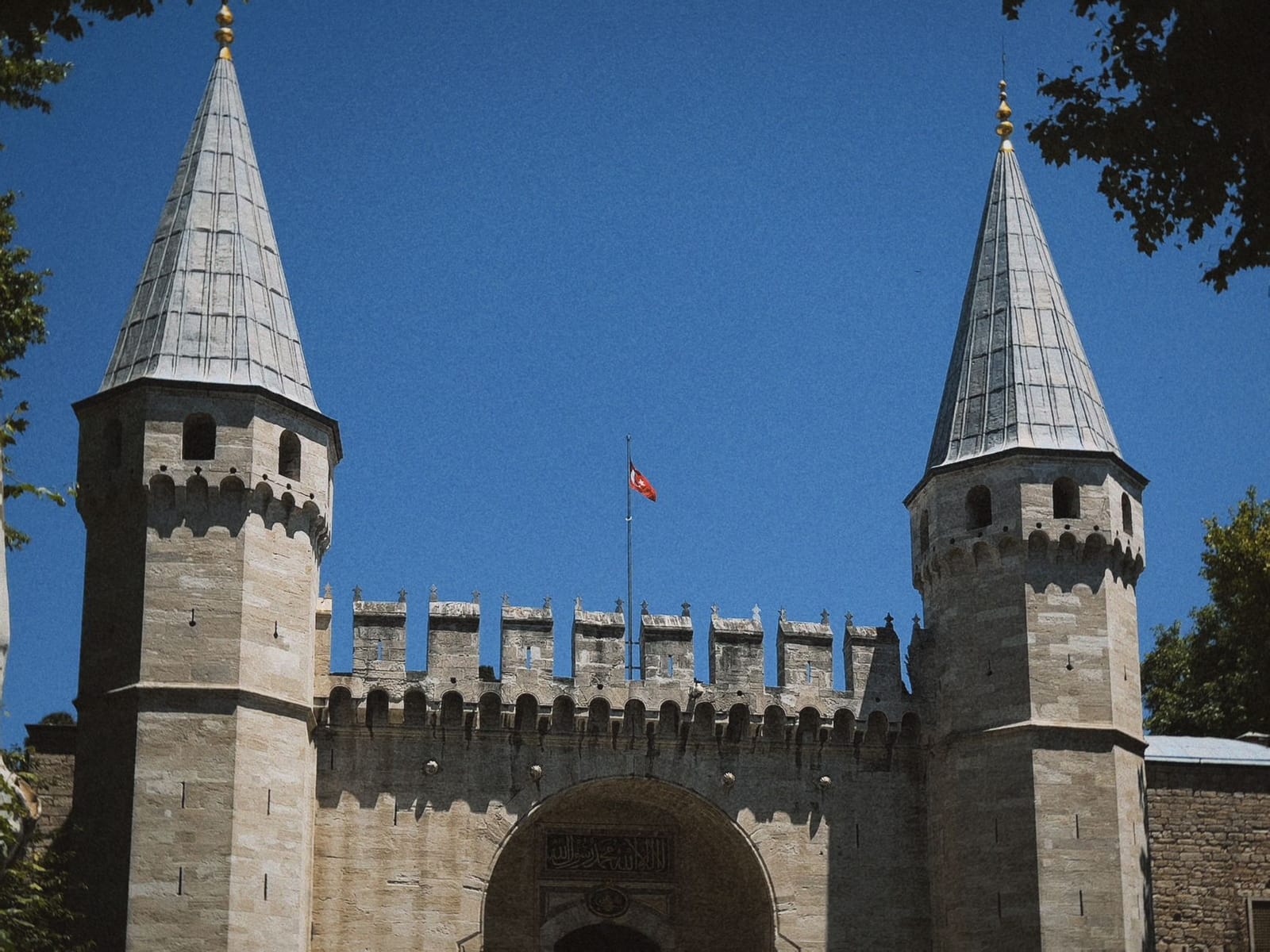
Insider tip: I watched a visitor lose 25 minutes at 09:15 trying to negotiate entry with a handheld gimbal and a detached microphone. The guards categorize video stabilizers as commercial gear, so pack a compact mirrorless body or stick to your phone if you want to clear security without delays.
Passing through the heavy iron doors of Bab-üs Selam brings you onto the gravel paths of the Second Courtyard, where the route branches off toward the Council Chamber, the imperial kitchens, and the Harem ticket checkpoint. The turnstiles accept printed paper vouchers, digital bar codes on mobile screens, and the official Museum Pass Türkiye.
Second Courtyard administrative halls and the Imperial Kitchens
Passing through the Gate of Salutation into the Second Courtyard, known as Divan Square, you enter the administrative hub of Topkapi Palace. On the western wall stands the Divan-ı Hümayun (Imperial Council), where the Grand Vizier gathered state ministers to settle imperial decrees. Look closely at the upper wall of the council chamber to spot a small, gilded lattice window set beneath the dome. Ottoman sultans sat in private behind this screen; ministers debated without knowing whether the ruler was listening, a deliberate architectural device that kept state officials on guard.
Directly opposite the council hall along the eastern perimeter, ten twin chimneys mark the Matbah-ı Amire, the palace kitchens rebuilt by architect Mimar Sinan. This stone complex fed thousands of palace residents daily and now houses the court collection of Chinese Celadon porcelain. Ottoman court physicians valued celadon because folklore held that the pale green glaze would crack or discolor if placed in contact with toxic substances, acting as an early warning system against political poisonings.
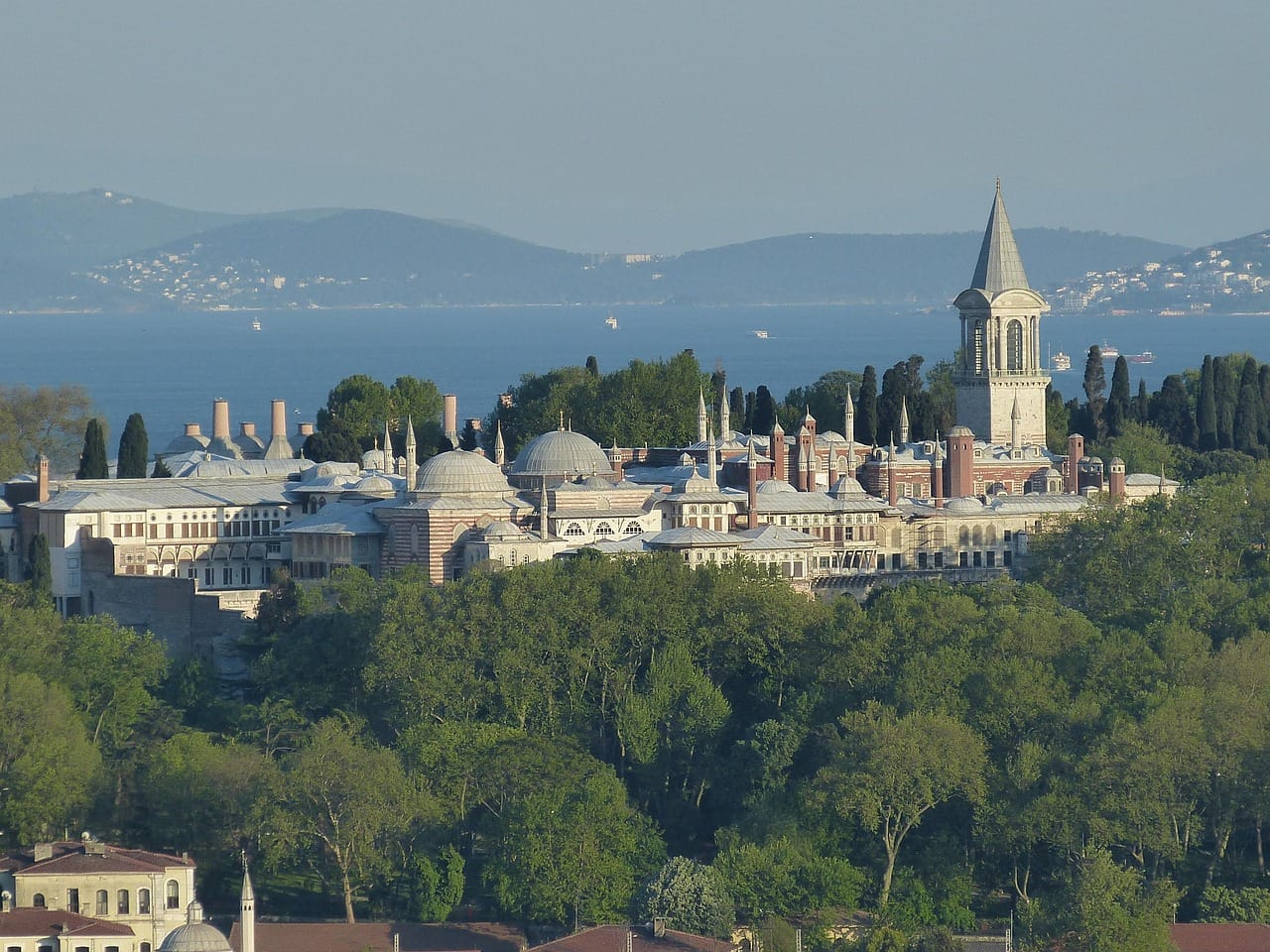
The entrance to the Imperial Harem sits directly adjacent to the council hall beneath the Tower of Justice. Large guided groups usually reach this doorway between 10:00 AM and 11:30 AM, creating a bottleneck across the flagstone paths. You can avoid the worst of this congestion by pacing your route in reverse: head directly to the Harem entrance when the complex opens, then return to the council hall and kitchens later in the morning.
Berk’s Insider Tip: Most travelers head straight to the Treasury chambers upon passing the Gate of Felicity, creating a massive queue by 10:30 AM. Walk straight into the Harem first thing in the morning when the doors unlock. You will have the tiled corridor of the Queen Mother almost entirely to yourself for twenty minutes before tour groups file through.
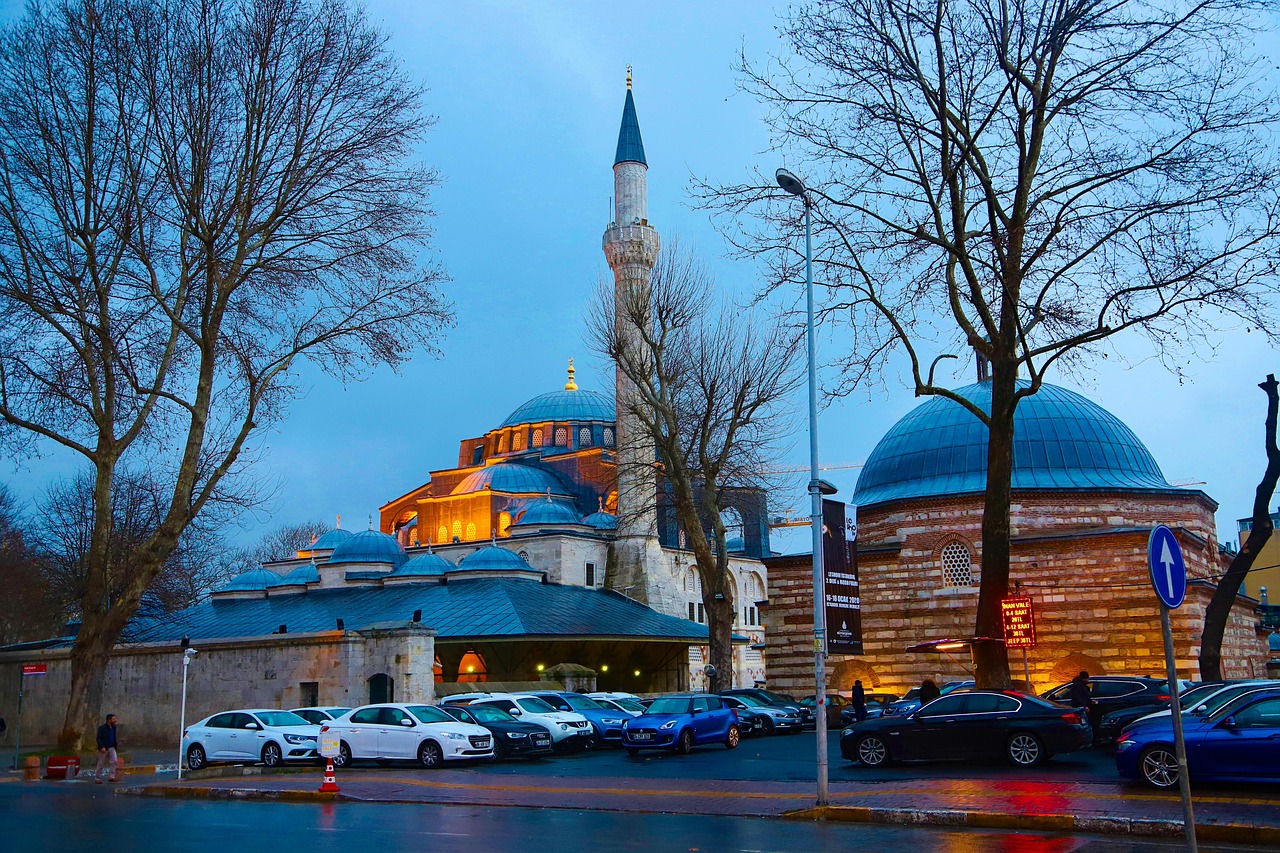
When you return to explore the council rooms, the Iznik tile panels and gilded woodwork offer an immediate look into sixteenth-century decorative statecraft under Grand Vizier Sokullu Mehmed Pasha. If you appreciate this tile heritage, study the masterwork panels described in our overview of Iznik Tiles and Sacred Stones at the Sokullu Mehmed Pasha Mosque with 2026 Visiting Tips located just down the hillside. For a distinct look at nineteenth-century imperial court living, compare these quarters with the French-influenced salons at Dolmabahçe Palace Waterfront Gardens and Harem Tours with 2026 Ticket Prices. The kitchen galleries and council chambers admit visitors until forty-five minutes before the main museum gates close.
Navigating the Imperial Harem chambers and Iznik tile corridors
The Imperial Harem follows a strict one-way pedestrian circuit that funnels visitors through three centuries of modular Ottoman imperial palace construction. Because Ottoman sultans added wings, bathhouses, and private apartments as families grew, the layout lacks a central organizing axis. Visitors must navigate tight transitions, varying floor levels, and narrow corridors where bottlenecking is frequent during midday tour arrivals.
- Enter through the Carriage Gate and move past the guard quarters into the Courtyard of the Black Eunuchs.
- Follow the flagstone corridor past the tiled dormitory stalls into the Courtyard of the Queen Mother (Valide Sultan).
- Walk through the domed Imperial Hall into the Privy Chamber of Murad III.
- Inspect the wall fountain and polychrome Iznik ceramics along the western wall before entering the adjacent library niche.
- Ascend the stone steps to the Twin Kiosks (Apartments of the Crown Prince) to view the painted canvas domes before exiting toward the Courtyard of the Favorites.
During my walk through the Harem at 09:15 AM on a chilly autumn morning, right after clearing the security stanchions, I pushed straight past the Courtyard of the Black Eunuchs while two tour groups paused to calibrate their wireless audio receivers. That brisk pace bought me twenty uninterrupted minutes alone inside the Privy Chamber of Murad III, admiring the acoustics and 16th-century Iznik cobalt tiles in complete silence before forty headset-wearing visitors flooded the doorway.
The architectural core of the complex centers on the power of the Valide Sultan, who managed palace domestic administration. Her courtyard has double-tiered wooden porticos flanked by early 17th-century tile work, reflecting the building campaigns overseen by figures such as Nurbanu Sultan.
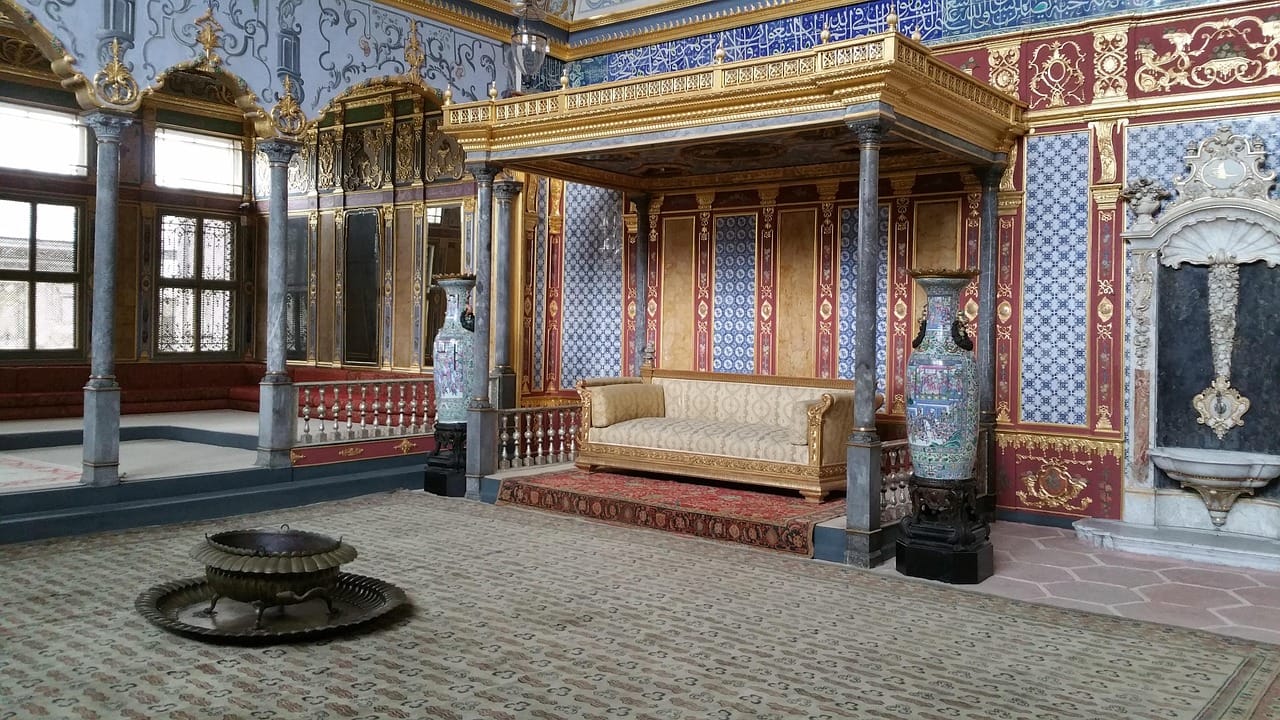
Directly off the main ceremonial corridor sits the Privy Chamber of Murad III, designed by Mimar Sinan in 1579. The room retains its original 16th-century Iznik underglaze ceramic panels, dominated by coral red, turquoise, and cobalt blue palmette motifs. A multi-tiered marble fountain sits embedded in the wall opposite the bronze fireplace; running water from this fountain masked sensitive political conversations from eavesdroppers in the adjacent hallways.
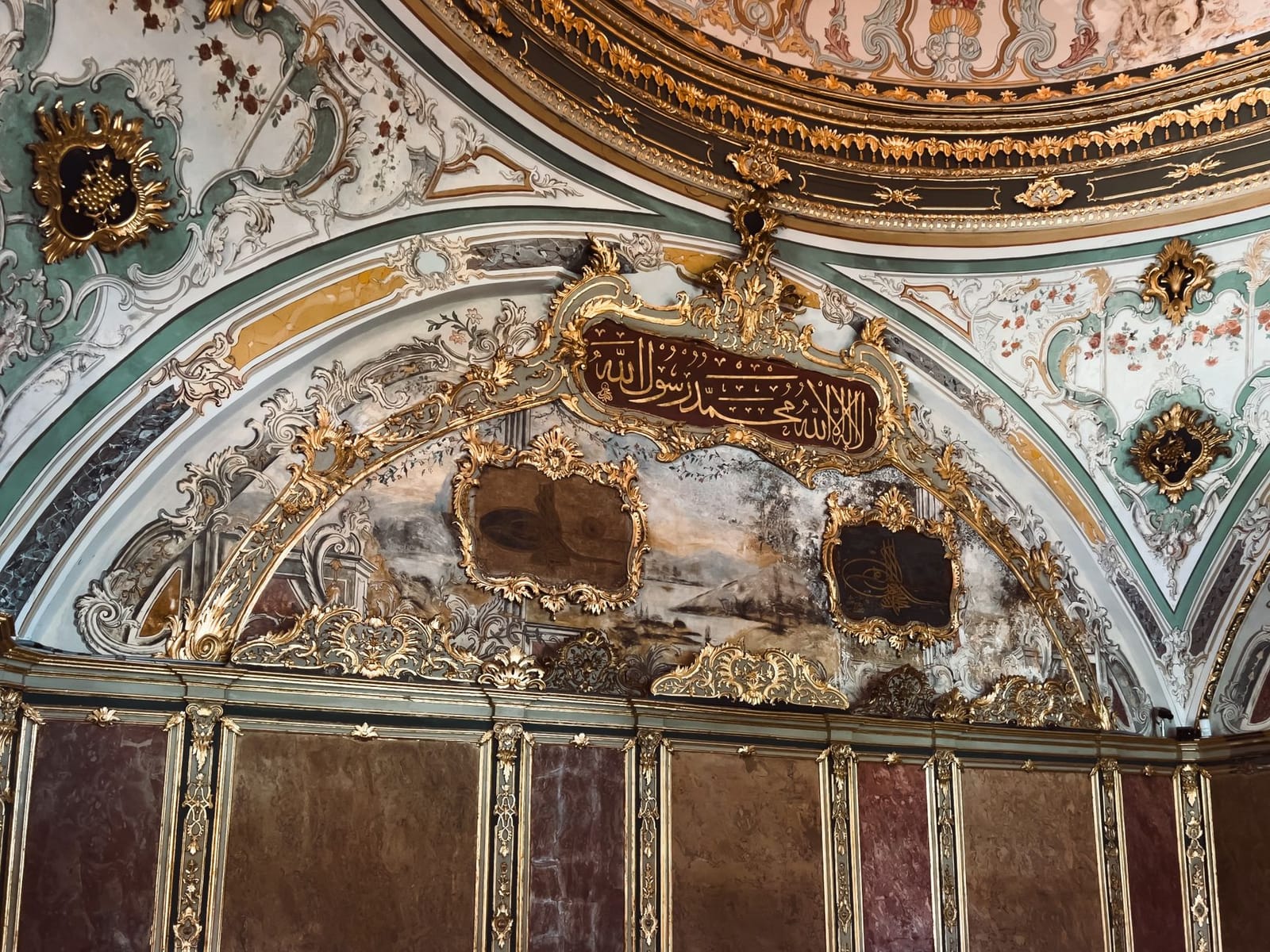
Immediately past this hall lie the Twin Kiosks, dating from the early seventeenth century. These two chambers served as quarters for the crown prince and have elevated divans, leaded stained glass on the upper window registers, and ornate dome ceilings constructed from painted canvas stretched over timber frames.
Because the corridors connecting the Queen Mother’s suites to the private baths have low stone arches and widths under 1.2 meters, palace guards do not permit backward movement against the visitor flow. Keep your party together before passing through each doorway, as stepping past a portal means completing the entire circuit to re-enter. Topkapı Palace opens at 09:00 and closes at 18:00 every day except Tuesdays.
Third Courtyard treasury collections and the Sacred Relics pavilion
Passing beneath the gilded eaves of the Gate of Felicity (Babüssaade) brings you directly across the threshold between state administration and the sultan’s private household. Unlike other Sultanahmet landmarks where crowds disperse across open plazas, Topkapi Palace operates with rigid directional paths through these innermost quarters.
Immediately ahead sits the Arz Odası (Audience Hall), where grand viziers presented state decisions and foreign ambassadors offered credentials under strict silence. Directly behind it, the Library of Ahmed III, commonly known as the Enderun Library, rests on a raised marble basement. Built in 1719 for palace school pages, it combines Iznik wall tiles with bronze-grilled book cabinets and central dome lighting.
The northwest corner of the courtyard holds the Chamber of the Sacred Relics (Has Oda). Since Sultan Selim I brought the caliphate relics from Cairo in 1517, resident imams have maintained a continuous, live Quranic recitation in this hall. Because this room is an active sacred space rather than a standard museum gallery, staff enforce a strict dress code. Shoulders and knees must be covered before you step inside, hats must come off, and flash photography is prohibited.
During an August visit at 11:45 AM when the courtyard heat hit 31°C, I watched a guard at the Has Oda entrance turn away three tourists wearing knee-length gym shorts. Without wraps or pants, they had to walk 500 meters down through the Gulhane park gate toward the Arasta Bazaar shops to buy 400 TL linen trousers, losing their spot in a 30-minute line.
Insider tip: Skip the treasury line in the morning and head straight into the Has Oda around 09:30. The recitation echoes through the vaulted chambers before tour groups fill the corridor, letting you hear the acoustics clearly without being pushed along by security guards.
On the eastern flank, the Conqueror’s Pavilion houses the Imperial Treasury. The primary draws here are the 86-carat Spoonmaker’s Diamond and the emerald-encrusted Topkapı Dagger. By 11:00, the entry queue extends across the courtyard colonnade, but the real choke point occurs indoors. Palace security funnels visitors into a single-file progression through dimly lit rooms, where you will spend an average of 20 minutes crawling past display vitrines at a shuffling pace. To avoid the midday gridlock, view the treasury either within thirty minutes of the palace gates opening at 09:00 or after 16:00, when tour groups clear out toward the lower gardens.
Fourth Courtyard terraces, Baghdad Kiosk, and Bosphorus vistas
The Fourth Courtyard forms the private terrace garden of the sultans, stepping down across stone levels toward the confluence of the Bosphorus and the Golden Horn. Here, the Ottoman imperial palace abandons the enclosed court model for freestanding pavilions and marble verandas. Commissioned by Murad IV to mark seventeenth-century military campaigns, both the Baghdad Kiosk and the Revan Kiosk show classical Ottoman craftsmanship: octagonal dome profiles, projecting wooden eaves, and blue-and-white İznik tilework across interior and exterior walls. At the edge of the marble terrace stands the bronze İftariye Baldachin, installed by Sultan Ibrahim in 1640 as a vantage point to break the fast after sunset while observing Galata and the waterway below.
Looking out across the water from this terrace railing reveals the busy maritime traffic rounding Sarayburnu toward Kadıköy and the Marmara Sea. If you plan to head across the water later in the day, consult our review of Istanbul ferry pier navigation with 2026 ticket prices and route differences to catch municipal boats from nearby Eminönü rather than paying commercial excursion rates. If you prefer high-elevation viewpoints further up the straits, you will find similar panoramas along the Steep Alleys and Bosphorus Views from Rumeli Hisarı to Aşiyan with 2026 Tea Prices.
Access to these terraces is included with foreign visitor Topkapi Palace tickets 2026, which cost 2,750 TL (55 EUR) for the combined palace, Harem, and Hagia Irene entry. Most visitors rush directly to the bronze canopy for photographs; during an 11:30 AM site check on a weekday, twenty people queued for a turn at the railing while the marble benches behind Revan Kiosk sat completely empty.
Berk’s Insider Tip: Do not buy water or snacks inside the Fourth Courtyard cafe where prices are heavily inflated. Carry a refillable bottle through security; there is a working historic fountain tap right by the entrance to the Imperial Kitchens that provides clean, cold drinking water.
The open terrace cafe charges captive-audience prices, demanding 100 TL to 150 TL (2 EUR to 3 EUR) for a small commercial water bottle and 120 TL (2.40 EUR) for black tea. For a proper break, exit through the palace outer perimeter down into Gülhane Park. The tree-shaded municipal gardens just outside the high stone walls sell tea for 30 TL to 40 TL (0.60 EUR to 0.80 EUR), and fresh sesame simit from street carts costs 20 TL (0.40 EUR).
Practical exit route and visit duration
Set aside at least 3.5 to 4 hours to cover the four courtyards and the Harem at a steady pace. When you finish at the Fourth Courtyard, avoid retracing your steps through the Imperial Gate, where tour groups bottleneck on the route back to Sultanahmet Square. Instead, take the paved descent from the outer court down into Gülhane Park, which cuts the walking time and gives you shade under the plane trees.
If I had to adjust this itinerary on a crowded afternoon, I would skip the Imperial Treasury queue entirely. Standing outside the Conqueror’s Pavilion for forty minutes just to spend ninety seconds shuffling past the Topkapı Dagger takes time away from the Harem, where the Iznik tilework and domestic quarters tell a far clearer story of how the court functioned. Follow the slope through the park past the Istanbul Archaeological Museums to the Alemdar Caddesi exit; the Gülhane T1 tram platform sits fifty meters to your right.